
Tag: leave

  • Australia Mandates Acceptance Of Cash For Fuel, Groceries: Exemptions And Future Plans Explained

    Australia Mandates Acceptance Of Cash For Fuel, Groceries: Exemptions And Future Plans Explained

    The Australian Federal Government has made significant strides towards safeguarding the validity of cash as a payment mode for everyday necessities by issuing key provisional regulations mandating the acceptance of cash for fuel and groceries.

    Details of the Draft Regulations

    Outlined after a public consultation conducted in the early part of the year, these draft regulations dictate that the obligation to accept cash for fuel and groceries will be restricted to face-to-face transactions of less than $500.

    However, small businesses with a combined turnover of less than $10 million, along with those businesses that are part of a franchise arrangement netting under $10 million, are exempt from these regulations. Additionally, companies that face challenges in managing cash transactions are also exempt.

    Daniel Mulino, the Assistant Treasurer and Minister for Financial Services, agrees that while Australians are progressively opting for digital payment methods, the government recognizes that cash will still be a vital part of society. He appreciates this as a balanced, pragmatic, and judicious move to aid cash users while also taking businesses into account.

    A Three-Year Review Plan

    The Federal Government has announced that it will evaluate the mandate in three years to ensure the policy is effectively serving its purpose. This evaluation will also explore whether the mandate should extend to cover other businesses. It will consider the potential impact on companies presently affected by the mandate and any advancements concerning cash distribution and access.

    The Council of Financial Regulators and the Australian Competition and Consumer Commission, back in July, issued a consultation paper suggesting various propositions on the regulation of cash distribution. Mulino assured that the government would closely examine the CFR’s recommendations alongside industry feedback, and work diligently to ensure that Australians continue to have access to cash.

    Questions & Answers

    What are the new draft regulations issued by the Australian Federal Government?
    The new draft regulations mandate the acceptance of cash for fuel and groceries, specifically for in-person transactions that are less than $500.

    Who are exempted from these new regulations?
    Small businesses with an aggregate turnover of under $10 million, businesses that are part of a franchise arrangement netting under $10 million, and companies that find managing cash transactions difficult are exempted.

    What is the future plan for these regulations?
    The Federal Government will review the mandate after three years to evaluate its effectiveness. This review will also consider whether the mandate should extend to other businesses and the potential impact on the currently affected companies.
  • The Nissan Leaf Can Now Power A House

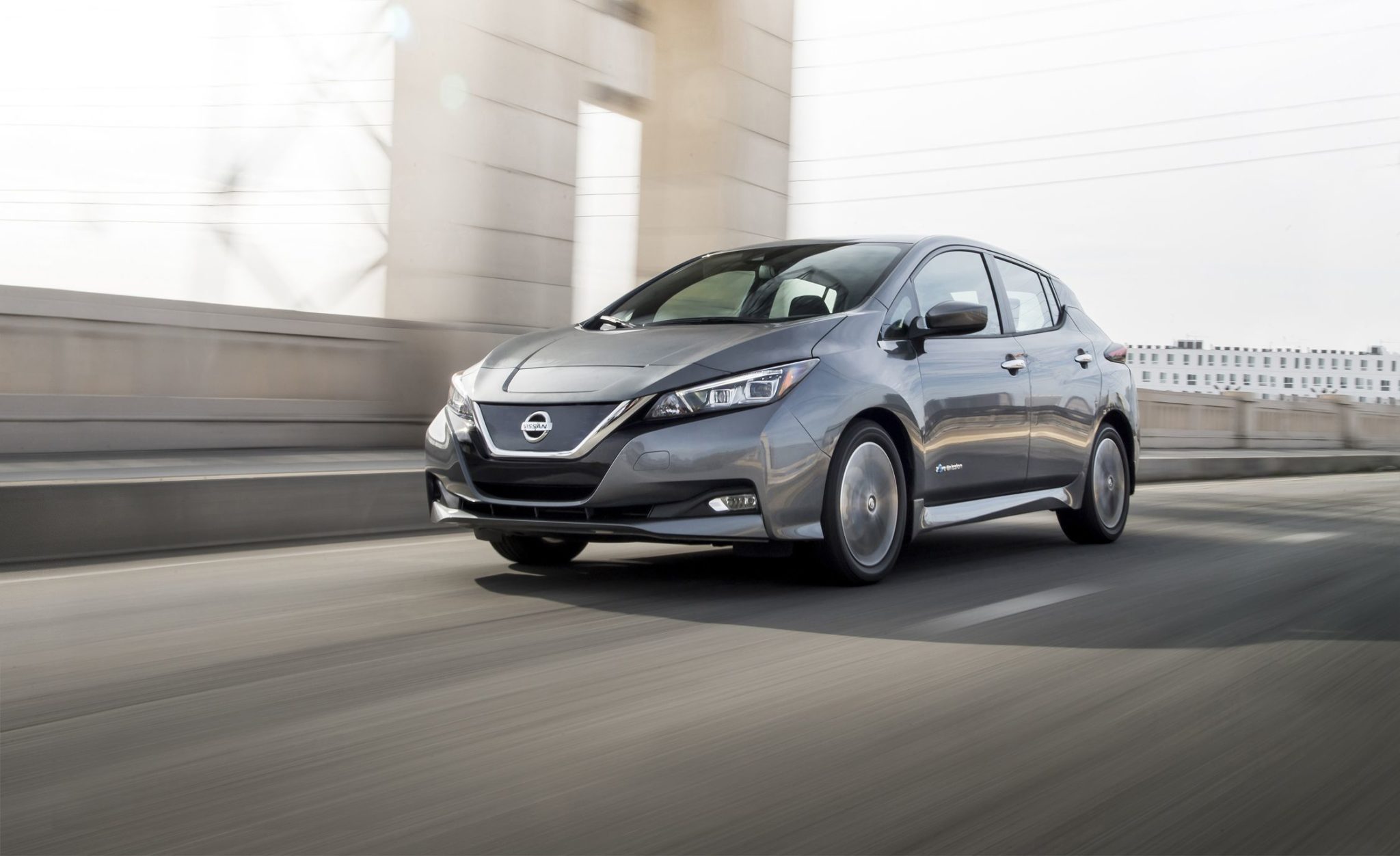
    The Nissan Leaf Can Now Power A House

    Nissan and EDF have partnered to accelerate the delivery of electric mobility in the United Kingdom, France, Belgium and Italy and will be adopting smart charging of electric vehicles in these markets. The new agreement will be primarily focusing on the development of smart charging solutions i.e. vehicle to grid (V2G) chargers which will help to optimize the charging or discharging of an electric vehicle. Interestingly, the stored energy on the car can be supplied back to the grid and can be used to power the house.

    As part of the deal, Nissan will develop and sale the V2G compatible EVs and the EDF Group will provide the V2G charging solution. Nissan says that the V2G technology will offer a significant opportunity to electricity grids and will provide new financial opportunities to the businesses. Nissan is aiming for a potential shift towards electric vehicles after achieving record sales for both Nissan Leaf and e-NV200.

    Speaking about the partnership, Francisco Carranza, Managing Director for Nissan Energy in Europe, said: “This new partnership with EDF across four major European markets is another sign that our vision of an electric ecosystem is becoming a reality. Businesses are becoming increasingly aware of the benefits and opportunities offered by the Nissan LEAF and e-NV200, and adding a V2G solution is a logical next step for managing their energy supply and opening new revenue opportunities.”

    Speaking on similar lines, Yannick Duport, EDF Group Electric Mobility Director, says: “The cooperation agreement is fully in line with the Electric Mobility Plan launched last October. We are convinced that the development of electric mobility will be supported by partnerships. I am very pleased to count among them the cooperation agreement that Nissan and EDF have just signed to develop smart charging solutions. So, EDF is building an ecosystem of innovative players by forming strategic partnerships for the large-scale roll-out of the best technologies to support our customers.”

    Smart charging solutions include technologies to control when vehicles charge and how quickly they power up, as well as allow the two-way flow of electricity between vehicle and charger. The V2G technology helps the energy to accumulate in the batteries of electric vehicles which can also be used for businesses own energy needs or the grid when required. The energy that is stored in a electric vehicle like the Nissan Leaf and e-NV200 van can be sold back to the grid by the customer, generating additional revenue to offset vehicle ownership costs.