Tag: LeEco

  • Le Eco Auctioning Beijing Mall on Taobao for RMB2.3B

    Le Eco Auctioning Beijing Mall on Taobao for RMB2.3B

    Chinese tech firm LeEco has put a Beijing shopping centre up for auction on Chinese e-commerce platform Taobao. Experiencing financial difficulties, yet determined to uphold its online trading practices, the firm has listed the 50,000sqm Beijing Shimao Gongsan Plaza at a reserve of RMB2.3 billion (US$334 million). The move follows legal action by mortgagor China Citic Bank against LeEco for failing to meet repayment obligations.

    The auction opens on Taobao’s distressed asset channel, which saw an 88 per cent rise in listings in October against the backdrop of China’s enormous bad debt market. Under supervision of the courts, the auction will start on January 7 at 10 am and run for 24 hours.

    The property was expected to sell last year to leading Chinese developer China Vanke, but was not traded due to unmatched expectations in price.

  • LeEco Cuts 60 Jobs In Hong Kong

    LeEco Cuts 60 Jobs In Hong Kong

     LeEco may be one of the best-known Chinese smartphone vendors globally after Lenovo, Huawei and Xiaomi, but the company has been in severe financial stress in recent times. The Beijing-based firm recently ventured out of China to establish a global footprint, and towards that end, have entered quite a few new markets over the past couple of years, including India and the U.S.

    However, even as LeEco was marching ahead with its global ambitions, its holding company, Leishi Internet Information and Technology Corp, was struggling financially, with its shares recently halted from trading at the Shenzhen Stock exchange. LeEco itself has been facing a severe cash crunch, with the company’s CEO, Mr. Jia Yueting, even admitting that the expansion efforts “have gone too far”.

    With its finances starting to become a major issue, LeEco was recently rumored to have laid off 1,400 of its employees globally, with the bulk of the job cuts coming in India. While about 200 people at LeEco’s sports video-streaming subsidiary, LeSports, lost their jobs in China as part of an organizational restructuring, almost a thousand LeEco employees were reported to have been laid off in India, mostly in the company’s sales and retail divisions. Reports out of Hong Kong now suggests that the company is also laying off as many as 60 of its employees in its Hong Kong office, although, its existing businesses and membership services will all reportedly continue to function as usual.

    Even in the midst of all this doom and gloom, though, there is a glimmer of hope for LeEco if a recent interview by a senior company executive is anything to go by. According to the president of LeEco’s smart TV business, Mr. Liang Jun, the company has received a fresh round of funding from strategic investors, although, he’s refused to give out any specifics about the reported investments until now. Meanwhile, even though the company’s finances are in a mess right now, reports indicate that at least three LeEco devices with model numbers LE X920, LE X850 and LE X622 are all set to be launched in the coming months. Right now, there’s no timeframe for the launch, but it should happen sooner rather than later if everything goes well from here for the struggling company.

  • Despite recent setbacks, LeEco has big retail ambitions in China

    Despite recent setbacks, LeEco has big retail ambitions in China

    LeEco may have had some high-profile setbacks in recent weeks, with news coming from the company that it had overextended itself financially in some areas, but the Chinese electronics maker and service provider is still doing ambitious things in retail, starting with a new flagship store it opened at its Beijing headquarters earlier this year.

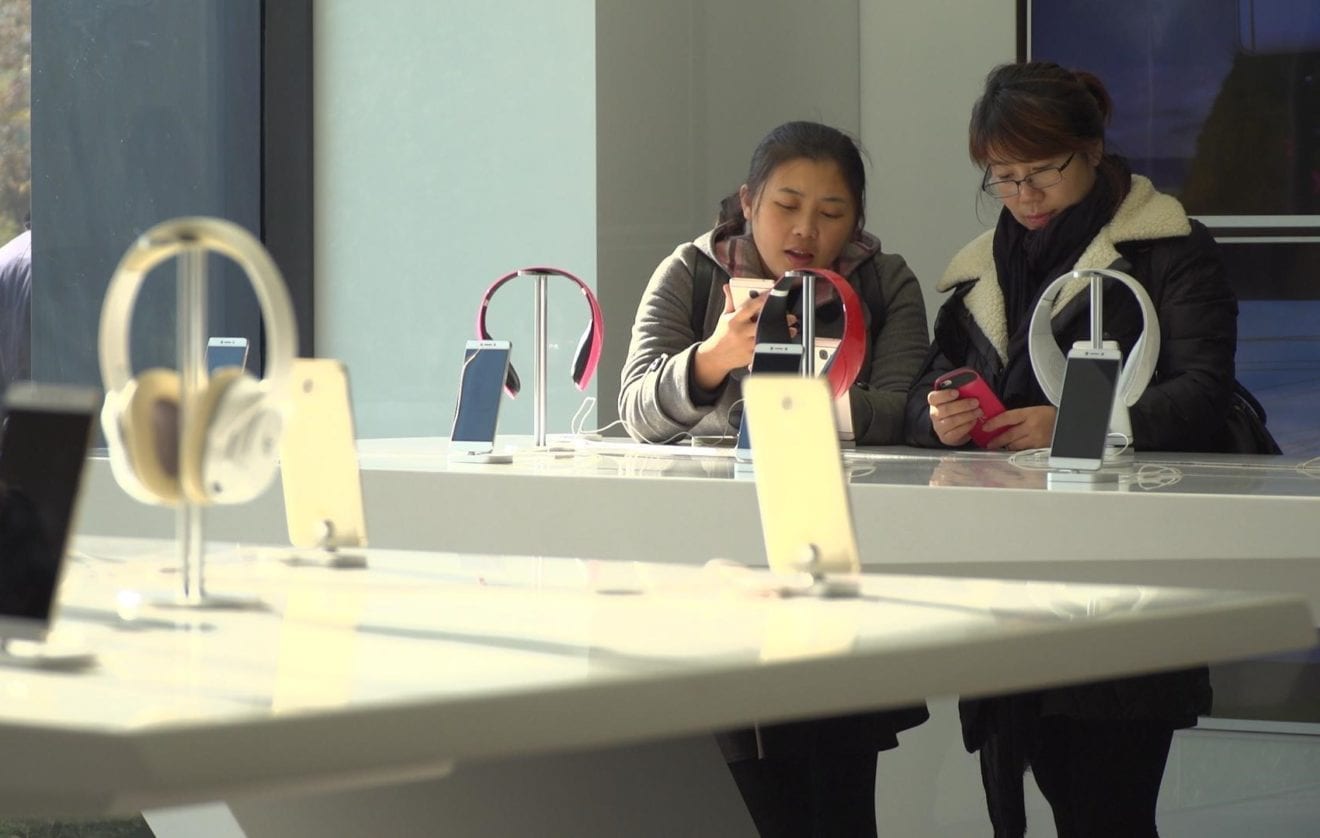
    We toured the store, and spoke to LeEco VP of retail Steve Zhao about some of the inspiration for the retail space and its intended purpose. A significant portion of Chinese electronics shoppers do their buying online, so the focus is on building a store that provides experiences and examples of how LeEco devices and services might work for a consumer in their daily lives, rather than on stocking shelves with as much inventory as possible.

    From flooring and furniture materials to layout and staff, the LeEco store feels like an Apple Store, which isn’t surprising given its aims and intent. But this is also only the first iteration of what’s to come; Zhao told me that their first major retail location in a shopping centre will dwarf the current flagship in size and scope, with a launch planned for sometime later in 2017.

  • China’s LeEco acquires US-based Vizio for $2b

    China’s LeEco acquires US-based Vizio for $2b

    LeEco entered into a definitive agreement to acquire Vizio for $2 billion, with the latter’s hardware and software businesses to be operated as a wholly owned subsidiary.

    Meanwhile, Vizio’s data business, Inscape, will spin out and operate as a separate, privately owned company.

    “LeEco believes in breakthrough technologies, a complete ecosystem and disruptive pricing,” said Yueting Jia, chairman and CEO of LeEco. “Acquiring Vizio is an important step in our globalization strategy and building our North American presence.”

    The acquisition benefits both companies with Vizio offering LeEco a steady install base of users and a brand that is distributed throughout major North American retail channels.

    Commenting on the transaction, which is expected to close during the fourth quarter of 2016, research firm IHS Technology said the biggest challenge for LeEco will be convincing Vizio’s US retail customers that it will be business as usual during the integration, with no loss of product quality/supply, account service or supply chain discipline.

    IHS said the acquisition will help LeEco and Vizio to optimize their supply chain resources. While TV supply chain relationship for both LeEco and Vizio will likely stay unchanged for the next few years, TV manufacturers that supply products exclusively to Vizio or LeEco may have more opportunities as long as they are cost competitive.

    Also, the acquisition is also likely to impact their competitors, should LeEco decide to apply its current business model in China to North America and other markets.

    The Chinese company focuses on the growth of the paid content subscription, while it sells TV hardware at below manufacturing cost or even provides it for free during promotional periods.

  • Lenovo-­Motorola India seeks to open showrooms

    Lenovo-­Motorola India seeks to open showrooms

    The Lenovo-­Motorola India combine has applied for single-­brand retail licence to open company­- owned showrooms.

    This comes on the heels of the Chinese company’s mobile sales in India crossing the US$1 ­billion mark.
    Lenovo India’s director Sudhin Mathur says the turnover from mobile-phone sales in the year ended March 31 stood at $1.3 billion, nearly double the $700 ­million of the previous year.

    “Sales have been growing at a healthy pace and we expect to maintain a strong momentum.”

    According to industry tracker IDC, the Lenovo­-Motorola combine sold about 10 million units last year, accounting for a nearly 10 per cent share of the market.

    Mathur says smartphone industry sales in India are expected to grow by 30 per cent this
    year.

    The company’s units for India are being contract ­manufactured by Flextronics at Sriperumbudur. Lenovo is also looking at having its own phone plant in India.

    Mathur says eight or ­nine new models will be introduced in India over the coming months as the company beefs up its portfolio ahead of the festive season.

    Other companies to have applied for the single-­brand retail licence include Apple and Chinese company LeEco.

  • Troubles may mount for Indian smartphone vendors and you can blame China

    Troubles may mount for Indian smartphone vendors and you can blame China

    It’s going to be a lot tougher to buy smartphones in India around the festive season beginning October, a time when Indians buy the maximum, fancy gadgets included.

    The reason is really very simple, plain economics-a demand-supply mismatch. There is, as of now a glaring shortage of mobile components in China, the country which sells the maximum number of smartphones in India, through companies like Xiaomi, LeEco, Huawei, Oppo, etc.

    Many Chinese manufacturing units in China have shut shops due to new technology, which requires more investment and hiring labour at higher rates.

    The display panel shortage comes as some of the panel makers, especially for the LCD displays which are largely used in the low-end smartphones and make up for majority of the smartphones sold in India, have shut shop recently, while others have not had significant increase in capacity.

    This is further aggravated by the fact that consumers are moving towards larger screens, 5″+ and especially at 5.5″, so there are fewer glass panels are coming out from the same capacity.

    Even though top Chinese handset and component makers mulled over investing around $3 billion in India, the country is still dependent on the Dragon nation.

    Some of the key components such as screen displays, 3G SOCs and flash memory will be short in supply, hitting the production plans of many vendors in the Indian market.

    “This is likely to impact local Indian vendors, the small ones as well as the heavy weights, more than it will impact the global vendors such as Samsung or Apple, who have a more secure supply chain, and Chinese vendors such as OPPO, vivo, Lenovo, Xiaomi and Huawei, who are able to secure better deals due to the large volumes they can commit,” said Kiranjeet Kaur, Research Manager Mobile Phones IDC Asia/Pacific.

    “The local country vendors have a disadvantage in this case. This shortage could also possibly lead to longer time to market and increased costs, and some of the costs may eventually get passed on to the consumers,” she added.

    It is noteworthy that Chinese companies such as Techno, Gionee, Coolpad, Holitech, Wingtech, Camera King, Galaxy Core, Poxiao, Vivo and Sprocomm, which took part in ‘China-India Mobile Phone & Component Manufacturing Summit’, explored avenues to tap the existing and emerging opportunities.

    “Going by the encouraging response of Chinese companies and definitive joint collaboration talks between the Indian and Chinese mobile and handset manufacturers, Chinese investment of $2-$3 billion (roughly Rs. 13,360 crores – Rs. 20,040 crores) over the next two years looks like a real possibility along with employment for one-two lakh people” Pankaj Mohindroo, national president, Indian Cellular Association (ICA), had said.

    However, IDC expects the Indian smartphone market to still pick up in Q2 of this year, with further gains coming in Q3.

    Jaipal Singh, Market Analyst Mobile Phones IDC India, said, “China-based vendors have extended their retail presence in the larger part of India and getting the shelf space along with the Indian vendors. Even as some of the eTailers are focusing more on profitability, which could mean lesser discounts this season, we believe the China-based vendors with presence in retail and push from the eTailers will drive the market this year.”

    The China-based vendors had 24% share in the Indian smartphone market in 2016 Q1, up from 12% a year ago. Almost two-thirds of their sales takes place through the online channels.
  • China’s LeEco to enter Indian market with flagship Le Max and Le 1s smartphones

    China’s LeEco to enter Indian market with flagship Le Max and Le 1s smartphones

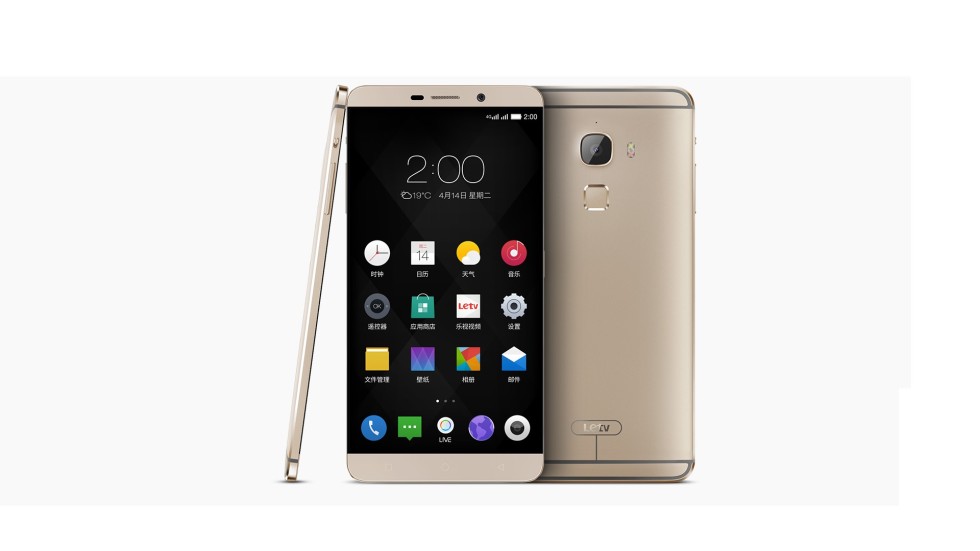
    LeEco, the Chinese entertainment giant formerly known as Letv, is bidding to become a top brand in India’s fast-growing smartphone market with the release of two handsets next month through leading online retail partner Flipkart.

    Its 6.3-inch flagship Le Max will go on sale on February 16, two weeks after the 5.5-inch mid-range Le 1s becomes available to whet consumers’ appetites. LeEco said that due to limited supply it will initially provide just 60,000 units of the Le 1s. Both will only be available online.

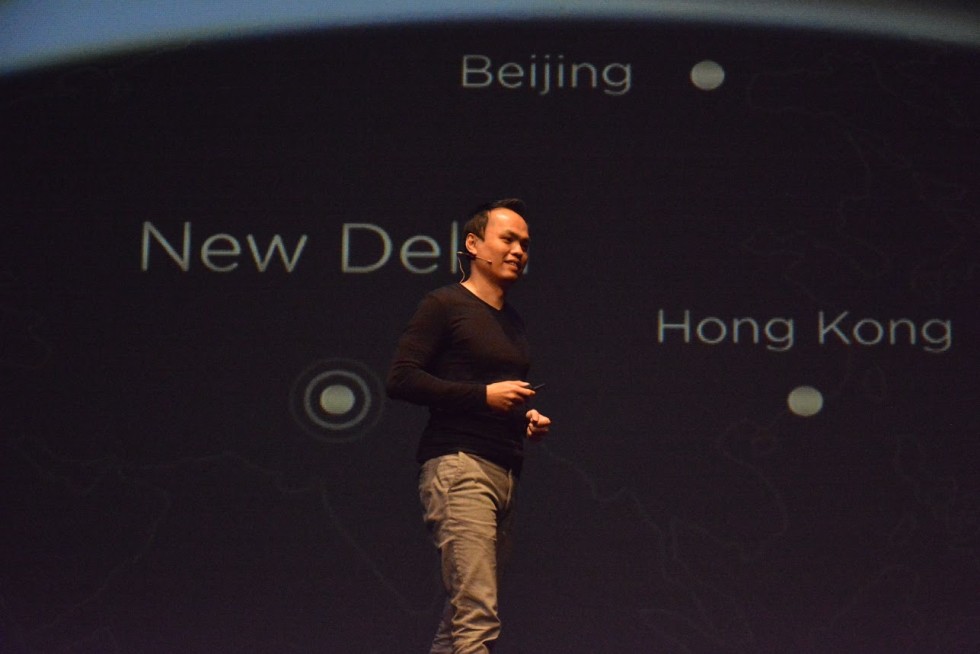
    “India is our new destination, our top priority and new home to all our smart products,” said Mok Tsui-tin, chief executive for LeEco Asia-Pacific, at a launch event in Gurgaon in Haryana state earlier this week.

    Addressing a crowd of about 1,000 in the city, located just south of New Delhi, Mok said India has the largest young population in the world, which will drive the switch from traditional feature phones to smartphones.

    Atul Jain, chief operating officer of smart electronics business for LeEco India, presented the two handsets to the enthusiastic crowd.

    Jain is a former senior vice president at Samsung Electronics’ South West Asia regional headquarters.

    Both phones will be sold exclusively at leading online retailer Flipkart, which it claimed to be the largest online retailer in India.

    “Every one in five smartphones sold in India today is from Flipkart,” said Ankit Nagori, chief business officer of Flipkart.

    LeEco announced deals with Eros International, a major Indian film production and distribution company that posted annual revenue of more than US$230 million in 2014, to run its content on LeEco’s website.

    It also partnered with US-based streaming content provider YuppTV, which mainly provides local Indian content.

    LeEco said content from both companies would be available during the second quarter of 2016.

    Le Max and Le 1s were both released in China in 2015. LeEco said it sells smartphones at prices below cost, a tactic to attract more subscribers to its streaming service.

    The retail prices in India are close to those in China. The Le Max will cost 32,999 rupees (US$485) for a model with 64GB memory and 35,999 rupess for the 128GB version. The Le 1s will retail for 10,999 rupees.

    The company will also build a research centre in Bangalore, India’s technology centre, later this year. Mok said LeEco plans to recruit around 1,000 local staff to support the localization of LeEco’s product.

    “As our businesses and operations are landing in the country, [this] will require a large number of talented staff,” said Mok.

    LeEco will also bring its smart television to India this year along with a wide array of products such as a virtual reality headset, smart bicycle and other accessories , according to its spokesperson.

    LeEco is one of many Chinese smartphone makers entering the emerging South Asian market and is likely to face competition with its peers. China’s computer maker Lenovo and popular smartphone maker Xiaomi are already top brands in India.

    According to Flipkart, Motorola’s Moto G is the most popular smartphone on the shopping site. The brand is owned by China’s Lenovo Group. Xiaomi’s Redmi Prime and Lenovo brand’s K3 note occupy second and third place.

    LeEco runs a major streaming website in China and also sells smartphones and TVs. It earned nearly 4 billion yuan (US$607.7 million) in the third quarter of 2015, representing more than 100 per cent growth from the same period last year.

    The company announced this month another partnership with electric car start-up Faraday Future, which is building a US$10 billion factory in the US, its home market.