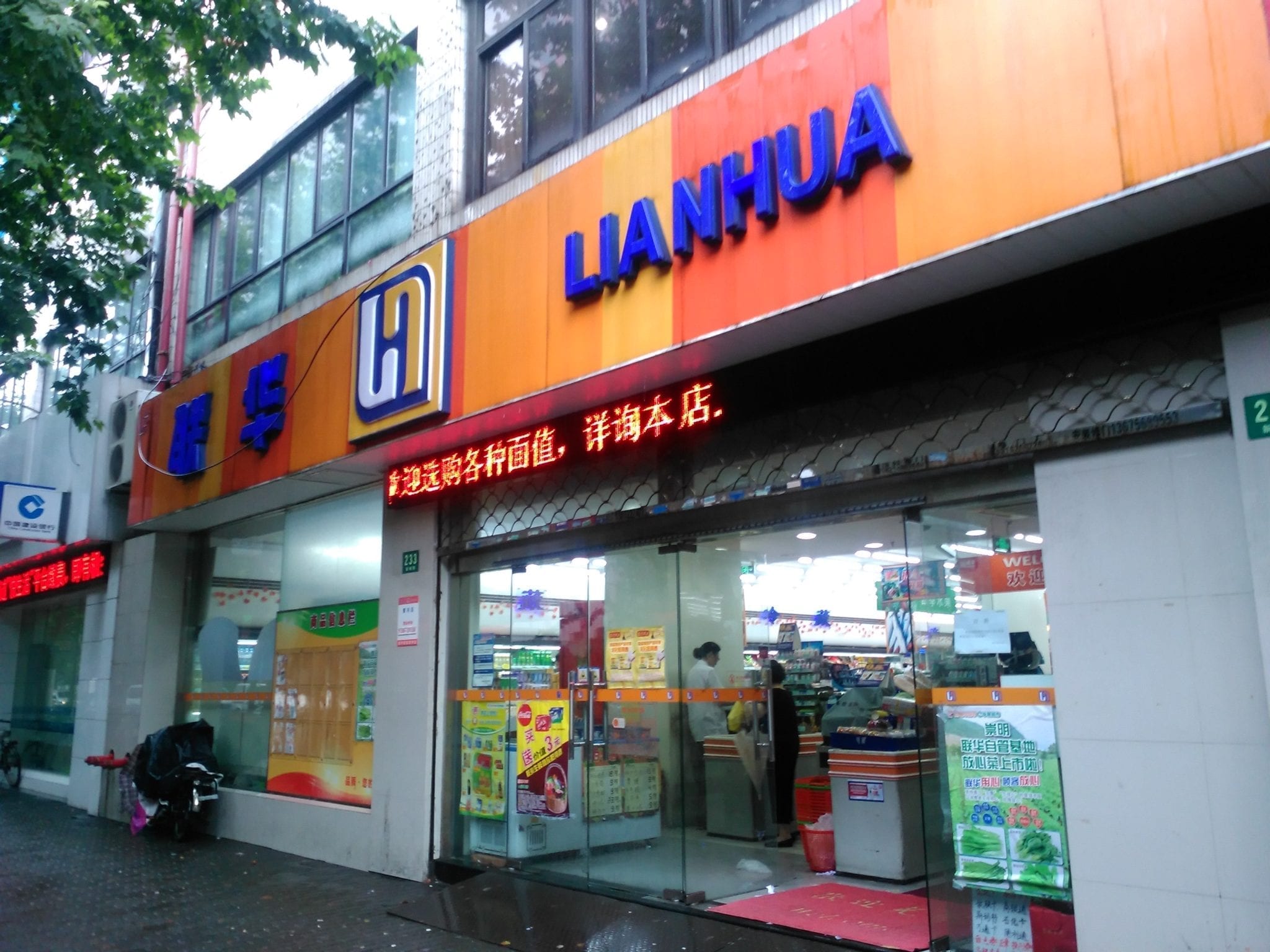
Chinese state-owned retailer Lianhua Supermarkets has undergone a complete brand refresh, after 28 years of trading.
The new look, including a refreshed logo and instore signage and design, is being rolled out across the retailer’s 42 stores in China including Shanghai, Hangzhou, Anhui, Guangxi, and Henan.
Like many traditional Chinese retail brands, Lianhua’s efforts to attract and retain customers until now were focused on in-store promotion and pricing. However, Chinese consumers have become more sophisticated and the market is more competitive now, meaning brands have to stand out from the crowd and develop a connection with their customers.
“Numerous digitally-driven and technology-led retail brands have seized the market share and disrupted China’s retail industry bringing fresh and seamless online to offline retail experiences to China’s increasingly discerning consumers,” said a Superunion managing creative director Ray Lan. “In order to deal with the external challenges, Lianhua felt the need to change and define touchpoints to re-establish the connection with consumers amidst fierce competition in China’s retail industry.”
The agency’s team started the project by interviewing staff and management to understand brand and what it meant to the people who work there. Through this process, Superunion uncovered unique aspects of Lianhua’s culture – from the older, more experienced employees, to their reliable supply chain and neighborhood-oriented stores.
“The high market coverage of stores is also the biggest difference between Lianhua and its peers. These strengths are part of Lianhua’s long-held heritage and are more pertinent than ever amidst China’s fast-moving, overwhelmingly dense information society, a society that increasingly fears losing meaningful connection,” said Lan.
Togetherness
This insight is the core of the brand’s newly created brand positioning of Togetherness, aiming to nurture relationships and solve the pain points that consumers experience in a fast-paced life. Through Togetherness, Lianhua has re-examined the nature of retail and created a more satisfying consumer experience providing high-quality products and consumer services, giving them a more unique positioning in a highly competitive market.
“Togetherness has been visualized as an elaborate ribbon that ties all elements together. The new eye-catching store signage has become a highlight on the streets of the Yangtze River Delta region with the new key visual communicating a sense of connection among Lianhua, shoppers and the community.”
As part of the corporate rebranding process, a cross-functional brand committee and a brand team have been established to provide professional brand management training and to ensure the brand transformation progresses smoothly, with passion and engagement from within the organization, both at head office and in-store. Lianhua employees and consumers believe the new logo and brand image brings a modern touch to the household name and is expected to attract younger generation to the store.
The first stage of the brand rollout will be completed by the end of this year, by which time all stores will have new livery, in-store design, staff uniforms and signage.
Lan says customer response to date has been positive, with the fresh new look in-store vastly improving the Lianhua brand experience.
“Creating the Lianhua brand identity was a challenging but fun journey. The new key visual – the “ribbon” – reflects the brand positioning “togetherness” in a very smart way, endowing it with a more vivid and concrete representation. It has become a powerful visual asset of Lianhua, enriching the brand through various touchpoints, and communicating what the brand stands for to customers.”
Doreen Cheng, CMO, Lianhua Supermarket Holdings, said the company believes retail has the power to bring communities together.
“Superunion helped Lianhua build a unique brand model of togetherness that comes from the intersection between Lianhua’s strengths (coverage and resource) and the cultural disconnection being felt in Chinese communities. Togetherness will differentiate Lianhua in the competitive retail market, creating a holistic platform for the brand.”