Retail News CRM

Tag: lifeline

  • Singapore Injects $466,000 Lifeline Into Workforce: Relief for Workers Stranded by Company Liquidations

    Singapore Injects $466,000 Lifeline Into Workforce: Relief for Workers Stranded by Company Liquidations

    Between 2023 and 2025, the Singapore government allocated SGD600,000 (US$466,000) from its short-term relief fund to provide financial aid to 260 employees who were left without pay when their companies went into liquidation. The relief fund aims to support employers who genuinely cannot meet their salary obligations due to business failure, according to Manpower Minister Tan See Leng.

    Regulations and Protections

    Companies that intentionally refrain from paying wages despite having the resources to do so will potentially face legal consequences for violating employment laws when their businesses are liquidated, Minister Tan pointed out. While his ministry does not actively monitor the total count of workers left unpaid as a result of corporate liquidations, he highlighted the government’s understanding of the crucial nature of employees’ salary claims during such circumstances.

    Support Beyond Financial Aid

    Apart from offering aid via the short-term relief fund, the government also assists impacted workers in finding and securing new opportunities with promising long-term prospects through career-matching services and training programs.

    The SkillsFuture Jobseeker Support scheme provides eligible workers who lose their jobs involuntarily with up to SGD6,000 over a six-month period. For lower-income households that require assistance with basic expenses, they can seek financial support from their local social service office.

    Minister Tan emphasized the government’s encouragement and support for Singaporeans to maintain their career health and remain relevant in their professional roles.

    Labour Market Outlook

    Minister Tan also shared insights about the labour market. The financial and insurance services, professional services, and information and communications sectors have been actively hiring and seeing wage growth for professionals, managers, executives and technicians.

    As of September 2025, these sectors had 14,200 job openings, a rise from 12,600 in the previous year. The roles within these sectors are suitable for fresh graduates, according to Tan. He further noted that real median incomes in these sectors in 2025 grew at a rate that exceeded the overall median income increase of 4.3%.

    Questions & Answers

    What is the purpose of the Singapore government’s short-term relief fund?
    The fund is designed to assist employers who genuinely cannot pay their employees’ salaries due to business failure.

    What kind of support does the government provide for workers affected by corporate liquidations, apart from financial aid?
    The government offers career-matching services and training programs to help these workers find and secure new jobs with promising long-term prospects.

    What are the job prospects in Singapore’s labour market according to Manpower Minister Tan See Leng?
    According to Minister Tan, the financial and insurance services, professional services, and information and communications sectors are actively hiring and seeing wage growth, making them promising sectors for job seekers.

  • Shein’s Brick-and-Mortar Debut: A Lifeline or Death Blow for Department Stores?

    Shein’s Brick-and-Mortar Debut: A Lifeline or Death Blow for Department Stores?

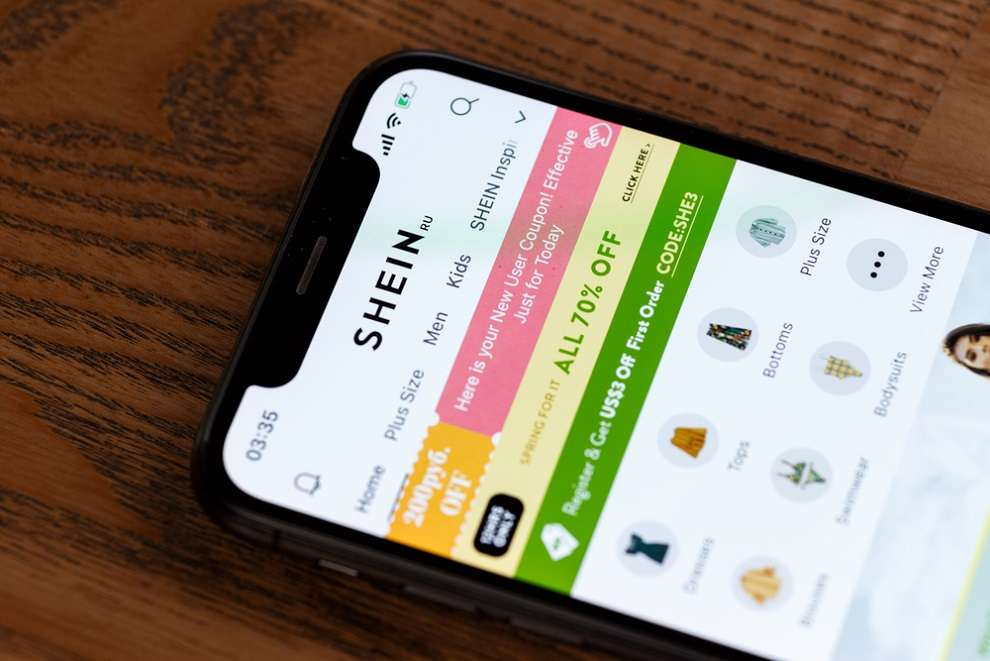
    The recent entry of Chinese budget retailer Shein into the flagship BHV in Paris has stirred up a political storm, adding to the ongoing struggles of department stores worldwide. These traditional retail outlets are grappling with the seismic shift of consumers towards online shopping and ultra-fast fashion.

    Shein opened its inaugural brick-and-mortar shop in the BHV department store, situated on the Rue de Rivoli in the heart of Paris, earlier this month. This move sparked a backlash from lawmakers and fellow retailers, who argue that Shein’s low-cost business model has been detrimental to the traditional shopping streets of France.

    For BHV, a store recognized for its diverse array of products, this partnership was a strategic move designed to lure younger consumers. This demographic has increasingly turned to online platforms, such as Shein, for a variety of needs, ranging from cosmetics to fashion.

    The shift to online shopping, further exacerbated by the pandemic, has posed a significant challenge to department stores around the globe, with many still struggling to recover from a steep decline in physical footfall during the crisis.

    New Threat from Ultra-Fast Fashion

    Laetitia Henry, general manager of the iconic Printemps Haussmann store in Paris, noted that while competition from other large local department stores was once the norm, the rise of online platforms has led to a new international threat. Ultra-fast fashion can replicate a designer dress in as little as three weeks and sell it for a fraction of the original cost.

    This competitive landscape has prompted top-tier department stores like Macy’s to close outlets, while Saks Fifth Avenue’s parent company, Saks Global, is exploring divestments to manage its debt.

    The Société des Grands Magasins (SGM), which acquired BHV from the Galeries Lafayette group two years ago, is banking on its partnership with Shein to safeguard its future. On the day of Shein’s launch at BHV, store traffic surged by 50%, with a quarter of Shein’s customers going on to make additional purchases at BHV.

    Department Stores Innovate to Attract Consumers

    Several prominent French department stores, including Printemps, Galeries Lafayette, and LVMH-owned Le Bon Marché, have sought to redefine themselves as lifestyle destinations. They are aiming to attract more shoppers by offering unique luxury experiences.

    Le Bon Marché, for instance, organizes regular events such as concerts and dance performances. Printemps offers fine dining and beauty treatments, even featuring an in-store ice rink during the holiday season. Galeries Lafayette invested over 100 million euros (approximately US$115.06 million) in renovations during the pandemic, which helped boost visitors and foot traffic.

    However, these innovative strategies have not been as successful for mid-range stores trying to break into the luxury experience market. These stores are keenly observing the publicity generated by Shein’s partnership with BHV.

    Late payments to brands at BHV have resulted in product shortages, impacting sales and causing job security concerns among workers. Despite these challenges, SGM president Frederic Merlin maintains that retailers should collaborate with new models like Shein’s. He argues that moving forward is vital, even in the face of criticism.

    However, the launch of Shein’s physical outlets hasn’t been without controversy. When Shein’s Paris store opened, France temporarily suspended its French marketplace after discovering inappropriate items for sale on the platform.

    Questions & Answers

    Has the shift towards online shopping affected traditional department stores?

    Yes, the move towards online retailers and ultra-fast fashion has posed a significant challenge to traditional department stores, many of which are still struggling to recover from the pandemic-induced drop in footfall.

    What strategies have department stores adopted to stay relevant in the market?

    Department stores have been attempting to innovate in various ways. Some are partnering with online retailers like Shein to attract customers, while others are reinventing themselves as lifestyle destinations, offering unique luxury experiences such as concerts, fine dining, and beauty treatments.

    Did the opening of Shein’s store in BHV increase footfall?

    Yes, the launch of Shein’s shop in BHV led to a surge in store traffic by 50%, with a quarter of Shein’s customers making additional purchases at BHV.

  • Order Management – a lifeline for Asian retailers in a COVID-19 world

    Order Management – a lifeline for Asian retailers in a COVID-19 world

    The ongoing pandemic has changed the way that people purchase and acquire goods. Soaring demand for eCommerce and increased interest in new ways of collecting purchases, such as curb side pickup and click & collect, mean that Asian retailers are now faced with the challenge of recalibrating their business strategy to serve an increasingly complex omnichannel environment. Alongside various city and state lockdowns, many brands have had to get creative and accelerate their journey towards digital services over the last year. However, not all of them have successfully managed the transition.

    To assist, new business-to-consumer distribution models are coming to market, with a core focus on the importance of ‘living’ the omnichannel customer experience, rather than just talking about it. One such model is Order Management Systems (OMS), which integrate all sales and distribution channels into one place, bringing absolute transparency and making it easier for retailers to manage customer orders. An OMS helps retailers to see what inventory they have where, what’s been allocated, what is in transit, what’s been sold, what is available, what needs to be replenished and what’s being returned.

    Optimising order sourcing

    New demands being placed on retailers today have forced innovation to occur at an unprecedented pace. From adding drop-shipped items to websites to quickly beefing up sales, launching quick ‘on ramp’ digital solutions, or streamlining operations to maximise strained employee bandwidth, the need for innovation through technology has never been greater. In fact, in the latest Forrester Wave Report, it was revealed that 39% of retailers increased their investments in technology immediately after the pandemic began to disrupt supply chain operations.

    Without this necessary push towards efficiency-boosting technology, retailers would be left behind their competition. With innovations like OMS, retailers have even been able to review the rules of stock allocation, temporarily giving priority to in-store stock over warehouse stock, thus, freeing up any trapped inventory confined within closed stores. This comes as a great advantage to the many retailers whose physical stores were closed for long periods during lockdowns.

    Optimising order sourcing is a new focus for retailers, allowing brands to use the stock available in their entire network, wherever it is located. A smart OMS allows retailers to use the ‘pool’ of physical stores in large urban areas to offer same day, or next day delivery by couriers, whilst also favouring the warehouse stock for less immediate orders.

    Addressing multiple shipments

    Recent research undertaken by Manhattan Associates has shown that due to the ongoing impacts of the pandemic and its convenience, home delivery is now the preferred delivery option for 69% of online shoppers. Interestingly, 60% of consumers indicated they often receive their online order in multiple shipments and 81% of them said that they think this is an inefficient and unsustainable way of delivering goods. In fact, the same number (81%) also said they would prefer to receive their order at a later date if it meant that it would arrive in one consolidated delivery. These changing consumer preferences pose challenges for retailers and their supply chains to match their inventory and delivery capabilities against what customers actually want. 

    For those orders that have to be shipped in multiple deliveries, advanced OMS systems allow customers to view the status of all items within an order in a Digital Self-Service order tracking page. If an order is shipped in multiple packages, customers can view all tracking details, estimated time of arrival, and the delivery date of each package from a single page. If all items have not been shipped, the customer can view the status of all items, including items which are in in-process or cancelled. By providing customers with complete order transparency there is less uncertainty around an order’s status, working to substantially reduce customer call volumes to the contact centre to check where an order is.

    Cost-effective omnichannel offerings

     In a recent study, conducted by Manhattan Associates and IHL Group, it was revealed that retailers who optimised their digital customer journey saw their margins improve by three to eight points more than those who didn’t. Additionally, by enhancing the customer journey through the use of technology, retailers are equipped with the knowledge they need to understand what their consumers want, and in turn, they can clearly communicate their promises to consumers – such as delivery dates and returns processes – leading to a positive bump in overall margins.

    According to several independent studies, the conversion rate is said to increase up to 30% when a brand communicates a precise delivery date promise on a product page. However, 50% of consumers agree that they would in fact abandon a purchase if there was no delivery date indicated at the checkout. This is a good signal of the importance of offering total transparency to the customer regarding their order, as without it, consumers are left uneasy about not only the wait time for delivery, but the credibility of the brand itself.

    Turning returns into a positive customer experience

    Since the pandemic, the ability to promote a more efficient returns process for eCommerce purchases in-store has become an increasingly important all-round service for brands looking to maintain an adequate retailer-to-consumer relationship. Using an OMS in-store application, customer service teams can directly search for customers’ original orders and records of the returned items. Then, the products that are in return-worthy condition are immediately integrated into the global stock pool, making them available for sale online, even if the item was not originally listed at the point of sale.

    For consumers who are on-the-go, new QR code solutions exist which allow customers to drop a return item at a carrier location. The QR code can be made available to customers via email. This avoids situations where customers previously had issues printing a return label at home.

    More efficient returns processes enables faster refunds, improved order accuracy, and delivery transparency, develop a greater peace of mind for consumers, and ultimately, improve overall brand advocacy and loyalty – which comes as the biggest advantage to retailers in the long-term.

    Managing order cancellations

    With more online orders being placed, today’s consumers expect to have full visibility of their order’s progress, as well the flexibility to cancel their order if needed. With an advanced OMS, customers can cancel items that are being shipped to their address before the items have been packed, without having to reach out to the contact centre. Customers can view which items are eligible for cancellation, select items and reasons for cancellation, and preview their new order total before confirming the cancellation.

    Supporting order cancellations and changes as late as possible prevents the situation where a customer wants to cancel an item that has already reached the ‘point of no return’ in the fulfilment process. When these situations occur, it causes friction and frustration for the customer who has to receive and return the item, plus time and cost for the retailer who will often have to absorb the shipping and handling costs for both the shipment and the return.

    Order Management for future-proof retailing

    With the everchanging nature of the retail landscape, and the increasing demands and expectations of consumers, enhancing retail operations with innovative technology such as OMS will serve as a way for retailers to optimise their operations for the future, to withstand even the harshest fulfilment, delivery, and customer services challenges.

    By Richard Wright, Managing Director, SEA, at Manhattan Associates

    For more information on Order Management from Manhattan Associates, go to: https://www.manh.com/en-sg/products/order-management