Tag: linkedin

  • Microsoft-owned LinkedIn might have quietly used your DMs to train AI

    Microsoft-owned LinkedIn might have quietly used your DMs to train AI

    In today’s AI-driven world, data has become an incredibly valuable asset for developers and companies alike. The usage patterns and interactions of thousands – or even millions – of users often contribute to training AI models. Now, LinkedIn, the world’s largest professional networking platform, finds itself in hot water. A new lawsuit accuses the company of allegedly sharing user DMs to train AI systems.

    LinkedIn, owned by Microsoft – who has a close partnership with OpenAI (yep, the brains behind ChatGPT), is now facing a lawsuit. LinkedIn Premium users are accusing the platform of sharing their private messages with third parties to train AI models – and they never gave their consent for that.

    The lawsuit claims that back in August, LinkedIn “quietly” rolled out a new privacy setting that automatically signed users up for a program allowing third parties to use their personal data for AI training. It also accuses the Microsoft-owned company of covering its tracks a month later by updating its privacy policy to state that user data could be shared for AI training purposes.

    To top it off, the filing says LinkedIn edited its FAQ section, mentioning that users could opt out of sharing data for AI training. However, it also made it clear that opting out wouldn’t undo any training that had already been done using their data.

    The complaint further argues that LinkedIn’s move to “cover its tracks” shows it knew it was breaking its promise to only use personal data to improve its platform, all while trying to dodge public backlash and legal trouble. Of course, LinkedIn denies these allegations.

    The lawsuit, filed in federal court in San Jose, California, represents LinkedIn Premium users who exchanged InMail messages and had their private data shared with third parties for AI training before September 18. It demands damages for breach of contract and violations of California’s unfair competition law, along with $1,000 per user under the federal Stored Communications Act.

    This isn’t the first time a company’s been accused of crossing the line when it comes to user privacy for AI training. Just last year, Elon Musk’s X was called out for allegedly using data from EU users to train its AI chatbot, Grok, without permission. That said, legal battles like these tend to drag on for years – if they ever get resolved at all.

  • LinkedIn goes TikTok

    LinkedIn goes TikTok

    Thanks to the soaring popularity of platforms like TikTok, short-form videos have become an integral part of our digital landscape. Following TikTok’s meteoric rise, other big players like Instagram, Facebook, YouTube, and Snapchat have all jumped on the short-video bandwagon. Now, LinkedIn is gearing up to join the fray.

    TechCrunch reports that LinkedIn confirmed it is experimenting with a new short-video feed, taking a page from TikTok’s playbook. The news first surfaced when Austin Null, a strategy director at an influencer agency, shared a sneak peek (later shared on X) of the new feed on LinkedIn.

    The new feed resides in the app’s navigation bar under a fresh “Video” tab. Once you tap into the Video tab, you’re greeted with a vertical feed of bite-sized videos that you can easily swipe through. Users can engage with the content by liking, commenting, or sharing. Details on how the feed curates content remain undisclosed.

    Unlike the eclectic mix found in other apps, LinkedIn’s focus remains squarely on careers and professionalism. While video content has long been a part of the platform, this dedicated feed aims to elevate engagement and discovery by curating relevant, easily digestible videos.

    According to LinkedIn, users increasingly turn to video content to learn from industry professionals. Hence, the platform is exploring new avenues to surface such valuable content. However, the feature is still in its early testing phase, meaning it’s not widely available yet.

    For content creators, LinkedIn’s new feed might present an opportunity to expand their reach and share video content with a professional audience. There’s talk that LinkedIn might explore monetization options down the line, which could encourage creators to get on board.

    However, not everyone may welcome this change with open arms. LinkedIn has long been valued for its professional and informational content, free from the distractions of typical short-form video feeds. Feel free to share what you think about it in the comments below.

  • LinkedIn cuts over 700 jobs, exits China app as demand wavers

    LinkedIn cuts over 700 jobs, exits China app as demand wavers

    LinkedIn, the social media network owned by Microsoft that focuses on business professionals, said on Monday it would cut 716 jobs as demand wavers, while also shutting down its China-focused job application.

    LinkedIn, which has 20,000 employees, has grown revenue each quarter during the last year, but it joins other major technology companies including its parent in laying off workers amid a weakening global economic outlook.

    In the past six months, more than 270,000 tech jobs globally have been cut, according to Layoffs.fyi, tracking the fallout.

    LinkedIn makes money through ad sales and charging for subscriptions to recruiting and sales professionals who use the network to find prospects.

    In a letter to employees, LinkedIn CEO Ryan Roslansky said the move to cut roles in its sales, operations and support teams was aimed at streamlining the company’s operations and would remove layers to help make quicker decisions.

    “With the market and customer demand fluctuating more, and to serve emerging and growth markets more effectively, we are expanding the use of vendors,” Roslansky wrote.

    A LinkedIn spokesperson said the vendors were “external partners” who would undertake new and existing work.

    Roslansky also said in the letter that the changes would create 250 new jobs. The spokesperson said that employees affected by the cuts would be eligible to apply for those roles.

    LinkedIn also said it was eliminating the slimmed-down jobs app that it offers in China after it decided in 2021 to mostly withdraw from the country, citing a “challenging” environment. The remaining China app, called InCareers, will be phased out by Aug. 9, LinkedIn said.

    “Despite our initial progress, InCareer faced fierce competition and a challenging macroeconomic climate, which ultimately led us to the decision of discontinuing the service,” the company told users of the website.

    LinkedIn will retain a presence in China to help companies operating there to hire and train employees outside the country, the company spokesperson said.

    Large companies have accounted for the bulk of recent layoffs in the tech sector, including 27,000 at Amazon.com, the most in its history.

    Facebook owner Meta Platforms shed 21,000, and Google parent Alphabet has laid off 12,000.

    Before LinkedIn’s announcement, 5,000 technology jobs had been in eliminated in May alone, according to Layoffs.fyi.

    Microsoft, which bought LinkedIn for around $26 billion in 2016, has announced some 10,000 job cuts in recent months and took a $1.2 billion charge related to the layoffs.

  • The Best Digitalized Swiss Private Banks

    The Best Digitalized Swiss Private Banks

    There is a large gap between private banking and your average smartphone app, according to a new study. But a small avant-garde makes headway.

    Swiss traditional private banking pure-play Julius Baer seems to be the grand citadel of Insta-bankers. That is the surprising conclusion of a study by consultancy Columbus Consulting.

    It ranked 27 of the larger Swiss private banks based on how they did in both digitalization and client experience.

    According to Columbus, Julius Baer is the most digitalized private bank in the country. «It made the top in 2022 based on a strong showing in social networking and good results for its website and digital marketing», the team around partner Rémi Chadel indicated.

    The bank showed a sharp increase in YouTube subscribers, good engagement on Instagram, and had the second-largest Linkedin community among Swiss private banks surveyed.

    But the experts also maintain the bank lags others when it comes to a mobile smartphone app.

    In any case, it was enough to bunt local investment house Vontobel out of first place. They didn’t make the grade as a result of a «weak social networking performance», the study says. And that is exactly where Julius Baer scored highly. Lombard Odier, which came in third place, managed to outdo the others in social media and in digital marketing. But the Geneva-based private bank did not do as well when it came to its website and mobile apps.

    Pictet came in fourth, as it tested best for client experience based on a sample test. Others in the top ten include Union Bancaire Privée, EFG, Banque Cantonale Vaudoise (BCV) unit Piguet Galland (which jumped up five places), Zurich-based private bank Bergos, J. Safra Sarasin and Banque Edmond de Rothschild.

    Even though the rankings did not change that much last year, investments still rose substantially. According to the study’s authors, spending on digital marketing alone was up 15 percent at 2.9 million francs while their websites drew 31 percent more views than they did in 2020.

    In total, the institutes get about 525,000 visits a month on their diverse channels. That means that the digitalization drive prompted by the pandemic shows little signs of ebbing.

    But activity levels are uneven. The three leading banks in the ranking make up 85 percent of all internet consumption of all the 27 banks reviewed. About 30 percent of those surveyed did not offer a mobile app. That is not much of a change from a year earlier, the authors maintain, somewhat laconically. But that nonchalance could turn on them quickly given the current pace of progress and change.

    The private banks are also dwarfed when it comes to digitalization by the retail banks. Swiss postal unit Postfinance, which emphasizes TikTok, has 14 times as much traffic as all the 27 private banks do together.

    Some have been trying to catch up by experimenting. Apparently, Linkedin has become a preferred meeting site for new, highly affluent clients. It is also the leading social outlet for private bankers, with the highest overall engagement at 78 percent, and 72 percent of bankers being subscribers.

    Some institutes have made it a habit to communicate digitally, much as they did during the pandemic. Private banks have also been invested heavily in digitalizing their client relationships and integrating that with their needs and demands.

    That means that some of the institutes are starting to understand what they want through data. Digital marketing has become a new tool in the advisory arsenal and the Columbus consultants are certain it will help them introduce new services in future.

  • Microsoft to shut down LinkedIn in China

    Microsoft to shut down LinkedIn in China

    LinkedIn said on Thursday that it was shutting down its professional networking service in China later this year, citing “a significantly more challenging operating environment and greater compliance requirements,” in a move that completes the fracture between American social networks and China.

    LinkedIn, which is owned by Microsoft, said it would offer a new app for the Chinese market focused solely on job postings. It will not have social networking features such as sharing posts and commenting, which have been critical to LinkedIn’s success in the United States and elsewhere.

    LinkedIn’s action ends what had been one of the most far-reaching experiments by a foreign social network in China, where the internet is closely controlled by the government. Twitter and Facebook have been blocked in the country for years, and Google left more than a decade ago. China’s internet, which operates behind a system of filters known as the Great Firewall, is heavily censored and has gone in its own direction.

    When LinkedIn expanded in China in 2014 with a localized service, it offered a tentative model for other major foreign internet companies looking to tap the country’s huge, lucrative, and highly censored market. The company teamed with a well-connected venture capital firm, which it said would help it with government relations.

    But LinkedIn also agreed to censor the posts made by its millions of Chinese users in accordance with Chinese laws, something that other American companies were often reluctant or unable to do. Even in 2014, LinkedIn acknowledged the challenge, saying, “LinkedIn strongly supports freedom of expression and fundamentally disagrees with government censorship. At the same time, we also believe that LinkedIn’s absence in China would deny Chinese professionals a means to connect with others.”

    Seven years on, it has become apparent the experiment did not work. No major internet platform has followed in LinkedIn’s footsteps. Its business in China struggled as it ran up against major local competitors and a population skeptical about publicly listing valuable contacts.

    “It has gotten pretty ugly around the world where authoritarian governments are forcing the private sector, particularly U.S. tech companies, into these dilemmas,” said Eileen Donahoe, executive director of the Global Digital Policy Incubator at Stanford University and former U.S. ambassador to the United Nations Human Rights Council.

    She said LinkedIn was unusual in keeping a bare-bones product in China, rather than withdrawing entirely. “It is not so simple as ‘they are the bad guys, get out of there,’” she said. “There is a cost.”

    The operating environment in China has also become more difficult. Since President Xi Jinping took the reins of the Communist Party in 2012, he has repeatedly cracked down on what can be said online. Presiding over the rising power of the Cyberspace Administration of China, the country’s internet regulator, Mr. Xi turned China’s internet from a place where some sensitive topics were censored to one where critics face arrests for a constantly shifting set of infractions, like jokes at Mr. Xi’s expense.

    In March, the regulator rebuked LinkedIn for failing to control political content, three people briefed on the matter said at the time. Officials required LinkedIn to perform a self-evaluation and offer a report. The service was also forced to suspend new sign-ups of users inside China for 30 days.

    The site also suffered as the U.S. relationship with China soured, with anger about LinkedIn’s complicity in China’s information controls rising in Washington. In recent months, after LinkedIn stopped displaying the profiles of several activists and journalists in China, American lawmakers criticized the company.

    In one letter last month, Senator Rick Scott, Republican of Florida, wrote to Satya Nadella, Microsoft’s chief executive, demanding to know why it had censored the accounts of three journalists. Mr. Scott called the censorship “gross appeasement and an act of submission to Communist China.”

    Beyond the fights over censorship, other challenges loomed. A new Chinese data security law requires firms like LinkedIn to store more data on local users within China and provide access to the authorities, which may have raised even more ire.

    The shutdown cleaves apart one of the last social media bridges that linked China’s cloistered internet to the rest of the world, even if in a censored fashion. That may matter little to Chinese officials, who have cleverly used foreign social media blocked in China. In recent years, the government has been linked to a series of disinformation campaigns run on sites like Twitter and Facebook. Government and state media also advertise heavily on the sites.

    LinkedIn also has served a separate purpose, as a recruitment ground for spies. Chinese intelligence services are among the most active at using it for that purpose, according to American officials.

    China is one of LinkedIn’s largest markets, with 54 million users, behind only the United States and India. It does not disclose how much revenue each country generates.

    Since Microsoft bought LinkedIn for $26.2 billion in 2016, revenue from the business has tripled. Mr. Nadella told investors in July that LinkedIn’s revenue had surpassed $10 billion in annual sales, up 27 percent from the previous year.

    LinkedIn declined to comment beyond its announcement.

    While Microsoft has tried to build a market in China for more than a decade, it has had only modest success. Last year, Brad Smith, Microsoft’s president, said the country accounted for less than 2 percent of its revenue.

    Microsoft Windows and Office are common in China, but many people use pirated copies. The company has tried to overcome the issue, by hosting its software online and by tapping a major Chinese military contractor to help it offer an operating system better trusted by China’s government.

    It has been a difficult year for private technology firms in China. Mr. Xi has overseen a series of investigations, bans and new rules that have laid low many of the country’s best known local internet companies, including Alibaba and Didi.

    “The scale and scope of the crackdown in Beijing has been so jaw-dropping that not just domestic companies within China but even U.S. companies have now had to pull back,” said Dan Ives, an analyst at Wedbush Securities. “The last thing Microsoft wanted was to get into a political football situation in China.”

    In a sign of the sensitivity around the news, Thursday’s announcement was not made by Mr. Nadella or LinkedIn’s chief executive, Ryan Roslansky, but by Mohak Shroff, the social network’s head of engineering.

    Yet while the LinkedIn closure gets Microsoft out of one fraught business, it raises questions about the prospects of its search engine, Bing. The lone major American search engine still operating in China, Bing also censors results. In 2019, it was briefly blocked in the country, even as it continued to push users there to state media accounts on disputed topics like the Dalai Lama.

    It remains unclear precisely what will happen to the millions of Chinese user accounts on LinkedIn. In the past, when foreign internet companies have stopped offering locally censored services, their sites have been quickly blocked by the government.
  • Introducing Clubhouse, the invite-only alternative to Linkedin

    Introducing Clubhouse, the invite-only alternative to Linkedin

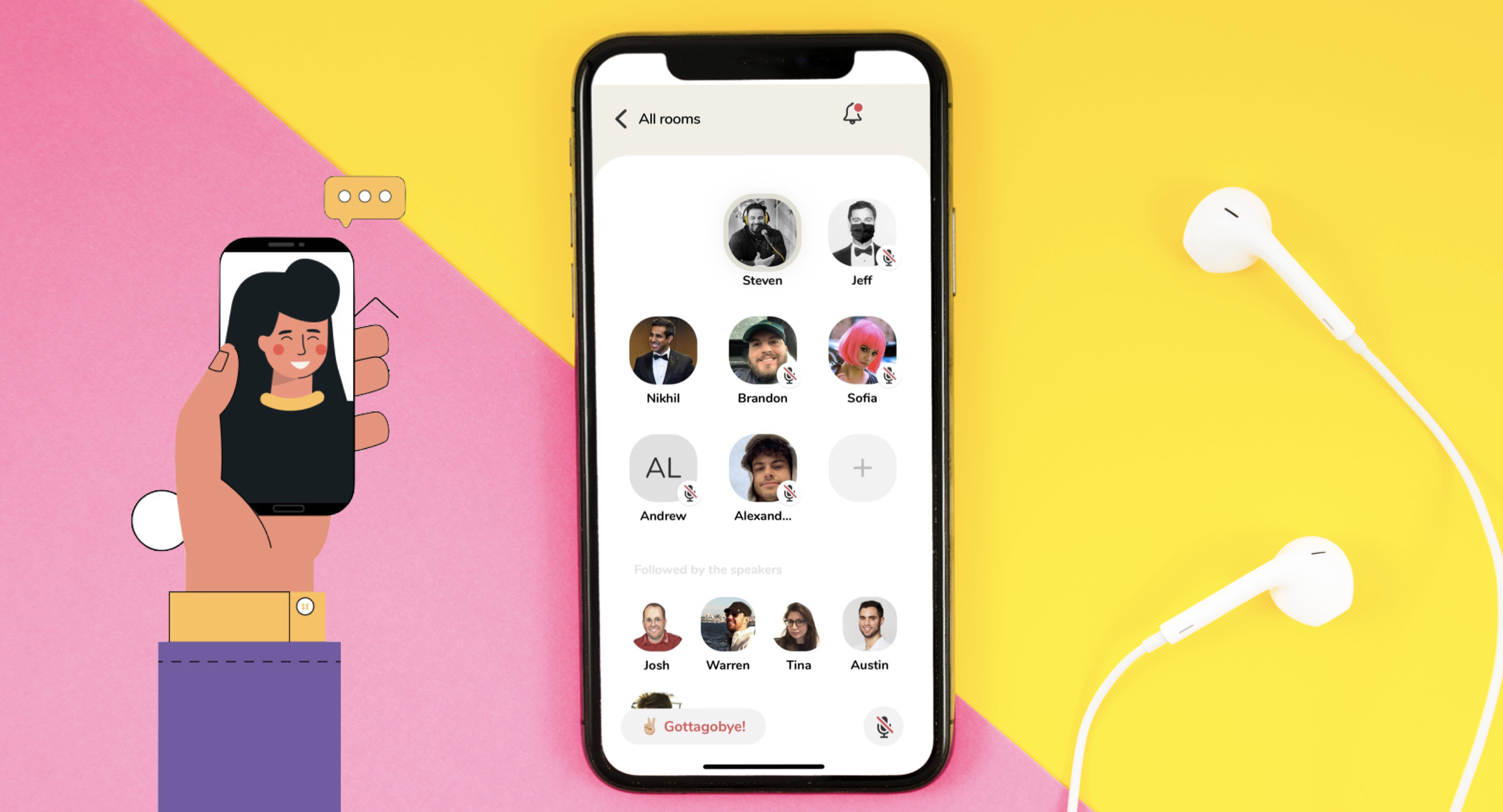
    Forget The Nice Guy or Soho House. The place to find Hollywood and Silicon Valley powerhouses during the pandemic has been on Clubhouse, the invite-only, audio-driven app that’s quickly gaining steam as a networking tool for those looking to make it in the entertainment and tech worlds.

    Hop on Clubhouse at any given time and you could stumble into conversations led by Wiz Khalifa, Tiffany Haddish, Ava DuVernay, Ashton Kutcher, Brian Koppelman or Scooter Braun, among several other celebs. Kevin Hart, in a story that’s already solidified in Clubhouse lore, recently took part in an hours-long conversation focused on whether he was, in fact, funny. And on the tech side, Clubhouse is packed with entrepreneurs like former Twitter CEO Ev Williams, Reddit co-founder Alexis Ohanian, and former Y Combinator President Sam Altman, along with a laundry list of angel investors and venture capitalists.

    Clubhouse isn’t complicated: Users can go on the app and join a “room” where a particular conversation is going on. Often, these conversations are focused on business and networking topics; “Pivoting from live events to virtual events + sponsorships” and “virtual writing cafe” were two rooms pulling in users on Monday, for example. Once inside, users can listen to the discussion and, if approved by the room moderator, chime in and join the conversation themselves. It’s not uncommon to see rooms with a few dozen speakers and a few hundred users listening in.

    Since launching in April, the app has grown to over 100,000 beta users, according to an individual familiar with the company’s internal metrics. The app’s early traction helped it land a $12 million round of funding from Andreessen Horowitz, valuing Clubhouse at $100 million.

    As the new, go-to spot to listen to entrepreneurs and stars, Clubhouse has also become the audio version of LinkedIn for those looking to make connections in Hollywood. Even in normal times, making it in the movie business is tough enough. But for Sade Sellers, a 31-year-old screenwriter from Burbank, California, one of the many problems tied to the pandemic has been the end to casual networking events — coffee meet-ups with executives, conferences and post-work drinks with people in the film industry — that have helped her career grow.

  • LinkedIn, Reddit, Google News and other apps caught spying on iPhone users’ clipboards

    LinkedIn, Reddit, Google News and other apps caught spying on iPhone users’ clipboards

    Last month, we told you that a new feature found in the iOS 14 beta detects when a third party app is spying on your iPhone’s clipboard. The latter is the place where data is temporarily stored while being copied from one app to another. Those running the iOS 14 beta preview noticed that they were receiving notifications that apps like TikTok and even AccuWeather were sniffing around an iPhone user’s clipboard and could copy things like PIN numbers, social security numbers and more. Some users received this notification every time they typed a punctuation mark or tapped the space bar on their iPhone’s QWERTY keyboard.

    Last week, Don Morton, a developer using the iOS 14 beta, was seeing a notification that Microsoft’s networking app LinkedIn was copying the content of his clipboard after every keystroke. When ZDNet got in touch with LinkedIn, a spokesperson said that this was all part of a bug. LinkedIn engineering VP Erran Berger said, “We don’t store or transmit the clipboard contents.” TikTok claimed that it appeared as though it was spying on iPhone clipboard data because of an anti-spam “fraud detection mechanism.” The popular short-form video app said that it never copied any content from anyone’s iPhone but it removed the mechanism anyway.

    Morton made a list of apps that iOS 14 is catching red-handed stealing clipboard data. The list includes apps that copied clipboard data after each keystroke and others that copied the data once the app was opened. The former list includes three names: TikTok, LinkedIn, and Reddit. We’ve already mentioned the responses from TikTok and LinkedIn. Reddit said that it is going to disseminate a software update to eliminate code that caused it to copy content from an iPhone user’s clipboard. The software update is expected to be pushed out on July 14th.

    Some password manager apps will automatically clear your clipboard after a certain period of time has passed. The 1Password app has a feature that when toggled on, will automatically clear any field copied from the app to the clipboard in 90 seconds. Some say that they will ask Apple to make access to the clipboard permission that users must agree to give to an app.

    In Morton’s blog post he wrote that this is a real problem. He said, “This is a problem. However, the real problem and thing that scares me is the fact that ANY app has the ability to access the clipboard without permission. I could easily see “phishing apps” starting to pop up (if they are not already) with the sole intention to scrape as much clipboard data as possible. To me, this is just as bad or even more worrying than the companies that have already been called out for it. For the most part, the companies that have been getting called out have a motive to be “good.” I’m just starting to think about companies or apps that have no intention of being good.”

    Once the notifications start appearing for everyone when the final version of iOS 14 drops, we will certainly have a better idea about how widespread this problem is.

  • LinkedIn opens data center in Singapore

    LinkedIn opens data center in Singapore

    LinkedIn has opened its first data center in Singapore, spanning 23,500 square feet in Jurong. This is one of six data centers for LinkedIn globally, and the first outside the United States.

    LinkedIn has invested S$80 million ($587.4 million) so far in the new data center, which was established to enhance the experience for the fast-growing base of LinkedIn members and clients across the Asia-Pacific region.

    With the facility the enterprise social media company aims to imrpove speed and reliability of APAC members’ access to LinkedIn’s services as they connect to professional opportunities on the network.

    Since January 2013, the number of LinkedIn members in APAC more than doubled to reach over 85 million members at the end of 2015. This includes more than 1 million members in Southeast Asia (of which more than 1 million are in Singapore), 34 million in India and 7 million in Australia.

    LinkedIn also counts prominent leaders as its influencers, including Narendra Modi (Prime Minister of India), Piyush Gupta (CEO of DBS Bank), Tony Fernandes (Group CEO of AirAsia), Shinzo Abe (Prime Minister of Japan) and Andrew Penn (CEO of Telstra). Over the same period, LinkedIn’s revenue in the region more than tripled.

    The new data center in Singapore processes all of LinkedIn’s online traffic in the Asia Pacific region and will also handle about a third of global traffic. It will also complement the continuing growth in LinkedIn’s storage and processing needs globally – in 2015, this growth was 34%.

    The smart design features are also expected to reduce the annual energy consumption of the data centre by a magnitude that is equivalent to powering about 100 private homes in Singapore. For more information about the data centre, please click here.

    “Asia Pacific is our fastest growing region in terms of member base outside of the US,” said Olivier Legrand, managing director of LinkedIn in Asia Pacific. “Singapore is the natural choice for us to locate this new data center, as it is already our Asia Pacific headquarters, and it offers the cutting-edge infrastructure and talent we need,” said Legrand.

  • KerjaDulu, ‘Indonesia’s LinkedIn’ raises money from MNC Group

    KerjaDulu, ‘Indonesia’s LinkedIn’ raises money from MNC Group

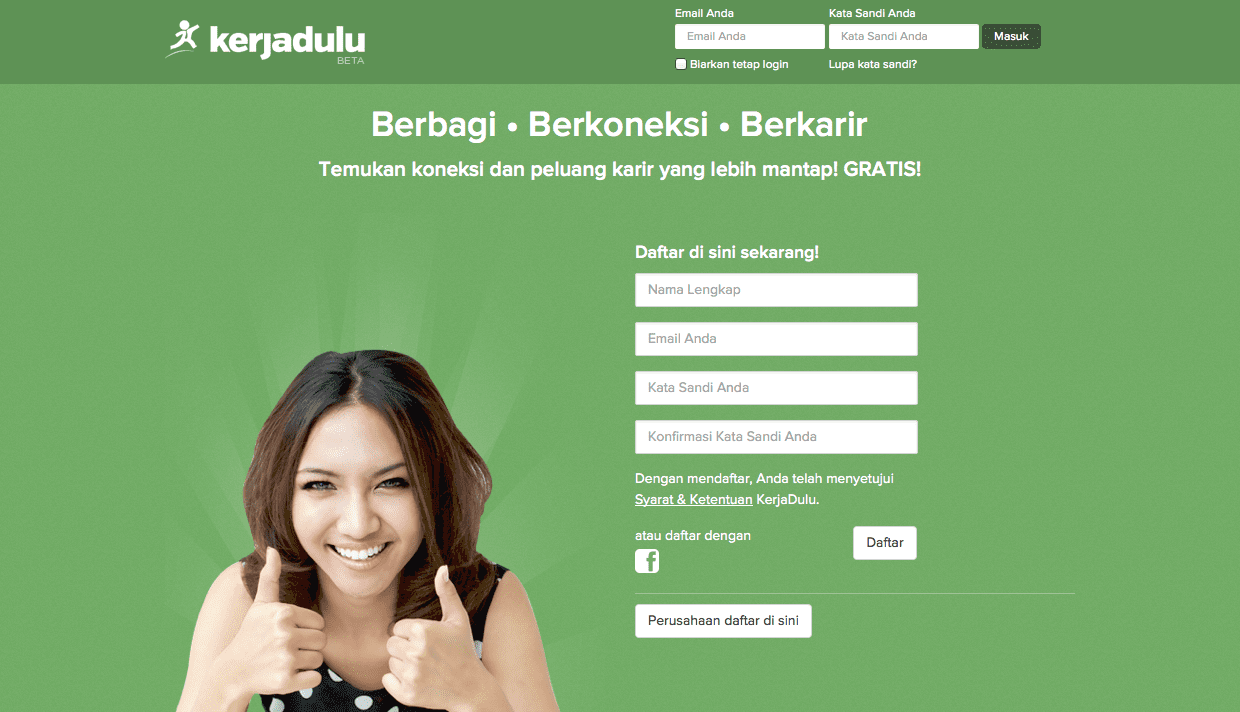
    KerjaDulu, an Indonesian social recruitment portal for job seekers and employers, today announced a strategic investment from local media conglomerate MNC Group. The startup said its post-investment valuation is at $5 million, but did not disclose other terms of the deal. Following the investment, MNC plans to intensify its own use of the portal for recruitment purposes and use its media channels to help market KerjaDulu.

    “MNC itself has more than 40,000 employees and is very active with recruitment. We can utilize KerjaDulu’s innovative social recruitment platform as our priority to hire talented people,” David Audy, director of MNC Media Group, said in a statement. David will join KerjaDulu’s board of commissioners as part of the investment.

    Launched in January 2014, KerjaDulu now consists only of about ten people, CEO and co-founder Chris Liu says.
    Some of the site’s features make it resemble LinkedIn. People set up a profile page and connect with professional contacts. But unlike LinkedIn, which prioritizes a person’s CV, member pages on KerjaDulu focus on their online activities.
    Members can follow company profiles and get an alert when there are new job openings. Chris says the aim is to combine the benefits of a job portal with that of a social network.

    The site now has “somewhere in between 500,000 and 1,000,000 registered users,” according to Chris.
    So far, Chris says, 388 companies have completed the site’s sign-up procedure, where they are put through a verification process.
    KerjaDulu is free to use for companies and job seekers, explains Chris. Monetization will come at a later point, and the team is still discussing the possibilities.