Tag: Lippo Group

  • OVO lead in Cashless Payment Race in Indonesia

    OVO lead in Cashless Payment Race in Indonesia

    Lippo-backed cashless payment service OVO has announced a partnership with Tokopedia, Indonesia’s largest e-commerce platform. OVO said in a statement on Wednesday that the deal would help it cement its position as the country’s largest mobile payment platform in terms of transaction volume and reach.

    “The partnership will add Tokopedia’s close to 80 million active monthly users to OVO’s existing userbase of 60 million. It will also add more than 4 million Tokopedia merchants to what is already a market-leading merchant network, covering malls, smaller retailer, as well as GrabFood partners and Kudo agents,” the company said in the statement.

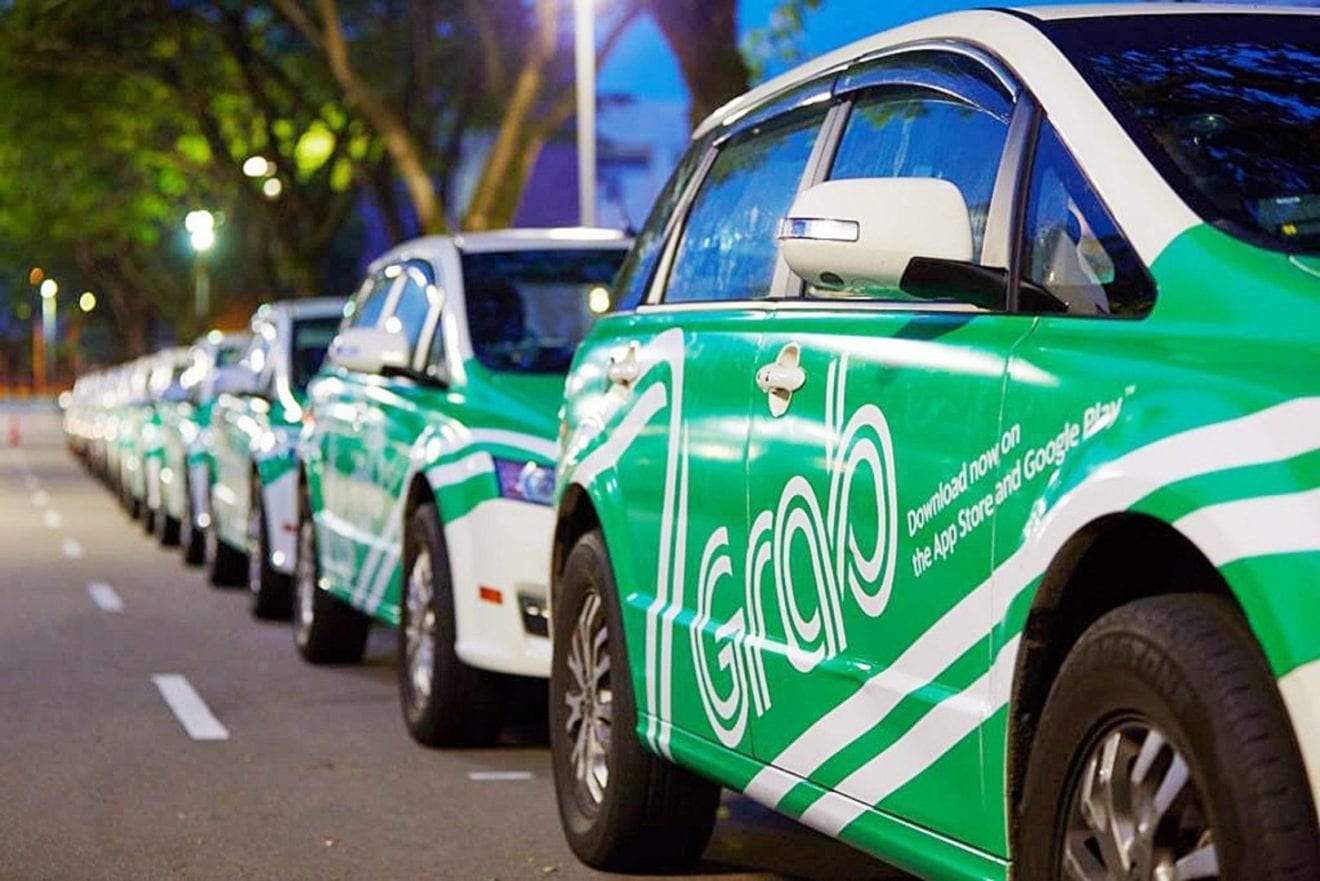
    OVO has been partnering with online-based ride-hailing service Grab since December last year, while also targeting brick-and-mortar shops and restaurants across Indonesia.

    “We see this landmark partnership as a validation of our strategy to enable payments for all Indonesian companies, both online and offline. Cash is a very difficult habit to break and consumers will only switch to cashless if it’s easier and safer than cash,” said Harianto Gunawan, director of enterprise payments at OVO.

    OVO chief executive Jason Thompson said the company expects a surge in new users and additional transactions from the e-commerce platform.

    “We have a very bullish outlook as we close out 2018. Having established ourselves as the No. 1 mobile payment platform by transaction volume, this partnership with Tokopedia and our push into e-commerce will further accelerate our growth,” Thompson said.

    The company said OVO is now available in 90 percent of shopping malls across the country, offering cashless payment options to customers at hypermarkets, department stores, coffee shops, cinemas, parking operators, hospital chains and food and beverage outlets.

    It has also set a target to expand QR-code payments to 100,000 small and medium enterprises by the end of this year.

    OVO’s online-to-offline business comprises its partnerships with Grab and Kudo, a service that allows individual agents to sell digital products, such as phone credit, tickets or insurance, to customers. Kudo currently has about 1.7 million agents in its network.

    OVO said its latest deal with Tokopedia would allow it to reach 93 percent of districts in Indonesia currently served by the e-commerce platform. It also plans to secure more deals with other e-commerce platforms.

  • CT Corp moving to open cinemas

    CT Corp moving to open cinemas

    Indonesia’s retail/media conglomerate CT Corp is partnering with cinema companies to open movie theatres in its retail complexes.

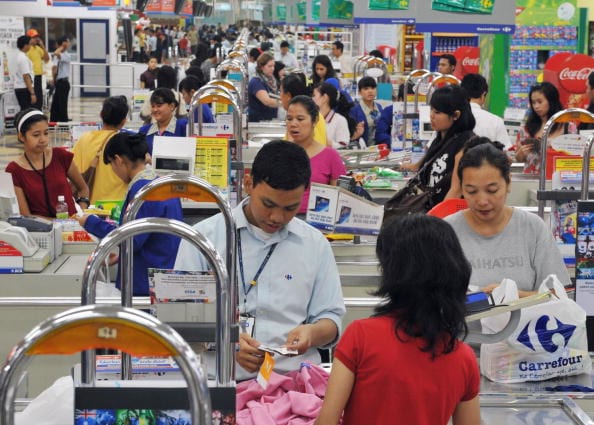
    CT retail arm Trans Retail has announced a partnership with Graha Layar Prima, which runs the Korean-owned CGV cinema chain (formerly known as Blitz Megaplex), to develop cinemas at CT’s Transmart Carrefour stores across Indonesia. Launched last year, the Transmart centres feature restaurants, apparel stores and supermarkets. There are presently 13 outlets, with a US$3 billion plan to expand the number to 100 by 2019.

    CT founder/chairman Chairul Tanjung says that over the next three years a minimum of 500 cinema screens will be opened in Transmart centres.

    GLP will open CGV cinemas in four Transmart centres in Java and Sumatra in May, with plans to add four more by the end of the year. Each cinema will have five screens and include 4D entertainment systems, sofa-type seating for couples and VIP spaces that serve drinks and snacks.

    GLP says its cinemas attracted more than 10 million visitors last year, a 150 per cent increase from 2012. It aims expand its network of cinemas to 40 from the current 27.

    Meanwhile, Singaporean sovereign wealth fund GIC is to acquire an undisclosed stake in cinema company Nusantara Sejahtera Raya (NSR) for 3.5 trillion rupiah (US$262.9 million).

    Trans Retail has just signed a deal to install NSR’s Cinema XXI movie theatres in at least four Transmart stores this year.

    Meanwhile, mall management company Lippo Group is expanding its own cinema business, with plans to have 2000 screens across 85 cities by 2024.

  • Lippo Group betting on e-money in digital age

    Lippo Group betting on e-money in digital age

    Indonesia’s Lippo Group is turning e-commerce, electronic money and other information technology-related enterprises into a new pillar of its business, closely monitoring spending trends to gain a better foothold in the greater Southeast Asian market.

    The next phase for the banking and real estate conglomerate “will be the fourth industrial revolution,” CEO James Riady told The Nikkei Tuesday on the sidelines of the 18th Nikkei Global Management Forum here.

    Lippo Group was founded as a banking institution by Mochtar Riady, the current CEO’s father and a former head of Bank Central Asia. It branched out into real estate in the 1990s when subsidiary Lippo Karawaci developed a plot outside Jakarta that the group collected as collateral. Lippo Group has since also developed retail and hospital operations, which help boost property value. It now has more than 20 listed subsidiaries and rings up a total of about $7 billion in annual revenue.

    But the fall in resource prices and China’s economic slowdown have dealt a blow to the Indonesian economy, including to its real estate sector. Lippo Karawaci suffered a 23% drop in sales last year to 9.19 trillion rupiah ($702 million), as well as a 79% plunge in net profit to 535.3 billion rupiah.

    Business of the future

    Meanwhile, the proportion of smartphone users in Indonesia has risen from about 20% of the population in 2014 to almost 40% — about 100 million people — in 2015. “We must have inward creative disruption so that we can be transformed into a new area of growth, which is the digital economy,” James Riady said.

    In addition to its communications and media businesses, Lippo Group launched e-commerce site MatahariMall in September 2015. One of the platform’s strengths is that it can use Lippo Group’s retail network throughout Indonesia to move and distribute products — a definite plus in the face of competition from Lazada Group, a subsidiary of Chinese titan Alibaba Group Holding, and Tokopedia, in which Japan’s SoftBank Group has a stake. It was revealed in October that Japanese trading house Mitsui & Co., bullish on MatahariMall’s growth potential, was investing in the site’s operating company.

    Riady considers e-money his new focus. The goal is to get Lippo Group’s 120 million customers on board by allowing them to pay at hundreds of retail locations using the service. He plans to expand the group’s e-money offerings to other Southeast Asian countries, as well as include such services as depositing and transferring e-money. Riady sees a complete transformation in the way banks do business.

    Lippo Group and Singaporean ride-hailing company Grab agreed in July to cooperate on launching a mobile payment platform. The service will roll out in earnest at the end of the year.

    Following trends

    The spread of e-money will allow Lippo Group to closely track spending by its customers at retailers, e-commerce sites and other outlets. Riady hopes to use the service to bolster overseas expansion of the group and improve products and services associated with retail operations.

    Lippo Group is currently operating real estate businesses in Singapore and Hong Kong. But it will target Southeast Asia in the future to win over the region’s young, eager consumers. “What matters is how we can capture the [Association of Southeast Asian Nations] population of 600 million into our e-money accounts and world of services,” Riady said.

    In terms of Lippo Group’s real estate business, Riady expressed his interest not just in property development but in creating entire communities spanning retailers, hospitals and schools. The group has already built hospitals in Myanmar, and the CEO said the company is looking into Vietnam and Laos as well.

  • Grab partners Lippo Group for e-payment platform

    Grab partners Lippo Group for e-payment platform

    The partnership is an extension of a strategic deal signed between the two companies in March this year.

    According to the agreement, Lippo Group will develop a universal payments platform that enables Indonesians to top-up an e-money account and use it to pay digitally at Lippo companies.

    Grab will then integrate the payments platform into the Grab app as a mobile wallet option within GrabPay, enabling any mobile user to use the Grab app to pay for not only their daily transport needs, but also other lifestyle services.

    “We commend the government’s efforts to push Indonesia towards a cashless society and look forward to contributing towards this goal. Grab’s partnership with the Lippo Group to develop a universal payments platform will be a leap forward for e-money in Indonesia,” said Grab Group CEO and co-founder Anthony Tan.

    “With a rapidly growing middle class, people will want to have a mobile wallet option in the Grab app, which they can use every day, whether for transport, or payments for basic transactions,” he added.

    Tan believed that the potential of developing a mobile payments platform in Southeast Asia is “limitless”. The majority in Southeast Asia are unbanked but are armed with mobile phones. Thus, the only way forward is to find a cashless solution that will help customers manage their money and mobile wallets.

    “We will work with local partners to make cashless transactions a reality for the majority in Southeast Asia,” he concluded.

    The universal platform will be rolled out in the fourth quarter this year.

    With that, over 50 million existing customers from the Lippo and Grab will be able to pay via their mobile phones or use their Grab App to pay for a full suite of services from Lippo’s retail companies, including department stores, hypermarts, cinemas, coffee shops and e-commerce.

    Lippo Group director Adrian Suherman said his company will introduce more partner merchants in unrelenting efforts to push cashless transactions.

    “Lippo Group is committed to transforming lives in Indonesia, and we want to work with partners like Grab that have this common vision,” Suherman said in a statement.

    “Indonesians can enjoy the convenience of using their mobile phones and the Grab app to top-up and pay, as well as better manage their cash flow,” he added.

    Grab is determined to expand new services specifically for Indonesian preferences, as the country is Grab’s largest market. Nearly 95 per cent of Indonesians do not use credit cards. Grab said it will continue to partner with leading companies to launch innovative services to cope with these challenges.

    Began as a taxi-hailing app in 2012, Grab has expanded its core product platform to include private cars and motorbikes. The region’s largest transport network is now testing new services such as social carpooling, as well as last mile and food deliveries.

    Grab currently offers services in Singapore, Indonesia, Philippines, Malaysia, Thailand and Vietnam.

    Meanwhile its partner Lippo Group is a pan-Asian investment holding company with investments in real estate, department stores, retailing, financial services, telecommunications, hospitality, healthcare, news media, and IT services.

    With Riady family’s second generation at the helm, Lippo Group has been increasing its presence in the digital scope through aggressive investments in technology, media and online platforms.

    Its latest and largest investment is through Mataharimall.com, an online marketplace, which has pledged $500 million of funds for the platform.

  • Lippo Group Launches Web-Based E-Procurement Service Mbiz.co.id

    Lippo Group Launches Web-Based E-Procurement Service Mbiz.co.id

    Mbiz.co.id offers an integrated and web-based e-commerce experience. It offers an electronic catalog of thousands of products in  various categories, ranging from IT products, stationary and industrial tools to groceries, provided by a number of certified vendors in Indonesia.

    “The value of sales from online retail in Indonesia is less than 1 percent of the total [bricks-and-mortar] retail sales,” said Andrew Mawikere, co-founder of Mbiz.co.id, describing the growth potential in the sector.

    Christopher Hartono, head of general services at Bank Nobu, a bank owned by the Lippo Group, said ever since the lender cooperated with Mbiz.co.id since October last year, the company was able to easily acquire any goods it needed.

    “Transactions became more transparent and convenient,” he said.

  • Tough battle brews in Indonesian eCommerce

    Tough battle brews in Indonesian eCommerce

    Three Indonesian eCommerce platforms are about to be launched – by Astra Graphia, CT Corp and a joint venture formed by the Salim and Lotte Groups.

    This comes after forays into eCommerce in the past 12 months by such Indonesian conglomerates Lippo Group (MatahariMall and Venturra Capital), Sinar Mas Group (SMDV) MNC Group (BrandOutlet) and MAP Group (eMall), reports E27, which says Indonesia’s eCommerce market is predicted to grow to US$130 billion by 2020.

    Salim Group has signed an agreement with South Korea’s retail giant Lotte Group to form a joint venture for eCommerce business. Launching next year, it is the second such collaboration followingElevenia.
    Lotte Group’s portfolio in Indonesia includes a department store, 41 retail stores and 31 fast-food franchise outlets. Salim Group owns businesses in the F&B, infrastructure, logistics, telco, media and real estate sectors. It also has 11,000 Indomaret minimart outlets.
    “We expect ourselves to champion the market as soon as we walk into it, says CT Corp founder Chairul Tanjung, who has yet to reveal a launch date for the group’s online venture.

    CT Corp owns hypermarket chain Carrefour, the department store chain Metro, hotels and theme parks managed by TransStudio, media companies Detik and TransTV, and fashion and F&B outlets.

    Its new eCommerce platform will be a separate business entity from the group’s TransRetail subsidiary, which covers its retail businesses.
    Meanwhile, a subsidiary of Astra International specialising in office equipment and services, Astra Graphia has spent about IDR50 billion (US$3.6 million) on developing its Axiqoe platform.
    “The online shop will display thousands of items, initially for business-to-business,” says Astra Graphia’s chief of finance Panji Nurfirman.

  • Fund expands Indonesia exposure, buys into retail

    Fund expands Indonesia exposure, buys into retail

    Singapore sovereign wealth fund GIC has increased its exposure to Indonesia’s growing middle class by investing 5.2 trillion rupiah ($385 million) in Trans Retail, the main retail arm of conglomerate CT Corp.

    CT Corp’s businesses span television and online media to retail, banking and amusement parks. Its retail arm Trans Retail, formerly a local unit of French retail group Carrefour, currently runs 86 hypermarkets and supermarkets in the country under the Carrefour and TRANSmart brands.

    GIC said in a press release on Wednesday that Trans Retail is taking advantage of the rapidly expanding consumer class as Indonesia’s retail scene shifts from traditional mom-and-pop stores to modern trade formats.

    “We are keen to build lasting partnerships with reputable local partners,” said Amit Kunal, GIC’s head of direct investments group for Southeast Asia.

    CT Corp’s owner Chairul Tanjung, Indonesia’s fifth richest businessman in 2015 according to U.S. magazine Forbes, is a rare breed of non-ethnic Chinese tycoons in the country who built his business from scratch. CT Corp gained full ownership of Trans Retail after it increased its stake to 100% in 2013 for 525 million euros ($578 million). The group also has a stake in Garuda Indonesia, the country’s flag carrier.

    GIC has been boosting investments in consumer sectors overseas, especially in emerging markets where the middle class population is growing. Its investments include retail, e-commerce, education and medical sectors.

    In 2014, the sovereign wealth fund participated in a round of investment for Indian e-commerce company Flipkart, which raised a total of $1 billion, and invested $104 million in Taiwanese music-streaming company KKBOX. The fund has also actively invested in various shopping malls overseas, including in the U.S., South Korea and Brazil.

    Nonetheless, uncertainties remain in the outlook for Indonesia’s retail scene. Trans Retail does not disclose its financial performance, but the earnings of Indonesian retailers have been under pressure amid a slowdown in consumer spending.

    Matahari Putra Prima, a listed hypermarket operator affiliated with the Lippo Group conglomerate, reported a 30% year-on-year decline in net profit for the nine months ended in September 2015. On Wednesday, supermarket operator Hero Supermarket said it would sell off its convenience store business.