Retail News CRM

Tag: lippo

  • NWP Retail to buy five Indonesian malls

    NWP Retail to buy five Indonesian malls

    Indonesian retail shopping mall platform NWP Retail is set to acquire five shopping malls, two owned by local subsidiaries of Singapore-listed Lippo Malls Indonesia Retail Trust.

    The two Lippo Malls will be purchased for a total price of IDR1.30 trillion (US$92 million), while the other three mall purchases total approximately IDR440 billion (US$31.5 million). The Lippo malls are located in Pejaten Village just out of Jakarta, and Binjai – a satellite city of Medan. The remaining three malls are in Bandar Lampung, Denpasar, and Depok.

    “This acquisition represents a milestone in NWP Retail’s rapid expansion,” said NWP Retail president director and CEO Timothy Daly. “It will strengthen the company’s presence across key markets in Tier-1 and Tier-2 cities in Indonesia and further expand its market leading position as Indonesia’s largest independent retail shopping mall platform.”

    NWP has expanded from four seed assets in 2015 to more than 40 today.

    “NWP Retail has executed a clear and consistent strategy since its founding, pillared on Indonesia’s strong consumption growth story,” added Daly. “Our unique strength lies in the ability to create value through a scalable and well-managed platform and to generate synergies across different retail asset classes. The company continues to seek high-potential, attractively priced retail acquisitions and development opportunities across key markets in Indonesia.”

    Earlier this year, NWP raised nearly US$200 million in its latest round of equity fundraising, one of the largest ever for a private real estate company in Indonesia.

  • OVO lead in Cashless Payment Race in Indonesia

    OVO lead in Cashless Payment Race in Indonesia

    Lippo-backed cashless payment service OVO has announced a partnership with Tokopedia, Indonesia’s largest e-commerce platform. OVO said in a statement on Wednesday that the deal would help it cement its position as the country’s largest mobile payment platform in terms of transaction volume and reach.

    “The partnership will add Tokopedia’s close to 80 million active monthly users to OVO’s existing userbase of 60 million. It will also add more than 4 million Tokopedia merchants to what is already a market-leading merchant network, covering malls, smaller retailer, as well as GrabFood partners and Kudo agents,” the company said in the statement.

    OVO has been partnering with online-based ride-hailing service Grab since December last year, while also targeting brick-and-mortar shops and restaurants across Indonesia.

    “We see this landmark partnership as a validation of our strategy to enable payments for all Indonesian companies, both online and offline. Cash is a very difficult habit to break and consumers will only switch to cashless if it’s easier and safer than cash,” said Harianto Gunawan, director of enterprise payments at OVO.

    OVO chief executive Jason Thompson said the company expects a surge in new users and additional transactions from the e-commerce platform.

    “We have a very bullish outlook as we close out 2018. Having established ourselves as the No. 1 mobile payment platform by transaction volume, this partnership with Tokopedia and our push into e-commerce will further accelerate our growth,” Thompson said.

    The company said OVO is now available in 90 percent of shopping malls across the country, offering cashless payment options to customers at hypermarkets, department stores, coffee shops, cinemas, parking operators, hospital chains and food and beverage outlets.

    It has also set a target to expand QR-code payments to 100,000 small and medium enterprises by the end of this year.

    OVO’s online-to-offline business comprises its partnerships with Grab and Kudo, a service that allows individual agents to sell digital products, such as phone credit, tickets or insurance, to customers. Kudo currently has about 1.7 million agents in its network.

    OVO said its latest deal with Tokopedia would allow it to reach 93 percent of districts in Indonesia currently served by the e-commerce platform. It also plans to secure more deals with other e-commerce platforms.

  • Lippo Indonesia Delivers First Apartments in Meikarta Megaproject

    Lippo Indonesia Delivers First Apartments in Meikarta Megaproject

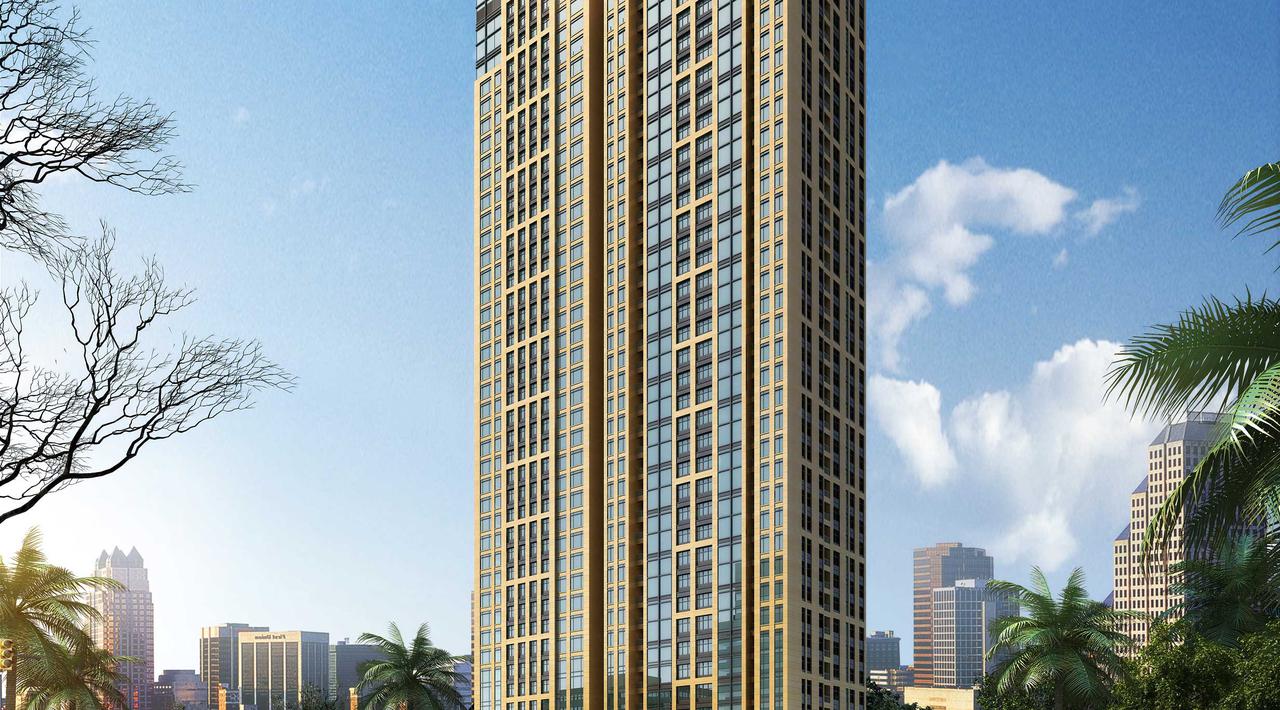
    The Lippo Group handed the first 863 apartments in its Meikarta megaproject in Cikarang, Bekasi, West Java, over to their new owners on Saturday, signifying the conglomerate’s success in meeting its commitments.

    Lippo Cikarang, the group’s property developer arm, said in a statement that the apartment units are in the towers known as Irvine Suites and Westwood Suites – both situated in the Meikarta CBD, which is the premium area inside the 500-hectare property development. The two towers have cost Rp 709 billion ($48 million).

    “This handover of apartment units in the Meikarta CBD is real proof of our achievement and success in honoring our commitments to our customers,” Meikarta president Ketut Budi Wijaya said in the statement.

    Saturday’s event marks the start of a series of handovers of apartments in the 84-tower first phase of the gigantic project. All units in the six 42-story apartment towers – Irvine, Westwood, Pasadena, Burbank, Glendale Park and Newport Park – have already been sold.

    The topping-off ceremonies of the first four towers, marking the placement of the last beam on top of the building, have already taken place, while those of Glendale and Newport are scheduled for December this year.

    Lippo plans to hand over the second batch of units in 28 more towers, which are between 32 and 42 stories in height, in February next year.

    The Rp 278 trillion project, which will ultimately consist of 200 skyscrapers hosting offices, apartments, shopping malls, educational institutions and health care facilities, is expected to redefine urban living in Indonesia.

    The developer plans to build 225,000 apartments in total and designate 1.5 million square meters as commercial space.

    Situated 34 kilometers east of the capital, the future city will eventually be home to around a million people who will benefit from several transportation infrastructure projects currently underway.

    In addition to an elevated section of the Jakarta-Cikampek Toll Road, scheduled for completion in 2019, there is also a light rail transit system connecting Cawang, East Jakarta, with East Bekasi. This project has already reached 47 percent completion. Another is the Jakarta-Bandung High-Speed Railway, which is expected to be operational by March 2021.

  • Lippo Invests Rp 628b in Chinese Internet Giant Tencent

    Lippo Invests Rp 628b in Chinese Internet Giant Tencent

    Indonesian diversified conglomerate Lippo Group has invested Rp 628 billion ($45 million), or 350 million Hong Kong dollars, in Chinese internet giant Tencent, the world’s eighth most valuable listed company and owner of leading internet services including WeChat, Snapchat and Spotify, and technology companies such as Tesla.

    The investment highlights Lippo’s continued digital transformation and investment into the fourth industrial revolution, the group said in a statement on Monday (25/06).

    Lippo, a pan-Asian group with strategic investments and operations across eight markets globally, is the largest integrated services group in Indonesia, serving more than 60 million unique customers across its real estate, malls, department stores, hospitals, telecommunications, media and financial services businesses.

    Lippo’s 350 million Hong Kong dollars investment into Tencent comprised of new Tencent shares and equity-linked notes (ELNs). The investment is made by Lippo’s Hong Kong investment subsidiary.

    Tencent’s market capitalization passed $500 billion last November, making it the first listed Chinese firm to do so and briefly overtaking Facebook as the world’s fifth biggest firm.

    Co-founder Ma Huateng, nicknamed Pony Ma, is the 17th richest person in the world, with a fortune of $45.3 billion — four places behind Google co-founder Sergey Brin, according to the latest Forbes rich list.

    Tencent’s core business is built on messaging app WeChat, the world’s largest mobile gaming franchises, and an ecosystem of services (for its 1 billion users) usually offered by Silicon Valley firms that have no foothold in China.

    Tencent Video, a streaming service much like Netflix, is the biggest of its kind in China and carries exclusive content including HBO series “Game of Thrones”. The service more than doubled in size in 2017, drawing more than 40 million paying subscribers.

    In Indonesia, Lippo’s nine unique sectors are all pushing to digitalize. In addition, it has established a digital investment group to lay strong foundations for the fourth industrial revolution. This includes Venturra Capital having invested in 24 start-ups in the last 2 years, mataharimall.com, and OVO — Indonesia’s leading payment and marketing platform.

  • Lippo Group Indonesia Opens Matahari Department Store’s 155th Outlet

    Lippo Group Indonesia Opens Matahari Department Store’s 155th Outlet

    Residents of Cilegon in Banten Province, Indonesia, responded enthusiastically to the opening of Matahari Department Store’s 155th outlet on Friday (01/06).

    In addition to being strategically located in the central business district, the 5,700-square-meter store inside the 67,000 square-meter Cilegon Center shopping mall also boasts a modern design.

    The first day of trading saw extraordinary sales, as more than 30,000 customers flooded the new outlet, said Irwin Abuthan, director at Matahari Department Store.

    “It was an extraordinary day. The turnout was fantastic. The store and mall will bring great added value and benefit to the city of Cilegon and surrounding areas,” Irwin said.

    Matahari Department Store, Hypermart, Matahari Supermarket, Foodmart, Primo, Boston Health & Beauty and Books & Beyond are all controlled by the Lippo Group, Indonesia’s largest multi-format retail group with more than 600 outlets spread out across Indonesia, from Aceh to Papua.

    This vast retail network is supported by a robust system comprised of formidable logistical networks and distribution channels.

    The Lippo Group owns and operates 70 shopping malls in Indonesia, making it the country’s largest.

    The image of the opening can be viewed below (3 images) :

  • Lippo, Itochu Explore Expanding Cooperation in Asia

    Lippo, Itochu Explore Expanding Cooperation in Asia

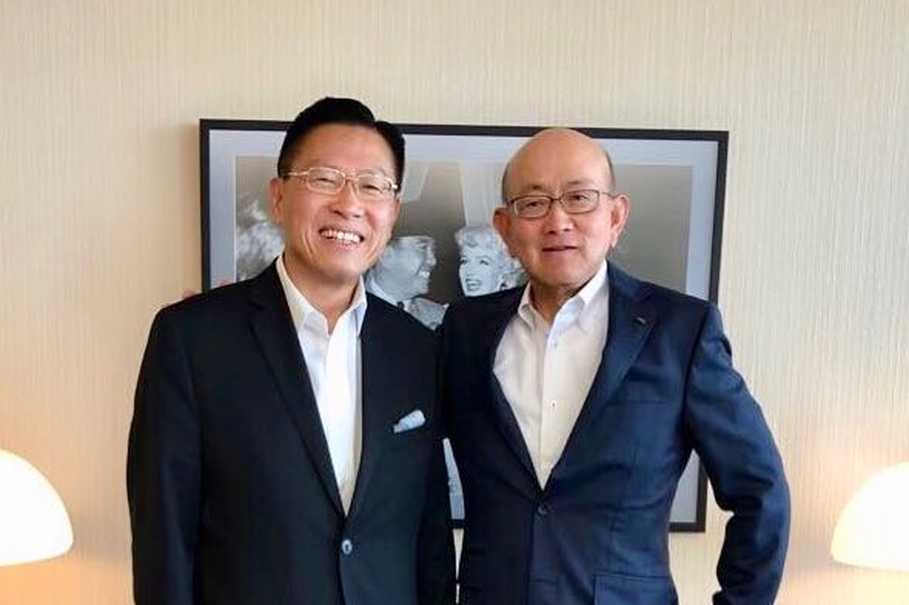
    James Riady, the chief executive officer of Lippo Group, one of Indonesia’s largest property conglomerates, met with Itochu chairman and chief executive Masahiro Okafuji in Tokyo on Monday to discuss ways to boost the companies’ cooperation in the regional healthcare sector.

    Lippo and Itochu are strategic joint venture partners in Lippo’s Healthcare operations outside Indonesia, covering 106 medical clinics serving 1.4 million Singaporeans, a hospital in China and 12 elderly medical facilities in Japan.

    The two business leaders discussed how to intensify their joint healthcare exposure across Asia and Indonesia, according to a statement from Lippo Group.

    Itochu is one of Japan’s largest and most profitable “sogo shosha” general trading groups with global operations and over $43 billion annual revenue in 2017 fiscal year.

    Lippo is Indonesia’s leading integrated services groups with operations in nine countries, including in Singapore, Hong Kong, China and the United States.

    Lippo’s 115,000 staff and employees serve over sixty million customers in various asset categories, including department stores, hypermarkets, malls, housing developments, hospitals, broadband and internet, technology and digital services, media, hotels, banking and financial services and township developments.

  • Lippo Urges Deeper Indonesia-Japan Business Ties

    Lippo Urges Deeper Indonesia-Japan Business Ties

    The Lippo Group, one of Indonesia’s largest conglomerates, has called for deeper ties between the Japanese and Indonesian business communities to help realize the Southeast Asian country’s high investment potential over the next decade.

    Japan has long been a major source for foreign direct investment in Indonesia, influencing a wide range of sectors, from mining and basic industries to automotive and public transportation.

    “Japan has been critical to Indonesia’s modern development. Today, as Indonesia continues to be a go-to market for textile, automotive, chemical and technology manufacturing, and more, Indonesia continues to be an attractive, high-potential business opportunity,” Lippo Group chief executive James Riady said on the sidelines of the Nikkei Asia300 Forum in Tokyo on Monday.

    “We began our relationship with the Japanese business community over 30 years ago. It began with investment projects with various reputable Japanese banks,” James said.

    “Today, we are proud to have partners in a wide range of industries, from telecommunications to data centers, property to health care, financial technology to e-commerce. We are excited about deepening and widening this range of partnerships,” he added.

    Among the Lippo Group’s Japanese partners is Itochu Corporation, which is involved in the group’s health care business outside Indonesia. Lippo has worked with Mitsui & Co. since 2014 to expand mobile broadband services in Indonesia.

    Lippo opened the way for the Toyota Tsusho Corporation, the trading arm of the Toyota Group, in the Indonesian property market for the first time in 2013 with a hotel-style apartment tower project in Bekasi, West Java.

    Mochtar Riady, Lippo Group founder and chairman, used the Nikkei Asia300 Forum as an opportunity to thank Japanese partners and friends for putting their trust in the Lippo Group and the Indonesian economy. The Lippo Group believes in growing with partners and working together to achieve long-term results, he said in a statement.


  • Indonesia’s Lippo & Korea’s Lotte form e-commerce JV

    Indonesia’s Lippo & Korea’s Lotte form e-commerce JV

    Indonesia’s Salim Group is planning a major foray into e-commerce this year in partnership with South Korea’s Lotte.

    Indo Lotte Makmur, a 50-50 JV by the two conglomerates, will launch the iLotte online shopping platform as soon as July, putting US$88 million into the project initially. The service will be geared primarily toward women in their 20s and 30s, and feature name-brand cosmetics sold in South Korea as well as offerings from Lotte’s online mall.

    A robust infrastructure built up over the course of years will let Salim achieve economies of scale for the e-commerce business, says Indo Lotte CFO Dani Sumarsono, who is overseeing online business at Indonesia’s largest conglomerate.

    “E-commerce is not only about digital technology but about moving physical products,” he says. “We have been investing in infrastructure for a long time.”

    Indo Lotte president, a former executive at Lotte’s e-commerce business in South Korea, says Salim has a lot of infrastructure, while Lotte can bring know-how and technology.

    Indonesia’s e-commerce market is expected to grow to $46 billion in 2025 from just $1.7 billion a decade earlier, according to research by Google and Singapore’s Temasek Holdings. Under this scenario, Indonesia would make up more than half of the total Southeast Asian e-commerce market and would follow China and India as the third-largest national market in Asia, excluding Japan. A doubling of internet users, from 92 million to 215 million, is seen as the driver of this expansion.

    Expensive market

    With chronic congestion of its major cities and a lack of basic infrastructure on its islands, Indonesia is an expensive market to service. Logistics costs are 27 per cent of GDP, compared with 20 per cent in Thailand and 13 per cent in Malaysia, according to the World Bank.

    However, Salim’s 13,000-plus Indomaret convenience stores across Indonesia can be used as places to pay for and pick up goods ordered online. Meanwhile, a shipping unit that delivers instant noodles made by group member Indofood Sukses Makmur to more than 30,000 small towns nationwide can help bolster efficiency.

    Salim has also created a JV with Tokyo-based startup Liquid to explore payments using fingerprint authentication, with credit-card ownership of less than one in every 10 adults in Indonesia. Liquid’s system allowing pre-registered shoppers to pay via fingerprint scanner has been deployed at Japanese convenience stores. The JV will test the system for 500,000 Salim employees initially and targets commercial application within the year.

    Meanwhile, another Indonesian conglomerate, Lippo Group, is developing an electronic payment service for use on MatahariMall.com, which Lippo launched in 2015.

  • Lippo Malls Indonesia Retail Trust posts 7.6% rise in Q4 DPU

    Lippo Malls Indonesia Retail Trust posts 7.6% rise in Q4 DPU

    Lippo Malls Indonesia Retail Trust (LMIRT) posted a distribution per unit of 0.87 cents for its fourth quarter 2016, an increase of 7.4 per cent from a year ago.

    Its net property income went up 10.9 per cent to S$44.6 million. For the full year ended 2016, LMIRT’s net property income rose 8.4 per cent to S$171.9 million.

    For Q4 2016, total gross revenue went up 9.1 per cent to S$48.7 million year on year, mainly due to positive rental reversion within the existing malls.

    The trust recently completed the acquisition of Lippo Mall Kuta, expanding its portfolio to 27 properties and asset size to S$1.9 billion.

    Viven Sitiabudi, executive director of the Reit manager, said: “With our shopping malls registering a consistently high occupancy rate of 94.3 per cent, we expect a stable stream of rental income going forward.”

  • Lippo explores investment possibilities in border with Timor Leste

    Lippo explores investment possibilities in border with Timor Leste

    Lippo Group is exploring investment possibilities in the eastern province of Nusa Tenggara, which borders Timor Leste, to generate development and improve living standards in the region.

    “Increased investments in the border region is very important as it can help to improve the welfare of the local population. We are now studying the regions investment potential,” said Lippo Group President Theo L Sambuaga on Saturday (Jan. 21).

    He added that explorations to see if the region had any investment potential would be done in the districts of Timor Tengah Utara, Belu and Malaka.

    Businesses under the Lippo Group include those in education, health and the retail sector.

    Sambuaga stated there are possibilities of establishing a world-class health service, as well as a BPJS (government-subsidized health insurance scheme) scheme for poor people that live along the border region.

    With regards to the education sector, he added that Lippo are planning to provide scholarships for promising university students from the region.

    “We have already offered scholarships to students at State Timor University (Unimor) in Kafemenanu totaling Rp150 million, this was announced to the university on Friday,” he said.

    The Lippo Group also has an education division that was involved in the building of 340 schools across the country, as well as a health division that has built several general hospitals.

    “We have one hospital in East Nusa Tenggara province and also one in Kupang and another one in Labuan Bajo. We are still exploring the possibilities of building others in the border regions, such as in Timor Tengah Utara and Belu,” said Sambuaga.

    With regards to the retail sector, Lippo Group includes a chain of Hypermarts and Matahari Department Stores, which they claim to be a boost for local economies.

    Its chain of Hypermarts are located across the region, totaling up to 120 stores. There is also a possibility that the company may set up more in Kafemenanu in Timor Tengah Utara or Atambua in the Belu district. The group also has 150 department stores across the country.

    “The investment possibilities are there in view of our capacity, in addition to the positive impact our investments will bring for the development of the welfare of the people in the border region,” added Sambuaga.

    As one of its major stakeholders, he also stated that the Indonesian government shares the same level of responsibility with Lippo in improving the welfare of the local people.

    “This is about shared responsibility and I hope that this could motivate other parties to join our efforts. Cooperation between the government and the public is a must,” he said.

  • Lippo Malls Indonesia Retail Trust Has A Yield Of 9%: 3 Things Investors Should Know

    Lippo Malls Indonesia Retail Trust Has A Yield Of 9%: 3 Things Investors Should Know

    Lippo Malls Indonesia Retail Trust was listed over nine years ago on November 2007. It was the first real estate investment trust that focused on Indonesian retail malls in Singapore’s stock market.

    Today, LMIRT remains the only REIT in Singapore with that focus. The REIT currently has a portfolio of 19 retail malls and seven retail spaces that are all located in Indonesia. At end-2015, LMIRT’s portfolio had a total net lettable area of over 765,000 square metres.

    At its current price, the REIT has a distribution yield of 9%. For perspective, this is nearly three times higher than the SPDR STI ETF‘s yield of 3.2%. The SPDR STI ETF is an exchange-traded fund that tracks Singapore’s market barometer, the Straits Times Index.

    Here are three things that current and prospective investors in LMIRT may want to know about now:

    1. Performance in the first nine months of 2016

    In the first nine months of 2016, LMIRT saw growth in a number of important metrics in Singapore dollar terms. Its gross revenue, net property income, unitholders’ distribution, and distribution per unit saw year-on-year growth of 8.6%, 7.5%, 13.2%, and 10.9%, respectively.

    2. Historical growth

    lmirt-results-chart
    Source: LMIRT 7th annual general meeting presentation

    From the two charts above, we can see that LMIRT has managed to grow its revenue, net property income, and distribution income over the past five years from 2011 to 2015 in rupiah terms. The growth rates have been strong, with the REIT’s revenue and net property income more than doubling and distribution income climbing by 80%.

    There’s growth in Singapore dollar terms as well for LMIRT, but the depreciation of the rupiah against the Singapore dollar over the past few years has left its mark. For instance, the REIT’s distribution income has stepped up by only around 30% from 2011 to 2015 in Singapore dollar terms.

    This highlights the fact that investors in LMIRT are subject to currency risks.

    3. The diversity of the REIT’s income sources

    It is important that a trust does not depend too heavily on any particular trade sector for its rental income so as to prevent high concentration risk.

    The chart below shows the trade sector breakdown for LMIRT’s property portfolio by rental income and net lettable area:

    lmirt-trade-sector-breakdown
    Source: LMIRT 2016 third quarter earnings presentation

    We can see that the REIT does not depend on any individual trade sector for more than 17.6% of its rental income.

    But, LMIRT is still exposed to some form of concentration risk since all its assets are related to the retail industry in Indonesia. So, any downturn in Indonesia’s retail scene could affect the REIT’s earnings.

    Investors can perhaps rest a little easy for the time being given that Indonesia’s economy is forecast to grow by 5% in 2016 and 5.1% in 2017, according to data from the Asian Development Bank. From 2011 to 2015, the country’s economy has expanded at an annual rate of between 4.8% and 6.2%.

  • Lippo Investment Trust to Acquire Lippo Mall Kuta in Bali

    Lippo Investment Trust to Acquire Lippo Mall Kuta in Bali

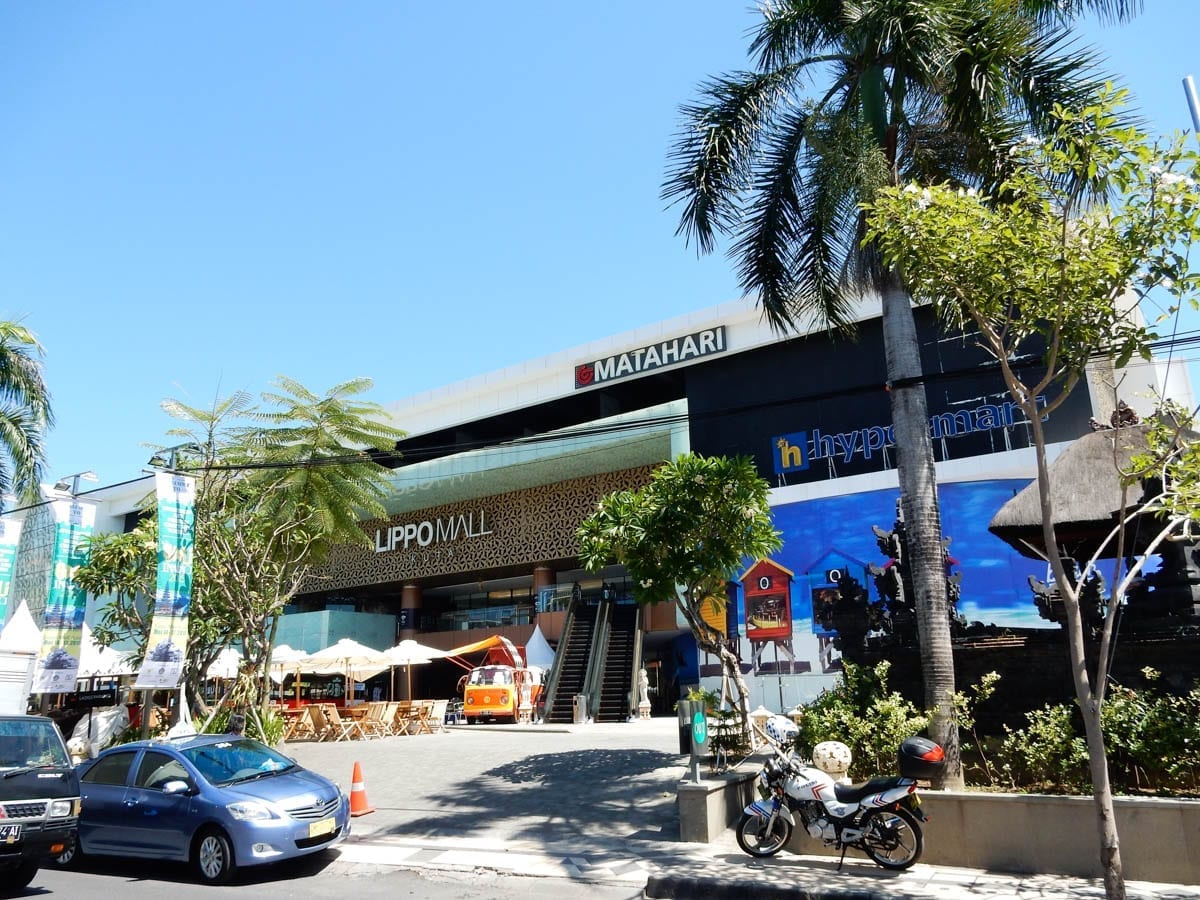
    Opened in 2013, Lippo Mall Kuta is a three-floor mall that offers 21,132 square meters to international and local tenants, such as Nike, Bata, Quicksilver, Planet Sports, Amazing Kuta, Matahari Department Store and Cinemaxx.

    Lippo Karawaci president director Ketut Budi Wijaya said the acquisition is part of “light assets program,” by which the property developer expects to increase its revenue and reduce operating cost.

    LMIRT has been listed on Singapore Stock Exchange since 2007. Its diversified portfolio of income-producing real estate in Indonesia includes 19 retail malls and seven retail spaces.

    The company had $760 million in market capitalization as of November.


  • Lippo Group betting on e-money in digital age

    Lippo Group betting on e-money in digital age

    Indonesia’s Lippo Group is turning e-commerce, electronic money and other information technology-related enterprises into a new pillar of its business, closely monitoring spending trends to gain a better foothold in the greater Southeast Asian market.

    The next phase for the banking and real estate conglomerate “will be the fourth industrial revolution,” CEO James Riady told The Nikkei Tuesday on the sidelines of the 18th Nikkei Global Management Forum here.

    Lippo Group was founded as a banking institution by Mochtar Riady, the current CEO’s father and a former head of Bank Central Asia. It branched out into real estate in the 1990s when subsidiary Lippo Karawaci developed a plot outside Jakarta that the group collected as collateral. Lippo Group has since also developed retail and hospital operations, which help boost property value. It now has more than 20 listed subsidiaries and rings up a total of about $7 billion in annual revenue.

    But the fall in resource prices and China’s economic slowdown have dealt a blow to the Indonesian economy, including to its real estate sector. Lippo Karawaci suffered a 23% drop in sales last year to 9.19 trillion rupiah ($702 million), as well as a 79% plunge in net profit to 535.3 billion rupiah.

    Business of the future

    Meanwhile, the proportion of smartphone users in Indonesia has risen from about 20% of the population in 2014 to almost 40% — about 100 million people — in 2015. “We must have inward creative disruption so that we can be transformed into a new area of growth, which is the digital economy,” James Riady said.

    In addition to its communications and media businesses, Lippo Group launched e-commerce site MatahariMall in September 2015. One of the platform’s strengths is that it can use Lippo Group’s retail network throughout Indonesia to move and distribute products — a definite plus in the face of competition from Lazada Group, a subsidiary of Chinese titan Alibaba Group Holding, and Tokopedia, in which Japan’s SoftBank Group has a stake. It was revealed in October that Japanese trading house Mitsui & Co., bullish on MatahariMall’s growth potential, was investing in the site’s operating company.

    Riady considers e-money his new focus. The goal is to get Lippo Group’s 120 million customers on board by allowing them to pay at hundreds of retail locations using the service. He plans to expand the group’s e-money offerings to other Southeast Asian countries, as well as include such services as depositing and transferring e-money. Riady sees a complete transformation in the way banks do business.

    Lippo Group and Singaporean ride-hailing company Grab agreed in July to cooperate on launching a mobile payment platform. The service will roll out in earnest at the end of the year.

    Following trends

    The spread of e-money will allow Lippo Group to closely track spending by its customers at retailers, e-commerce sites and other outlets. Riady hopes to use the service to bolster overseas expansion of the group and improve products and services associated with retail operations.

    Lippo Group is currently operating real estate businesses in Singapore and Hong Kong. But it will target Southeast Asia in the future to win over the region’s young, eager consumers. “What matters is how we can capture the [Association of Southeast Asian Nations] population of 600 million into our e-money accounts and world of services,” Riady said.

    In terms of Lippo Group’s real estate business, Riady expressed his interest not just in property development but in creating entire communities spanning retailers, hospitals and schools. The group has already built hospitals in Myanmar, and the CEO said the company is looking into Vietnam and Laos as well.

  • Lippo Group expands into online wholesaling

    Lippo Group expands into online wholesaling

    After launching its Matahari Mall online shop in October, Indonesia’s Lippo Group is expanding its eCommerce activity into wholesale services.

    It is set to launch Mbiz.co.id next month, targetting businesses and government institutions. It digitises the procurement process, which Lippo Digital Group CEO Adrian Suherman says translates into efficiency.

    To offer its customers more choice, Mbiz is hoping to attract a wide range of vendors to join its platform as suppliers. The aim is to offer an easy alternative to cumbersome conventional procurement, where a business has to find vendors and compare them one by one, negotiate prices and record transactions manually. Mbiz wants to expedite procurement by making vendor information easily available, comparable and transparent, as well as offering flexible payments.

    Meanwhile, the eCommerce site has been selling products from 12 main categories, including electronics, furniture, office supplies and packaging. Its vendors include Asus, HP, Philips, Samsung, Sony and other blue-chip companies.

    Mbiz intends to start selling heavy machinery and agricultural goods as well as maintenance, repair and overhaul items for businesses and government institutions.

    “If we talk about fashion in B2C business, it is going to be the clothing itself, but in B2B or B2G business, the items are yarn, loom, sewing machines, embroidery machines and fabrics,” says Mbiz co-founder Ryn Hermawan.

    As many businesses have their own particular procurement systems, Mbiz uses a direct-selling strategy, giving individual presentations to companies and organising events to introduce its services. A follow-up team is available to train businesses and help them evaluate their performance.

    Mbiz can also offer clients product recommendations and input on when they need to buy goods based on their historical data.

    For the largely untapped government institution market, Mbiz will play the role of vendor by providing its e-catalogue to the Government Procurement Regulatory Body (LKPP). Co-founder Andrew Mawikere says the potential for the procurement of government goods and services in Indonesia last year was Rp31 trillion (US$2.36 billion) without e-tendering.

    Mbiz has fewer than 100 employees and is funded by Lippo, but says it is open to foreign investment in the future. The unit is run by Brilliant E-Commerce, part of the Lippo group. Matahari Mall is run by Global Ecommerce Indonesia, in which Investama Digital Ventura holds a majority stake.

  • Grab to deliver for MatahariMall

    Grab to deliver for MatahariMall

    Taxi and ride app service Grab has formed a strategic partnership with one of the Indonesia’s largest conglomerates to provide logistic services for online shopping.

    It has signed up with Lippo Group’s MatahariMall, launched last year at a cost of $500 million
    – the largest eCommerce investment in Indonesia. A competitor to Sequoia-backed Tokopedia, MatahariMall is aiming for $1 billion in sales within its first few years.

    Formerly under the Singapore brand GrabTaxi, the company rebranded in January to reflect its extra services, including deliveries, beyond its original licensed taxi service.

    “Technology can be a key driver of economic growth, and we are both invested in opening the digital economy to all Indonesians,” says Grab co-founder/CEO Anthony Tan of its deal with Lippo.

    Backed by investors like Didi Kuaidi (China’s largest ride app), GGV Capital and SoftBank, Grab is reportedly valued at more than $1 billion. Its rivals include Uber and Indonesia-based Go-Jek, both of which are also entering the delivery/logistics space.