Retail News CRM

Tag: Liquid

  • IOS 26 Update: The Leap, The Controversy, And The Reinforced Apple Aesthetic

    IOS 26 Update: The Leap, The Controversy, And The Reinforced Apple Aesthetic

    The public version of iOS 26 has been available for more than a week, and numerous users have transitioned from iOS 18. However, not all of them are satisfied with their decision.

    In the modern age, most individuals turn to Google for answers to their queries. Currently, there are a multitude of searches for instructions on how to revert from iOS 26 to iOS 18.

    The issue lies in the fact that there is no quick solution for this concern. If you have already updated your device to iOS 26, there is no turning back. Therefore, it may be wise to evaluate if iOS 26 truly suits your needs before updating your device.

    A Leap in Versions

    To those who have been distant from the Apple universe, receiving an update prompt to iOS 26 may come as a surprise. However, there is no need to panic. This leap has not caused you to miss seven editions overnight. Apple has simply intended to synchronize its naming convention across all platforms.

    Now, a uniform system exists: iOS 26, iPadOS 26, watchOS 26, macOS 26, and visionOS 26. This eliminates the previous mismatched numbers such as iOS 18, watchOS 12, and visionOS 2. Apple has chosen to adopt a year-based naming strategy, thereby making iOS 26 applicable for the 2025-2026 cycle. This makes it easier for users to identify if they are utilizing the most recent operating system.

    Consider Before You Leap

    Since living with iOS 26 and iPadOS 26 for a week, I have my reservations about whether I should have waited before installing the update. The primary reason for this is the rapid battery drain that I am experiencing with the update.

    Many other users have reported similar problems, which likely accounts for the numerous searches for downgrading the operating system. However, this appears to be a temporary issue. A significant OS update initiates several background tasks on your iPhone, such as reindexing files, updating apps, and downloading assets, which could affect battery life and device performance.

    The Liquid Glass Controversy

    Liquid Glass, Apple’s new interface design, has stirred up some controversy. While some users, including myself, find it appealing in many instances, it is clearly not universally admired. Despite this, adjusting to the new user interface is not optional. The only alternative to this is enabling Reduce Transparency, which only slightly alleviates the issue.

    The Liquid Glass design has notable downsides, including visual clutter and readability issues, usability problems, and performance hits.

    Not All is Lost

    Despite its shortcomings, iOS 26 has its bright spots. Liquid Glass particularly shines in some aspects, such as the new spatial wallpapers, the fresh look of Photos and Camera, and the modern feel of the Phone app with its customizable unified layout. All these changes feel like an upgrade once the initial shock subsides.

    Apple’s New Direction

    The introduction of Liquid Glass could be the reason why some people regret installing iOS 26. However, additional features like Live Translate, Spam Filtering, and adjustable Lock Screen widgets are generally well-received.

    The main adjustment is the new design, which suggests a significant shift in Apple’s direction. Rumors indicate that future iPhones might adopt the same transparent aesthetic, and subsequent iOS versions will likely reinforce it.

    Future iOS versions might also promote greater consistency across iPhone, Mac, and Vision Pro. Regardless of personal opinions, iOS 26 represents the commencement of a new, unified Apple look.

    Questions & Answers

    Why are many users regretting their update to iOS 26?
    The primary reason appears to be the new design, specifically the Liquid Glass feature which has faced mixed reviews. Additionally, some users have reported higher battery usage since the update.

    Are there any standout features in iOS 26?
    Yes, iOS 26 introduces several new features such as Live Translate, Spam Filtering, and adjustable Lock Screen widgets which are generally well-received.

    Can users revert to the previous iOS version once they have updated to iOS 26?
    No, there is currently no solution for users to revert back to a previous iOS version once the update to iOS 26 has been made.
  • Liquid Death Ventures Into Energy Drink Market With Low-caffeine, Sugar-free ‘sparkling Energy

    Liquid Death Ventures Into Energy Drink Market With Low-caffeine, Sugar-free ‘sparkling Energy

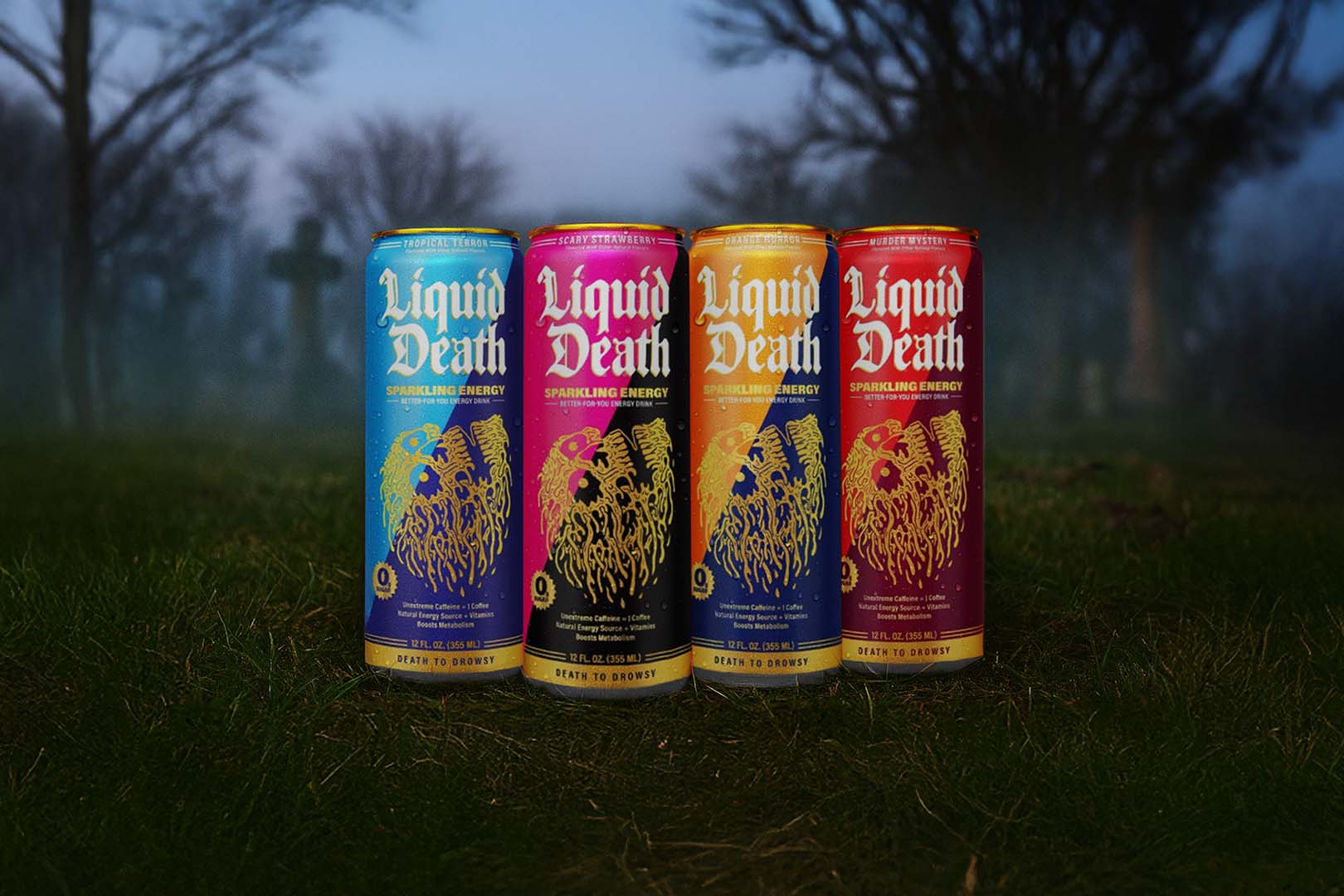
    Liquid Death, a notable canned water company, is set to make a definitive move into the energy drink market. Their new product line, named Sparkling Energy, is a low-caffeine, sugar-free beverage range expected to make its debut in the United States market early next year.

    New Flavours in the Pipeline

    The Sparkling Energy range is slated to roll out in four unique flavours. Tropical Terror, Scary Strawberry, Orange Horror, and Murder Mystery are the enticing names that have been unveiled. These four flavours promise to offer a refreshing and energy-boosting experience to their customers.

    Nutritional Aspects

    Each 355ml can of Sparkling Energy boasts a sensible caffeine content of 100mg, roughly equivalent to a cup of coffee. This seemingly modest caffeine level was purposefully chosen, as a counter-response to the excessive caffeine content perceived in the existing energy drink market.

    Furthermore, Sparkling Energy will leverage natural sweeteners, specifically stevia and allulose, to maintain its sugar-free promise. The drink also includes a beneficial infusion of vitamin B12 and vitamin C, adding another layer of nutritional value.

    Product Pricing and Marketing

    The Sparkling Energy drink is estimated to be priced at approximately US$3 per can. More intricate details about the marketing strategy for this new product range will be released as the launch date approaches.

    Questions & Answers

    What is the new product that Liquid Death is about to launch?
    Liquid Death is gearing up to introduce Sparkling Energy, a new range of low-caffeine, sugar-free energy drinks.

    What are the unique flavours that Sparkling Energy will be available in?
    Sparkling Energy will be available in four flavours: Tropical Terror, Scary Strawberry, Orange Horror, and Murder Mystery.

    What is the expected retail price of a Sparkling Energy can?
    Each can of Sparkling Energy is expected to retail for around US$3.

  • Energica Unveils Liquid-Cooled Electric Motor

    Energica Unveils Liquid-Cooled Electric Motor

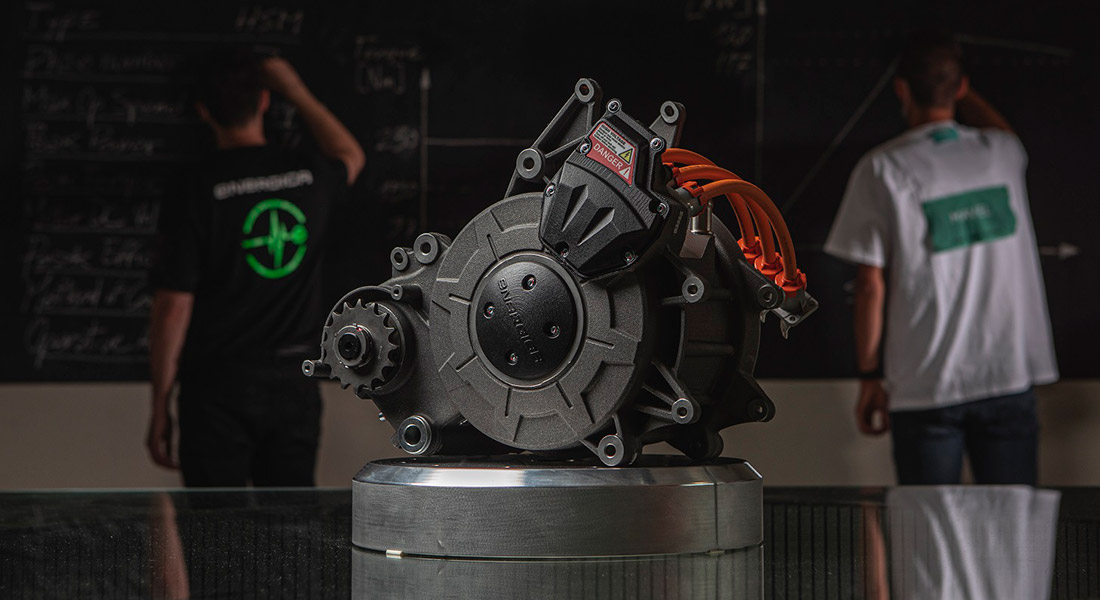
    Italian electric motorcycle manufacturer Energica has joined hands with Italian engineering company Mavel, to co-design a new liquid-cooled electric motor that will be used in Energica’s upcoming electric motorcycle range. Called the EMCE (Energica Mavel Co-Engineering), the new liquid-cooled powertrain increases peak power to 126 kW (169 bhp), compared to the outgoing unit’s figures of 110 kW (147 bhp). The motor also offers an increased range by 5-10 percent, while decreases overall weight by as much as 10 kg. The new motor will be used in the firm’s electric motorcycle models for the 2022 model year.

    “The introduction on the market of the new EMCE engine was scheduled for release in 2022, but following the difficulties of our supply chain – due to the global pandemic situation – we decided to anticipate this timing and instead, in just 6 months we have developed this co-engineering with Mavel, into our current model year production,” said Giampiero Testoni, CTO of Energica.

    According to Energica, the new motor features innovative rotor and stators’ geometries that minimize energy losses and maximize performance. The innovative and patented cooling of the rotor is capable of generating an internal flow of air that laps the magnets and cools them. This allows the engine to exploit its potential even at high speeds. According to Energica, the new EMCE powertrain will be introduced in electric motorcycles in Europe later this year, followed by the US, and then Asia. Energica however, doesn’t have a presence in India yet.

  • Liquid Group partners Changi Airport to roll out world’s first integrated QR Platform

    Liquid Group partners Changi Airport to roll out world’s first integrated QR Platform

    Liquid Group is pleased to announce today that it has entered into an agreement with Changi Airport Group to roll out the integrated acceptance of multiple major QR payment apps by merchants located across all four terminals at Changi Airport.

    The integrated payment platform by Liquid Group will allow retailers at Changi Airport to accept e-wallets such as GrabPay, Liquid Pay, Singtel Dash, Ezi Wallet and PayNow QR bank payment apps, as well as international payment app partners such as WeChat Pay, UnionPay and Alipay.

    Liquid Group’s payment platform will roll out a unified point-of-sales (POS) for QR payments that enable merchants to accept multiple local and international QR payment apps using a single device. Furthermore, with a standardized merchant workflow, participating Changi Airport retailers can accept multiple QR payment apps without additional infrastructure, integration or cashier training when Liquid Group and Changi Airport expand the network to include additional local, overseas and card scheme QR payment apps.

    The platform also enables Changi Airport to launch multiple marketing campaigns with participating payment apps without the need for additional cashier training or verification during checkout.  This provides for a frictionless user experience.

    “Changi Airport strives to continually enhance our passenger’s shopping experience. With the rise in QR payments, launching Liquid Group’s unified QR payment platform not only provides a frictionless payment experience, it will also provide more partnership opportunities with local and overseas e-wallet issuers. In addition, the unified QR payment platform will improve our tenant’s productivity in the areas of staff training, reporting and settlement for QR payments. We are pleased to partner Liquid Group to introduce this convenient payment option at Changi Airport.” – Ms Teo Chew Hoon, Group Senior Vice President at Changi Airport Group

    “Alipay welcomes this initiative and looks forward to further improving the user experience for our consumers at Changi Airport.” – Ms Cherry Huang, General Manager, Alipay South & South East Asia

    “At Grab, we are about providing real choices and more convenience to our customers. As travel gets bigger in Southeast Asia, we are pleased to have GrabPay accepted at all merchants in Changi Airport. Our users from across the region who are already using GrabPay to pay for their transport, food and other daily needs, can now enjoy the same seamless payment experience at the airport and have more opportunities to accumulate GrabRewards points for perks and benefits.” – Mr Gary Wong, Head of GrabPay Singapore

    Changi is the world’s seventh busiest airport for international traffic with over 65 million passenger movements. With the rapid proliferation of QR mobile payment apps across ASEAN, North Asia and South Asia, Liquid Group’s payment platform will enable Changi Airport to spearhead the seamless acceptance of such apps and offer deals to shoppers from different countries.  Retailers and consumers can look forward to an exciting and innovative e-payment journey ahead at Changi Airport.

    This is also in line with the Government’s Smart Nation objective to provide an open, accessible and interoperable national e-payment infrastructure, as well as the adoption of SGQR as the single, standardised QR code for e-payments in Singapore.

    “As one of the world’s leading airports, WeChat Pay is both excited and proud to be part of Changi Airport’s efforts to enhance its merchants’ payment experience. We believe this initiative will help Changi’s merchants gain greater access to the billion users that are active on the WeChat platform” – Team of WeChat Pay, Southeast Asia

    “We’re excited to have Dash accepted at the many merchants in Changi Airport, bringing even more dining and retail choices to our customers. This is an especially perfect fit for us, as we continue to expand our VIA cross-border mobile payment alliance and connect more merchants to travellers. Overseas customers that are part of VIA would be able to enjoy the ease, familiarity and convenience of using their local wallets at Changi Airport, greatly enhancing their retail experience.” – Mr Gilbert Chuah, Head of mCommerce at Singtel

    “The use of QR Code for payments is gaining momentum in Singapore and all across Asia. According to The Future of Payments Study conducted by UnionPay International and Nielsen last year, QR was the most widely-adopted mobile payment method among Singapore consumers, with two-thirds of Singaporeans having used it at least once in the past three months. With the integrated QR and Marketing Platform for merchants at all Changi Airport terminals, we believe that more travellers and Singaporeans alike will get to enjoy greater convenience and ease of payments with UnionPay QR Code, to further heighten their shopping experience at the world’s best airport.” – Mr Wenhui Yang, General Manager, UnionPay International South East Asia

    Jeremy Tan, Founder and CEO of Liquid Group, said: “Promoting the interoperability of mobile payment services is a fundamental part of advancing a cashless society. We are delighted to roll out the largest open QR payment platform at Changi Airport, which provides a unified point-of-sale for the wide range of QR payment apps available. Our vision is to expand this network across the region and create a cross-border platform to facilitate large-scale QR payment transactions and accelerate the adoption of QR payment apps.”

    The roll-out of the new payment platform will be in phases, with the first phase slated to commence in the 1st half of 2019.

  • Indonesia’s Lippo & Korea’s Lotte form e-commerce JV

    Indonesia’s Lippo & Korea’s Lotte form e-commerce JV

    Indonesia’s Salim Group is planning a major foray into e-commerce this year in partnership with South Korea’s Lotte.

    Indo Lotte Makmur, a 50-50 JV by the two conglomerates, will launch the iLotte online shopping platform as soon as July, putting US$88 million into the project initially. The service will be geared primarily toward women in their 20s and 30s, and feature name-brand cosmetics sold in South Korea as well as offerings from Lotte’s online mall.

    A robust infrastructure built up over the course of years will let Salim achieve economies of scale for the e-commerce business, says Indo Lotte CFO Dani Sumarsono, who is overseeing online business at Indonesia’s largest conglomerate.

    “E-commerce is not only about digital technology but about moving physical products,” he says. “We have been investing in infrastructure for a long time.”

    Indo Lotte president, a former executive at Lotte’s e-commerce business in South Korea, says Salim has a lot of infrastructure, while Lotte can bring know-how and technology.

    Indonesia’s e-commerce market is expected to grow to $46 billion in 2025 from just $1.7 billion a decade earlier, according to research by Google and Singapore’s Temasek Holdings. Under this scenario, Indonesia would make up more than half of the total Southeast Asian e-commerce market and would follow China and India as the third-largest national market in Asia, excluding Japan. A doubling of internet users, from 92 million to 215 million, is seen as the driver of this expansion.

    Expensive market

    With chronic congestion of its major cities and a lack of basic infrastructure on its islands, Indonesia is an expensive market to service. Logistics costs are 27 per cent of GDP, compared with 20 per cent in Thailand and 13 per cent in Malaysia, according to the World Bank.

    However, Salim’s 13,000-plus Indomaret convenience stores across Indonesia can be used as places to pay for and pick up goods ordered online. Meanwhile, a shipping unit that delivers instant noodles made by group member Indofood Sukses Makmur to more than 30,000 small towns nationwide can help bolster efficiency.

    Salim has also created a JV with Tokyo-based startup Liquid to explore payments using fingerprint authentication, with credit-card ownership of less than one in every 10 adults in Indonesia. Liquid’s system allowing pre-registered shoppers to pay via fingerprint scanner has been deployed at Japanese convenience stores. The JV will test the system for 500,000 Salim employees initially and targets commercial application within the year.

    Meanwhile, another Indonesian conglomerate, Lippo Group, is developing an electronic payment service for use on MatahariMall.com, which Lippo launched in 2015.

  • Japanese firm unveils fingerprint payments in Indonesia

    Japanese firm unveils fingerprint payments in Indonesia

    Japanese tech company Liquid has launched a biometric payments service in Indonesia that operates at the point of sale.

    Currently the project is being tested at an enterprise level, with the service offered to the Salim group’s workforce of around 500,000.

    “We are looking forward to developing the next generation payment and business platform in Indonesia, which will contribute to changing people’s lifestyle and have a big business impact in Indonesia,” said Yasuhiro Kuda, CEO of Tokyo-based Liquid.

    Users of the service need to register their fingerprints and deposit money in advance. They can complete payments within three seconds with the system’s fingerprint readers, which have an error rate of one in a trillion, according to Liquid.

    The company will start registering users’ fingerprints this month and start installing fingerprint readers later this year at stores run by Salim, whose businesses range from food and car sales to convenience store operations.

    Liquid is currently providing such fingerprint payment services to tens of thousands users in some cities in Japan.

    The company is aiming to expand the business in Indonesia, counting on the economic growth of the most populous country in Southeast Asia.