Tag: Little Sheep

  • Yum China eyes Thailand with A Fresh Hotpot Concept

    Yum China eyes Thailand with A Fresh Hotpot Concept

    Yum China looks to expand Asian footprint for hot-pot restaurant brand.

    Quick-service restaurant firm Yum China Holdings is seeking entry into the Thai hotpot market, reportedly worth THB5 billion (US$156.7 million).

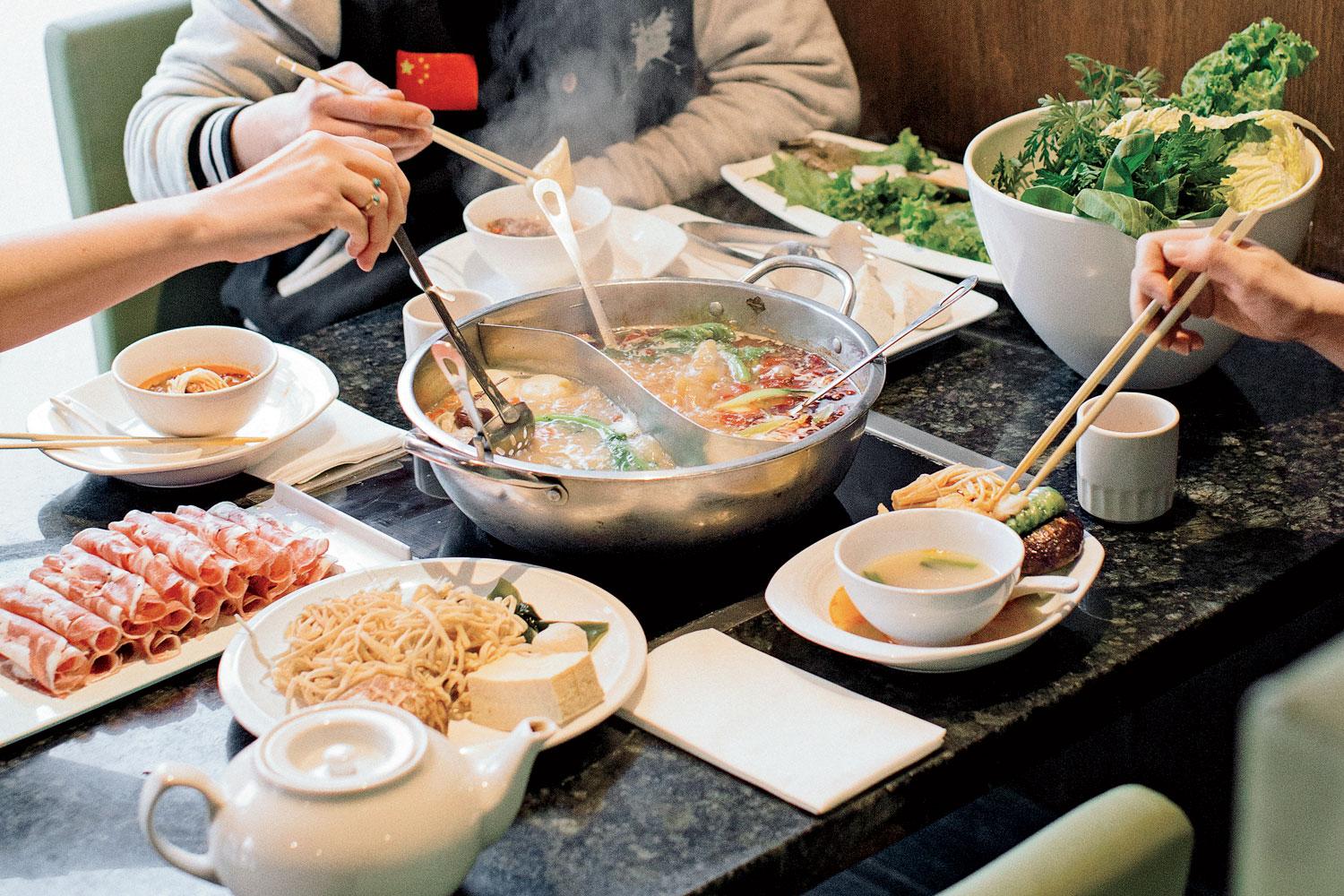
    The company is seeking a local partner to launch its Little Sheep Mongolian hotpot chain in the territory.

    “The food and beverage industry in Thailand is one of the most developed markets in the world,” said Yum’s senior specialist for franchise development Isa Jiang. “Thailand also has a rich history of hotpots, as well as food culture.”

    Sixty-six Little Sheep outlets opened in China last year, as well as a further 10 abroad. Seventy of the openings were franchised. The restaurant is currently operated in 300 locations across 130 cities.

    “Ma la, or Sichuan hot chillies, is growing in popularity with Thais,” said business advisory firm Gnosis MD Sethaphong Phadungpisuth, “and we believe that Little Sheep will fit well with Thai tastes.”

    “Southeast Asia and the US have the highest projections for expansion this year,” observed Jiang. “We are focusing on Malaysia, the Philippines and Indonesia. Shabu restaurants are quite popular in Thailand, but we are confident in our key product’s characteristics, especially our meat and broth.”

  • Little Sheep restaurant debuts in Singapore

    Little Sheep restaurant debuts in Singapore

    No Signboard Holdings has signed a 10-year franchise agreement to develop and operate the Little Sheep restaurant chain in Singapore.

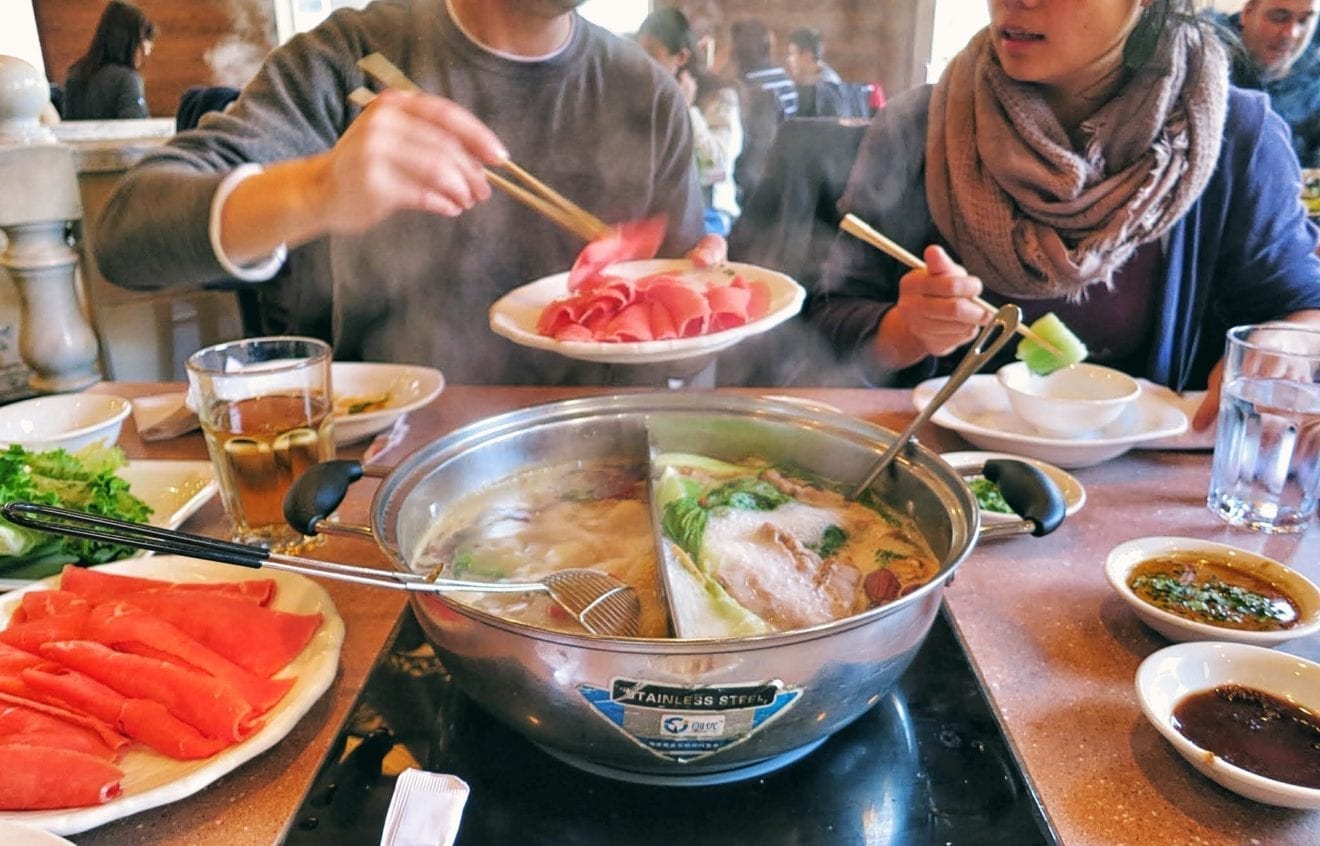
    Little Sheep is a Chinese hot-pot eatery which has its origins in Inner Mongolia. It has since grown to more than 280 outlets across China, the US, Canada and Japan, the vast majority of them franchised.

    Singapore-listed No Signboard, which has also just taken full control of Danish Breweries less than a year after it bought a controlling 80 per cent interest, plans to open one Little Sheep outlet a year for the next five years before deciding on a longer-term opening rate.

    No Signboard executive chairman and CEO Sam Lim believes the Little Sheep restaurant concept has great potential in Singapore.

    “Given the popularity of hot pot restaurants among Singaporean consumers over the last couple of years, we are confident that this venture would be a great success for the group.”

  • Profits rises for Yum China Holdings

    Profits rises for Yum China Holdings

    Yum China’s full-year operating profit of US$640 million was up 31 per cent led by margin expansion and restaurant openings.

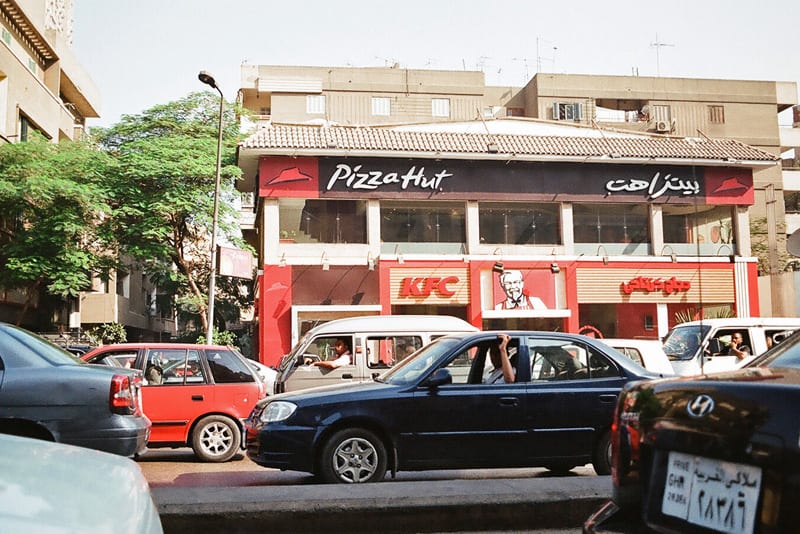
    Its CEO describes it as a “momentous” year for the group, licensee of Yum! Brands in Mainland China. It has exclusive rights on the mainland to KFC, Pizza Hut and Taco Bell, which opened its first restaurant in China at the end of the year. Yum China also owns the East Dawning and Little Sheep concepts outright.

    Total system sales for the year grew 5 per cent, including growth of 6 per cent at KFC and 3 per cent at Pizza Hut Casual Dining, excluding foreign currency translation (F/X).

    Same-store sales were flat, with an increase of 3 per cent at KFC offset by a decline of 7 per cent at Pizza Hut.

    Yum China opened 575 restaurants during the year, representing 5 per cent growth, taking its total to more than 7500 outlets.

    Currency impact

    While retail tax structure reform helped profit growth, this was negatively impacted to the tune of $36 million by foreign currency translation. Excluding F/X and special items, operating profit grew 37 per cent.

    For its fourth quarter, Yum China’s total system sales grew 4 per cent, including growth of 4 per cent at KFC and 6 per cent at Pizza Hut, excluding F/X.

    Same-store sales were flat, rising 1 per cent at KFC and offset by a 3 per cent decline at Pizza Hut.
    The group opened 302 restaurants during the quarter.

    Foreign currency translation negatively impacted operating profit by $5 million.

    CEO Micky Pant says Yum China became an independent, publicly traded company while simultaneously improving its business performance and investing for future growth.

    “We continue to focus on our long-term growth formula: new unit development, same-store sales growth, and continued restaurant margin improvement. Right now, our top priority is consistently delivering positive same-store sales growth.”

    Digital engagement

    There was a focus on product innovation during the year, as well as restaurant refurbishing and digital engagement with customers.
    Pant says it was a groundbreaking year in digital and delivery.

    “Our loyalty programs have more than 80 million members –  ranked number one in the restaurant industry worldwide in terms of number of members.

    “Total delivery sales reached about $700 million, and we were number one among restaurant operators in terms of online sales in China. Cashless payment accounted for about 30 per cent of our company sales.”
    Pant says this year marks the 30th anniversary of the launch of KFC in China, and he believes most the company’s restaurants in China are yet to be built.

    Members in the loyalty programs grew to more than 60 million for KFC and more than 20 million for Pizza Hut.

    Mobile payments reached about 17 per cent of company sales for the year, while cashless payment methods were used for more than $2 billion in company sales.

  • Taco Bell China launches in Shanghai

    Taco Bell China launches in Shanghai

    Mexican-inspired restaurant chain Taco Bell has opened its first outlet in China, near Shanghai’s landmark Oriental Pearl Tower in the Lujiazui business district.

    The restaurant has opened in conjunction with Yum China Holdings, which is the licensee of Yum! Brands in Mainland China.

    “Leveraging our deep insights into Chinese consumer preferences, developed from close to 30 years working in this market, we researched and fine-tuned the Taco Bell menu for China, and the initial response from customers is very encouraging,” says Yum China CEO Micky Pant.

    Favourite items on the brand’s menu have been adapted to local tastes, plus sauces have been developed. Items such as the Shrimp and Avocado Burrito will be offered only in China Taco Bells, and the Crunchy Taco Supreme now has Taco Bell’s signature nacho cheese sauce while the Volcano Chicken Burrito features spicy Sriracha sauce.

    Customers can order shared plates featuring seasoned nacho chips, spicy fried chicken and Mexican fries. Drinks available include cold draft beer and specialty cocktails such as the Margarita and the Mojito.

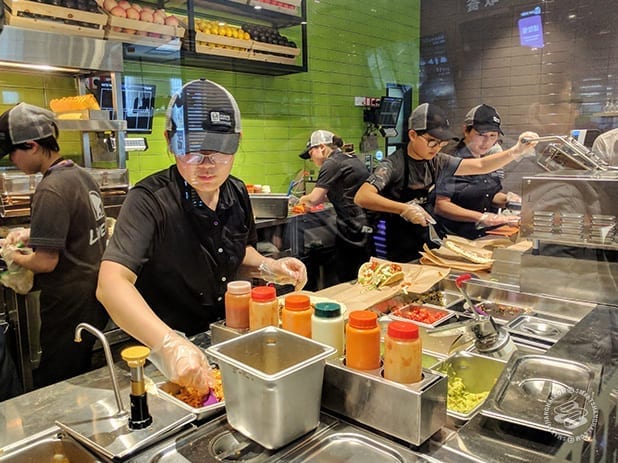
    There is an open kitchen so customers can see their food being made to order. There are also self-order kiosks.

    The restaurant has been officially launched following a soft opening during which customers have been sharing their experience of the brand through social-media posts, blogs and videos. More than 1000 people took part in a selfie soft-opening promotion.

    taco-bell-shanghai-inside

    California inspiration

    “Built around the concept of ‘Live Mas’, which literally means ‘Live More’, Taco Bell encourages its customers to try new things,” says Pant. “I look forward to creating experiences that surprise and delight people as we expand the Taco Bell brand in China.”

    The Shanghai restaurant showcases Taco Bell’s classic California-inspired look and design. It features surfboards hanging from the ceiling as well as guitars and graffiti art. It also integrates advanced technology throughout, including free Wi-Fi, digital ordering kiosks, digital menu boards and a range of payment options.

    “Building restaurants in new international markets is a key component to the overall growth and evolution of Taco Bell, and we’ve just scratched the surface of our global unit expansion potential,” says CEO Brian Niccol. “The opening of this restaurant in China is an exciting milestone for the brand, as this market holds tremendous growth potential.”

    Taco Bell has more than 7000 restaurants, more than 300 of them in 26 countries outside of the US. It aims to reach 1000 restaurants internationally by 2022.

    Yum China Holdings, with executive offices in Shanghai, has exclusive rights in mainland China to KFC and Pizza Hut as well as Taco Bell. Yum China also owns the East Dawning and Little Sheep concepts. With more than 7300 restaurants and 400,000-plus employees in more than 1100 cities, Yum China generated more than $8 billion in system sales in 2015.

    Taco Bell, a subsidiary of Yum! Brands, was the first quick-service restaurant to offer American Vegetarian Association (AVA) certified menu items. Taco Bell’s 350-plus franchise organisations serve more than 42 million customers each week through 7000 restaurants across the US, as well as through its mobile, desktop and delivery ordering services.

    Based in Louisville, Kentucky, Yum! Brands has nearly 43,000 restaurants in 135 countries and territories. Worldwide, it opens more than six new restaurants a day on average.
  • Yum China aims to triple outlets

    Yum China aims to triple outlets

    Yum China, being spun off at the end of this month by Yum Brands Inc, says it can triple its number of restaurants.

    Yum Brands opened its foray into China with a KFC restaurant in Beijing in 1987. There are now more than 7300 KFC and Pizza Hut outlets.

    “I really don’t see any reason why we cannot have 20,000 restaurants in China,” says Yum China division CEO Micky Pant.

    However, Yum China has had challenges in recent years including marketing blunders, rising competition, bird flu outbreaks, food-safety problems and slowing economic growth. Just this month, executives blamed anti-US protests sparked by political tensions in the South China Sea for a surprise 1 per cent drop in China sales during the latest quarter.

    Pant says those sales are recovering and “the fundamentals of the brands in China are very strong”.

    He says Yum China will have 15 per cent earnings expansion in the world’s fastest-growing economy with plans to  open restaurants in burgeoning mega-cities, major transportation hubs and new shopping malls.

    There are also plans to open Little Sheep and Taco Bell restaurants.

    Partners Primavera Capital and Alibaba Group Holding affiliate Ant Financial, which will buy a US$460 million stake in Yum China, bring competitive advantages such as real-estate market knowledge and digital leadership, Pant says.

    Yum China already is the biggest user of Ant’s Alipay service, and the restaurant group is investing in making its mobile ordering system and loyalty programs even more robust.

    After the separation, Yum China Holdings will become a licensee of Yum! Brands in mainland China with exclusive rights to quick-service restaurant KFC, casual dining brand Pizza Hut and Taco Bell, which is expanding globally but is not yet in China. It will also own the Little Sheep Mongolian hot pot and East Dawning Chinese cuisine concepts. Yum China has more than 400,000 employees in more than 1100 cities, generating more than $8 billion in system sales last year.

    The standalone Yum China is expected to start trading on the New York Stock Exchange on November 1.

  • Yum China board lineup revealed

    Yum China board lineup revealed

    Yum China has revealed the likely composition of its board post-spin-off from its US parent, Yum! Brands.

    The new company to be formed after the sell-off to Primavera Capital Group and a subsidiary of Alibaba Group, will be called Yum China Holdings and is expected to be formally formed on October 31.

    The nine new directors announced, seven of whom are independent, will join the board chaired by Dr Fred Hu, chairman and founder of Primavera Capital Group.

    The other members are:

    • Micky Pant, CEO of Yum China.
    • Peter A Bassi, former chairman and president of Yum! Restaurants International and current lead director for BJ’s Restaurant and Potbelly Sandwich Works.
    • Christian L Campbell, owner of Christian L Campbell Consulting LLC and former senior VP, general counsel, secretary and chief franchise policy officer of Yum! Brands.
    • Ed Chan Yiu-Cheong, vice chairman of Charoen Pokphand Group.
    • Edouard Ettedgui, non-executive chairman of Alliance Francaise, Hong Kong and non-executive director of Mandarin Oriental International.
    • Louis T Hsieh, director and senior advisor to the CEO, and former CFO and president of New Oriental Education & Technology Group.
    • Jonathan S Linen, director for Yum! Brands and Modern Bank, former adviser to the chairman of American Express, and former vice chairman of American Express.
    • Zili Shao, co-chairman of King & Wood Mallesons, China.

    Yum China also expects to name one additional independent board member in connection with the spin-off.

    Yum! Brands CEO Greg Creed said the company was pleased to have announced the composition of the Yum China board, as it nears the completion of the separation.

    “We are confident that these business leaders will offer the market insights and strategic vision required to enable Yum China to reach its full potential.”

    Yum China will become the licensee of Yum! Brands in Mainland China. It will have exclusive rights to KFC, Pizza Hut and Taco Bell, the latter of which is expanding globally but is not yet in China. It will also own the Little Sheep and East Dawning concepts outright.

    Yum China has more than 7200 restaurants in over 1100 cities in China and generated over US$8 billion in system sales in 2015.

  • Chains top China restaurant rankings

    Chains top China restaurant rankings

    Chains outperform independent eateries in China restaurant rankings, new research shows.

    A survey by global consulting firm OC&C Strategy Consultants shows that Chinese consumers dine out on average two or three times a week, with Hai Di Lao, Pizza Hut and Little Sheep ranking as their favourite brands.

    Western brands ranking in the top 10 are: McDonald’s (7), TGI Friday’s (8) and KFC (9). Others on the list are South Beauty (4), Shanghai Min (5), Waipojia (6) and Tairyo (10).

    Food quality, wide choice and service quality shows as the three critical factors in restaurant choice, while serving speed, convenience and pricing are rated as less important Chinese consumers actively seek out new restaurants and are receptive to new formats and concepts such as theming, healthy lifestyle menus and organic produce, as well as innovative, fusion cuisine.

    According to the report, Serving up a Winner – Establishing a Winning Proposition in China’s Restaurant Landscape, China’s restaurant market is more vibrant than ever, with growth outstripping other major markets despite higher volatility.

    “While other retail segments struggle in the face of ‘the new normal’, restaurants are becoming more innovative and reaping the benefits of the growing middle class,” says OC&C greater China partner Jack Chuang. “The arrival and rapid expansion of international chains in the past few years has increased the competitiveness of the market.”

    He says getting diners through the door of a restaurant is still challenging. “Restaurant staff need to ensure that service is authentic and make creative, personalised decisions to delight guests.”

    Chuang says restaurants should also offer a wide menu range with local flavour.

    The study canvassed 2600 respondents in 21 cities across China, with consumer surveys and restaurant audits in February.

    Founded in 1987, OC&C provides corporate and business strategy, channel, marketing, organisational and change strategy, as well as transactional support services. It has more than 400 consultants in 14 offices globally, including China and India. The greater China practice has offices in Hong Kong and Shanghai.