Retail News CRM

Tag: live

  • Thriving Live Commerce: TikTok Boosts Thai Durian Sales by Tenfold

    Thriving Live Commerce: TikTok Boosts Thai Durian Sales by Tenfold

    In a collaborative effort, TikTok and Thailand’s Department of Internal Trade have drastically elevated durian sales on TikTok Shop, underscoring live commerce as a significant conduit for Thai agricultural commodities. The initiative led to a tenfold surge in durian sales, facilitated by more than 89,000 live durian broadcasts on the platform in the past quarter. Remarkably, a new live session was initiated approximately every 90 seconds, lasting an average of 118 minutes.

    During the apex of the durian harvest season, the gross merchandise value for the fruit surged by a factor of 10.6 in comparison to the average weekly sales recorded prior to the campaign. A key contributor to the success of this venture has been TikTok’s creator ecosystem. Over 1.8 million creators generate content that correlates with products available on TikTok Shop.

    Engaging Farmers and Influencers

    Content creators aren’t the only ones to credit for the success of this fruitful venture; farmers and local influencers have also climbed aboard the bandwagon. By actively promoting their produce through live streams, they’ve facilitated consumer discovery of agricultural products. The campaign has effectively doubled the number of fruit purchasers on TikTok Shop, year on year. Furthermore, total fruit orders have seen an impressive 134% increase in the first half of 2026.

    Notably, almost half of the consumers who bought durian via the platform returned for another purchase within the same season. This indicates a trend of stronger repeat-buying behavior among online shoppers.

    Looking Beyond Durian

    Yanee Srimanee, the Deputy Director-General of the Department of Internal Trade, anticipates that Thailand will produce approximately 2.07 million metric tons of durian this year. The majority (70%) of this yield is slated for export, with the remaining being distributed in the domestic market.

    The department aims to bolster domestic consumption and sees the collaboration between public and private sectors as a key strategy in connecting farmers with consumers. TikTok Shop has been a crucial tool in enhancing digital skills and creating new avenues for agricultural products to reach online markets.

    Chanida Klyphun, TikTok’s Director of Public Policy for Southeast Asia, characterized the departmental partnership as a crucial step towards broadening Thai farmers’ entry into the digital economy. This includes skill development and the adoption of live commerce as a sales strategy.

    As the eastern Thailand durian season wraps up, TikTok and the department have plans to continue supporting durian sales from the southern region of the country. The collaboration also aims to expand the program to other agricultural products and farming communities and to leverage content, creators, and e-commerce to widen market opportunities.

    Questions & Answers

    What has been the impact of the TikTok and Department of Internal Trade initiative on durian sales?
    The collaboration led to a tenfold increase in durian sales on TikTok Shop, with over 89,000 live durian broadcasts in the past quarter.

    What strategies were key to the success of the campaign?
    The success of the initiative can be attributed to the active participation of content creators, farmers, and influencers, and a strong emphasis on live commerce.

    What are the future plans of this collaboration?
    The partnership plans to continue supporting durian sales in the southern region of Thailand and aims to expand the program to other agricultural commodities and farming communities.


  • Chat with Your Inbox: Googles New Gmail Live Feature Set to Revolutionize Email Search

    Chat with Your Inbox: Googles New Gmail Live Feature Set to Revolutionize Email Search

    Google is currently in the process of testing a new feature for both iOS and Android known as Gmail Live. This innovative feature will allow users to engage in a conversational interaction with the Gmail application, particularly when seeking information from a specific email. This function is particularly beneficial for users like myself who have hundreds of emails crowding their Gmail inbox, providing a more efficient method to retrieve information rather than manually searching through the inbox.

    Understanding the Gmail Live Feature

    Upon opening the Gmail application and tapping the search bar, an option labeled “Ask Gmail” will be visible. This option represents the text version of the new feature wherein users can type in a natural language query and receive an AI Overview in response. If a user prefers to utilize voice commands, they can do so by tapping an icon situated within the search bar which resembles the Gemini Live icon, distinguished by a sound wave and a sparkle.

    Tapping this icon will present a full-page user interface (still in the testing phase), similar to Gemini Live, providing examples of prompts that can be used. For instance, if a user wishes to check the status of orders placed with Amazon, they could ask, “What are the updates on my latest orders?” This question is then transcribed on the screen and is subsequently answered after Gmail Live processes the question. The response is simultaneously displayed on the screen and read aloud.

    The Future of Gmail Live

    The Gmail Live feature, which is currently under testing for both Android and iOS, is set to be launched later this summer for Google AI Pro and Ultra subscribers. Subscribers to these Google AI services will discover the ability to interact with Gmail in a conversational manner.

    Google AI Pro is priced at $19.99 per month and is crafted for power users without the high costs associated with an enterprise subscription. It includes YouTube Premium Lite, 5TB of storage, and a $10 monthly credit for Google Cloud. Google AI Ultra, on the other hand, is priced between $99.99 to $199.99 per month, providing 20TB of storage, a full YouTube Premium subscription, and a $40 monthly Google Cloud credit.

    Questions & Answers

    What is the new feature that Google is testing?
    Google is testing a feature called Gmail Live which allows users to interact with the Gmail application in a conversational manner.

    How does the Gmail Live feature work?
    Users can either type a natural language query or use voice commands to ask Gmail a question. The question is processed, and an answer is provided both visually on the screen and audibly.

    Who can access the Gmail Live feature?
    The Gmail Live feature will be made available to Google AI Pro and Ultra subscribers.

  • Introducing PineDrama: TikTok’s Free, Ad-less Portal to Micro Drama Series, Now Live in the US

    Introducing PineDrama: TikTok’s Free, Ad-less Portal to Micro Drama Series, Now Live in the US

    For devotees of brief video content, the introduction of TikTok’s latest application focused on ‘micro dramas’ comes as exciting news. This new application is a development of TikTok’s commitment to fostering engagement and innovation in the realm of digital entertainment.

    Micro Dramas – The New Craze

    Micro dramas, also known as mini or vertical dramas, are swiftly gaining popularity in the mobile entertainment space. These dramas are segmented into brief episodes that typically last for around 60 to 90 seconds. This app, named PineDrama, has been launched in the United States and Brazil and is exclusively dedicated to this format.

    Unlike standalone videos, these mini series are designed to be viewed in order, drawing in the audience with numerous quick clips. In doing so, the potential for higher view counts increases dramatically, potentially reaching into the millions.

    Modern Day Soap Operas

    Drawing parallels with the global popularity of soap dramas several decades ago, micro dramas seem to be enjoying a similar resurgence. PineDrama tends to favor genres of romance and the supernatural, with common narratives revolving around love triangles, billionaires, vampires, and werewolves.

    One of their series, titled ‘Love at First Bite’, has already amassed 18 million views. The three most popular shows on the app have all garnered over 100 million views according to in-app counters, which speaks to the traction that this app is already gaining.

    Monetization Strategy

    Traditionally, the majority of micro drama platforms resort to aggressive monetization strategies, often involving viewer payments. In 2025, micro dramas were estimated to have generated $1.3 billion in the United States largely from these direct viewer payments.

    Typically, platforms like DramaBox and ReelShort offer a limited number of free episodes before implementing a paywall that can cost upwards of $20 a week. PineDrama is adopting a markedly different stance at its launch, allowing users to sign in with their existing TikTok accounts to access full series at no cost, with no advertisements or visible payment prompts.

    This lack of an advertising model or paywall implies that PineDrama may still be in the early stages of testing. It appears that, at least initially, TikTok is prioritizing user engagement over revenue generation.

    Questions & Answers

    What are micro dramas?
    Micro dramas, also known as mini or vertical dramas, are a rapidly growing format in mobile entertainment. They are brief episodic dramas that usually last for around 60 to 90 seconds.

    What kind of content does PineDrama focus on?
    PineDrama primarily focuses on romance and supernatural themes. Storylines often involve love triangles, billionaires, vampires, and werewolves.

    How does PineDrama plan to monetize its content?
    Unlike other platforms that use aggressive monetization tactics such as paywalls, PineDrama currently allows users to watch full series for free. This suggests that the platform is prioritizing user engagement over revenue generation during its initial phase.

  • Levi Strauss & Co. Projects Revenue Surge, Boosting Fy25 Forecast Amid Strong Q2 Performance

    Levi Strauss & Co. Projects Revenue Surge, Boosting Fy25 Forecast Amid Strong Q2 Performance

    Levi Strauss & Co. anticipates a brighter financial future following robust sales and profit increase in the second quarter. The company has revised its net revenue growth forecast for FY25, projecting a rise of 1-2% compared to the earlier prediction of a 1-2% decline.

    Projected Organic Revenue Growth

    The expected organic growth in revenue has also been adjusted. Levi Strauss & Co. now projects an increase of 4.5-5.5%, a significant improvement from the earlier estimate of 3.5-4.5%. These expectations are centered on the company’s continuing operations, excluding the Dockers business, which was divested earlier in May.

    Implication of Tariffs on Outlook

    The company’s forecasts take into consideration the current tariff rates. It anticipates that the US tariffs on imports from China will persist at 30%, and the remaining global tariffs will remain at 10% for the rest of the year.

    Harmit Singh, Chief Financial and Growth Officer of Levi Strauss & Co., expressed confidence in the company’s future, asserting, “We are fundamentally evolving into a higher growth, higher margin organization, with enhanced cash flows and returns on invested capital.”

    Second Quarter Performance

    The second quarter, which concluded on June 1, was a strong one for Levi Strauss & Co. The company achieved a 6% increase in net revenues on a reported basis and a 9% increase on an organic basis, culminating in a total revenue of US$1.4 billion.

    Regionally, organic sales rose 9% in the Americas and 15% in Europe. However, sales remained stagnant in Asia. Net income from continuing operations also witnessed a remarkable increase, rising from $17 million in the previous year to $80 million.

    Looking Ahead

    The company’s President and CEO, Michelle Gass, expressed optimism about the company’s future. She stated that Levi Strauss & Co. is entering the second half of 2025 with a strong foundation. The company continues to strive towards becoming a leading denim lifestyle brand and a top direct-to-consumer retailer. Gass is confident that Levi’s future is brighter and its legacy larger, and the company is steadily building towards this vision quarter by quarter.

    Questions & Answers

    What is the revised net revenue growth forecast for Levi Strauss & Co. for FY25?
    The company now expects a 1-2% increase in net revenue, a reversal from the previous prediction of a 1-2% decline.

    What is the projected organic revenue growth for the company?
    The revised estimate for organic revenue growth is 4.5-5.5%, up from the earlier forecast of 3.5-4.5%.

    How did Levi Strauss & Co. perform in the second quarter?
    The company reported a 6% increase in net revenues on a reported basis and a 9% increase on an organic basis. Net income from continuing operations rose to $80 million, a significant increase from $17 million in the previous year.

  • PetO to cease live animal sales across its network

    PetO to cease live animal sales across its network

    PetO, a renowned family-owned pet retail company, has made the substantial decision to halt the sale of live animals throughout its 58 nationwide stores. The decision has been driven by mounting concerns about animal welfare and the notable absence of industry regulation.

    The Impetus Behind the Decision

    The decision from PetO comes at a time when the live animal sales sector is under increased scrutiny, particularly in an industry dominated by sizeable chains and multinational corporations. With over two-thirds of Australian households currently owning a pet, PetO posits that current industry practices are falling short of societal expectations.

    PetO’s spokesperson voiced concerns over the handling and sale of pets in pet shops, which presents ethical challenges and potentially leads to issues surrounding animal welfare and irresponsible pet ownership.

    Industry Influence

    In addition to implementing these changes within its own operations, PetO is encouraging other retailers to follow suit, particularly those who hold substantial influence on a national scale. The goal is to elevate the ethical standards across the industry.

    Expansion and Forecasted Growth

    In its recent expansion, PetO absorbed 41 retail stores and 25 veterinary clinics formerly under the ownership of Petstock and Woolworths, raising its total number of stores from 17 to 58. Although this transition may cause short-term commercial effects, the company views it as a strategic move aligned with its long-term growth vision. PetO aims to attain an annual revenue of $250 million by the year 2028.

    Questions & Answers

    Why has PetO chosen to cease the sale of live animals in its stores?
    In response to the growing concerns over animal welfare and the lack of industry regulation, PetO has decided to stop live animal sales in its stores.

    How is PetO encouraging other retailers to change their practices?
    PetO is publicly calling on other retailers, especially those with significant national reach, to follow its example and cease live animal sales, thereby raising the ethical standards of the industry.

    How does PetO’s recent acquisition of 41 retail stores and 25 veterinary clinics align with its long-term business strategy?
    While the acquisition may have some short-term commercial impacts, PetO sees this expansion as part of its long-term plan to achieve an annual revenue of $250 million by 2028.

  • The iOS stopwatch gets Live Activities support in iOS 17.4

    The iOS stopwatch gets Live Activities support in iOS 17.4

    The iOS 17.4 beta update that was recently released by Apple includes a new feature for the Clock app’s Stopwatch. Once iOS 17.4 is installed on your iPhone, (we expect the update to be released as soon as March 4th), you’ll be able to start the Stopwatch from the clock app and watch it count the seconds, minutes, and hours on the Dynamic Island and the Lock Screen.

    The Dynamic Island will display an up-to-the-second look at the Stopwatch and tapping on it will give the user an option to pause the timer, or start a new lap. The same controls are all available for the Stopwatch on the Lock Screen. After pausing the Stopwatch on the Dynamic Island, you can clear it by tapping on the “X” button. On the Lock Screen, you can clear the Stopwatch by pausing it and swiping it off the screen.

    While timers have worked with Live Activities since the feature was introduced with iOS 16, the Stopwatch could only be viewed in the Clock app. But with iOS 17.4, that is going to change. And with an active Stopwatch running on the iPhone showing up front and center, you will no longer forget that you have one running.

    Because iOS 17.4 will bring major changes to iOS, Safari, and the App Store in the EU thanks to the Digital Markets Act (DMA). The DMA mandates that Apple make these changes by March 8th which is why we expect the update to arrive on Monday, March 4th. As we noted the other day, iOS 17.4 will also add a switch to the Stolen Device Protection feature allowing users to have the feature work everywhere. Currently, users can arrange to have the feature work at unfamiliar locations or they can disable it.

    Stolen Device Protection requests that Face ID and Touch ID verify your identity to complete certain actions. More sensitive tasks, such as changing your iPhone passcode, changing your Apple ID password, resetting Face ID or Touch ID, and disabling the Find My app, require that an hour pass before the requested changes take place. And even then, after an hour, you must verify your identity via Face ID or Touch ID.

  • Spotify to move Greenroom to its main app, rename it to Spotify Live

    Spotify to move Greenroom to its main app, rename it to Spotify Live

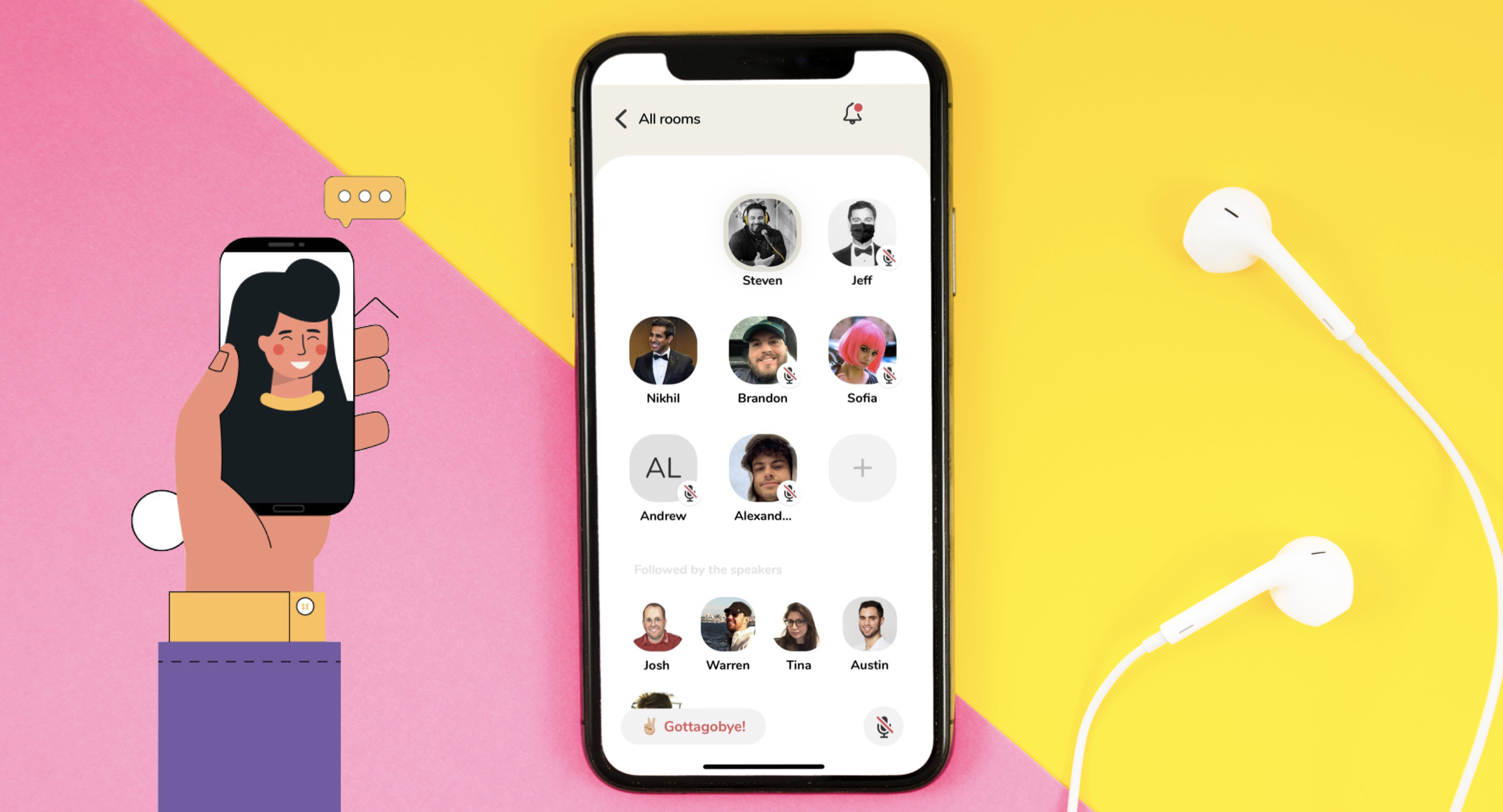
    It seems that the Clubhouse craze is slowly dying out – Spotify is the latest company to make changes to its live conversation app, Greenroom. According to inside sources, Spotify plans to integrate Greenroom into the main app, and rename it to Spotify Live.

    The change is apparently happening in the second quarter of the year, with all the features migrating to Spotify. Creators will be able to organize and start conversations in Spotify Live, and subscribers will be able to listen to them in the main app.

    There’s another piece of evidence, tied to the change – it was found in the beta app by developer Steve Moser who allegedly shared the matter with Bloomberg. Spotify reacted to the popularity of Clubhouse, which exploded last year, by acquiring Betty Labs, the maker of social audio app Locker Room, and then rebranded the product to Greenroom.

    The short-lived success of Clubhouse resulted in many companies trying to replicate the functionality – Twitter introduced Spaces, and Facebook launched Live Audio Rooms. According to data from SensorTower, Clubhouse scored less than 1 million active monthly users in October 2021, compared to the top result of 9.6 million active users back in February of the same year.

    Integrating Greenroom into Spotify is probably a wise choice, as the standalone app failed to take off and managed to haul only 140,000 installs on iOS as of July 2021. Spotify, on the other hand, ended 2021 with 406m active users and 180m subscribers, and giving them the opportunity to listen to these Clubhouse-like streams may breathe a new life to the feature.

  • Clubhouse gets a text chat feature for live audio rooms

    Clubhouse gets a text chat feature for live audio rooms

    Clubhouse, an audio chat app that debuted back in 2020 as an exclusive social network, is now adding a feature that seems to be contrary to its initial live audio chat purpose. 9to5Mac reports that there is a major change to the app coming, and will let users interact in voice rooms with text chat.

    Clubhouse’s live audio chat was an idea that was quickly followed by competitors such as Twitter and Reddit. Now, the app is going to add a text chat option for people who don’t feel like they want to talk in the live audio chat rooms.

    The app has announced in its official blog that there is a new feature that would allow everyone to be able to join live conversations, whether by voice or text. The new addition to Clubhouse’s feature set is dubbed “In-Room Chat”, and it works in a similar manner to Zoom or Skype. Basically, you will be able to chat within a live audio room.

    The blog post reads that the feature will be useful to share jokes, request songs, or send emojis as reactions to what’s being talked about.

    On top of that, voice room moderators will be able to delete chat messages. Basically, creators can appoint mods to keep an eye on the chat and delete messages if found inappropriate.

    Understandably though, if the room has hundreds or thousands of people, the task of moderating chat comments will indeed prove to be quite difficult.

    As a creator, you will also be able to delete chat messages at any moment, and even after the live session has ended. Additionally, you will be able to turn off the In-Room chat at any moment as well, if it proves to be unproductive or annoying.

    Creators can choose to disable text chat when starting a new audio room if they don’t feel like having the feature. Additionally, the audience will also be able to report comments in the chat and provide feedback to moderators, so that the text chat is safe from trolls.

    Another useful feature of the In-Room chat option is that you will be able to delete your comment during the live room or after the live room has ended.

    Audio rooms that have chat enabled will appear with a dedicated icon at the bottom left of the screen. When the live audio ends, all messages sent during the session will be available for reading to anyone listening to the Replay of the session.

    But that’s not all the new feature is expected to bring. The social network says that the text chat will give creators an option to make quick polls or ask questions in a live chat with multiple people.

    The new In-Room Chat feature is currently rolling out with the latest version of the Clubhouse app from the App Store.

    As you may probably know, initially, the Clubhouse app was available only on iOS and Android devices. In January though, Clubhouse expanded its platform to the web, and with this, anyone could listen to a live chat. However, it is still not possible to join from the web as a speaker during live audio sessions.

    The option to listen to a live audio chat on Clubhouse from your desktop doesn’t require you to be logged in, so basically creators can share live audio chats with multiple people (only for listening on the web though, as we said, it is not possible to join to talk from your PC or Mac).

  • YouTube starts rolling out a new Live rings feature on mobile

    YouTube starts rolling out a new Live rings feature on mobile

    YouTube is a huge place with millions of channels each firing out content on a regular basis. In the past few years streaming content live has become a trend, and people enjoy watching vlogs, reaction streams, and shows as they happen.

    Now, YouTube has started rolling out a new feature called “Live rings”, aimed to help YouTube users find livestream content. The new feature was announced by Neal Mohan, Chief Product Officer at YouTube – he posted a quick preview on his Twitter page.

    “Really focused making it easier for users to find live streams on @YouTube so we’re rolling out the Live rings feature on mobile! @YouTubeCreators streaming live will now have a ring around the channel avatar & clicking on the avatar will take you directly to the Livestream,” says Neal in his Twitter post.

    When a channel begins live streaming, a red ring will appear around the avatar of that channel. Users then will be able to go directly to the live stream (rather than visiting the creator’s profile page) by clicking on the avatar.

    The idea isn’t exactly new or original, as Instagram and TikTok have a similar approach to the concept. The new feature is already rolling out on mobile devices but there’s no word whether it will be available on desktop as well.

  • YouTube TV outrageously raises monthly subscription prices

    YouTube TV outrageously raises monthly subscription prices

    It’s not the first time that Google decides to raise YouTube TV subscription prices whenever it felt that the portfolio was large enough to justify the price hikes. Unfortunately, this time it raised the monthly subscription costs by quite a lot and we’re quite sure that many customers will refuse to renew their subscriptions.

    The search giant announced earlier this week that YouTube TV monthly fees will increase from $50 to $65, so customers would have to pay about 30% more. The new price takes effect on June 30 for new subscribers, while existing subscribers will see the changes reflected in their next billing cycle on or after July 30.

    To justify the new price, Google reiterates that it added eight of ViacomCBS’s family channels – BET, CMT, Comedy Central, MTV, Nickelodeon, Paramount Network, TV Land and VH1, which will be available starting today. Six other channels will be added to YouTube TV at a later date, including BET Her, MTV2, MTV Classic, Nick Jr., Nick Toon, and TeenNick.

    According to Google, the price increase was necessary because most networks require that YouTube TV include not just some of their channels, but all of them. Perhaps adding one or more flexible plans to its portfolio might allow customers to choose what they want to watch and how much they want to pay.

    Customers who wish to pause or cancel their YouTube TV membership can do it anytime here. Otherwise, you’ll be forced to pay a lot more starting July 30.

  • Levi’s boosts margins by retaining same price levels online

    Levi’s boosts margins by retaining same price levels online

    Denim brand Levi’s plans to scale back shipments to off-price retailers in the US as it targets a further improvement in gross margin and long-term ambitions in the growing Chinese market.

    The company ended the year reporting US$1.57 billion in sales, slightly behind analyst estimates, but with a gross margin up by 100 basis points compared to the prior year.

    Sales in Europe rose by 5 percent and its operating profit thereby a healthy 47 percent, but sales in Asia rose by just 1 percent, and operating profit there took a 43-per-cent hit, largely due to civil unrest in Hong Kong and India.

    While the company expects to take a hit in Mainland China after closing about half of its stores there in response to the coronavirus outbreak, the company says its sales there account for just 3 percent of its global turnover.

    “It probably puts a damper – at least in the short-term – for our growth plans in China, but we are here for the long-term,” CFO Harmit Singh said. “We are still long on China.”

    Singh said the company would restrict shipments to off-price retailers like Ross Stores and TJ Maxx, which erode profit margins. It will sell more products into a joint venture with discount department store Target and into other higher-priced retailers like department stores.

  • Levi Strauss Asia sales Books good Sales Numbers

    Levi Strauss Asia sales Books good Sales Numbers

    Levi Strauss Asia sales grew 12 per cent in the second quarter (on a constant-currency basis) with strong performance across both wholesale and direct-to-consumer channels.

    Globally, the denim-led lifestyle-fashion retailer achieved 9-per-cent growth on a constant-currency basis, however second-quarter income fell by US$49 million, largely due to $29 million in costs relating to the company’s IPO.

    Gross profit for the second quarter rose 4 per cent to $700 million.

    “Our second quarter and first half results reflect the continued strength of our diversified business model as we delivered broad-based growth across all brands, regions and key product categories despite a challenging retail and macroeconomic environment,” said Levi Strauss & Co president and CEO Chip Bergh.

    “For both periods, the Levi’s brand grew in all three regions across men’s, women’s, tops and bottoms and maintained its position at the centre of culture through iconic products and consumer experiences.”

    In Asia, revenue growth was broad-based across the region’s markets. The region’s operating income grew 4 per cent on a reported basis and 15 per cent on a constant-currency basis, reflecting higher revenues partially offset by a decline in gross margin and higher direct-to-consumer costs.

    Globally, sales by the company’s direct-to-consumer business grew by 9 per cent in the second quarter, primarily due to performance and expansion of the retail network and e-commerce growth. The company had 78 more company-operated stores at the end of the second quarter of this year than it did 12 months earlier. The company’s wholesale business grew reported revenues by 3 per cent, reflecting growth in all the regions.

  • Spotify now has 100 million Premium Global Subscribers

    Spotify now has 100 million Premium Global Subscribers

    Twelve months after it first reached 75 million subscribers, Spotify has today announced that 100 million users now pay for its Premium service across the globe. The news represents year-on-year growth of 32% and has helped push Spotify’s revenue figures up an equally impressive 33% to €1.51 billion ($1.67 billion).

    Including users of Spotify’s ad-supported service, the streaming company now has a total of 217 million monthly active users. This figure is up 10 million from last quarter and 44 million when compared to twelve months ago.

    Once again, Europe continued to be Spotify’s most important market followed by North America and Latin America respectively. In North America especially, Premium subscriber growth was driven by Spotify’s continued partnerships with Samsung, Google, and Hulu.

    Specifically, Samsung agreed to pre-install the Spotify app on millions of its smartphones including the recently-released Galaxy S10, buyers of which receive six months of free Spotify Premium. Google, on the other hand, offered Spotify Family Plan users a free Google Home Mini, a promotion which has since been expanded to both the UK and France due to its popularity. Lastly, Hulu and Spotify recently lowered the price of their bundle offer which has boosted interest.

    By the end of this current quarter, Spotify expects to have between 222 and 228 million users, of which 107 to 110 million should be Premium subscribers. Driving this growth will continue to be promotional offers like the ones mentioned above and India, where Spotify registered 2 million users in the month following its launch.

  • New Pandora NOW original music experience Went Live last April 4th

    New Pandora NOW original music experience Went Live last April 4th

    SiriusXM and Pandora have just announced a brand new exclusive music experience available for subscribers of the former and listeners of the latter: Pandora NOW. The feature mixes “Pandora’s extensive listener data” and “SiriusXM’s curatorial expertise” to offer users some of the most popular and fast-trending music available at any given moment.

    If you’re a SiriusXM listener, Pandora NOW will be available as a new curated channel (Channel 3), while Pandora users can experience it as an interactive station with song skipping and thumbs up/down rating, or as a continually-updated playlist for Pandora Premium subscribers.

    Another interesting thing about the new feature is that the music played on Pandora NOW will be uncensored and showcase the most listened to and fastest-trending new music on Pandora across all genres, including Pop, Hip Hop, R&B, Dance and Latin.

    Last but not least, to celebrate the launch of Pandora NOW, R&B superstar artist Khalid will be at SiriusXM’s Rockefeller Center studios on April 4 to launch the new channel and station on SiriusXM and Pandora.

  • Update to Google’s Duo changes how you use the application

    Update to Google’s Duo changes how you use the application

    The Google Duo app allows users to stream live video, make calls or send video and voice messages to their Duo contacts. A server-side update performed by Google has changed how users select contacts, and whether they are streaming them video or making a voice call to them. In the olden days (like a week or so ago), one would open the Duo app, go to contacts, and tab the video or audio tabs before selecting the recipient.
    After the update, when you open the Duo app, you first select the contact that you want to connect with. Only then do you decide if you are going to stream live video or simply make a phone call to your selected contact. If you want to send a message, as soon as you open Duo, you swipe down on the screen. You then are given the option of creating a voice or video message. Once you create that message, you are given the option of sending it to five contacts simultaneously.
    The Google Duo app is available from both the Google Play Store and Apple App Store for Android and iOS devices, respectively.