Tag: lobby

  • Auto Lobby Urges Spain To Speed Up Vehicle Electrification As Sales Lag

    Auto Lobby Urges Spain To Speed Up Vehicle Electrification As Sales Lag

    Spain’s auto industry needs an overhaul to catch up with European peers and speed up its electrification process as automakers struggle to recover from a pandemic-induced slump, the country’s biggest manufacturers’ lobby said on Tuesday.

    As elsewhere in Europe, Spanish car production has been hampered in the past few years by semiconductor shortages, temporary factory closures and supply chain bottlenecks after the 2020 global outbreak of the COVID-19 disease.

    “We cannot waste any more time,” Wayne Griffiths, the head of the lobbying group ANFAC and chief executive of Volkswagen’s Spanish unit SEAT, said while presenting the group’s roadmap until 2025.

    “We can’t afford to let 2023 go by without taking ambitious decisions,” he added. “Cosmetic measures are no longer enough.”

    Among the challenges the country’s industry faces are weaker-than-expected electric vehicle (EV) sales, an ageing car fleet – which is stymieing emission reduction and safety goals – and a still-lacking charging infrastructure for EVs, Griffiths said.

    In 2022, about 78,000 plug-in hybrid (PHEV) and battery electric vehicles (BEV) were sold in Spain, far below the 120,000 required to meet current emission goals. Electric vehicles account for 9.2% of total auto sales, while the European Union average is over 20%.

    “Europe is splitting in two, and Spain is falling further and further behind leading countries” such as Germany or Portugal, Griffiths said.

    Some measures proposed by ANFAC to boost the sector include revamping subsidies for EV buyers so they are directly applied to the purchase price; streamlining relevant sales, income and corporate taxes; and setting binding targets for the deployment of high-power public EV charging infrastructure.

    Griffiths said the industry ultimately needed to encourage consumers to make the leap to EVs, though he was aware that their generally high prices had put off some potential buyers.

    “I think there will be a step-by-step democratisation of electromobility. In 2024 and 2025, new models will come out at more affordable prices.”
  • India Considers Sharp Import Tax Cuts On EVs After Tesla Lobbying

    India Considers Sharp Import Tax Cuts On EVs After Tesla Lobbying

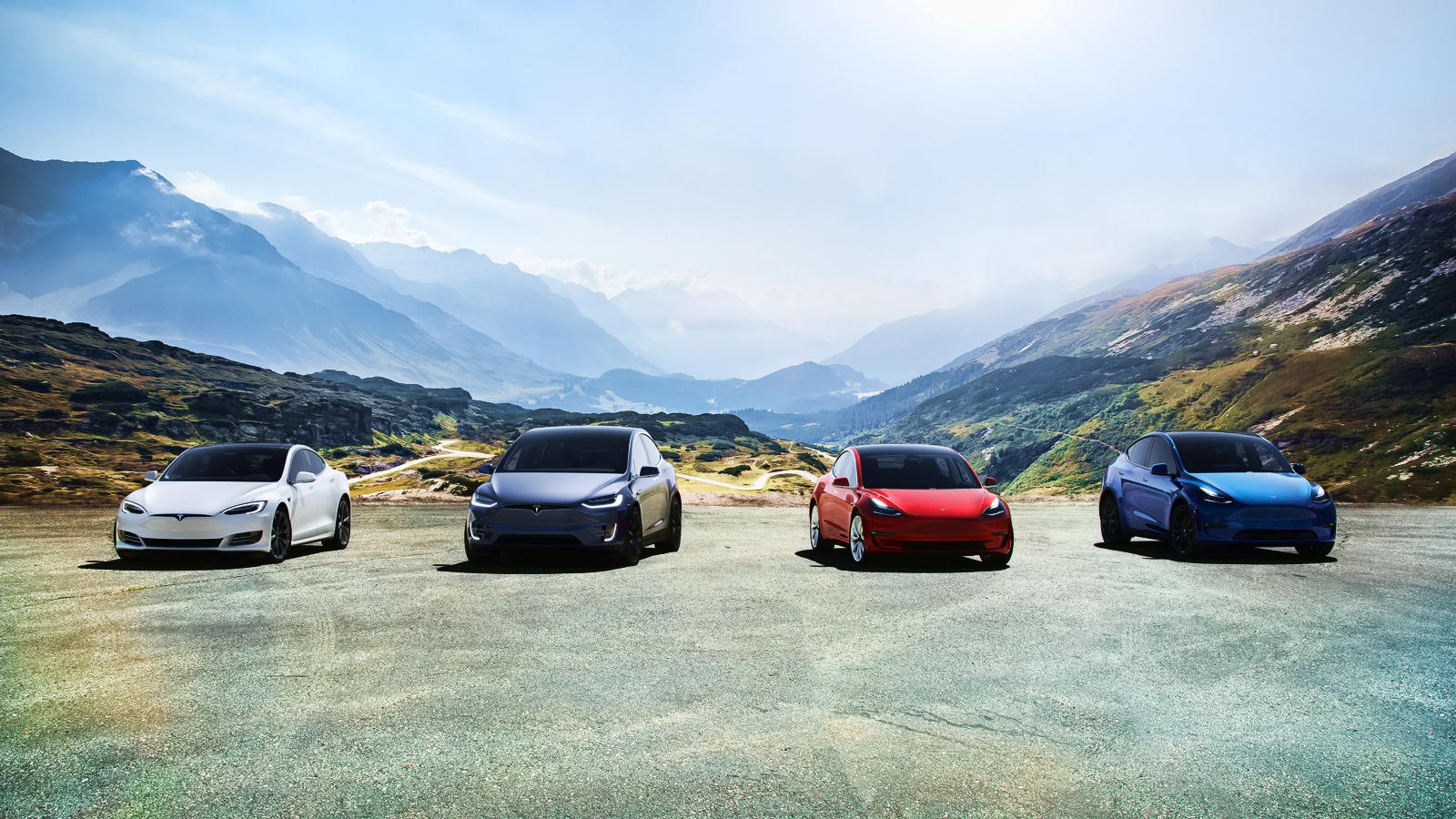
    India is considering slashing import duties on electric cars to as low as 40%, two senior government officials told Reuters, days after Tesla Inc’s appeals for a cut polarised the country’s auto industry. For imported electric vehicles (EVs) with a value of less than $40,000 – including the car’s cost, insurance and freight – the government is discussing slashing the tax rate to 40% from 60% presently, the officials told Reuters. For EVs valued at more than $40,000, it is looking at cutting the rate to 60% from 100%, they said.

    “We haven’t firmed up the reduction in duties yet, but there are discussions that are ongoing,” one of the officials said. India is the world’s fifth-largest car market with annual sales of about 3 million vehicles but the majority of cars sold are priced below $20,000. EVs make up a fraction of the total and luxury EV sales are negligible, according to industry estimates.

    Tesla, in its pitch to the government – first reported by Reuters in July, argued that lowering import duties on EVs to 40% would make them more affordable and boost sales. This triggered a rare public debate among automakers over whether such a move would contradict India’s push to increase domestic manufacturing. Even so, the government is in favour of a cut if it can see companies such as Tesla providing some benefit to the domestic economy – manufacture locally, for example, or give a firm timeline on when it would be able to, one of the officials said. “Reducing import duties is not a problem as not many EVs are imported in the country. But we need some economic gain out of that. We also have to balance the concerns of the domestic players,” the official said.

    Tesla CEO Elon Musk said on Twitter last month that a local factory in India was “quite likely” if the company was successful with vehicle imports but taxes on them are high. The second official said that since the duty cut is being considered only for EVs and not other categories of imported cars, it should not be a concern for domestic automakers – that mainly manufacture affordable gasoline-powered cars.

    India’s finance and commerce ministries, as well as its federal think tank Niti Aayog, chaired by Prime Minister Narendra Modi, are discussing the proposal and all stakeholders will be consulted, the person added. Both sources did not want to be identified as the discussions are still private. India’s commerce and finance ministries as well as Niti Aayog did not immediately provide comment.

    Automakers including Daimler’s Mercedes-Benz and Audi have for years lobbied for lower import duties on luxury cars but faced strong resistance mainly from domestic companies. As a result, India’s luxury car market has remained small with average sales of around 35,000 vehicles a year.

    Tesla’s demands have found support from Mercedes as well as South Korean automaker Hyundai Motor, which has around an 18% share of India’s car market.

    Tesla’s cars would fall into the high-end EV category, which are mainly imported into India and account for a much smaller percentage of sales. Mercedes, Jaguar Land Rover and Audi sell imported luxury EVs in the country.

    This time Tesla’s demands have found support from Mercedes as well as South Korean automaker Hyundai Motor, which has around an 18% share of India’s car market.

    Opposing the proposed cut are Tata Motors, which produces affordable electric cars in the country, and Softbank Group-backed Ola, which is making electric scooters in India.

    A third source familiar with the government’s thinking said there was awareness that a brand such as Tesla can make electric cars more penetrable in India, which is lagging other major auto markets in EV sales.

    The government is thinking about the best way to approach this and they want to see some benefit even if that only means Tesla pledges to source parts domestically, the person said.

  • Former UBS Boss to Head Banker Lobby

    Former UBS Boss to Head Banker Lobby

    The weighty trade group is tapping Marcel Rohner, who ran UBS during the financial crisis, as its next chairman.

    Marcel Rohner will succeed long-standing Swiss Bankers Association Chairman Herbert Scheidt, effective mid-September, the Basel-based lobby said in a statement on Tuesday. The 57-year-old Rohner has sat on the SBA’s board for the past three years.

    He is better known as the man thrust into the CEO job at UBS 16 months before the Swiss wealth manager was forced to take a government bailout in October of 2008. After stepping down four months later, he has taken jobs including deputy chair of Geneva’s Union Bancaire Privée and overseer at property firm Warteck Invest and in firms controlled by Swiss investors Daniel Aegerter.

    Rohner will lead a lobby where interests are drifting apart. Cooperative Raiffeisen left six months ago, disillusioned over the influence of weightier actors like UBS and Credit Suisse at the traditionally conservative and influential business association.

    I am familiar with the highs and lows of the banking business and with large, medium-sized and small institutions, Rohner said in a statement by the SBA. The most important lesson I have learned is that for the banks, shared interests are the norm and diverging interests the exception.

  • Samsung spent $3.12M lobbying in U.S. last year

    Samsung spent $3.12M lobbying in U.S. last year

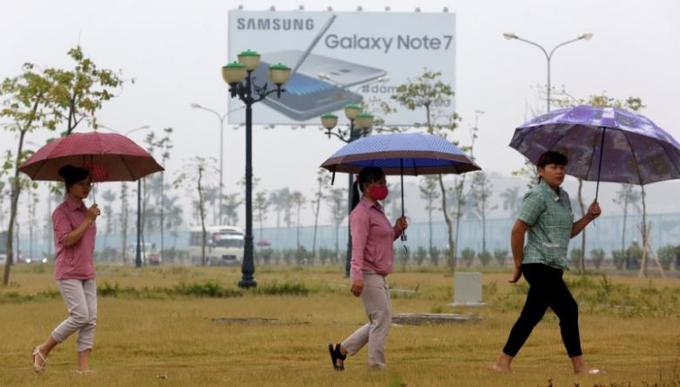
    The American subsidiary of Korean tech giant Samsung Electronics spent $3.12 million on lobbying U.S. politicians and officials last year, the second-largest amount following 2017, data from a Washington-based research group showed Monday. Samsung Electronics’ lobbying expense was the ninth largest among electronics companies operating in the United States, moving up two notches from a year earlier, according to the Center for Responsive Politics (CRP).

    Microsoft spent the most with $7.18 million, followed by Qualcomm with $6 million, Oracle with $5.47 million and Apple with $5.09 million, said the nonprofit research group, which tracks the effects of money and lobbying on elections and public policy.

    Among foreign companies, Samsung Electronics was the second-biggest lobbying spender after German engineering group Siemens.

    The Korean tech conglomerate has been intensifying its lobbying efforts in its key market since U.S. President Donald Trump took office in 2017 and advocated more protectionist trade policies.

    Samsung’s lobbying expenses over the past two years amounted to $6.62 million, far surpassing $6.04 million spent during former President Barack Obama’s second term from 2013-16, data showed.

    Trade-related issues were Samsung’s main lobbying target in the United States last year, with 13 cases out of 81 total in this area.

    The company also made extensive lobbying efforts for the telecommunication sector as it has been exploring ways to expand its foothold in the 5G network equipment market.

    Last month, Samsung and American telecommunication company Verizon announced their plan to launch 5G-compatible smartphones in the U.S. market in the first half of 2019.