Retail News CRM

Tag: lobster

  • Vietnamese Lobster Exports to China Skyrocket to $506M in 5 Months, Up 44.3% YoY

    Vietnamese Lobster Exports to China Skyrocket to $506M in 5 Months, Up 44.3% YoY

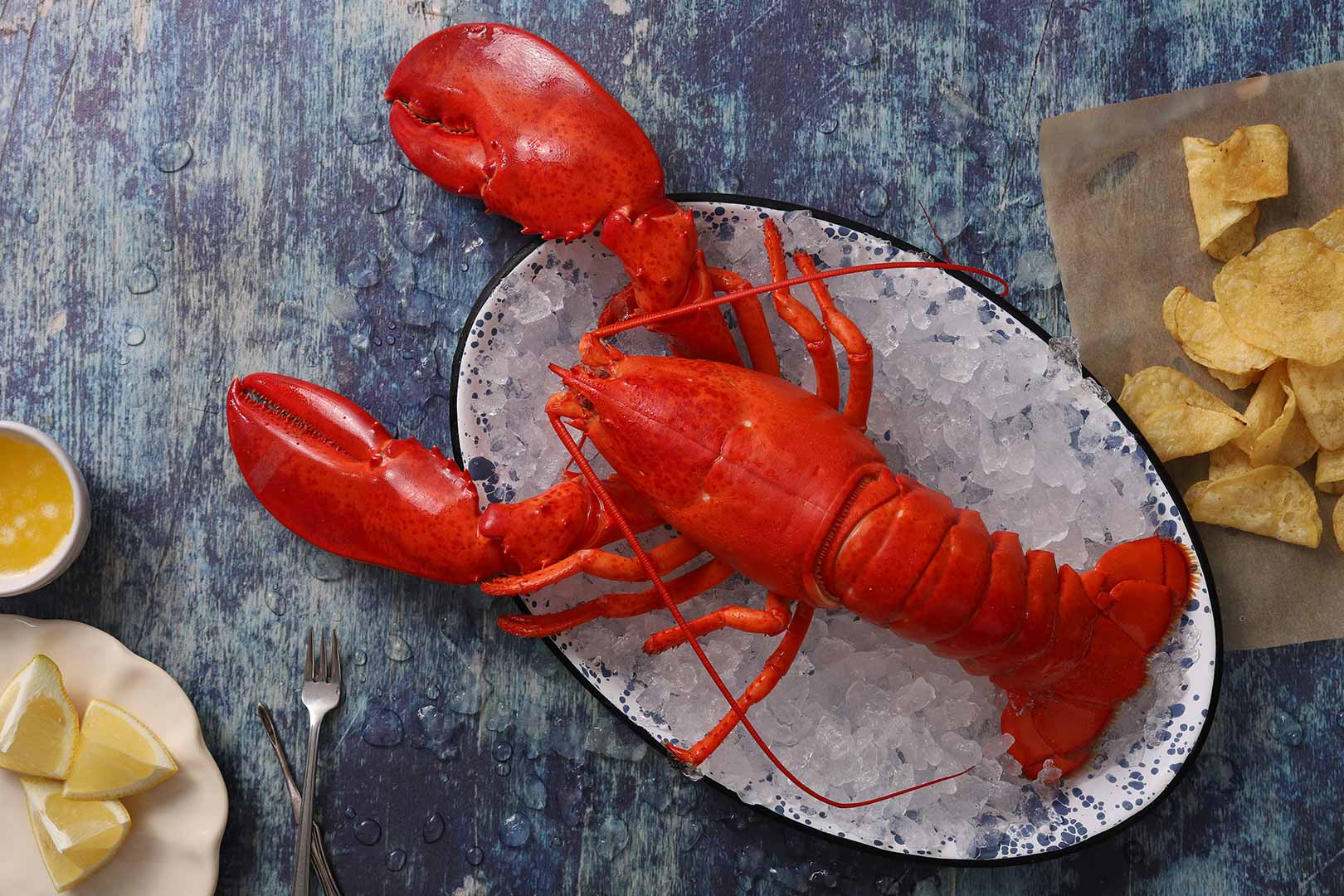
    China has solidified its position as the leading consumer of Vietnamese lobster for the first five months of this year, purchasing over $506 million worth of the seafood delicacy. This figure represents an impressive increase of 44.3% compared to the same period last year. The surge in imports reached its zenith in February, when China imported $154 million worth of Vietnamese lobster, a staggering 150% increase year-on-year. In the subsequent months, the importation figures have remained consistently strong, ranging between $78 million and $87 million.

    Unwavering Demand and Favorable Conditions

    The steady consumption of Vietnamese lobster in China is largely attributable to the incessant demand for live seafood, particularly within the more opulent spectrum of the market such as restaurants, banquets, and gift-giving. Vietnamese lobster boasts several competitive advantages in the Chinese market, such as its geographical proximity which guarantees shorter transportation times, thereby maintaining the quality of live shipments.

    Additionally, transportation methods are diverse, with exporters having the capacity to supply the market via both land and air transport. Notably, small to medium-sized blue lobsters have proven to be competitively priced and well aligned with the taste preferences of Chinese consumers.

    The Changing Dynamics of Seafood Supply

    Apart from these natural advantages, shifts in the global supply chain have opened doors for Vietnamese exporters. In recent times, several traditional suppliers, such as Canada, the U.S., and Australia, have been impacted by tariffs, trade disruptions, or slow recovery in production. This has created a niche for Vietnamese lobster to broaden its market share.

    As a result, Vietnam has evolved into one of China’s critical suppliers of lobster. This progression has laid a strong foundation for continued export growth within this year.

    Industry specialists project that if the consumer demand in China remains steady and exporters persist in supplying high-quality products, there will be additional room for growth in Vietnamese lobster exports in the second half of the year. However, it will be crucial for the industry to keep a close eye on any changes in China’s import policies, quarantine requirements, and quality standards to retain its competitive advantage and sustain its growth.

    Questions & Answers

    What has contributed to the increase in Chinese imports of Vietnamese lobster?

    The surge in Chinese imports of Vietnamese lobster can be attributed to the steady demand for live seafood, particularly in upscale settings, as well as the competitive advantages Vietnamese lobster offers, including close geographical proximity and diversity in transport methods.

    How have global supply chain shifts benefited Vietnamese lobster exporters?

    Changes in the global supply chain, including tariffs, trade disruptions, and slow production recovery affecting traditional suppliers, have created opportunities for Vietnamese lobster to expand its market share.

    What factors will be crucial for the future growth of Vietnamese lobster exports?

    The future growth of Vietnamese lobster exports will depend on the stability of consumer demand in China, the ability of exporters to maintain a reliable supply of high-quality products, and careful monitoring of changes in China’s import policies, quarantine requirements, and quality standards.
  • Lobster exports to China surge 33 times

    Lobster exports to China surge 33 times

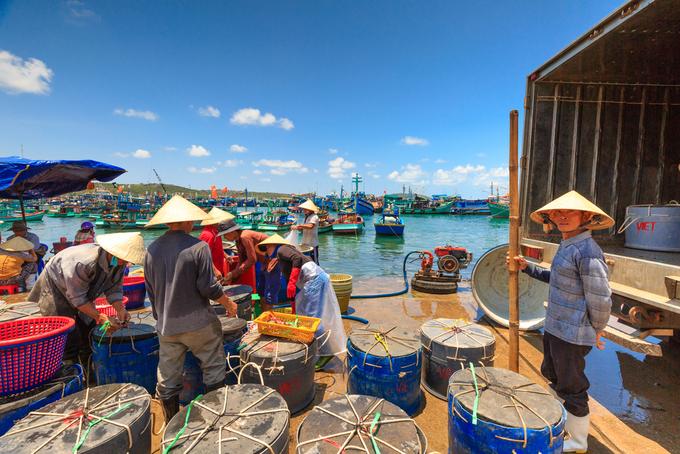
    Vietnam’s lobster exports to China rose 33-fold year-on-year to US$205.87 million in January-September on the back of lower prices and stronger trade ties between the two nations. This marks a 3,285% surge from the same time last year, citing statistics from the General Administration of Customs of China.

    In September alone, lobster imports from Vietnam rose by 133.9% from August and 2,336% year-on-year.

    China’s overall lobster imports increased by 40.86% year-on-year to $558.24 million in the same period, while import prices decreased by 23%.

    Analysts said the spike means Chinese consumers still have a craving for high-end foods despite hesitancy in overall spending, adding import costs from Vietnam are significantly lower than from other countries due to differentials in labor and shipping.

    According to Phung Thi Kim Thu, an expert from the Vietnam Association of Seafood Exporters and Producers, China’s easing of seafood import regulations, together with the signed bilateral agreements and the trade liberalization rules under the Regional Comprehensive Economic Partnership (RCEP), has facilitated the growth in Vietnam’s lobster exports.

    China is also set to restart the import of Australian lobsters. During the recent ASEAN Summits in Laos, Beijing and Canberra agreed to lift a nearly four-year moratorium on lobster shipments by the end of the year.

    In 2019, the last full year with data recorded, over half of China’s lobster imports came from Australia.

  • Vietnam calls on China to resume import of ornate rock lobsters

    Vietnam calls on China to resume import of ornate rock lobsters

    Minister of Industry and Trade Nguyen Hong Dien has urged China to consider resuming imports of ornate rock lobsters from Vietnam at an early date.

    He made the request Monday at the 12th meeting of the inter-governmental China-Vietnam Economic and Trade Cooperation Committee.

    Exports of the lobsters, one of Vietnam’s major seafood products, to China were stopped two months ago due to that country’s amendments to wildlife conservation laws that now require clear proof of the farming process, including using only second-generation (F2) lobsters raised in farms for breeding and not wild ones.

    Importers in China need to apply for a certification from its Bureau of Fisheries.

    Responding to the request, Chinese Commerce Minister Wang Wentao said Vietnamese ornate rock lobster farms and packing facilities need to register with China Customs.

    Relevant departments in both countries need to inspect and review businesses and aquaculture facilities that export the lobsters to China, he said further.

    He praised Vietnam for its high-quality agricultural products, citing the example of durian fruits, which make up nearly US$2 billion of its exports to China.

    Agricultural products from Vietnam are highly sought-after on Chinese e-commerce sites.

    Wang also said his ministry would help Vietnamese brands establish themselves in the Chinese market and work with Vietnam’s Ministry of Industry and Trade to set up an agency for promoting Vietnamese goods.

    Dien concurred with Wang’s suggestions and expressed Vietnam’s willingness to cooperate in setting up smart customs in Lang Son Province to expedite movement of goods and strengthen bilateral agricultural cooperation.

    China is Vietnam’s biggest trade partner, with their trade valued at $175.6 billion last year. Vietnam is China’s fourth biggest partner.

    The country is also one of the top importers of Vietnam ornate rock lobsters, but the recent legal hurdle has significantly affected their exports.

    In the year to August Vietnam had exported $76 million worth of ornate rock lobsters to China, a 42% year-on-year decline.

  • Vietnamese lobsters half price as Chinese orders dwindle

    Vietnamese lobsters half price as Chinese orders dwindle

    Diminishing exports to China’s massive market has Vietnamese ornate rock lobsters selling for VND1-1.3 million (US$42-54) a kilogram, half the price of two months ago.

    According to lobster harvesters in the central province of Khanh Hoa, prices are at the lowest point in two years.

    China is the biggest importer of Vietnamese lobsters.

    Lobster vendors in the province said they have decided to stop selling their lobsters or now in hopes prices will spike for the Lunar New Year early next year.

    Seafood shops in Ho Chi Minh City are selling ornate rock lobsters for VND1.4-1.7 million per kilogram.

    Tuan, a lobster trader, said domestic and overseas demand for seafood is down.

    “China currently favors painted spiny lobsters because their prices are lower.”

    Nguyen An, people’s committee chairman of Cam Binh Commune in the south-central-coastal province of Cam Ranh, said that Vietnam has mainly exported painted spiny lobsters to the Chinese market since mid-year, not ornate rock lobsters.

    He said this was because Australian ornate rock lobsters are cheaper than Vietnam’s, “so it is difficult to compete in China.”

    According to the Association of Seafood Exporters and Producers, Vietnam exported lobsters worth a total $76 million to China in the first eight months, a year-on-year decline of 42%.

    While reducing imports from Vietnam, China is now buying more lobsters from Canada, Australia, the U.S., New Zealand, Cuba, India, Brazil, and Mexico.

    According to Vietnamese firms, the two countries should agree on official lobster quotas to boost lobster exports to China.

    A project launched by the Ministry of Agriculture and Rural Development aims to develop Vietnamese lobster production and exports by 2025, with total output of 3,000 tons per year and annual export turnovers of $200 million.

    The largest lobster farming provinces are Phu Yen, Khanh Hoa, in the north-central regions, and Kien Giang in the southern region’s Mekong Delta.


  • Vietnamese favor Canadian lobsters, snow crabs

    Vietnamese favor Canadian lobsters, snow crabs

    Vietnam spent US$65 million importing Canadian seafood, mainly lobsters and snow cabs last year, doubling 2021 imports and trebling 2020.

    Among Southeast Asian countries, Vietnam was Canadian’s biggest seafood importer, Steve Craig, Minister of the Department of Fisheries and Aquaculture of the Canadian province of Nova Scotia, said at a recent business networking event in HCMC.

    Although Vietnam is the world’s fourth largest seafood exporter with an annual turnover of $11 billion, it is still a fertile ground for Canadian products, he said, noting that Vietnamese are among the world’s top seafood consumers.

    Tran Van Truong, CEO of Royal Seafood chain, an official importer of Canadian seafood in large quantities, said the seafood is famous in Vietnam because their prices are always stable and often 5-20%, sometimes 40%, lower than imports other countries.

    Currently, in the Vietnamese market, Canadian lobsters are priced at VND1.4 million ($59.3) per kilogram, and Australian lobsters at VND2.4 million. The price of cod, oysters, and geoducks imported from Canada are also lower.

    Between 50 and 60 Vietnamese firms directly import Canadian seafood, and the number of Canadian seafood shops in Vietnam is rising.

    Canada will create more favorable conditions for Canadian and Vietnamese seafood to penetrate more deeply into each other’s markets, Craig said, stating that the Vietnamese market is very promising.

    Overall, bilateral trade between Canada and Vietnam was $14 billion last year, he said, noting that Vietnam is Canada’s biggest trading partner in Southeast Asia.


  • Vietnam’s seafood exports nearing $11 bln in 2022

    Vietnam’s seafood exports nearing $11 bln in 2022

    Vietnam’s seafood exports this year could reach $11 billion for the first time, spearheaded by shrimp, pangasius and tuna, according to the Vietnam Association of Seafood Exporters and Producers (VASEP).

    Truong Dinh Hoe, VASEP general secretary, said at a conference in HCMC Saturday that by November, seafood exports had already crossed $10 billion, so by the end of the year, it could reach $11 billion for the first time.

    The largest seafood export markets for Vietnam are the U.S., Japan, China and the EU. The EU, the U.S., and China account for 60% of the global seafood trade and 50% of Vietnam’s export turnover in the first ten months of this year.

    Hoe said all sectors of the seafood industry grew 18-77%, but exports began to slow down amid lower purchasing power, higher interest and fluctuating exchange rates. He added that as the world enters a recession and inflation increases, demand is falling globally.

    As such, Vietnam’s seafood industry would face tough competition from competitors that offer lower costs and prices, like Ecuador or India.

    Economist Dinh The Hien said that the global economy would worsen in 2023, directly affecting the seafood industry.

    “However, businesses shouldn’t be too pessimistic; they should search for new opportunities to grow,” he said.

  • Lobster exports up seven-fold in 9 months

    Lobster exports up seven-fold in 9 months

    A seven-fold year-on-year increase in lobster exports to China netted revenues of $179 million in the first nine months of the year.

    According to the Vietnam Association of Seafood Exporters and Producers (VASEP), China accounted for 90% of Vietnam’s total lobster exports in the first nine months.

    VASEP communications director Le Hang said China’s demand for seafood is set to increase with the Lunar New Year festival season coming up.

    She said lobsters account for more than 5% of Vietnam’s total seafood exports yearly.

    A fall in lobster production after aquaculture areas were affected by recent storms and floods. Retail prices of lobsters currently stand at VND1.3-2 million ($52.4-80.6) per kilogram, up 10% against over October.

    Some 90% of lobsters raised in the two central localities of Phu Yen and Nha Trang, the two biggest lobster aquaculture areas in Vietnam, are exported to China via border trade.

    Recently, a business in HCMC signed a contract to export 2,000 tons of live lobsters to the Chinese city of Kunming.

    Under the agriculture ministry’s plan, Vietnam will raise 3,000 tons of lobsters for an annual export turnover of around $200 million yearly.

    According to VASEP, the country earned nearly $3.4 billion from the export of lobsters, prawns, and shrimps in the first nine months, up 23% year-on-year.

  • Lobster exports skyrocket in first half

    Lobster exports skyrocket in first half

    Lobster exports rose 30 times year-on-year in the first six months of the year to US$130 million, according to the Vietnam Association of Seafood Exporters and Producers.

    Besides, surging global demand has caused the prices of some lobster species to double.

    Tropical rock lobster has risen to VND1.7 million ($73) a kilogram and scalloped spiny lobster to VND1.4 million.

    Exports of shrimp products also rose in the first half, with shipments of processed whiteleg shrimp going up by 17 percent and those of black tiger shrimp by 20 percent.

    They fetched $2.3 billion, up 33 percent from last year. Shrimps account for 40 percent of Vietnam’s seafood exports.

    Shrimp exports to China, where production is affected by Covid restrictions, doubled to $275 million in the first five months.

    VASEP said Vietnam’s shrimp exporters face challenges like supply shortage and inflation but are coping by expanding farming areas and focusing on more demanding markets.

  • First Burger & Lobster Store to open in Singapore

    First Burger & Lobster Store to open in Singapore

    Burger & Lobster Singapore will open its first outlet, at Jewel Changi tomorrow.

    The 81-seat Jewel Changi store is the 16th Burger & Lobster’s outlet internationally. Others are in locations including New York, Bangkok, Dubai, Genting Highlands in Malaysia, London and Kuwait City.

    “Singapore is an extremely important market as we see Singaporeans in our outlets particularly in London, Bangkok and Malaysia,” said Riccardo LaMonica, Burger &Lobster’s regional head of operations.

    “There is no immediate plan for another Burger & Lobster Singapore outlet,” he said. “We will have to see how people respond.”

    The new eatery’s menu offers Original Lobster with live lobsters from Nova Scotia, Canada, and Original Roll with tender lobster meat rolls.

    There will be a Singapore twist – items available exclusively at Jewel Changi – such as the Sambal Glazed Lobster, and Chocolate Jewels, a dessert of dark chocolate spheres topped with housemade caramel sauce.

    A bar operates from 9am until midnight daily, offering a selection of cocktails, beer and wine.