Tag: location

  • Don Don Donki to Bid Farewell to HarbourFront Centre Location amid Singapore Malls Redevelopment Plan

    Don Don Donki to Bid Farewell to HarbourFront Centre Location amid Singapore Malls Redevelopment Plan

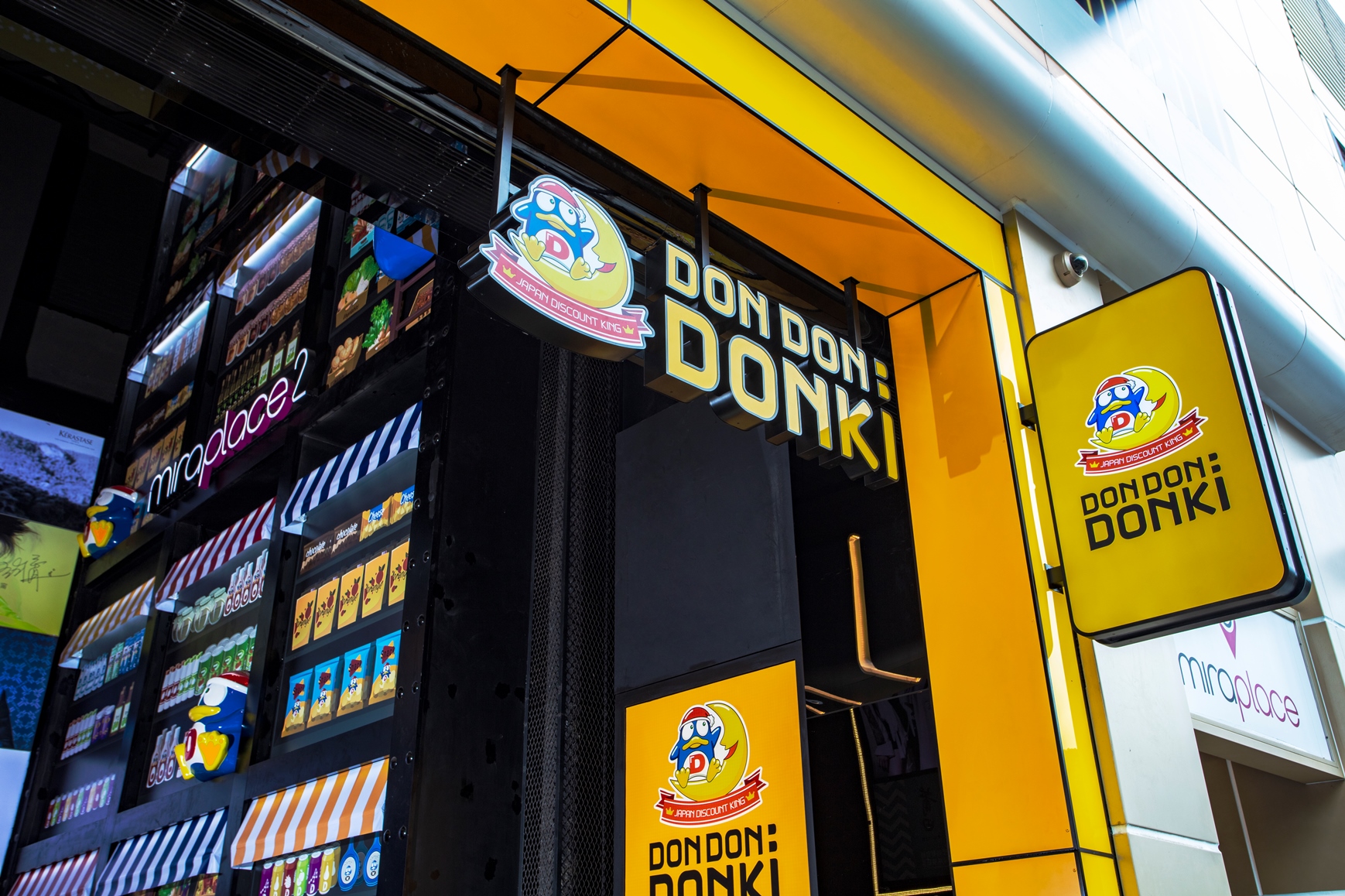
    The Japanese retail giant, Don Don Donki, has disclosed plans to close its outlet at HarbourFront Centre in Singapore this July. Shoppers will be in for a treat as select items will be sold at clearance discounts, some with up to 70% off.

    The store, popular amongst commuters, visitors venturing to Sentosa, and late-night shoppers eager for sushi, bentos, and Japanese snacks, is due to shut its doors for the last time on July 19. The imminent closure aligns with the anticipated redevelopment of the mall. The outlet is strategically located on the third floor of the mall, just above the bustling cruise center.

    A Transformation for HarbourFront Centre

    HarbourFront Centre has a storied past and is on the brink of another major transformation. Initially opened in 1978 as the World Trade Centre, the centre underwent renovations and was relaunched as HarbourFront Centre in 2003. The current redevelopment plans aim to transform the centre into a 33-storey mixed-use development, integrating retail and office spaces along with an elevated waterfront park.

    The redevelopment project ties into the larger Greater Southern Waterfront initiative, a visionary plan to revolutionize Singapore’s southern coastline into a lifestyle and recreational hub.

    Business as Usual for Other Outlets

    Despite the closure, Don Don Donki continues to operate its remaining 16 outlets across Singapore. These include locations at Orchard Central, Jem, Tampines 1, Suntec City, Waterway Point, and 100 AM. The chain was first introduced to the local market at Orchard Central in December 2017. Since then, it has flourished, with one exception – the Downtown East mall outlet, which closed this March after nearly five years in operation.

    Questions & Answers

    What is the current discount available at the Don Don Donki outlet at HarbourFront Centre?
    There are clearance discounts on selected items, with some discounted by up to 70%.

    What is the future plan for HarbourFront Centre?
    The centre is set to be redeveloped into a mixed-use development, comprising retail and office spaces, along with an elevated waterfront park.

    What will happen to other Don Don Donki outlets in Singapore?
    Don Don Donki’s remaining 16 outlets in Singapore, including those at Orchard Central, Jem, Tampines 1, Suntec City, Waterway Point, and 100 AM, will continue to operate as usual.

  • Diesel Powers Up Osaka Presence with Bold, New Flagship Store Location

    Diesel Powers Up Osaka Presence with Bold, New Flagship Store Location

    Italian lifestyle label Diesel has upgraded its flagship store in Osaka, Japan, shifting to a more prominent location as part of its strategy for enhanced visibility in the city.

    Store Relocation and New Design Theme

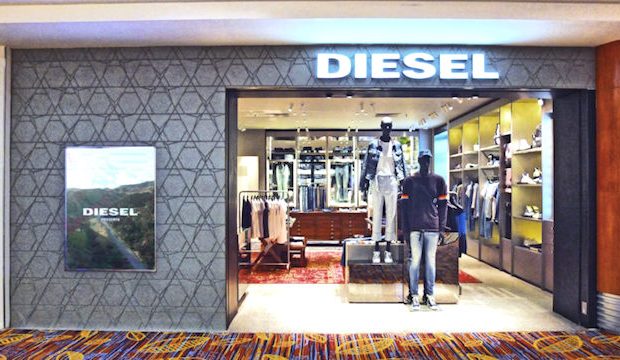
    Diesel’s new Osaka home is situated in Quartz Shinsaibashi, a multi-purpose edifice in the bustling Shinsaibashi district. The two-tiered store exhibits a distinct popcorn concrete exterior and proudly displays the recognizable Diesel ‘Biscotto’ logo. This striking exterior design embodies Diesel’s robust and dynamic visual identity.

    The interior of the store mirrors Diesel’s renegade spirit, utilizing materials such as metal-board-covered walls to create an engaging graphic environment. Central to the store’s layout is an illuminated red staircase, a standout feature that gives the space a unique character.

    Retail and Product Expansion

    The store presents a clear division of Diesel’s product lines, with womenswear occupying the first floor and menswear on the second. The store also showcases a limited-edition denim capsule collection, giving customers access to exclusive product offerings.

    This redesign was driven by the brand’s aspiration to increase its prominence and to mirror the evolving artistic direction led by creative director Glenn Martins. Apart from this standalone flagship, Diesel operates several other outlets within department stores and malls across Osaka, including Daimaru Shinsaibashi and Hankyu Umeda.

    Questions & Answers

    Why did Diesel decide to relocate its flagship store in Osaka?
    Diesel relocated its flagship store in Osaka to enhance its visibility and presence in the city.

    What is unique about the new store’s design?
    The Diesel store features a popcorn concrete exterior with the brand’s iconic ‘Biscotto’ logo. The interior incorporates materials that embody Diesel’s rebellious spirit, including metal-board-covered walls and a standout red staircase.

    What does the store’s product inventory look like?
    The store is divided into two floors, with womenswear on the first floor and menswear on the second. It also offers a limited-edition denim capsule collection.

  • Japan’s Top Ramen Specialist, Ramenya Shima, to Launch First International Location in Hong Kong

    Japan’s Top Ramen Specialist, Ramenya Shima, to Launch First International Location in Hong Kong

    Ramenya Shima, a renowned ramen specialist based in Tokyo, is set to make its first foray outside Japan with a new eatery in Hong Kong. The expansion is scheduled for next month, in a significant milestone for the brand.

    An Upscale Ramen Hub in Causeway Bay

    Ramenya Shima, currently operating a single establishment in Shibuya, Tokyo, has secured a location for its new venture at Sugar+ in Causeway Bay. The 1200 square foot restaurant is designed to accommodate 24 guests, mirroring its Tokyo flagship’s warm wood finishes and counter-style seating.

    A Menu Steeped in Tradition

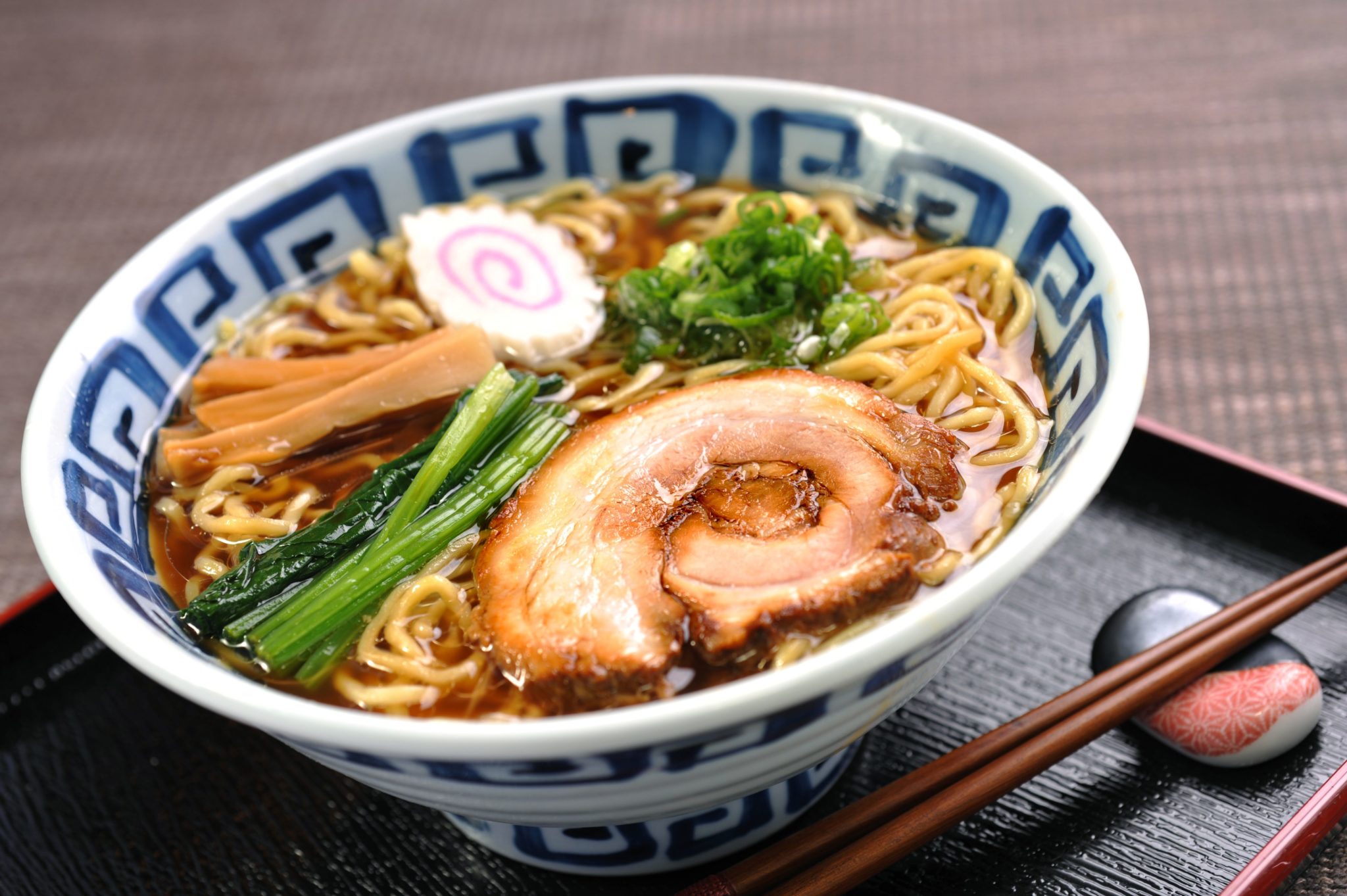
    Ramenya Shima’s menu will primarily feature three distinct broths: shoyu, white shoyu, and shio. Each of these delectable soups is based on a complex stock concocted from 30 different ingredients, encompassing chicken, seafood, and various dried components. The noodles are made from a unique blend of five flours, including Kitahonami wheat grown in Hokkaido. Moreover, they are produced without any additives, aligning with the restaurant’s commitment to quality and authenticity.

    A Proven Track Record

    Since its establishment in 2020 by chef Hiroshi Morishima, Ramenya Shima has amassed a loyal following in Tokyo’s highly competitive ramen market. It has consistently been ranked as one of the top three ramen restaurants on a prominent Japanese dining review platform for five consecutive years.

    Chef Morishima expressed his optimism about the upcoming opening in Causeway Bay, stating, “Its vibrancy and accessibility echo the spirit of Tokyo. I am confident that all of our guests will experience the warmth and depth of our handcrafted ramen, made with recipes that have been perfected in Japan.”

    Expansion with Quality Assurance

    The move to Hong Kong signifies a strategic step in Ramenya Shima’s growth plans. In Tokyo, the restaurant is renowned for limiting its daily output to about 60 bowls to maintain consistency and high-quality standards. This practice will be replicated at their new overseas location, ensuring that the brand’s commitment to quality prevails in every aspect of its operations.

    Questions & Answers

    What is Ramenya Shima’s expansion plan?
    Ramenya Shima is venturing outside Japan for the first time by opening a new eatery in Hong Kong. The brand plans to maintain its commitment to quality and consistency, as it has in its Tokyo location.

    What is unique about Ramenya Shima’s menu?
    Ramenya Shima’s menu is based on traditional recipes. It features three distinct signature broths and noodles made from a proprietary blend of five flours, including additive-free Kitahonami wheat from Hokkaido.

    What measures does Ramenya Shima take to ensure quality?
    To maintain high standards of quality and consistency, Ramenya Shima limits its daily output to around 60 bowls of ramen. This practice will also be adopted in their new location in Hong Kong.

  • Google Messages Revamps Read Receipts and Teases Real-Time Location Sharing: An Enhanced Chat Experience Ahead

    Google Messages Revamps Read Receipts and Teases Real-Time Location Sharing: An Enhanced Chat Experience Ahead

    Google’s messaging app, Google Messages, has recently undergone a series of tweaks to improve its user experience. One significant change is the simplification of the group creation process, which allows users to chat with multiple individuals simultaneously. However, this isn’t the only modification to the app.

    Revamped Read Receipts

    The read receipts feature in Google Messages has been revamped in its latest version. Previously, the read receipt was composed of two small circles, commonly referred to as the “Double Bubble” design, located outside the text bubble. The latest version relocates the read receipt within the text bubble, specifically at its lower right corner, and changes its design to a single circle.

    This new version incorporates four states to indicate the status of the sent message: an ellipsis within a circle denotes a message in the process of being sent; a single check within a circle indicates a message has been sent; double checks within a circle signifies the message has been delivered; and finally, a solid circle with double checks mean the message has been read.

    End-to-End Encryption Verification

    Users are now able to verify whether their message was encrypted end-to-end (E2EE) by swiping the text bubble to the left. This action will reveal the time the message was sent and its E2EE status. If a lock with a line through it is displayed, it means the message was not encrypted. Conversely, a lock without a line through it signifies the message was sent via E2EE.

    Real-Time Location Sharing Feature

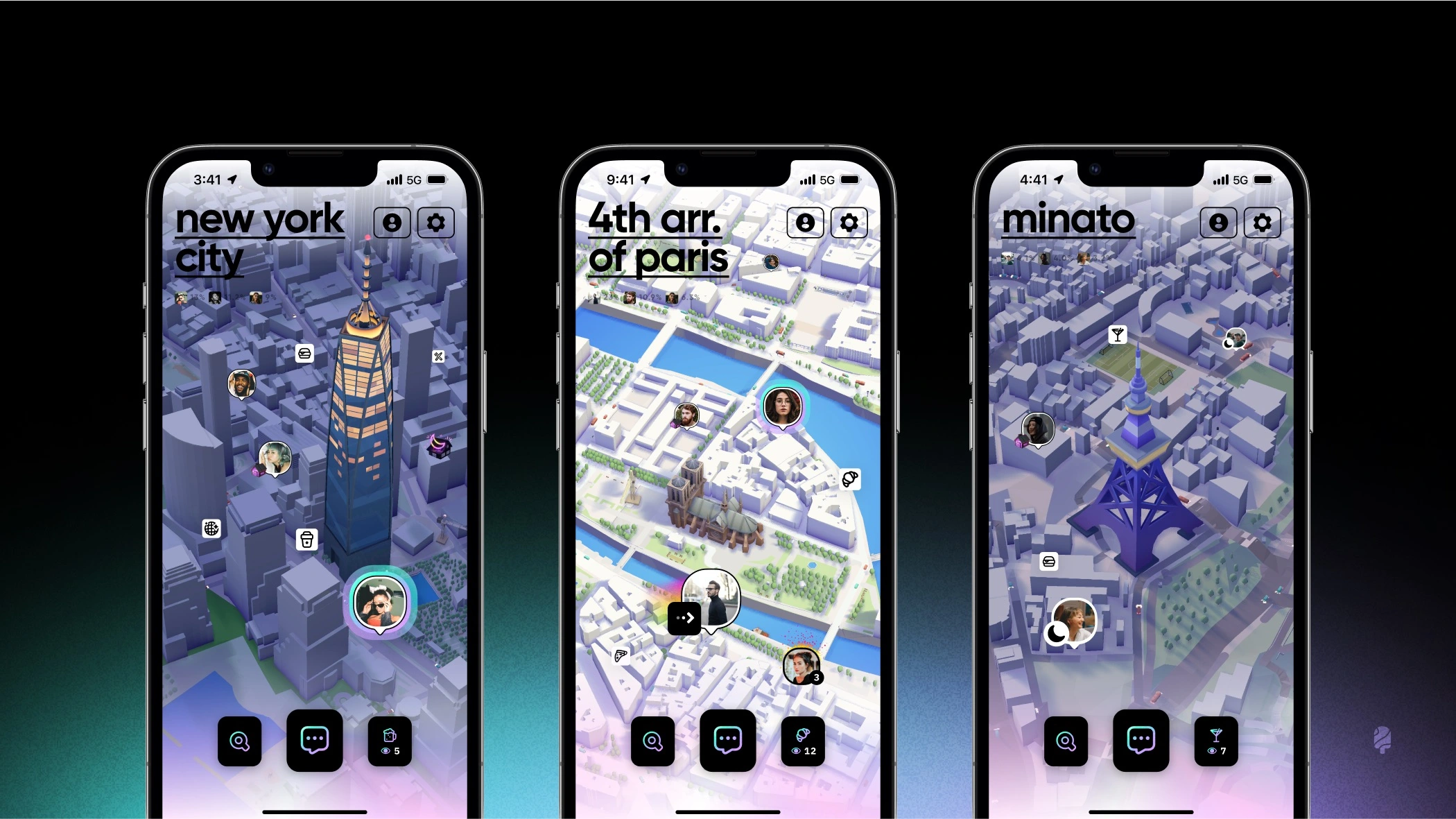
    Google Messages is rumored to be introducing an exciting feature that will enable users to share their real-time location with others. Currently, the app only allows for a one-time location share, which remains static even when the user is on the move. However, the new “Real-time Location” feature will show the user’s location as they move in real time.

    This feature requires location permissions and can be enabled to share the user’s location in chats. A banner will be displayed at the top of the chat when this feature is active, indicating the remaining time before it is automatically switched off.

    Interestingly, the user can share their live location even if the recipient does not have the same feature enabled on their device. If the recipient has the Google Find Hub app installed, the shared live location link will open in the app. Otherwise, the link will open in a web browser, revealing the sender’s real-time location. To disable location sharing, users simply need to tap the banner at the top of the conversation and select “Stop” from the options at the bottom.

    Questions & Answers

    What are the four states of the new read receipt design in Google Messages?
    The read receipt can be in one of four states: an ellipsis within a circle indicates a message being sent; a single check within a circle shows the message has been sent; double checks within a circle signify the message has been delivered; and a solid circle with double checks means the message has been read.

    How can users verify if a message was encrypted end-to-end in Google Messages?
    Users can swipe the text bubble to the left to reveal the time the message was sent and its encryption status. A lock with a line through it means the message was not encrypted, while a lock without a line through it indicates end-to-end encryption.

    What is the new “Real-time Location” feature in Google Messages?
    The “Real-time Location” feature allows users to share their real-time location with others in chats. A banner will appear at the top of the chat when this feature is active, revealing how much time remains before the feature is automatically turned off.

  • Location-tracking app Zenly shutting down

    Location-tracking app Zenly shutting down

    The popular location-tracking social media platform Zenly will shut down February 3 as its operator Snap Inc undergoes restructuring.

    “Time to say goodbye,” read a notification to all users of the app Tuesday morning. The notification said the platform would shut down in 59 days.

    It also urged users to switch to the app Snap Map, operated by Snap Inc, which bought Zenly in 2017.

    Zenly is used by many Vietnamese who want to track the location of their friends of family members. It has been among the most downloaded apps here for years.

    It is currently Vietnam’s sixth most downloaded iOS social media app and ninth on Android.

    Zenly, launched in 2014, is one of the best performing apps in Asia and Europe, with 160 million downloads and 35 million active users, according to a report by Data.ai earlier this year.

    The app has caused controversy for using key personal data such as location, contacts, micro and camera, all of which are at risk of being leaked.

    Some users have admitted to installing Zenly secretly on someone else’s phone to covertly track that person.

    Rumors of a Zenly shutdown have been circulating since September, when Snap Inc said it would undergo restructuring – including letting go of 20% of its staff.

  • Google tracks locations even when told not to

    Google tracks locations even when told not to

    Google wants to know where you go so badly that it records your movements even when you explicitly tell it not to.

    An Associated Press (AP) investigation found that many Google services on Android devices and iPhones store your location data, even if you’ve used privacy settings that say they will prevent it from doing so.

    Computer-science researchers at Princeton confirmed these findings at the AP’s request.

    For the most part, Google is upfront about asking permission to use your location information. An app like Google Maps will remind you to allow access to location if you use it for navigating. If you agree to let it record your location over time, Google Maps will display that history for you in a “timeline” that maps out your daily movements.

    Storing your minute-by-minute travels carries privacy risks and has been used by police to determine the location of suspects – such as a warrant that police in Raleigh, North Carolina, served on Google last year to find devices near a murder scene. So the company will let you “pause” a setting called Location History.

    Google says that will prevent the company from remembering where you’ve been. Google’s support page on the subject states: “You can turn off Location History at any time. With Location History off, the places you go are no longer stored.”

    That isn’t true. Even with Location History paused, some Google apps automatically store time-stamped location data without asking.

    For example, Google stores a snapshot of where you are when you merely open its Maps app. Automatic daily weather updates on Android phones pinpoint roughly where you are. And some searches that have nothing to do with location, like “chocolate chip cookies,” or “kids science kits,” pinpoint your precise latitude and longitude – accurate to the square foot – and save it to your Google account.

    The privacy issue affects some two billion users of devices that run Google’s Android operating software and hundreds of millions of worldwide iPhone users who rely on Google for maps or search.

    Storing location data in violation of a user’s preferences is wrong, said Jonathan Mayer, a Princeton computer scientist and former chief technologist for the Federal Communications Commission’s enforcement bureau. A researcher from Mayer’s lab confirmed the AP’s findings on multiple Android devices; the AP conducted its own tests on several iPhones that found the same behavior.’

    “If you’re going to allow users to turn off something called ‘Location History,’ then all the places where you maintain location history should be turned off,” Mayer said. “That seems like a pretty straightforward position to have.”

    Google says it is being perfectly clear.

    “There are a number of different ways that Google may use location to improve people’s experience, including: Location History, Web and App Activity, and through device-level Location Services,” a Google spokesperson said in a statement to the AP. “We provide clear descriptions of these tools, and robust controls so people can turn them on or off, and delete their histories at any time.”

    To stop Google from saving these location markers, the company says, users can turn off another setting, one that does not specifically reference location information. Called “Web and App Activity” and enabled by default, that setting stores a variety of information from Google apps and websites to your Google account.

    When paused, it will prevent activity on any device from being saved to your account. But leaving “Web & App Activity” on and turning “Location History” off only prevents Google from adding your movements to the “timeline,” its visualization of your daily travels. It does not stop Google’s collection of other location markers.

    You can delete these location markers by hand, but it’s a painstaking process since you have to select them individually, unless you want to delete all of your stored activity.

    You can see the stored location markers on a page in your Google account at myactivity.google.com, although they’re typically scattered under several different headers, many of which are unrelated to location.

    To demonstrate how powerful these other markers can be, the AP created a visual map of the movements of Princeton postdoctoral researcher Gunes Acar, who carried an Android phone with Location history off, and shared a record of his Google account.

    The map includes Acar’s train commute on two trips to New York and visits to The High Line park, Chelsea Market, Hell’s Kitchen, Central Park and Harlem.

    To protect his privacy, The AP didn’t plot the most telling and frequent marker – his home address.

    Huge tech companies are under increasing scrutiny over their data practices, following a series of privacy scandals at Facebook and new data-privacy rules recently adopted by the European Union.

    Last year, the business news site Quartz found that Google was tracking Android users by collecting the addresses of nearby cell phone towers even if all location services were off.

  • Davao could be next retail hotspot

    Davao could be next retail hotspot

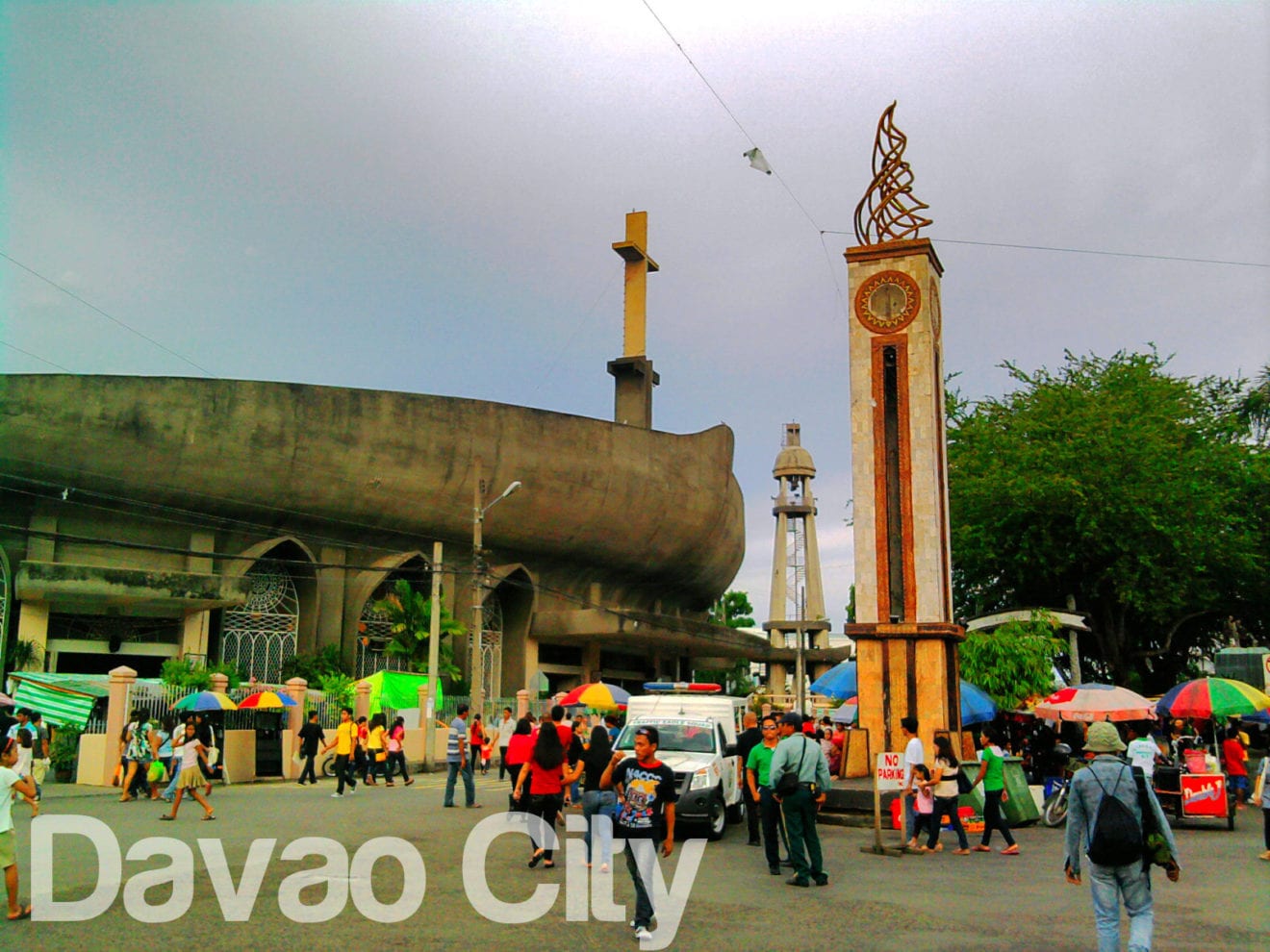
    With strong macroeconomic fundamentals driven by a burgeoning consumer market and supporting social infrastructure, Davao City is expected to be the Philippines’ next retail hotspot outside Metro Manila. A recent report by global real estate services group Cushman and Wakefield said such progressive environment has supported the recent expansion of retail space in the city and the influx of international brands.

    Cushman and Wakefield said Davao City exhibits the trends and qualities that make for a robust retail market.

    Some of these qualities are Davao’s increasing population, the city’s high income, massive regional consumer market, and strong tourism market.

    Cushman and Wakefield noted that the rapid influx of people into the city has turned it into the largest urbanized area in terms of population and land area outside Metro Manila. The city is estimated to have a population to date of about 1.63 million.

    It also said the uptrend in the city’s population is driven by the migration of people from other regions, mainly because of the incentives that Davao has to offer, such as good social
    infrastructure like easy access to quality schools, hospitals, and an international airport.

    The advent of the Information Technology-Business Process Outsourcing (IT-BPO) sector in the city has also served as a magnet for people to settle in Davao.

    “The outlook now is that we will be seeing retail integrated into workplaces and mixed-use township communities,” the report said.

    Citing the implementation of a stringent traffic management system, Cushman and Wakefield observed in Davao the absence of traffic and infrastructure woes that bug people in Metro Manila.

    “Further, complementing the population trend, we have seen housing subdivisions and residential options increase in urban Davao, encouraging people to choose to conveniently live in the city,” it added.

    Davao is also recognized as one of the top-five high-income cities in the country, according to data from the Bureau of Local Government Finance.

    The report said the economic gains of Davao City could also be gauged from the city’s transforming economic landscape, with buildings rising in every corner.

    “We see the emergence of infrastructure like high-rise residential buildings and mixed-use developments,” the report noted.

    Among the significant upcoming developments, it cited, are the mixed-township Davao Park District, Dusit’s luxury accommodations Dusit Thani Residences and DusitD2 Hotel, and the Lubi Plantation Resort.

    “Clearly, Davao City has proven and continues to prove to be an economically healthy emerging high-income city that offers the right incentives for business and investment,” Cushman and Wakefield said.

    The report cited that the city experienced a 16-percent increase in total capital from 2011 to 2014 alone.

    The report also said Davao City serves as the regional center of the entire Davao Region, which is known to be the fastest growing region in the country, exhibiting exceptional gross regional domestic product (GDRP) growth rate in 2014 at 9.4 percent from the 6.7 percent in 2013.

    The report said one of the main drivers of this growth is the region’s locational advantage as a financial and business hub in Southern Philippines, and with the emergence of IT-BPO parks in the region.

    “This motivated business expansion into the region, resulting in the increased demand for property in the form of offices and residential and retail spaces,” the report said.

    The report also pointed out Davao Region’s emerging signs of a maturing consumer market, even surpassing Metro Manila’s and the whole Philippines’ growth in terms of per capita spending.

    “Indicators show that purchasing power is increasing in the region and this presents ample opportunity for growth in retail,” the report said.

    It said the optimism toward Davao retail and developers’ consequent response of adding more retail spaces had ushered in an influx of retailers, including foreign brands.

    “We can now observe a very international mix of tenants, especially in the newer malls of Ayala and SM,” Cushman and Wakefield said. “This is a drastic departure from six years ago, when tenants were predominantly local brands.”

    The group noted that Davao’s biggest malls now have more international tenants, especially the established brands for general retail, 90 percent of which are fast fashion.

    Cushman and Wakefield said this is especially true for Ayala Abreeza and SM Lanang Premier, which post international tenant shares of 72 percent and 63 percent, respectively.

    Cushman and Wakefield said this is anticipated, as both Ayala Abreeza and SM Lanang Premier have always marketed themselves as the premier and upscale malls in Davao.

    The group said while there is no visible major shopping mall project in the city’s pipeline yet, future retail development is looking to take place in many of Davao’s mixed-use developments.

    “Major malls tend to evolve over time, more often not expanding retail space in the process,” Cushman and Wakefield stressed. “Many of the major mall developers in Davao, like SM and Ayala, have sizable land banks that allow for any form of expansion.”

    The group further noted that the rapid take-up of retail space in major malls is sure to keep occupancy rates at a high, with optimistic projections looking at close to 100-percent occupancy by 2016.

    A popular Philippine tourist spot, Davao breached the one-million tourist arrival benchmark in 2012, and has since been growing, even if 90 percent of the tourists were locals.

    “Domestic travelers have proven to be a strong market for retail tourism, as Filipino travelers tend to include shopping in malls in travel plans,” Cushman and Wakefield said.
    The firm said the past five years has been the most vibrant for Davao City in terms of retail, as retail developers see the opportunities for retail growth in the area.

    Some of the biggest shopping malls in Davao so far are: the Ayala Abreeza Mall by Ayala Land Inc.; Gaisano Mall of Davao by DSG Sons Group Inc; and SM City Davao and SM Premier Lanang both by SM Prime Holdings.

    “While Davao retail is already more dynamic, it will become even more vibrant, as new developers and retailers enter the market,” Cushman and Wakefield concluded. “With the right demographic fundamentals, the social infrastructure to support the demographic, and an energetic and fresh retail sector, Davao City is poised for further retail development and is surely a retail destination to look out for outside the capital.”