Tag: Loewe

  • Loewe Opens Largest Japan Flagship in Tokyo’s Ginza District

    Loewe Opens Largest Japan Flagship in Tokyo’s Ginza District

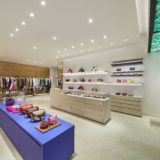
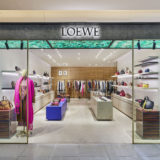
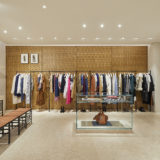
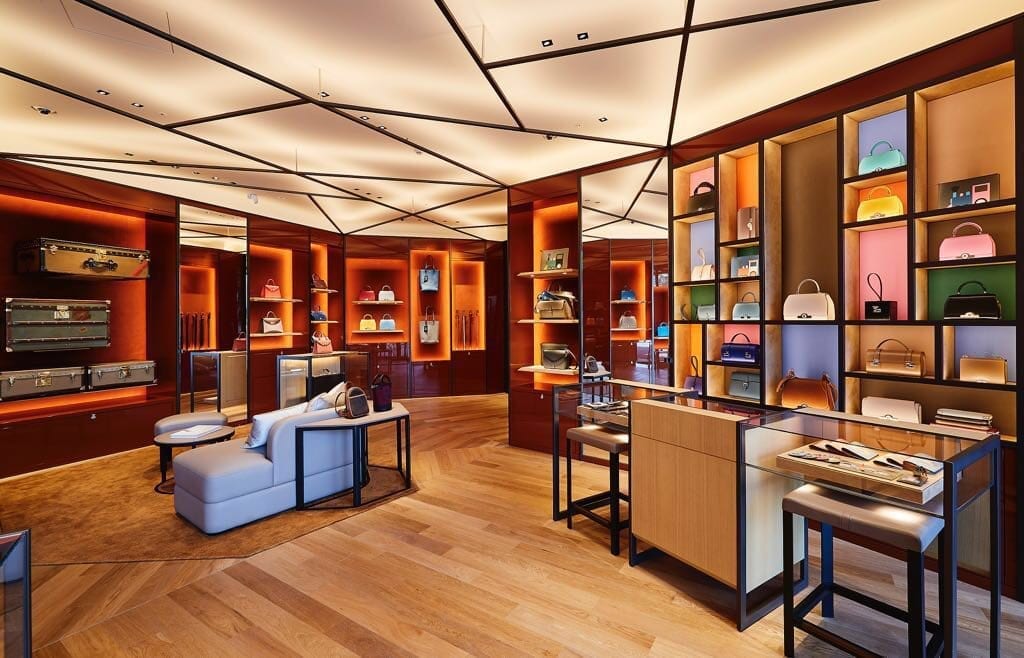
    Loewe has opened CASA LOEWE Ginza in Tokyo. It is the brand’s largest flagship in Japan and its second-largest retail footprint worldwide.

    Located at the intersection of Chuo-dori and Miyuki-dori in Tokyo’s luxury district, the street-level store lands as the Spanish fashion house marks its 180th anniversary. The opening anchors its retail presence in Japan’s resilient high-end consumer market.

    Suna Fujita Collaboration and Exclusive Ranges

    Inside, the flagship features an exclusive collaboration with Kyoto ceramic studio Suna Fujita. The studio produced designs specifically for the Tokyo location. Those artworks appear on the signature Hammock bag, a shearling coat, and a jacket detailed with cherry blossom motifs.

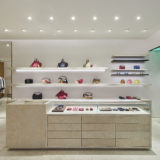
    Alongside the bespoke launch pieces, the store secured an advance pre-release of the wider Loewe and Suna Fujita collection. That lineup includes reworked versions of the Amazona and Basket bags. Dedicated floor displays show small leather goods, charms, and accessories.

    Luxury Brands Cement Prime Ginza Real Estate

    Securing corner plots along Chuo-dori remains a core strategy for European luxury labels competing for tourist spending and domestic shoppers in Japan. Following flagship rollouts in Shanghai and Seoul, Loewe’s expanded presence shows top-tier brands still view Tokyo street retail as essential for long-term brand equity in North Asia.

    Doors are now open to the public. Retail traffic around Ginza’s prime intersections will test full-year footfall targets across the brand’s expanded footprint in the months ahead.

  • Loewe Unveils Its Largest Japanese Store in Tokyo’s Glamorous Ginza District: A Fusion of Luxury Fashion and Art

    Loewe Unveils Its Largest Japanese Store in Tokyo’s Glamorous Ginza District: A Fusion of Luxury Fashion and Art

    Spanish luxury brand Loewe has continued its expansion in Asia with the opening of a new flagship store in Tokyo’s renowned Ginza district. Japan remains a crucial market for the brand, and the latest outlet signifies a strategic expansion of its retail presence.

    A Landmark Store

    The Casa Loewe Ginza store is the largest of its kind in Japan and second-largest globally. It occupies a prime location at the intersection of Chuo-dori and Miyuki-dori, an area famed for its luxury shopping culture. The sprawling four-story store offers the brand’s complete collection of products, including men’s and women’s ready-to-wear, leather goods, accessories, fragrances, and home items.

    An Ode to Art and Design

    The Casa Loewe concept, which intertwines retail with elements of art and design, is at the heart of the store. The exterior of the building is adorned with handcrafted ceramic tiles in a muted green hue, paying tribute to Ginza’s historical landscape. Inside the store, artworks and craft pieces are tastefully displayed alongside the brand’s merchandise, creating an immersive shopping experience.

    Celebrating with Unique Collaborations

    In celebration of the new store’s opening, Loewe has released exclusive items created in partnership with Kyoto-based ceramic studio, Suna Fujita. These special items add an element of local artisanal craftsmanship to the brand’s offering, further enhancing its appeal to the discerning Japanese market.

    Loewe’s parent company, the French luxury group LVMH, continues to prioritize the opening of brick-and-mortar locations in major cities across the globe, despite the rising trend of online shopping.

    In 2020, LVMH unveiled the Casa Loewe megastore in Shanghai, marking the brand’s largest flagship in Asia.

    Questions & Answers

    What is the Casa Loewe concept?
    The Casa Loewe concept is an innovative retail approach that integrates art and design elements into the shopping experience.

    How does Loewe’s new store in Tokyo compare in size to its other global locations?
    The Casa Loewe Ginza store is the largest in Japan and the second-largest worldwide.

    What unique offering has Loewe created to celebrate the opening of its new Ginza store?
    Loewe has produced exclusive items in collaboration with Suna Fujita, a Kyoto-based ceramic studio, to celebrate the launch of the new store.

  • LOEWE’s 4th store in Korea opens

    LOEWE’s 4th store in Korea opens

    Spanish brands LOEWE opened a women’s store on the second floor of the Hyundai Department Store. LOEWE is a Spanish leather brand with over 170 years of history and is now attracting the attention of global fashion people, led by designer Jonathan Anderson.

    According to LOEWE, the store is the 4th one to open in Korea, and Loewe plans on developing women’s bags, clothing, accessories and eye-wear in its newly opened store. In addition, the brand will present exclusive products for Hyundai Department Store in commemoration of the store opening.

    The concept of this store is known as ‘Casa Loewe’, designed by Brand Creative Director Jonathan Anderson, using materials such as Spanish limestone, walnut wood and concrete to feature strong mood.

    Eye-catching furniture exclusive to the store are displayed around the space. The brand had a specially-made carpet to show the LOEWE DNA “craftsmanship”.

    With the upcoming holiday season, LOEWE plans on releasing its “Mackintosh” capsule collection. Some items of the collection are exclusive to the Hyundai department store.

    While the newly opened store is one for women, LOEWE opened the men’s store in Galleria department store last October.

    View gallery below for pictures (5 images) :

  • Police smash massive China counterfeiting gang

    Police smash massive China counterfeiting gang

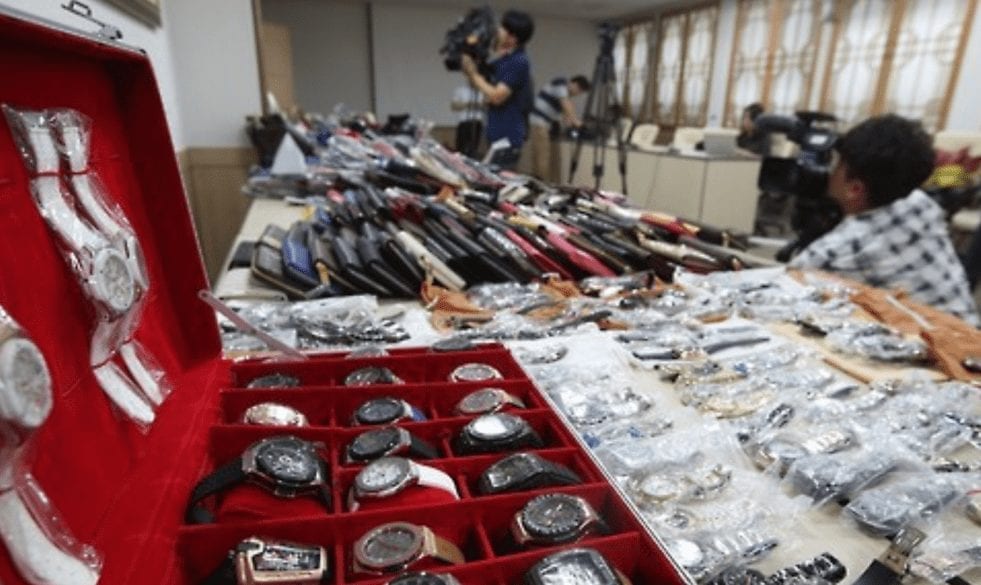
    Police have shut down a huge China counterfeiting ring estimated to have raked in some US$15 million.

    Chinese police have arrested 32 people believed to be part of the operation, which focused on counterfeiting luxury-branded goods.

    The Shanghai raid led to the seizure of more than 4000 items of luxury apparel and accessories bearing Louis Vuitton, Kenzo and Loewe labels, among other top brands. Two assembly lines producing the counterfeit items were shut down.

    The raid was in response to a tip-off to the Shanghai Qingpu district public security bureau that fake Louis Vuitton bags were selling on Chinese social media platform, WeChat.

    Estimates held that the ring had sold more than 100,000 fake luxury items at a value of around RMB100 million (US$14.9 million). Each item would have cost around RMB200 ($30) to produce.

    The rise of online markets all over the world has been blamed for a general increase in fake products sold globally. The counterfeit industry is now worth an estimated $590 billion a year, and accounts for around 3.3 per cent of total international trade.

    According to customs officials, the most frequently seized fakes are items of footwear, clothing, leather goods and IT equipment. China is by far the world’s largest source of pirated goods.

  • Japanese “Yama style” goes global

    Japanese “Yama style” goes global

    The “made in Japan” words on the label, for many people, have always been a guarantee of high quality. Even after the economic downturn and natural disasters,  Japanese still keep their quality and try their best to differentiate themselves through the attention to details. Their perseverance, loyalty to their country and respect for their traditional culture, have always been their strength.

    Unfortunately, today’s fashion industry pursues speed and high productivity. Thus, Japanese’s persistence seems to be easily overlooked. Although this is an irreversible condition in a money-orientated world, there are still some people who appreciate and value the spirit of the craftsmanship in Japan.

    Despite the fact that Japan is a modern country focusing on economic development, Japanese also focus on the pursuit of spirituality. There are Buddha followers, but also those ones who believe in gods behind the natural elements, such as mountains.

    In terms of geography, 70% of land in Japan is hill and mountains. Since the ancient times, fishermen regarded the hills as navigation coordinates. And for people who lived in the mountains, they saw mountains as resources for their lives, harvesting and hunting were their major activities to live on. Through worship of mountain gods, Japanese express their fear of nature as well as pray for peaceful life.

    Today, the Japanese government still shows respect towards mountains. In 2016, the government announced the Mountain Day, 11th August, as public holidays providing a chance for people to get closer to the mountains via hiking.

    Functional and practical with bright and unique colors

    Whenever a craze sweep the country,  Japanese will always concoct and create the relevant peripheral products and accessories. As a result, the “mountain fashion” was developed, which is the so-called Yama Style (Yama means mountain in Japanese), referring to the clothes that is suitable for hiking.

    Yama style emphasizes on integration with the natural environment, usually designed in gray black, dark green, yellow-brown and other earth tone colors. Additionally, it comes with an oversize coat or shawl in relatively bright color, to create a unique style.

    Integration of Art and Technology

    On the other hand, while Korean pop culture has been in the limelight internationally in recent years, the Japanese brand is still leading the world due to a number of Asian representatives who have a pivotal position in the high fashion.

    Since the 1980’s, Japanese have established a position in the international fashion trend, rooted their perception of fashion and influenced over the global fashion industry deeply.

    Due to the fashion industry values on materials, design, and details, Japanese fashion style still has their charm, followed by a lot of people around the world. Thus, many international fashion brands still love to work with Japanese brands, and launched a series of collaborations.

    In the recent years, Loewe, which has been known for its excellent quality, also seems to be paying tribute to Japanese culture and tradition. The new “Eye/Loewe/Nature” menswear series is inspired by nature, offering a range of clothes designed for outdoor activities with both practical and functional features as their selling points.

    Obviously, the design deliberately takes the ideas from the Yama style. Not only replacing the traditional outdoor clothing’s dark color with bright colors, but also having a great variety of styles and different layers. Thus, customer may easily match their outfit with different kinds of  clothes and practice different outdoor activities.

    In terms of accessories, the brand even changes the place of production from Spain to Japan, in order to combine their traditional craftsmanship with advanced technology.

    Undoubtedly, they see the advantages and market in the Japanese Yama style to feed  fashion industry with a new touch.

  • Loewe launches outdoor menswear collection

    Loewe launches outdoor menswear collection

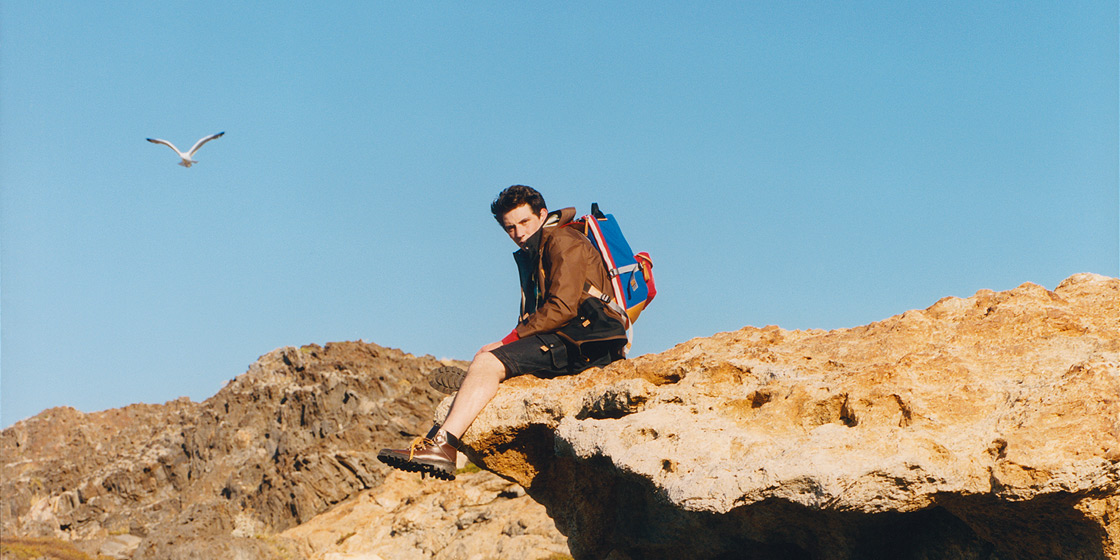
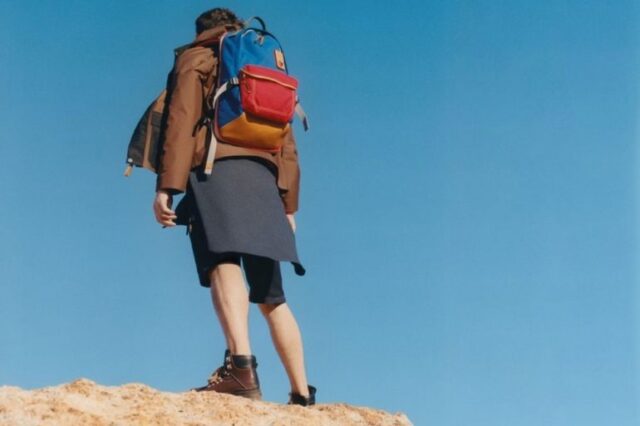
    Inspired by the great outdoors, Loewe has launched a new permanent collection of functional clothes and accessories for men. The campaign features British actor Josh O’Connor in the wilds of Cap de Creus, Spain. Loewe has launched a great outdoors-inspired collection of functional clothes and accessories for men. Featuring a wide range of vibrant colours, the collection – Eye/LOEWE/Nature – makes use of recycled materials, adding an innovative touch to conventional apparel.

    The ready-to-wear collection includes jumpers knit from partly recycled cotton fibre, parkas made of technical material, outerwear, shirts, trousers and cargo shorts.

    The accessories, manufactured in Japan, boast exclusive technology. Hand-sewn from quality canvas with calfskin trim, the Eye/LOEWE/Nature backpacks come with extra cushioning and support. There are interior zip pockets in which iPads can be stored. There are also tote bags and sling sacks for men to choose from.

  • Record results for LVMH in 2018

    Record results for LVMH in 2018

    The world’s largest luxury retailer LVMH shrugged off broader market pessimism overnight reporting record revenue of €46.8 billion last year, up 10 per cent over 2017. Excluding the closure of the unprofitable Hong Kong airport duty-free business in December 2017, the group’s organic growth was 12 per cent. Every business division delivered what the company described as “excellent performances”.

    Group profit rose a staggering 21 per cent to €10 billion with operating margin reaching 21.4 per cent, an increase of 1.9 percentage points.

    “LVMH had another record year, both in terms of revenue and results,” said chairman and CEO Bernard Arnault. “The desirability of our brands, the creativity and quality of our products, the unique experience offered to our customers, and the talent and the commitment of our teams are the group’s strengths and have once again made the difference.”

    Arnault said this year the company would continue to innovate and target investments combining tradition and modernity.

    “In an environment that remains uncertain, we can count on the appeal of our brands and the agility of our teams to strengthen, once again, our leadership in the universe of high-quality products.”

    The company’s flagship Louis Vuitton business was a standout for the group, contributing much of the 15 per cent organic sales growth of the fashion and leather goods business division where profit from recurring operations was up 21 per cent.

    “Christian Dior had an excellent first full year within LVMH thanks to the creativity of Maria Grazia Chiuri for the women’s collections and to the arrival of Kim Jones, the new artistic director of Dior Homme,” the company said in its earnings statement.

    “Fendi and Loro Piana continued to assert their know-how throughout their collections. Celine entered a new and ambitious stage of its development with the arrival of Hedi Slimane as artistic, creative and image director of the brand.”

    Givenchy, Loewe and Kenzo “progressed well” while the other brands, Berluti and Rimowa continued to gain momentum.

    Watches and jewellery profit soars

    LVMH’s watches and jewellery business recorded organic revenue growth of 12 per cent – and a stunning 37 per cent increase in profit from recurring operations.

    “Bulgari performed very well and gained market share. Its iconic jewellery and watchmaking lines Serpenti, Diva’s Dream, B.Zero1, Lvcea and Octo grew strongly.”

    Chaumet’s growth was driven by the success of the Liens and Joséphine collections, particularly in Asia.

    In the watchmaking sector, Tag Heuer continued to expand its range and Hublot enjoyed strong growth, partly due to high visibility as the FIFA World Cup official timekeeper.

    DFS returns to profit

    A return to profitability for the travel-retail business DFS after it exited its Hong Kong airport concessions at the end of 2017 was a highlight of LVMH’s ‘selective retailing’ business unit last year. The business group achieved a 12 per cent improvement in organic revenue growth (excluding the airport business from the 2017 base comparison) and a 29 per cent improvement in profit.

    “DFS progressed strongly thanks to a particularly good performance in Hong Kong and Macau. The recently opened Gallerias in Cambodia and Italy also grew rapidly,” said LVMH.

    Sephora enjoyed unspecified growth in sales and market share, with strong online sales growth in Asia and North America. About 100 new stores opened worldwide, including the new Nanjing Road store in Shanghai and the first Sephora-branded stores in Russia.

    Scents of success

    The perfumes and cosmetics business division achieved organic revenue growth of 14 per cent, driven by the performance of its flagship brands, with profit from recurring operations up 13 per cent.

    “Parfums Christian Dior experienced remarkable growth and increased its market share in all regions of the world. The launch of its new perfume Joy and the exceptional worldwide success of Sauvage and the other iconic perfumes J’adore and Miss Dior are behind the strong growth of the Maison,” said LVMH.

    “Makeup and skincare also grew rapidly. Guerlain progressed well, driven in particular by the success of Abeille Royale in skincare and Rouge G in makeup. Benefit strengthened its leading position in the eyebrow segment and Parfums Givenchy accelerated its performance, thanks in particular to makeup and its new perfume L’interdit. Fresh and Fenty Beauty by Rihanna continued their exceptional growth.”

    Strong spirits

    The wines and spirits business group achieved organic revenue growth of 5 per cent and profit from recurring operations also increased by 5 per cent.

    “The business group reaffirmed its leadership position by pursuing its value strategy and balanced geographic development.”

    The Hennessy business enjoyed “strong momentum” in Mainland China, LVMH said.

  • Lanvin creative director departs the company

    Lanvin creative director departs the company

    Lanvin has announced the departure of its menswear creative director, Lucas Ossendrijver, adding to a turbulent few years for the French label. Appointed under the mentorship of former creative director Alber Elbaz, Dutch designer Ossendrijver served as the creative chief of the 129-year-old brand’s menswear department for 14 years.

    Elbaz, creative director of Lanvin’s women’s wear since 2001, left the house in October 2015 after falling out with majority shareholder Shaw-Lan Wang over the direction of the brand.

    In February this year, Wang sold the title to Chinese conglomerate Fosun International.

    French designer Bouchra Jarrar, who was Elbaz’s replacement, left Lanvin after just 16 months before her successor, Olivier Lapidus, stepped down after only eight months.

    Bruno Sialelli, former head of Loewe menswear, is reported to the front runner to replace Ossendrijver.

  • HBX first-ever street X luxury fashion pop-up with Loewe

    HBX first-ever street X luxury fashion pop-up with Loewe

    After Virgil Abloh was named Creative Director for Louis Vuitton Menswear, the blend between luxury and streetwear emerged as a confirmed upcoming trend.

    We had seen earlier luxury brands launching athleisure and sneakers to delight younger generations, and HBX forseeing this was planning its first-ever street X luxury collaboation recently unveiled in its pop-up in HK.

    After launching a series of successful pop-ups in Hong Kong, HBX took a step
    further to unveil the first collaboration with luxury brand LOEWE, launching Paula’s Ibiza II collection for SS2018.

    Consists of Men ́s & Women ́s Ready-to-Wear and accessories, the Paula’s Ibiza collection fuses bohemian coastal dressing with the legendary Ibiza boutique Paula’s iconic prints and designs, chosen by LOEWE’s creative director Jonathan Anderson.

    The collection’s playful colours and whimsical icons are re-imagined to a series of vivid, retro beach-inspired installations, drawing attention to the pop-up store. The youthful installation is complemented by digital and printed displays of LOEWE Paula ́s Ibiza Publication shot in New Orleans, a refreshing photography series by Gray Sorrenti, the daughter of Mario Sorrenti.

    A launch event was held to celebrate the first street-meets-luxury HBX pop-up with cocktails, DJ performances and more.

  • LVMH sales soar as shoppers return to luxury

    LVMH sales soar as shoppers return to luxury

    LVMH sales surged 15 per cent in the latest quarter to €9.88 billion (US$10.477 billion).

    That was nearly €400 million more than analysts had been expecting, with the result driven across all of the luxury group’s business units.

    Fashion and leather goods, which account for more than half the company’s turnover, rose 15 per cent during the quarter. That compares with static growth the same quarter last year. Fendi and Louis Vuitton were singled out by analysts as strong performers, with Celine, Kenzo, Loewe and Berluti also showing progress.

    LVMH’s leather and fashion brands also include Dior, Emilio Pucci, Fendi, Givenchy, Louis Vuitton, Marc Jacobs, Moynat, Rimowa and Thomas Pink.

    ‘Selective retailing’,  the group’s second-largest division, had been dragged down by DFS in prior quarters, offsetting a strong performance by Sephora cosmetics chain, observed Deborah Aitken, an analyst with Bloomberg Intelligence. But the latest quarter it showed improvement of 11 per cent. Sephora continued to gain market share globally and recorded double-digit revenue and profit growth for the quarter.

    “This could be an important turnaround,” said Aitken.

    Liquor – including brands such as Cape Mentelle, Chandon, Cloudy Bay, Dom Pérignon, Glenmorangie, Hennessy, Krug, Moët & Chandon and Veuve Clicquot – was the second best performing sector, up 13 per cent organically. Hennessy was a star performer.

    Sales of watches and jewellery also rebounded, rising 11 per cent. Bulgari continued to gain market share and Tag Heuer successfully launched its new Connected Modular 45 watch.

    And the perfume and cosmetics business grew sales by 12 per cent.

    Fung Global Retail observed that Parfums Christian Dior reported good growth and Guerlain launched a new women’s fragrance called Mon Guerlain during the quarter. Parfums Givenchy benefited from the success of lipstick lines, which saw rapid development in Asia. In addition, the Kat Von D brand launched exclusively in January 2017 at Sephora in France.

    Managing expectations

    While the company was clearly pleased with its results it did warn shareholders to keep their expectations modest, pointing out the growth had come against a 2016 quarter when the industry was struggling with Paris terror attacks. It said such levels of growth should not be expected for the full year.

    LVMH shares rose to a record in Paris after the results were announced.

    The LVMH figures will set the standard for a raft of luxury retail earnings due to be released in the coming days. Prada reports results today and Kering, parent of Gucci, on April 25.

  • How to grow for Luxury brands

    How to grow for Luxury brands

    Luxury brands need to use new technologies and offer experiences for their customers, the second Luxury Society keynote event in Shanghai has been told.

    UCO Cosmetics CEO Arthur Zhang told the event that the early-stage eCommerce model of simply providing a platform for selling products online is dead.

    He said key technologies being experimented and improved upon in China include augmented reality, virtual reality and live-streaming.

    “The millennial generation in China, which already numbers about 300 million people, seeks experiences and emotional connection – they are not just bystanders,” DLG China partner/MD Pablo Mauron told the audience of more than 150 luxury-industry brand executives. “As a result, live-streaming has become a medium for them to express themselves.”

    He told how brands such as Maybelline, Montblanc and Swarovski are taking advantage of these new opportunities.

    Underlining the key message of the event that eCommerce is changing, CEO Thibault Villet of luxury fashion eCommerce platform Mei.com told how a live-streamed show in collaboration with TMall resulted in 65 per cent of the products featured quickly selling out.

    Meaningful data

    Social customer-relationship management (CRM) makes highly targeted messaging and engagement possible, the event was told by Four Seasons Hotels Asia Pacific director of marketing communications John Hamilton. He said the luxury hotel chain has been gaining meaningful data about its customers, which in turn has driven growth. In the past year, through trial-and-error and optimisation, the group has defined a CRM-led content strategy on WeChat.

    Celebrity and key-opinion-leader partnerships can make a big impact in China, said East Entertainment commercial director Qing Dai, who spoke of her experience of partnering luxury brands with appropriate celebrities. One of Easy Entertainment’s most successful was in linking up Cartier with singer/actor Lu Han.

    Baidu GM for East China Wan (Grace) Zhang said Cartier was the most-searched luxury watch brand among the generation born between 1990 and 2000, linked to Cartier’s collaboration with Lu Han.

    Other speakers at the event included Four Seasons Hotel Pudong (Shanghai) GM Arthur Ho, writer Casey Hall of Women’s Wear Daily, Digital Luxury Group founder/CEO David Sadigh and MD for China Pablo Mauron, Baidu senior project manager Di Fu and Sephora China digital manager Vanessa Qian.

    Attendees included representatives of Alexandre de Paris, Baume & Mercier, Bottega Veneta, Bulgari, Cartier, Chanel, Chaumet, Conde Nast, De Beers, Dior, Hublot, Loewe, LVMH, Marc Jacobs, Massimo Dutti, Michael Kors, Montblanc, Nars, Net-a-Porter, Nike, Sephora, Shiseido, Swarovski, TAG Heuer, Tiffany & Co and Vacheron Constantin.

    Luxury Society, published by Digital Luxury Group, is an online destination for luxury-brand executives covering digital and technology matters and with more than 40,000 members across 150 countries.