Tag: #logistic

  • Finnair and DB Schenker join forces in reducing GHG emissions for cargo transport

    Finnair and DB Schenker join forces in reducing GHG emissions for cargo transport

    Finnair and DB Schenker have initiated their sustainability collaboration by signing an agreement for DB Schenker to purchase nearly 400 tons of scope 3 CO2e reductions, equaling approximately 120 tons of sustainable aviation fuel (SAF) from Finnair. Both companies are committed to increasing the use of sustainable aviation fuel to reduce the greenhouse gas (GHG) emissions related to air cargo transport. Sustainable aviation fuel (SAF) is a safe, certified, and renewable alternative to fossil jet fuel that we can use today to reduce the climate impact of air cargo transport.  SAF can reduce greenhouse gas emissions by up to 80% over the fuel’s life cycle compared to using fossil jet fuel.

    Finnair has set a science-based target to reduce its carbon emissions intensity (CO2e/RTK) by 34.5% by 2033 from a 2023 baseline. The target has been validated by the Science Based Targets initiative (SBTi). Like others in the industry, Finnair is aiming towards net-zero emissions by 2050.

    “Our toolkit for reaching the target comprises investing in sustainable aviation fuels beyond regulatory requirements, further improving operational efficiency, optimizing our network, and investing in new aircraft technology. This agreement with DB Schenker marks an important milestone in our decarbonization efforts and we are thrilled to partner with such a pioneering company, placing key focus on this important matter. Air freight industry needs to address the climate challenge together, and partnering with like-minded stakeholders within the value chain is essential”, says Gabriela Hiitola, Senior Vice President, Finnair Cargo.

    By co-funding SAF with Finnair, DB Schenker receives a verified scope 3 emissions reduction certificate, proving its contribution to decreasing air cargo-related emissions.

    DB Schenker, one of the world’s leading logistics service providers, has been an early adopter of SAF since 2020 and seeks to steadily expand its portfolio of low-carbon air freight solutions to cargo shippers.

    “At DB Schenker, we recognize the urgency of decarbonizing air freight and are committed to driving meaningful change within the industry. Our collaboration with Finnair marks another step in scaling sustainable aviation fuel use to significantly reduce the industry’s carbon footprint. By investing in SAF, we are not only reducing our own carbon footprint but also empowering our customers with low-carbon air freight solutions”, says Björn Eckbauer, Senior Vice President of Global Operations & Procurement Air, DB Schenker.

  • DB Schenker celebrates 30th anniversary in Vietnam

    DB Schenker celebrates 30th anniversary in Vietnam

    DB Schenker has opened a new office in Vietnam to mark 30 years of orchestrating the logistics industry in the country.

    A ceremony took place on Nov. 23 to celebrate the 30th anniversary of DB Schenker in Vietnam and the opening of its new corporate office at the Viettel Complex Tower A in Cach Mang Thang 8 Street, District 10, Ho Chi Minh City.

    Commenting on the event, Andy Lim, CEO of DB Schenker in Vietnam, said: “We are proud and grateful to be one of the main logistics providers in the country today and to play such an important role during the pandemic when the market conditions we operate in continue to be disruptive and far from normal. Our logistics experts have been working hard to keep the supply chains moving and helping to deliver essential goods across the country via land, air and ocean, as well as by continuing to provide warehousing activities.”

    Josefine Wallat, Consul General of Germany in Ho Chi Minh City, expressed her delight at seeing a German company operating for a long time and constantly growing in Vietnam. “The pandemic has been a challenge worldwide for everyone, including German companies in Vietnam. But I trust that companies in Vietnam will come out of this challenge faster than others. What we are seeing at the moment is just a setback and Vietnam will be back on track very, very quickly,” she said.

    During the pandemic, provinces and cities went into lockdown, air and ocean carriers were restricted to a few cargo freighters a week due to port control and commercial flights ceased operation. Strict preventive and control measures caused delivery delays and cost of shipping increased to historical heights.

    “At first, we thought the pandemic would have a tremendous impact on our business, but things were actually different. Covid-19 has highlighted the urgency of the need for smooth transportation of goods more than ever. It is a challenge but also an opportunity for DB Schenker to showcase our capability and adaptability during such critical times,” said Lim.

    All key services provided by DB Schenker, including Air, Ocean, Contract Logistics and Land Transport, were in full operation during the pandemic.

    Hundreds of warehouse employees have been away from their families for many months. Customer service representatives worked around the clock, including weekends, regardless of time zone differences. Drivers were required to get tested for Covid-19 every 72 hours and had to wear personal protective equipment (PPE) while making deliveries. Most of DB Schenker employees have been working from home during the pandemic. However, there were also colleagues who had to come to the office, spent time on the road for deliveries, or stayed on site in the warehouses.

    To meet customer demand during this critical period, DB Schenker had to adapt and come up with logistics and supply chain alternatives to keep the business of its customers moving. The company also had to manage escalating fuel costs, price increases for Air and Ocean and invest in health and safety measures for the employees.

    In 1991, DB Schenker was one of the first international logistics companies entering Vietnam. From one representative office in Ho Chi Minh City with only three employees, DB Schenker now has over 1,000 employees, more than 100,000 square meters of warehouse space and 21 offices and warehouses across the country with key ground operations at key ports and terminals.

    The company’s growth is in line with the massive expansion of Vietnam’s logistics industry. “Information technology and innovation are the key drivers of the Vietnamese freight and logistics market. Today’s industrial parks have the highest security, environmental and health standards in place. We continue to develop and introduce new technologies to provide the best supply chain experience to our customers and make DB Schenker their first choice,” said Lim.

    After 30 years, DB Schenker has grown to become one of Vietnam’s leading logistics and forwarding service providers and a strategic partner to many air and ocean carriers. The company not only transports goods via air and ocean but also provides domestic land services and offers an efficient LANDbridge cross-border trucking solution connecting Singapore, Malaysia, Thailand, Cambodia, Laos, Myanmar, and China.

    This year, DB Schenker in Vietnam also started offering rail services between Ho Chi Minh City and Hanoi, in addition to the existing EurAsia LANDbridge Rail service. The EurAsia LANDbridge Rail service is an alternative for the transportation of goods between Europe and Southeast Asia.

  • Lazada merges logistics divisions under new name

    Lazada merges logistics divisions under new name

    E-commerce player Lazada, which is now majority-owned by Alibaba, is confident that its expertise in Southeast Asian markets can counter the looming threat from Amazon’s much-anticipated entry into the region, a top executive said.

    Last year, TechCrunch reported that Amazon had planned to launch local e-commerce services in Singapore in the first quarter of 2017. But earlier this year, the news site cited sources and said Amazon’s much-anticipated entry was postponed.

    Aimone Ripa di Meana, co-founder and chief marketplace officer at Lazada, said the company’s on-the-ground knowledge about each of the six regional markets in which it operates, its logistics network, and the backing from Jack Ma’s Alibaba Group will be advantageous in the face of competition.

    “We feel very confident about what we’ve built so far — we have a very unique approach to business,” Meana said. “Having built teams that have been with us for a long time that function in a very organic way that knows the markets, know the complexities that are in each market, which can’t easily be replicated. I don’t think knowing how to do (business in) Singapore is in any way relevant to how you build your business in the Philippines or Indonesia.”

    He explained that the differences in each Southeast Asian market went beyond people and languages spoken. It involved things including the infrastructure set-up in each country to facilitate logistics and delivery, how the syntax of each local language affected the way search worked and also the behaviors of small and medium enterprises in listing their products and structuring their catalogs.

    But the region is still lucrative for e-commerce as millions of first-generation internet users embrace online shopping. A frequently cited study from Google and Singapore investment firm Temasek Holdings predicted the region’s internet economy to grow to $200 billion by 2025, driven mostly from growth in e-commerce. Meana said Alibaba’s investments into Lazada, and the speculation surrounding Amazon’s eventual push into the market, underscored the potential of the region.

    “We are in a market that is at the beginning of its curve,” said Meana. “While obviously the numbers are vast and exciting, I think the opportunities that lie ahead are much larger than anything that’s been built behind us.”

    To be sure, Amazon has aggressively invested in markets outside the U.S. to grow its stake. For example, reports in India said Amazon has invested more than $2 billion to-date to compete with local e-commerce players Flipkart and Snapdeal.

    Earlier this year Alibaba upped its stake in Lazada from 51 percent to about 83 percent, with over $2 billion invested into the company. Its affiliate Ant Financial, earlier this year, merged with Lazada’s helloPay platform to bolster payments processing capabilities.

    The backing allowed Lazada to move into Alibaba’s ecosystem and make use of all of the innovation and features for sellers on their platform, said Meana. Those include offerings like a business intelligence portal and new promotional features that allow sellers to create shop decorations in the same way they would’ve done for an offline business.

    To offer consumers more variety, Lazada launched its Taobao Collection store that curates and sells about 4 million products in English from Alibaba’s Taobao marketplace — which is inaccessible to many non-Chinese speaking consumers in Southeast Asia.

    Logistics operations, which Meana said is a key differentiator for Lazada, also benefit by tapping into Alibaba’s technology, processes and approaches to delivery. Currently, Lazada has about 100 logistics partners in the region and its operations are split into two areas of business: last-mile delivery and a control tower that coordinates the most effective means of delivering parcels from merchants to customers.

    “For a consumer or merchant, this is completely seamless. They don’t need to make decisions or choices — all that is done by us, and in turn what that means is, a number of players that were maybe too small to catch the trend, that weren’t able to enter e-commerce, are now being able to leverage our infrastructure and be part of this phenomenal growth that we’re seeing in e-commerce,” he said.

    Delivery speed is another way that many online retailers attempt to differentiate themselves. For a region like Southeast Asia, Meana explained that fast delivery was not always feasible. That is, cross-border e-commerce, a growing part of Lazada’s business, means consumers are more willing to wait for their parcels, he said.

    Ultimately, Meana said, it’s about maintaining a balance between being local and nimble — required for most online marketplaces — in multiple countries and having a regional structure to grow the business.

    “That’s clearly one of the great learnings of having built Lazada over the past five years — the interplay between having this regional structure and the economies of scale and scope to get there and then maintaining the nimbleness of the market,” he said.

    “It’s not an easy balance, but it’s something that we’ve invested a lot of time to get to and I don’t think it’s acquired or built in a day.”
  • Alibaba increased stakes in Cainiao Smart Logistics Network

    Alibaba increased stakes in Cainiao Smart Logistics Network

    Alibaba has invested an additional RMB23.3 billion (US$3.3 billion) to increase its equity stake in Cainiao Smart Logistics Network from approximately 51 percent to about 63 percent.

    The investment was made by subscribing for newly issued Cainiao ordinary shares in its latest financing round and purchasing some equity interest from an existing Cainiao shareholder. Other existing shareholders also participated in the fundraising.

    “Logistics is a key pillar of the Alibaba Business Operating System. It allows us to offer the best service to customers and to effectively advance our New Retail strategy,” said Alibaba Group executive chairman and CEO Daniel Zhang.

    “Cainiao strives to enhance service and user experience for merchants and consumers through superior technology and digital solutions, both within China and around the world. We are committed to supporting its ongoing development, to realizing greater synergies throughout the entire Alibaba Economy and accelerating the digitisation of the logistics industry.”

    With more financial resources, Cainiao will be able to continue its investment in technologies and logistics infrastructure services to strengthen its smart logistics network and enable innovations in

  • Tigers continues global growth with new mega hub facility in Rotterdam

    Tigers continues global growth with new mega hub facility in Rotterdam

    Tigers is building a new mega-hub facility in Rotterdam, the Netherlands, as global customer demand and the e-commerce sector continue to grow.

    The multi-million-Euro mega-hub is currently under construction and is scheduled to be officially opened in April 2020, providing another flagship location for Tigers in Europe.

    “Rotterdam is the biggest port in Europe and a key gateway to the continent for the supply chain, which is why Tigers has been based there for the past 20 years,” said Shahar Ayash, Managing Director – UK and Europe, Tigers.

    “The mega hub will be an advanced omnichannel fulfillment center and Tigers’ biggest single operation in Europe, which is being built with longevity and sustainability in mind.

    “E-commerce has also been a huge factor in this development with 70 percent of orders processed in Rotterdam related to the e-commerce sector, which is set for even further future growth.”

    The new mega-hub will replace Tigers’ existing Rotterdam facility and will be more than 550,000 sqft, have 60,000 pallet positions, and 550,000 bin locations.

    The hub is also being built with solar panels on the roof to create a sustainable structure and will be equipped with Tigers’ Cloud-based SmartHub:Connect technology.

    “The new facility will be just 10km from the Port of Rotterdam with close proximity to major road and rail networks, making it strategically located for both first and final mile,” said Ryan Balic, Regional Director Sales, Europe, Tigers.

    “The mega hub will allow our customers to accommodate organic growth and benefit from state-of-the-art facilities, including enhanced security features, multiple storages and picking processes, dedicated B2C returns and VAS processing areas, and an increased number of conveyor scan-pack stations.”

    The Rotterdam mega-hub is part of an ongoing global expansion plan for Hong Kong-headquartered Tigers, and the facility is being constructed by a real estate developer, DHG.

  • Tigers is launch customer for new instant freight rate quote enginepowered by tech start-up Doozee

    Tigers is launch customer for new instant freight rate quote enginepowered by tech start-up Doozee

    Tigers is the launch customer for a new instant freight rate quote engine developed by tech start up Doozee, as Tigers continues to embrace the digital revolution in logistics. The new tool will be available to Tigers’ extensive international agent network and will be hosted on the Tigers SmartHub:Connect portal following the release of future versions of Doozee.

    Doozee will then allow customers to access live quotes between all Tigers locations globally, and to customise the service they receive through SmartHub:Connect.

    “This is a significant step in the digitalisation process for Tigers,” said Mark Gatenby, Chief Information Officer, Tigers.

    “Doozee is a free of charge, agnostic ‘plug-in and play’ for everybody, and it is unique because it allows for community and collaboration between a company and its agents.”

    The current version of the Doozee Cloud-based engine will enable Tigers agents to send customers full quotes in seconds via email or as an online link, with customers able to respond with the click of a button.

    In the future, Tigers’ customers will be able to see instant quotes on SmartHub:Connect by inputting details of their consignment and route on their dashboard.

    USA-based start-up Doozee will further develop the engine’s functionality to include links to postal operators, supporting Tigers’ e-commerce customers.

    Doozee was founded by tech pioneer Dr Scott Deerwester who co-invented Latent Semantic Analysis (LSA) technology, which has become a commonly used tool in search engine optimisation (SEO).

    “Tigers is a forward-thinking global company, and, as a technologist, I share their commitment to embracing digitalisation, which makes SmartHub:Connect the perfect platform to launch Doozee,” said Deerwester.

    “Doozee has been designed in a way that is appropriately transparent and the business rules are clear, so that it is easy to use.”


    Doozee is available in 12 different languages and contains an algorithm for ranking freight forwarders by transit times, reliability, price, and online ratings.

  • Today’s demanding consumers need tech-savvy food retailers: Walmart India CEO

    Today’s demanding consumers need tech-savvy food retailers: Walmart India CEO

    Food is the largest retail consumption category in India, accounting for 33 percent of the overall consumption expenditure. It is also the largest opportunity area, especially in times when market dynamics are changing dramatically, and consumer behaviour is no longer generic.

    Indian consumers are becoming more and more indulgent with food (and vegetables), and they are experimenting with new and foreign cuisines; they are seeking variety and are open to international brands. They profess to enjoy foreign food and are ready to pay more for premium or organic food items. This is a huge shift from the last decade.

    The changes to Indian consumer behaviour are being driven by increasing incomes, younger profiles of consumers and growing access to the Internet.

    According to Krish Iyer, President & CEO, Walmart India and Chairman of India Food Forum, the key trend certainly is for on-demand food.

    “There are a lot of pressures on the disposable income of the consumer. Factors like rising costs of real estate and the need to invest in health – important today because of the awareness and education on health are taking away good chunk of consumer’s disposable income and the expectation of value is increasing,” Iyer said on the sidelines of India Food Forum 2019.

    Expectations, he said, have built up because the consumer has a lot of options, making him more demanding of quality and other conveniences. “Today’s consumer is time-starved. Working couples want ready-to-eat, on-the-go and on-demand food, and this is driving a lot of consumption,” he added.

    To meet the shift in consumer demands, FMCG players are gearing up make the changes in their retail stores.

    Share of E-Commerce in The Retail Pie

    Iyer stated that the share of e-commerce is set to rise over the next 10 years aided by a rise in the Omnichannel format. This, despite the growth in brick-and-mortar retail from 2 percent to 12 percent.

    “What works for today’s FMCG players is a ‘go-to market (GTM) strategy’. This is particularly true for small and medium enterprises who want to launch products. Since GTM is more about digital first, they use the opportunity to connect with consumers in today’s highly connected phygital environment,” he said, talking about the big change which the FMCG sector is witnessing today.

    He stressed on the fact that it is extremely important to bridge the gap between physical and digital retail, especially since the consumer is going digital in terms of experience as also his touchpoints.

    Tech-Savvy CX At Walmart

    Sharing his insights gleaned from years at being at the helm of Walmart India, Iyer explained that that by enriching customer experience, Walmart has observed that the consumer has started purchasing more using the Omnichannel format – Rs 180 over Omnichannel versus Rs 100 spent at the physical store.

    While citing technology adoption as the key to retail growth, Iyer also talked about the four key challenges that retailers need to face head on: food security, safety and nutrition, food wastage and sustainability.

    “Feeding a rising world population of 10 billion, amid rising deaths of infants due to malnutrition and changing climatic conditions are key challenges. In India, phenomenal efforts are made on the regulatory front for safety and nutrition that will follow with awareness, compliance and enforcement of law. Significant investment amounting to Rs 92,000 crore in food processing in catchment areas is needed to overcome the wastage of 30 percent of all food and 40 percent of fruits and vegetables in the country,” he concluded.

  • Vietnamese logistics startup raises $5.5 mln in latest funding round

    Vietnamese logistics startup raises $5.5 mln in latest funding round

    Logivan, a web platform that helps trucks connect with potential customers, said it has raised $5.5 million in the latest funding round. The investment comes from two Asian angel investors and Indonesian venture capitalist Alpha JWC Ventures. One of the angel investors is David Su, a founding managing partner at private equity firm Matrix Partners China, who invested through his family office.

    He said: “Vietnam is the next rising star in the growing Southeast Asia region and it is well poised to experience a similar growth trajectory as we witnessed over the past years in China.

    “Vietnam’s logistics industry is highly fragmented, logistics costs make up 23 per cent of Vietnam’s GDP, with 90 per cent of trucks in Vietnam being owned by individuals. Given the success of Manbang (a Chinese truck-hailing firm), we believe that Logivan has the potential to emulate its success.”

    According to e27, an online Tech media platform for Asia, Logivan will be investing in data analysis to optimize user experience, artificial intelligence, truck-matching, and pricing algorithms to minimize empty trips and in human resources.

    Last year, Logivan raised $600,000 in April from Singapore-based Insignia Ventures Partners and $1.75 million in August from Singaporean private equity firms Ethos Partners and Insignia and Vietnamese investment fund VinaCapital Ventures.

    It has raised a total of $7.9 million to date.

    Founded in 2017 by Cambridge graduate Pham Khanh Linh, the company offers a logistics service which optimizes trucks’ routes and minimizes empty return trips.

    She came up with the idea after observing that 60-70 percent of trucks in Vietnam returned empty after dropping off their loads because they could not connect with potential customers.

    In 2018 Logivan claims to have connected more than 22,000 transportation partners with every major commercial truck type. It also has 10,000 shipping companies registered on its system.

  • Microsoft supports Mitsubishi in digital transformation of trucks, logistics operations

    Microsoft supports Mitsubishi in digital transformation of trucks, logistics operations

    Microsoft Japan Co., Ltd. is leveraging its AI, mixed reality and other cutting-edge technologies to support Mitsubishi Fuso Truck and Bus Corporation (MFTBC) in an initiative to enhance its customer relations, boost employee productivity and drive the digital transformation of its business through digitalising its truck and logistics operations.

    MFTBC is pursuing digital transformation based on its Connected X concept. Connected X seeks to boost productivity and offer further added value through seamlessly connecting employees, customers, devices, trucks and factories. MFTBC launched its Connected X project in July 2017, and is pursuing a wide range of digitalisation initiatives with the goal of becoming a 100 per cent digital manufacturing company by June 2019. At present, the following three key components are in progress.

    1    AI chatbot

    MFTBC plans to streamline its operations by deploying an Azure-based internal helpdesk chatbot to respond appropriately and promptly to frequently asked questions. The chatbot will enable queries to be answered more uniformly in less time. MFTBC aims to enhance customer services, productivity, and maintenance quality by deploying the chatbot across the whole company and enabling it to also handle customer inquiries and converse with drivers and mechanics.

    2    Truckonnect operation management system

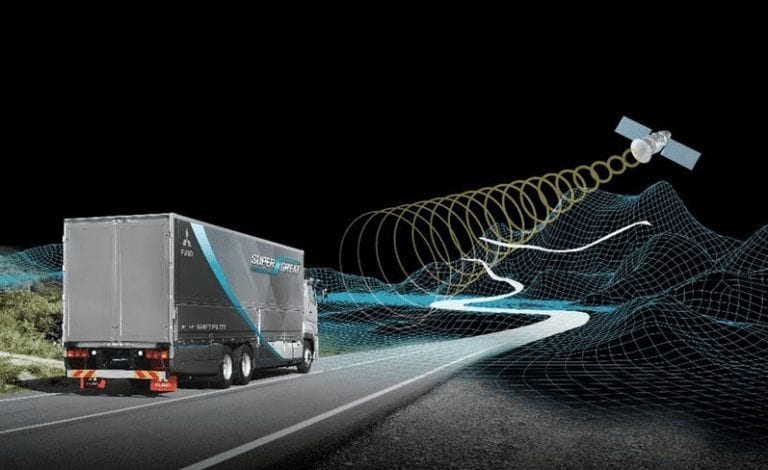
    MFTBC is using Microsoft Azure IoT Hub for its Truckonnect operation management system that connects trucks and buses to the cloud so as to enable vehicle location and remaining fuel to be monitored in real time, thereby preventing problems before they occur and enabling more efficient transport and smooth vehicle maintenance by sharing information with vehicle dispatch centres.

    3    Utilisation of Microsoft HoloLens to transform development and maintenance

    MFTBC and Microsoft Japan will make concrete preparations for deploying Microsoft HoloLens, a self-contained Windows 10-powered holographic computer, by the end of this year to revolutionise conventional vehicle design and development, preventive maintenance and other processes by enabling users, engineers, and designers to simultaneously share visualised 3-D data. HoloLens will unlock new possibilities in digital experiences, collaboration and workstyle by leveraging Mixed Reality (MR) technology that combines real and virtual worlds to utilise the best of both worlds by overlaying holograms (3-D virtual objects) on the real world in front of the viewer’s eyes.

    Microsoft Japan’s Enterprise Services will provide full backup for this project. Digital advisors belonging to a special unit dedicated to supporting the digital transformation of Microsoft Japan’s customers will assist with all aspects of the project up to deployment, including identifying issues and suggesting solutions that leverage the latest technology.

  • Dematic expands solution set to include AutoStore

    Dematic expands solution set to include AutoStore

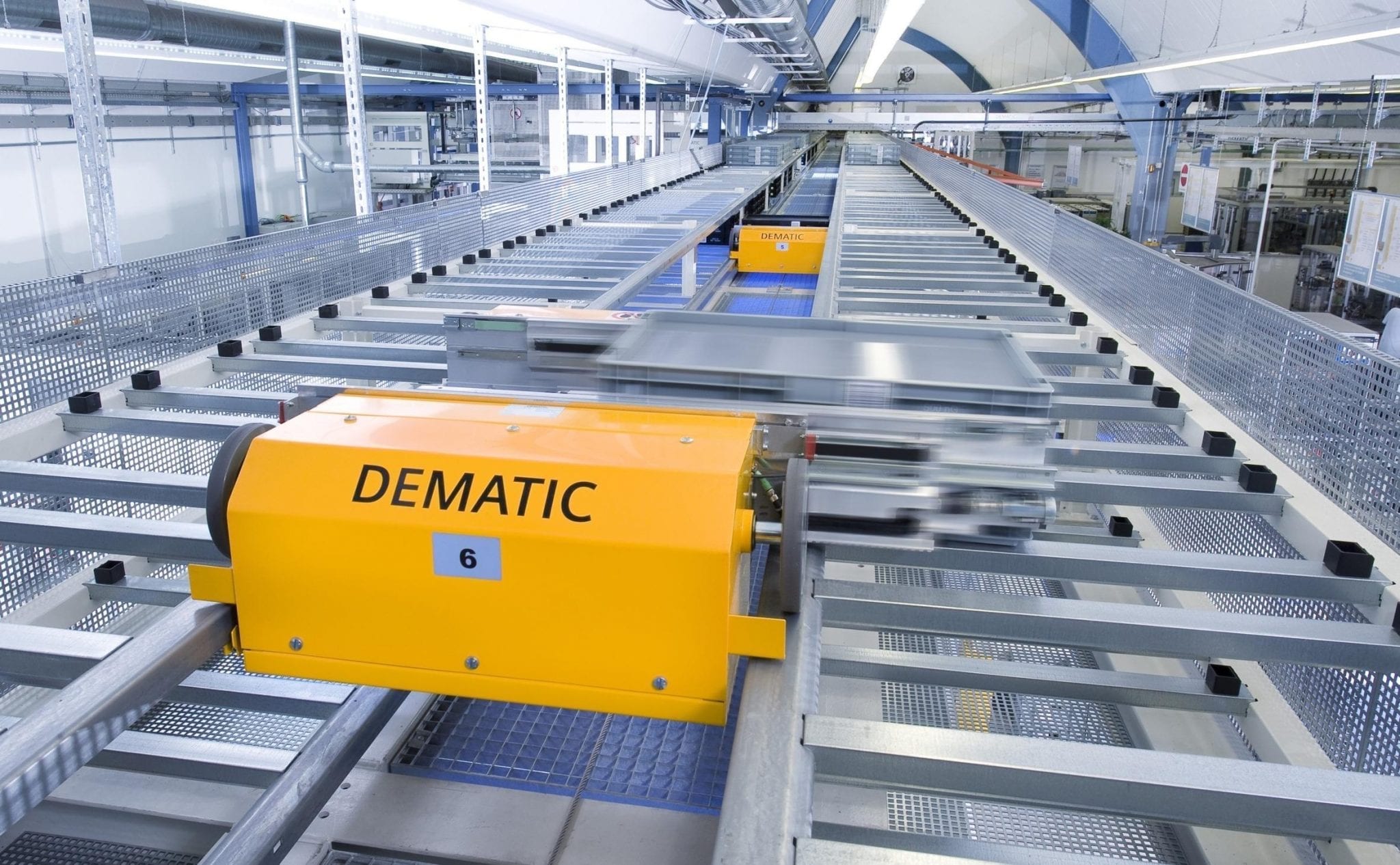
    Dematic has signed a global agreement with AutoStore. The agreement will enable Dematic to expand its omni-channel integrated solution offering with an ultra-high density storage and goods to person piece picking system to optimise order fulfilment and kitting. As a qualified system integrator, Dematic will design, configure, engineer, install and support AutoStore as a sub-system within an overall Dematic solution or as a standalone piece picking system throughout the globe.

    Dematic helps customers achieve operational excellence by offering the most appropriate solution for each application. Including the AutoStore system into the Dematic portfolio of solutions creates more choices for customers to optimise order fulfilment. For example, if storage density is the most important consideration, the AutoStore system may be the most effective option.

    With the AutoStore partnership, Dematic has the ability to provide scalable solutions that work across all elements of the dynamic order profiles and SKU velocities associated with e-commerce and omni-channel solutions. In addition, the Dematic iQ Warehouse Execution System (WES) will manage all functional areas of the operation including piece picking and the AutoStore system. This Dematic one source, solution provider capability, insures production and distribution operations employ a holistic integrated solution that harmonises information and material flow from receiving to shipping.

    “The Dematic suite of solutions is comprehensive; adding AutoStore to the mix enables users to obtain the ideal storage, buffering and piece picking solution” according to Jeff Moss, CEO, Dematic International. “The ability to design and implement a wide variety of system configurations is critical to effectively accommodate the growing demands of omni-channel distribution in this age of acceleration,” Moss continued. “The Dematic expanded solution will be a sure way for our customers to serve their customers better and faster.”

  • UPS appoints Harld Peters as new China president

    UPS appoints Harld Peters as new China president

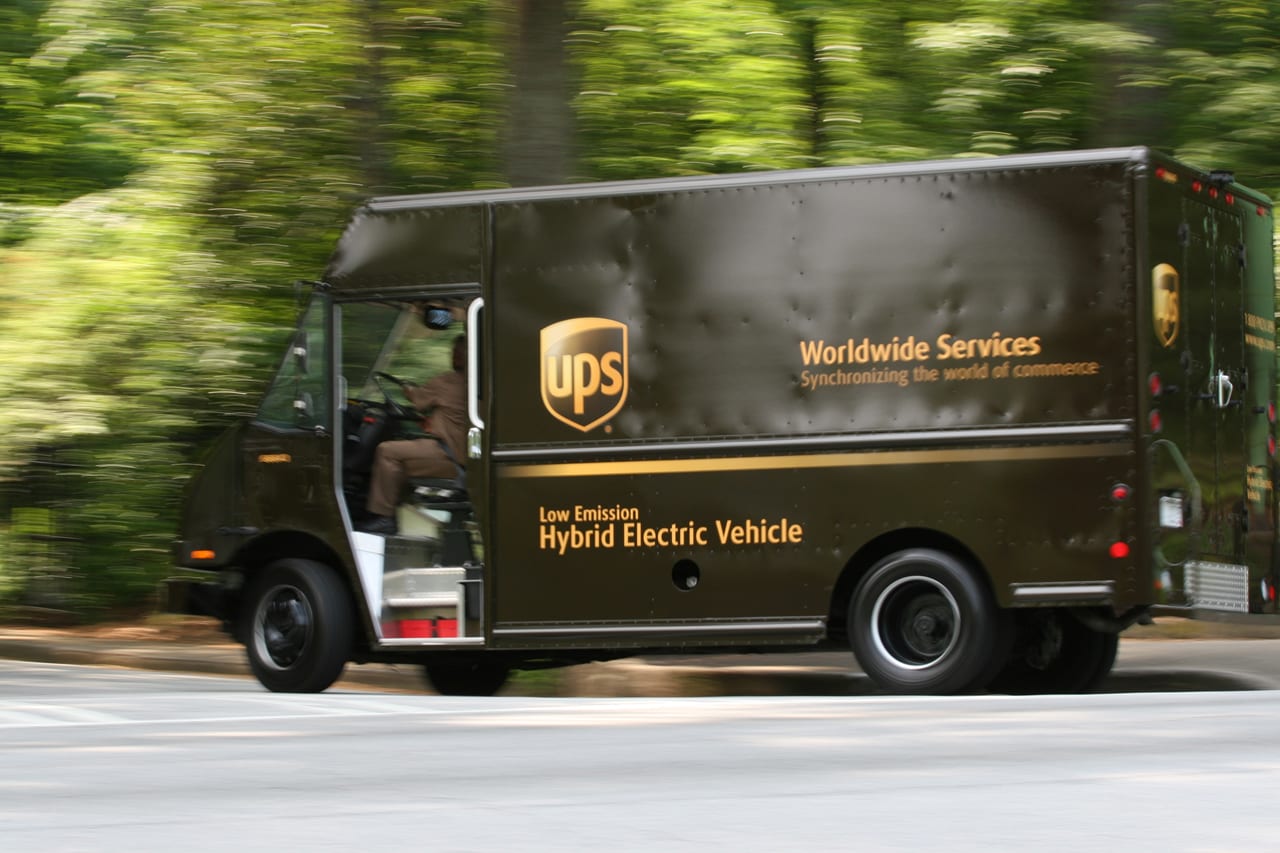
    UPS announced the appointment of Harld Peters as the new president of UPS China. A UPS veteran with 18 years of logistics experience, Peters will be responsible for leading strategic initiatives across UPS’s package delivery and supply chain operations in China. Peters succeeds Richard Loi, who will be retiring after 26 years of dedicated service with UPS.

    “The Belt and Road Initiative (BRI) will continue to open new trade corridors between two of the world’s biggest traders,” said Ross McCullough, president of UPS Asia Pacific. “Harld’s extensive experience working closely with European customers across major industry segments positions him well to bolster UPS’s Chinese customers in their efforts to accelerate growth overseas.”

    “As China continues to transform with increased cross-border commerce and with the rise of global markets, I am confident that Harld’s leadership will take UPS to the next level of growth in China,” he added.

    “UPS has made significant strides since we started doing business in Asia over 25 years ago,” said Harld Peters, President of UPS China. “Customers demand more from their partners with China’s transformation from a low cost manufacturing model to an innovation-driven economy. I am excited about leading the next phase in our growth, and building upon Richard’s successes in this key market for UPS. Our commitment to helping China go global will be seen in our upgraded global transportation network, rich industry intelligence and expanded service enhancement.”

    UPS has set in place a multi-year investment and growth plan for China that is focused on widening and deepening its geographical presence, and improving the customer experience through differentiated service offerings. Earlier this year, the company announced the addition of six stations to its Preferred Full and Less-than-Container Load (FCL and LCL) multimodal rail service between Europe and China. It also announced a joint venture with S.F. Holding, the parent company of S.F. Express, to develop and provide international delivery services initially from China to the US, with expansion plans for other destinations.

    Peters formerly served as President of UPS West Europe District, where he led the successful integration of over 10,000 UPS Access Point™ locations, a network of neighborhood stores and businesses that make online shopping and delivery more convenient for customers. He joined UPS in 1999 as a Contract Manager of Supply Chain Solutions in the Netherlands and later assumed various management positions in the Express and Supply Chain Solutions business units throughout Europe, including Vice President of Contract Logistics.

  • Third Party Logistics Market in China Growth at a CAGR of 10.16% by 2021

    Third Party Logistics Market in China Growth at a CAGR of 10.16% by 2021

    The third-party logistics market in China to grow at a CAGR of 10.16% during the period 2017-2021.

    Third Party Logistics Market in China 2017-2021, has been prepared based on an in-depth market analysis with inputs from industry experts. The report covers the market landscape and its growth prospects over the coming years. The report also includes a discussion of the key vendors operating in this market.

    One trend in the market is increase in overseas shopping. The preference for overseas shopping is increasing in China owing to the increased internet penetration. Consumers have access to various communication devices and payment methods and have become familiar with the mechanics and benefits of shopping online. In addition, the Internet has raised awareness of new online shopping destinations across the globe. Online shopping user base and the total amount of online shopping are showing strong growth momentum in China.

    The cross-border e-commerce transactions are expected to have more than 20% share in the total import and export trading volume of China by the end of 2016. E-commerce companies like Alibaba Group, JD.com, and NetEase have also entered the cross-border e-commerce business. To adapt to the changing demands, the logistics service providers need to be efficient in the supply chain process.

    According to the report, one driver in the market is growing demand from e-commerce sector. China is a leader in the global online retail market. In 2015, the share of online sales in the total retail sales in China was 11% while the online sales constituted only 8% of the total retail sales in the US. Online retail sales are growing at a YoY rate of 53%. Thus, in order to stay competitive in the e-commerce industry, the vendors need to find an effective approach to delivering their goods on time and meet the customer expectation of on-time delivery of goods. Thus, many e-commerce industries are demanding highly efficient logistics services like 3PL. 3PL also allows vendors to focus on other activities to promote their business while the logistics are handled by 3PL service providers.

  • Singapore GIC Makes First Investment in Indonesia’s Logistics Sector

    Singapore GIC Makes First Investment in Indonesia’s Logistics Sector

    Singapore sovereign wealth fund GIC has teamed up with Indonesia’s PT Mega Manunggal Property (MMP) to develop a portfolio of quality logistics warehouses over the next three years.

    The warehouses will boast nearly 500,000 sq m of net leasable area in both Greater Jakarta and Greater Surabaya in Indonesia, the two firms said in a joint press release issued yesterday.

    The partnership aims to meet increasing demand by companies for sophisticated inventory systems which cannot be fulfilled by traditional warehouses, they added.

    This is GIC’s maiden investment in Indonesia’s logistics sector.

    “We are attracted by the long- term growth of this sector, which is underpinned by the strong consumption of Indonesia’s rapidly rising middle class,” GIC Real Estate’s managing director and co-head of its Asia operations, Mr Loh Wai Keong, said. “We believe GIC’s knowledge and experience investing in logistics, both in Asia as well as other global markets, will add value to this partnership.”

    MMP, a publicly listed company in Indonesia, develops, owns and operates logistics properties, with a focus on international quality warehousing. “The partnership will also focus on increasing productivity,” MMP president director and chief executive Fernandus Chamsi said, adding that having good operations and quality human resources, as well as good corporate governance, helps.

    Indonesia was ranked 54th in the World Bank’s Logistics Performance Index of 2014. Restrictions on foreign investment in its logistics sector were recently loosened under President Joko Widodo as his administration aims for economic expansion and higher growth by 2019.

    GIC has over US$100 billion (S$135.9 billion) in assets under management in the property, private equity, fixed income and equity sectors in over 40 countries. It has been investing in emerging markets for over two decades.

    It has invested in Indonesia’s retail sector, putting in about 5.2 trillion rupiah (S$537 million) in PT Trans Retail, which operates hypermarkets, supermarkets and cash- and-carry stores under the Carrefour and TranSmart brands.

  • Logistics operators intensify e-commerce focus in Thailand and China

    Logistics operators intensify e-commerce focus in Thailand and China

    Global logistics companies continue to pile into the Asia e-commerce market, with Damco launching a China solution and DHL expanding its growing presence in the region deeper into Thailand.

    DHL is building a 32,000 square foot, central distribution center in Bangkok and a network of over 20 depots located throughout Thailand to provide full coverage across the country. To meet increasing business demands, the integrator plans to more than double the number of depots in Thailand by 2017 and expand its fleet primarily in two-wheel vehicles that can operate more efficiently in the traffic situations in Thailand’s major cities.

    “The Thai e-commerce market is expected to more than triple in size to $3.93 billion between now and 2020 and with this investment, we are well positioned to support the growth of e-commerce businesses in Thailand,”  said Thomas Kipp, CEO, DHL eCommerce.

    Only 1.7 percent of total sales in Thailand were obtained from e-commerce, compared to more than 10 percent in China, said Malcolm Monteiro, CEO, Asia Pacific, DHL eCommerce.

    “We see major strategic opportunities for e-commerce growth in Thailand, particularly with the Asean Economic Community which is expected to increase the movement of goods within the region,” Monteiro said.

    “Despite e-commerce already being a billion-dollar sector with extremely rapid adoption, Thailand’s e-commerce share of the retail market is still relatively low compared to other high-growth economies.”

    Damco has focused its latest service offering in China where it is launching an end-to-end e-commerce solution, from inbound goods management and consumer order receipt to final delivery.

    Damon Gu, Damco’s head of supply chain management for Asia, said the large and rapidly growing Chinese market for online shopping was a magnet for both importers and domestic producers.

    “Online shopping events such as China Singles Day are already creating world-beating levels of activity for e-retailers locally in China, as well as globally,” he said. “Discerning Chinese consumers in this highly competitive marketplace expect the highest standards of fulfilment. This new program helps companies to guarantee that level of service.”

    Using its 1,500 local staff and 26 locations in China, Damco will arrange delivery to end-consumers in more than 1,600 Chinese cities.

  • SingPost to build $150 mil mall offering e-commerce logistics solutions

    SingPost to build $150 mil mall offering e-commerce logistics solutions

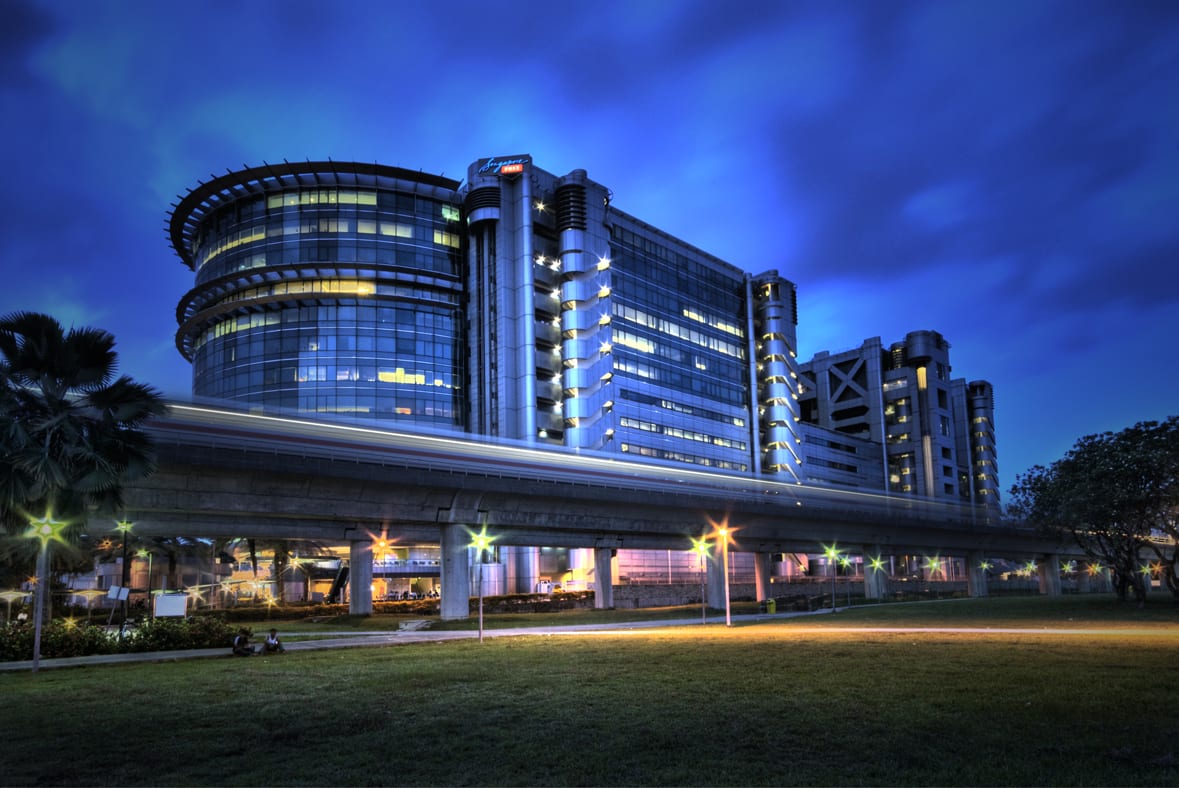
    Singapore Post will build a $150 million shopping mall that offers a “complete suite” of e-commerce logistics solutions, the first of its kind in Singapore.

    The new retail mall at Singapore Post Centre (SPC) will boast 269,097.8 sf of retail space and it will be located next to the Paya Lebar MRT station.

    Construction works have commenced today with a target completion in around mid-2017. It includes upgrading amenities and facade for the adjoining office building.

    The postal and e-commerce logistics provider says this development is aimed at creating opportunities for businesses in the changing retail landscape and catering to the evolving needs of consumers.

    It will offer greater convenience, choices and experiences to consumers by providing online e-merchants and offline brick-and-mortar shops all under one roof, SingPost says.

    It adds that online shopping through e-merchants will include in-shop online ordering and flexibility in delivery and pickup timings.

    SingPost ended lower at $1.90 on Tuesday.