Tag: longchamp

  • “Longchamp Embraces Green Retail Revolution with Pop-Up Concept Store in Hong Kong”

    “Longchamp Embraces Green Retail Revolution with Pop-Up Concept Store in Hong Kong”

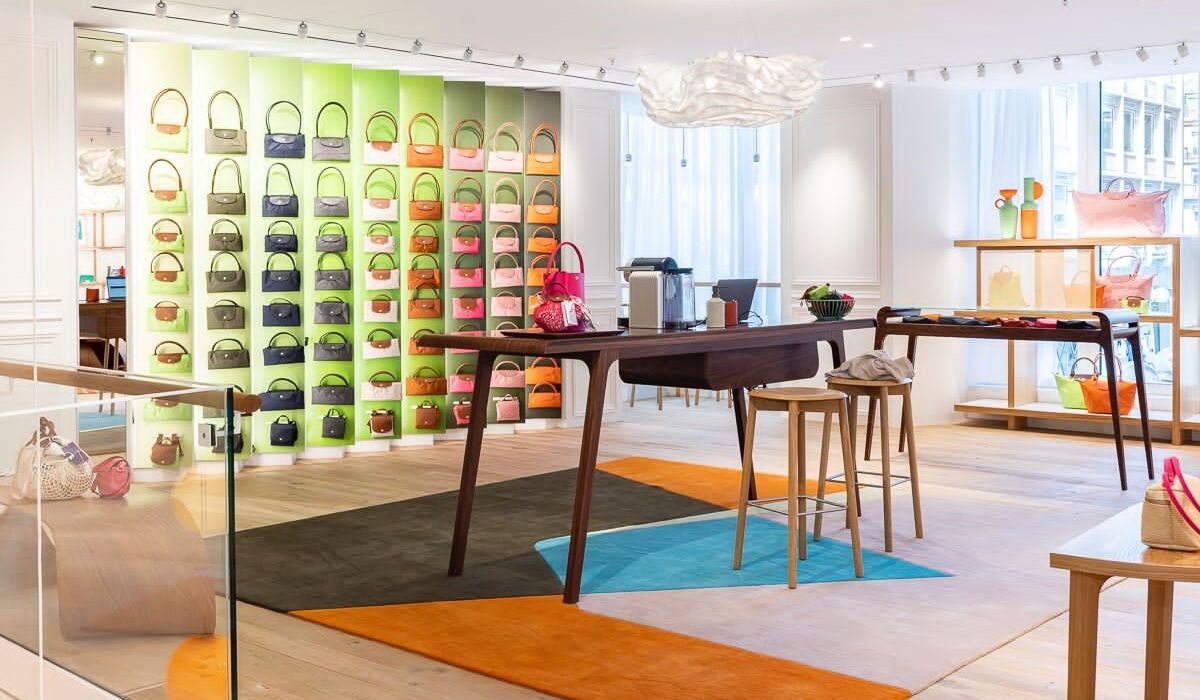
    In its ongoing pursuit of innovative retail formats and engaging visual narrations, Longchamp has launched a one-of-a-kind “Green Concept Store” on a temporary basis at Pacific Place, Hong Kong.

    A Green Retail Experience

    The pop-up store, which was launched on October 24, boasts an exclusively green interior – an aesthetic feature which extends to the walls, flooring, and fixtures. Darker tones have been incorporated into the design as a nod to the brand’s long-standing heritage.

    The concept store is an extension of Longchamp’s shift towards experiential retail, placing greater emphasis on the ambiance and design of the shopping environment than on traditional merchandising. Offering an immersive and extraordinary setting, the store is designed as an interlude, inviting visitors to experience the essence of the brand in a novel way.

    Star-Studded Opening

    To celebrate the launch, Longchamp hosted an event that saw attendance from notable personalities from the acting and fashion industries, including singer Jace Chan, actress Fish Liew, actor Martin Wong, and fashion figures Faye Tsui, Evelyn Choi, Zoe Yu, and Angie Ng.

    This temporary store in Hong Kong follows the August relaunch of the brand’s two refurbished stores in Singapore, situated at Ion Orchard and Marina Bay Sands.

    Questions & Answers

    What is the concept behind Longchamp’s Green Concept Store in Hong Kong?
    The Green Concept Store is an extension of Longchamp’s shift towards experiential retail. It’s a store designed with an immersive and unique setting, allowing visitors to experience the brand in a fresh, unconventional way.

    What does the interior of the Green Concept Store look like?
    The store is entirely enveloped in green, from walls and flooring to fixtures, with darker shades incorporated to reference the brand’s heritage.

    Where are Longchamp’s other recently renovated stores located?
    The recently renovated Longchamp stores are located in Singapore, at Ion Orchard and Marina Bay Sands.

  • Longchamp Unveils Stylishly Renovated Boutiques at ION Orchard and Marina Bay Sands

    Longchamp Unveils Stylishly Renovated Boutiques at ION Orchard and Marina Bay Sands

    Longchamp has breathed new life into its boutiques at ION Orchard and The Shoppes at Marina Bay Sands in Singapore, unveiling a stunning redesign inspired by the essence of a stylish Parisian apartment. The renovations promise an inviting atmosphere that embodies the luxury of both the brand and the city.

    The refreshed façades feature elegant, tone-on-tone wood-clad panels, creating a sophisticated backdrop that allows the brand’s vibrant products to pop. Inside, each section of the boutique unfolds a unique theme: a workshop-style welcome desk curates seasonal highlights, while a Haussmannian-style lounge provides a cozy retreat adorned with vintage furnishings. A captivating “library” wall showcases the iconic Le Pliage® bags, artfully arranged by color and format, transforming the shopping space into a style gallery.

    Moreover, Longchamp celebrates its signature leather lines, Le Roseau and Le Foulonné, prominently within the spaces, alongside the new Berry Bon Bon podiums at ION Orchard. The meticulous attention to detail shines through in the rich dark and light green accents and bespoke decorative pieces. Not to mention, the creative product displays incorporate whimsical touches, featuring fruit baskets and lacquer trays designed by Philippe Model — who knew shopping could resemble a stroll through a chic gallery?

    This redesign not only underscores Longchamp’s commitment to heritage and craftsmanship but also enhances the shopping experience, inviting customers to immerse themselves in a uniquely Parisian ambiance right in the heart of Singapore.

    Questions & Answers

    What inspired the new design of Longchamp’s boutiques in Singapore?
    The new design is directly inspired by a chic Parisian apartment, aiming to create a warm and inviting atmosphere for customers.

    What unique features can shoppers expect to see inside the renovated stores?
    The boutiques feature distinct themed areas, including a workshop-style welcome desk, a vintage lounge, and a “library” wall showcasing the iconic Le Pliage® bags arranged by color.

    How does the redesign reflect Longchamp’s brand values?
    The renovation highlights Longchamp’s heritage, craftsmanship, and Parisian roots, all while offering an immersive shopping experience that invites customers to engage with the brand more personally.

  • Longchamp Unveils Parisian-inspired Redesign For Singapore Boutiques Following Record-breaking Sales Year

    Longchamp Unveils Parisian-inspired Redesign For Singapore Boutiques Following Record-breaking Sales Year

    The renowned luxury bag label, Longchamp, has given its two Singapore stores, located at Ion Orchard and Marina Bay Sands, a fresh new look.

    The Inspiration Behind the Redesign

    The revamped boutiques draw design inspiration from Parisian apartments, an aesthetic that resonates strongly with the brand’s French heritage. The chic, revamped spaces boast bookshelf-style displays, where the brand’s key seasonal pieces take center stage.

    A monochromatic color palette has been used across the stores’ wood-clad panels, further reinforcing the sophisticated Parisian vibe.

    Season’s Latest Collection Displayed

    Customers visiting the renovated Longchamp outlets will be able to explore the brand’s latest collection of leather goods and accessories. These have been thoughtfully showcased alongside a variety of mix-and-match decorative objects.

    Following the overall design theme, these objects are styled using a deep green colour palette, lending an atmosphere reminiscent of a refined Parisian apartment.

    A Success Story

    The renovation of these boutiques comes on the heels of a record-setting fiscal year for Longchamp. The brand’s strong performance was significantly influenced by its robust sales in South Korea and Europe.

    Questions & Answers

    What was the inspiration for the redesign of Longchamp’s boutiques in Singapore?
    The redesign of Longchamp’s boutiques was inspired by the aesthetic of Parisian apartments, mirroring the brand’s French heritage.

    What are the characteristic elements of the renovated boutiques?
    The renovated boutiques feature bookshelf-style displays, wood-clad panels with a monochromatic colour scheme, and a deep green colour theme for the decorative objects.

    What was significant about Longchamp’s performance in the last fiscal year?
    The last fiscal year set a sales record for Longchamp, with a significant contribution coming from robust sales in South Korea and Europe.

  • Longchamp to invest in China

    Longchamp to invest in China

    French handbag label Longchamp sees the China and US markets as key in boosting its global sales.

    Facing sluggish traditional European markets, the company is looking to celebrity endorsements and online opportunities to drive growth, according to CEO Jean Cassegrain.

    “We’re entering a different phase of growth, it’s no longer about store openings but about improving the performance of our current network,” Cassegrain said in an interview.

    China is already Longchamp’s second biggest market, behind France, where turnover took a hit as tourist numbers dived in the wake of terror attacks on Paris in 2015.

    However Cassegrain said in the interview he expected the privately owned company would outperform the wider luxury industry by next year.

    While the firm does not traditionally reveal sales or profit data, it did report sales of US$658.11 million in 2015 and independent analysts estimate turnover remains close to that.

    Longchamp China currently sells products through Tencent’s WeChat social media platform with the brand planning its own direct e-commerce platform soon.

    In the US it plans to open several more stores within the next 12 months, but beyond that believes its global retail footprint is relatively mature.

  • Longchamp opens boutique at HKIA

    Longchamp opens boutique at HKIA

    Travel retailer Dufry has launched a Longchamp boutique at Hong Kong International Airport.

    It is the world’s first duty-free boutique to host a Longchamp “personalisation station” offering to stamp customer initials on their purchases.

    Dufry’s global head of luxury Coral Clavero said, “The HKIA store will be the first duty-free point of sale worldwide to offer the personalisation service with the hot stamping machine, and premium product lines, including an exclusive selection of items.

    “Dufry values its strong partnership with Longchamp, which has been built on the basis of mutual trust and the satisfaction of a well done job in the industry. This enduring and collaborative partnership goes back more than 15 years and accounts for a distribution network of over 25 points of sale, geographically spread around the world.”

    Longchamp CEO Jean Cassegrain said airport locations have played a significant role in the history of the brand, both as a point of departure and one of growth.

    “This new boutique is an opportunity to connect with our clientele from around the world while paying tribute to our origins. We are happy to be growing our network in Hong Kong and strengthening the ties between our home, Paris and Hong Kong, two cities overflowing with energy and creativity.”

  • Longchamp expands with fourth store in the Philippines

    Longchamp expands with fourth store in the Philippines

    French handbag brand Longchamp Philippines has opened its fourth boutique, in Rustan’s Makati.

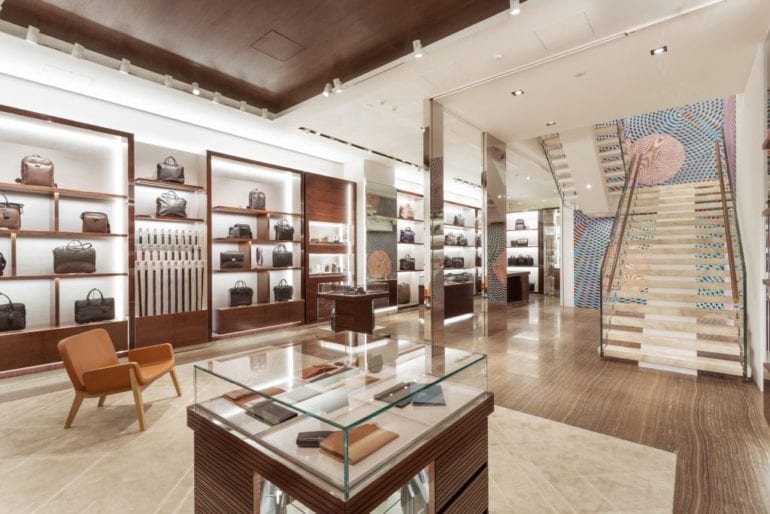
    Inspired by the brand’s Paris flagship along rue Saint-Honore, the new 65sqm store is  decorated with modern interiors – lots of wood, leather and fabric, and rich textures in order  to highlight the collections.

    “We are honored to welcome Longchamp into a bigger and better space at Rustan’s Makati. As a brand beloved not only by the Filipino shoppers but by the entire global community, Longchamp further brings prestige and is truly a great part of the Rustan’s portfolio of distinguished retail partners,” said Rustan’s president Donnie Tantoco.

    The store is highlighted by Longchamp’s Spring/Summer collection featuring African-inspired patterns, prints and colors, as well as the signature Mademoiselle handbag, the classic Le Pliage tote, and other leather goods.

  • Longchamp Philippines expands with fourth store

    Longchamp Philippines expands with fourth store

    French handbag brand Longchamp Philippines has opened its fourth boutique, in Rustan’s Makati.

    Inspired by the brand’s Paris flagship along rue Saint-Honore, the new 65sqm store is  decorated with modern interiors – lots of wood, leather and fabric, and rich textures in order  to highlight the collections.

    “We are honored to welcome Longchamp into a bigger and better space at Rustan’s Makati. As a brand beloved not only by the Filipino shoppers but by the entire global community, Longchamp further brings prestige and is truly a great part of the Rustan’s portfolio of distinguished retail partners,” said Rustan’s president Donnie Tantoco.

    The store is highlighted by Longchamp’s Spring/Summer collection featuring African-inspired patterns, prints and colors, as well as the signature Mademoiselle handbag, the classic Le Pliage tote, and other leather goods.

  • Longchamp opens the biggest store in Asia

    Longchamp opens the biggest store in Asia

    French leather goods brand Longchamp officially opened its biggest Asian store in Tokyo in October 2017. The move signals a move to attract more Japanese clientele to the Parisian brand, as well as tourist shoppers visiting Japan.

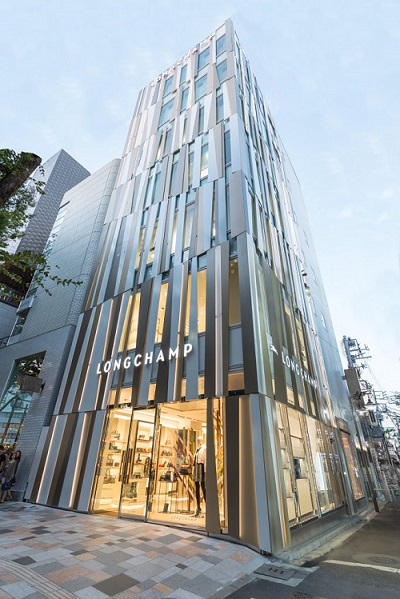
    Dubbed ‘La Maison Omotesando’, the Japanese flagship store is located on Tokyo’s prestigious Omotesando Avenue. Standing 35 metres high and covering 500 square metres of retail floor space, the Asian flagship opened to much fanfare 19 October 2017, with the attendance of French actress – and Longchamp fan — Audrey Tatou.

    Inside, the Tokyo store sells Longchamp’s complete range of leather goods and handbags, as well as footwear, women’s fashion and menswear, the latter a collection-first for the Japanese market, which is located on the basement level of the multi-level store.

    Longchamp opens in ‘Maison Omotesando’ in Tokyo, biggest Asia store yet 2
    Source : prestigeonline.com

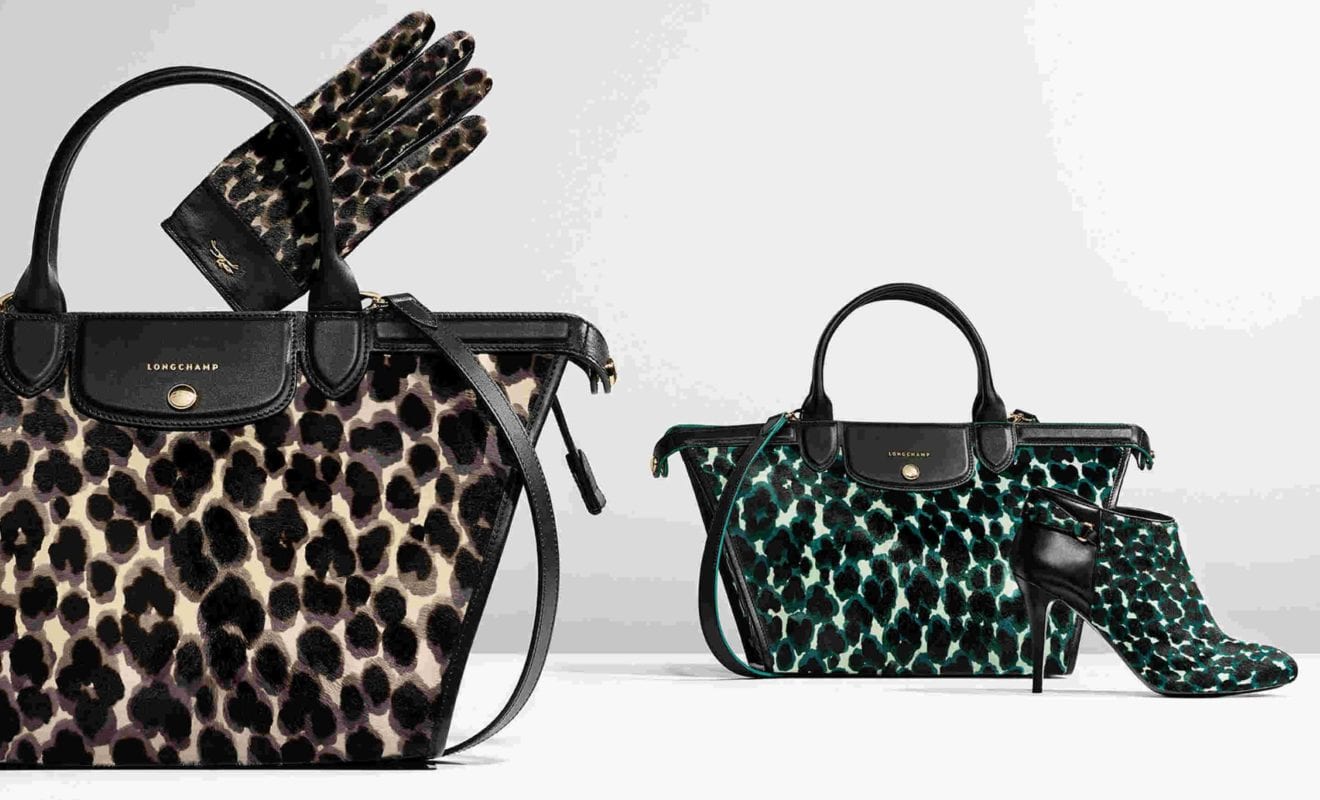
    In time for the new store launch, the luxury leather goods company unveiled its ‘Intempor’elle’ collection too. The autumn 2017 collection is composed of ready-to-wear pieces, handbags and boots. Key items include an updated two-tone Pénélope bag, studded and panther-print calf fur versions of the iconic “Mademoiselle Longchamp” messenger, and a clutch sporting a winged-horse motif.

    Speaking at the opening, Jean Cassegrain, Longchamp managing director, said the store will serve as a showcase of the brand’s way of life and collections.

    “This strategic and attractive store, which will serve as a showcase for our brand and our craftsmanship, allows us to welcome more Japanese clientele, but also tourists from across the globe, with whom we will have the pleasure of sharing the French way of life, and the creativity and quality of our collections,” said Cassegrain.

    With 210 sales points in Asia, the Asia market represented 28 percent of Longchamp’s total revenues in 2016.

    Founded in 1948, the Paris brand is sold in 80 countries across 1,500 sales points globally. This includes namesake stores and franchises, department store counters, leathergood retailers, airport concessions and online stores. The firm directly operates 300 stores worldwide.

  • Longchamp Japan opens largest store in Asia

    Longchamp Japan opens largest store in Asia

    Longchamp Japan has launched its largest store for Asia with a flagship in Tokyo’s fashion mecca Shibuya.

    French actress Audrey Tautou attended the inauguration of La Maison Omotesando, which has a 35m-high facade and offers 500sqm of retail space.

    It features all the French brand’s collections – leather goods, footwear, women’s ready-to-wear and, occupying the basement, men’s lines.

  • Longchamp Singapore reopens at Paragon

    Longchamp Singapore reopens at Paragon

    Longchamp Singapore has reopened its Paragon mall boutique.

    Marking the relaunch at 02-40 kiosk, the French luxury leather brand released its Mademoiselle Longchamp range of bags, which is exclusively distributed there until September 15, and at all Longchamp outlets thereafter.

    Inspired by 1970s heroines such as Jane Birkin and Francoise Hardy, the bags are available in black, grey, cognac and mimosa, and are sold from US$630 to $1955.

  • Longchamp and Burberry have set up store on WeChat, China’s top messenger app

    Longchamp and Burberry have set up store on WeChat, China’s top messenger app

    Longchamp and Burberry have arrange shops on WeChat, China’s prime messenger app. In addition to chatting with buddies and idly thumbing via their social feeds, now you can purchase luxurious baggage off China’s largest social app, WeChat.

    The nation’s hottest messenger app — which boasted almost 900 million day by day customers final year — is so ubiquitous that luxurious manufacturers like Longchamp and Burberry are leaping onboard.

    Massive manufacturers like Louis Vuitton, Givenchy and Dior are additionally testing demand via flash gross sales.


    Early adopter, Longchamp, has already launched two in-app shops. One permits individuals to create customised merchandise from the French maker, and the opposite permits individuals to put up their experiences with Longchamp’s bodily shops.

    The corporate discovered that WeChat pulled in a whole lot of gross sales, after earlier experiments with social media advertising and marketing in China. WeChat appeared simpler than different e-commerce platforms, Cassegrain added. “A technique or one other, WeChat will considerably contribute to our gross sales.”

    WeChat is taking on every little thing

    This validation for WeChat is a giant deal. The app began out as a messenger earlier than including a Fb-style timeline characteristic, permitting individuals to blast their lives to buddies.

    Right now, you’d discover WeChat’s in-app pockets generally used for transferring cash to buddies, in addition to paying retailers of all sizes, from roadside stalls to massive retail shops. This cost is commonly performed by scanning a easy QR code.

    However will that spending translate to massive ticket objects from luxurious manufacturers? That continues to be to be seen, say trade watchers.

    Pablo Mauron, managing director in China for Digital Luxurious Group, a high-end digital advertising and marketing agency, stated: “For the posh trade, it’s vital to not idiot ourselves.”

    “I’m nonetheless uncertain that somebody that doesn’t have a relationship with a model will purchase a $20,000 watch on WeChat.”

    Nonetheless, manufacturers organising WeChat shops creates a singular closed loop not seen in lots of different examples outdoors of China. This loop takes customers from the preliminary contact with the model, to the acquisition, and straight via to a personalised customer support channel.

  • Longchamp opens Shanghai flagship, plans more China stores

    Longchamp opens Shanghai flagship, plans more China stores

    Longchamp has opened a new China flagship store in Shanghai, with plans for the French luxury brand to open another flagship store in Beijing later in the year.

    Located at the Jing An Kerry Centre on Shanghai’s Nanjing Road West, the new Longchamp flagship offers the biggest selection of fashion, bags and accessories from the Parisian leathergoods brand. This includes women’s ready-to-wear, shoes, handbags, leather accessories, as well as men’s collections and luggage bags.

    According to Longchamp CEO Jean Cassegrain, the luxury brand is considering opening stores in the country’s capital, and in second-tier cities such a Changsha.

    “There is a potential for us to open stores at new locations and there are still cities where we are not present,” Cassegrain told China Daily this week.

    “In October, we will open a new store in Beijing, at a landmark shopping mall on Wangfujing Street,” he added.In addition to physical stores, Longchamp products are available for purchase in China on social media platform, WeChat, via the Longchamp account. According to the CEO, e- and m-commerce are yet to be fully explored in the Asian market.

    “It is our plan to continue developing online channels in China,” he said.

    Longchamp’s retail push comes as experts predict the return of luxury spending in China over the next three years. In a report, Bain Consulting Group said the proportion of global luxury consumption accounted for by Chinese consumers would increase from the current 30% to 35% by 2020.

    Longchamp currently has 18 stores in China. It counts 1,500 points of sale across 80 countries spanning exclusive brand and franchise stores, department store concessions, multibrand leathergoods stores, airport stores and online sales. The brand directly manages more than 300 points of sale through 21 distribution subsidiaries.

  • Closing shop on China’s e-commerce platforms

    Closing shop on China’s e-commerce platforms

    The closures of a number of retail and luxury brand giants on China’s e-commerce platforms indicate that retail competition is no less fierce online than offline.

    It is old news that the Chinese market is highly competitive and unlike any other market in the world. What may sell on the high street in London is not guaranteed to sell in China. The rainbow-lensed promises of e-commerce seem to be an easy way to access China’s 770.4 million working population, 0.2 per cent or over 1.5 million of which have an average income of US$500,000.

    Political concerns and falling sales: Lotte

    In 2015, Lotte Group Retail opened a Tmall store, hoping to widen its reach in China, where over 60 per cent of its overseas stores are located. The large South Korean multinational conglomerate has had a presence in China for over 20 years, with 115 supermarkets and five shopping malls.

    But on January 12 this year, Lotte closed its Tmall store – along with three brick-and-mortar stores in Beijing – after rising political tension between China and South Korea. In December, Lotte’s China headquarters admitted that the company was facing investigations for tax, fire control and safety issues. However, the closure of its Tmall store seems to have stemmed also from the fact that China is Lotte’s only international market where growth is stymying. Sales fell during the last three months of 2016, year-on-year.

    While Lotte remains in the market through its physical shopping malls and supermarkets, and on the JD.com website, the company has not announced whether it will be reopening its Tmall store at any future date.

    Heavy local competition: Asos

    Asos, the UK’s largest online fashion retailer, entered China in 2013 with high expectations. The company announced it was investing RMB 100 million (US$14.5 million) towards the market, importing British styles and developing a sales force. Its business model relied exclusively on e-commerce, with its own website, as well as a Tmall store.

    However, Asos failed to attract enough customers and was running a loss of GBP 4 million (US$5 million) by April of 2016, when it announced that it was shutting down its China operations.

    Asos faced a number of problems in the Chinese market, from operations to marketing. When it first started, the company encountered issues with shipping though China Post, with customers paying import taxes on clothes. Eventually, Asos obtained a local warehouse, but then it encountered complex clothing trade regulations in China, particularly in regards to correct labelling. As a result, Asos had to spend additional funds on restitching to comply with local code, contributing to higher than expected start-up costs.

    Effective marketing was also a major issue for Asos, with the company failing to distinguish itself from local, more affordable brands. While it may be a major player in the US and Europe, Asos was relatively unknown to Chinese millennials, its target consumer base.

    Tmall concerns for luxury brands: Coach

    Coach was one of the first US luxury handbag brands to launch a Tmall store, creating a pop-up store from December 2011 to January 2012, and then an official one in 2015. However, citing a shifting operational strategy, Coach announced that it was leaving the platform just one year later in September 2016.

    China is a critical market for luxury goods, as sales in the US and Europe steadily decline. Many brands see e-commerce as a way to directly access customers and receive greater exposure, which is why many have moved onto online platforms en masse. Despite this, online platforms have always been a concern for luxury brands, who fear appearing too mass market. Moreover, Alibaba has been criticised by brands for not doing enough to remove fake goods, despite a counterfeit removal program. In 2016, Gucci and Michael Kors quit the anti-counterfeit coalition as protest against the program’s inefficacy.

    Coach still remains in the Chinese market through its WeChat account, an avenue that is growing in popularity amongst luxury brands. Cartier, Longchamp, and Montblanc all have WeChat shops with WePay functions. Some companies believe that WeChat offers a more personalised shopping experience, as well as greater control over its brand.

    For many luxury brands, online platforms are more for marketing and building brand image, rather than sales. However, official Tmall flagship stores do not receive priority listing on searches. In fact, according to a 2016 study by L2, only 12 per cent of first page Tmall search results were through the official Coach shop. The only luxury brands that controlled more than 80 per cent of first page search results were Ports 1961, Burberry, Tommy Hilfiger, Calvin Klein, and Tumi.

    Key Takeaways

    E-commerce is a high-growth sector, with online retail sales totaling US$581.61 billion in 2015, and it is estimated to grow 20 per cent annually by 2020. China is now the biggest online retail market in the world, and Chinese consumers make up almost half of all online sales globally.

    Companies looking to take advantage of China’s market size and sell to Chinese consumers often mistakenly believe that e-commerce offers a shortcut to success. While a misconception, this idea is understandable. There are fewer licensing requirements to operate through e-commerce, and customs clearance is faster.

    However, as has been demonstrated through high-profile store closures in 2016, e-commerce requires extensive pre-entry knowledge of current regulations, a realistic logistics plan, and a local marketing strategy. Those who enter the market blindly do so at the risk of expensive learning curves and wasted efforts.

    • This article was first published on dezshira.com.  Since its establishment in 1992, Dezan Shira & Associates has been guiding foreign clients through Asia’s complex regulatory environment and assisting them with all aspects of legal, accounting, tax, internal control, HR, payroll, and audit matters. For inquiries, email [email protected].
  • Indonesia leading charge, says Asia Luxury Index

    Indonesia leading charge, says Asia Luxury Index

    Indonesians have become Asia’s foremost online buyers of luxury goods, according to the latest Asia Luxury Index.

    Amid difficult economic conditions, online sales of luxury goods in Indonesia have grown by 84 per cent, according to the index, which draws mainly on the sales data of Reebonz, a Singapore-based eCommerce platform for luxury products.

    Reebonz Indonesia executive manager Anggono Wijaya says social media, digital marketing and collaborations with influencers and young designers were among the main reasons behind the ballooning sales.

    Senior marketing manager Bernard Widjaja Ng says the group of luxury consumers is evolving and expanding as luxury is no longer just for the select few. “With growing affluence and accessibility, more consumers can readily buy luxury goods.”

    He says consumers have also become younger, with 21-year-olds starting to buy luxury goods. “There is a shift in an economical class of buyers, as people from the B-level economy have started to buy luxury goods.”

    Accounting for 62 per cent of online transactions in Asia are bags, with Balenciaga, Fendi and Longchamp topping the brand list in Indonesia. The report also notes an 87 per cent rise in shoe sales and a 39 per cent increase in timepiece sales.

    It also notes a shift in buying trends, with a 30 per cent increase in pre-owned luxury goods sales.

    Topping the brand list in this category are bags and shoes by Chanel, Hermes, Louis Vuitton and Prada.

    Starting as a luxury product retailer in Singapore, Reebonz has expanded via eCommerce platforms with offices in Indonesia, Australia, Hong Kong, Malaysia, South Korea, Thailand and Taiwan.

  • Valentino heading into India

    Valentino heading into India

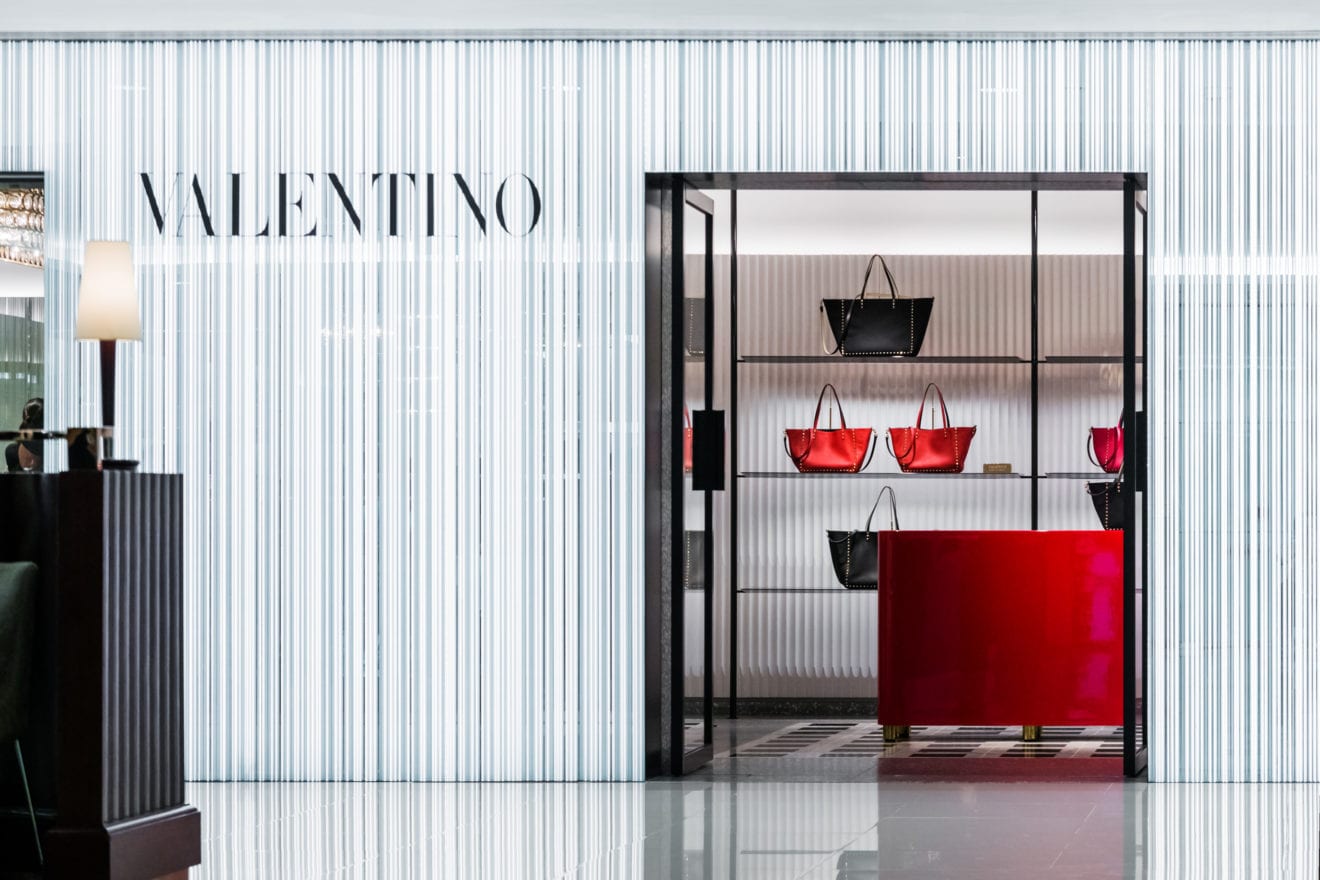
    Italian fashion house Valentino is about to enter India, joining a growing list of luxury brands changing their focus to a buoyant retail scene far from the slowing Chinese economy.

    Valentino is reportedly dealing with IDFS Tradings and is also in talks with DLF Luxury Retail.

    Over the past few months, French luxury leather-goods maker Longchamp, Italian bespoke menswear brand Isaia and Swiss watch brand Bovet have been launched in India.

    One commentator says the possibilities of an omni-channel strategy is among factors attracting top brands to India.