Tag: Lotte Department Store

  • Korean retailers struggle amid sluggish demand

    Korean retailers struggle amid sluggish demand

    The first quarter of 2025 presented significant challenges for the South Korean department store industry due to a notable decrease in domestic consumption. This tough economic climate had a substantial impact on sales and profits. Lotte Department Store was the only major player to announce a significant increase in profits, primarily attributed to its strong overseas operations and internal streamlining.

    Lotte Department Store reported a 44.3% year-on-year increase in its operating profit to 130 billion won in Q1 2025. This growth occurred despite a minor 1.1% drop in revenue, falling to 806.3 billion won. The company attributed this positive development to their aggressive cost-efficiency strategies, including shutting down underperforming stores and reinvesting in flagship locations. Additionally, their international business arm recorded a 6.2% revenue increase, marking its return to profitability.

    In contrast, Lotte’s rivals, Shinsegae and Hyundai Department Store, failed to meet their profit expectations. Shinsegae’s revenue fell by 0.8% to 659 billion won, while its operating profit decreased by 5.1% to 107.9 billion won. Hyundai also experienced a 0.8% decline in sales, falling to 589 billion won, and a 5.7% reduction in operating income to 97.2 billion won.

    This downward trend was linked to a poor performance across almost all product categories due to growing consumer pessimism and colder-than-average winter weather, which adversely affected fashion sales. This is a significant blow considering that fashion typically represents up to 50% of annual department store revenue.

    Challenging Market Conditions

    An industry official said, “Political instability due to emergency rule, increased trade uncertainty stemming from US tariff actions and unpredictable weather have all negatively affected our performance.” This statement reflects the combined impact of domestic and global challenges on the sector.

    On a brighter note, E-Mart, the market leader in the big-box retail sector, reported impressive first-quarter results. The company’s standalone revenue rose 10.1% year-on-year to 4.63 trillion won, while operating profit surged 43.1%, reaching 133.3 billion won. This was its best quarterly performance since 2018.

    Company executives credited this achievement to an increase in foot traffic at both its standard discount stores and warehouse-style Traders locations. This indicates a resurgence in consumer interest in brick-and-mortar shopping, despite the ongoing economic uncertainty.

    In contrast, Lotte Mart reported a modest 0.3% rise in revenue to 1.49 trillion won, while its operating profit fell sharply by 34.8% to 28.1 billion won. Its domestic operating profit, excluding overseas earnings, dropped by a staggering 73.6% from the previous year.

    The Power of Pricing Strategy

    Both E-Mart and Lotte Mart have focused on low-price strategies through centralized purchasing. However, E-Mart’s larger scale has given it a stronger position to pass savings onto consumers. Its aggressive promotions, including the “Price Shock Declaration” and “Great Eat Festa”, were widely credited as contributing to its superior performance.

    An industry official commented, “As integrated purchasing intensifies, the retailer with greater volume naturally holds an advantage in reducing procurement costs.” They predicted a potential promotional war in the second half of the year if Lotte Mart decides to roll out large-scale discounts to regain market share.

    Questions & Answers

    Why did Lotte Department Store outperform its competitors in Q1 2025?
    Answer: Lotte’s strong performance is attributed to its successful international business and aggressive cost-efficiency measures, which included closing underperforming stores and reinvesting in flagship locations.

    How did the weather impact the performance of department stores?
    Answer: An unusually cold winter affected the sales of fashion items, which typically make up to 50% of annual department store revenue.

    What factors contributed to E-Mart’s strong first-quarter performance?
    Answer: E-Mart’s success is credited to both an increase in foot traffic at its stores and aggressive promotions that passed on savings to consumers.
  • Lotte brings in The Conran Shop to Korea

    Lotte brings in The Conran Shop to Korea

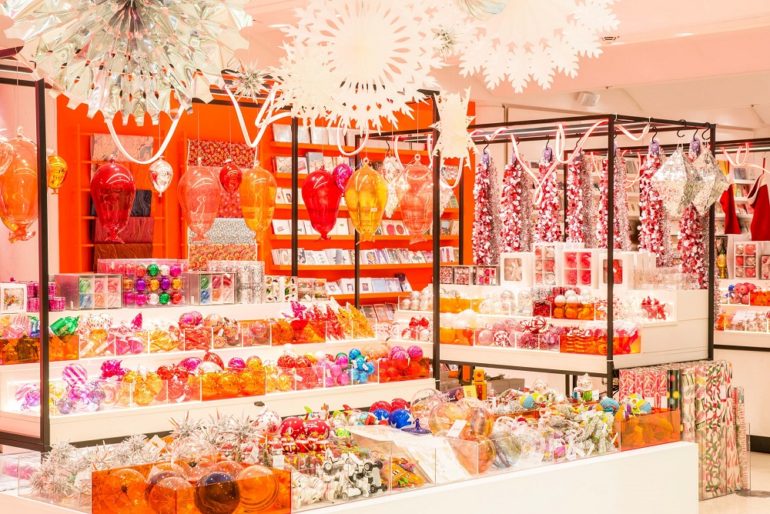
    ondon-based high-end furniture and home furnishing store chain The Conran Shop will open its first South Korean outlet in the second half of next year in partnership with the country’s leading department store chain Lotte Department Store.

    Lotte Department Store said on December 13 it has signed a contract to run Korean stores of The Conran Shop with Conran Retail and Brand Holdings. They aim to open The Conrad’s first local outlet in the second half of next year on an area of 2,314 square meters in the affluent Gangnam district of southern Seoul.

    Founded by British designer Terence Conran in 1974, The Conran Shop is a leading luxury retailer offering various home interior products from some of the most iconic designers of the world. It now runs 10 stores in the UK, France and Japan.

    The partnership with The Conran Shop is part of Lotte Department Store’s push to bolster its living goods and home furnishing business at a time when the home interior market is burgeoning in the country.

    Korea’s major conglomerates have recently turned aggressive in expanding their presence in the home furnishing market that has rapidly grown since Swedish furniture and home furnishing giant IKEA landed in the country in 2014.

    Lotte Department Store expects the Conran Shop’s Korean operation will position differently from other home furnishing chains with its luxurious items and plans to add more the Conran Shop outlets in Korea later, according to a company official.

  • Party supplies sales surge in South Korea

    Party supplies sales surge in South Korea

    Demand for party supplies from South Korean retailers is soaring as a growing number of people prefer to host end-of-year celebrations at home instead of going out. According to E-Mart, wine and cake sales at six stores in Daegu last month soared 18.9 per cent and 16.1 per cent, respectively, year on year.

    Frozen foods sales jumped 16.3 per cent compared to last year.

    More South Koreans are choosing to cook at home using a variety of home meal products, as so-called ‘meokbang’ (eating shows) and ‘cookbang’ (cooking shows) are sweeping the country.

    Lotte Department Store’s Sangin Branch in Daegu also saw its kitchenware sales increase by more than 70 per cent compared to last year.

    Suppliers are coming up with various promotions to capture the attention of end-of-year party throwers.

    Lotte Department Store’s Daegu Branch is offering discounts of up to 60 per cent on dinnerware and is showcasing a variety of props to help decorate the perfect party.

    Lotte Department Store’s Sangin Branch is also holding a promotion event for Christmas-themed tableware.

  • Shinsegae Department Store uses AI in marketing push

    Shinsegae Department Store uses AI in marketing push

    Shinsegae Department Store has become the first South Korean retailer to deploy a marketing strategy using AI technology.

    A wave of artificial intelligence (AI) is sweeping the nation’s retail industry, as major department stores and online shopping malls rush to adopt the latest technology to attract consumers.

    From this week, Shinsegae Department Store is introducing a personalisation service called “S Mind”, which will analyse each customer’s brand preferences and come up with product suggestions.

    Using a database of some 5 million existing customers, S Mind will take into consideration around 100 factors including the purchase history, gender, age, and location.

    The results, which will include suggested brands and related shopping information, will be sent to customers through Shinsegae’s mobile application.

    AI Korea

    Shinsegae predicts its latest move will generate additional sales revenue of 100 billion won annually.

    The new system, established solely with South Korean developers and data analysts, was four years in the making before its completion.

    Shinsegae Department Store’s rival, Lotte Department Store, teamed up with IBM Korea last December to develop a new mobile app AI feature that is expected to be released by the end of this year.

    Lotte’s new ‘Recommendation Bot’ will work as a shopping advisor to make suggestions through voice messages or texts, and will give app users information on the latest trends and celebrity fashion news.

    Kim Myeong-gu, who is responsible for omni-channel marketing at Lotte, said, “With the overload of information today, many customers find it tiresome to make a choice.

    “Our new AI-based recommendation feature will differentiate our marketing strategy with that of our competitors,” he added.

    As the major retail chains are beginning to embrace AI technology that will redraw the landscape of how we shop, the industry as a whole and the government are also backing the trend.

    A new alliance was formed yesterday which will see the retail and distribution industry work closely with IT and manufacturing companies to adopt the fourth industrial revolution.

    Dubbed the “Retail Industry Convergence Alliance,” the cross-industry coalition will help spread the use of new technologies in various fields including research and development.

    The fourth industrial revolution, typified by advanced technology such as AI, IoT, robots, augmented reality and virtual reality is rapidly being incorporated into the retail and distribution industry around the world.

    An official from the Korean Ministry of Industry said: “For our retail industry to be acknowledged as a global platform, it’s important to emphasise having the right business environment for innovation and cooperation.

    “The government will help with subsidies to make sure the collective effort between various industries leads to new business opportunities and markets.”

  • Lotte Department Stores take in online retailers

    Lotte Department Stores take in online retailers

    Online retailers in Korea are set to open 13 outlets at Lotte Department Store branches in the next three months.

    “Online brands are continuously expanding into offline stores to raise their brand value and to receive real-time feedback from consumers,” says Lotte Department Store.

    Statistics Korea says online sales of apparel and fashion-related items have grown each year by double digits from 6.2 trillion won (US$5.48 billion) to 10.2 trillion won between 2013 and last year.

    As these brands gain traction against traditional fashion houses, they start opening brick-and-mortar outlets as well, first as showrooms then as stores, says the Korea Herald. This helps them to tap into consumers who prefer to see products before they buy.

    A report from Open Survey last year shows that 53 per cent of consumers want to buy their clothes at offline stores.
    Lotte Department Store’s first offline store was for Style Nanda in 2012. Now about 100 online brands have offline outlets at Lotte’s department stores. Opening soon at Lotte are such brands as Imvely, Migun Style and Sappun.

    Some Korean brands, such as Liphop and Style Nanda, have even expanded to offline stores overseas in countries like China and Singapore.

  • Korean food companies move into direct retail

    Korean food companies move into direct retail

    Korean food companies are reaching out to consumers through face-to-face encounters at their own branded cafes and restaurants.

    And they are reaping the rewards: upgrading their company image, testing new products and increasing sales.

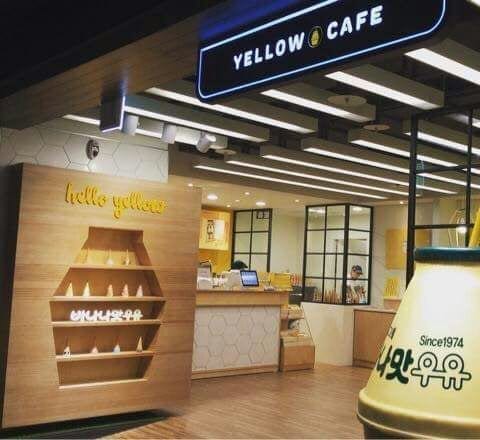
    Binggrae gave its Banana-flavored milk, a product that has survived for 40 years, a new twist in March by opening a cafe in downtown Seoul that sells beverages and ice cream based on the milk. Opened in collaboration with Hyundai Department Store that hosts the cafe at its downtown outlet, Yellow Cafe is making monthly sales of some 100 million won (US$85,178), company officials said.

    yellow-cafe

    Binggrae also worked with Olive Young, a health and beauty store chain, to sell body care products based on its milk brands. Last month, it opened a soft ice cream shop at a Lotte Department Store branch in southern Seoul.

    Company insiders say the moves are market tests for Binggrae, which is interested in starting a restaurant business.

    Orion, synonymous with its most popular snack Choco Pie, is operating a dessert cafe, Lab O, in southern Seoul. As its name suggests, the store serves as the company’s research center for dessert products, getting consumer reactions to different flavors and foods tweaked from its mainstream brands.

    Haitai Confectionery & Foods, which recently landed a smash hit with its honey-flavored potato chips, Honey Butter Chips, runs cafe Haitai Ro at two locations in Seoul. The stores sell desserts, as well as character figurines and stuffed animals that enjoy the company’s snacks. Officials at the firm say the cafes are more like “antennae shops” that catch consumers’ preferences.

    Lotte Confectionery has Guylian Cafe at the Lotte Department Store’s Lotte World branch that sells desserts made with the Belgian chocolate. Lotte took over the brand in 2008. Lotte separately operates exhibition booths for its own products in southern Seoul.

    Food companies likewise are working their way directly to consumers through restaurant-style shops.

    SPC Samlip has adopted “grocerant” as its concept store, mixing a grocery store with a restaurant. Its Glucks Schwein, which sells premium processed meats, has German sausages and beer on its menu. The company’s noodle line Hi-myon, launched in 1974, is being marketed at its noodle specialty restaurant Hi-myon Udon. Company officials say they are planning to open 20 Glucks Schwein franchises by 2018 on top of 10 noodle restaurants by the end of next year.

  • Korea Sale Festa’ kicks off with huge discounts from retailers

    Korea Sale Festa’ kicks off with huge discounts from retailers

    South Korea kicked off a nationwide shopping event on Thursday with a variety of promotions, cultural and entertainment events to draw more shoppers at home and abroad and revive the sluggish domestic consumption.

    The massive shopping campaign called “Korea Sale Festa” runs until Oct. 9, involving major retailers, manufacturers and traditional markets, while cultural and entertainment programs for foreign travelers will be held throughout October.

    The shopping festival is jointly hosted by the Ministry of Trade, Industry and Energy and the Ministry of Culture, Sports and Tourism to tie up the retail industry with tourism and cultural sectors to unleash pent-up demands in time with the major Chinese holiday season.

    A total of 249 retailers, manufacturers and online malls provide discounts and promotions at 59,000 stores across the nation, offering much wider options compared with last year’s fall shopping season when “Korea Black Friday” and “Korea Grand Sale” were held between September and October.

    This shopping season isn’t just limited to malls and online retailers. Consumers looking for a new vehicle, phone or television will find some attractive bargains at car dealerships and electronics stores as major companies join the shopping season. Among the big names are Samsung Electronics, LG Electronics, Hyundai Motor, AmorePacific and LG Household & Healthcare.

    samsung
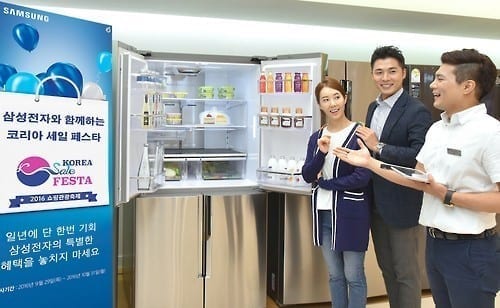
    A sales manager at Samsung’s electronics store in Seoul explains discount deals on a refrigerator on Sept. 28, 2016, in this photo provided by the company.

    Three car makers — Hyundai Motor, SsangYong Motor and Renault Samsung Motors — offer up to a 10 percent discount on cars during the period, while Samsung Electronics and LG Electronics give half priced deals on best-selling home appliance items. Consumers can get up to a 670,000 won discount (US$612) on Samsung’s Galaxy S6 Edge Plus smartphone.

    Department stores give deep discounts on luxury goods, fashion items and cosmetics, knocking down price tags by up to 80 percent.

    Among the top price for a giveaway event is a 700 million won apartment offered by Lotte Department Store, the retail unit of Lotte Group.

    Online malls and social commerce sites, including Coupang and Ticket Monster, are also offering cyber deals during the period, with the government supporting part of their delivery fees to boost sales.

    About 400 traditional markets nationwide will hold various events and unique festivals in October to catch the eyes of visitors and spur the local economy.

    The event held ahead of the year-end holiday season is raising expectations among local retailers as it overlaps with a Chinese national holiday that runs from Oct. 1-7. It’s when deep-pocketed Chinese travelers hop on planes to go on a holiday shopping spree.

    According to industry officials, about 250,000 Chinese tourists are expected to visit South Korea during the weeklong autumn holiday.

    korea-sale-fiesta

    With so much money up for grabs, local retailers have prepared a bunch of promotional events and giveaways targeting Chinese patrons.

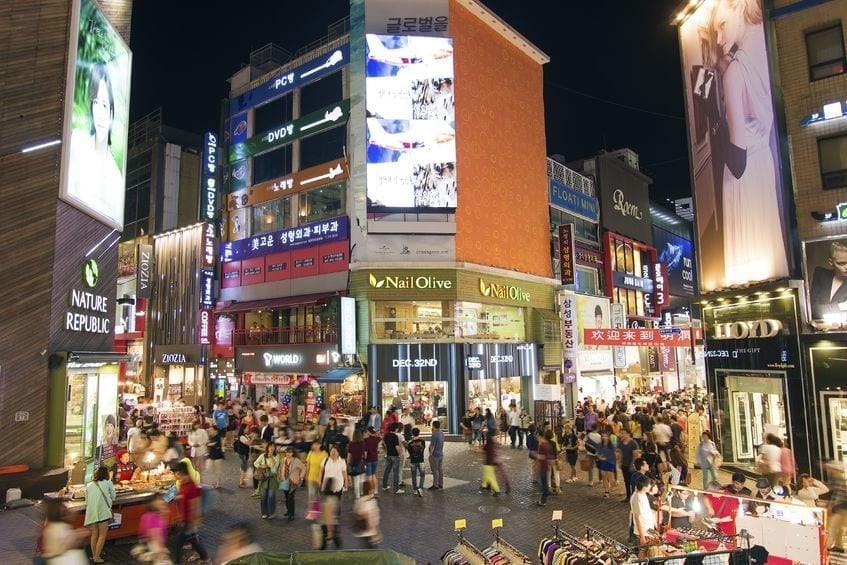
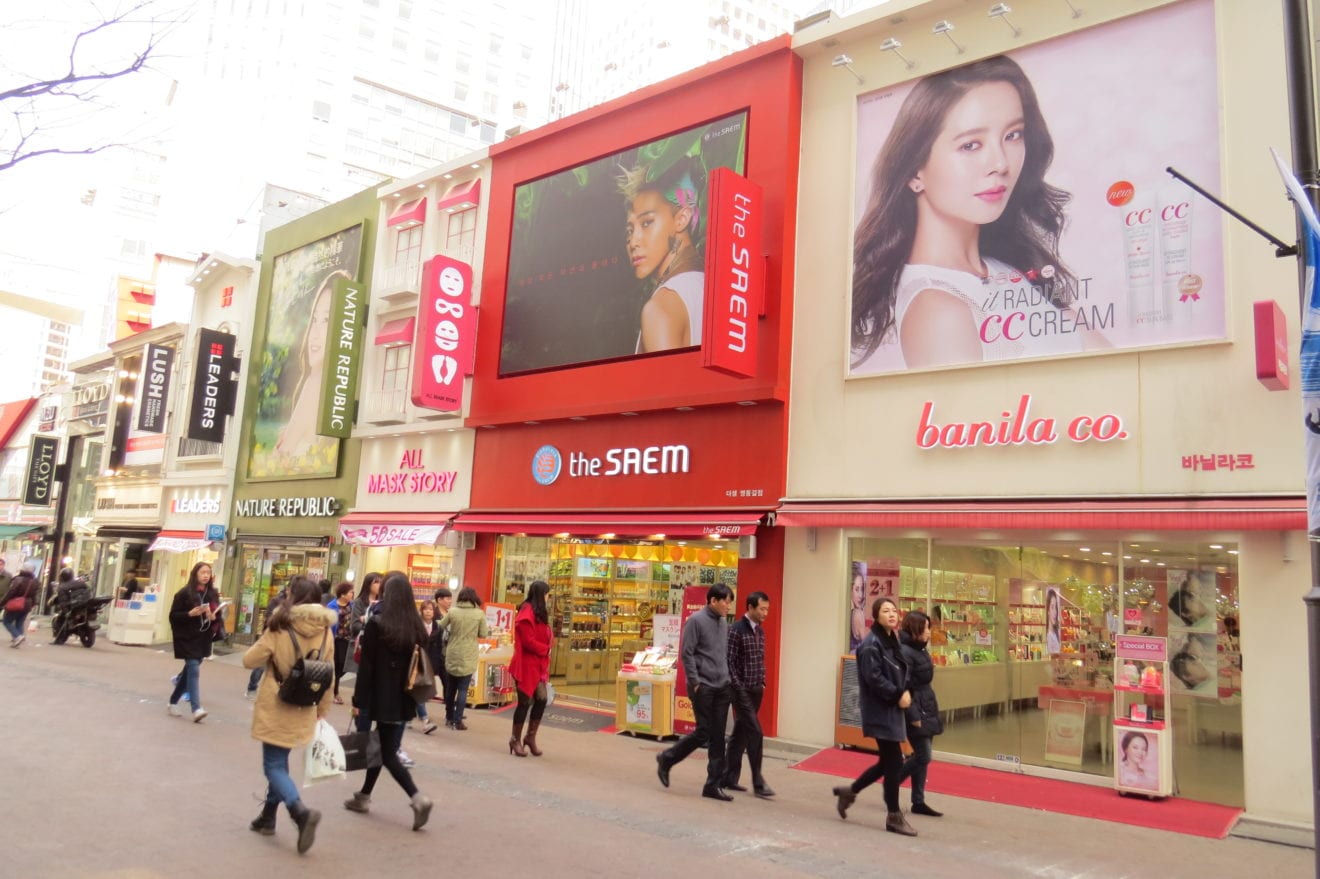
    Myeongdong, the busiest shopping street in downtown Seoul, has transformed to embrace Chinese travelers, supplementing Chinese-speaking shop assistants and putting up Mandarin signs for the latest beauty products.

    Duty free stores, which heavily rely on Chinese travelers, also offer promotional and entertainment events, teaming up with credit card companies.

    Shinsegae Duty Free holds “K-beauty and fashion week” during the Chinese holiday at its Myeongdong branch to attract those who are interested in beauty know-how and encourage purchase of Korean beauty products.

    Market watchers say the influx of Chinese tourists will give much-needed momentum to revitalize the tepid domestic consumption, which will in turn drive up shares related to consumption and leisure.

    “While last year’s sales event was mostly about offering discount deals, Korea Sale Festa is more systematic with wider discounts and cultural events for foreign travelers,” Nam Ok-jin, a researcher at Samsung Securities, said. “Special offers given during (China’s) National Day is expected to maximize the effect.”

  • Korean department stores trigger restaurant battle

    Korean department stores trigger restaurant battle

    Korean department stores have become the new battleground for Korean restaurant chains.

    Restaurants have long been a lucrative business for department store operators – accommodating hundreds of weary shoppers every day, they have sometimes been referred to as a ‘goose that lays a golden egg’.

    However, until now, opening such a restaurant had been a near-impossible task without deep connections to the store’s higher-ups.

    According to retail industry sources, several new restaurants are set to open next month in the food court section of Lotte’s flagship department store in Myeongdong, which is currently being renovated. Of note, the new owners didn’t have to lobby Lotte management or be a member of a Lotte family to open their establishments.

    Lotte faced significant criticism in June when the media spotlighted Seo Mi-kyung, Lotte founder Shin Kyuk Ho’s third wife, and her company Yuki Co, which operates a bibimbap restaurant (Yukyung),  naengmyeon restaurant (Yuwonjeong) and coffeehouse (Margaret) at the Lotte’s Myeongdong store.

    “We’re in the middle of clearing up our business with Seo’s company,” said the department store official. “We plan to operate our food court based on the popularity of restaurants and their competitive advantage.”

    A high-end sushi restaurant, Sushi Chohi, Chinese restaurant Luii, and European casual restaurant Elbon Grand Cafe operated by chef Choi Hyun-seok are among the new eateries that will open in mid-September.

    Hyundai Department Store, once criticised for giving favors to its subsidiary Hyundai Green Food, is also rearranging the food courts at its stores to accommodate popular restaurants from across Korea. And although it still operates Hyundai Green Food-owned restaurants like Bonga Sushi and Hansol Naengmyeon at its branches, it’s now focusing its efforts on attracting other popular restaurants.

    “Bonga Sushi and Hansol Naengmyeon have made a name for themselves, and their inclusion is not necessarily due to the Hyundai family relationship,” said a Hyundai Department Store official. “We’re concentrating more on attracting well-known restaurants to our food courts, because restaurants with no competitive edge aren’t likely to survive.”

    Italian restaurants Le Jiu and Signature Lab opened their latest locations at the Samseong-dong branch, while Amorino, an Italian gelato franchise, opened a new eatery at Hyundai’s Apgujeong branch.

    Shinsegae Department Store also introduced new restaurants this year. Youth-driven restaurants from Gangnam and Hongdae, including Chinese cuisine franchise Choma, steakhouse restaurant Fukuoka Hambageu, and premium tteokbokki restaurant Villa de Spicy, according to Shinsegae, were met with high acclaim.

    Shinsegae also said that new restaurants tend to attract more customers to its stores.

    “Department stores are no longer solely a place for shopping. They’re transforming into one integrated living space for consumers to spend their free time,” said a retail industry official. “Given the circumstances, the stores will continue with their efforts to accommodate more popular and competitive restaurants.”

  • Lotte tests ‘Virtual Fitting Service’

    Lotte tests ‘Virtual Fitting Service’

    Lotte Department Store is to implement a ‘Virtual Fitting Service’ for customers to try on clothes, without actually putting them on.

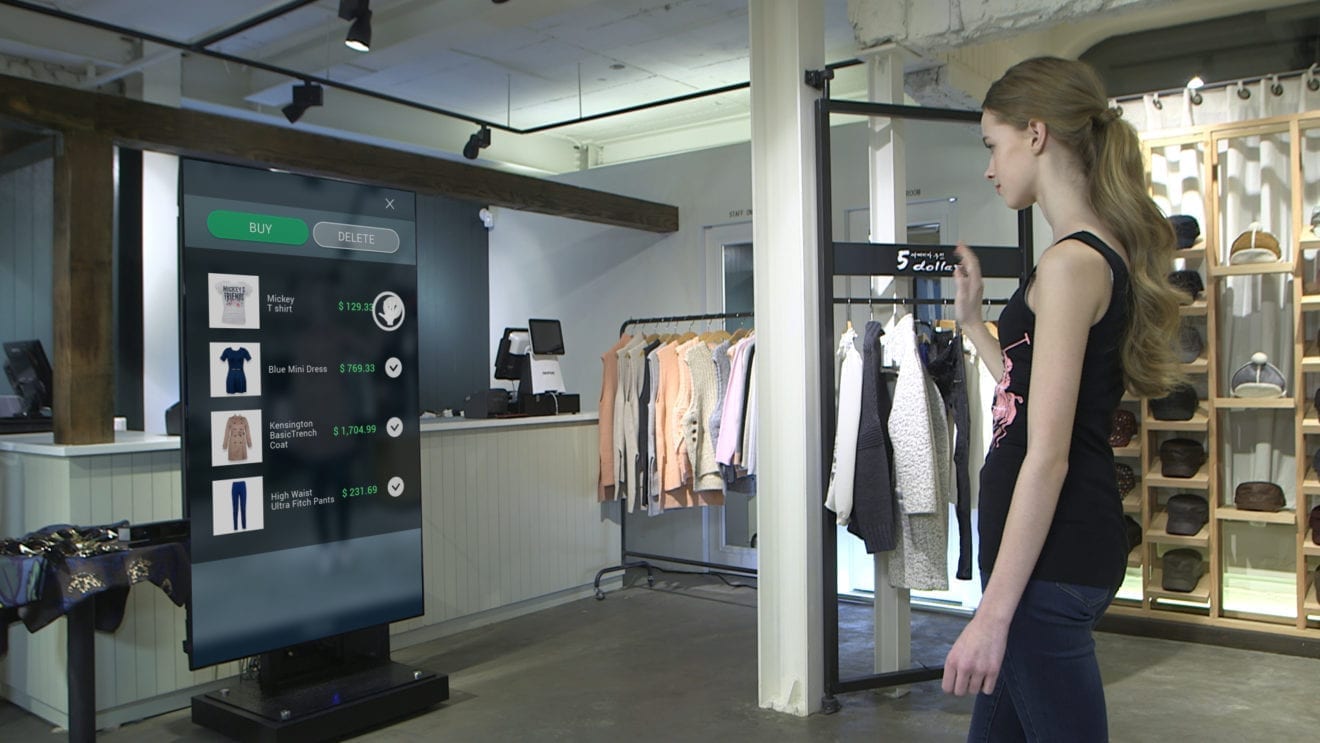
    The service uses a special mirror that provides a virtual reflection of the customer wearing the clothing by applying a 3D image of the product to the customers’ body. It will also help customers to save both time and the nuisance of having to try on different clothes. The service is expected to launch in the latter half of 2016.

    Lotte will also install 3D foot measuring devices in the third quarter, at shoe stores located in its flagship store, and Jamsil and Yeongdeungpo branches. The devices can measure a customer’s  foot in just two seconds, and recommend products based on a client’s foot size and shape.

    “We’re trying to create a more convenient environment for our customers by making use of the latest advanced technologies,” said Lee Wan-shin, chief of marketing at Lotte Department Store.

    “We’ll continue our efforts to make store visits a more pleasant shopping experience.”

  • BMW cafe says Hello to Korea

    BMW cafe says Hello to Korea

    A BMW cafe in Korea has opened inside a Lotte department store in Incheon.

    Lotte Department Store’s Premium Outlet allows visitors to enjoy the BMW motorcycles and related accessories such as clothing and helmets. The cafe open today, May 27.

    Free consultations about motorbikes and other products are also offered to customers.

    BMW Cafe Korea 1


    “We tried to make a store that targets men who are interested in motorcycles,” said a Lotte spokesman.

    “We’ll try to expand our shopping spaces that cater to male customers.”

    The number of Korean motorcycle fans has increased in recent years, doubling the number of imported high-capacity motorbikes from 10,300 in 2012 to 20,800 in 2015.

  • South Korean retailers eye overseas push

    South Korean retailers eye overseas push

    The largest South Korean retailers, faced with cut-throat competition in the rapidly saturating domestic market, are turning their attention to overseas markets in conjunction with small and mid-sized businesses to secure a new growth driver.

    The country’s three major retail conglomerates – Shinsegae Group, Lotte Group and CJ Group – are targeting to sell more of their ‘private brand’ products or help small and medium-sized enterprises (SMEs) promote their products both in emerging and developed markets, they said.

    Of the three, Shinsegae’s Emart, the nation’s largest discount store chain by sales, appears to be the most aggressive player given its latest moves and announcements.

    On Wednesday, Emart outlined its 2016 plan not only to increase shipments of its products to overseas branches in China and Vietnam but also to supply them to local retail companies in the US, Europe and Oceania.

    “We have set an ambitious target of US$20 million in overseas earnings this year, sharply up from $1.72 million the year before. What we earn outside the country still accounts for a tiny portion of our overall sales. But we expect it to grow over time,” Emart spokeswoman Hur Chae-jeong said.

    For all of 2015, Emart saw its net profit jump 57 per cent to 455.9 billion won ($374 million) from 290 billion won a year earlier. Sales rose 4.1 per cent to 15.3 trillion won from 14.7 trillion won during the same period.

    The dominant discount store company seeks to fill more than 40 per cent of its total products to be exported with price-competitive PB products. In Korea, in partnership with SMEs, big retailers provide ‘less-recognised’ private label products to customers at lower prices compared to existing brand names.

    Moreover, Emart signed an initial agreement with the Korea Trade-Investment Promotion Agency (KOTRA) in November to help SMEs find ways to export their products. The move was in line with the government’s broad efforts to support them amid falling exports.

    Exports have been on a losing streak over the past 14 months, posting a 12 per cent on-year decline in February at $36.4 billion, according to government data.

    Lotte Department Store and CJ O Shopping, the nation’s biggest department store chain and home shopping channel by sales, respectively, have taken similar moves to go overseas.

    Lotte said Thursday it had arranged meetings between Korean SMEs and their Vietnamese and Indonesian counterparts in those countries to help them find bilateral business opportunities there.

    “The Korean SMEs supply their products to our department store chains. If they successfully enhance their brand awareness among overseas customers, it will lead to an increase in sales. So we will jointly conduct a market survey with the SMEs and offer them a variety of support programs,” a Lotte spokesman said.

    Lotte currently operates department store outlets in Vietnam, Indonesia, Russia and China.

    CJ O Shopping said it has partnered with Kotra to help Korean SMEs advance into Latin American markets on top of its current China and Southeast Asian markets.

    “In June last year we set up a joint venture with Mexico’s main broadcasting company Televisa to sell Korean products through a local home shopping channel. We will sign such partnerships with other Latin American countries in coming years,” CJ spokesman Hong Seok-woo said.

    CJ O shopping is in talks with daily deals website operator Groupon  and US retailer Walmart Stores to have Korean products available in their online shopping malls, Hong said.

    CJ has signed with 10 countries, largely in emerging markets, to sell Korean goods through local home shopping channels.

    “We are seeing a burgeoning demand for Korean beauty and fashion products in Latin America helped by the boom of ‘hallyu,’ or the Korean wave, there,” he added.

  • Korean department stores struggle

    Korean department stores struggle

    Chinese travellers have emerged as one of the few bright spots for Korean department stores suffering from dull domestic consumption.

    The arrival of a new demographic of consumers has prompted an all-out fight to attract deep-pocketed clients, industry officials told Yonhap.

    Sales at department stores inched down 0.4 per cent on-year to 29.22 trillion won (US$23.69 billion) in 2015, Statistics Korea showed, mostly attributable to the Middle East Respiratory Syndrome (Mers) outbreak and rapidly rising online marketplaces.

    While consumption among locals has steadily slowed over the past years, major department stores in downtown Seoul saw growing sales among Chinese nationals.

    At Lotte Department Store in the famous shopping district of Myeongdong, sales by Chinese customers accounted for 18.1 per cent of the total, rising 6.8 per cent from a year ago.

    At the nearby Shinsegae Department Store, sales by Chinese customers rose 21.8 per cent in 2015 from a year ago, though the pace slowed from 131 per cent in 2014 and 87 per cent in 2013 in the wake of the Mers outbreak. The store did not release exact sales figures.

    Foreign luxury watch and jewellery brands topped their shopping list, while leading Korean fashion and cosmetic brands were also picked up by Chinese travellers.

    Among them, the Seoul-based luxury bag manufacturer MCM was the second-most selling brand by the Chinese, while sunglass brand Gentle Monster and Amore Pacific’s high-end cosmetic lineSulhwasoo were named as popular items.

    “While the Chinese mostly preferred foreign luxury brands and local cosmetic brands, a wider range of Korean products have been selling among Chinese customers,” said Park Young-hwan, a marketing official at Lotte Department Store.

    In response to the changing consumption trends, Korean department stores have launched a variety of promotional events through social networking services and invited China’s popular bloggers to embrace rich Chinese customers.

    Some stores have even assigned assistants for VIP customers to provide guidance while they shop. Others have offered limousines and pick-up services.

  • Lotte launches smartphone app for Chinese tourists

    Lotte launches smartphone app for Chinese tourists

    Lotte Group has launched a smartphone app for Chinese tourists visiting Korea.

    The application is called ‘TianTianLeTian’, and provides visitors with information on shopping, tourism, and other services offered by Lotte companies.

    Department stores and large discount stores have already launched mobile solutions for Chinese tourists, but Lotte Group’s new software marks the first time an app was developed by an entire group.

    In addition to tourism information, TianTianLeTian also provides users with mobile coupons for Lotte Members, Lotte Duty Free Store, Lotte Department Store, and Lotte World.

    The app also provides suggestions for places to dine, popular tourist spots, the latest travel information and content from Hallyu stars. Maps are provided in Chinese, and translation services are also provided.

    In collaboration with Zai Seoul, a startup company specialising in travel information targeting Chinese tourists, the location and information of 1800 small shops are listed.

    Lotte will provide small businesses who subscribe to its service with big data related to keywords frequently used in searches by Chinese tourists, human traffic, and shopping habits, helping companies develop marketing strategies to attract Chinese tourists.

    Lotte’s decision to develop a new app was the result of a change in travel habits for Chinese tourists, and a move towards independent travel instead of group packages.

    According to data from the Korea Tourism Organization, the number of Chinese tourists visiting Korea individually nearly doubled in 2015 to 3.5 million compared to the 1.64 million visitors in 2013. The organisation expects 5.5 million individual Chinese tourists to visit this year.

    To target individual travelers who get most of their information through mobile devices while traveling, Lotte started development of the application in April 2015. The beta version was released on January 6, and the number of downloads has already reached 40,000.

  • South Korean retailers binge on discounting

    South Korean retailers binge on discounting

    On top of seasonal sales and occasional promotions, major South Korean retailers have been holding a series of big discount events since summer to create an intense, promotion-heavy atmosphere through the Christmas season and beyond.

    The discount binge has indeed given a fillip to consumer spending here, but market watchers question its long-term effect as a slowdown in Asia’s fourth-largest economy has led to lower incomes for many people, prompting them to tighten their purse strings.

    Most recently, “K-Sale Day” kicked off last week to run for 26 days nationwide, led by major department stores and outlets that hope to grab shoppers’ attention ahead of the original Black Friday.’

    It came just a month after “Korea’s Black Friday”, a nationwide shopping campaign initiated by the government during the first two weeks of October to jack up the stagnant domestic consumption.

    The government-led event even overlapped with “Korea Grand Sale”, during which retailers knocked down prices from early September to mid-October to woo back both domestic consumers and Chinese travelers during the long-haul national holiday.

    One of the main reasons for the deluge of sales is the summer slump following the outbreak of Middle East Respiratory Syndrome (Mers) in late May, which poured cold water on domestic spending and dented tourist numbers.

    More fundamentally, however, the seemingly never-ending sale is seen as an early sign that South Korea is heading into a recession.

    “Although the domestic economy has long grappled with sluggish consumption, the government is ever more concerned about weak spending after exports showed signs of slowing,” says Ko Ga-young, a researcher at LG Economic Research Institute.

    “Exporters in the manufacturing sector had propelled the growth until the 2008 global financial crisis, but their prospects remain bleak due to slowdown in the Chinese economy and tougher global competition in the low-end manufacturing sector.”

    Although policy makers had expected that low oil prices and record-low interest rates would boost the economy this year, the fallout from the Mers outbreak prompted the government to lower its 2015 growth forecast from 3.8 per cent to 3.1 per cent in June.

    The retail discount events, held both online and offline, did not create much buzz like Chinese e-commerce giant Alibaba’s “Singles Day”, which recorded a blockbuster US$14.3 billion in sales on November 11, but the steep discounts did serve as the spending trigger for pent-up demand in a short period of time.

    According to the data compiled by the industry ministry, the 22 retailers that joined the Black Friday Korea campaign saw their sales rise 20.7 per cent on-year to 719.4 billion won (US$634.9 million) during the two-week period.

    While the government touted its “successful effort” in reviving the consumer sentiment, the market remained skeptical over the growth from last year’s low base during the extended holiday season.

    “Large department stores and discount chains face an unfavorable business environment because massive sales events and permanent discount policy produced a limited effect despite last year’s low base,” said Nam Sung-hyun, a researcher at Kiwoom Securities.

    Unlike a one-off factor like the viral disease, market watchers worry that the tight labor market and rising household debt could continue to discourage people from spending on concerns over their unstable future.

    The youth jobless rate reached the highest level in 15 years at 10.1 per cent in June with more college graduates landing at temporary positions, while the average consumption propensity dipped to a record low 71.5 per cent in the third quarter, according to Statistics Korea.

    “The consumption propensity is expected to further decline because households are managing their spending schedule in line with the bleak long-term growth prospect and extended life span,” Ko said.

    Bricks-and-mortar shops face an even dimmer outlook as more consumers are hunting for bargains from online marketplaces abroad.

    Traditional retailers not only have to compete with each other but also counter challenges from international online marketplaces stealing their customers with easier delivery and transaction procedures.

    “As more consumers learn they can easily buy products at a much cheaper price via online vendors, offline shops are more frequently conducting discount events to retain their customers,” said Jun Mi-young, a professor at Seoul National University and co-author of Trend Korea 2016.

    “The experience of buying foreign brands at discounted prices has created a healthy dose of cynicism about department stores’ pricing policy.”

    According to US No 1 retailer Walmart’s Black Friday advertisement, South Korean tech giant Samsung Electronics’ 55-inch HDTV was discounted to $498, less than half prices for similar models sold at Korean department stores.

    Some deals even raise questions over whether retailers set a higher price from the beginning to look like they are giving discounts.

    Lotte Department Store’s K-Sale Day promotional leaflet shows that the price of German kitchenware maker Henkel’s five-star knife block set was reduced from 550,000 won to 229,000 won.

    Sounds like a good deal. But you can buy the same product below 200,000 won at several online shopping malls on any given day.

    The desperate efforts to grab customers with lower prices, however, come at a price.

    As sales start earlier and last longer, they become less important and easier for consumers to ignore. When every day is special, none is.

    “I used to wait for the discount season to buy off-season clothes or other things at cheaper prices,” Lee Su-jin, a 35-year-old office worker in Seoul, said. “These days, I use mobile applications to buy refurbished products or find good deals at overseas websites.”

    While the discount pricing strategy is useful in driving traffic and sales for a short term, marketing professionals worry repeated sales could negatively affect the retail industry in the long run.

    To survive in the borderless digital commerce world, they advise bricks-and-mortar shops to come up with differentiated services to increase customer loyalty.

    ”As the rise of digital shopping has become an inevitable trend in the retail industry, offline sales channels should seek ways to provide better in-store experiences and quality service,” Jun said. “Squeezing margins is not a sustainable business model.”

    Experts emphasise the government’s role in setting a long-term policy to manage the record-high household debt and steer the economy clear of such economic uncertainties as China’s slowdown and market jitters over a US rate hike.

    “The government should control the pace of the household debt growth so it does not rise faster than the income growth, which could further contract spending,” Ko said.

    “Structural reforms are also needed to foster new value-added service sector for healthier growth.”

  • Question mark hangs over South Korea’s discount spree

    Question mark hangs over South Korea’s discount spree

    People love bargain deals. Clearance sales with 80 percent or more off can even lure customers in to buy things they don’t need.

    That’s why retailers offer “door buster” deals when they need to handle rising stockpiles or attract customers during holiday shopping seasons, such as “Black Friday”, the biggest shopping day of the year in the United States.

    On top of seasonal sales and occasional promotions, major South Korean retailers have been holding a series of big discount events since summer to create an intense, promotion-heavy atmosphere through the Christmas season and beyond.

    The discount binge has indeed given a fillip to consumer spending here, but market watchers question its long-term effect as a slowdown in Asia’s fourth-largest economy has led to lower incomes for many people, prompting them to tighten their purse strings.

    Most recently, “K-Sale Day” kicked off last week to run for 26 days nationwide, led by major department stores and outlets that hope to grab shoppers’ attention ahead of the original Black Friday.

    It came just a month after “Korea’s Black Friday”, a nationwide shopping campaign initiated by the government during the first two weeks of October to jack up the stagnant domestic consumption.

    The government-led event even overlapped with “Korea Grand Sale”, during which retailers knocked down prices from early September to mid-October to woo back both domestic consumers and Chinese travelers during the long-haul national holiday.

    One of the main reasons for the deluge of sales is the summer slump following the outbreak of Middle East Respiratory Syndrome (MERS) in late May, which poured cold water on domestic spending and dented tourist numbers.

    More fundamentally, however, the seemingly never-ending sale is seen as an early sign that South Korea is heading into a recession.

    “Although the domestic economy has long grappled with sluggish consumption, the government is ever more concerned about weak spending after exports showed signs of slowing,” Ko Ga-young, a researcher at LG Economic Research Institute, said.

    “Exporters in the manufacturing sector had propelled the growth until the 2008 global financial crisis, but their prospects remain bleak due to slowdown in the Chinese economy and tougher global competition in the low-end manufacturing sector.”

    Although policy makers had expected that low oil prices and record-low interest rates would boost the economy this year, the fallout from the MERS outbreak prompted the government to lower its 2015 growth forecast from 3.8 percent to 3.1 percent in June.

    The discount events, held both online and offline, did not create much buzz like Chinese e-commerce giant Alibaba’s “Singles Day”, which recorded a blockbuster $14.3 billion in sales on Nov. 11, but the steep discounts did serve as the spending trigger for pent-up demand in a short period of time.

    According to the data compiled by the industry ministry, the 22 retailers that joined the Black Friday Korea campaign saw their sales rise 20.7 percent on-year to 719.4 billion won (US$634.9 million) during the two-week period.

    While the government touted its “successful effort” in reviving the consumer sentiment, the market remained skeptical over the growth from last year’s low base during the extended holiday season.

    “Large department stores and discount chains face an unfavorable business environment because massive sales events and permanent discount policy produced a limited effect despite last year’s low base,” said Nam Sung-hyun, a researcher at Kiwoom Securities.

    Unlike a one-off factor like the viral disease, market watchers worry that the tight labor market and rising household debt could continue to discourage people from spending on concerns over their unstable future.

    The youth jobless rate reached the highest level in 15 years at 10.1 percent in June with more college graduates landing at temporary positions, while the average consumption propensity dipped to a record low 71.5 percent in the third quarter, according to Statistics Korea.

    “The consumption propensity is expected to further decline because households are managing their spending schedule in line with the bleak long-term growth prospect and extended life span,” Ko said.

    Brick-and-mortar shops face an even dimmer outlook as more consumers are hunting for bargains from online marketplaces abroad.

    Traditional retailers not only have to compete with each other but also counter challenges from international online marketplaces stealing their customers with easier delivery and transaction procedures.

    “As more consumers learn they can easily buy products at a much cheaper price via online vendors, offline shops are more frequently conducting discount events to retain their customers,” said Jun Mi-young, a professor at Seoul National University and co-author of Trend Korea 2016.

    “The experience of buying foreign brands at discounted prices has created a healthy dose of cynicism about department stores’ pricing policy.”

    According to U.S. No. 1 retailer Walmart’s Black Friday advertisement, South Korean tech giant Samsung Electronics’ 55-inch HDTV was discounted to $498, less than half prices for similar models sold at Korean department stores.

    Some deals even raise questions over whether retailers set a higher price from the beginning to look like they are giving discounts.

    Lotte Department Store’s K-Sale Day promotional leaflet shows that the price of German kitchenware maker Henkel’s five-star knife block set was reduced from 550,000 won to 229,000 won.

    Sounds like a good deal. But you can buy the same product below 200,000 won at several online shopping malls on any given day. The desperate efforts to grab customers with lower prices, however, come at a price.

    As sales start earlier and last longer, they become less important and easier for consumers to ignore. When every day is special, none is.

    “I used to wait for the discount season to buy off-season clothes or other things at cheaper prices,” Lee Su-jin, a 35-year-old office worker in Seoul, said. “These days, I use mobile applications to buy refurbished products or find good deals at overseas websites.” While the discount pricing strategy is useful in driving traffic and sales for a short term, marketing professionals worry repeated sales could negatively affect the retail industry in the long run.

    To survive in the borderless digital commerce world, they advise brick-and-mortar shops to come up with differentiated services to increase customer loyalty.

    “As the rise of digital shopping has become an inevitable trend in the retail industry, offline sales channels should seek ways to provide better in-store experiences and quality service,” Jun said. “Squeezing margins is not a sustainable business model.”

    Experts emphasize the government’s role in setting a long-term policy to manage the record-high household debt and steer the economy clear of such economic uncertainties as China’s slowdown and market jitters over a U.S. rate hike.

    “The government should control the pace of the household debt growth so it does not rise faster than the income growth, which could further contract spending,” Ko said. “Structural reforms are also needed to foster new value-added service sector for healthier growth.”