Tag: Lotte Shopping

  • Singapore Attracts over 50 Consumer Brand Investments as Regional Hub

    Singapore Attracts over 50 Consumer Brand Investments as Regional Hub

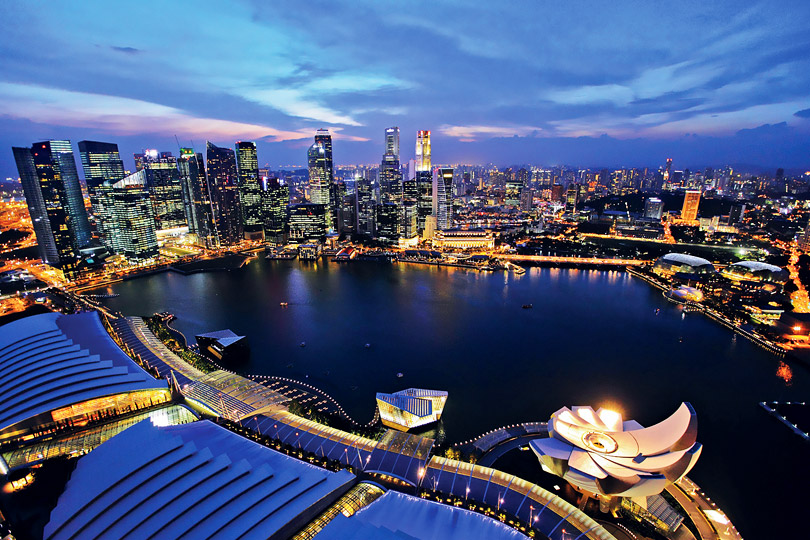
    Singapore secured more than 50 new consumer company investments between 2022 and September 2025, drawing global brands seeking a regional operating base for Asia.

    Danish jeweller Pandora opened its regional headquarters in Singapore in November, adding roughly 50 corporate positions to support 62 stores and 400 retail and office staff across Asian markets.

    Headquarter hubs and flagship rollouts

    Pandora Chief Commercial Officer Massimo Basei said the Singapore hub focuses on market development, digital operations, and marketing across both mature markets like Japan and South Korea and expansion targets including India and Indonesia.

    Swiss sportswear maker On and activewear brand Alo opened flagship locations at Jewel Changi Airport and The Shoppes at Marina Bay Sands in July and August. South Korea’s Lotte Shopping plans to open its international headquarters in Singapore in 2026 to direct its Southeast Asian store network.

    Global consumer groups increasingly treat Singapore as an operational bridge between headquarters in Europe or the United States and fragmented retail markets across Southeast Asia. Establishing central merchandising and supply chain teams in the city reduces the risk of running decentralized Asian market entries.

    American dining brands brave high failure rates

    Food and beverage chains from North America are also expanding their footprint in the city despite intense local competition. Fast food operator Chick-fil-A opens its first Asian outlet in Singapore on 11 December, following Blue Bottle Coffee, which launched its debut local cafe on 3 April.

    Tapestry broadened its luxury label Coach into hospitality with the Coach Cafe in 2023, followed by a Coach Coffee Shop and the woodfire-focused Coach Restaurant. In grocery retail, US potato supplier Lamb Weston rolled out retail frozen fries across FairPrice, FairPrice Xtra, and FairPrice Finest stores in November.

    The expansion runs counter to tough local operating conditions. Over 60 per cent of Singapore food businesses closed within five years between January and October 2025, and 82 per cent operated without a profit, according to parliamentary figures from Deputy Prime Minister Gan Kim Yong.

    US chain Chipotle Mexican Grill opens its first Singapore restaurant in 2026, while Lotte prepares its international headquarters for operation the same year.

  • Asia’s Retail Giant Lotte Shopping Unveils Tech-driven, Eco-friendly Strategy To Transform Customer Experience

    Asia’s Retail Giant Lotte Shopping Unveils Tech-driven, Eco-friendly Strategy To Transform Customer Experience

    With the fervor of the holiday shopping season fast approaching, retailers across Asia are gearing up for a bustling fourth quarter. Among them, Lotte Shopping, South Korea’s retail giant, is strategizing ways to capture consumer attention and boost sales. In a recent announcement, the company revealed its ambitious action plan to reinvent the customer experience across its stores.

    Innovation Takes Center Stage

    Lotte’s plan emphasizes deploying cutting-edge technology to enhance the shopping experience. From virtual reality interfaces to smart carts equipped with personalized recommendations, the company aims to merge the convenience of e-commerce with the tactile pleasure of brick-and-mortar shopping. Kim Yong-won, the Chief Executive Officer, expressed excitement about these innovations, hinting that technology could seamlessly blend shopping and entertainment.

    Focus on Sustainability

    Amid rising consumer interest in sustainable practices, Lotte Shopping also seeks to strengthen its commitment to eco-friendly operations. Initiatives include reducing plastic usage and increasing the availability of sustainable products. By aligning their strategy with environmental consciousness, Lotte hopes to resonate with a younger, eco-aware demographic eager for more responsible consumption choices.

    Enhancing Customer Loyalty

    As competition intensifies, retaining existing customers becomes vital. Lotte Shopping is ramping up its loyalty programs, offering exciting rewards and personalized experiences that encourage shoppers to return. The company plans to leverage data analytics to better understand customer preferences, ensuring that promotions and products are tailored to meet their unique desires.

    A sprinkle of ingenuity in retail is always welcome, and Lotte’s strategy shines like a beacon of creativity in a sea of sameness!

    Questions & Answers

    What is the main focus of Lotte Shopping’s new strategy?
    Lotte Shopping’s primary focus is to enhance the customer experience using innovative technology, sustainability initiatives, and improved loyalty programs.

    How will Lotte incorporate technology into its stores?
    The company plans to introduce virtual reality interfaces and smart carts that offer personalized shopping suggestions, thereby blending entertainment with convenience.

    Why is sustainability important to Lotte?
    Sustainability is crucial for Lotte as it aims to engage environmentally conscious consumers and adapt to the growing demand for responsible retail practices.

  • Shinsegae, Naver win bidding battle for EBay South Korea

    Shinsegae, Naver win bidding battle for EBay South Korea

    South Korean retail giants Lotte Shopping and Shinsegae Group have submitted separate letters of intent for online marketplace eBay Korea, the retailers’ spokesmen confirmed on Monday.

    It is a deal that will almost certainly shake up the country’s e-commerce retail segment, potentially propelling one of the country’s largest retailers into becoming the leading omnichannel operator in South Korea.

    SK Telecom, South Korea’s biggest mobile carrier, and private equity firm MBK Partners, the largest shareholder of discount store chain Homeplus, reportedly dropped out of the race to acquire eBay Korea, which has been up for sale since last year.

    This week’s formal bidding marks the second attempt to divest its interests by eBay Korea – which represents about 11% of global sales within the U.S.-based eBay corporation – and it wants at least $4.43 billion, a price that is looking increasingly attainable.

    South Korea’s total e-commerce transactions jumped 25% last year according to Trade Ministry estimates and eBay Korea represents about 12.8% of South Korea’s e-commerce market, just trailing Coupang at 13% and market leader Naver with 18%. Its revenue is estimated at $1.17 billion, with an operating income of $76 million.

    Coupang listed on the New York Stock Exchange in March, becoming the largest Asian company since Alibaba to go public in New York and raising $4.6 billion. Founded by billionaire Bom Kim, a Harvard business school dropout, Coupang is now the country’s most valuable start-up with a market capitalization of more than $60 billion, backed by Softbank’s Vision Fund.

    By contrast, Lotte and Shinsegae’s market shares in the country’s e-commerce sector are estimated at just 5% and 3% respectively and the takeover of eBay Korea by either could reshape the country’s online retail segment and fast-track the winning bidder into a market-leading position. Both have struggled to catch up with the major online competitors, especially after the impact of the Covid-19 pandemic.

    However, the picture is complicated. Naver could be one of the biggest beneficiaries if Shinsegae is successful as it is believed to be offering support in financing any acquisition. The retailer and portal established a strategic alliance in March and Shinsegae could switch to Naver Pay as the payment platform for three e-commerce websites operated by eBay Korea: Gmarket, Auction and G9. At present, eBay Korea uses its own online payment system called Smile Pay.

    Top South Korean cellphone carrier SK Telecom and retail group E-Mart were still among the remaining suitors as the preliminary round of bids sought by the U.S. parent closed 16 March.

    Indeed, SK Telecom had been the leading candidate. The group also operates the online platform 11Street through a subsidiary, making SK Telecom the fourth-biggest e-commerce provider. But 11Street has struggled to grow, leading SK Telecom to partner with Amazon AMZN 0.0% in November in a collaboration initially limited to 11Street hosting Amazon products, but likely to expand in scope.

    Meanwhile, Lotte will no doubt view the purchase of eBay Korea as a springboard for rebuilding the group’s online business. In April 2020, the group merged the e-commerce sites of its department stores, supermarkets, electronics shops and other physical retail affiliates under one shopping platform called LotteON but it has failed to make much headway.

    While all the potential suitors have refused to give much away, Kang Hee-tae, CEO of Lotte Shopping, admitted during a spring shareholder meeting: “We’re certainly interested.”

    Launching in 2000, eBay Korea quickly grew and last year earned around $75 million in operating profit. But eBay Korea has been squeezed by rivals in recent years, while activist investors like Elliott Management have urged eBay to shed assets with poor growth prospects.

    The U.S. parent’s hope of securing a lucrative deal initially looked ambitious but then Coupang went public successfully, boosting its hopes.

    Whoever wins the battle for eBay Korea, the fact that the rivals are both major retail players should heat up the market and could lead to an array of collaborations and partnerships to fight scale with scale. South Korea is on the brink of the biggest online shake-up since eBay announced its arrival over two decades ago.

  • Lotte Shopping gearing up store-exit plan

    Lotte Shopping gearing up store-exit plan

    South Korean retail group Lotte Shopping will sell off 121 stores this year in an attempt to recover from the impact of the coronavirus pandemic on sales.

    The company says it will close five department stores, 16 discount stores, 75 supermarkets and 25 physical stores linked to its online mall LOHB within this year.

    The move accelerates Lotte’s existing plans to sell roughly 200 stores to refocus on e-commerce.

    A spokesperson from the firm indicated Lotte would move to quickly shake off its less-profitable assets in the interests of improving its financial health. Lotte Shopping’s first-quarter results, at a loss of US$35 million, represented a massive drop from the $88.2 million profit it achieved during the same period last year.

    Lotte Shopping has around 700 department stores, discount stores, and supermarkets.

  • Lotte Shopping closing 200 stores as losses mount

    Lotte Shopping closing 200 stores as losses mount

    Lotte Shopping plans to shut down as many as 200 department stores and large-format supermarkets in South Korea, marking one of the biggest retail network culls in the nation’s history.

    Lotte Group operates more than 700 stores under its Lotte Mart, Lotte Department Store, Lotte Super and drug-store chain LOHB banners, which means its closure plans will affect almost one in three stores.

    There are no reports that Lotte will scale back its international business, which is largely in Southeast Asia after it began withdrawing from China last year.

    “The focus of our business strategy in 2020 is a heavy downsizing to enhance efficiency and profit,” the company said in a statement.

    “The food sections at underperforming small- and mid-sized department stores will be changed into supermarkets selling fresh groceries.”

    The rationalization plan follows news that South Korean convenience stores are outperforming supermarkets and hypermarkets in financial terms.

    Lotte Shopping’s net loss grew by 83.6 percent year on year to US$721 million last year, on an operating profit down 28.3 percent to $361.7 million. Sales slipped 1.1 percent to $14.9 billion, largely driven by a 5.8-per-cent decline in supermarket sales. Department-store sales dropped by 3.1 percent.

    Kang Hee-tae, who heads Lotte Shopping, said its major stores were performing poorly and market conditions remain tough. He cited an increase in the minimum wage and falling Chinese tourist arrivals as contributors to the poor result. But analysts in Seoul say Lotte Shopping’s problems are in part caused by a shift to online shopping, where consumers can often pay less for goods.

    According to Yonhap, South Korean retail sales rose 4.8 percent last year, with online sales growing 14.2 percent based on a sample of 13 e-commerce players. Overnight fresh-food deliveries were a contributor to the online growth.

    “The top priority at Lotte Shopping is to resolve fundamental problems and deliver clearly positive results,” said Kang.

    Besides store closures, the company plans to restructure some of its operations. For example, the fashion zones at its Lotte Mart stores will in future feature stock curated from the company’s department stores and likely feature more branded apparel rather than discount garments.

    The company also plans to use big data to refine and personalize its services to customers instead of running hundreds of too many loss-making branches.

    Lotte Shopping is not alone with its challenges in a changing South Korean market. Last August, rival Emart posted its first-ever loss, of $24.7 million, for the June quarter, its worst result since it was spun off from Shinsegae Group in 2011. It reported a 53-per-cent drop in full-year net profit to $189 million.

    The company said it planned to raise $820 million by selling assets and will buy back stocks to boost shareholder value.

    Emart has since embarked on a plan to downsize its Electro Mart gadgets chain and its Boots drugstore franchise and it is closing all it’s discount Pierrot Shopping stores, which are modeled on the Don Don Quijote concept from Japan.

  • South Korea Dec department store sales rebound from Nov, reverse two declining years

    South Korea Dec department store sales rebound from Nov, reverse two declining years

    Sales at South Korea’s department stores in December rebounded from November on year-end gift purchases, trade ministry data showed on Monday, while sales for the whole year ended on a positive note, reversing two years of decline.

    Combined sales last month at department stores run by Hyundai Department Store, Lotte Shopping and Shinsegae Co rose 3.3 percent on-year, the Ministry of Trade, Industry and Energy said, bouncing from a 2.8 percent decline in November.

    Nearly all product categories saw rises in sales, which were led by offshore brand items and food products.

    Retail data has shown consumption has not fallen markedly since an influence-peddling scandal involving President Park Geun-hye engulfed the country late last year, although consumer sentiment is at its worst in nearly eight years.

    The central bank governor, Lee Ju-yeol, said earlier this month private consumption is likely to head down in 2017 due to uncertainties at home and abroad, hampering overall growth.

    Discount store sales, meanwhile, slipped 1.9 percent in December over a year earlier, the same trade ministry data showed, although not as bad as November’s 6.1 percent decline.

    In 2016, department store sales rose 3.3 percent, breaking two years of falls and rebounding from a 1.2 percent fall in 2015. Demand for luxury goods and large household appliances such as televisions and refrigerators bolstered sales, the ministry said.

    Discount store sales fell 1.4 percent in 2016, declining for a fifth straight year, the data said, as more consumers bought food items online from a widening variety of vendors.

    In 2015, discount store sales dropped 2.1 percent.

  • Singapore Sovereign Fund Invests $136 Million in Korean Retail Complex

    Singapore Sovereign Fund Invests $136 Million in Korean Retail Complex

    Singapore’s sovereign wealth fund, GIC Real Estate Pte Ltd, has acquired GG-Square, a Seoul-based retail complex, for $136 million.

    The complex was completed in 2014 and is spread over an area of 238,248.43 square meters. It has 28 stories and is located in the heart of Anyang, a bustling metropolitan area in the southern part of Seoul. The complex is strategically located as it offers direct access to the city’s subway. Besides retail outlets, G-Square also has offices, spread over an area of 34,681 square meters.

    The complex is operated by one of the largest retail operators in South Korea, Lotte Shopping Co. However, after acquisition, it will be managed by IGIS Asset Management, a leading real estate management company in South Korea.

    GIC has been showing interest in the real estate, of late. Earlier in 2016, the sovereign wealth fund entered into an agreement with Shingsegae Inc., a South Korea-based department store franchise, to develop a retail mall based in Songdo.

  • Lotte Shopping profit soars 203 per cent

    Lotte Shopping profit soars 203 per cent

    While revenue for its third quarter rose 2 per cent year-on-year, South Korea’s Lotte Shopping Companysaw its net profit soar 203.9 per cent to KRW78.2 billion (US$68 million).

    The retail giant says these are preliminary figures yet to be independently audited.

    Third-quarter revenue rose 2 per cent to KRW7.9 trillion. Domestic department stores maintained solid same-store sales growth (SSSG) of 2.2 per cent, while hypermarket SSSG faded 2.4 per cent in the face of a sluggish industry and the impact of renewal construction.

    Internationally the company had strong sales growth, apart from weakness for its China hypermarkets because of competition. Department store SSSG rose 9.2 per cent while hypermarkets declined 5.1 per cent.

    Lotte’s third-quarter operating profit dipped 10.1 per cent to KRW176 billion, both for department stores and hypermarkets domestically.

    On the international market there was an improvement in operating loss thanks to enhanced efficiency in all stores, plus there was an increased profit contribution from its cinema and electronics businesses.

    There was an increase in labour costs because of a one-off special incentive paid to all Lotte employees.

  • South Korea August dept store sales rise for 3rd month

    South Korea August dept store sales rise for 3rd month

    South Korea’s department store sales rose for a third straight month in August thanks to widespread discounting ahead of a major public holiday this month, government data showed on Thursday.

    Combined sales at department stores run by Hyundai Department Store, Lotte Shopping and Shinsegae Co rose 4.1 percent on-year, data from the Ministry of Trade, Industry and Energy said.

    This followed a 7.0 percent jump in July.

    Sales of all individual categories at department stores rose in August, with the exception of men’s clothing.

    The same data showed August sales at discount stores fell 1.3 percent from a year ago after rising for two months previously. In August, sales rose 2.1 percent.

    The decline was attributed to a 14.8 percent slump in sports-related goods as the unusually hot summer weather this year discouraged customers from seeking them out, the monthly report said.

    Online open market sales growth at websites owned by eBay Korea Co Ltd and others slowed slightly to 22.4 percent in August from 31.2 percent in July.

    Retail sales overall in August mainly saw demand for household electronics like air conditioners and gifts ahead of the Chuseok holiday season, the data said.

  • Vietnam shopping center linked to Lotte’s slush fund scandal

    Vietnam shopping center linked to Lotte’s slush fund scandal

    South Korea’s Lotte Group has come under suspicion of using a shell company that owns a mega mall in Vietnam to funnel money into a possible slush fund.

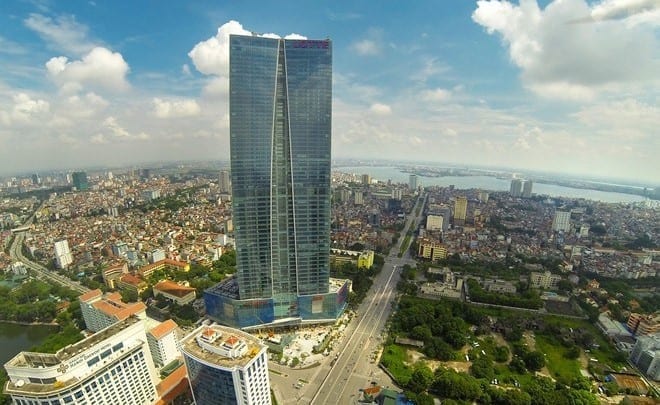
    Luxembourg-incorporated Coralis SA, the company in question, developed Lotte Center Hanoi at a cost of around US$400 million. The 65-story shopping and leisure complex was opened in September 2014.

    It recorded a net loss of 55.1 billion won ($47.31 million) last year, raising a suspicion that the conglomerate was exaggerating its losses to hide money, according to the report, citing sources from a Korean prosecutor’s office.

    According to another theory, Lotte Engineering & Construction, the project’s contractor, may have overcharged the developer to hide funds, The Korea Herald said.

    Coralis SA had been used for offshore tax evasion by Kim Seon-yong, the third son of former Daewoo Group chairman Kim Woo-jung, before being acquired by Lotte Asset Development in 2009 at 69.7 billion won ($59.86 million), according to The Korea Herald.

    Lotte Asset Development later sold a stake of 45 percent in the company each to Lotte Shopping and Hotel Lotte, it said.

    Lotte has denied the allegations, saying it bought Coralis SA to acquire the right to do business and lease land in Vietnam and that such practice is adopted by most companies when they invest overseas.

    The report came as South Korea’s fifth-largest conglomerate was facing an ongoing investigation for alleged corruption, illegal intragroup deals and embezzlement, according to Korean media.

    In Vietnam, Lotte has invested over $2 billion into more than 20 subsidiaries which operate in a wide range of sectors from retail to real estate. 

  • Suitors for Casino’s Asia assets will have to face off against Thai tycoons

    Suitors for Casino’s Asia assets will have to face off against Thai tycoons

    French retail group Casino’s sale of its Thai and Vietnam units has drawn the eye of Singapore’s Dairy Farm International Holdings and South Korea’s Lotte Shopping but they’ll need punchy bids to go up against deep-pocketed Thai tycoons, bankers said.

    The auction represents a rare opportunity for cashed-up Asian companies to expand into what analysts say are two of Southeast Asia’s most profitable retail markets, but they also warn there is a risk of overpaying, particularly in Thailand where the economy is slowing.

    Central Group, Thailand’s biggest retailer led by tycoon Tos Chirathivat, has pole position as it already owns a quarter of Big C Supercenter Pcl, the nation’s second-largest discount retailer which it founded in 1993.

    Central has said it is keen to buy Casino’s 58.6 percent stake in Thailand’s Big C, worth around $3.1 billion at current market prices, and Casino’s wholly owned unit, Big C Vietnam, which bankers have valued at between $800 million and $1 billion.

    “Whoever is going to buy this will have to pay a high price to get Central out or they will have to co-exist,” said a banking source familiar with the matter.

    A separate banking source said Casino was keen to sell both units to the same bidder.

    In addition to Dairy Farm and Lotte Shopping discussing potential bids with banks, Japanese retail conglomerate Aeon Co Ltd (8267.T) is weighing an offer, the sources said but added it was unlikely to bid aggressively.

    The sources declined to be identified as they were not authorized to speak about the matter.

    Dairy Farm, the second-biggest retailer in Singapore and Hong Kong, and Lotte Shopping, South Korea’s largest department store operator declined to comment. Aeon and Casino also declined to comment.

    The bidder seen most likely to give Central Group a run for its money is Thai business magnate Charoen Sirivadhanabhakdi, who is keen to expand further in retail.

    Berli Jucker Public Co, the listed retail arm of Charoen’s TCC group, has said it is interested in Casino’s Vietnam unit and bankers also expect TCC to make an offer for the Thai unit.

    Asked whether TCC would bid for the Thai business, Charoen told Reuters in Bangkok on Wednesday: “Not yet, we haven’t done anything. We need to have a look first.”

    PREMIUMS NEEDED

    The first source said that to outbid Central for the Thai asset, other suitors would likely have to pay 270 baht per share, a 14 percent premium to Thursday’s close that would value Casino’s stake at $3.6 billion.

    Bangkok-based AEC Securities said in a note to clients it expects bidders to pay 238-298 baht per share. Thailand’s Big C shares have jumped as much as 17 percent since Casino said on Jan. 15 it has received expressions of interest..

    Casino’s surprise plans to sell the Thai unit came after a December report by short-seller Muddy Waters that said the French firm was “dangerously leveraged”, prompting its worst stock slide in seven years. The Vietnam unit sale had been planned beforehand.

    Preliminary bids for the Thai unit, which had 734 stores including 125 hypermarkets at the end of 2015, are due on Feb. 5. Bids for the Vietnam unit are due in late February, one source said.

    Thailand’s retail market is worth $93 billion annually, according to research firm Euromonitor. The sector trades at a price-to-earnings ratio of 24, the highest in Southeast Asia, and is no stranger to rich deals.

    In 2013, CP All, backed by Thailand’s richest man Dhanin Chearavanont, bought cash-and-carry wholesaler Siam Makro for $6.6 billion, valuing it at 53 times earnings in Asia’s most expensive consumer sector deal by multiple.

  • Shin calls for fresh goals for entire Lotte group

    Shin calls for fresh goals for entire Lotte group

    The 60-year-old chairman on Thursday became chairman of Lotte Holdings, the holding company of the Lotte Group in Japan, which was previously held by his brother Shin Dong-joo. This sealed his control of Lotte operations in both Korea and Japan. It is believed to be the first step in uniting the businesses in both countries.

    According to industry sources, Hwang Gak-kyu, president of policy coordination at Lotte Group, is already making adjustments to the chairman’s Vision 2018.

    In 2009, Shin teamed up with the Boston Consulting Group to devise long-term goals for the Korean retail giant to expand into a conglomerate that would be 10th-largest in Asia with annual revenues of 200 trillion won ($173 billion).

    “It seems that Chairman Shin has come to the conclusion that the vision needs to be readjusted, as the leadership has changed and the retail industry is also changing rapidly,” said a high ranking official at Lotte.

    Lotte Japan has far smaller revenues than Lotte Korea. In 2013, Lotte Korea generated 83 trillion won in revenue from 74 affiliates. On the contrary, the Japanese businesses only generated 5.7 trillion won in revenue from 37 affiliates.

    The biggest change in the vision is said to be “select and focus” and “synergy management.”

    Lotte said it is looking into the idea of choosing duty free shopping, hotels, chemicals and finance as core businesses and focus its resources on enhancing those businesses. Additionally, since food and beverages are key businesses in Lotte Japan, it plans to generate synergy with Lotte Shopping and Lotte Confectionery.

    For new growth engines, the retail conglomerate is likely to inject large amounts of investment, but the affiliates that are not picked will likely undergo heavy restructuring, and some will probably shut down.

    One of the key areas for Lotte is chemicals.

    On Friday, the day after Shin was officially made the head of Lotte Japan, he visited Lotte Chemical’s headquarters in Sindaebang-dong, southwestern Seoul, where he was briefed on business.

    On the contrary, investments in department stores and supermarkets is expected to decline. Lotte Group is expected to pursue merger and acquisitions in channels that combine offline and online shopping in order to raise synergy with existing branches and businesses.

    “Considering the size of changes that Lotte will undergo, we can’t say the funding we have is sufficient,” a Lotte official said. “Our investments will likely focus on quality more than on quantity.”