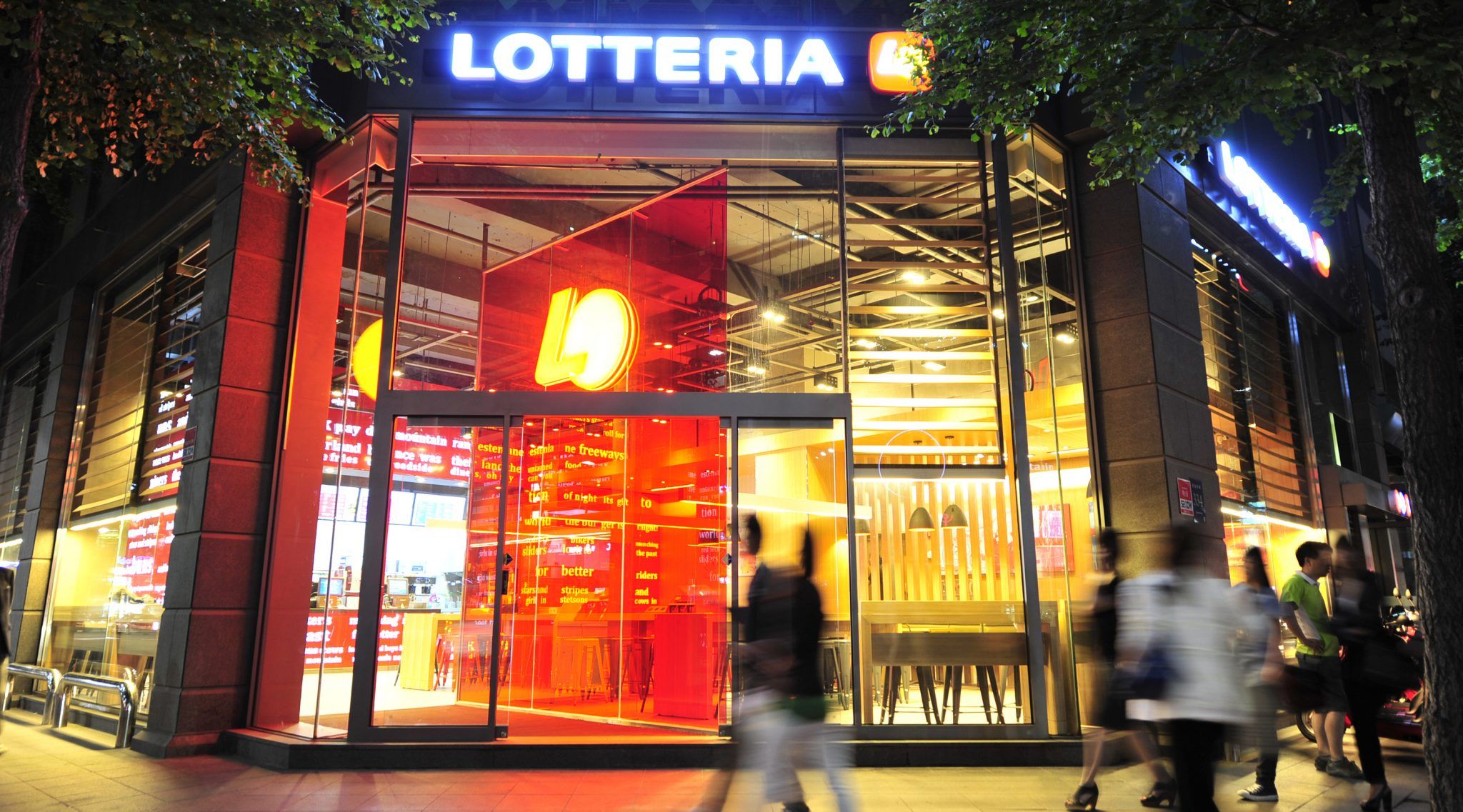
Tag: Lotteria

  • End of an Era: Lotteria Transforms into Zetteria, Marking a New Chapter in Japan’s Fast-Food Industry

    End of an Era: Lotteria Transforms into Zetteria, Marking a New Chapter in Japan’s Fast-Food Industry

    After 54 years in operation, the popular Japanese burger chain Lotteria is set to be rebranded as Zetteria, beginning in March. The Lotteria brand first entered the market in 1972, establishing its inaugural outlet in Tokyo. The decision to retire the brand was recently taken by its operating company, Zensho Holdings.

    Zensho Holdings, a leading food service operator in Japan, took ownership of Lotteria Japan in 2023. The first Zetteria branch opened its doors in Tokyo in September of the same year. Since then, Zensho Holdings has been systematically converting Lotteria stores into Zetteria outlets. By December 2025, Japan had 106 Lotteria outlets and 172 Zetteria stores, totaling 278 locations. This places Zensho Holdings as the fourth-largest burger chain operator in the country, following McDonald’s (3,025 outlets), Mos Burger (1,309), and Burger King (337).

    The number of Lotteria outlets has seen a significant decrease in recent years, plummeting from 358 in January 2023 to 222 by June 2025, a near 40% drop in just over two years. This drop reflects not only store closures, but also Zensho Holdings’ strategic approach to transform existing outlets and alter business models.

    The Zetteria brand aims to bridge the gap between fast food and cafe dining. Expansion has been expedited by repurposing existing Lotteria locations and modifying store signage and concepts. Through the integration of the two brands, Zensho Holdings hopes to reduce costs by refining raw material procurement and logistics, while also improving operational efficiency.

    Despite the shared naming of menu items like the Zeppin Cheeseburger between Lotteria and Zetteria, the two brands previously operated separate procurement, production, and distribution systems, leading to differences in buns, patties, and sauces.

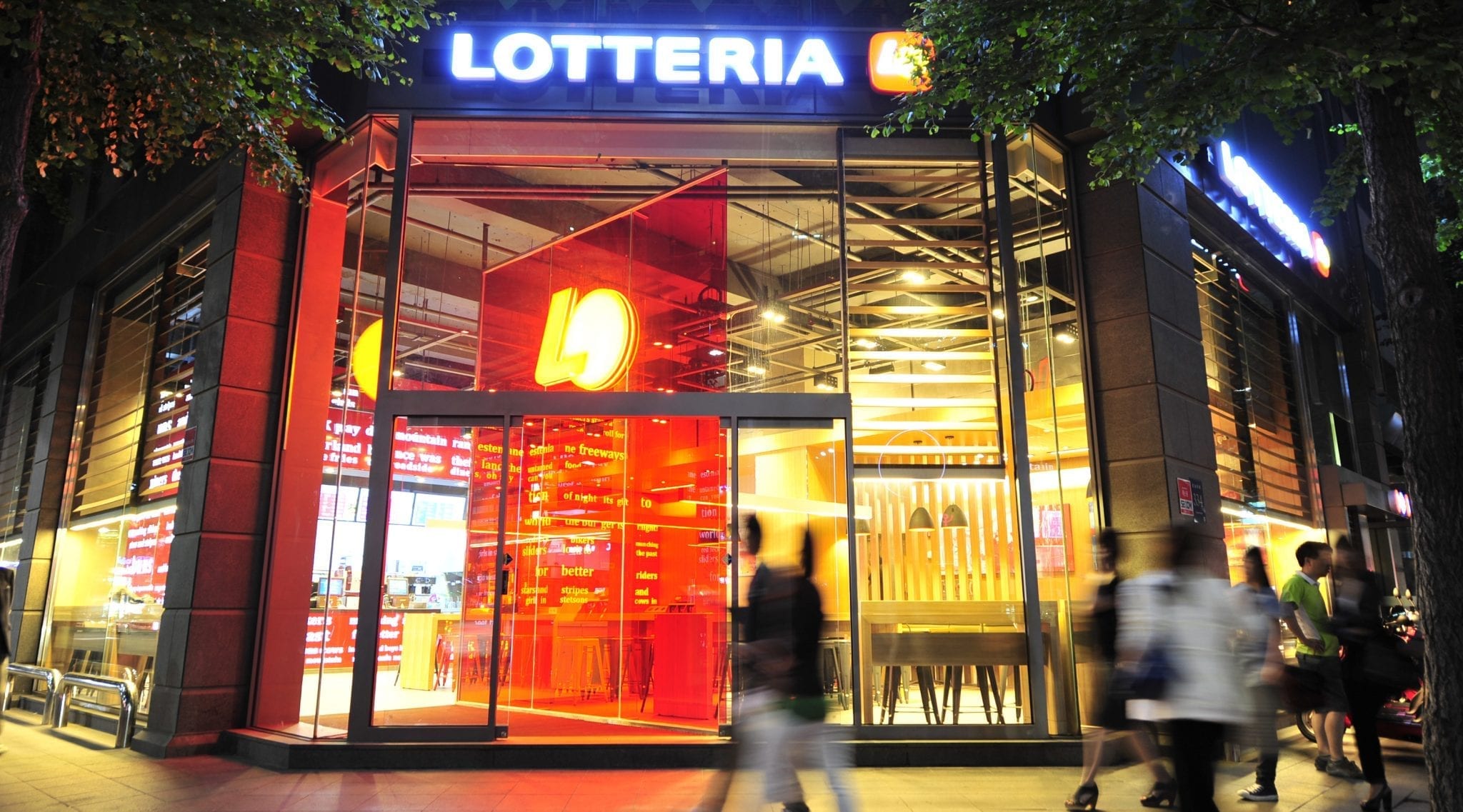
    Zetteria locations have been described as spaces that offer a dining experience beyond the typical fast food ambiance. The outlets feature spacious layouts, ample seating, understated lighting, and interiors that are reminiscent of cafes. Certain locations provide charging points for laptops and many have transitioned to table tablet ordering instead of traditional counter service.

    The menu has also seen adjustments. While basic burgers start at JPY250 (US$1.58), the signature Zeppin Beef Burger is priced at JPY540, making it more expensive than the previous offerings of Lotteria. The brand has also introduced premium, limited-time items such as roast beef burgers.

    Industry experts view the rise of Zetteria as indicative of broader changes within Japan’s fast food sector, as more operators seek to offer more than just quick, inexpensive meals. Zetteria is seen as an experimental brand aiming to occupy a new position as both a fast food restaurant and a cafe.
    Questions & Answers

    What is the reason for Lotteria’s rebranding as Zetteria?
    The change was part of Zensho Holdings’ strategy to transform existing outlets, improve operational efficiency, and cut costs by streamlining raw material procurement and logistics.

    What makes Zetteria different from Lotteria?
    Zetteria aims to bridge the gap between fast food and cafe dining. Outlets offer spacious layouts, ample seating, understated lighting, and interiors that are reminiscent of cafes. The menu also includes premium items, with the signature Zeppin Beef Burger priced higher than Lotteria’s previous offerings.

    How has the fast food sector in Japan been evolving?
    The rise of brands like Zetteria represents a shift in Japan’s fast food sector, with more operators seeking to offer experiences beyond just quick, inexpensive meals. Zetteria is seen as an experimental brand aiming to occupy a new position as both a fast food restaurant and a cafe.
  • South Korean Fast-food Chain Lotteria Targets Malaysian Market In Strategic Expansion

    South Korean Fast-food Chain Lotteria Targets Malaysian Market In Strategic Expansion

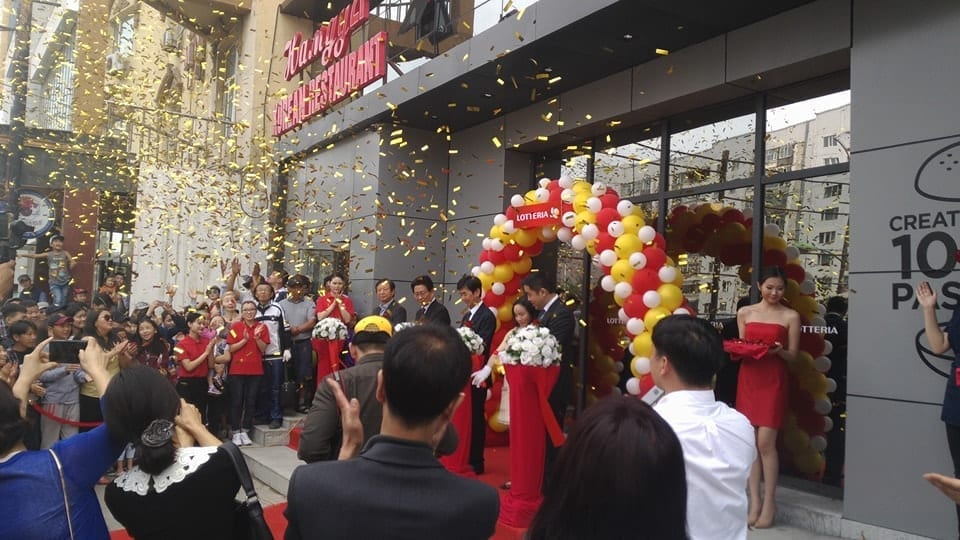
    The South Korean quick-service restaurant chain, Lotteria, is set to enter the Malaysian market by the end of the current year. This move is a result of a strategic alliance with the local firm, Serai Group.

    Exclusive Partnership with Serai Group

    As part of the collaboration, Serai Group has secured exclusive privileges to establish and manage Lotteria stores throughout Malaysia. Furthermore, it is authorized to sub-franchise the brand to other parties.

    Lotteria’s Expansion Strategy

    The venture in Malaysia is a component of Lotteria’s extensive growth strategy in Southeast Asia. This initiative is spearheaded by its parent organization, Lotte GRS Co., which is a branch of the South Korean conglomerate, Lotte Group.

    Lotte GRS has an ambitious plan to open an additional 30 Lotteria outlets throughout Malaysia in the next half-decade.

    Past Ventures and Future Prospects

    The decision to expand in Malaysia was made after Lotte GRS’s leadership, including CEO Cha Woo-cheol, conducted feasibility assessments in the region, and in Singapore, earlier in 2023. The company was exploring master franchise possibilities in these areas, indicating a strong desire to grow beyond Lotteria’s existing international markets, which include Vietnam, Myanmar, Laos, and Mongolia.

    A significant international market for Lotteria has been Vietnam, where the chain has been active since 1998. As per the 2024 financial report of Lotte Group, there are currently 253 Lotteria outlets operating across Vietnam.

    In tandem with its growth in Southeast Asia, Lotte GRS is also gearing up to open its inaugural US outlet in Orange County, California, in the middle of August.

    Questions & Answers

    What are Lotteria’s expansion plans in Malaysia?
    Lotteria plans to establish an additional 30 outlets throughout Malaysia in the next five years.

    What is the role of Serai Group in Lotteria’s expansion into Malaysia?
    Serai Group has secured exclusive rights to open and manage Lotteria stores across Malaysia, and it also has the authority to sub-franchise the brand to other parties.

    What are some of Lotteria’s established overseas markets?
    Lotteria has a strong presence in several international markets, including Vietnam, Myanmar, Laos, and Mongolia.

  • Lotteria to debut in Mongolia

    Lotteria to debut in Mongolia

    Korean conglomerate Lotte is launching its fast-food chain Lotteria in Mongolia.

    The brand’s restaurant franchise unit, Lotte GRS, will open its first location in the capital city of Ulaanbaatar and increase outlets to 10 over the next four years. The move follows an agreement with Mongolian restaurant and theatre operator Eugenetek Mongolia, which has signed on as master franchisor.

    A spokesperson for Lotte GRS said the flagship store’s prime location within the city’s commercial district, together with Mongolia’s young population and local enthusiasm for Korean culture, should contribute to the success of the new restaurant.

    Lotte GRS has previously expanded into China, Vietnam, Indonesia, Myanmar and Cambodia with its Lotteria chain as well as its Angel-in-us cafe franchise.

  • First Lotteria store in Singapore to launch next year

    First Lotteria store in Singapore to launch next year

    The first store of South Korea’s famous fast food chain Lotteria in Singapore is set to be opened in the second quarter next year.

    Food and beverage company Katrina Group has inked a non-binding term sheet with a restaurant business of Lotte Group to bring the chain to the city-state, it said in a news release Wednesday.

    Established in 1979, Lotteria specializes in hamburgers, fried chicken, and fries, and currently operates 1,600 outlets across seven countries, including Vietnam, Cambodia, and Myanmar.

    “Given the brand’s massive popularity in South Korea and its emphasis on quality, innovation and customer satisfaction, we are confident that Lotteria will resonate with Singaporeans and further enhance our F&B portfolio,” said Alan Goh, CEO and founder of Katrina Group.

    Katrina Group operates seven food and beverage brands in Singapore, including Bali Thai, Daily Chicken, and Vietnamese-style noodles chain So Pho.

    Earlier this month U.S. chicken sandwich chain Chick-fil-A announced plans to launch its first Singapore restaurant late next year as part of its US$75 million investment to enter Asia.

  • Japanese restaurant chain Zensho to buy Lotteria Japan

    Japanese restaurant chain Zensho to buy Lotteria Japan

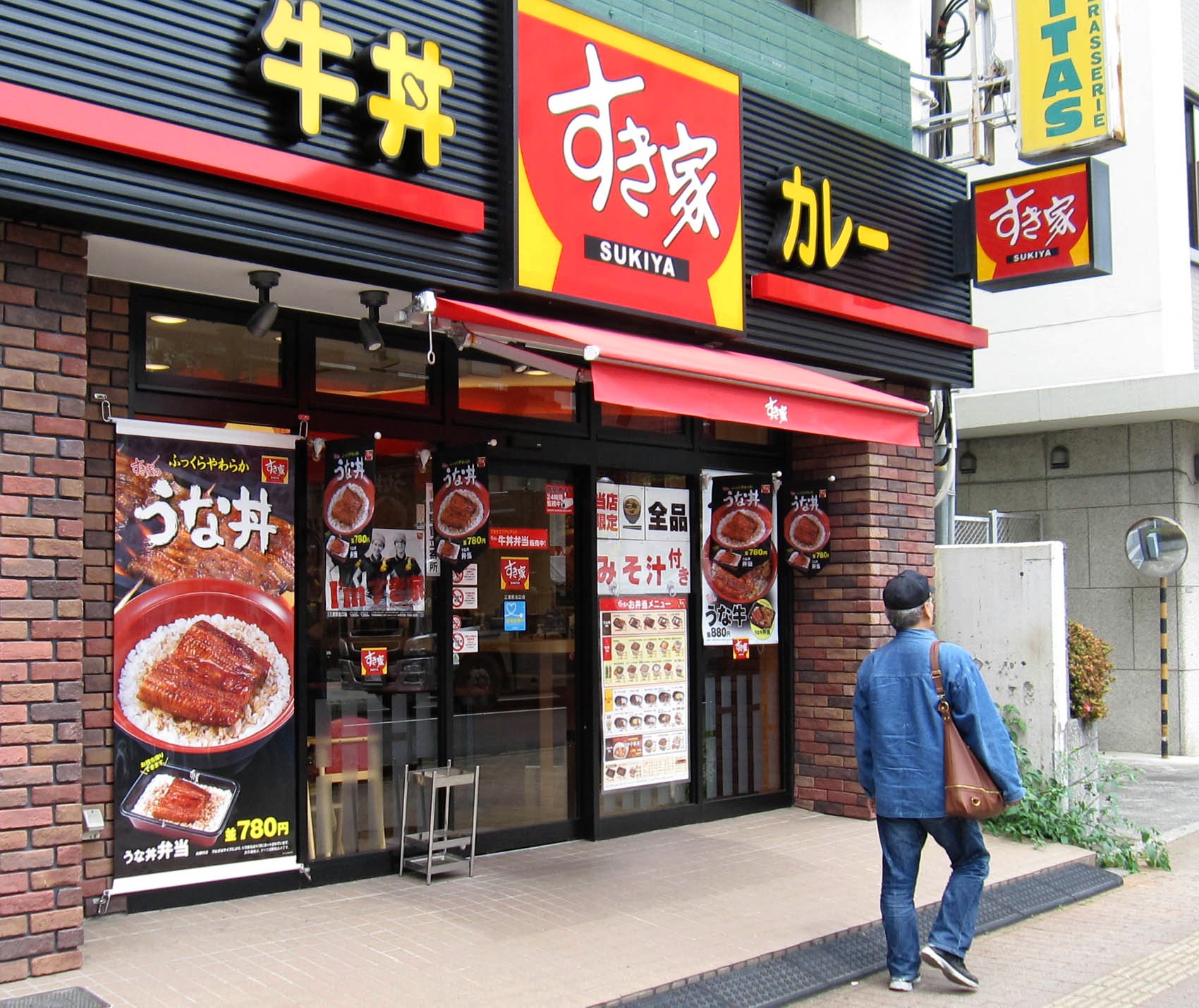
    Sukiya beef bowl chain’s operator, Zensho Holdings, is to acquire burger franchise Lotteria Japan from Lotte Holdings for an undisclosed sum.

    The deal is expected to be completed on April 1.

    Entering Japan in 1972 with the first store opened in Tokyo’s Nihonbashi, Lotteria had 358 stores across the country as of January 1.

    Zensho Holdings said it has decided to acquire the shares based on the judgment that the synergistic effect of its mass merchandising system and wide range of food business will contribute to the future expansion and development of Lotteria’s business.

    The deal is part of an operational restructuring by South Korea’s Lotte Holdings.

    “We believe this is the best option for Lotteria to pursue new growth,” Lotte Holdings said in an announcement.

    The company said the Lotteria brand will continue for a certain period after the transfer of the shares but the new owners may rename it in the future.

    As of March 31 2022, Zensho Holdings managed and developed 10,078 restaurants, with sales of about US$4.9 million. Its portfolio of brands includes Sukiya, Big Boy, Nakau, Victoria Station and Jolly Pasta. The company previously operated US burger chain Wendy’s restaurants’ in Japan.

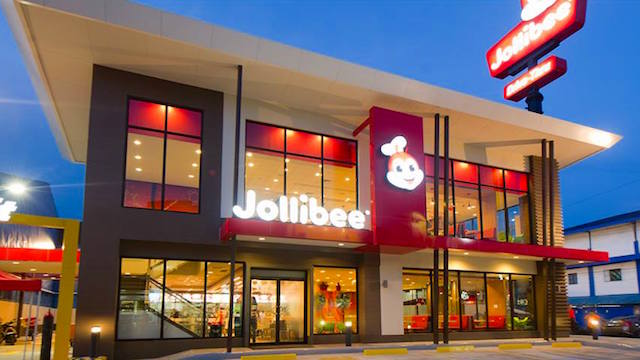
  • Jollibee Foods struggles to make profits in Vietnam with 4 brands

    Jollibee Foods struggles to make profits in Vietnam with 4 brands

    All four brands that Jollibee Foods Corp of the Philippines operates in Vietnam, including coffee chain Highlands Coffee, posted losses last year.

    The corporation, founded by Filipino billionaire Tony Tan Caktiong, established its first company in the country, Jollibee Vietnam, in 2005, as a fast food operator.

    Since then it has branched into other food and beverage brands: Pho 24, Highlands Coffee and Coffee Bean & Tea Leaf Vietnam. But Highlands Coffee is its only profitable brand (except for last year), while all three other chains have been making losses for years

    Jolibee Vietnam planned to have 300 outlets in the country by 2020, but it only has 150 as of now, lower than its competitors KFC and Lotteria.

    It posted a loss of VND43.9 billion (1.83 million) last year.

    Pho 24, which sells the traditional Vietnamese rice noodles soup, is also struggling to make profits nearly 20 years after it was established.

    At one point, it had targeted 1,000 outlets, but only has 22 now, mostly in Ho Chi Minh City. It also has outlets in South Korea, Indonesia and the Philippines.

    It posted a loss of VND89.4 billion last year.

    The Coffee Bean & Tea Leaf is in an even worse situation with just six outlets in HCMC after 14 years in Vietnam. Its prices are 1.5-2 times higher than that of Highlands Coffee and its outlets are mostly located in large malls.

    It has been reporting an annual loss of VND26-29 billion in the last four years.

    Highlands Coffee, meanwhile, has reported profits for seven of the last eight years.

    The chain topped the VND1 trillion revenue mark in 2017 and doubled it in two years to cross VND2 trillion.

    Except for last year when it posted a VND19 billion loss due to Covid-19, Highlands Coffee had posted annual profits of VND55-100 billion in the previous four years.

    The chain now has 525 outlets in Vietnam and the Philippines.

  • Lotte Vietnam denies reports it will close Lotteria fast-food chain

    Lotte Vietnam denies reports it will close Lotteria fast-food chain

    Lotteria Vietnam has said that it will continue its business expansion in Vietnam amid Korean media reports of its closedown over a net loss of nearly US$9 million.

    The company, which is operated by Lotte GRS under South Korea’s Lotte Group, dismissed a media report that it would cease operations in Vietnam, a spokesperson told Tuoi Tre (Youth) newspaper on Saturday.

    There is an inaccurate understanding of the Korean media report, the Lotteria Vietnam spokesperson added.

    Lotteria Vietnam is proceeding with its normal business while an expansion is underway.

    The firm is expected to invest in a new plant at Long Hau Industrial Park in Long An Province, just outside Ho Chi Minh City, and open ten Lotteria stores in 2021.

    “We are working with our parent company in South Korea to clarify its new strategy,” the spokesperson told Tuoi Tre.

    The spokesperson further explained that Lotteria Vietnam is still operating its franchise business and has reached almost 100 franchised restaurants.

    Entering the Vietnamese market in 1998, Lotteria Vietnam is running over 260 outlets and is among the top fast-food chains in the Southeast Asian country.

    The Korea Times reported on Sunday that Lotteria Vietnam is not closing down.

    “It is true that Lotte GRS is leaving the Indonesian market but we are continuing with our franchise and food retail businesses in Vietnam,” the newspaper quoted a Lotte GRS official as saying.

    The paper seemed to correct its report on Friday that had cited “a Lotte GRS official” as saying “Lotteria Vietnam and others have met the requirements for closure starting this year.”

    Friday’s article said that Lotte GRS was in the process of closing down “Lotte Group’s food material supplier in Vietnam, which was established in early 2020 to expand Lotte GRS’ business in neighboring Southeast Asian countries.”

    “Lotteria franchises in Vietnam have all stopped operations and its headquarters in Seoul is reviewing the possibility of closing down the business within this year,” The Korea Times reported.

    The report went on to elaborate that Lotteria Vietnam did not make any profit for Lotte GRS in 2020.

    “Lotteria Vietnam’s book value stood at 26.8 billion won [$24 million] as of early last year, but declined to 15.6 billion won [$14 million] after recognizing 11.2 billion [$10 million] won in valuation losses,” the article said.

    “Its net loss surpassed 10 billion won [$8.9 million] in one year.”

  • Lotteria burgers get 2.2% more expensive

    Lotteria burgers get 2.2% more expensive

    Lotteria is raising burger prices. The fast food franchise announced Wednesday that it was going to raise the price of 11 of its burgers by an average of 2.2 percent. Its Teri Burger, for example, will now cost 2,300 won ($2.04), up from the original 2,000 won. The price of the Classic Cheese Burger will rise from 4,000 won to 4,200 won.

    “We have decided to increase prices due to economic factors, but hope to offer customers higher quality and service,” read a statement from the franchise.

    Cafe franchise Angel-in-us Coffee also announced it would raise prices of 17 of its beverages by an average of 2.7 percent, or 200 won. Both Lotteria and the cafe chain are operated by Lotte GRS, the food business subsidiary of Lotte Group.

    Angel-in-us cited higher prices of ingredients – like coffee beans and milk, as well as higher labor costs – for the beverage price hike.

  • Lotte Mart makes debut in Mongolia

    Lotte Mart makes debut in Mongolia

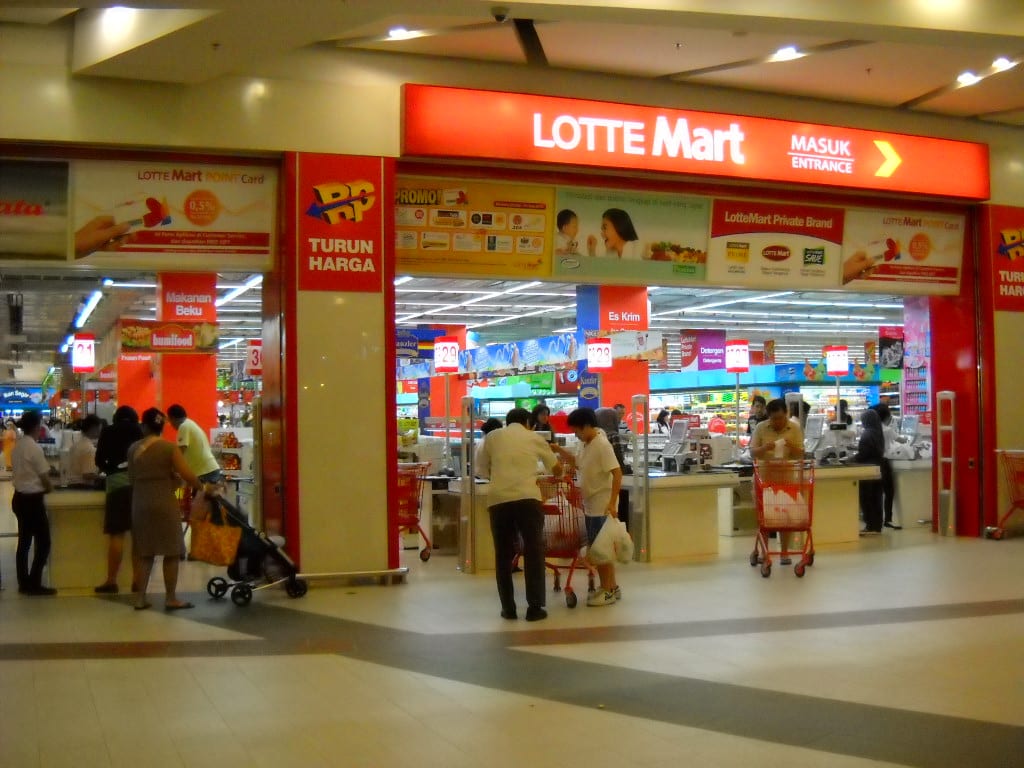
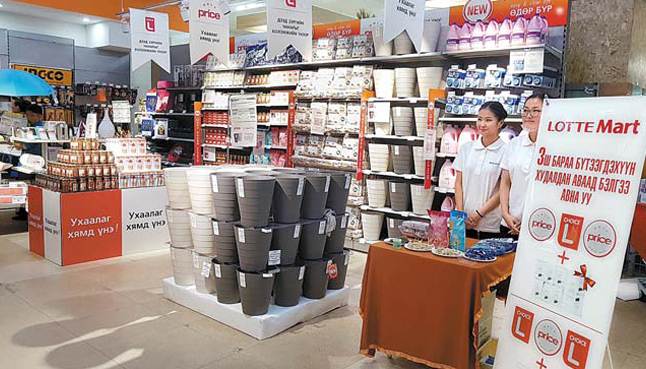
    Lotte Mart Mongolia is opening its first store, in Ulaanbaatar, in the first half of next year.

    The South Korean retailer has set up a joint venture with local retailer Nomin Holdings, which will sell Lotte’s private label products for the next 10 years. It is initially targeting sales of US$3 million annually.

    To prepare for this expansion, Lotte Mart has already sold its food products of its private labels – Only Price, Yorihada, and Choice L – last year at four stores including a state-run department store and two supermarkets owned by Nomin in Ulaanbaatar.

    Nomin Holdings is one of Mongolia’s three largest enterprises and has also worked with other global names including L’Oreal, Mango, and Century 21 in the country.

    Mongolia is one of Lotte’s latest foreign markets after it pulled out from China. Parent Lotte Group operates 46 Lotte Mart stores in Indonesia and 13 in Vietnam. It launched its fast-food brand Lotteria in Ulaanbaatar last month.

  • Lotteria Burger Laboratory concept to open Korea-wide

    Lotteria Burger Laboratory concept to open Korea-wide

    London-based consultancy JHP Design has created a fast-dining experience for Asian fast-food restaurant group Lotteria.

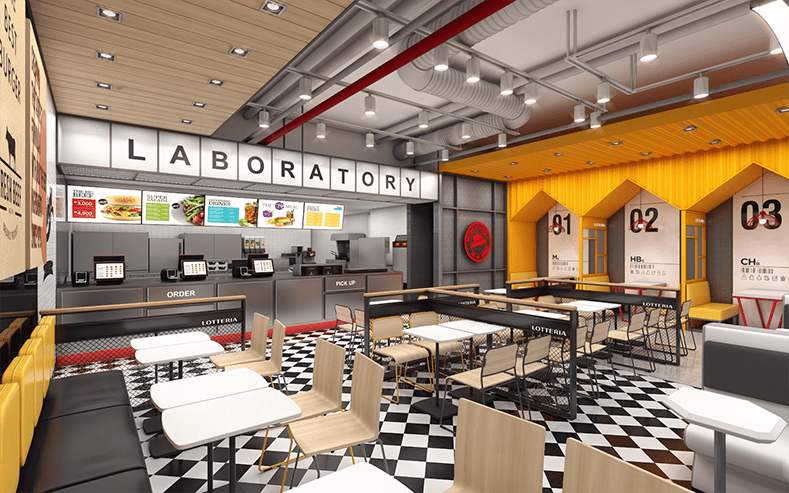
    The new concept, called the Lotteria Burger Laboratory, features an open kitchen combined with a made-to-order system, so customers can watch the “burgerista” preparing every stage of their meal.

    Customers can place orders via an app before arriving, or in store through bespoke tablets as well as at the counter.

    Lotteria Burger Laboratory Korea 6

    A science and experimental theme in the restaurant is reflected in every aspect of the customer experience. A red industrial ceiling-mounted pipe snakes from the front of the “laboratory” to the back, guiding the customer journey. The ceiling also features an illuminated digital clock indicating how long customers need to wait for their order to be ready.

    Lotteria Burger Laboratory Korea 5

    Science icons

    The walls are decorated with periodic tables, food-assembly diagrams and science-based icons. The chairs have chemical-resistant wire frames and the tables offer power plugs for charging mobile devices.

    The seating area offers individual code-writing tables, laboratory benches and breakout booths as found in high-tech start-ups.

    Lotteria Burger Laboratory Korea 4

    A stainless-steel drinks machine enables customers to mix and refill their own beakers.
    With “radioactive” yellow and black doors and frames, the restrooms have acid-resistant white glazed tiles.

    Lotteria Burger Laboratory Korea 3

    All materials used have low environmental impact. Recycled strawboard, reclaimed porcelain and salvaged waste pipes have all been combined in an environment lit entirely with low-energy LED bulbs, and the kitchen uses hyper-efficient induction cooking equipment. All packaging is recycled and biodegradable.

    Lotteria Burger Laboratory Korea 2

    The first Burger Lab opened in Seoul last November, built in just four weeks at a total cost of US$480,000. The concept is now being rolled out across the company’s 3000 outlets throughout Asia.

    Lotteria Burger Laboratory Korea 1

    The Lotteria Burger Laboratory sources its ingredients solely from Lotteria’s own vertically integrated sustainable farms. As well as beef, chicken and shrimp burgers and fries, the new outlet offers local specialties and vegetarian options.

    Lotteria is owned by Lotte, a conglomerate established in 1948 with headquarters in Japan and South Korea.

  • The Burger Laboratory by Lotteria

    The Burger Laboratory by Lotteria

    In recent years the world of fast food has been in panic mode. An explosion of casual dining brands and a public that perceives fast food as poorly sourced, artificially flavoured, and uncaring of animals and the environment has reduced both credibility and revenue.

    LOTTERIA’s response was to follow the lead of discount supermarkets, reducing ranges and hugely improving the provenance and quality of ingredients. Fresh sustainable and well sourced meat and vegetables are now at the heart of the offer, which is completely made to order, all achieved by efficient, transparent and sustainable logistics and sourcing.

    JHP’s commission was to design and develop this new experience, including the store architecture, internal environment, brand identity, product strategy, packaging, internal communication, multi-sensory strategy, advertising and service strategy.

    The Response

    The BURGER LABORATORY’s ingredients are entirely sourced from LOTTERIA’s own vertically integrated farms and are of the highest quality in terms of both environmental sustainability and animal husbandry. In addition to beef, chicken and shrimp burgers and fries, LOTTERIA’s new BURGER LABORATORY offers local specialties and vegetarian options.

    An entirely open kitchen has been introduced combined with a made-to-order process allowing customers to watch the BURGERISTA preparing every stage of their meal. Customers can place orders via an app on their journey to the LAB, in-store through bespoke tablets or in person at the counter.

    The BURGER LABORATORY’s science and experimental theme is reflected in every aspect of the customer experience.

    A red industrial ceiling mounted pipe winds its way from the front of the laboratory to the back guiding the customer journey. The ceiling also features an illuminated digital clock indicating how long customers must wait for their order to be ready.

    The restaurant’s walls are decorated with periodic tables, food assembly diagrams and science based icons. Chairs have chemical resistant wire frames whilst tables are equipped with power plugs for charging mobile devices instead of Bunsen Burners. (Free WI-FI access is of course a hygiene factor in Korea).

    The stainless steel drinks machine enables customers to mix and refill their own beakers. The seating area offers individual code writing tables, long laboratory benches and breakout booths reminiscent of those found in high tech start-ups.

    Restrooms use acid resistant white glazed tiles with ‘radioactive’ yellow and black doors and frames. The materials used are not only consistent with the laboratory’s look and feel but were also selected for their low environmental impact.

    Recycled strawboard, reclaimed porcelains and salvaged waste pipes have all been combined in an environment that is lit entirely with low energy LED sources and uses hyper-efficient induction cooking equipment. All packaging is recycled and biodegradable.

    The Outcome

    The first 300 M2 BURGER LAB opened its doors in Seoul’s Jonjak in November 2016. Built in a remarkable four weeks including all equipment and services, the total project cost was a modest $480,000.

    The BURGER LABORATORY’s results have been outstanding consistently trading 35% higher than its previous incarnation.

    The concept is now being rolled out across the companies 3,000 outlets throughout Asia and has received numerous positive comments in the press and on social media.


  • Burger King Vietnam ‘not shutting down’

    Burger King Vietnam ‘not shutting down’

    Burger King Vietnam has refuted media claims the company is planning to exit the Southeast Asian nation.

    The US fast food chain entered Vietnam in 2012, initially opening in Ho Chi Minh City’s Tan Son Nhat international airport, before progressively moving into suburban locations in the city.

    At the time the company projected it would open 60 stores within five years, but three-quarters of the way into that timeline, it still has just 16.

    The closure of three stores in recent months has fuelled speculation the brand may exit the market. But CEO Nguyen Gia Thanh told news website Dau Tu this week that was not the case.

    He said two stores in Ho Chi Minh City were closed to relocate in better sites with more affordable rents.

    The third store closed was in the capital, Hanoi.

    Thanh said Burger King will continue to expand in both cities and is not closing down in Vietnam.

    Vietnamese are not known as big consumers of burgers and Burger King arrived in the market with higher price points than established rivals Jollibee from the Philippines, Lotteria from Korea and fried chicken and burger chain KFC from the US.

    Rival Carl’s Jr has also struggled to make an impression in the market, largely targeting the expat market in districts of Ho Chi Minh where foreigners reside.

  • 20 Lotte affiliates meet IPO requirements

    20 Lotte affiliates meet IPO requirements

    The conglomerate has pledged to simplify its governance structure and boost its managerial transparency through a set of measures, including initial public offerings (IPOs), after a bitter family feud over control of the retail conglomerate. Currently, Lotte has eight publicly traded affiliates here, with the key units being linked through unlisted Japanese units.

    According to the data compiled by the Korea Exchange, a total of 20 out of 73 Lotte subsidiaries are eligible for IPOs in the country. The candidates include Hotel Lotte, Lotte Card Co., Lotteria and Lotte Capital.

    Under local regulations, a firm seeking to be listed is required to have a capital base of more than 30 billion won (US$26.5 million), average annual sales exceeding 70 billion won for the previous three consecutive years and a return on equity surpassing 5 percent.

    After the squabble over control of the sprawling business empire, which has a cobweb-like governance structure, Lotte chairman Shin Dong-bin in August expressed his desire to push for the listing of Hotel Lotte, a key affiliate, as part of its reform plan.

    The listing on the local stock market requires stricter regulatory filings while allowing it to seek capital increases, issue more non-voting stocks and reap other benefits that translate into greater business opportunities.

    “As a South Korean company, we will have more of our affiliates go public with a strong will to contribute to the Korean economy,” a Lotte official said.