Tag: Louis Vuitton

  • Louis Vuitton Celebrates 130 Years of Iconic Monogram with Revamped Seoul Flagship Store

    Louis Vuitton Celebrates 130 Years of Iconic Monogram with Revamped Seoul Flagship Store

    Luxury fashion house, Louis Vuitton, has unveiled its rejuvenated flagship Dosan store in Seoul’s prestigious Gangnam district. The renovation was undertaken to mark the historic 130th anniversary of the brand’s famous monogram.

    The Legacy of the Iconic Monogram

    The newly rejuvenated store is a celebration of the classic monogram, a design conceived in 1896 by Georges Vuitton as a tribute to his father, Louis Vuitton. This symbol, over the years, has evolved to become one of the most identifiable emblems in the realm of high-end fashion.

    A Rejuvenated Space with a New Concept

    The Dosan store was redesigned around the brand’s enduring philosophy of the “art of travel,” culminating in a hotel-inspired atmosphere. This remodeled space features an array of the brand’s classic monogram bags. Ranging from the Keepall, Speedy, Alma, Neverfull, to the Noé, visitors can explore the evolution of the iconic Louis Vuitton designs.

    Introducing a Hospitality Element

    The redesign also incorporated a hospitality aspect. A bar situated on the second floor now offers champagne and a selection of new menu items, all bearing Louis Vuitton’s monogram motifs. This amalgamation of retail and lifestyle experiences enhances the ambience of the store.

    A Broader Strategy in Play

    The revamping of the Dosan store is reflective of Louis Vuitton’s wider plan of transforming its flagship stores into immersive destinations. As luxury brands are progressively looking to bolster customer engagement beyond the conventional shopping experience, Louis Vuitton is leading the way.

    Questions & Answers

    What is the significance of the renovation of the Dosan store in Seoul?
    The renovation marks the 130th anniversary of Louis Vuitton’s iconic monogram and is symbolic of the brand’s broader strategy to enhance customer engagement.

    What features does the redesigned store offer?
    The redesigned store blends retail with lifestyle experiences. It includes a bar offering champagne and a new menu featuring the brand’s monogram motifs. The store also showcases the brand’s classic monogram bags.

    What is the philosophy behind the redesign?
    The redesign is based on Louis Vuitton’s long-standing philosophy of the “art of travel,” resulting in a hotel-inspired concept.

  • Louis Vuitton Reconquers Macao: Flagship Relaunch Meets Debut Fashion Show

    Louis Vuitton Reconquers Macao: Flagship Relaunch Meets Debut Fashion Show

    The luxury fashion house, Louis Vuitton, has recently celebrated the reopening of its flagship store at the Shoppes at Four Seasons in Macao. In addition to the store reopening, the brand launched its first-ever fashion show in the city, marking a significant milestone in its history.

    Store Expansion and Redesign

    The revamped flagship store now offers the full range of Louis Vuitton products. It has been redesigned to include a Travel Room that seamlessly connects the men’s and women’s collections. The redesign is an embodiment of the brand’s commitment to creating an immersive shopping experience for its customers.

    A key architectural feature of the store is an eye-catching wooden staircase, suspended mid-air, conceived by acclaimed Japanese architect Shohei Shigematsu of OMA. The staircase aims to provide visitors with a unique, sculpture-like experience, encapsulating the brand’s dedication to design and its luxury status.

    Luxury Fashion Show

    Following the grand reopening of its store, Louis Vuitton teamed up with Sands China to present the Cruise 2026 collection at The Londoner Arena.

    The event was orchestrated by the brand’s women’s artistic director, Nicolas Ghesquière. The show attracted a host of regional celebrities. Among those in attendance were brand ambassador Victoria Song, as well as Carina Lau, Louise Wong and Yuxiao Lu.

    David Sylvester, President of Global Retail at Las Vegas Sands Corp, commented on the event, noting its significance in highlighting Macao’s emerging influence on the global stage. He emphasized that the event showcased the city’s ability to combine luxury fashion, exceptional hospitality, and world-class experiences, thereby reinforcing Macao’s status as a top-tier destination for culture, creativity, and sophistication.

    Questions & Answers

    What does the reopening of Louis Vuitton’s flagship store signify?

    The reopening of Louis Vuitton’s flagship store in Macao represents the brand’s continuous commitment to offering high quality, luxury fashion to its customers. The redesigned store now offers a full range of Louis Vuitton products, making it a top-tier shopping destination.

    What was unique about the store’s architectural design?

    A standout feature of the store’s redesign is the suspended wooden staircase, designed by Japanese architect Shohei Shigematsu. This architectural marvel is intended to provide visitors with a unique, sculpture-like experience.

    What was the significance of the fashion show held by Louis Vuitton?

    The fashion show held by Louis Vuitton, following the reopening of its flagship store, served to showcase the Cruise 2026 collection. The event highlighted Macao’s capacity to host world-class events, thus reinforcing its status as a premier destination for culture, creativity, and sophistication.

  • Fake Louis Vuitton, Gucci shoes seized in $1.3M Hong Kong counterfeit bust

    Fake Louis Vuitton, Gucci shoes seized in $1.3M Hong Kong counterfeit bust

    In a recent operation, Hong Kong officials intercepted an estimated HK$10 million worth of suspected counterfeit clothing and footwear, featuring labels from major brands such as Louis Vuitton, Gucci, and Nike. The operation, held between October 6 and 17, resulted in the confiscation of approximately 18,000 items and the arrest of two individuals, according to an announcement from the Hong Kong Customs and Excise Department.

    Details of the Seized Goods

    The confiscated merchandise included items bearing the branding of Nike, Adidas, Louis Vuitton, and Gucci. Officials believe these products were headed for foreign markets, specifically in Europe and America, to capitalize on the demand generated by large-scale global events.

    “Large events, such as sports shoe exhibitions, often see collectors and enthusiasts trading items on-site, which escalates the demand for high-quality counterfeit sports shoes,” explained Inspector Yeung Tit-fung from the department.

    Investigation and Legal Consequences

    The investigation into these cases is currently ongoing. The arrested individuals have been released on bail, pending further investigation. The Hong Kong legislation stipulates that importing or exporting products carrying a counterfeit trademark could lead to a maximum of five years imprisonment and fines reaching up to HK$500,000.

    The Customs Department revealed plans to intensify inspections and execute intelligence-driven operations to combat counterfeiting and trademark infringement activities.

    Previous Operations

    The department had previously conducted a week-long operation in late September, which focused on the city’s major shopping districts ahead of the Golden Week holiday. This operation resulted in the seizure of around 2,000 suspected counterfeit handbags, leather goods, and fashion accessories, with an estimated market value of HK$1.3 million.

    Questions & Answers

    What brands were predominantly featured among the seized goods?
    The seized items predominantly featured branding from major labels such as Louis Vuitton, Gucci, Nike, and Adidas.

    What are the legal consequences for importing or exporting counterfeit products in Hong Kong?
    In Hong Kong, the import or export of goods bearing a counterfeit trademark can result in up to five years of imprisonment and fines of up to HK$500,000.

    What measures are the Hong Kong Customs Department taking to combat counterfeiting?
    The Hong Kong Customs Department plans to enhance inspections and implement intelligence-led operations to prevent counterfeit and trademark infringement activities.

  • Louis Vuitton Launches Standalone Beauty Boutique In China Amid Revenue Slump

    Louis Vuitton Launches Standalone Beauty Boutique In China Amid Revenue Slump

    The French luxury behemoth, Louis Vuitton, has recently inaugurated its inaugural standalone beauty retail outlet in China. This strategic development marks a significant effort by the brand to fortify its presence in the high-end market segment and re-establish its bond with Chinese consumers.

    The Beauty Boutique

    The beauty boutique, nestled in the esteemed Deji Plaza of Nanjing, serves as the platform to exhibit the company’s novel beauty product line, La Beaute. This line is the creative offspring of the distinguished makeup artist, Dame Pat McGrath. The La Beaute collection comprises a meticulously curated assortment of products such as lipsticks, lip balms, eyeshadow palettes, and an array of beauty accessories.

    Product Highlights

    Notable products from the collection include the LV Rouge lipsticks, which are available in a staggering 55 shades, with both satin and matte finishes. These lipsticks are marketed at roughly $160 each. Furthermore, the product line is also home to 10 LV Baume lip balms and 8 LV Ombres eyeshadow palettes.

    Brand Strategy

    The unveiling of this boutique aligns with Louis Vuitton’s large-scale plan to rejuvenate its relations with China’s luxury consumer base. This comes in the wake of a reported 4 per cent slump in its global revenue during the first half of FY25. The brand’s initiative is a response to the weakening demand noticed in China, a situation partly attributed to the prevailing trade friction between Beijing and Washington.

    Questions & Answers

    What is the strategic significance of Louis Vuitton’s first standalone beauty boutique in China?
    The launch of this boutique is a key move by Louis Vuitton to strengthen its foothold in the premium market and foster stronger relations with Chinese consumers.

    What are some notable products from the new La Beaute collection?
    Prominent products from the collection include the LV Rouge lipsticks, available in 55 shades, LV Baume lip balms, and LV Ombres eyeshadow palettes.

    Why is Louis Vuitton focusing on re-engagement with China’s luxury consumers?
    The brand’s focus on re-engagement with China’s luxury consumers comes in response to a 4 per cent decrease in its global revenue during the first half of FY25 and weakening consumer demand within China.

  • Louis Vuitton Enters Cosmetics Industry With Sustainable, Luxury Makeup Line, La Beaute

    Louis Vuitton Enters Cosmetics Industry With Sustainable, Luxury Makeup Line, La Beaute

    Luxury fashion brand Louis Vuitton is venturing into the cosmetic industry with the introduction of La Beaute, a premium makeup line. The initial launch is set to take place in China this month, with a worldwide expansion planned shortly after.

    The Creative Force Behind La Beaute

    The creative process for developing this collection was steered by renowned British makeup artist, Dame Pat McGrath. The French luxury establishment communicated that the products come in artistically designed containers that are intended to be lifelong keepsakes.

    The makeup assortment features 55 lipsticks, 10 lip balms, and a variety of eyeshadow palettes.

    Sustainable and Luxurious

    All items in the collection are designed with sustainability in mind, as they are refillable. Customers can purchase replacement lipstick bullets and individual eyeshadow shades as needed.

    Adding an extra touch of luxury, the lip products, a collaboration with Louis Vuitton’s master perfumer Jacques Cavallier Belletrud, are also fragranced. The Rouge lipsticks boast a blend of mimosa, jasmine, and rose scents, while the Baumes lip balms carry hints of mint and raspberry.

    “Makeup is culture; it is power; it is presence; and it’s personal,” McGrath, the creative director of cosmetics for La Beaute, said of the new line.

    Pricing and Availability

    The lipsticks and balms from the range are priced at $160 each, while the eyeshadow palette is available for $250.

    The brand is planning a digital pre-launch scheduled for August 25.

    Questions & Answers

    What is the price range for the La Beaute makeup line?
    The lipsticks and lip balms are valued at $160 each, whereas the eyeshadow palette is priced at $250.

    Are the products in the La Beaute makeup line refillable?
    Yes, all the products in the line, including lipsticks, lip balms, and eyeshadows, are refillable.

    Who is the creative director behind the La Beaute line?
    The La Beaute makeup line was developed under the creative direction of renowned British makeup artist, Dame Pat McGrath.

  • Louis Vuitton Set to Unveil Stunning Megastore in Luxurious Global Retail Hub

    Louis Vuitton Set to Unveil Stunning Megastore in Luxurious Global Retail Hub

    Scaffolding has emerged around the latest project from Louis Vuitton, poised at K11 Musea and overlooking the Avenue of Stars—a scenic promenade that showcases breathtaking views of Victoria Harbour and the vibrant Hong Kong skyline. As the luxury brand prepares for its next chapter in this prime location, whispers of its plans have started to circulate, although official confirmation remains elusive.

    Reports suggest that the new outlet will encompass approximately 40,000 square feet, mostly dedicated to non-retail features. The anticipated offerings include a museum, a café, and a luxurious lounge reserved for VIP clientele. This flagship store is expected to be one of the largest in Asia, with a projected opening by the end of 2026, as indicated by Bloomberg during the initial agreement announcement.

    A Blueprint for Immersive Shopping

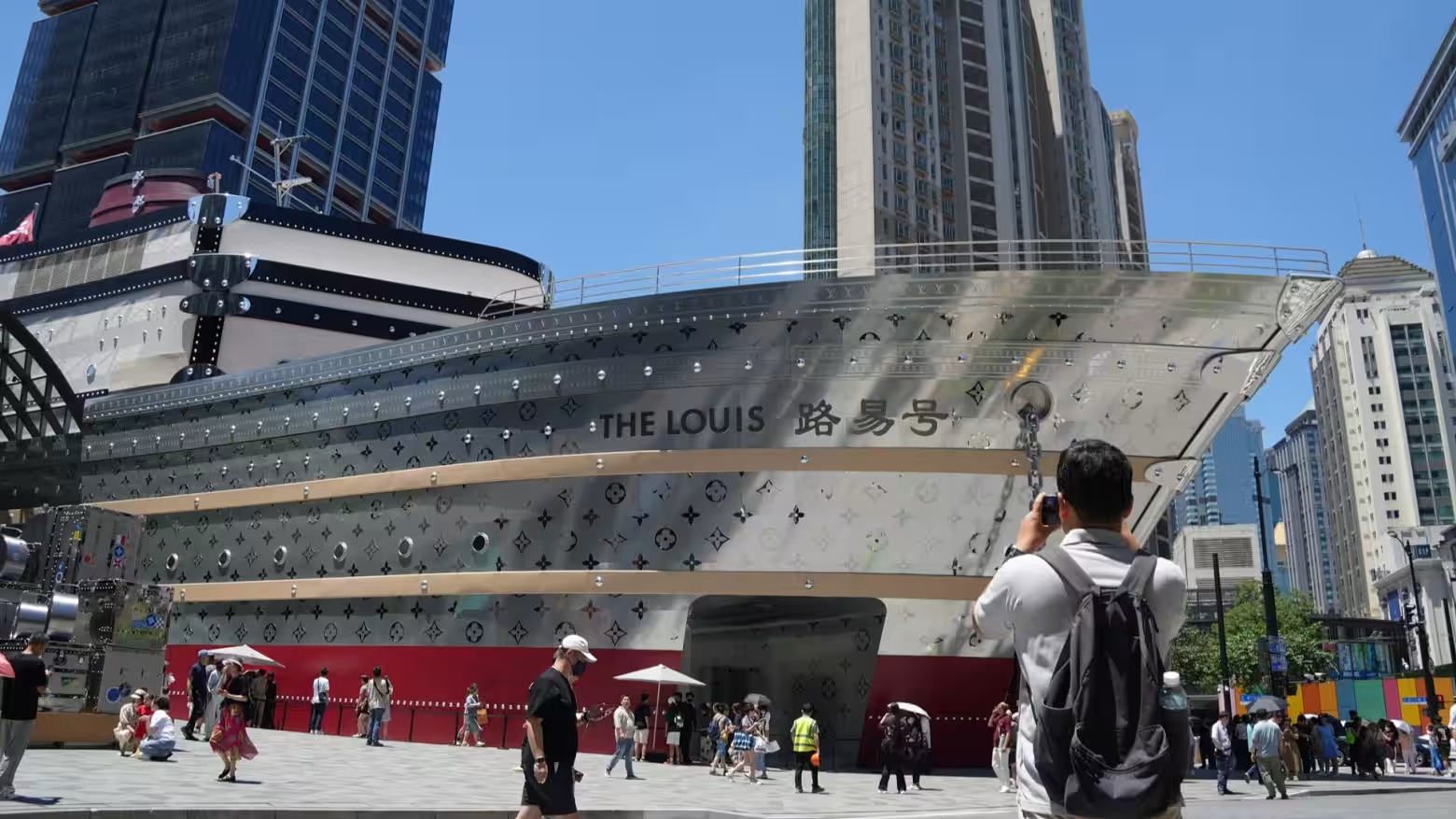
    Industry experts, speaking to the South China Morning Post, hint that the store’s design will mirror that of the recent three-level, ship-shaped retailer unveiled in Shanghai. This indicates a strategic approach aimed at creating a multi-experience hub rather than simply a retail outlet, aligning with a trend toward immersive shopping environments.

    Luxury Amid Record High Rents

    Louis Vuitton’s bold move into this space comes as Tsim Sha Tsui claims the title of the most expensive retail market globally. As of the fourth quarter of 2024, prime rents soared to an astonishing 17,132 euros (roughly US$20,177) per square meter annually, outpacing renowned shopping streets like Madison Avenue in New York and Bond Street in London, according to property consultancy Savills. The developer, New World Development, helmed by the billionaire Cheng family, is reportedly setting rental terms partly based on the store’s turnover—talk about a high-stakes game of luxury leasing!

    Navigating Shifting Consumer Habits

    This new endeavor arrives at a time when global luxury brands are recalibrating their strategies in China, a market grappling with economic uncertainty that has nudged consumers toward a more careful approach to spending. Despite challenges, the appetite for high-end experiences—think five-star hotels, extravagant dining, and fine travel—is undimmed among affluent individuals. In response, brands like Louis Vuitton are capitalizing on the opportunity to create physical spaces that deliver personalized experiences, luring customers who crave more than just products.

    Strategically located near popular tourist destinations, K11 Musea has quickly become a favorite among both locals and visitors alike. Adding to its allure, Louis Vuitton recently hosted a fashion show at the mall in late 2023, showcasing its menswear pre-fall 2024 collection, further solidifying its presence in this bustling cultural hub.

    Questions & Answers

    What unique features will the new Louis Vuitton store at K11 Musea offer?
    The store will include a museum, a café, and an exclusive lounge for VIP customers, aiming to provide an immersive shopping experience rather than just retail space.

    Why has Louis Vuitton chosen Tsim Sha Tsui for its new flagship store?
    Tsim Sha Tsui is recognized as the world’s priciest retail market, making it an appealing location for luxury brands seeking high visibility and foot traffic.

    How are luxury brands adapting their strategies in China amid economic fluctuations?
    Brands are focusing on creating brick-and-mortar experiences that emphasize personalization and unique offerings in response to consumers becoming more selective with their spending.

  • Louis Vuitton hit by massive Hong Kong data breach

    Louis Vuitton hit by massive Hong Kong data breach

    Louis Vuitton’s Hong Kong branch faces scrutiny following a significant data breach that may have left the personal details of approximately 419,000 customers exposed.

    Investigation Launched

    The luxury brand’s Hong Kong office reported a data breach to the Office of the Privacy Commissioner for Personal Data (PCPD) on July 17. This was over a month after the company’s French head office first identified suspicious activity on June 13. The PCPD confirmed receipt of the report the following day.

    The initial analysis indicates that the compromised data includes personal information such as names, passport numbers, birth dates, addresses, email addresses, phone numbers, and detailed customer transactions including purchase history and product preferences.

    Despite not yet receiving any complaints or inquiries about the incident, the PCPD announced that a formal investigation had been initiated. The investigation will follow established procedures and will also look into whether there was a delay in reporting the breach.

    Swift Response

    Louis Vuitton Hong Kong has confirmed that an unauthorized entity accessed its customer data. However, it promptly responded by launching an investigation into the issue and taking steps to contain the breach, bringing in external cybersecurity professionals for assistance.

    In a statement, the company clarified that no payment information was included in the accessed database. The company also stated: “While our investigation is ongoing, we can confirm that no payment information was contained in the database accessed.”

    Louis Vuitton further affirmed its commitment to enhancing its security systems and ensuring communication with both relevant regulatory bodies and affected customers. “We sincerely regret any concern or inconvenience this situation may cause,” the company added.

    The PCPD also confirmed that it has begun an investigation into the incident at Louis Vuitton Hong Kong, giving particular attention to whether the company reported the breach in a timely manner. The PCPD reiterated that it has yet to receive any relevant complaints or inquiries in relation to the issue.

    Questions & Answers

    What personal information was exposed in the data breach at Louis Vuitton Hong Kong?
    The compromised data includes personal details such as names, passport numbers, birth dates, addresses, email addresses, phone numbers, along with purchase history and product preferences.

    Has Louis Vuitton Hong Kong received any complaints or inquiries related to the data breach?
    As of the current report, no complaints or inquiries have been received in relation to the data breach.

    What measures has Louis Vuitton taken in response to the data breach?
    Louis Vuitton has launched an investigation with the help of external cybersecurity experts. It is also working on upgrading its security systems and has promised to keep regulators and affected individuals updated.

  • Louis Vuitton and Tiffany Exit Japan’s Regional Retail Scene, Handing the Spotlight to Coach

    Louis Vuitton and Tiffany Exit Japan’s Regional Retail Scene, Handing the Spotlight to Coach

    In a noteworthy shift that underscores the evolving landscape of retail, major luxury brands are retreating from department stores in Japan’s less urban areas, leaving store managers grappling with the challenge of maintaining customer interest. This trend signifies a significant change in consumer behavior and retail strategy in the region.

    Luxury Brands Exit Small-Town Market

    American jewelry giant Tiffany recently shuttered its outlet on the first floor of the Keisei Department Store in Mito, marking a dramatic shift in the availability of high-end shopping options in Ibaraki Prefecture. This closure followed the December exit of France’s iconic Louis Vuitton from the same location, leaving a conspicuous void in the luxury offering for residents and visitors alike.

    Once a bastion of luxury retail in the outskirts of the greater Tokyo metropolitan area, the department store now features blank spots where these high-profile brands once showcased their goods. With two of the only directly operated luxury outlets in the region gone, the lingering question remains—what will fill the luxury space now absent from Mito’s retail scene?

    The Ripple Effect on Local Retail

    The departure of these prestigious labels is sending ripples through local retail operations as managers strive to adapt to a market increasingly shifting towards a preference for urban shopping experiences. Store managers are now left in a precarious position: how do they keep customers engaged when the allure of luxury is sidelined? The fading presence of such brands challenges the traditional department store model that has long been a staple in Japanese retail.

    As consumer priorities evolve, this trend could encourage a much-needed pivot in the strategies employed by these stores, perhaps giving room for more niche brands or localized offerings. Perhaps we’ll see that what loses in luxury may gain in unique experiences—who knows? Maybe a sushi-tasting event could become the next big draw!

    Looking Ahead

    While the departure of major luxury brands from suburban department stores is alarming for some, it also opens the door for innovation within the retail sector. As consumer dynamics change, traditional retailers will need to rethink their approach to remain relevant. With globalization and digital shopping continuing to gain traction, Mito and similar locales may have to adapt in ways previously overlooked.

    Questions & Answers

    What does the closure of Tiffany and Louis Vuitton outlets signify for the retail landscape in Japan?
    The closures highlight a shift in consumer behavior, with luxury brands retreating from smaller markets, reflecting a growing preference for urban shopping experiences.

    How are department store managers responding to the loss of luxury brands?
    Store managers are tasked with finding ways to keep customers engaged, potentially by shifting focus to niche products or unique experiences.

    Could the departure of luxury brands lead to new opportunities for local retailers?
    Yes, this trend might encourage local retailers to innovate, leading to an increased emphasis on personalized shopping experiences and localized offerings.

  • Louis Vuitton Korea Customer Data Breach: No Financial Details Compromised, Other Luxury Brands Under Investigation

    Louis Vuitton Korea Customer Data Breach: No Financial Details Compromised, Other Luxury Brands Under Investigation

    In June, Louis Vuitton Korea experienced a systems breach that resulted in the exposure of certain customer data, including contact information. However, the company’s South Korean division clarified last Friday that the breach did not compromise customers’ financial details.

    Unauthorized Access to Company System

    Regrettably, an unauthorized third party gained temporary access to the company’s system, leading to the leak of some client information. The company released a statement in response to the incident, expressing their concern and regret over the breach.

    The organization first became aware of the breach on Wednesday and promptly alerted the relevant government authorities. Additional measures are now in place to contain the situation and enhance the existing system security.

    Government Investigations Into Other Luxury Brands

    In related news, the South Korean divisions of two other major luxury brands are currently facing government investigations. Christian Dior Couture and Tiffany, both part of the world’s largest luxury group, are under investigation for customer data leaks they reported earlier in the year. The investigations were initiated by the Personal Information Protection Commission, South Korea’s main authority for data protection.

    Questions & Answers

    What type of data was leaked in the Louis Vuitton Korea’s system breach?
    Client contact information was exposed in the breach. However, no financial information was compromised.

    Who is investigating the data leaks at Christian Dior Couture and Tiffany?
    The Personal Information Protection Commission in South Korea is conducting the investigations into these two luxury brands’ reported data leaks.

    What measures has Louis Vuitton Korea taken in response to the breach?
    Following the breach, Louis Vuitton Korea took action to contain the situation and augment its system security. They also alerted the relevant government authorities about the breach.

  • Set Sail for Style: Louis Vuitton Unveils Cruise Ship-Inspired Store in Shanghai

    Set Sail for Style: Louis Vuitton Unveils Cruise Ship-Inspired Store in Shanghai

    Louis Vuitton’s latest venture into retail has set sail in the heart of Shanghai with a striking cruise ship-themed concept store that is stirring excitement among both shoppers and social media enthusiasts. With its whimsical design, the three-story venue has quickly established itself as a go-to hotspot for those looking to capture the perfect Instagram moment.

    An Immersive Shopping Experience

    This innovative store offers more than just a place to browse and buy. It incorporates an expansive sales area, a chic café, and curated exhibits that delve into the rich culture and history of Louis Vuitton. It’s a retail experience that invites customers not only to shop but to engage with the brand in a fun and educational way—like taking a cinematic journey without ever leaving the building!

    A Blend of Retail and Art

    As guests wander through the store, they encounter a stunning array of merchandise, art installations, and interactive displays that celebrate the brand’s legacy. This is more than just retail therapy; it’s a celebration of the craftsmanship and artistry that define the Louis Vuitton name. The store cleverly marries the allure of luxury fashion with an engaging narrative experience, captivating the interests of a diverse clientele.

    Strategic Location Fuels Popularity

    Situated in a bustling area of Shanghai, the store is perfectly positioned to attract both tourists and locals, making it a prime destination on the city’s retail map. The balance of luxury and accessibility is evident as chatter fills the café and excited voices exclaim over creatively designed displays. It appears that luxury shopping has found a new rhythm that resonates with the modern consumer’s desire for memorable experiences.

    Questions & Answers

    What makes the Louis Vuitton store unique compared to traditional retail locations?
    The Louis Vuitton store in Shanghai stands out with its cruise ship theme and immersive experience, blending retail with art and education about the brand’s heritage.

    How does the store enhance customer engagement beyond shopping?
    The store features exhibits showcasing Louis Vuitton’s culture, interactive displays, and a café, transforming the shopping experience into a multi-faceted engagement with the brand.

    Why is the location significant for the store’s success?
    Located in a bustling part of Shanghai, the store attracts both tourists and locals, creating a vibrant atmosphere that drives foot traffic and enhances its appeal as a social hotspot.

  • Louis Vuitton India sales and profits surge

    Louis Vuitton India sales and profits surge

    Louis Vuitton India has reported a 24.5-per-cent increase in profit year on year, representing a doubling of income since 2017.

    Sales have grown by 41 percent since 2017 with the luxury retailer now operating three stores in the country, at Delhi, Mumbai and Bengaluru.

    The growth reflects a strengthening Indian luxury-goods market estimated to be worth about US$8 billion now and growing at a rate as high as 18 percent through to 2023.

    Louis Vuitton India’s net profit for the 2019 financial year was ₹16.17 crore (US$2.25 million), over ₹12.98 crores ($1.8 million) for the previous year, according to local regulatory filings.

    Globally, the company, LVMH recorded revenue of €53.7 billion last year, up 15 percent year on year.

    Meanwhile, LVMH India’s country manager Sunaina Kwatra has announced her intention to resign from the firm’s board.

  • Pop-up Perfume Store by Louis Vuitton

    Pop-up Perfume Store by Louis Vuitton

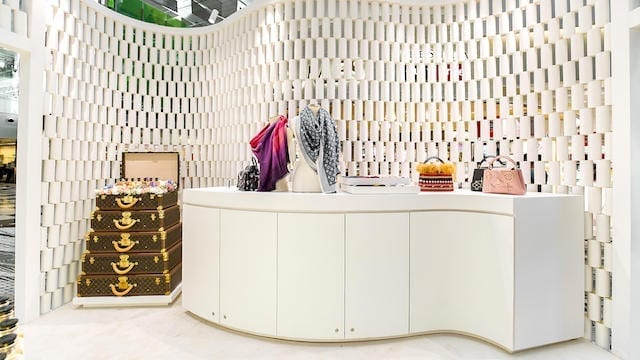
    All seven Louis Vuitton fragrances feature in a Les Parfums pop-up store at Changi Airport’s Terminal 2 until November 28.

    Louis Vuitton has also created a limited-edition (100 pieces) monogrammed orchid travel case exclusive to the pop-up.

    There is also a travel set including a travel bottle and seven perfume cartridges, along with a cartridge of Eau Neutre to clean the bottle and atomiser in between changes. The set is being launched in Singapore first.

  • Chinese tourists drive up Louis Vuitton

    Chinese tourists drive up Louis Vuitton

    Chinese tourists are fueling a surge in luxury goods sales in Japan, capitalizing on the weakened yen, which has plummeted to its lowest level in decades this year.

    Major luxury brands, including Yves Saint Laurent, Louis Vuitton, and Burberry, have reported significant sales growth in Japan during the first six months, despite experiencing weaker results in other markets.

    French fashion house Yves Saint Laurent’s sales jumped 42% in Japan “due to strong growth in the number of tourists visiting from China and Southeast Asia, who were attracted by the pricing differential arising from the favorable exchange rate,” its parent company Kering said recently.

    Another French brand, Louis Vuitton, operated by conglomerate LVMH, saw “exceptional growth in Japan arising in particular from purchases made by Chinese travelers.

    British brand Burberry has seen slower sales in China, its biggest market. But Japan posted a 6% growth, thanks to a surge in tourists’ spending, especially those from China, it said in a financial report last month.

    “Globally, the Chinese customer group also declined but held up better than mainland China as spend was diverted offshore,” it said.

    “Japan continued to grow, benefiting from strong tourism spend mainly from Chinese and near shore customers in Asia, whilst locals remained soft,” it added.

    The number of Chinese tourists in Japan quadrupled year-on-year in the first six months to 3.1 million, according to the Japan National Tourism Organization.

    The Japanese yen has been the one of the most depreciated currencies in the world this year and is hovering around the lowest in nearly four decades against the U.S. dollar.

    The Chinese yuan has risen 6.9% against the yen so far this year. Last month it reached a 24-year high against the Japanese currency.

    This currency disparity created opportunities for Chinese nationals like Snow and her boyfriend, who spent their first Japan visit indulging in luxury purchases.

    At a Gucci shop in Tokyo, the 30-year-old spent US$3,390 on a bag and two accessories.

    Another tourist who visited Japan in June said: “With the effect of the weak yen, shopping is quite affordable.”

    “You could buy a Bulgari necklace that costs 368,000 yen in mainland China for 300,000 yen in Japan.”

    Interest among affluent Chinese households in visiting Japan increased by 5 percentage points in May compared to a survey conducted last September, according to a study by consulting firm Oliver Wyman.

    Their travels are motivated by affordability. Prices for a range of luxury products in Japan were 10% to 30% lower than in mainland China, it added.

    Foreigners visiting Japan spent JPY2.14 trillion in the second quarter, a new quarterly record, according to the Japan Tourism Agency. Apart from mainland China, other major inbound tourism markets included South Korea, Taiwan and the U.S.

    Large department stores have also reaped the benefits of the luxury shopping boom. Isetan Mitsukoshi Holdings’ three flagship stores in Tokyo experienced a 20% year-over-year sales increase in the first half of July.

    Daimaru Matsuzakaya Department Stores’s tax-exempt sales jumped nearly 22% during the same period.
  • Louis Vuitton launches chocolate store in Singapore

    Louis Vuitton launches chocolate store in Singapore

    Luxury fashion house Louis Vuitton has launched its first chocolate store outside France, in Singapore.

    The chocolates, offered at Marina Bay Sands’ Louis Vuitton Island Maison boutique, are inspired by award-winning pastry chef Maxime Frédéric and prepared with ingredients including hazelnuts harvested on his farm in Normandy.

    The store’s design features yellow as the main colour tone. It also offers chocolate-based cakes and pastries with LV’s monogram logos.

  • Louis Vuitton picks Shanghai for first furniture and homewares store

    Louis Vuitton picks Shanghai for first furniture and homewares store

    Louis Vuitton on Friday announced plans to open a dedicated furniture and homewares store in Shanghai, a world first for the French luxury brand as it aims to expand further into lifestyle offerings to affluent Chinese clients.

    The appointment-only showroom, which will open on Monday, is located in a century-old three-storey mansion situated just behind Nanjing Road, the city’s premier upscale shopping strip.

    Louis Vuitton, part of LVMH, said in a statement the showroom will be trialed for several months as a pop-up and if successful will then become a permanent feature.

    While no price tags were on show at the store during a media preview, a Louis Vuitton employee said a brightly hued hanging cocoon chair designed by the Campana brothers is priced at more than 700,000 yuan ($97,860) and a small lamp resembling a glass milk bottle encased in leather straps cost 10,500 yuan.

    A smaller side building is dedicated to showing designs by Frank Chou, the first mainland Chinese designer tapped by Louis Vuitton to collaborate on the Objet Nomades collection, as the furniture and homewares ranges is known.

    Finding new avenues for growth, particularly among wealthy consumers, is becoming increasingly important for luxury brands in China as COVID-19 curbs, a property market decline, and widespread economic uncertainty pressure luxury spending.

    Louis Vuitton dipped its toes into a more lifestyle-oriented offering in China last month when it opened a store in the southwestern city of Chengdu that included an exhibition space and restaurant.

    “LMVH is striving to … reposition itself as a contemporary luxury brand by tapping new avenues that resonate with dynamic Chinese Millennials and Gen Z consumers,” said GlobalData consumer analyst Bobby Verghese, whose firm reckons sales in China’s home sector will grow to $782 billion by 2026.

    Verghese sees homewares as a good bet for Louis Vuitton, especially in China.

    “Unlike their predecessors who prioritized privacy, the Gen Y digital immigrants and Gen Z digital natives are not averse to flaunting their lifestyles on social media,” Verghese said. “LMVH aims to gain an early-bird advantage in this emerging space.”