Retail News CRM

Tag: love

  • New Love Trend: Young Vietnamese Couples Investing in Homes Before Rings

    New Love Trend: Young Vietnamese Couples Investing in Homes Before Rings

    In a shift of convention, many young couples are prioritizing financial stability and homeownership over marriage. Rather than saving for a wedding, these couples are committing to mortgage contracts together, seeing this as the true foundation for their future.

    After a short dating period of only six months, Ngoc Ly and Huy Hoang, both 30 years old, decided to jointly purchase a 65-square-meter apartment on Tran Phu Street in Hanoi’s Ha Dong District, valued at USD135,000. The couple is not yet married, but they believe that owning a home lays a secure foundation, after which marriage can follow at any time.

    Hoang and Ly are both architecture graduates and began dating shortly before Lunar New Year festival of 2024. They had been working for six years before deciding to make a joint property purchase, both to grow their investments and to secure a place of their own.

    “In our assessment, we realized that no matter how hard we work, keeping pace with housing prices is almost impossible,” Hoang explains. “As people from other provinces, we’ve always dreamed of having our own place in Hanoi.”

    In May 2024, they jointly purchased the apartment in Ha Dong. A bank loan covered 60% of the property’s value. Another couple in Vung Tau, Le Hoai and Thien Nhi, both 26 years old, made a similar decision.

    The couple bought a two-story, 30-square-meter house for VND2 billion. Despite criticism and doubt from those around them, they believed purchasing a home should come before their wedding. To afford the house, they sold a homestay in Da Lat and borrowed more from relatives. In June 2024, they moved into their new house.

    A Shifting Paradigm

    The trend among young people to prioritize homeownership over marriage is growing. According to data from the Vietnam Association of Realtors Institute for Research and Evaluation, buyers aged 25–35 are now involved in over 40% of all transactions, and this figure can rise up to 70% in some housing projects.

    Truong Anh Tuan, head of the legal department at the Vietnam Real Estate Association, notes, “In recent years more young people have been pooling money to buy property together, especially in major cities. This reflects a shift in their perspective on ownership, which has become more flexible, pragmatic, and open to risk-taking.”

    Dr. La Linh Nga, director of the Center for Psychological and Educational Science Research and Application, adds that young people today approach love with practicality and independence. They plan carefully for each stage of their lives, from dating to marriage, from securing housing to starting a family.

    This trend highlights the harsh reality of homeownership dreams in the face of rising property prices and stagnant wages. As a result, the government has initiated programs like the “One Million Social Housing Units” and preferential credit packages to support young buyers.

    Questions & Answers

    What are the factors influencing young couples to prioritize homeownership before marriage?
    Rising property prices and stagnant wages are pushing young couples to prioritize homeownership. They are pooling resources to buy property together as they believe it provides a secure foundation for their future.

    What is the government doing to support young property buyers?
    The government has initiated several programs like the “One Million Social Housing Units” and preferential credit packages to assist young property buyers.

    What does this trend signify about the new generation’s perspective on homeownership?
    This trend reflects a shift in perspective among the new generation who are more pragmatic, flexible, and open to risk-taking. They are considering joint property ownership as a form of investment and a step towards financial stability.

  • Love, Bonito unveils new brand identity, revamped assortment strategy

    Love, Bonito unveils new brand identity, revamped assortment strategy

    Southeast Asian omnichannel fashion brand Love, Bonito has unveiled its new brand identity after 13 years of operation, introducing a change in its assortment strategy as part of the campaign.

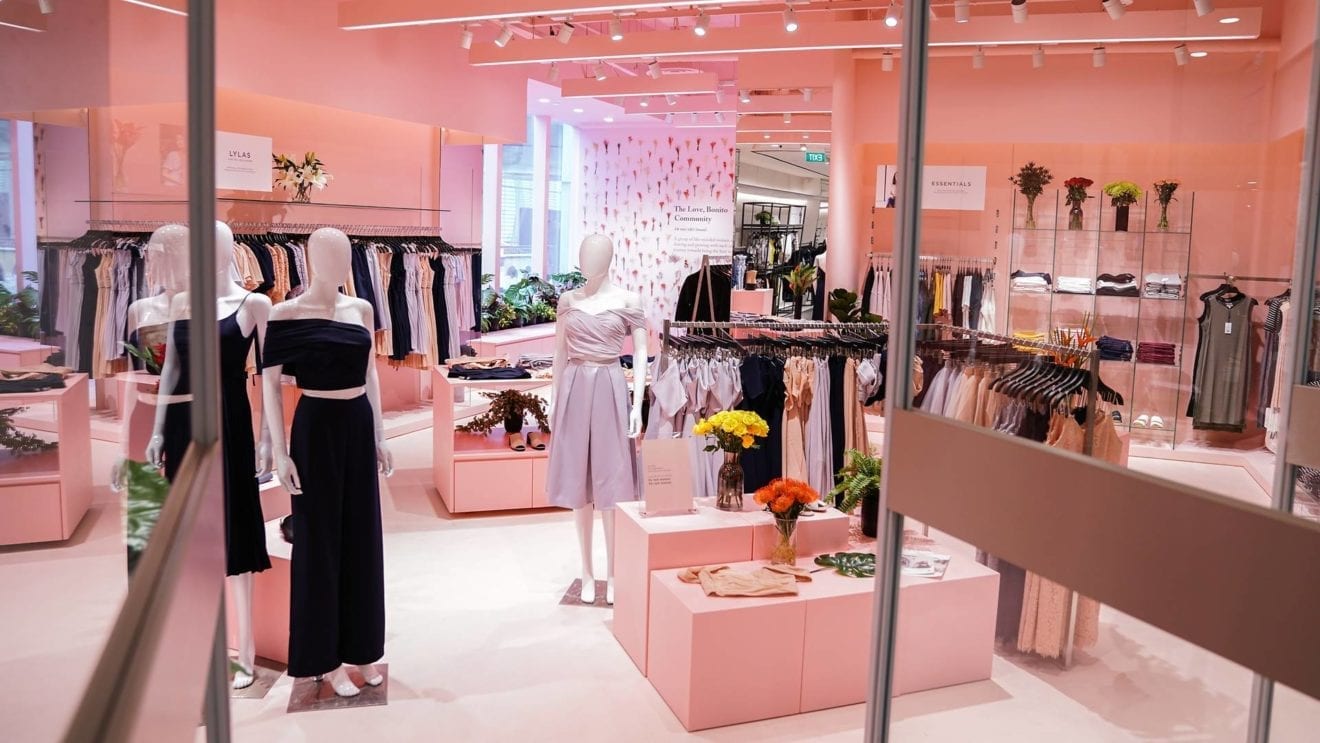
    The brand’s name was redesigned with a cleaner font, while the clean bold logo was complemented by a heart-shaped monogram that was formed by the brand’s initials ‘LB’. While the brand is commonly known for its signature peach tone, the brand has expanded its colour palette with Bold Brown, Cool Pink and Heart Red.

    The company said its new image reflects the maturity and sophistication alongside its loyal community. The new look will be rolled out in physical stores in key markets such as Singapore, Malaysia, Indonesia and Hong Kong, with the flagship in Tun Razak Exchange Mall being the first location to be fully rebranded. The brand will also shift to a sassier tone of voice.

    “While many of our Asian cultures have been known to be more conservative, we want the world to see who the multifaceted Asian women are in this 21st century,” said Dione Song, CEO of Love, Bonito. “By doing so, we too want to let Asian women know that it is perfectly alright to be unabashedly ourselves while keeping to our roots and heritage.

    “Our consistent double-digit year-on-year growth since 2020 has been an encouraging sign,” Song added. “The vision of being the go-to destination for Asian women is big, and we are just getting started.”

    Love, Bonito said it will reduce the number of styles produced by 60 percent, streamlining its assortment to three key lines: Signatures, Staples, and capsule collections.

    “Our assortment overhaul was born out of the desire to create a resilient business as we continuously widen our global footprint,” said Pat Achakulwisut, chief commercial officer at Love, Bonito. “We want to make smarter strategic investments across various business functions, from design, production, merchandising to supply chain as well as overall operations.”

    The campaign follows the brand’s expansion into the US and the Philippines last year. Love, Bonito ships to 20 countries worldwide.

  • Love, Bonito launches a flagship in Hong Kong

    Love, Bonito launches a flagship in Hong Kong

    ​Southeast Asia leading womenswear brand, Love, Bonito, officially opened its Hong Kong flagship store today (July 22), as part of its global expansion plan to capitalise on its growth momentum and develop a stronger presence in the city.

    The new flagship store is located in the heart of Central and measures over 2,000 square feet, offering Asian-centric fit and functional, yet trendy, women’s clothing. Since the brand’s debut in Hong Kong with a pop-up store in 2019, followed by its localised website launched in 2021, Love, Bonito has continued to grow its local customer base, according to the company’s Regional Director of Hong Kong and Taiwan, Ms Christina Wang.

    Ms Wang said, “We have seen tremendous double-digit growth in Hong Kong through our online channels and successful string of pop-ups. Our range is popular amongst local ladies who are financially independent, assertive, and career-focused. With the popular demand for Love, Bonito we are excited to finally have a physical footprint in the city.”

    She added, “Hong Kong as an international city is one of our key target markets. Aside from supporting omni-channel sales, expansion, marketing and retail operations in the city, the team is also looking to explore more experiential hub opportunities with the aim of developing a stronger direct-to-consumer omni-channel presence.”

    Associate Director-General of Investment Promotion Mr Charles Ng, welcomed the opening of Love, Bonito’s flagship store in Hong Kong. He said, “Love, Bonito has steadily grown in the Hong Kong market through creative use of pop-ups and online, and is now expanding their presence with the flagship store. Hong Kong is a great place for brands to reach out to both consumers and potential investors alike.”

  • Tinder is working on a Swipe Party feature

    Tinder is working on a Swipe Party feature

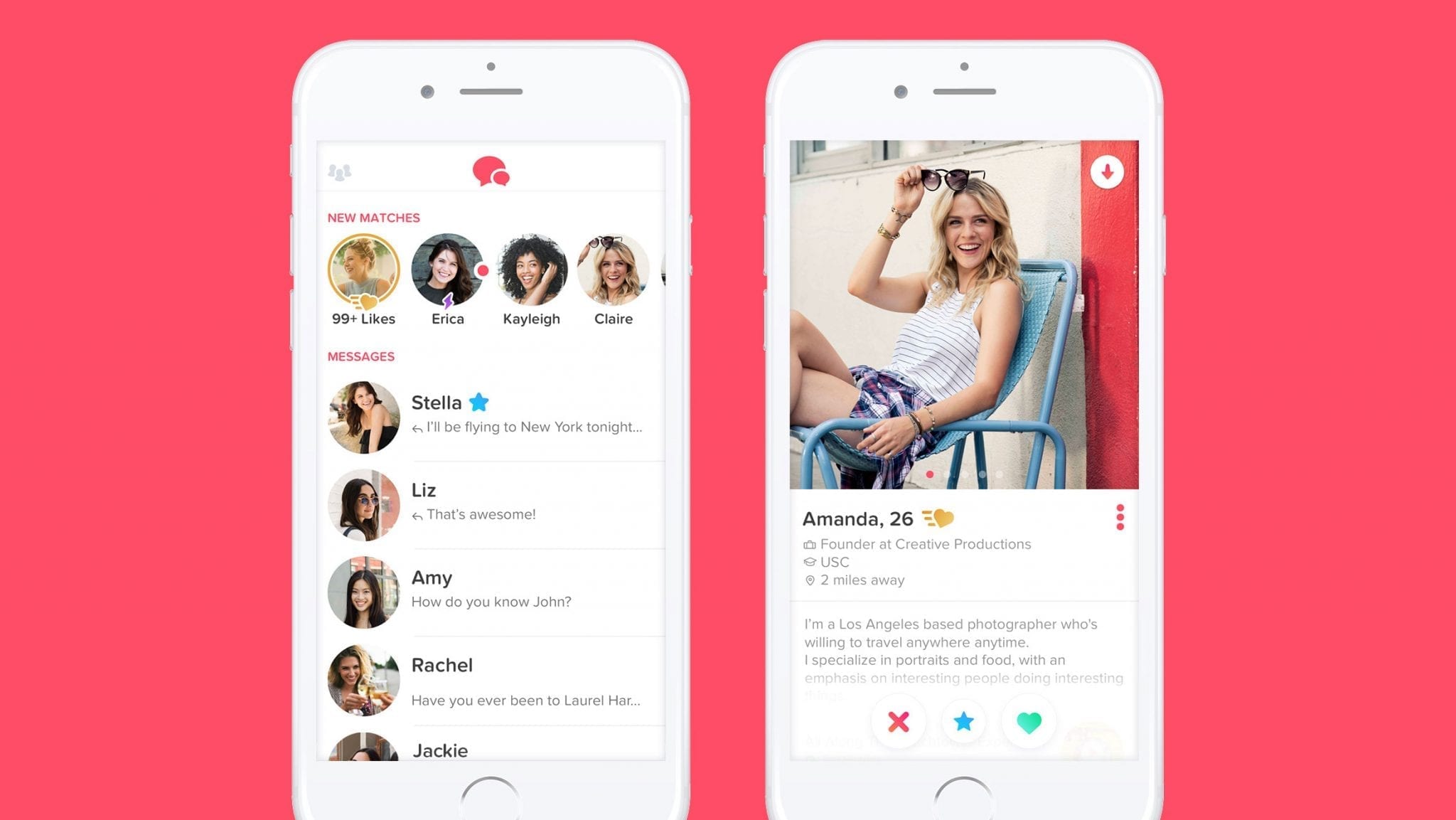
    The swipe craze is about to get reignited with a fresh new feature – apparently, Tinder is working on a new functionality called “Swipe Party”. This was uncovered by the Dutch dating site GratisDatingTips, as the guys found evidence in the source code of the Tinder app. This new feature will allow Tinder users to swipe with their friends. Swipe Party will make it possible for people to invite friends to watch them swipe left and right (although it’s not clear how this functionality would be implemented).

    Looking at the strings in the code, it seems that people will be able to see and hear what’s going on during your swipe sessions. “Let your friends see and hear you while vetting prospects,” reads one line of the code.

    It’s a “gossipy” feature that would allow people to comment and kinda swipe together, evaluating the potential candidates. Whether this is good or bad, we will let your moral compass be the judge. For what is worth, this will add a pinch of fun and a shared experience during these pandemic times (when will this Covid thing end!).

    There’s also a string that suggests users who don’t have a Tinder account could also join the Swipe Party by creating a guest account and “Joining the party.” The existence of the new feature was also confirmed by a Senior Software Engineer from Tinder, who shared some insights on his LinkedIn page.

    The aforementioned code can be found in the latest version of the Tinder mobile app, which points toward a potential official release of the Swipe Party feature in the coming months.

  • Exclusive Playboy nears deal to buy sexual wellness chain Lovers

    Exclusive Playboy nears deal to buy sexual wellness chain Lovers

    Playboy Enterprises Inc is nearing a deal to acquire the parent company of sexual wellness chain Lovers as it seeks to grow its lifestyle brand following the shuttering of its eponymous magazine, people familiar with the matter said on Sunday.

    The acquisition marks Playboy’s latest effort to leverage its famous rabbit silhouette logo to expand in the consumer products arena. It already capitalizes on its brand by selling everything from apparel to art.

    The deal would value Lovers-parent company TLA Acquisition Corp at around $25 million and could be announced as early as Monday, the sources said, requesting anonymity as the details were not yet public.

    In October, Playboy agreed to go public by merging with blank-check acquisition company Mountain Crest Acquisition Corp in a deal that values Playboy at $413 million, including debt.

    Upon closing of the deal, which is expected in February, Playboy will become a publicly-traded company again, having been taken private in 2011 in a $207 million deal led by its late founder, Hugh Hefner, and private equity firm Rizvi Traverse Management.

    Lovers operate online as well as across 41 stores in five U.S. states, selling sexual wellness and health goods including lingerie and intimacy products.

    Playboy last year ceased publication of its magazine, ending a nearly seven-decade run on newsstands that began in 1953 with a debut issue featuring Marilyn Monroe.

  • Three myths about cheating 

    Three myths about cheating 

    “8 ways to keep a man,” “How to keep a marriage” – training and seminars on such topics are often based on the idea of ​​control in relationships. Many people believe that it is in our power to control the “quality of relations” and that it depends primarily on us whether the partner will cheat. In our opinion, this belief is based on three myths. More precisely, these are not entirely myths, sometimes they turn out to be true, but they become a problem when we consider each betrayal through their prism. The human experience is much more diverse than our ideas about it. 

    Myth # 1: “Cheating appears due to relationship problems.” 

    And really, can there be a place for cheating in a happy marriage? And does not the fact of betraying automatically mean an unsuccessful marriage? Sometimes not. Often the cheating partner is not going to destroy the relationship; moreover, his partner, maybe children and the family nest, in general, are dear to him. In our culture, it is very difficult to accept the idea that adultery also happens in marriages in which there are no serious problems. Like the man saw a young pretty woman on the https://primedating.com/gallery.html  site, they met and something terrible happened. In fact, there are no relationships at all without problems. Take a closer look at the relationship, which only yesterday seemed strong, but today cracked, and there will certainly be some explanation. 

    And although cheating is what a person seems to be doing in relation to his partner this act is far from being always about a partner. Sometimes this is the way out of a very deep personality conflict. Since childhood, each of us has a dilemma every now and then – to choose the security of maternal embrace or risky exploration of the world. 

    Different parts of our “I” cannot simultaneously receive satisfaction in marriage – at least not automatically. It hurts to accept, but this is the reality of life. Some are trying to solve this dilemma in polygamous relationships, but such a compromise has many pitfalls. And by the way, keep in mind: “I am polygamous, but my wife does not know” – this is not an open marriage. As soon as cheating gets revealed, a personal conflict instantly turns into an interpersonal one, and then the question “what is wrong between us” comes to the fore. Although until the moment of finding a random text or someone else’s stuff in the spouse’s car, this was an internal conflict of one person, in fact, very indirectly related to the partner. 

    This myth follows the second, which can become destructive for the one who is cheated on. 

    Myth # 2: “We cheat because we lack something in the partner.”  

    The bitter truth is that a person sometimes enters into a relationship on the side, unconsciously rebelling against what he values ​​most in his partner. Imagine a woman who has a wonderful husband, two children, this friendly family experienced a lot of good and difficult things together. This woman insanely appreciates the care and attention of a partner. And at the same time, his courtesy and well-organized daily life suppress her. A woman falls in love with a man who has no permanent job and acts quite windy. Each of our friends, lovers reflects something special in us. Sometimes we did not suspect. 

    She, of course, feels enormous guilt, but at the same time, an incredible rise: this romance helped her to feel that she was alive again! She discovered something new in herself; she never thought she was capable of it. But at the same time, she really really appreciates her marriage. He is incredibly important to her. It’s just that a certain part of her “I” could not fully express itself in these stable relations.  

    Myth # 3: “Male and female infidelities are different in essence” 

    Men cheat easily and for the sake of drive, and women only when they feel an emotional connection, the social stereotype tells us. In fact, both men and women have emotional and sexual needs. But society, as we know, looks rather condescendingly on how a man satisfies both of them – having a reliable rear in the form of a family and sexual adventures on the side. But the woman is required to sacrifice her sexual interests for the sake of the family. 

    In fact, the role of a caring mother, which is most often chosen by a woman, turns out to be a real anti-aphrodisiac in partnerships. Responsibility for others prevents her from focusing on her desires. To reconcile the emotional connection with home reliability and comfort is not a problem to be solved, it is a paradox that needs to be dealt with somehow. And how exactly – in the form of refusal or restriction of one’s desires, polygamous relationships, open marriage – everyone already decides for himself. And no one can solve it for another. 


  • Little romance likely for China retailers on Valentine’s Day

    Little romance likely for China retailers on Valentine’s Day

    The coronavirus outbreak is set to rob retailers of all the romance on Valentine’s Day tomorrow according to analysts from OC&C Strategy Consulting.

    Pascal Martin and Veronica Wang, partners at OC&C, say the outbreak will lead to “markedly different behavior” among consumers in Mainland China and Hong Kong tomorrow.

    “We anticipate a continuing surge in online grocery shopping, and a drop in traditional grocery, as has already been widely reported by Chinese e-commerce players and observers,” the pair said in an email to Inside Retail Asia.

    “However, this is contingent on whether merchants like Alibaba and JD will be able to fulfill the delivery orders effectively, which may be challenging given the sheer volume of demand and availability of staff during the crisis.”

    Online retailers are delivery services are stretched in both markets, especially on the mainland where tens of thousands of retail stores and restaurants are closed either on local government orders or due to negligible demand as consumers stay at home to avoid contact with other people.

    “After more than two weeks filled with fear and anxiety, consumers are also seeking unique experiences to energize themselves at this very moment, but they are also wary of going to public spaces,” said Martin and Wang.

    “Therefore, instead of spending the upcoming Valentine’s Day at conventional venues such as cinemas or upmarket restaurants, people are more inclined to seek safer alternatives such as home-cooked candlelight dinners, ordering gifts and flowers online and having them delivered to their home.”

  • Love, Bonito confirms data breach affecting its e-commerce customers

    Love, Bonito confirms data breach affecting its e-commerce customers

    Online-to-offline fashion label Love, Bonito has confirmed a data breach affected its e-commerce website briefly – but only a tiny fraction of customers were affected.

    Company co-founder Rachel Lim admitted that malicious code had been incorporated into its site, which has since been removed.

    An estimated 3 percent of Love, Bonito’s customers may have had personal information exposed during the hack, with a small number have had their financial data accessed.

    “We have always been committed to providing our community with a safe shopping environment and sincerely apologize for this incident,” said Lim.

    “It is therefore regrettable to discover a security incident involving our website,” read a statement on the firm’s Facebook page. “This incident was discovered 72 hours ago, which we immediately took steps to contain.

    “Some of our customers’ personal information may have been unfortunately exposed … For those affected by this incident, an email has been sent to you informing you on next steps.”

    Singapore police will be making investigations into the incident with the assistance of the firm.

  • Lee Hwa’s JewelPlay opens at Bugis Junction

    Lee Hwa’s JewelPlay opens at Bugis Junction

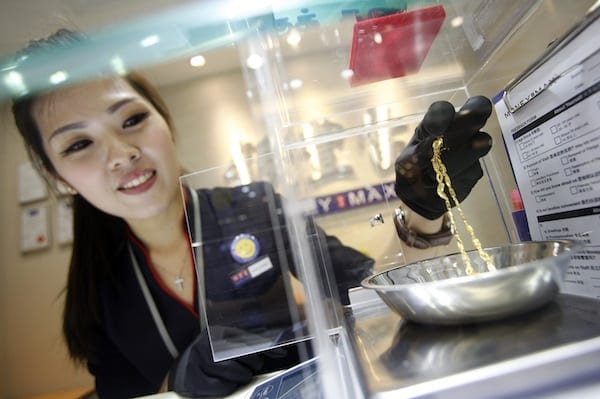
    Lee Hwa’s JewelPlay concept has opened at Bugis Junction, promising personalised jewellery and services for weddings.

    Targeting millennial couples and fashion-forward shoppers, the 880sqft concept store features interactive touch-points and spaces geared to showcasing the brand’s bridal jewellery collection, Lee Hwa Romance, as well as its extensive multi-wear series catered to the young and the young-at-heart.

    “Besides the trendsetting multi-wear jewellery for daily wear, we observed a growing demand among young couples,” said Mavis Toh, business director of Lee Hwa Jewellery.

    “We want to be a part of every couple’s unique love journey, from couple bands, to proposal ring, wedding bands, bridal jewellery, and anniversary gifts.”

    She says Lee Hwa’s JewelPlay boutique is providing an engaging space for couples to “revel in the experience and celebrate their love story together”.

    The store features a JewelPlay Mirror in front of which people can try on jewellery for Instagrammable photographs.

    In the ‘Love Cove’ customers can receive a private consultation with a boutique staff member to explore creative bridal styles and personalisation.

    Lee Hwa’s JewelPlay carries the widest selection of bridal jewellery among all of its stores, which includes global jewellery brands such as Destinee, Forevermark and Niessing as well as customisable wedding-band collections such as Ensemble Collection, Niessing Configurator, and Furrer Jacot Ringdividuell.

    Couples can design their own jewellery Lee Hwa Jewellery’s My Personal Designer service.

    Lee Hwa’s JewelPlay has launched a store-exclusive collection to celebrate the boutique’s opening.

  • South Korean love hotels business booming and expanding

    South Korean love hotels business booming and expanding

    Yanolja’s gentrification of South Korean love hotels has brought the company a valuation of more than $1 billion from investors keen to capitalise on the globalisation of a novel approach to short-stay accommodation, its chief executive told Reuters.

    The budget hotel and online booking platform operator reached the valuation having secured $180 million from US peer Booking Holdings Inc and Singapore sovereign wealth fund GIC Pte Ltd, Yanolja confirmed on Tuesday.

    It aims to conduct an initial public offering (IPO) as early as next year, CEO Kim Jong-yoon said in an earlier interview.

    “I can proudly say we transformed the industry,” he said.

    Yanolja’s emergence coincides with a time of flux among hoteliers, as legislators are at loggerheads with market disruptors such as Airbnb Inc – through which private home owners can let rooms for short-term stay – while a government campaign to reduce working hours promises to free up more leisure time for short breaks.

    Love hotels have occupied a peculiar space in the broader market, offering privacy for as little as a few hours at minimal cost for, for instance, young couples living with their parents.

    Popular association with extramarital affairs, prostitution and hidden cameras, however, has sullied their reputation, exacerbated by their often garish decor and low-key lighting.

    Yanolja – meaning “Hey, let’s play” – sought to dispel any stigma with its bright, modern franchised love hotels, targeting millennial couples but also budget tourists seeking short-term accommodation.

    “Previously, many people were not able to go to love hotels out of embarrassment,” Kim said. “But we’ve drawn in guests even for travel. That’s the biggest change.”

    The firm, which began as an online search portal for love hotels, also lists hotel, pension and guest house rooms on its website at prices ranging from 50,000 won ($41.86) a night at budget hotel Ben-Hur to 200,000 won at five-star Hyatt.

    It has entered a strategic partnership with Booking whereby the latter’s Agoda brand can list Yanolja accommodation, while Yanolja customers will be able to book worldwide through Agoda and other Booking brands, Yanolja said in a Tuesday statement.

    Booking and GIC were not immediately available for comment.

    “It’s a unique example which breaks away from the traditional notion of love hotels,” said tourism professor Lee Hoon at Hanyang University in Seoul.

    “But the domestic market is not big enough. Yanolja can survive only if it goes global and scales up,” Lee said.

    Yanolja aims to expand in hotels in Southeast Asia where it invested $15 million in ZEN Rooms last year, bringing it into competition with Indian budget hotel operator Oyo, backed by Airbnb and Japan’s SoftBank Group Corp.

    “We are very keen to go global,” said Kim.

    Yanolja was founded in 2005 by former love hotel housekeeper and valet Lee Su-jin, whose search portal evolved into an advertising platform for love hotel operators seeking to replace customers lost after the 2004 passing of an anti-prostitution law.

    A decade later, Yanolja claimed to be the first company to offer a reservation platform for mobile phones for its own and others’ love hotels, a major shift in an industry which relied on walk-in customers.

    The platform allowed it to expand its target guests to shoe-string travellers from home and abroad, in a country where Airbnb-type options are limited to foreign guests. Listings later ballooned as hoteliers turned to Yanolja to fill rooms after a political dispute caused a drop in Chinese demand.

    South Korea’s online travel sales nearly doubled in five years through 2018 to $21.8 billion, showed Euromonitor data provided to Reuters. Sales by mobile made up nearly half of the total, the third-biggest proportion globally, Euromonitor said.

    Yanolja’s revenue nearly doubled to 188.5 billion won last year, from a year earlier, but the firm is still losing money on a consolidated basis, said CEO Kim. It aims to sell shares in an IPO by 2022 at the latest, he said.

    Yanolja plans to increase offerings and raise efficiency through technology such as artificial intelligence and the internet of things, in a hotel industry Kim deemed conservative.

  • Love, Bonito to open in Funan Mall

    Love, Bonito to open in Funan Mall

    Online fashion retailer Love, Bonito is about to open its third and largest physical store yet, at Funan mall.

    Set to offer a “thoughtful and feminine” retail experience, the store will have customer touch points such as “Instagrammable” spots, and an express counter for click-and-collect orders.

    “More importantly, the store will hold dedicated and designated space for us to bring our community together to experience the brand, via workshops and events,” Rachel Lim, Love, Bonito co-founder said.

    The store will also offer personal stylists on demand who will be ready to give fashion advice to customers.

  • Tinder beats Netflix to become the top-grossing non-game app

    Tinder beats Netflix to become the top-grossing non-game app

    Dating app Tinder has beaten Netflix and it is now the top-grossing non-game app on the iOS App Store, according to intelligence firm Sensor Tower.

    Tinder’s revenue soared by 40% in the first quarter of 2019 to reach $260.7 million, up from $183 million from the same period last year, while Netflix’s numbers went down from $255.7 million to $216.3 million.

    But there is a reason for that: Netflix itself stopped paying the so-called “Apple tax”, a 15% cut on all in-app purchases that go through Apple’s systems, and since December of 2018, all new Netflix subscriptions are handled outside of iOS. Apple traditionally charges companies a 30% cut of their subscription revenue for the first year and then drops that number to 15%, but Netflix is said to have had a special deal with the 15% rate available on day 1. Even those 15%, however, workout to a massive amount when you look at the numbers. At an estimated annual revenue of around $850 million, 15% would amount to around $130 million.

    Netflix pulling out of the App Store subscription program (it had already pulled out of a similar program on Android earlier) is basically a reaction to those huge amounts of money that it had to pay to Apple, which provided only the platform. And of course, this move has allowed Netflix to keep more of its revenue to itself.

    At the same time Tinder’s popularity has continued growing and the company has managed to overcome Netflix as the top grossing app.

    Interestingly, if you look at the general picture of things, you see that the majority of the top grossing, non-game apps in this first quarter of 2019 all had something to do with streaming, either for music or for video. Those apps include Tencent Video (a video streaming service popular in Asia), YouTube, Pandora and YouKu (Chinese YouTube alternative).

    And if you look at just the top downloads, you see that messengers at among the most popular ones: WhatsApp, Messenger, TikTok, Facebook, Instagram, and others.

    Considering these numbers it really is no surprise to see Apple shift to a portfolio of streaming services of its own. The newly announced Apple TV+ is coming this fall and will open a new world of Apple-original movies and shows headlined by an Oprah show and a bunch of Hollywood honchos, plus it will offer streaming from services such as HBO or Showtime. And then you have Apple Arcade, a brand new gaming service focused on quality releases that do not have pay-to-win written all over them.

  • Link’s Stanley Plaza launches seaside speed-dating for dogs

    Link’s Stanley Plaza launches seaside speed-dating for dogs

    Link’s Stanley Plaza is presenting Hong Kong’s first seaside speed-dating event for dogs. Now in its eighth year, the Paws by the Sea 2019 event will involve a series of events held at the plaza on the weekends from March 23 to 31, including the doggie speed-dating activity. Dog owners and their dogs are invited to attend together to find their true love, and loving dogs-in-waiting will have the chance to be adopted into a new family.

    The events constitute part of Link’s Stanley Plaza’s commitment to providing innovative services for customers and their pets as Hong Kong’s first pet-friendly shopping mall.

    Stanley Plaza and the Society for Abandoned Animals will hold a “Walk the Dog Experiential Tour” for people who are considering adopting a dog to assess their chemistry with the dogs being considered for adoption. On March 31, Link will also host the “Doggie Wedding Gown Exhibition and Design Competition”, in which dog owners can design a unique wedding dress for their doggies and dress up them as a model in the catwalk show. At the same time, there is a dog wedding exhibition which collects various dog marriage information for each dog owner.

    Stanley Plaza will also challenge the Guinness world record for the “Longest Line of Glass Bottles” again on March 24, where dog owners will write love letters to their dogs and decorate their own “love bottle” to add to the line. After the event, owners may take their bespoke bottle home as souvenir.

    Several large-scale dog photo spots, exciting activities and workshops are also being arranged concurrently, including a photography tour, a “Love the Dogs Educational Workshop”, a “Pet Doctor Workshop Doggie” and “Love Is in The Air Carnival Exhibition”.

  • How much do Hongkongers spend on Valentine’s Day?

    How much do Hongkongers spend on Valentine’s Day?

    If you were in Hong Kong for Valentine’s Day you must have seen cascades of flowers around the city, couples flooding the restaurants, and inevitably thought: “love is definitely in the air”. You were actually right. Hong Kong is one of the top Asian markets for sentimental spending according to the Mastercard Love Index, showing continued growth since 2016 and some intriguing behavioural insights.

    Now, whether you think of it as the most romantic day of the year or a sickening slog, it’s undeniable that Valentine’s Day is a big deal for people splurging on their loved ones, and in Hong Kong even more so. The Mastercard Love Index has gathered data from credit, debit, and prepaid card transactions from the last three Valentine’s Day holiday periods(11th-14th February 2016-18) to discover the change in how fluffy feelings have translated into cold hard cash.

    The results show that since 2016, Hong Kong ranks third in growth for sentimental spending at 62%. China takes the top spot at 88% followed by Japan at 68%, which had a 35% surge. Overall across Asia-Pacific, sentimental spending has jumped up 33% with Valentine’s Day period transactions rising by 37% since 26%

    What was the biggest increase seen? Flowers of course. Since 2016 spend value on the holiday staple has gone up by 89% with 73% more transactions. In comparison, Hong Kong transactions for the pretty petals went up by 46% with total spend rocketing up by 93%.

    Here are some other interesting insights about Hongkongers from the research:

    Hongkongers aren’t early Valentine’s shoppers. Last minute buys for gifts are the norm with the 28% majority of sales happening on the day itself.

    Restaurant dates are still a growing favourite and getting flashier. Transactions in restaurants have grown by 20% since 2016 with the amount spent at meals up by 30%.

    More romantically, there has been a huge increase in couples popping away for romantic trips for Valentine’s Day. Transportation transactions showed a 205% increase in 2018, making up a significant 23% of the total spend for the day.

    Hotel rendezvous are also on the rise with 63% growth in transactions since 2016 and a boost to the total spend by 66%.

    Bling is still in. Jewellery transactions for Valentine’s Day have climbed with spend up 43% since 2016.

    Hongkongers like the personal touch when it comes to gifts for Valentine’s Day. 88% of gifts were bought in face-to-face transactions versus 6% online. However, online shopping for Valentine’s Day is still rising with a 146% increase in online transactions over the period since 2016.

  • Former eHarmony marketing chief joins telco startup

    Former eHarmony marketing chief joins telco startup

    eHarmony’s former managing director, Nicole McInnes, has taken up the inaugural marketing leader’s chair at media telco startup, OVO.

    OVO provides a range of mobile phone plans to Australian consumers matched with data-free allowances across its own digital content platform, OVOplay. The group launched in 2016 and is positioning itself as a new type of hybrid telco/media offering, tapping into the Optus 4G network to deliver services and content.

    McInnes is the company’s first c-level appointment and first marketing chief. Most recently, she spent seven months as marketing director of WooliesX. Prior to this, McInnes was the local marketing director for eHarmony for 18 months. Her resume also includes marketing executive roles with Pandora and Adshel.

    “The day of the telco becoming the broadcaster has been a long time coming. OVO knows it, and is ahead of both industries in making it happen,” McInnes said in a statement announcing her appointment.

    “As a digital marketer who has been fortunate enough to get paid to indulge my deep interest in content and human connection that media represents, OVO is an exciting opportunity. This is a company that for all its success to date, is still in its early stages, with so much more creativity and creation to be undertaken to help it really take off.”

    McInnes said she joins OVO as it prepares to debut its patented machine-learning video platform. Her priority list also includes ramping up both the brand’s mobile business and exclusive digital sports and entertainment content partnerships.

    To date, OVO said it’s amassed more than 20,000 hours of unique content across sport and entertainment including e-sports, gymnastics, motorsport, sailing and Triple M and HIT radio currently available on OVOPlay. The intention is to build out this library of content as it rolls out its AI-driven video delivery platform over the coming months. The company also claims 60,000 mobile subscribers.

    OVO CEO, Matt Jones, said he’d known McInnes for years and was keen to get her on-board.

    “It was her experience inspiring consumers on behalf of digital native companies that were pioneering machine learning algorithms, that convinced me she was right for OVO,” he said.