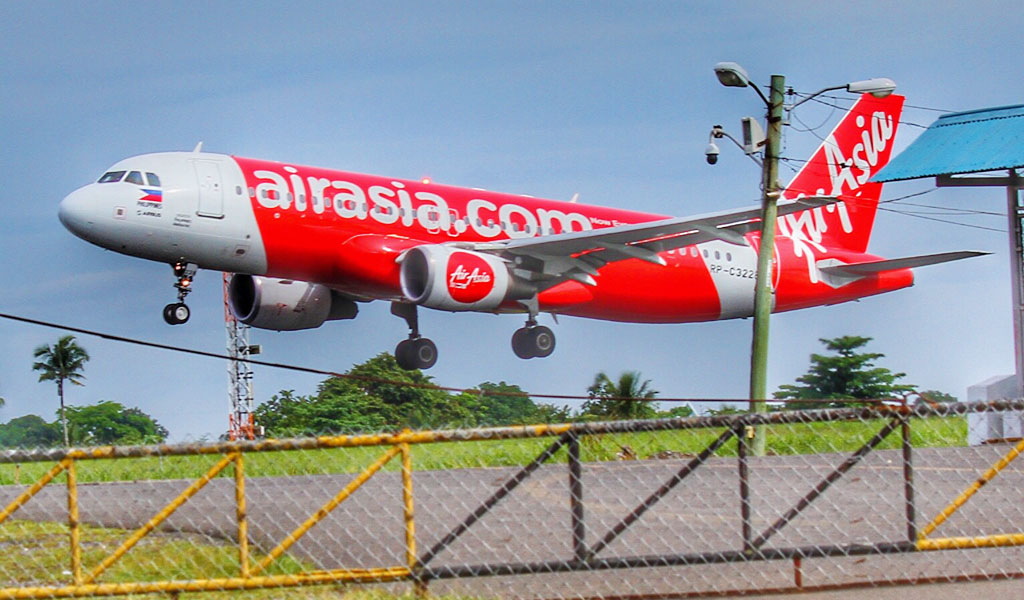
AirAsia has denied that its airfares between the Peninsula and Sarawak are high as well as its unavailability for the Christmas and state election period.
The low-cost airline operator said it has engaged continuously with the Ministry of Transport Sarawak (MoTS) and submitted applications to permanently increase its scheduled flight frequencies from Peninsular Malaysia and Sabah into Sarawak on several occasions since early this year, including the latest request submitted last week which included the operation of extra flights for the upcoming holiday season, Christmas and Chinese New Year.
The airline said it received confirmation from MoTS and the Sarawak State Disaster Management Committee (SDMC) today for an additional 42 weekly flights from Peninsular Malaysia and Sabah into the state for a limited period from Dec 4 to Jan 5, 2022.
This has brought the fares down from around RM1,000 one way to below RM200 for a Kuala Lumpur to Kuching flight and these were very quickly snapped up, it said.
“AirAsia wishes to clarify its position with regards to the views and concerns expressed on social media that the airline is charging high fares for flights between Peninsular Malaysia and Sarawak for the upcoming Christmas and holiday season that coincides with the state election scheduled for Dec 18”, it said in a statement.
Chief Executive Officer of AirAsia Malaysia Riad Asmat said as a low-cost carrier, the airline is in a volume business to pass on the lowest fares to its guests.
“AirAsia’s operation is all about economies of scale where we need to achieve a high passenger volume so that costs can be spread among a sizable number of passengers, allowing us to offer travelers low fares and giving them great value for money.
“Historically, our average fare for flights between Sarawak and Peninsular Malaysia has been around RM160 per one-way passenger. This takes into account the highest fares and the lowest, including when we offer zero fare promotional sales,” he said.
Riad said AirAsia’s pricing model is similar to other airlines around the world and is based on supply and demand.
“In abiding with the limited flight frequencies imposed by the SDMC resulting in a reduced supply of flight seats, AirAsia’s demand-based dynamic pricing mechanism has inevitably derived prices seen as unfavorable to buyers at this time. It must be remembered that this is also the same mechanism that we used to offer guests promotional fares from as low as RM99 one way earlier in October,” he said.
He added that as a general rule, fares will be higher, closer to the travel date, and during peak holiday periods when their flights are already near full.
“Buyers have already taken up to 90 percent of our capacity on most flights. The limitation on the number of flights available in the market is a key factor that has pushed the prices higher across all airlines”.
Riad said for the record, AirAsia used to fly over 300 weekly flights into Sarawak pre-Covid, connecting Kuching, Sibu, Miri, and Bintulu to Kuala Lumpur, Penang, Johor Baru, Kota Kinabalu, and various other destinations in Malaysia.
“Just for Kuala Lumpur – Kuching alone, we used to fly between 12 and 15 flights daily on this hugely popular route before Covid, but with the latest approval today, AirAsia will be flying 5 daily flights between Kuala Lumpur and Kuching which is a 67 per cent reduction in our capacity due to the restrictions by SDMC.
“We comprehend that demand is there but at the moment we are unable to meet it until more flight approvals are given,” he said.
Riad also expressed AirAsia’s sincere appreciation to SDMC and MoTS for the additional flight approval for the Christmas holiday season.
“However, we would like to appeal to MOTS and SDMC to also approve our request for extra Chinese New Year flights, and to remove frequency restrictions on all the approved flights entirely to enable us to better manage cost efficiency and lower the fares for passengers.”
AirAsia, Riad said has always pledged its full commitment and support towards the full reopening and resumption of travel and tourism activities in Sarawak.
They were also looking forward to keep working closely with all relevant regulators, the federal and state governments, civil aviation and health authorities, and tourism bodies to ensure the highest conformity to standard operating procedures for every flight.