Tag: LPG

  • Parami Energy Myanmar readies imported LPG for sale as demand rises

    Parami Energy Myanmar readies imported LPG for sale as demand rises

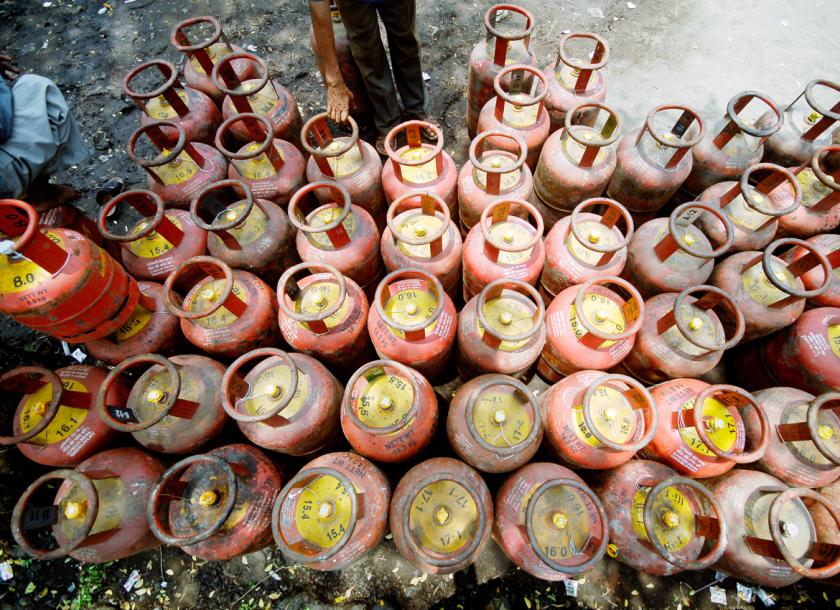
    The government is aiming to replace the use of electricity with Liquefied Petroleum Gas (LPG) as a fuel for household cooking. If widely used, LPG can reduce the use of firewood as well as electricity when cooking, which will help to conserve power as well as the environment.

    Last year, the Ministry of Electricity and Energy (MOEE) launched a K6.5 billion tender involving the lease of a jetty, terminal and storage facility at the Thanlyin refinery in Yangon Region, for the purpose of importing, storing and distributing LPG in Myanmar.ti

    A total of 21 companies sought tender applications but only nine submitted proposals. Of these, privately-owned Parami Energy Services Company ultimately beat oil company Puma Energy to win the tender in August last year.

    It is the first time the government has leased out state-owned facilities under a Public-Private Partnership for the import, storage and distribution of LPG in Myanmar. In the past, the import and distribution of LPG was conducted solely by state-owned Myanmar Petrochemical Enterprise.

    During an interview over the weekend, U Pyi Wan Tun, CEO of Parami Energy, shared his company’s plans and the prospects for LPG in Myanmar. Here is an excerpt of the interview, which has been edited for clarity:

    Can you give us an overview of the current Myanmar LPG market? 

    Currently, LPG is mainly imported from Thailand through the Myawaddy border. Some quantities are imported from China. Officially, Myanmar imports 4,000 tonnes of LPG per month, but the real number could be as high as 7,000 tonnes per month.

    However, this is not enough to meet demand from the industrial, commercial and household sectors. Nationwide, LPG consumption is around 100,000 tonnes annually and this is expected to grow as there are now more hotels, restaurants and other businesses that require LPG.

    In comparison, Thailand consumes 4 million tonnes of LPG yearly, which is around 40 times more than Myanmar. So, our LPG market has the potential to expand to become a million-tonne market at least in the years to come.

    What is required to address and develop the LPG market?  

    The LPG industry must build up adequate safety standards as international investors will invest in growing the sector only if there are satisfactory standards in place. We need to promote safety standard procedures across every part of the business, from filling stations to consumption. We will develop these together with Fire Bridge Department and respective ministries.

    The other issue is taxes. The import tax for LPG is less than 5percent in Thailand. Businesses also get tax exemptions when the LPG is re-exported. In Myanmar, we need a comprehensive and efficient policy to further develop the business.

    What have you done so far since winning this tender last year?

    We did some renovation works at the jetty and terminal. As there is no filling station, we have also built one. We started importing LPG since December. It is now ready for sale.

    Where do you currently import from and what is your target? 

    We imported the first batch of LPG from Indonesia. We will continue to import two vessels worth of LPG a month for now. Currently, our jetty in the Thanlyin refinery area is the only one in the country equipped to handle LPG imports. As the water depth is only 5 meters, we can only handle vessels with the capacity to transport 2,000 tonnes of LPG. So it is still quite limited. But our target is to import at least 8,000 tonnes – 10,000 tonnes of LPG a month over the longer term.

    How long is this project and who is your partner?

    It is a two year project but extendable. If there are investments and we make a profit, we may be able to continue. Currently, we do not have any partner for this project. But we are planning to expand our investments beyond importing to include retail distribution to cover more areas. If we are going to do both wholesale and retail distribution, we will need international partners to help with funding, technology and expertise. At the moment, we cannot expand into retail distribution.

    What is your current investment in this LPG project?

    We have invested $2 million-$3 million to renovate the jetty and terminal as well as build the filling stations. So far, we have 1,800 tonnes of LPG in storage. It is ready for sale. We expect the market to stabiles and for sales to be good.

    What are the advantages of leasing state-owned LPG facilities both for the country and Parami Energy?

    This is the first time state-owned LPG facilities at the Thanlyin refinery area are being leased out to a private company for business. During the previous administration, struggling state-owned enterprises were usually privatised or suspended. By leasing out the facilities to us, the state earns K6.5 billion and gains from private sector investments. As the facilities will be run by a private company, additional expenses like maintenance are also

    passed on.

    The government has a target of supplying LPG to 150,000 households in Yangon. This project will support it. At the moment, we are still in the investing stage and are not sure yet of any profits. However, we can expect a profitable outcome if we can import more than three vessels worth of LPG a month.

    One of the risks is market competition. When a newcomer enters the market, our profit margins will become smaller. On the other hand, we can expect a win-win situation when market demand hits one million tonnes of LPG or more, as there will be room for more competition then.
  • South Korea’s LPG sales jump 17% to 6.4 mil mt over Jan-Sep on strong petchem demand

    South Korea’s LPG sales jump 17% to 6.4 mil mt over Jan-Sep on strong petchem demand

    South Korean LPG providers sold 6.4 million mt LPG in the domestic market over January-September, up 17.4% year on year, amid lower retail prices and stronger demand for petrochemical production, company officials said Friday.

    The rise outpaced the 0.8%-increase seen for full-year 2015 sales, when the suppliers sold 7.52 million mt, up from 7.46 million mt in 2014.

    Of the total 6.4 million mt LPG sold over the first nine months, SK Gas, the market leader, sold 2.83 million mt, up 49.7% from 1.89 million mt a year earlier.

    Its market share also increased to 44.3% for the period, up from 34.6% in the same period last year.

    In May, SK Gas started commercial production at its propane dehydrogenation plant that converts LPG into propylene.

    The PHD plant uses 700,000 mt/year of propane as feedstock to produce 600,000 mt/year of propylene.

    SK Gas is run by SK Group that also owns the country’s biggest oil refiner SK Innovation.

    Sales of second-largest supplier E1 Corp. rose 14.1% year on year to 1.54 million mt over January-September, up from 1.35 million mt in the year-ago period.

    E1 Corp. and SK Gas provide LPG to the domestic market through imports, while the country’s four oil refiners produce domestically.

    LPG sales by South Korea’s second-largest refiner GS Caltex fell 8.5% year on year to 741,000 mt over January-September, from 810,000 mt a year earlier.

    Top refiner SK Innovation’s LPG sales also dipped 10.1% year on year to 569,000 mt for the first nine months, from 633,000 mt in the same period last year.

    Third-largest refiner S-Oil Corp. sold 445,000 mt of LPG over January-September, up 3.7% from 429,000 mt, while smallest refiner Hyundai Oilbank’s sales dropped 20.3% to 177,000 mt, from 222,000 mt a year earlier.

    “LPG demand for petrochemical making soared 90% over the first nine months from a year earlier, while demand from industry use jumped 31% year on year in the period, driven by lower domestic prices,” an SK Gas official said.

    But LPG demand for transport has been on the decline over the past few years, falling 4%-7% year on year over January-September due to fewer LPG-powered vehicles while consumption by households and commerce edged down 0.7% from a year earlier, the official said.

    RETAIL PRICES FALL IN Q3

    Retail propane prices averaged Won 1,651 ($1.39)/kg in the third quarter of 2016, down 8.3% from Won 1,801/kg a year earlier, according to state-owned Korea National Oil Corp.

    Retail butane prices also fell 8.1% to average Won 1,863/kg in the third quarter, down from Won 2,028/kg in the year-ago period.

    According to KNOC, which provides data on barrels basis, South Korea consumed 28.83 million barrels of LPG over July-September, up 22.2% from 23.59 million barrels in the same period last year.

    The third-quarter growth slowed compared with a 29.4% rise seen the second quarter when the country consumed 20.11 million barrels of LPG, KNOC said.

    For the first nine months, LPG consumption increased 21.8% year on year to 79.21 million barrels, KNOC said.

    “LPG demand is likely to keep rising later this year unless retail prices rebound,” the SK Gas official said. To meet strong domestic demand, South Korea’s LPG imports jumped 34.1% year on year to 59.18 million barrels over January-September, compared with 44.14 million barrels a year earlier, according to KNOC.

    LPG imports from the US, the biggest supplier, soared nearly three times to 27.83 million barrels for the first nine months, from 9.68 million barrels in the year-ago period.

    South Korea’s LPG demand was sluggish in previous years. The country consumed 89.87 million barrels of LPG last year, unchanged from 89.58 million barrels in 2014, which was down 3.7% from 93.06 million barrels in 2013.

    Amid weak demand, South Korea’s LPG imports fell 2.3% year on year to 62.71 million barrels last year, compared with 63.53 million barrels in 2014, according to KNOC.

    -Charles Lee

  • Iran’s first LPG cargo for Pertamina arrives in Indonesia

    Iran’s first LPG cargo for Pertamina arrives in Indonesia

    State-run energy giant Pertamina officially received a cargo of liquefied petroleum gas (LPG) from Iran on Thursday, marking Iran’s first shipment as a new supplier of LPG to Indonesia.

    Pertamina president director Dwi Soetjipto welcomed the 44,000 metric tons of LPG transported from Asaluyeh Port in Iran 13 days ago by its VLGC Pertamina Gas 2 vessel, at Kalbut Port in Situbondo, East Java.

    According to him, the LNG shipment from the National Iranian Oil Company (NIOC) would open up other business development opportunities between Pertamina and the NIOC, in both the upstream and downstream sectors.

    “It marks a new chapter of cooperation between Pertamina and the NIOC and makes trade cooperation between Indonesia and Iran more significant,” Dwi said in a statement on Thursday.

    Earlier, the NIOC agreed to supply Pertamina with a total volume of 600,000 tons of LPG for 2016 and 2017.

    Following the arrival of the first cargo, the NIOC will immediately send the next cargo, which is expected to arrive on Nov. 20.

    In addition to the LPG purchase, the two state-run companies signed an agreement to conduct a preliminary study of two giant oil fields in Iran, namely Ab-Teymour and Mansouri, which have an oil reserve of more than 5 billion barrels.

  • Retail LPG price drops 2 baht/kg to 20.29 baht/kg

    Retail LPG price drops 2 baht/kg to 20.29 baht/kg

    The board also decided to scrap the compensation for transportation costs for LPG to be delivered by PTT Plc to regional depots across the country. This measure will reduce the LPG prices in the countryside to different levels depending on the distance between the depots and PTT Plc main LPG terminal.

    However, Mr Thavarath Sutabutr, director of the Energy Policy and Planning Office, said that during the first three months the depot-gate prices of LPG in the countryside will be controlled at levels not exceeding the transportation costs.

    He pointed out that the LPG price in Lampang which is the farthest from PTT terminal will not be reduced as the compensation remains at 2 baht/kg.

    The new LPG retail price for Bangkok and the eastern region effective as of Thursday is 20.29 baht/kg.


  • Fitch Thailands Liberalisation of NGV Price Positive for Industry

    Fitch Thailands Liberalisation of NGV Price Positive for Industry

    Thailand’s plan to remove the cap on the retail price of natural gas for vehicles (NGV) is positive for Thailand’s oil and gas sector. Prices of all types of fuel in Thailand will reflect actual costs once the latest NGV reforms are effective, after liquefied petroleum gas (LPG) price reforms were implemented in February 2015 and an NGV price hike was imposed in 4Q14.

    The further reduction of losses from NGV sales, as a consequence of the latest reforms, is positive for PTT Public Company Limited’s (PTT, BBB+/AAA(tha)/Stable) cash generation. PTT’s profits have been significantly reduced by the weaknesses in its core upstream division amid low oil prices.

    Thailand’s Energy Policy Administrative Committee has said that the NGV retail prices will be liberalised in 2016. The NGV price will be set based on the natural gas cost in Thailand (pool gas price). Prices will be updated on a monthly basis. However, the NGV retail price will be capped at THB13.5 per kilogram (kg) from 21 January to 15 July 2016, after which the cap will be lifted. The NGV price for public vehicles, which account for only around 25% of total NGV volume consumed in Thailand, will continue to remain unchanged at THB10 per kg. However, the government is in the process of reviewing the law to let the country’s Oil Fund subsidise this cap on the NGV price for public vehicles.

    PTT incurred heavy losses in its NGV business in 2011-2014. The company reported negative EBITDA of THB20.0bn in 2014 (compared with total consolidated EBITDA of THB251.0bn for the year) and THB8.3bn in 9M15. The smaller EBITDA loss in 9M15 was due mainly to the increase in the NGV retail price in 4Q14. We expect the losses to narrow substantially in 2016.

    Demand for NGV in Thailand has been historically distorted by the regulated pricing – particularly during periods of high oil prices, due to its low fixed retail price, resulting in large losses for operators like PTT. Demand for NGV increased substantially during 2011-2013, but growth moderated to 3% in 2014 when the NGV retail price was increased. The increase in NGV retail price plus the lower refined oil prices have sapped demand for NGV in 2015. NGV consumption for 9M15 decreased by about 2% yoy, while consumption of gasoline and diesel increased by 13% yoy and 3% yoy, respectively. A similar trend was observed for LPG after prices were reformed in the beginning of 2015. LPG consumption for 9M15 dropped by 12% yoy.