Tag: lu tian

  • BYD Readies Next-Gen Han Sedan as Sales Drop 67.39%

    BYD Readies Next-Gen Han Sedan as Sales Drop 67.39%

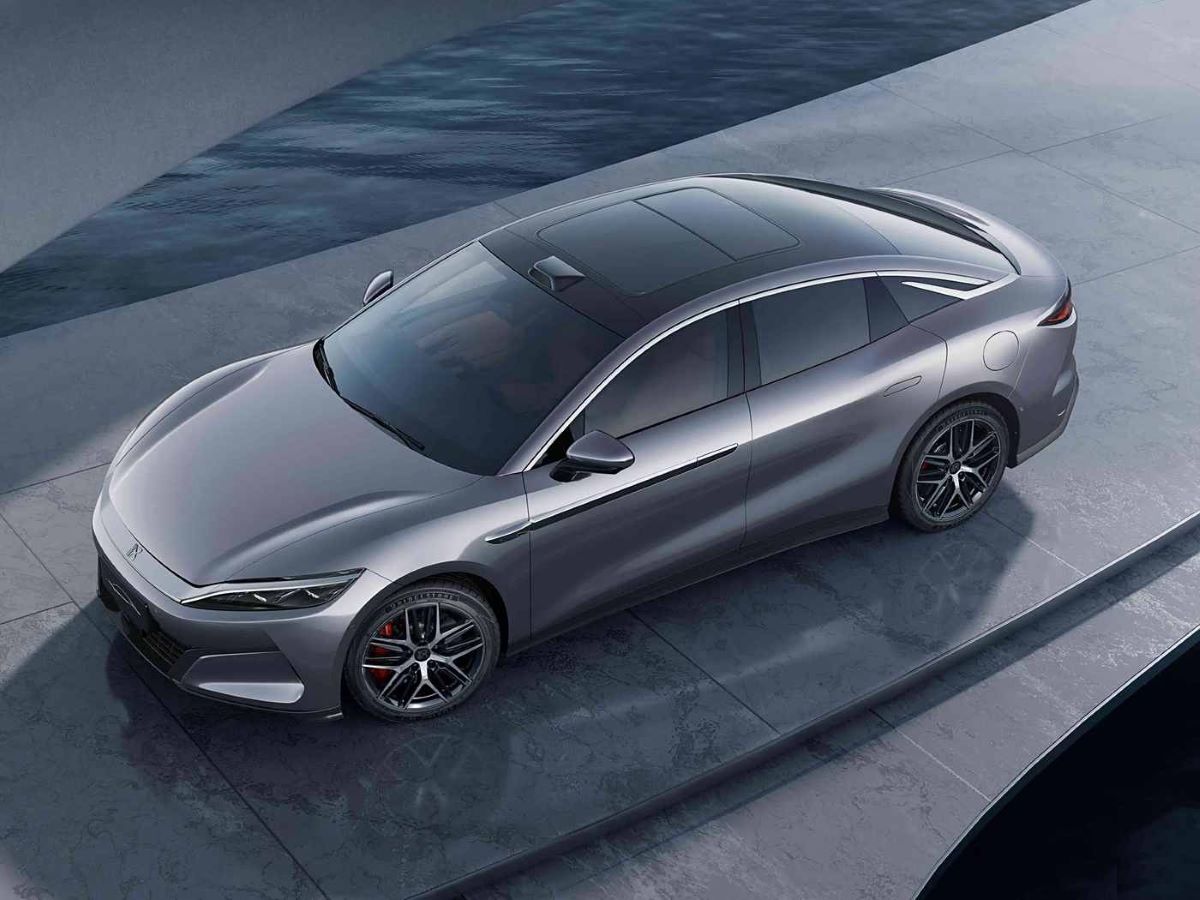
    BYD will debut a new model widely expected to be its next-generation Han sedan at the Guangzhou Auto Show later this month, aiming to revive a lineup whose sales fell 67.39 percent year-on-year across the first 10 months of the year.

    Cumulative sales of the Han reached 50,890 vehicles between January and October, according to data compiled by CnEVPost, down sharply as competition mounts in China’s executive sedan segment.

    Lu Tian, general manager of BYD’s Dynasty sales division, announced on Weibo on November 2 that the automaker will present “a model highly requested by customers” at the trade event, which opens to media on November 27.

    Bigger chassis and multiple powertrains

    The revised sedan appeared in the ministry’s 412th vehicle filing batch on October 16. It measures 5,156 mm long and 1,969 mm wide, riding on a 3,030 mm wheelbase across all five-seat configurations.

    Those proportions add 161 mm in total length and 110 mm between the axles compared with the Han EV flash charging edition released in April. The platform expands interior legroom to counter lengthening executive saloons rolled out by domestic competitors over the past twelve months.

    Government filings outline three battery-electric variants alongside one plug-in hybrid model. Rear-wheel-drive pure electric options deliver motor outputs of either 245 kW (329 hp) or 300 kW. An all-wheel-drive electric variant pairs a 200 kW front motor with a 320 kW rear unit for 520 kW total output, while the hybrid package couples a 1.5-litre turbocharged petrol engine to a 200 kW electric motor.

    Defending the executive market tier

    The overhaul reflects the squeeze facing mainstream executive sedans across China as price competition pushes premium specifications downward. While monthly Han sales rebounded to 6,566 units in October, rising 159.63 percent from September, that total represented a 52.11 percent decline year-on-year.

    Suppliers and fleet buyers face a segmented showroom floor. BYD carved out a higher market band on October 13 when it introduced the Da Han sedan at 235,900 yuan ($35,110), featuring a 5,256 mm length and a 3,130 mm wheelbase. The regular Han must defend volume where buyer migration toward sport utility vehicles and newer smart-cockpit saloons has eroded sedan residuals.

    Contrasting performance across Dynasty lines

    The sedan’s contraction contrasts with the broader performance of the Dynasty distribution channel. The division delivered 203,040 vehicles in October, climbing 13.6 percent year-on-year and 14.4 percent month-on-month to beat 200,000 units in a single month for the first time this year.

    Earlier releases paved the way for that volume. Dealership networks are already receiving floor units of the third-generation Tang, a five-seat SUV that debuted at the Chengdu Auto Show in August and reaches retail showrooms this quarter alongside the larger Da Tang flagship.

  • BYD Unveils Dual-Screen Interior for Third-Gen Tang SUV Ahead of Q4 Launch

    BYD Unveils Dual-Screen Interior for Third-Gen Tang SUV Ahead of Q4 Launch

    BYD unveiled the interior of its third-generation Tang on Thursday. The carmaker fitted the five-seat electric SUV with a 35.4-inch screen ahead of a fourth-quarter launch.

    Delivery figures explain the overhaul. Tang family sales dropped 49.87 per cent year-on-year to 81,614 units between January and August.

    Cockpit Overhaul and Space Configuration

    Inside the cabin, an integrated 35.4-inch far-side display and a 30-inch panoramic screen replace the traditional instrument cluster and head-up display. Lu Tian, general manager of sales for BYD’s Dynasty series, said the layout took design cues from sci-fi spaceship consoles. Buyers can choose between two interior color schemes: Dune Beige and Amber Brown.

    Rear seating serves as a key selling point. The second row offers more than 1,000 mm of legroom, and the backrest reclines up to 130 degrees. BYD positions the five-seat model as the technology-oriented 8-series flagship within the Dynasty division.

    Chassis Dimensions and Platform Hardware

    The vehicle measures 5,045 mm long, 1,980 mm wide and 1,760 mm tall, with a 2,950 mm wheelbase. These proportions place it in China’s mid-to-large consumer SUV bracket. It joins the larger 9-series Da Tang, introduced in June, to form a dual-flagship structure.

    Under the floor, the SUV runs on BYD’s second-generation Blade Battery with high-voltage flash charging architecture. Maximum driving range reaches 850 kilometers on the China Light-Duty Vehicle Test Cycle (CLTC). Under standard ambient temperatures, the pack replenishes from 10 per cent to 70 per cent in five minutes. It reaches 97 per cent in nine minutes.

    Driver Assistance and Chassis Control

    Every variant includes the God’s Eye B intelligent driving system as standard factory equipment. The carmaker also installed its DiSus-A intelligent air body control system across the range to adjust ride height and cabin stability automatically.

    Standardising air suspension and advanced driver assistance puts immediate pressure on domestic rivals. Competitors in the 200,000 to 300,000 yuan bracket must match these hardware specifications without adding option packages, even as margin compression limits profitability. The financial risk is that the heavy hardware package could trim BYD’s gross vehicle margins if sales volumes fail to recover quickly.

    Rebuilding the Dynasty Series Lineup

    The Tang badge previously generated high sales volumes for BYD. However, an aging cabin architecture and prolonged gaps between mechanical updates eroded showroom traffic over the past 18 months. Splitting the Dynasty line into separate 8-series and 9-series variants mirrors product segmentation strategies used by competing premium EV brands across Asian markets.

    Following its initial public exterior reveal at the Chengdu Auto Show on August 21, showroom deliveries and official customer pricing across China will take effect before the close of the fourth quarter.