Tag: Lush

  • Lush launches a 24-hour vending machine

    Lush launches a 24-hour vending machine

    Cosmetic brand Lush has opened its first 24-hour vending machine, located in Coal Drop’s Yard at King’s Cross in London.

    Lush said it aims to provide customers with a distinctive retail experience by allowing them to purchase its products at any time of the day.

    The machine is shaped like a circular kiosk. Customers walk around to and view the products, which include wrapped gift boxes. Moreover, it is sustainably designed, running on low energy.

    The Ilocker vending machine is designed by Anmac, whose owners are Andrew Alpine and his wife Gemma Jackson, a couple well known for designing numerous film and television series sets, including for The Piano, The Beach, Bridget Jones’ Diary and Game of Thrones.

    “Lush has always strived to dazzle our customers, from our product innovations through to bringing our core values into every aspect of our retailing,” said Charlotte Howe, a member of the Lush Group retail team.

    “Using the highest quality of automated retail machines with our partner, Anmac, we are able to surprise and delight with a micro store that is open 24 hours a day. It is a retail theatre that never sleeps – live glow on the go.”

    The London pop-up will run for six months during which time the company will change the product range and merchandising design to ensure ongoing customer interest.

  • Lush calls out Hong Kong landlords after flagship closing

    Lush calls out Hong Kong landlords after flagship closing

    Lush has taken a positive approach to its future in Hong Kong following the closure of its Central flagship store at the end of last month.

    But it has criticized the city’s landlords generally for failing to share the burden of a decimated retail market in the wake of the pandemic. The beauty products company said the decision to close the five-story flagship store, and its first spa in Asia at the end of its lease took “much consideration”.

    Lush said that all of its other stores in Hong Kong and Macau will continue to trade as usual.

    The Soho Square store’s closure reflected the challenges of dealing with reduced footfall during the Covid-19 crisis, the impact of “previous conditions” and a lack of early response from landlords and the government to help struggling businesses.

    “The pandemic has challenged many businesses around the world. Unfortunately, the measures to help in Hong Kong have been very late. Up until the end of January we had received little support from landlords or the government. However, the measure on salaries is very much needed and we are grateful for this.

    “Even though we are saying goodbye to Lush Soho Square Shop & Spa, we want to highlight the achievement of the team in the past five years and thank them for all their hard work. We have loved bringing the spa experience to customers in Hong Kong and we hope they have enjoyed every moment.”

    Elsewhere in Hong Kong, Lush has been engaging with landlords across the two territories because rent accounts for the majority of costs to businesses of all types.

    “We know it is also difficult for our landlords and as property owners, they also have a vested interest in the future of the retail industry,” Lush said in its email. “We would like to thank our partners who have to date been open to constructive discussion and particularly for those that have given discounts of 50 percent and above.

    “But this isn’t the time for one party to take all and one party left with all the burden. We believe there is collective social responsibility, and landlords and retailers should work collaboratively together to ensure retail survives in Hong Kong, which will benefit the local people and economy that in turn supports property owners that need rental tenants.

    “Some landlords gave us a slight discount on rent in February and March, following negotiations with us. However, this is not reflective of the reality we are facing. We have been in continual negotiations of the rent relief and payment plan with the landlords, and we are confident of keeping things under control with our strategic property plans, and where governments have offered pay schemes and guarantees we are making use of these to ensure staff payroll is protected as much as possible whilst there is little money flowing into the business.”

    Meanwhile, over the past few months, the company has worked to have a positive impact on the local communities during the pandemic.

    Underpinning the message of washing hands to keep the virus at bay, Lush donated more than 8 tonnes of soap to healthcare workers, non-profit organizations and minority groups.

    “We strongly believe that this is the time we have to help each other locally to overcome the unpredictable challenges so that we can support a positive future together.

    “We look to the future with optimism and sincere gratitude to our incredible staff and community. We are doing our best to make decisions and operate the only way we know how: honestly and transparently.”

    Lush founder Mark Constantine said the pandemic may bring many long-lasting changes to the way people live their lives.

    “Lush needs to adapt to these changes, stay agile and relevant, whilst holding true to our principles of being a business that is kind and caring. We will need the help of everyone as we enter this next phase.”

  • Lush Hong Kong flagship closes

    Lush Hong Kong flagship closes

    Beauty products retailer Lush Hong Kong has closed its five-story flagship store several months before its lease was due for renewal.

    The high-profile store was opened in late 2015, at Soho Square in Central. At the time billed as the brand’s largest store in Asia, it featured the first Lush spa globally.

    Located adjacent to the Mid-levels escalator on Lyndhurst Tce, it featured 6909sqft (642 sqm) of trading space.

    The ground floor featured the brand’s signature range of handmade soaps, scrubs, shampoos, and cosmetics, while the floor above housed a cafe, with the spa located on upper floors, offering customers scrubs, baths, massages, and facials.

    According to Land Registry records, Lush paid US$196,000 in rent for the latest year.

    Inside Retail Asia reached out to Lush for comment on the closure, but the company did not respond.

    Lush’s closure extends the recent trend of mid-market brands closing stores across the territory in the wake of falling footfall due to borders being closed to tourists during the Covid-19 pandemic. Other retailers including Gap, SaSa, and Swatch have been reducing their store count in the city, along with luxury brands such as Tiffany, MCM, and Prada.

  • Lush opens the world’s first language-free concept store in Japan

    Lush opens the world’s first language-free concept store in Japan

    Foreign Lush customers in Japan can now shop without language barriers as the brand launches the first language-free concept store in Shinjuku district.

    By using AI technology, the UK cosmetics retailer helps its customers enjoy their retail experience without words as they use digital functions, including interactive walls and app-controlled lighting, to locate and choose their favorite products.

    “Shinjuku represents the ultimate version of what we want from a shop. Importantly, it was the first time our tech warriors and brand and shop design teams collaborated to create a retail space in a digital age,” said Adam Goswell, tech R&D manager at Lush.

    Besides being its first language-free concept store, Lush Shinjuk

  • Lush Tokyo store marks beauty brand’s largest In South East Asia

    Lush Tokyo store marks beauty brand’s largest In South East Asia

    The new Lush Tokyo store opened on Saturday is its largest yet in Asia, a three-storey, 1240sqm flagship. Billed as “a global destination, with a curation of the best of Lush as you know it,” the Lush Shinjuku store is housed in the southeast wing of Shinjuku Station, the world’s busiest railway hub. From the outside, it is hard to miss: a towering four-storey 1024cm x 352cm LED screen dominates the street frontage (the building’s fourth floor will house back-office functions for now).

    Inside, Lush Tokyo promises an “experiential, imaginative retail space showcasing Lush’s innovation in technology, with exclusive product drops, and new ways to shop”.

    Digital screens feature throughout the retail space, as well as projection installations, positioned to communicate key messages through visual content and designed to overcome language barriers.

    Coinciding with the store’s opening is the release of an upgraded Lush Labs app for Android and iOS featuring English, Korean, Japanese and Simplified Chinese. Visitors can use the app’s scan function to browse product information while in store, at home and even in the store’s digital ‘shoppable window’ which will be active 24 hours a day for customers and passers-by to scan and shop curated collections and product drops.

    Lush says using lens technology, via the app, to demonstrate products and product information is a step towards minimising packaging and reducing water wastage by showcasing products through videos.

    The content placed in windows and on the giant screen “will reflect the mood of Shinjuku at that time and aims to capture the attention of passers-by and commuters”. It will showcase Lush’s values, campaigns and creativity.

    Lush says the ambience of the new store aims to change the customer’s mood, whether it is a skin consultation, spa treatment or something sensory to speed you up or slow you down.

    “Products, treatments and experiences with benefits beyond the body exist here and build in intensity as customers move through the floors. Each floor offers an uplifting, interactive and playful space that promotes exploration and creativity with benefits beyond the body through different materials, lighting, products, content and merchandising to set the tone and spark joy.”

    The second floor offers what Lush describes as “a surreal sensory experience using colour therapy and generative art inspired by bath art to create an interactive digital mood”.

    “Innovative use of technology heightens the senses and plays with mood, data from sensors that map customer position and movement will be used to activate sounds from within the displays. This is just one way the shop can respond to individual customers, creating targeted experiences filled with surreal moments.”

    The new Lush Tokyo store opened its doors on Saturday, June 1. A spa planned for the third floor will open within the next few months and the company says it is evaluating using some of the fourth-floor space for customer engagement as well.

  • Lush UK to closing down most social media accounts

    Lush UK to closing down most social media accounts

    Beauty and well-being retailer Lush UK will close its social media accounts this week, citing disillusionment with the algorithms and pay-to-display policies determining how they appear in their customers’ feeds.

    The firm will shut down Lush UK, Lush Kitchen, Lush Times, Lush Life, Soapbox and Gorilla across Facebook, Twitter and Instagram. US accounts will remain active for the time being.

    Lush will instead attempt to connect with followers via its website chat feature or through more traditional means of communication, although it may still work with social media opinion leaders to provide “an opportunity for our customers to connect one-on-one with people within Lush”.

    The shutdown will silence Twitter, Facebook and Instagram channels followed by hundreds of thousands of fans.

    “We don’t want to limit ourselves to holding conversations in one place, we want social to be placed back in the hands of our communities – from our founders to our friends,” the firm announced.

  • Lush Prepares Itself for Growth

    Lush Prepares Itself for Growth

    Global beauty business Lush posted a £3.9 million (A$7.17 million) operating loss in the year to June 30, 2018, compared to an operating profit of £22.6 million ($41.54 million) the year prior.

    The decline was due to the rising cost of goods, manufacturing, staff, rent and administrative costs, and a slowdown in the US market, which outpaced a 6.6 per cent increase in turnover on a constant currency basis to £524.4 million ($963.9 million) in FY18.

    This reflects a 4.4 per cent in like-for-like sales and 9.6 per cent increase in online sales, compared to the previous corresponding period.

    Still, GlobalData retail analyst Emily Salter called this a “solid year” for the brand off the back of its investment in stores and innovation.

    “The retailer relocated 11 UK stores to larger units during the period which saw an impressive 39.6 per cent increase in like-for-likes, indicating Lush’s dedication to the offline channel as it seeks to further differentiate its unique offering and drive customers to stores,” Salter said.

    Salter also pointed to the recent launch of a new global website, which she expects to bolster conversion and increase basket sizes thanks to the “more attractive, aspirational and easy-to-navigate site”.

    She believes the brand is in a good position for growth due to its strong brand identity, and commitment to vegan and ethical practices.

    There is a downside to this, however, as Salter said the brand’s focus on natural ingredients was partly to blame for the increased costs.

    “The retailer must work to return to profitability in its current financial year, although the increased ingredient costs will be hard to navigate due to Lush’s focus on natural and good quality ingredients,” Salter said.

    While performance in Lush’s largest retail market, the US, was disappointing – with declining footfall contributing to sales falling by 7.5 per cent – its UK business fared slightly better.

    Lush Australia was contacted for comment.

  • Lush opens Tokyo tech-concept store

    Lush opens Tokyo tech-concept store

    After opening two concept stores in Milan and Berlin earlier in the year, British cosmetics retailer Lush has opened a third global concept store in Tokyo. While the Italian and German locations opened with a focus on packaging-free cosmetics, the Japanese retail outlet, which kicked off trade on November 22, will specialise in selling Lush’s bath bombs.

    Located in Harajuku, the tech-focused store will promote Lush’s best-selling bath bombs, as well as those new editions, and those known to be seasonal.

    Across two floors, Lush will also add limited-edition bath bombs sold exclusively in the new shop.

    Inspired by Japanese culture, the bath products reflect the style of the district’s Harajuku fashionistas “with their vivid colours and imaginative outfits to mythical creatures such as nine-tailed foxes,” according to a press release from Lush.

    Under the umbrella of Lush Labs, the new Tokyo store will serve as a retail experiment for future Lush stores, by incorporating online and offline retail experiences in the same setting.

    In doing so, consumers will enter a store void of signing and pricing, and even sinks typically used to demonstrate the product.

    Instead, shoppers will be encourage to shop online via the Lush Labs app, and view demonstrations and products digitally, as well as gaining ingredient detail, simply by scanning the naked bath bombs directly from their phone. In this vein, packaging is done away with too.

    “With Lush’s long term commitment to removing packaging from cosmetics, the Lush Lens feature uses the phone’s camera and Artificial Intelligence to support the customer in shopping packaging-free with ease and ensures they get all the important product information they require in a fun and environmentally-conscious way,” said Lush in a statement.

    Lush is increasingly experimenting its online retail in the offline world and will use “community feedback” from the Harajuku store as a source of research and ultimately reason to open more across the globe.

    “Customers are being invited into the R&D process once again, only this time to feedback on the retail experience as a whole, rather than just the product,” concluded Lush.

    “Each comment, reaction and critique sent back will help shape the future of the shop and each area of innovation launching within it.”


  • Is it the end of cosmetics testing on animals for China?

    Is it the end of cosmetics testing on animals for China?

    It has been little more than a year since French cosmetics firm NARS’ controversial decision to sell its make-up in China caused a major rift in the global cruelty-free beauty scene.

    Fans of the brand and animal-lovers may soon be able to make peace. China is mooting a change in its policy of testing cosmetics on animals which could pave the way for cruelty-free brands to tap into the country’s US$33 billion cosmetics market.

    China’s National Institute for Food and Drug Control (NIFDC) recently issued a statement about its commitment to overhauling testing in the cosmetics industry and exploring viable alternatives to animal tests that are commonly used in countries where the practice is banned. The NIFDC emphasised that research, development, and the standardisation of testing methods that don’t use animals are its top priorities.

    Animal-protection organisations have been working closely with Chinese stakeholders to replace animal testing – which, for cosmetics alone, requires the use of an estimated 500,000 animals per year around the world – with more modern and predictive technologies.

    Notable progress has been made in recent months.

    Troy Seidle, vice-president of research and toxicology for Humane Society International, said that the recent NIFDC statement, published on its official WeChat account last week, is particularly promising.

    “It would be the first time the authority has publicised its view towards cosmetic alternatives with a future strategy so clearly articulated,” Seidle says. “Chinese authorities and stakeholders are actively working to embrace validated alternatives to strengthen international regulatory alignment and trade in the cosmetic sector.”

    China’s cosmetics testing laws require all foreign cosmetics products to be tested on animals before they can be sold in the country. In 2014, China began to soften its stance, allowing domestic cosmetic brands to sell products not for “special use” (make-up, skincare, and fragrances) without the need to test them on animals, but only so long as they adhered to strict standards and a list of pre-approved and tested ingredients. This also applied to foreign cosmetics brand that chose to manufacture products in China for sale locally.

    However, the 2014 rule change was not enough to convince organisations campaigning for cruelty-free cosmetics that selling in China was acceptable. They objected because companies that manufacture in China still face a risk that animals could be harmed via post-market testing – under which brands can have products taken off the shelves and tested on animals.

    In 2017, Nudestix was taken off the cruelty-free brands list of animal welfare website Cruelty-Free Kitty after the UK brand announced it would be producing its products domestically and selling in China.

    “Even though Nudestix does not test on animals, and has successfully bypassed any required pre-market animal testing in China, this is not enough for a “cruelty-free” claim,” Cruelty-Free Kitty author Suzana Rose wrote in a blog post last month. “Any brand that sells cosmetics in physical stores in China can potentially have their products taken down from the shelves and tested on animals.”

    Mette Knudsen, CEO of KnudsenCRC, a Shanghai-based consultancy that helps companies seeking to sell in China, wanted to help brands understand just how serious the risk was of cosmetics companies encountering these post-market tests, as they remain the “biggest barrier” to receiving cruelty-free certification.

    Usually, the post-market tests take place in response to a consumer complaint, though research commissioned by consultants Reach24H found that some Chinese municipal governments would sometimes implement mandatory post-market testing.

    Through research and talks with Chinese officials, laboratories, and UK charity Cruelty-Free International, KnudsenCRC determined that post-market testing rarely involved animals. This is because animal testing is expensive – it costs five to 10 times more than other safety assessments – and also time-consuming, taking about three months to complete.

    “If you have a product with a safety risk on the shelves, you obviously don’t have three months to see if it poses a safety risk or not; you have to react immediately,” Knudsen said.

    SEE ALSO : Makeup brand Nudestix enters China

    KnudsenCRC is teaming up with Cruelty-Free International on a pilot project designed to help cosmetics brands ensure no animal testing has occurred throughout their supply chain, and is working closely with authorities in Shanghai to eliminate the risk of post-market tests.

    “Although we have a lot of assurance from the Shanghai authorities,” Knudsen says, “it’s important to have the pilot because we need to be able to say this is a route we can recommend.” Knudsen says that many brands have already expressed interest and sent in applications for the pilot. Five brands will take part in the first stage of the project, due for completion in early spring 2019.

    It could take years to implement a complete shift away from cosmetics testing using animals. But some milestones towards ending the practice have already been attained.

    The Institute for In Vitro Sciences, a globally recognised organisation working to advance non-animal testing methods in China, announced this year that a lab it was working with in Hangzhou had officially adopted a test on artificial skin. The NIFDC has also adopted alternative tests for skin corrosion and eye irritation, as well as phytotoxicity (testing on plants), with more alternative methods to be introduced in the near future.

    “A crucial first step toward transitioning to non-animal testing approaches for cosmetics in China is for the national authority responsible for this sector to officially recognise the validated test methods as acceptable,” Seidle says. “Until this happens, companies and labs have little incentive to invest money or time to establish the infrastructures and competency necessary to carry out these tests on a regular basis, or for the industry as a whole to commission such tests within China.”

    There is pressure to move quickly. The 28-nation European Union became the first region to ban cosmetic testing on animals in 2013, prompting other countries to follow suit; and the California State Assembly has just passed a bill that will make it illegal for make-up or personal care brands tested on animals, or including ingredients that have been tested on animals, to be sold in the state. If the California governor signs the bill, the law could go into effect as soon as 2020.

    China faces a juggling act on consumer safety. Given numerous food and drug scandals in recent years, safety clearly remains the government’s top priority.

    “To balance consumer safety at a time when the market is developing at 500 kilometres an hour is a very difficult task. Getting the industry up to cruelty-free standards is not something they do overnight,” Knudsen says. “I’d say the minute they can make absolutely sure that consumer safety is not in danger, obviously they would allow these alternative methods.”

    It’s not just the government that is showing movement on the matter. A new generation of Chinese consumers is demanding higher levels of social responsibility from brands – the same consumers who lavish cash on their pets as if they were their children.

    “This is where the speed at which China is moving is a very good illustration because in just 10 years, pets are everywhere. It’s a completely new mindset,” Knudsen says. “Pets have definitely spurred an interest in everything in regards to cruelty-free. This is where you see a deeper and sincere interest in not harming animals.”

    Animal-rights organisations and beauty brands such as Lush have taken the opportunity to educate consumers about cruelty-free practices to inspire more ethical choices. Humane Society International provided funding to the Dalian Vshine Animal Protection Association in China to carry out an extensive public awareness campaign, as part of the organisation’s global #BeCrueltyFree effort. Its initiatives included a lecture tour of 50 universities in 34 provinces, awareness videos on animal testing and alternative technologies screened at shopping centres.

    While there are no official channels for purchasing cruelty-free products in China, such brands already have a presence on direct-to-consumer commerce platforms like Taobao and WeChat.

    There’s also little doubt that there are conscious Chinese shoppers seeking out animal-friendly beauty products through travel abroad as they become more educated about their options.

  • Lush Singapore opening flagship at VivoCity

    Lush Singapore opening flagship at VivoCity

    With four stores already, cosmetics company Lush Singapore is set to open its flagship at VivoCity on September 1.

    Occupying a 107 sqm basement space, it will be the largest Lush shop in Singapore.

    “The new shop will allow us to showcase the innovation at Lush with concept product displays and exclusive items,” says Lush Singapore director Sohana Chowdhury.

    There will also be new services such as hand and arm massages, and private in-depth skincare consultations.

    Lush VivoCity will also be one of the UK brand’s 20 international shops to offer the black-label range of Gorilla Perfumes.

  • Lush ends ‘exceptional’ year

    Lush ends ‘exceptional’ year

    Ethical cosmetic brand Lush has reported exceptional results for their 2014-15 financial year, with brand sales accelerating 26 per cent to £574 million.

    Strong like-for-like growth of 22 per cent has been achieved via the combination of its store estate and digital outlet, driving sales growth of 21.4 per cent and 27.8 per cent respectively. Despite Lush’s sales growth, profit figures were negatively influenced by currency volatility, particularly in Brazil – profit before tax dropped £900,000 on last year. Further dampening profits, exceptional costs in Japan heavily impacted group operating profit, plummeting by £9.2 million on last year.

    Store portfolio management remains a key focus of its strategic initiative, focusing on prime sites with larger selling space. The brand increased its store numbers to 933 in the financial year, having opened 93 shops and closed 58 throughout the year – UK current store numbers stand at 106, including its 9500 sqft flagship on Oxford St which opened in April 2015. Striving for higher turnover and basket sizes, 115 of its stores now have the ability to generate annual sales of over £1m, a 46 per cent increase in two years.

    Lush’s triumph stems from the growing number of consumers requiring cruelty-free and sustainably sourced cosmetics and skincare, which is in-turn enhanced by Lush’s capability in ensuring its staff can offer a high level of product knowledge and customer service in store.

    Lush has a way to go before reaching its 25 per cent online penetration rate, having increased marginally by 0.1 per cent to 8 per cent in its full year 2015-16, marginally outperforming the UK health & beauty market in 2015 estimated at 7 per cent. Online growth is far more challenging compared to sectors such as clothing, with lower prices and the essential nature of products driving traffic to stores, while consumers also like the instore experience and customer service element – especially in skincare items.

    While its two largest markets, US and UK, experienced resilient like-for-like growth of 37.2 per cent and 38.8 per cent respectively, its performance in Japan continued to disappoint at -11.2 per cent for the full year, with its turnaround remaining Lush’s greatest challenge. However, group sales for Q1 2015-16 have continued with an outstanding performance in both physical and digital outlets, up 21.7 per cent and 26.5 per cent, demonstrating the brand’s growing appeal among its loyal shoppers and strength in acquiring new customers.

  • British brands invading Philippines

    British brands invading Philippines

    Asif Ahmad, the UK ambassador to the Philippines, is one of the busiest diplomats in the country, as he leads, almost on a weekly basis, the opening of new outlets put up by dozens of British companies which are taking advantage of the rapidly growing consumer market and improved purchasing power of Filipinos.

    Ahmad, the 59-year-old diplomat who has been assigned in the Philippines since July 2013, says while several British companies have established their presence in the country for several decades now, more are expected to land in the Philippines soon.

    “We have done it in fashion.  We have done it in cars. We have done it in films and music.  The next story is eating and drinking,” says Ahmad, during the opening of the second outlet of Costa Coffee in the Philippines at Robinsons Place in Ermita, Manila.

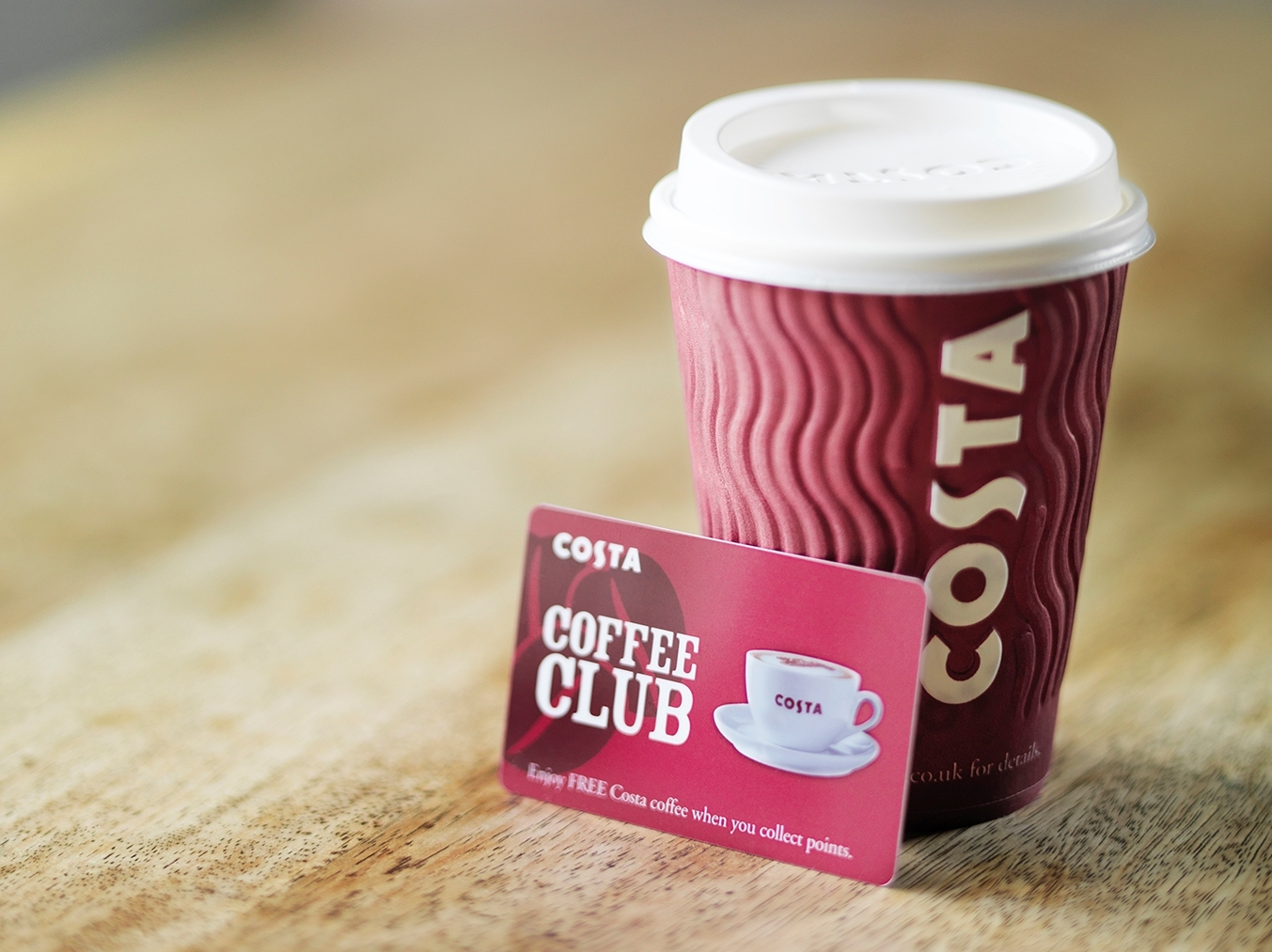
    Costa Coffee, the leading coffee chain in the United Kingdom, is the latest British brand setting its sights on the Philippine market, which Ahmad says offers a lot of opportunities for foreign companies.

    The ambassador says the expansion of British firms in the country is a part of a deliberate effort of the London government to triple its exports to the world to 1 trillion pounds by 2020.

    Unilever, an Anglo-Dutch company, is one of the biggest distributors of consumer products in the Philippines while Royal Dutch Shell Plc. is one of the three largest petroleum players in the country.

    The last couple of years saw dozens of UK firms opening outlets or expanding their presence in the Philippines.  In November 2013, London opened its airspace to Philippine Airlines via Heathrow Airport, with the help of Ahmad.  This has triggered a faster movement of people, including investors and tourists, between the two countries.

    British financial giants HSBC, Standard & Chartered, Barclays and Pru Life UK have strong presence in the Philippines while UK companies that are expanding in the country include Pearson Plc., Ashmore Group, British American Tobacco, British Petroleum, ECR Minerals Plc., CRH Plc., Arup, Nectar Group Ltd., MacKay Green Energy Inc., Forum Energy, Pitkin Petroleum Plc., Eaton Corp. Plc. and Weir Engineering Services Ltd.

    Top British brands opening or adding outlets in the Philippines include Rolls Royce, Range Rover, Jaguar, Mini Cooper, Morgan Motors, Tesco, The Body Shop, Fitness First, Toni & Guy, Remington UK, Marks & Spencer, Debenhams, Lee Cooper, F&F, John Lewis, Burton, Reiss, Speedo, Hamleys, Burberry, Topshop, Topman, Dorothy Perkins, Mitre Sports, Berghaus, Kangaroos, Superdry, Warehouse, Clarks Shoes, Paul Smith, Mothercare, Hackett London, Lush, TM Lewin, River Island, Cath Kidston, Pepe Jeans London, Savile Row, Lyle & Scott,  Whyte & Mackay, Twinings, Diageo, Union Jack Tavern, Wolf & Fox, Chuck’s Grub, Waitrose and Yummy Organics.

    Ahmad says more brands will expand in the Philippines soon. “We have a strong presence of British brands that is gonna grow.  My government, the UK, has said that we must triple exports to 1 trillion [pounds]. My mission here is to grow three times more than before.  That is a very strong target to have,” he says.

    The UK is already the largest investor among European countries in the Philippines.  “The easy target that we have met is being the number one investor in the Philippines from the European Union. We have achieved that already,” he says.

    “In terms of trade, we have a long way to go.  If we added it both ways, it [bilateral trade] adds up to $2 billion.  We have to make it $6 billion,” says Ahmad.

    He says the UK embassy is working with the British Chamber of Commerce to help more companies navigate the Philippine market.  British investors are looking at infrastructure, public-private partnership projects, water, healthcare, education, information technology and defense sectors, he says.

    The British Chamber of Commerce is arranging more trade missions to bring more British brands in the Philippines this year to look at opportunities, given the country’s improving economy.

    “What we are seeing is that the government has more money.  The infrastructure projects are now speeding up, after a difficult start.  We are seeing people consuming more, spending money more, not just in houses and cars, but also in their lifestyle,” Ahmad says.

    Ahmad says Filipinos can afford to buy British brands.  “It [local market] has been ready for quite some time.  That’s why we have been very successful here.  If you go back, they [British companies] have been here for a long time and they are expanding still.  New ones are coming onboard.  What Costa Coffee does is something different.  It is in food and beverage segment, which has much more to offer,” he says.

    Costa Coffee opened its first outlet at Eastwood Citywalk 1 in Libis, Quezon City in June and plans to open three more branches this year at Tera Towers in Fort Bonifacio, E. Rodriguez Jr. Ave. in Quezon City and Robinsons Antipolo in Rizal.

    “We plan to open 70 Costa Coffee branches in the Philippines over the next five years,” says Costa Coffee Philippines general manager Corinne Milagan, who heads a new unit of Robinsons Retail Holdings Inc. to guide the expansion of the Costa brand in the country.

    Among those who attended the opening of the Costa Coffee branch at Robinsons Place Manila are Ahmad, Milagan, Robinsons Retail Holdings president and chief operating officer Robina Gokongwei-Pe, Costa Coffee International managing director Chris Rogers, Robinsons Land Corp. president and chief operating officer Frederick Go and Costa Coffee franchise manager for Southeast Asia and India Matt Kenley.

    RRHI formed a new company called Robinsons Gourmet Food and Beverage Inc. to operate the Costa Coffee chain in the country. Robinsons Gourmet teamed up with Whitbread Plc. of the United Kingdom to bring the British coffee brand to the Philippines.

    “The Philippines has fantastic opportunity for the Costa brand.  It brings something different to the market. A different coffee, a different environment and a great people.  And it brings a little taste of London to the Philippines,” says Rogers.

    “We have been looking forward to the next 20 to 30 years. The Philippines is an exciting place to be, because of the potential growth.  The economy is growing strongly. The consumer population is growing. There are good dynamics,” says Rogers, who joined Whitbread eight years ago.

    Rogers has been leading the international expansion of the Costa Coffee brand since July 2012.

    Robinsons Retail plans to open 70 Costa Coffee stores in the Philippines over the next five years, with an average cost of P10 million per outlet.

    Rogers says Costa Coffee has found its niche in the competitive coffee market.  “Our difference is our coffee.  We have the Mocha Italian blend.  We are very particular with the beans we choose–high-quality beans with a particular taste. The environment is also very different,” he says.

    Milagan says the Philippine coffee market is now prepared for a British brand.  She says coffee lovers, including British expatriates, were lining up hours prior to the opening of the Costa Coffee branch at Robinsons Place Manila on July 31.

    “The [coffee] market is not yet saturated. The Philippine market has matured in terms of  food and drinking preference. We are graduating now from instant coffee and we are now shifting to coffee made in a hand crafted way,” says Milagan.

    Milagan says “the Filipino taste has become discriminating, as they travel abroad.”

    Costa Coffee was founded by Italian immigrants Sergio and Bruno Costa in 1971 in Lambeth, London. The Costa brothers were known for creating their unique blend of coffee, a combination of Arabica and Robusta beans. They called it Mocha Italia, a blend that is a closely guarded secret to this day.

    The brand was acquired by Whitbread Plc. in 1995.  The UK firm continues to serve the original Mocha Italia recipe, which is slowly roasted in the Old Paradise Street Roastery in London.

    Milagan says Costa coffees are all handcrafted and espresso-based.

    Costa Coffee now has 3,000 stores in more than 30 countries. Costa employs Master Genarro Peliccia as the official coffee master who ensures that the taste remains consistent to the original blend.

    Gokongwei-Pe says Costa Coffee is the second British brand brought to the Philippines by Robinsons Retail, the first being the fashion brand Topshop.  She says her company will bring more foreign brands, depending on the performance of Costa Coffee.

    “We have to make sure this works first,” she says, adding that the outlook for the Costa brand in the Philippines is promising.

    “I believe in good luck.  I believe in good vibrations,” she says.