Tag: luxury brands

  • Australian Luxury Eyewear Brand Valley Eyewear Collapses, Assets Ordered for Urgent Sale

    Australian Luxury Eyewear Brand Valley Eyewear Collapses, Assets Ordered for Urgent Sale

    Valley Eyewear, an Australian luxury sunglasses brand based in Gold Coast, has been placed into liquidation following a Federal Court order. The court has appointed Worrells’ James Robba and Jason Bettles as liquidators, instructing them to proceed with an urgent sale of the business and its assets.

    These assets include approximately $600,000 worth of stock, optical equipment, intellectual property, customer databases, and digital and social media holdings. The company is permitted to continue trading until August 24, which has been set as the deadline for expressions of interest from potential buyers.

    Court Order Follows Internal Dispute

    Founded in 2011 by Michael Crawley, Tenielle Crawley, and Matthew Grippo, Valley Eyewear achieved significant international reach, selling in over 20 countries and maintaining more than 100 Australian stockists, alongside numerous overseas retail points. The brand gained recognition through endorsements by celebrities such as Chris Hemsworth and Margot Robbie.

    The collapse also impacts House of Valley, a related entity established to operate Valley Eyewear’s Burleigh Heads store and optometrist, which opened in 2024. The liquidation decision comes after a court battle between the company’s founders, with the Crawleys filing an order against the companies and Grippo. Financial records reportedly indicate that Valley Eyewear had outstanding debts to various suppliers, banks, utilities, and email service providers.

    Liquidators Seek Buyer For Remaining Assets

    The liquidators will provide further details to creditors, employees, and other stakeholders as their investigation progresses. The urgent sale aims to salvage value from the business, which had built a strong reputation in the eyewear market since its inception.

  • Luxury brands turn their gaze to increasingly picky millennial buyers

    Luxury brands turn their gaze to increasingly picky millennial buyers

    Multimillion-dollar fashion brands in Hong Kong are transforming themselves to appeal to rich young customers.

    Christine Chen, 27, was looking for a special wedding gift for her best friend. Loaded with cash, she went into one luxury store after another at a mall. Doors were opened obsequiously and staff in tuxedos fawned over her.

    But soon her interest in luxury fashion dissipated, at least temporarily, because of the overwhelming attention she received.

    Fifteen minutes later she was out of the door without completing her shopping.

    Christine’s story epitomes the experience of many young Hong Kong shoppers: They have no problems buying item after item online but quickly lose interest when the very same items are physically displayed in front of them along with an army of sales staff.

    High prices are not a problem, according to Christine, but the shopping experience at luxury stores often makes her and her friends reluctant to buy.

    Hong Kong has seen many changes in buying behavior in recent years. Some have not been kind to sellers as the closure of many Burberry, Coach and Louis Vuiton stores due to lack of patrons testifies.

    Bloomberg presumed that wealthy Chinese, who account for much of the luxury items purchased, are no longer willing to wait in queues for the latest watch or handbag.

    On the other hand, the surge of millennial buyers in the ages of 20-34 is transforming the traditional demographic at shopping malls. Their increasing incomes and family financial support allow the young to shift from fast fashion to posh clothing and accessories.

    Bain & Co has predicted that by 2025 millennials and the Generation Z (people born after 1996) will be the consumers of 45 percent of luxury fashion sold on the planet.

    Then again, it is not easy to make them buy. After being accustomed to middle-aged buyers for long, sellers of luxury goods now have to turn their gigantic marketing machinery toward increasingly younger buyers.

    Chow Tai Fook is one of the top 10 luxury fashion brands and has colossal revenues. It is larger than brands like Hermès, Rolex, and Prada, according to Deloitte.

    Since 2016 Chow Tai Fook has been making over its traditional outlets to make them millennial-friendly. It also has online shopping portal ctfeShop.

    At another of its outlets in Hong Kong, Chow Tai Fook even offers customers the experience of personally wrapping a jewelry gift box with items bought on the spot.Standing out is its branch in Kwai Fong, one of the island’s nightlife hotspots. Guests encounter a pink-themed café inside the store that ensures no one leaves thirsty. The selfie generation also loves the Kwai Fong branch for its check-in area specifically meant for taking photos.

    In each area, stores have their own signature color, with red being a symbol of fortune and light blue and pastel pink representing youth.

    The company came up with the idea of jewelry vending machines in Shanghai inspired by traditional vending machines.

    It also bought copyrights from Disney and rolled out jewelry lines inspired by the latter’s cartoon characters.

    All these are meant to help young buyers feel more comfortable at Chow Tai Fook, Po Liu, its international business director, explained.

    Chow Tai Fook’s range of campaigns for the brands under its umbrella works toward the same goal.

    T MARK is a diamond brand that focuses on the diamond traceabilityand authenticity. diamond is inscribed with a mark that carries a set of unique serial numbers, enabling customers to trace the life journey of a diamond from sourcing to production.

    SoInLove is a jewelry gifting brand with affordable price, young style. Monolgues is an on-trend jewelry brand for trendsetting millennials .

    French luxury brand Guy Laroche recently launched a series of art watches in Hong Kong and China.

    Instead of thin leather straps in classic yellow and brown tones, they come with pastel straps and large faces with imprints of French paintings.

    This personalization was in response to millennials’ need to express themselves, and the watches are a favorite item, especially for online shoppers.

    “Young people have innovative views that help us reach our target audience quickly, while the experience of older executives reduces potential risks.”Elise S.M. Tsui, a distributor of Guy Laroche watches in Hong Kong, said young people were becoming her main customers. So her company also employs young people in managerial positions.

    Vietnam too

    This shift in demographics is also happening in Vietnam.

    Since the beginning of last year Lacoste Vietnam has seen VIP customers aged 24 – 35 years increase by 315 percent. A VIP customer is one who makes a one-time purchase of at least VND27 million ($1,155).

    Bui Thu Phuong, marketing director of Lacoste Vietnam, said in the last two years, amid fierce competition from international and domestic fashion brands and the entry of many global names, Lacoste set out to build strategies to attract millennials and the Generation Z in addition to the middle-aged segment.

    “This is a very promising customer group that many brands are interested in. They were and have been key players in the global workforce. This young group always wants its needs gratified immediately.”

    Concurring with Phuong, Nguyen Thi Minh Thu, marketing director of Precita jewelry, said millennials as a customer group account for a big proportion of purchases of high-end brands.

    They were born in the digital age and live with the digital world for more than 24 hours a week. Health and beauty are their major interests, but they are also very particular about the quality of the products they buy and how practical their spending is.

    Designer Do Long has been in the fashion industry for eight years and runs a design shop. A few years ago his clients started to see younger buyers, aged 25-35, flood in, but now many 18-20-year-olds can afford customized, expensive attires, he said.

    To gain market share, designers and luxury fashion businesses are forced to innovate strategies and technologies to produce esthetic, trendy, cost-effective, and versatile lines while simultaneously their clients offering new experiences.

    For instance, someone who has four Precita earrings can wear them in 20 different ways. The brand personalizes wedding rings by engraving hearts on their inside.

    Earlier this year Precita tweaked its website to enable customers to research products and buy with a few clicks.

    In 2017 and 2018 Lacoste spent its entire marketing budget on digital media like online newspapers and magazines, social networks and outdoor displays in malls and other venues frequented by young people.

    The brand also employs young influencers to promote its items, including models Quang Dai and Helly Song, Miss Vietnam H’Hen Nie and singers Noo Phuoc Thinh and Isaac.

    This marketing ploy has been adopted by many businesses to connect with the millennial customer.

    As for Christine Chen, not only did find jewelry for her friend, but also got to personally enclose it for her in a small, pretty chest.

    “This shop is decorated like a treasure chest and each chest has its own code. All I have to do is pass the code to my friend and she will have a pleasant gift experience.”

  • International luxury brands abandoning China as economy slows

    International luxury brands abandoning China as economy slows

    After enjoying a decade of aggressive expansion in China, international luxury brands have begun to curtail their operations as the world’s second-largest economy is beset by a slowdown, a massive government crackdown on graft and a Chinese preference to buy expensive goods abroad.

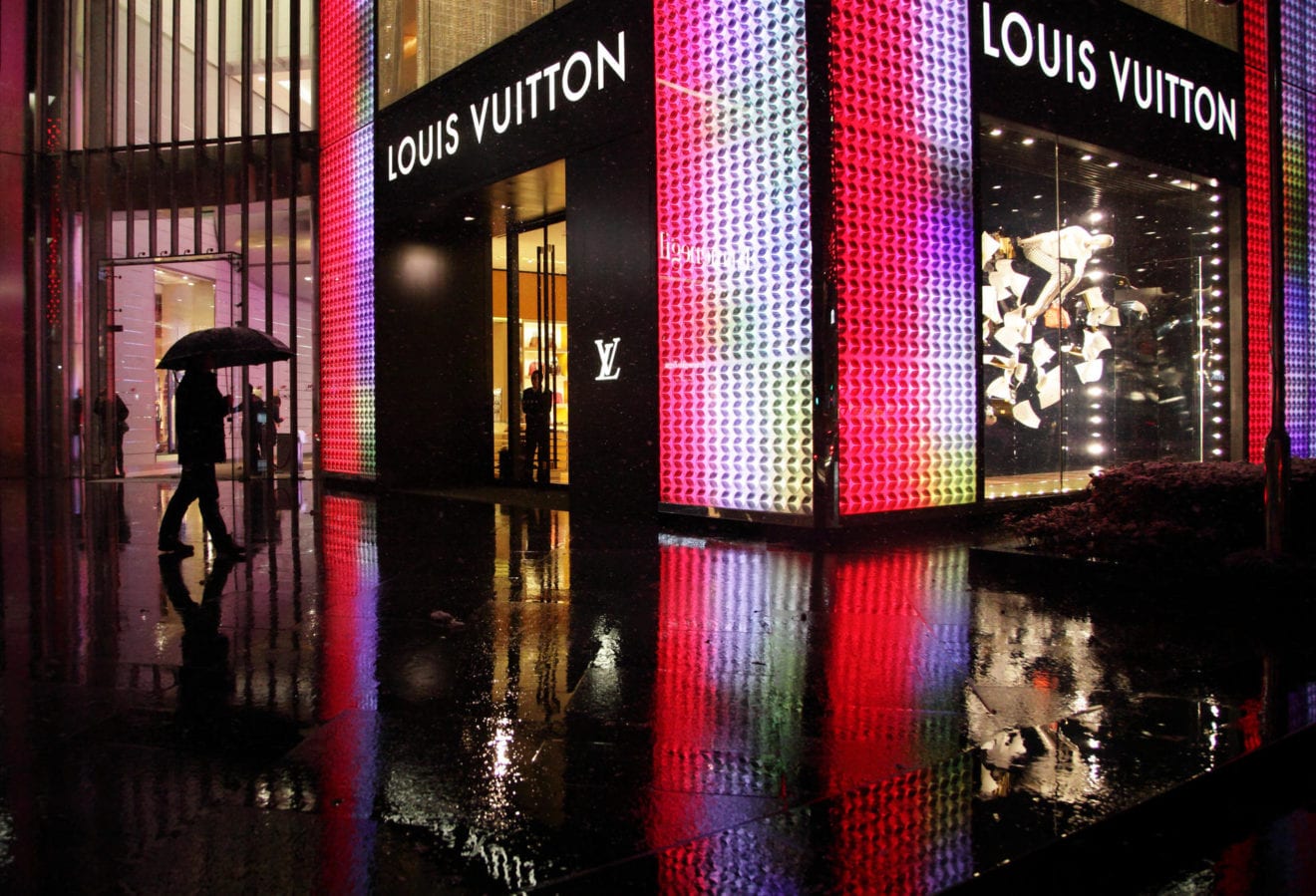
    French retailer Louis Vuitton closed its store in the sprawling port city of Guangzhou. That was followed by two more shutdowns by the firm in Harbin and Urumqi in Xinjiang.

    The company, however, said the closures were part of a marketing strategy adjustment by headquarters.

    During the past two years, Britain’s Burberry has closed four stores in China, Coach shut two, Hermes one, Armani five, and Prada went from 49 to 33.

    Following 10 years of aggressive expansion, the luxury brands have been shrinking their physical presence in China to adapt to a cooling market plagued by a slowing economy, an ongoing anti-corruption campaign and Chinese buyers’ increasing overseas purchases, Hong Kong-based South China Morning Post reported today.

    Fortune Character Institute (FCI), a Shanghai-based market research unit, forecasts mainland luxury sales to grow 3 per cent to USD 25.8 billion this year, much slower than the 11 per cent in the recovering global market.

    The institute in a study found that although Chinese shoppers consumed 46 per cent of luxury goods around the world, their purchases in their home market accounted for only 10 per cent of global sales, falling from 11 per cent in 2012 and 13 per cent in 2013.

    The sluggish growth is reflected in the expansion plans of luxury brands. They are opening fewer new stores and closing more, the report said.

    “Store openings are no longer a major way for international luxury brands to expand in the China market. Over the next two years we expect these brands to close even more stores than before,” said Zhou Ting, director of FCI.

    “But if you think luxury brands are taking a totally defensive strategy in China, you would be wrong. The closures are only a small part of a thorough strategy adjustment they are undertaking in China,” he was quoted in the report.

    The first batch of luxury brands entered China in the 1990s. Most of them set up stores in five-star hotels and high-end department stores in big cities, targeting foreign businessmen, overseas Chinese and government officials.

    The “golden era” came around 2009 and 2010 when affluent Chinese began spending on high-end goods and jewellery, making China the fastest-growing luxury market in the world.

    Encouraged by this, luxury retailers rushed to China.

    Global consultancy Bain & Co estimated that the 15 top brands it surveyed had opened more than 80 new shops during the first eight months of 2010.

    A watershed for China’s luxury market came in 2013 when President Xi Jinping launched a massive anti-corruption and austerity campaign. It had a big impact on the luxury market as government officials were banned from receiving gifts.

    Such expenditure had been a major driver of domestic luxury consumption, the report said.

  • Luxury fashion brands diversify into food and beverages in Asia

    Luxury fashion brands diversify into food and beverages in Asia

    Luxury brands have begun to expand beyond their core but saturated fashion businesses into the food and beverage sector in Asia.

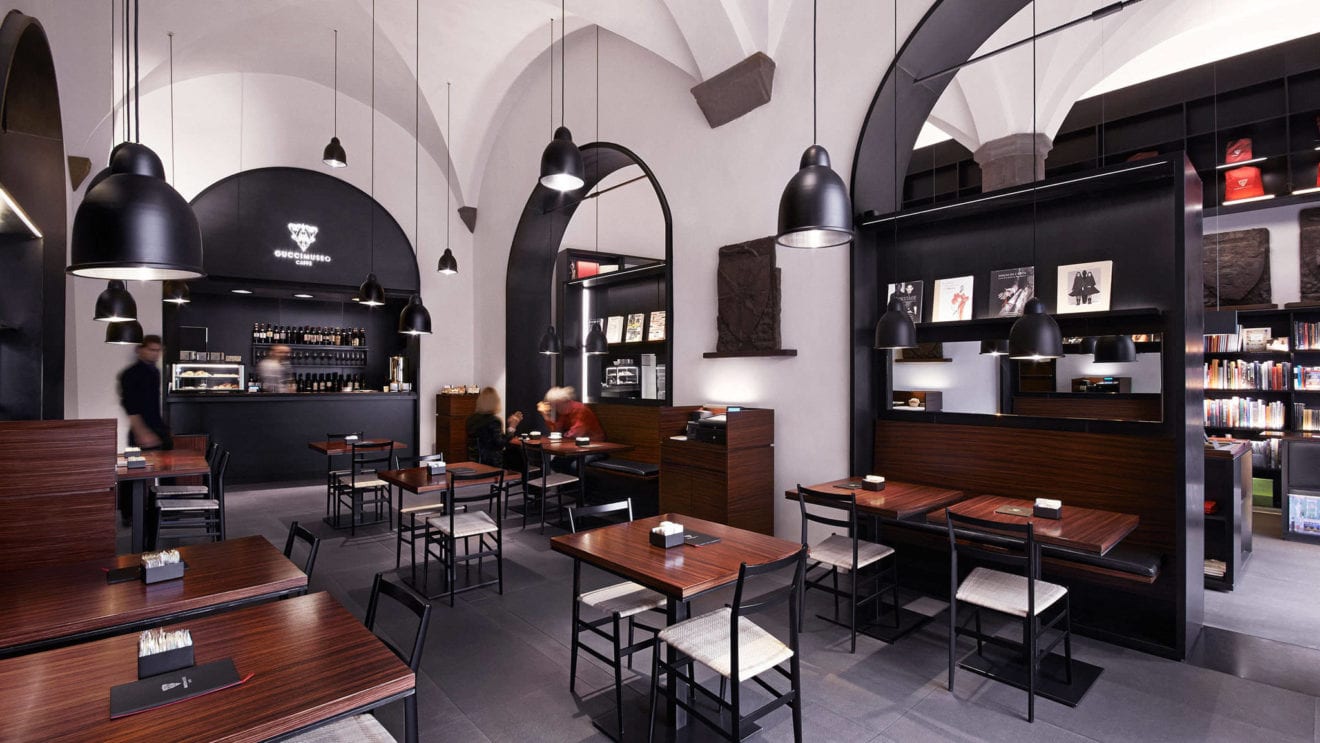
    Iconic fashion brand Gucci, for example, opened 1921 Gucci in Shanghai iAPM, which is owned by Sun Hung Kai Properties in the Pudong financial district of the city.

    “This is the luxury brand’s first fine dining restaurant in the world,” Maureen Fung Sau-yim, director of Sun Hung Kai Development (China), a unit of Sun Hung Kai Properties.

    The 360 square metres shop has received a good response since opening about three months ago, said Fung.

    The luxury restaurant is aimed to enhancing customers’ intrinsic aspirations which plays a role in luxury consumer behaviour. It would become part of a trend as mainland Chinese have been changing their shopping habits, she added.

    Adding an F&B component in stores enables luxury retailers to provide their consumers with a more complete experience in which they can shop, relax and socialise, said international property consultant CBRE.

    It cited another example in Cafe Dior by Pierre Hermé on the top floor of Christian Dior’s flagship store in Seoul. It helps transition the brand from being totally fashion-oriented to more lifestyle-driven.

    In its report known as The Future of Luxury Retail in Asia Pacific, CBRE said most major luxury retailers are now well established in the Asia Pacific region with mainland China and Hong Kong being two of the most penetrated markets at 89 per cent and 81 per cent, respectively.

    “However, the high growth period for luxury retailers in the region is gradually coming to an end,” said Henry Chin, Head of Research, CBRE Asia Pacific.

    Apart from food and beverage, CBRE has identified other emerging trends such as childrens’ wear and the growth of the affordable sector, anticipating that they will partially offset some of the negative effects caused by China’s slowdown and compensate for the loss of demand.

    As of 2014, Asia Pacific was home to 807 million people aged below 14, representing more than 20 per cent of the total population, offering an enormous opportunity for growth in this segment.

  • Thailand cost-effective destination for luxury brands

    Thailand cost-effective destination for luxury brands

    “During the last two years, more than 100 new global brands have entered Thailand. That has approximately doubled the number of stores [in this category] compared with 2012,” he said.

    The top brands are from Italy, Britain, Australia, Japan, Hong Kong, Singapore and Sweden.

    The cost of investment for luxury brands setting up in Hong Kong is about double that of Thailand, and Singapore costs 1.5 times as much. Costs here are also much lower than in many Western countries.

    Kriengsak said Thailand was also popular with international brands because of the size of the market, with a 70-million local population and tens of millions of tourists. “There are also more than 500 million people in the region. As such, top international brands are looking at expanding throughout the region from their stores in Thailand.”

    Another key reason for the fast growth in luxury brands’ presence here is the fact that tourism has recovered after suffering a huge drop last year during the political crisis. Meanwhile developers have new unique venues in place.

    Kriengsak said retail business would continue to grow during the rest of the year. However, he urged government to promote the country as a shopping destination as well as to assure foreigners that Thailand is a safe place to visit.

    “When The EM District, which is so far consists of The Emporium and EmQuartier, is fully opened, including the Bhiraj Tower, we expect 200,000 customers per day.”

    This year, it is forecast that visitors from other Asean countries will contribute Bt10 billion in sales, helping increase The Mall Group’s sales by Bt53 billion or 6 per cent from 2014.

    At EmQuartier, about 90 per cent of retailers have opened their doors. More world-class brands will open outlets soon: the first and only branch in Thailand of New York jewellery store Tiffany & Co; French jeweller Van Cleef & Arpels; separate Dior boutiques for women and men, Lady Dior and Dior Homme; Burberry; Emporio Armani; Issey Miyake; Tod’s; Canali; Patek Philippe; Rolex; and Hublot.

    The Mall Group plans to open a new shopping mall called Bluport in Hua Hin next year, followed by another Bluport in Phuket in 2018, and Emsphere in The EM District in 2019.

  • Asian cities top rankings for global brands

    Asian cities top rankings for global brands

    Tokyo is the world’s hottest market for retail expansion, attracting 63 new global brands last year as leasing momentum in core areas remained strong.

    In a list dominated by Asia and Middle East cities, Singapore ranked second with 58 new entrants, outshining Hong Kong which tied for fifth with Dubai (45 each) in the CBRE Group’s report How Global is the Business of Retail?

    Singapore’s new entrant count was double the number of 2013 – with entrants largely in the food and beverage sector, with apparel and accessories chains a little further behind.

    While Hong Kong finished fifth equal with Dubai on the list, it was still a respectable showing given CBRE surveyed 164 cities in 50 countries. In between Singapore and Hong Kong came Abu Dhabi and Taipei.

    For foreign retailers entering Singapore for the first time, the Shoppes at Marina Bay Sands ranked as their top choice f destination, largely due to the steady flow of affluent customers streaming to and fro the connected casino facilities.

    Globally, mid-range fashion retailers are the most active category looking at new market expansion, accounting for 21 per cent of activity, just a little more than luxury brands at 21 per cent.

    In Asia, luxury and business fashion retailers drove 24 per cent of the region’s business expansion, followed by coffee and restaurant retailers at 22 per cent.

    Meanwhile, the report found that the primary expansion targets for America’s retailers are Asia (41 per cent) Europe (33 per cent), and the Middle East and Africa (12 per cent).