Tag: LUXURY FASHION

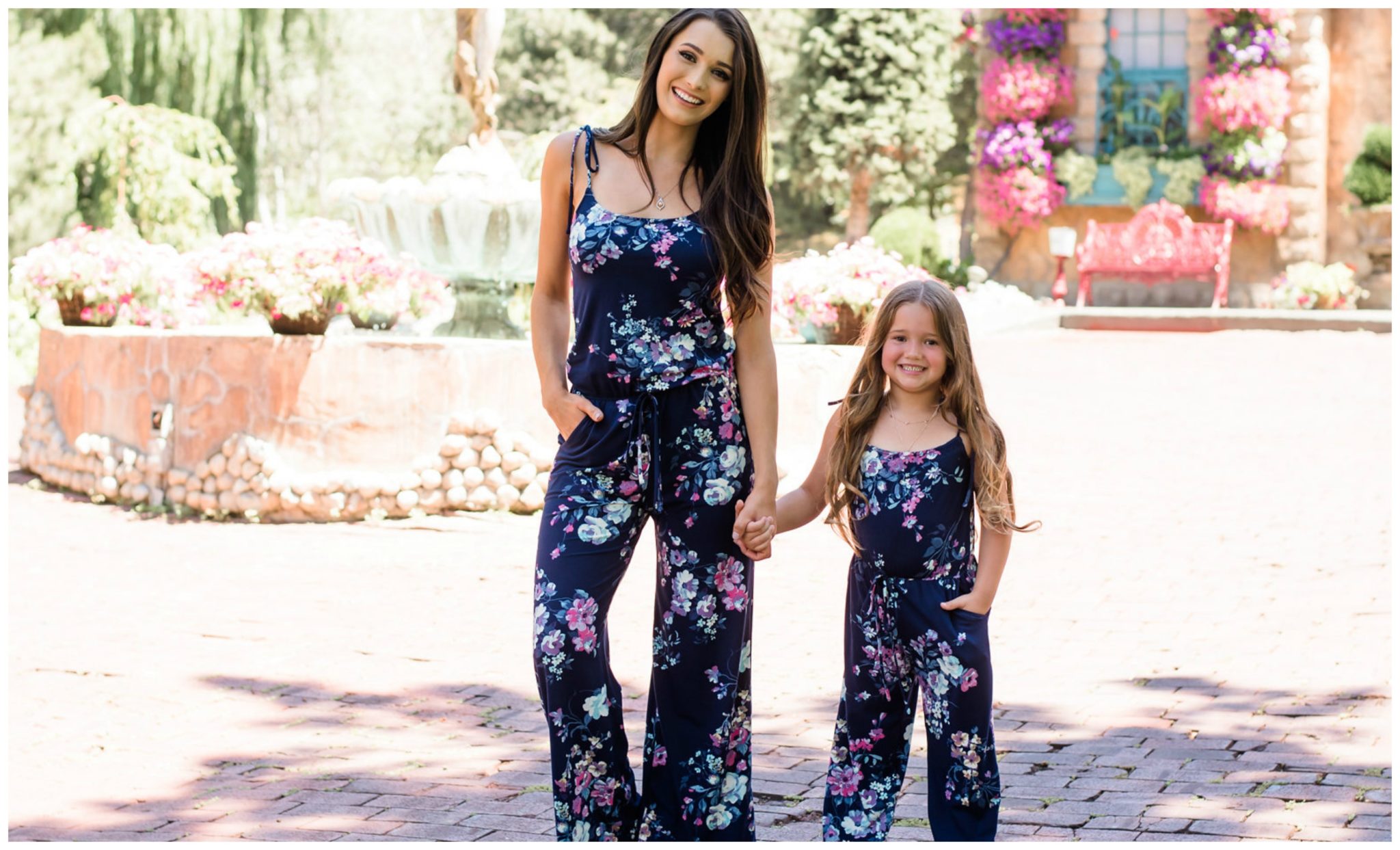
  • Matching mom-and-daughter outfit is a new trend

    Matching mom-and-daughter outfit is a new trend

    The luxury childrenswear market is forecast to reach $6.6 billion in 2018, up by 3.8 percent year-on-year, presenting ample growth opportunities as spending power increases and parents dish out upwards of $500 for a pair of miniature Gucci loafers to match their own.

    Brands from Gucci and Balenciaga through to Burberry have their own multi-million dollar childrenswear lines (the latter made £117 million in revenue in 2017, about $153 million) which largely shrink runway looks from ready-to-wear collections to fit young children rather than designing them from scratch, hoping to bank on a mother’s desire to wear matching pieces with her daughter.

    But putting celebrity power to one side, as Kim Kardashian West signaled that mini-me dressing is once again big business by stepping out in a matching outfit with her daughter, what else is driving this phenomenon that seems to reappear every few years?

    “Childrenswear is increasingly trend-oriented,” says Nathalie Christen-Genty, the founder of Paris-based Melijoe, the luxury e-commerce site dubbed “the Net-a-Porter for childrenswear.” “A few years ago, childrenswear was dictated by just a few kids-only brands and parents’ motivation to buy was first and foremost driven by practicality,” meaning pieces for children were designed specifically for them with a timeless and classic design in mind.

    In the recent past, matchy-matchy ensembles were considered passé, reminiscent of bygone eras like the 1960s when women would make garments for themselves and their children from the same piece of fabric.

    When luxury brands began launching childrenswear lines in the 2000s, “they didn’t think it would be big business,” says Giuliana Parabiago, a consultant at Pitti Bimbo, a key international childrenswear trade show where the latest trends are often discovered. They would use past-season styles that would be delayed by six months or a year, she says, but now childrenswear and ready-to-wear runs at the same speed. “This new generation wants to be young — and matching.”

    Chloé launched its children’s line in 2010 with licensee Children Worldwide Fashion (CFW), which also makes lines for Givenchy, DKNY and Little Marc Jacobs.

    For the current season, stand-out pieces include a velvet bomber jacket with horse embroidery and a pair of suede ankle boots — mini-versions of products creative director Natacha Ramsay-Levi sent down the runway.

    “The pieces which are obviously Chloé, [for instance] the horse pattern, tend to perform better,” says Geoffroy de la Bourdonnaye, the brand’s chief executive who credits the success of mini-sized versions to the fact that some “mothers take pride in seeing their daughters look like themselves” and that others want “to share the brand’s DNA of being ‘free’ with their children.”

    “The [childrenswear] business has consistently grown for the last eight years,” he adds. “The countries that spend a lot of money to dress their kids tend to be Russia and the Middle East, along with China. Countries in Latin America also invest in their kids.”

    While Chloé’s relationship with its licensee means there is constant contact with the ready-to-wear design studio and the capacity for CWF to select the runway pieces it wants to adapt for children, Dolce & Gabbana’s approach was to take its line in-house allowing it to have complete control like Ralph Lauren, Burberry and Dior Baby who also go it alone.

    However, such arrangements are still unusual; most luxury brands sign with a handful of specialist licensees. Simonetta produces childrenswear for Balmain and Fendi Kids; Kidiliz Group has the license for Kenzo Kids, Paul Smith and Levi’s Kids; and Brava Kid takes care of the brands under the OTB umbrella which include Diesel, Marni and Trussardi Junior.

    The reason that the license route is so popular is that childrenswear requires an expert hand since it is not as simple as it may seem to scale down a garment pattern to fit the body shape of a child. The specialist experience on offer by the licensed manufacturers means they also understand intuitively how to make an outfit appropriate for children.

    The movement has also helped drive childrenswear into the same trend cycle as womenswear as brands respond to demand by bringing out more novelty.

    “Children’s lines [now] have their long-awaited collections as much as the ready-to-wear for the parents,” says Emi Ozmen, the mother of one of the child vloggers behind Silver and Lux.
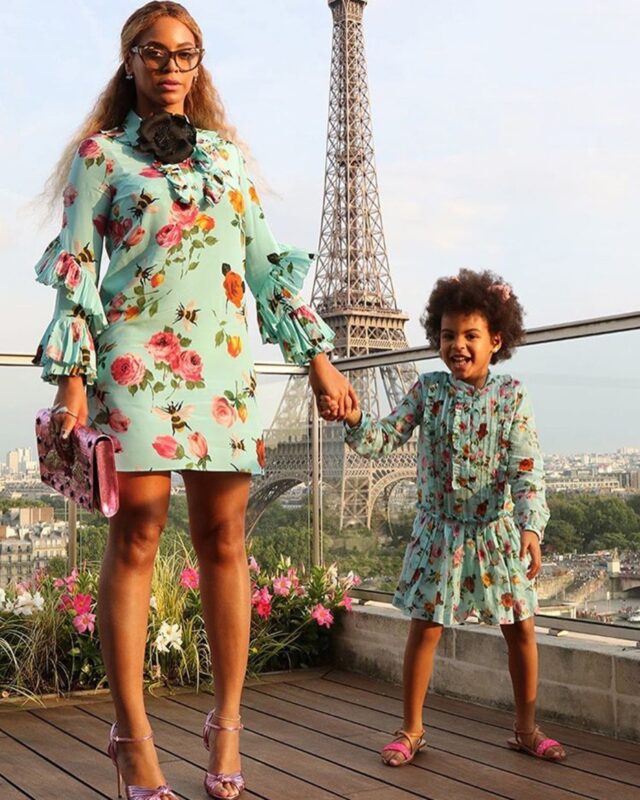
    Source: @beyonce

    Dolce & Gabbana launched a four-week kids pop-up at Net-a-Porter, including a £1,100 tiered fil-coupé silk-blend dress for ages two to six, a £775 satin-trimmed brocade suit for ages two to five and an array of handbags and footwear.

    “When [the mini-me trend] is executed well, it’s incredibly fun and expressive,” says the site’s global buying director Elizabeth von der Goltz. “It’s performed particularly well in the Middle East.” Having launched Gucci and Dolce & Gabbana capsules, Net-a-Porter’s next collaboration is with Moncler for miniature-sized puffer jackets.

    However, not everyone sees the trend as a harmless way for kids to bond with their parents; some find it incredibly uncomfortable and question the subtle messages it seems to underscore.

    “Two troubling phenomena converge in this mommy-and-me thing,” said Natalia Mehlman Petrzela, an associate professor at the New School in Manhattan. “There’s the infantilisation of women to look like little girls and, on the flip side, [the pressure] for young girls to always look older— to wear bikinis and crop tops.”

    Some mini-me dressing is criticised as a gimmick; there is a fine line between matchy-matchy dressing and ill-fitting clothing to be worn once and thrown away.

    “It’s clever marketing and appeals to emotional values,” says Jane Lewis, the founder of womenswear line Goat.

    In August, the brand launched a mini-me line of dresses for girls with the design remaining unmodified bar reducing the size — the crepe dresses have a timeless feel to them. “Again, it depends — I’m not going [to do] a pink bomber jacket. There’s going to be a distinction between viable mini-me childrenswear and the theatrical element.”

    Foraying into theatre is something SemSem founder Abeer Al Otaiba is also weary of.

    The Emirati entrepreneur launched the brand after seeing a gap in the market — there was an absence of stylish yet understated occasionwear for mothers and daughters. “It’s more of a lifestyle, and mothers in [markets like Russia and the Middle East] enjoy elegant pieces for themselves and their daughters all within one brand. It’s unique to find a brand that caters to both,” she says.

    SemSem’s Spring/Summer 2019 collection features matching lamé mother-daughter dresses and shirt dresses made from the same cotton fabric. Rather than shrinking women’s dresses to children’s size, Al Otaiba prefers to play around with fabrics and silhouettes.

    A far cry from Kardashian’s more literal matchy-matchy approach.

    Yet, social media and Instagram influencers continue to be the main driver of mini-me mother-daughter dressing.

    While the trend has long been popular in the Middle East and Russia, it has rapidly expanded to the US thanks, in part, to celebrities like Beyoncé, whose Instagram in matching Gucci with her daughter Von der Goltz cites as an example of celebrity culture popularising mini-me.

    Indeed, mommy-and-me looks drive likes and engagement, becoming good reasons for multi-brand retailers such as The Tot, a Dallas-based childrenswear store founded by Nasiba Adilova, to approach companies and ask for small-sized pieces of womenswear best-sellers.

    “The era when childrenswear was entirely functional is over,” says Christen-Genty. “It’s now firmly in the territory of fashion.”
  • The evolving Indian luxury market

    The evolving Indian luxury market

    India – every year is a growth story, despite complaints and gripes, the market grows! In the past 5 years, India has seen the beginning of a new cultural emergence from the prospective of retailers, manufacturers and the customer and consumer. The span 2017-2020 appears to be the decade quarter of evolution. There are number of small yet critical factors which clearly demonstrate the decade quarter of evolution that has continued in India and more importantly the way the luxury fashion market is developing on a fiscal and cultural prospective.

    There was a time when purchases in fashion were either need based or one off aspirational purchases. As we have seen, especially since 2015, fashion purchases have evolved to a more desire and aspiration based activity. Across the luxury pyramid 4 categories are seen as more than a basic need. The items worn reflect the consumer’s personality, and is perceived by them as a status symbols. With the growth of international influence and more correctly put, the emergence of a pan-global target audience, each brand, regardless of its Tier, price and country of manufacturing, represents an aspirational value.

    Its not just international brands we are referring to, the growing demand and redefined allocation of flexible income towards fashion, along with the newly restored pride in ‘Made in India’, has opened the doors for domestic brands today. With three of the largest department stores launching their own private labels, while not all are a luxury to the better travelled among us, nearly 28 percent of retail clothing sales from structured retail today comes from the department store segment including Shoppers Stop, Pantaloons and Westside among others. These department stores have effectively offered home grown alternatives to international high street fashion brands such as Zara and H&M. With Westside planning to expand beyond Indian borders, the coming years could very well give a much needed impetus to manufacturing in India.

    The currency advantages, higher quality of manufacturing and lower manufacturing costs in India, provide a key advantage to all brands that are manufacturing in India and selling globally today.

    KK Shirts launched in 2014, is a small outfit selling a limited run of 1,000 shirts globally every year, proudly ‘Made in India’, matching the quality of ready-to-wear shirts provided by far more established European brands. The shirts are priced modestly between Rs 6,000 to Rs 18,000 (45 GBP to 200 GBP) whereas a big boxed store would sell a similar quality and care for at least 2.5x, using sustainable textiles and environmentally friendly dyes and prints. The brand, in 2017, was sold out of all its shirts in a record 8 months period. It’s surprisingly good for a brand which neither banks on social media nor advertises, but just relies on the word-of-mouth from its customers and targets consumers who want a shirt from a brand which is different and cares as much about the process and the end creation as much as the consumer does about the taste of the food they eat.

    International brand launches are not to be left behind, while we have H&M open up across the country in the premium affordable market, we have also seen brands such as Ted Baker, which back in London, is a common department store and non-luxurious brand, in India’s newest luxury mall, The Chanakaya. Ironically ultra luxury or haute luxury niche shoe brand, EL Chaussure decided that malls in India are not yet luxurious enough to match their other stockists such as Harrods in London and chose to continue to offer their designed-to-desire shoe service online and through a partnership with Excedo Luxuria in India. They allow customers to design and order their own shoes online and then have them hand made by craftsman in Great Britain, Italy and Spain.

    The latest launches clearly show the consumer and customer of today is ever willing to look at newer brands and they are open to new brands, both international and domestic, which can provide value for money (that’s different from being cheap), support in defining a social status, is globally appealing and most importantly, is fashionable and in season.

    With the increase of foreign investment as well as local investment, local businesses infrastructure continues to develop driving down the mid-term cost of operations, logistics and even top level manufacturing costs.

    Given the glocal opportunity, e-commerce shopping continues to grow specifically when looking at the Omnichannel strategy. Investments in retail will continue largely focused on providing the customer an unbeatable personalised customer service. It was estimated that Rs 2,00,000 crore was invested in retail in 2016 and by 2020 its expected to double. With core and inter-market consolidation such as Reliance Brands’ acquisition of 40 percent of Genesis Luxury, it is making way for the original founders to pursue wider opportunities and growth, and giving Reliance the ‘influence’ to align benefits and market strategies.

    With investments being made in retail, we can expect the contribution of Tier -II and -III cities’ towards total luxury fashion spending increase, though in our experience, many key buyers are driven by the psychology of buying the best and buying better than those in the metropolitan cities, a higher status symbol and far better value for money. This mind set gives way to a list of haute luxury brands such as Swiss Luxury, Laurent Ferrier, along with higher end industrial luxury brands such as Kiton, a luxury made-to-measure clothing from Italy. These niche labels entice new customers and educate them in their own brands’ prospectives; without them being over exposed to Massitige and mass luxury fashion brands advertising such as Louis Vuitton or Christian Dior.

    The least obvious but one of the most critical evolutionary points, is the definition of luxury fashion. Fashion, till recently, was limited largely to clothes and immediate clothing accessories. As time progressed, categories such as shoes, jewellery, watches and accessories have been included, in the truest term. Today, the luxury fashion market includesa full wardrobe from innerwear to watches like Versace or the more niche Lytt Labs. With a variety of options and each design bearing in mind the modern day buyers’ wardrobe, lifestyle and functionality; the interchangeable straps on a Lytt Labs represents this exact mindset, with over 300 different straps available, from black leather to green, red and blue tartan, all changeable within a minute at home.

    Overall, the immense growth charted for the luxury fashion segment in India is nothing short of exciting; but with all enticing opportunities come challenges. There are not in surmountable challenges though. Consolidation is a wise move and I would expect to see further mergers and some inter-market investments reducing the competition domestically and increasing competition for international brands, providing the end customer and consumer with better service.

  • China, Millennials and Men are revitalizing luxury retail

    China, Millennials and Men are revitalizing luxury retail

    Attracting Millennials has been key for retailers, but the consumer population, characterized by rapidly shifting expectations in light of digital transformation, has remained elusive to many traditional retailers and buying categories, resulting in piles of literature on how to appeal to this influential group.

    And recently, marketers have all the more reason to focus on Millennials: they are integral in luxury retail’s comeback.

    The 16th edition of the Bain Luxury Study found the luxury market grew by a whopping 5 percent to €1.2 trillion globally last year. Luxury sales grew in a broad array of industries including cars, food and wine, travel, hospitality, clothing, and accessories – and much of the growth is thanks to Millennials.

    Despite the comeback, it’s clearly not your mom’s luxury shopping climate. Jewelry brands are still working to find their stride with younger cohorts and high-end department stores are scooping up Amazon employees to focus on digital growth. Here are some pointers for thriving as a luxury brand in today’s retail environment.

    According to the study, while the boom in luxury sales is primarily led by economic growth in China, demand for personal luxury items is also increasing worldwide. Japan, Europe, and the U.S. are standout markets for luxury retailers, growing at 4 percent, 6 percent and 2 percent, respectively. It is worth noting that tourism had a part in luxury’s rebound: “Globally, the share of personal luxury goods purchased by Chinese nationals reached 32 percent in 2017.”

    The study focused largely on Millennials as a key demographic, but also on the “millennialization” of luxury shoppers, referring to a shifting consumer mindset. In addition to Millennials, Gen Z and men are contributing to the sector’s recovery, and brands are taking notice, adapting to changing customer profiles.

    Menswear has become a focus area for high-end fashion brands. Conglomerates like LVMH (including the brands Louis Vuitton, Bulgari, and Dior, among others) and Kering (including the likes of Gucci, Yves Saint Laurent, and Girard-Perregaux) have focused marketing efforts on mens fashion. Louis Vuitton, for example, is exploring high-end streetwear to tap the male Millennial zeitgeist, and Saks Fifth Avenue says their menswear has gone “from just category addressing to…designers looking at how they’re going to wardrobe a man’s lifestyle,” according to Saks Fashion Director Roopal Patel.

    Moreover, to appeal to younger cohorts, many luxury brands have expanded their product lines to include footwear, hoodies, purses, t-shirts and other more affordable items. Understanding the key demographic purchasing trends will allow retailers to tap into new segments and capitalize on timely opportunities.

    According to Valérie Moatti and Céline Abecassis-Moedas of ESCP Europe Business School, the luxury retail sector has been uniquely reluctant to embrace digital technology. But 2017 saw some luxury brands, including Chanel, successfully embrace a social media presence.

    Although Chanel was one of the last luxury brands to sell online, they now have a Paris-based Instagram team churning out 3-4 posts per day. The success of their Instagram presence earned them 9.6 million new followers last year, making them the platform’s most followed luxury brand. Over half of Instagram’s 1 billion users are under 35, making it a prime platform for reaching the luxury-purchasing cohorts, Millennials and Gen Z.

    “Instagram is well-suited to fashion brands to whom the visual and ‘community’ dimensions are essential,” Moatti and Abecassis-Moedas write. “This generation has a different relationship to brands, placing emphasis on use rather than possession and proving more sensitive to the power of the image.”

    Aligning with meaningful influencers can be effective, as well. Yves Saint Laurent struck social media gold last year by partnering with influencers to promote their fragrance, “Y.” Their strategy focused less on their own social accounts and more on product placements with edgy and notable personalities. The campaign earned them a 69 percent boost in followers and over $16 million in earned media value.

    Of course, any one campaign is not enough to build a relationship with customers. Research by Deloitte shows that Millennials are listening to multiple channels at once, making an omni-channel approach to communication and branding all-the-more essential.

    In-person shopping still has an appeal, particularly with younger cohorts and luxury shoppers. Deloitte’s research shows 43 percent of American Millennials still prefer to buy luxury items in person. They cite the abilities to touch, feel, compare, and try products as key benefits.

    The brands that are making physical retail work for them are using an experiential approach. Ibrahim Al-Haidos, founder of luxury handbag brand Fursan, built a storefront with an environment he describes as being dedicated to opulence and consummate beauty. “We want people to feel special when they enter our store,” Al-Haidos said. “The environment we have created is one of high luxury. It’s important that people begin to feel luxurious from the moment they enter our store.”

    The notion of inviting customers into aspirational lifestyle is common among successful luxury retailers. Many are looking less like traditional storefronts and more like lifestyle touchpoints, sometimes reminiscent of an open house or a ‘permanent pop-up.’ Inviting customers to participate in a lifestyle defined by a brand’s ethos allows them to actually contribute to a brand’s narrative, blurring the line, and strengthening the relationship, between retailer and consumer.

    Partnerships with other brands and influencers that reflect a retailer’s particular ethos can also be effective. Take Ferrari, for example. Their brand aligns closely with Formula 1 racing, surrounded by those passionate about high-performing cars.

    Or look at Max Mara’s partnership with street artist Shantell Martin. The pair collaborated on limited edition sunglasses, using sunglass frame-shaped cut-outs from a custom piece of art by Martin to create a one-of-a-kind product for each purchaser. Reflecting Martin’s whimsical and uplifting stream-of-consciousness style that focuses on the interplay of audience and creator, the limited edition pieces invited their purchasers to effectively participate in the art.

    “I’m always looking for great non-traditional canvases to spread my message out into the world to a new demographic and in a new way,” says Martin. “This collaboration was a great example of that done well.”

    The partnership shows the brand’s acute awareness of what their customers like outside of Max Mara, enabling them to capitalize on the sentiment of Martin’s art and alluding to a broader narrative in which they are a key fixture.

    The luxury retail sector does not look like it did in the days of Elizabeth Taylor.

    But new channels are opening and new markets emerging to support high-end retail.

    Creative approaches to social media, an innovative brick-and-mortar presence, and meaningful lifestyle partnerships will put your luxury brand in the coveted crosshairs of young spenders.

    Millennials may be a tricky market in their ad-proof armor, but the luxury brands who can strike the right chord will find promising returns.

  • Why luxury will still need brick-and mortar

    Why luxury will still need brick-and mortar

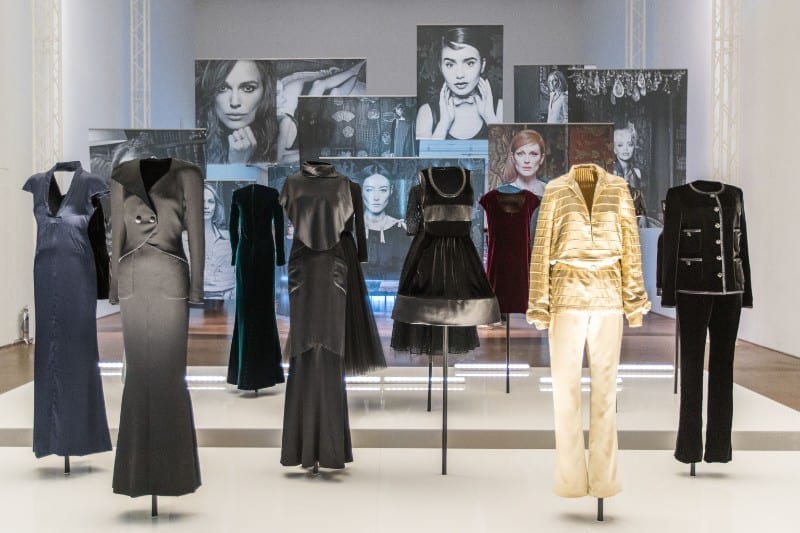
    Guests who visited Chanel’s Mademoiselle Privé at PMQ in Hong Kong got more than they bargained for.

    The luxury maison took its exhibition to the next level, blending augmented reality (AR) with physical experience. With the help of a virtual tour app on the smartphone, the many icons of the luxury maison, from the No.5 fragrance to the couture ateliers, were brought to life.

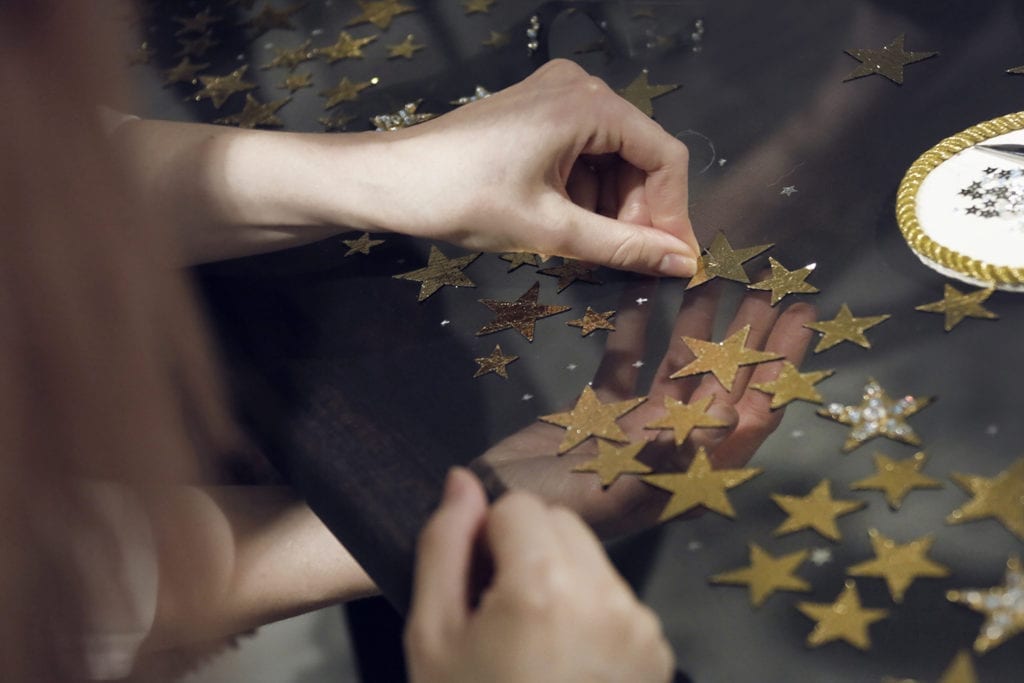
    Apart from exhibits that highlighted the maison’s heritage and savoir-faire, exclusive workshops were held to allow guests to try their hands at Chanel’s prized know-how, such as embroidery and high jewellery making.

    “Chanel is about more than a [mouse] click,” says Bruno Pavlovsky, the brand’s president of fashion. “Despite our investment in e-services for our customers, we still need to have the physical touch for them to understand the brand, to see and try the products. For us, all the digital developments and experiments are [designed to provide] better services for our customers in the boutiques.”

    While luxury brands continue to invest in digital storytelling and services, they are not forgetting about the physical experience either, now even more so than ever. They are not only focusing on retail spaces but also institutions to promote heritage and savoir-faire.

    Chanel’s Mademoiselle Privé exhibition, which travelled from London’s Saatchi Gallery to D Museum in Seoul, is hardly the only example. The maison is launching a Gallery Gabrielle Chanel exhibition space in Paris’s prestigious Palais Galliera fashion museum as well as a permanent location that will bring the house’s metiers d’art ateliers from Maison Lesage to Lemarié under one roof, expected to open in 2020.

    Apart from Chanel, other heritage houses are preserving their legacy through permanent institutions to reach existing and potential customers.

    Pavlovsky agrees on the importance of physical experience when it comes to branding.

    “We are not talking products but the values of Chanel and what makes the brand unique, which is more difficult than talking about the shoes or bags,” he says. “There’s nothing to buy at the exhibition. It’s for people to see, learn and better understand the brand. We believe that it’s quite important that in our key markets, we can share and offer that to our customers.”

    Even in their new retail concepts, brands are integrating their heritage, DNA and patrimony into the designs. Louis Vuitton’s Place Vendôme flagship store – restored from a heritage building circa 1714 and designed by Peter Marino – features more than 30 works by 22 artists ,including a 2015 portrait of a young Louis Vuitton by Yan Pei-ming.

    The Boucheron flagship store, also in Place Vendôme and under renovation, will be paying tribute to the house’s rich heritage.

    “We are renovating the full building in a patrimonial way,” says Hélène Poulit-Duquesne. “The objective is to redo it as if it was being built at the end of the 18th century. It’s our family house.”

    The flagship store, which is set to open doors in September 2018, will include a salon dedicated to hosting educational gatherings.

    The association between arts and fashion has been widely embraced by luxury maisons and many highlight the connection with permanent art spaces and cultural centres, such as the Fondation Louis Vuitton, which opened in Paris four years ago, as well as Fondazione Prada in Milan, which opened its new permanent location in 2015.

    Now luxury brands are also lifting the curtains of their ateliers to put their prized artisanal skills in the spotlight by hosting workshops and classes for customers to get a taste of their craftsmanship.

    Chanel’s Lesage workshops, which allowed fans to learn basic embroidery as part of the exhibition programme, were a sell-out. The pictures and posts on social media platforms proved how successful the classes were.

    While Chanel’s only hosting the classes during exhibition periods, Van Cleef & Arpels has taken the mission further and established L’ecole in Place Vendôme, Paris. Since 2012, the permanent address has been the venue for the brand to host a variety of classes on subjects from the history of jewellery, gemmology as well as savoir-faire.

    The Parisian school made its overseas debut in 2014 and hosted classes for fans in Hong Kong and came back for a third run just last year due to overwhelming results. “We’ve been asked by students to bring it back,” says Nicolas Bos, CEO, and president of Van Cleef & Arpels. “These programmes need some time and repetition to establish. So when we take them abroad, the mindset is that it’s going to last and develop over a long period of time. It’s really about education.”

    It is important to show the rare craftsmanship behind the brand, Pavlosky adds. “Because it’s difficult,” he says. “You cannot  be a good craftsman without the experience. In this digital world, it’s important to remind everyone of that.”

    Digital integrations might be how luxury brands do business today, but physical experience, be it in brick-and-mortar stores or for brand communications, has not been forgotten. As the aptly coined term “phy-gital” suggests, the future of luxury experience might require both experiences going forward hand-in-hand.

    “Both physical and digital aspects are really important, but when you buy a €2 million
    [HK$19.1 million] necklace, you would want to have a full ceremony,” Poulit-Duquesne says.

    Bos also believes that digital and physical experiences complement each other.

    “Definitely the digital world provides fantastic opportunities but we create jewellery that is meant to be experienced, touched and worn. So we really believe in physical experience. The more you offer on digital experiences, the more you need to develop physical experiences to match.”

  • Chinese consumers crave premium products

    Chinese consumers crave premium products

    Chinese consumers are increasingly craving premium-tier products to underscore their success, says Nielsen China.

    The market research company defines premium-tier products as items that cost at least 20 per cent more than the average price for the category.

    The global information company’s retail sales data, which covers major retail chains, shows that factors on both the supply and demand side are driving the growth of the premium segment in China.

    And in a Nielsen survey, 56 per cent of Chinese said they buy premium products in order to feel successful or show their success to others.

    Also, 48 per cent of consumers said they are willing to pay a premium for electronics, followed by clothing and cosmetics (both 38 per cent).

    Many consumers have greater buying power than ever before, with purchasing power growing from 7 to 9 per cent annually in China.

    “With increasing affluence, consumers are craving products that offer an enhanced, premium experience,” says Nielsen China MD Vishal Bali. “Beyond basic needs and benefits, Chinese consumers are making purchase decisions based on how products make them feel.”

    In its study, 65 per cent of online respondents in China said they will try a new and innovative premium product based on the recommendations of friends and family. Additionally, 60 per cent said  of respondents said they are “very willing” to pay for premium products with high quality and safety standards.

    Electronics favoured

    Chinese consumers are most willing to pay a premium for electronics, says the study. Globally, 42 per cent of consumers say they are willing to pay a premium price for electronics, while in China the number reaches 48 per cent.
    Apart from electronics, 38 per cent of respondents in China said they are willing to pay for a premium offering in clothing and cosmetics. Globally however, 39 per cent are willing to buy premium clothing while only 33 per cent say they would buy a premium offering in cosmetics.

    Other key categories where Chinese consumers are willing to pay a premium include dairy products (37 per cent), cars (32 per cent), oral care (31 per cent) and meat and seafood (30 per cent).

    Status is also a more important consideration for consumers in China compared to the rest of the world, with 54 per cent of respondents saying they buy premium products because these items show other people that they have good taste. Premium products are also regarded as an important indicator of accomplishment, with 56 per cent of Chinese respondents saying they buy premium products because it makes them feel successful or (also 56 per cent) shows other people that they are successful.

    “Emotional motivation is a key factor for Chinese consumers, and we see premium products driving this trend,” says Bali. “Consumers want unique experiences they can share with their friends. They want products that express their individual taste while also projecting a positive image of success and status.”

  • Balenciaga opens Osaka pop-up

    Balenciaga opens Osaka pop-up

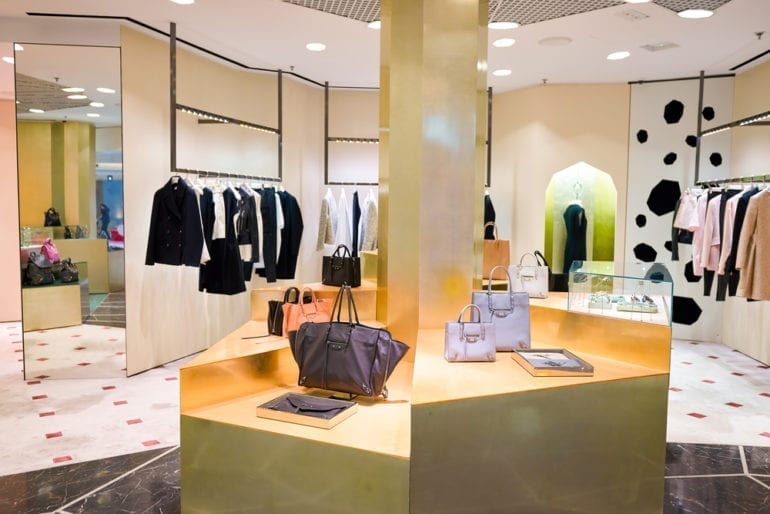
    French fashion maison Balenciaga has opened a new pop-up store in Osaka, adding to the five standalone boutiques already retailing in the Japanese city.

    The Parisian label has its sights set on pushing its newest ‘it’ handbag – the Bazar Shopping Bag – onto the Japanese clientele.

    The new Osaka pop-up shop will house the original Bazar Shopping from the latest collection, as well as holiday and resort versions. Also for sale are pouch and wallet versions of the bag.

    The colourful tote bag, designed by Demna Gsvalia, featured in Balenciaga’s Autumn/Winter 2016 collection. The Bazar Shopping Bag — already a hit with fashionistas such as Pernille Teisbaek, the co-founder and creative director at Social Zoo Direct — is part of Gvsalia’s first accessory line since taking the helm of Balenciaga this year.

    Despite being compared to a heavy-duty laundrette carryall, the Balenciaga accessory retails for a whopping £975 per unit and has been hailed a best-seller on major fashion e-platforms Net-a-Porter and MatchesFashion.com.

    Balenciaga is known for ‘it’ bags, since the Arena handbag, designed by Nicholas Ghesquire over ten years ago.

    The pop-up shop is located within a portion of the Hankyu department store in Osaka. It is open from now until the end of December.