Retail News CRM

Tag: luxury goods

  • Massive fake luxury goods ring shut down in Vietnam

    Massive fake luxury goods ring shut down in Vietnam

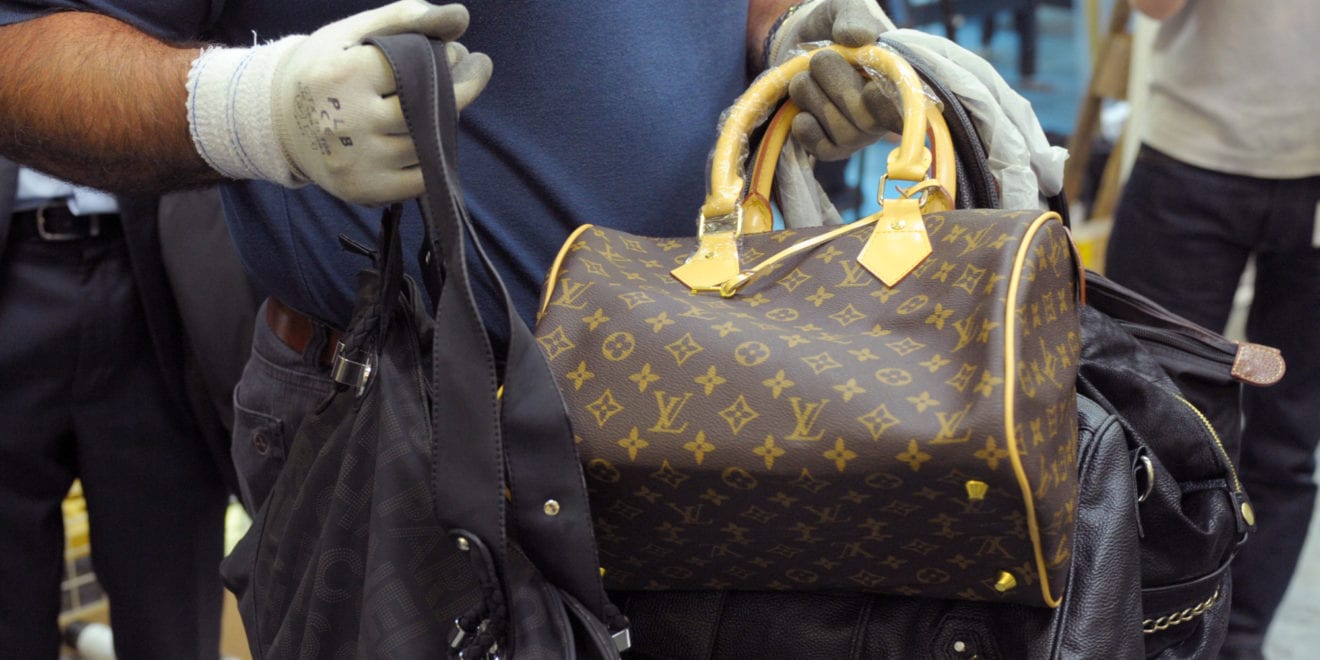
    Government authorities have raided a warehouse storing thousands of fake luxury goods in Lao Cai City, northern Vietnam, which were being sold online.

    The 10,000sqm warehouse was divided into several areas including rooms for selling fake luxury goods via live-streaming on Facebook. Most of the items are copies of major brands including Gucci, Chanel, Nike and Adidas.

    One of the employees from the warehouse admitted that there were more than 40 people processing orders during the live-streaming and some 1000 packages being shipped each day.

    Although the exact number of fake goods smuggled from China has yet to be confirmed, authorities discovered the ring sold more than 90,000 products each month at a profit of around US$432,000.

    An official said the ring was professionally organised and took advantage of online platforms for both wholesale and retail as online shopping has become increasingly popular in Vietnam.

  • Global luxury goods sales drop: Bain

    Global luxury goods sales drop: Bain

    New data from Bain & Company shows global luxury goods sales will struggle to maintain growth, as the US-Sino trade war and other geopolitical events impact on consumer confidence.

    In June, Bain said the personal luxury goods market was “on a tear” this year and would grow by between 6 per cent and 8 per cent at constant exchange rates to reach €276-281 billion. It said the market could reach €390 billion globally in sales by 2025.

    But now, Bain has released a more tepid projection of €260 billion and a growth rate of 5 per cent this year.

    It has pared back its 2025 projection of personal luxury goods sales to €320-365 billion, slashing €35 to €70 billion off its forecast in just five months.

    And it cautioned that even this figure may be under threat saying “socio-political issues, commercial policies, and potential short-term soft recessions could make this road to growth a bumpy one in the short term”.

    The Bain & Company Luxury Study was released in Milan in collaboration with Fondazione Altagamma, the Italian luxury goods manufacturers’ industry foundation.

    In June, Bain said Mainland China is expected to account for the lion’s share of growth this year. “We forecast this market to grow by 20-22 per cent … Brands are learning how to cater to local consumers, often young and heavily influenced by social media.”

    China kept close to its projections, rising 20 per cent, albeit with the year still not over.

    “Chinese consumers are leading the positive growth trend around the world. Between 2015 and this year, their purchases in Mainland China contributed twice as much growth as their spending abroad. Their share of global spending has continued to rise (now estimated at 33 per cent of global luxury spend, up from 32 per cent in last year), while the share of Mainland China has also risen to 9 per cent (up from 8 per cent in last year). In Mainland China, luxury sales grew 18 per cent at current exchange rates to €23 billion (20 per cent at constant exchange rates), driven by rising demand rather than by price increases,” the report said.

    Claudia D’Arpizio, a Bain partner and lead author of the study, said luxury purchases in Japan softened slightly this year, pushing brands to find new solutions to bring consumers back to stores. However, retail sales still grew at 3 per cent at current exchange rates to €22 billion. “Increased consumption from tourists in Japan is prompting brands to rethink their distribution models.”

    Across the rest of Asia retail sales grew 7 per cent at current exchange rates to €39 billion, due to dynamic growth in South Korea, driven by strong local consumption. Brisk growth in other Asian countries – Singapore, Thailand and Taiwan – also contributed while Hong Kong and Macau benefitted from Chinese purchases.

    Europe lagged in 2018 due to a strong Euro that impacted tourists’ purchasing power. Local consumption was positive overall, despite mixed country performance, helping to boost retail sales 1 per cent at current exchange rates to €84 billion.

    The Americas grew 5 per cent at current exchange rates to €80 billion. “A positive US economy boosted disposable income and overall luxury spending from locals, even as brands remained wary of continued economic prosperity,” the report said. “However, the strong dollar impacted tourists’ spending from Asia and Latin America. Canada and Mexico were strong players in the region, while political uncertainties derailed Brazil’s performance.”

    In other areas, there was nil growth, holding at €12 billion, mainly due to stagnation in Middle East brought on by a recent government spending restriction.

    Luxury online

    The retail channel grew 4 per cent this year, with three-quarters coming from like-for-like sales growth. Wholesale channels grew at only 1 per cent, brought down by high-end department stores still trying to recover, and a slow-down among specialty stores facing tough competition from online.

    Luxury shopping online continued to accelerate this year compared with physical channels, growing 22 per cent versus 2017 to €27 billion.  The US market made up close to half of online sales – 44 per cent– but Asia is emerging as the new growth engine for luxury online, slightly ahead of Europe. Accessories remained the top category sold online, ahead of apparel; beauty and hard luxury (jewellery and watches) were both on the rise.

    Brands are catching up to other online players, comprising 31 per cent of sales, compared to e-tailers (39 per cent) and retailers (30 per cent).

    “New technologies are at once enriching the online and mobile shopping experiences, while potentially putting role of physical channels at risk,” said Federica Levato, a Bain partner and co-author of the study.

    “The luxury store-opening path is slowing down, leading to channel consolidation in the future. Brands must therefore rethink their physical channels and evolve their role from point-of-sale to point-of-touch, and use new technology to enhance customers’ in-store experiences.”

    Luxury consumers getting younger

    The report concluded that younger generations are becoming increasingly more important luxury brands. This year, Generations Y and Z contributed 100 per cent of the total luxury market growth, compared with 85 per cent last year. Bain predicts Generation Z, which today comprises just 2 per cent of the market will account for 10 per cent of it in 2025.

  • Desire for cheap luxury drives counterfeit market in Vietnam

    Desire for cheap luxury drives counterfeit market in Vietnam

    Le Thu Trang recently switched from a Gucci bag to a Prada design for a fresh look, but the decision did not put a massive dent in her bank account.

    Both of her bags are counterfeits and cost 20 times less than the originals that can be found in the stores of luxury Italian brands.

    “I like to carry Gucci and Prada bags, but buying luxury goods is not easy because they’re expensive and fashion trends change quickly,” Trang said. “In that respect, fake bags are very appealing. They’re nice and quite cheap.”

    Trang’s case illustrates a trend among consumers, especially young people in Vietnam, who like buying fake products ranging from eyewear and shoes to garments and handbags. Their desire for cheap luxury has helped counterfeiters thrive in the country.

    On the streets of Hanoi and in some of its glistening air-conditioned malls, countless fake Hermes and Louis Vuitton handbags, Rolex watches and Gucci fashion accessories are openly on sale.

    Consumers who want an expensive logo or style can pick up goods for surprisingly cheap prices, even though they know the goods are illegal and might be confiscated by international customs agents who can impose heavy fines.

    Wealthy businessmen, savvy importers and even enthusiastic housewives are looking to make a profit from selling fakes from bricks and mortar stores or online, despite efforts to stop intellectual property right infringements.

    Retailers are also unconcerned about selling fake goods. “This is a knock-off, but no problem,” a woman said, pointing to a white polo shirt emblazoned with a Louis Vuitton logo.

    “Why should I have to worry about the police? I don’t sell drugs. I didn’t steal this shirt,” she said in a store on Hanoi’s Hang Ngang Street. “Lots of people here sell fake goods like me.”

    In a nearby handbag store, fake products with Chanel, Gucci and Louis Vuitton logos on them are on sale for $20-50.

    “The originals cost thousands of U.S. dollars,” the dealer said, convincing customers that her handbags look like the genuine article. “Same design. Same material. This one is made in China.”

    Fake products such as garments, footwear, eyewear, shampoo, body lotions and pharmaceuticals can be found all over Vietnam, from high-end shopping malls to street-side markets.

    Most of the knock-offs are smuggled in from China, Phan Hoan Kiem, head of the Market Surveillance Agency in Ho Chi Minh City, said at a recent meeting.

    However, some counterfeit products are made in Vietnam. Many households in Lich Dong Village, Thai Binh Province produce glasses and label them with famous international brands such as Ray-Ban, Gucci and Chanel, while Thao Noi Village in Hanoi is notorious for producing fake Chanel, Hermes and Louis Vuitton handbags.

    Without drastic measures to combat fake products, Vietnam could become a major counterfeiting center in the future, an official from the Department of the Intellectual Property under the Ministry of Science and Technology warned. Many handicraft villages that specialize in counterfeit goods have sprung up as farmland disappears as a result of the industrialization and urbanization process, he said.

    Vietnam has detected over 44,500 cases related to counterfeiting and piracy since 2014, said Truong Van Ba, a member of National Steering Committee 389, the government’s anti-smuggling body.

    Lack of enforcement

    Experts say Vietnam is not doing enough to stop the trend. Current laws do not impose fines on people who use counterfeit goods, but in many other countries buying and using these products is considered a crime.

    Hoang Van Truc, deputy director of the Investigation Bureau of Economic Crimes, said that only one in seven cases related to fake goods is prosecuted, while the rest receive administrative fines.

    Truc added that there’s a lack of cooperation between authorities, especially in border provinces, to prevent fake products from entering the local market. Many laws on counterfeiting and piracy overlap, while the current penalties aren’t enough of a deterrent.

    In addition, the fight against fake goods is made more difficult by the fact that some products are imported into the local market in the form of spare parts rather than finished products, making it almost impossible for authorities to identify them.

    Many enterprises also offer fake items that are 90 percent genuine, posing another problem for law enforcement officers.

    Even anti-counterfeiting stamps, which are used to protect trademarks, are being faked.

    The growing taste among local consumers for fake products has contributed to the market’s development in Vietnam, said Phan Thi Viet Thu, vice chairwoman of the Consumer Protection Association in Ho Chi Minh City.

    Her association rarely receives complaints about counterfeit products. “If consumers don’t say “no” to counterfeit goods, the trade will continue expanding.”

    Despite the warning, Trang is still happy with her fake bags. “I’ll buy genuine goods when I’m rich. For now, the cheap ones are still my best option.”
  • High-end Knockoff Retailers Busted in Seoul’s Busiest Tourist District

    High-end Knockoff Retailers Busted in Seoul’s Busiest Tourist District

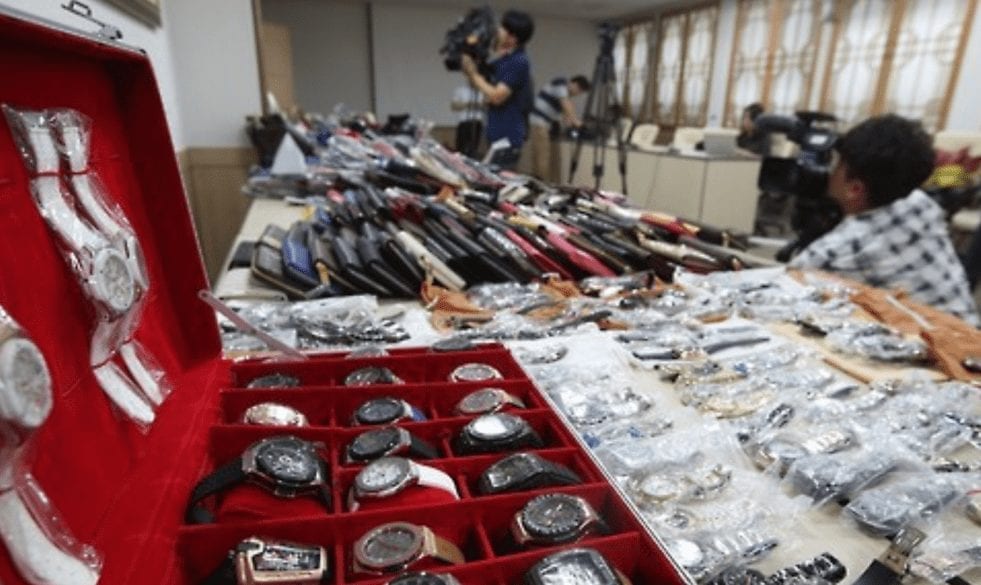
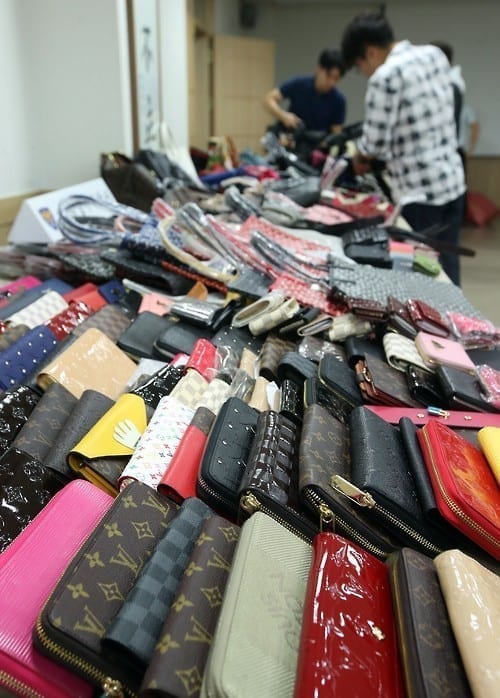
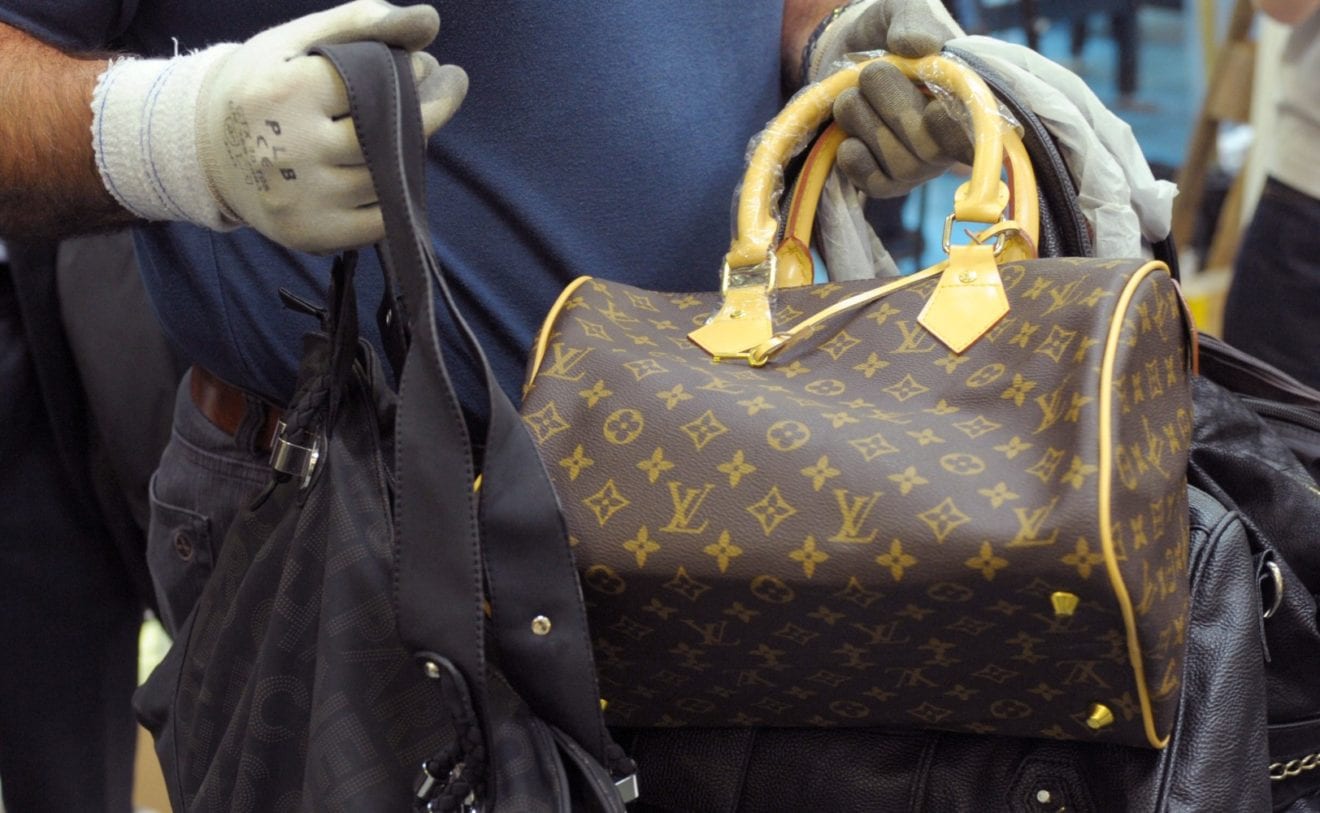
    Seoul police busted four retailers Monday for selling counterfeit products of luxury brands in Myeongdong, one of the busiest tourist and shopping districts in Seoul. 
    fake-product-luxury

    The gang launched operations in April, and has since sold 40-million-won ($36,245) worth of knockoff products from 41 brands that included luxury brands Louis Vuitton and Rolex. Converting the sales figure to the retail value of their respective genuine products, they were worth over 8.3 billion won, the police said. 

    The suspects displayed the products without the logo engravings to evade police crackdowns. Instead, they sold the final products with the logos at a separate storage area only when visiting customers asked for counterfeit products.

    “Counterfeit products can badly hurt the image of Myeongdong, so we plan to continue our crackdown operations jointly with the local government and the intellectual property office,” said a police official.


    Image Credit: Yonhap 

  • Report: Chinese Shoppers Make 40 Percent of Luxury Purchases Abroad

    Report: Chinese Shoppers Make 40 Percent of Luxury Purchases Abroad

    Chinese travelers are spending billions of dollars abroad, but where exactly are they making their luxury goods purchases? A recent report titled “Who Buys Where: Decrypting Cross-Border Luxury Demand Flows” by digital direct marketing services provider ContactLab and Exane BNP Paribas Research maps out spending patterns by tourists from all over the globe based on three years of data. ContactLab’s research ranks Chinese travelers second in terms of the proportion of spenders who buy luxury goods abroad, finding that 40 percent of Chinese consumers’ luxury spending occurred overseas in the first part of this year.

    chart

    While Chinese consumers spend most of their budget on luxury items abroad, this year, overseas spending dropped 5 percent, but rose 5 percent domestically. ContactLab attributes this to price corrections by major luxury brands on the mainland. For example, last year, Chanel lowered its mainland China prices to encourage Chinese shoppers to purchase there, and deter daigou sellers from benefiting from purchasing cheaper goods abroad.

    How much Chinese spend abroad may provide some insight into exactly who these consumers are. The value of purchases Chinese travelers make in “European Heritage” countries, the United States, and Japan is significantly lower than it is in China—by 20 to 30 percent. ContactLab says this suggests big spenders in these countries are “aspirational first-time buyers.”

    However, despite individual purchases being lower overall, Chinese luxury spending in Europe “appeared to be rising” in the first four months of 2016 compared to the same period two years before, according to the report. This was the case even factoring in the Paris terrorist attacks in late 2015. The increase takes place “possibly because our data includes also a portion of daigou spend (eg Chinese students in Europe whose visas don’t allow tax free refunds, and which are therefore not captured by Global Blue statistics),” said ContactLab senior advisor Marco Pozzi. “If this is what we see in the wake of the November terrorist attacks, then 2H16 could reasonably expected to be even more positive.” It’s still worth noting that since the release of the report last month, there have been further attacks in Europe and numerous luxury brands have reported that they are feeling the repercussions of waning Chinese tourists in light of security concerns.

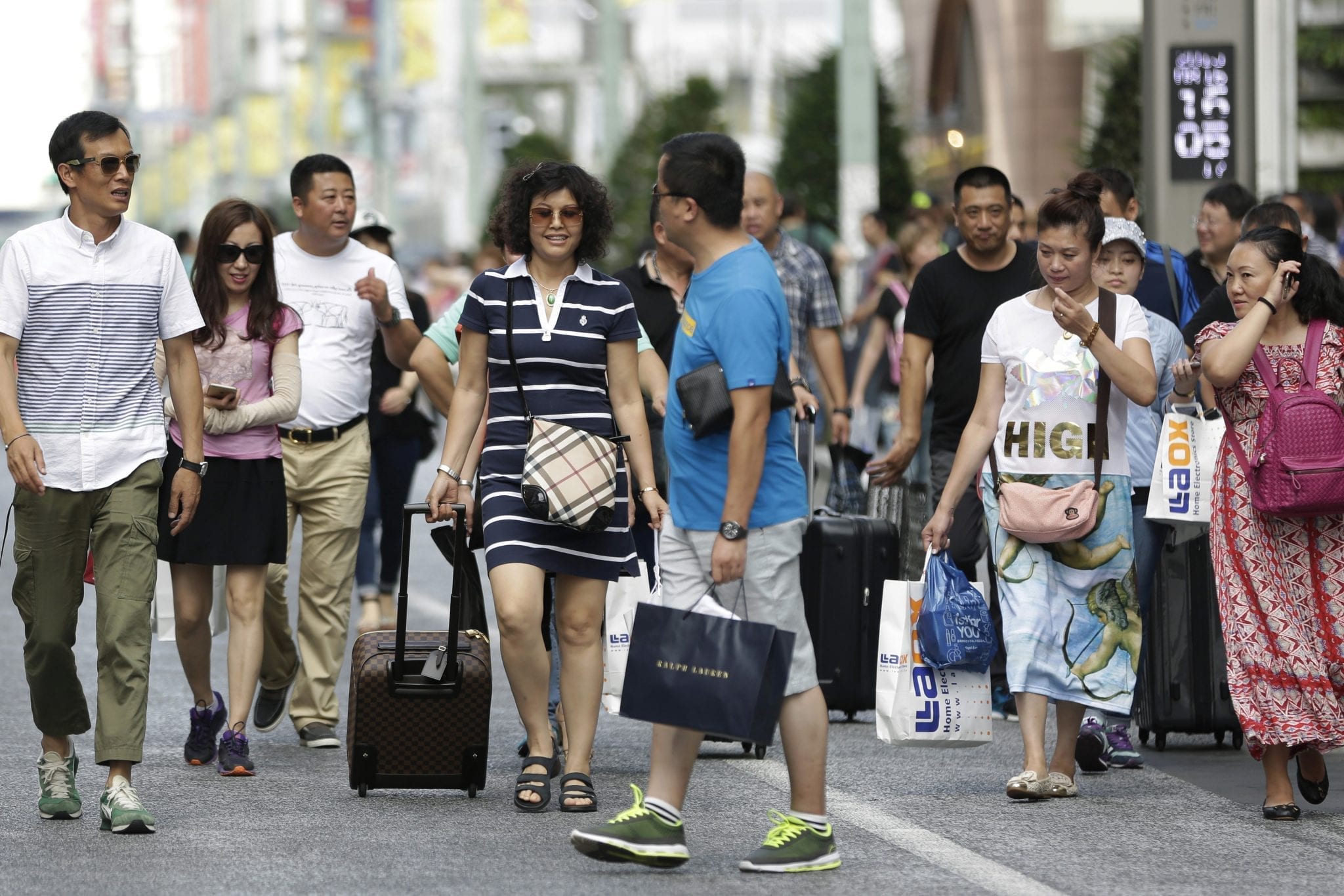
    In Asia, Chinese tourist luxury spending has also gone up in the last few years in Japan and Korea. In Japan’s case, Chinese travelers make up the majority of the luxury purchases, even though inbound tourists only make up about 5 to 15 percent of sales in the country overall.

    The report also confirms known trends in Hong Kong and Macau’s luxury retail industry. This year, Chinese consumers have done almost the same amount of luxury shopping in Japan, Taiwan, Singapore, and Korea combined as they have done in Hong Kong and Macau. Chinese tourists went from spending 70 percent of their luxury goods budget in Hong Kong in the first four months of 2014 to spending 35 percent in the same period this year. Hong Kong’s luxury retail industry has been struggling with the absence of Chinese tourists and developers are being forced to find alternatives to high-end stores to attract shoppers. This month was the first in over a year where Hong Kong finally experienced a rebound in tourists from the mainland.

  • Asia luxury goods market still growing

    The Asia luxury goods market is still growing rapidly despite negative press about Hong Kong, Macau and deteriorating China spending.

    Luxury goods retail sales in Asia-Pacific are expected to reach US$134.9 billion by 2019, growing at a CAGR of seven per cent during 2014-2019, according to the report Luxury Goods Retailing Market in Asia-Pacific, 2014-2019 Market and Category Expenditure and Forecasts, Trends, and Competitive Landscape.

    Japan will remain the largest Asia Pacific luxury goods market amid a slowdown in China and India’s luxury goods market is the fastest growing in Asia-Pacific, driven by rising disposable income, growing fascination towards luxury brands, and the desire of high earners to differentiate themselves from others.

    The report says jewellery, watches and accessories is the largest and fastest growing category in the region, driven by higher spending on jewellery and watches by Chinese, Japanese, and Korean consumers.

    The Hong Kong luxury goods market is struggling due to political unrest and reduced Chinese spending. A luxury tax exemption is expected to boost luxury goods consumption in Indonesia.

    Social messaging apps is a trending marketing channel for luxury brands, as the digital channel is influencing the purchasing decisions and pattern of consumers.

  • Hong Kong Luxury Goods Stores Want Cheaper Rents

    Hong Kong Luxury Goods Stores Want Cheaper Rents

    Rents for retail space on the island of O‘ahu rose to a record earlier this year.  Colliers International says commercial rents here have been rising for the past several years, a trend that’s expected to continue. Commercial rents have also risen in Hong Kong, but some luxury retailers are fighting back.  HPR’s Bill Dorman has more in today’s Asia Minute.

    Selling luxury goods in Hong Kong is not the business it used to be.  Part of that reflects a slowing Chinese economy.  But those who follow the sales say an even bigger impact has been the crackdown on extravagant spending by Chinese government officials.

    This week, the chief financial officer of Gucci’s parent company threatened to close some stores in Hong Kong unless rents are reduced.  He told a conference call of analysts that “many landlords have not necessarily understood that the markets have changed.”

    Bloomberg reports Burberry may also try to lower its rent after its sales in the city fell to a two-year low.  Commercial rents have come down in some parts of Hong Kong, but they remain among the most expensive in the world.  Reuters reports a 500-square foot store space in the neighborhood of Causeway Bay can cost the equivalent of 64-thousand US dollars a month.

    Commercial real estate firm Cushman and Wakefield says annual rent for retailers tops two-thousand dollars a square foot in three different Hong Kong neighborhoods.  Many Chinese shoppers are now traveling beyond Hong Kong to buy luxury goods.  In a report last month, Bain and Company said the world’s luxury goods market is continuing to grow, and its major driver is tourism.

  • China duty cuts details released

    China’s mainland government will halve duties on imported clothing, accessories, skincare products and nappies from Monday June 1.

    The China duty cuts were first flagged early this month as Beijing’s lawmakers sought a way to revive flagging retail sales growth and encourage locals to spend more at home rather abroad.

    The cuts are aimed at incentivising travellers to purchase luxury goods from local retailers rather than abroad, and discourage cross-border trading, especially through Hong Kong.

    The duty cuts average 50 per cent and will go a long way towards addressing an imbalance where mainlanders can pay as much as 40 per cent premium on foreign made goods due to import duties and other taxes.

    While the biggest impact of the duty cuts will be on luxury goods, Hong Kong’s border traders and cosmetics and personal care chains will take a significant hit. The mainland government has already clamped down on cross-border runs, limiting mainlanders to one trip a week to Hong Kong. That has reduced sales of nappies, cosmetics and infant milk formula in Hong Kong, for resale in Shenzhen and beyond.

    Hong Kong General Chamber of Pharmacy committee member Cheung Tak-wing told the South China Morning Post that local pharmacies had seen sales drop by one-fifth in April year-on-year. Drugstores in the northern district were hardest hit by the loss of bulk buyers from across the border.