Tag: luxury market

  • LVMH Pivots To Engage Younger Demographics In Asia: A New Era For Luxury Retail?

    LVMH Pivots To Engage Younger Demographics In Asia: A New Era For Luxury Retail?

    Luxury goods titan LVMH Moët Hennessy Louis Vuitton is making waves in Asia as it continues to reshape its strategies in response to shifting consumer behavior across the region. Following a noteworthy dip in earnings during the summer months, the company has pivoted to engage with the vibrant, younger demographic that is increasingly dictating market trends.

    Asian Consumables: A Shift Towards Youth

    In a move reflecting the shifting sands of consumer priorities, LVMH has focused its marketing efforts on digital platforms and experiential shopping. The luxury powerhouse recognized that younger consumers crave not just products, but immersive experiences. Over the past few months, LVMH has ramped up its presence in countries like China and Japan, launching stunning pop-up events and collaborations designed to capture the imagination of millennials and Gen Z shoppers. It’s almost as if they’re saying, “Why settle for just a purse when you can have a moment?”

    Fine Wines and Spirits Fuel Growth

    Among the brands leading the charge is Moët & Chandon, whose sparkling wines have captivated the Asian palate. The fine wines and spirits segment alone saw a robust uptick, bolstered by the growing enthusiasm for cocktails and premium beverages in bars across urban centers like Shanghai and Tokyo. Industry insiders note that this uptick in luxury spirits could very well be the toast of the town — or at least the next great Instagram moment.

    Strategic Collaborations and Innovations

    In addition to its events and product rollouts, LVMH has forged strategic partnerships with local designers and influencers to adapt its offerings to the regional market. These collaborations not only broaden the appeal of its brands but also inject a fresh, local twist into traditional luxury, ensuring they resonate deeply with Asian consumers. The result is a carefully curated blend of global prestige and local flair.

    Future Outlook: Navigating a Competitive Landscape

    Looking ahead, LVMH faces a competitive landscape in Asia where numerous luxury brands vie for attention. Yet, the company remains optimistic. Analysts suggest that by diversifying offerings and harnessing technology for enhanced shopping experiences, LVMH is well-positioned to thrive. As consumer demands evolve, so too must retail strategies, blending the old with the new in a seamless digital experience.

    Questions & Answers

    How is LVMH adapting to the changing luxury market in Asia?
    LVMH is focusing on digital engagement and immersive experiences aimed at younger consumers, launching pop-up events and collaborations to capture their interest effectively.

    Which LVMH brand is seeing significant growth in Asia?
    Moët & Chandon is experiencing considerable success, particularly in the fine wines and spirits sector, as demand for premium beverages continues to rise in urban areas.

    What future strategies might LVMH employ to maintain its competitive edge?
    The company is likely to pursue diversification, partner with local influencers, and enhance the shopping experience through technology, ensuring that it remains at the forefront of the luxury retail arena.

  • The Indian Luxury Outlook 2019

    The Indian Luxury Outlook 2019

    As 2018 comes to a cold & wintry end, as political environment hots up, as new alliances, mergers and acquisitions take shape in business & politics, as GST corrections & FDI norms in ecommerce are tinkered, what is it that the Indian Luxury Industry can look forward to?

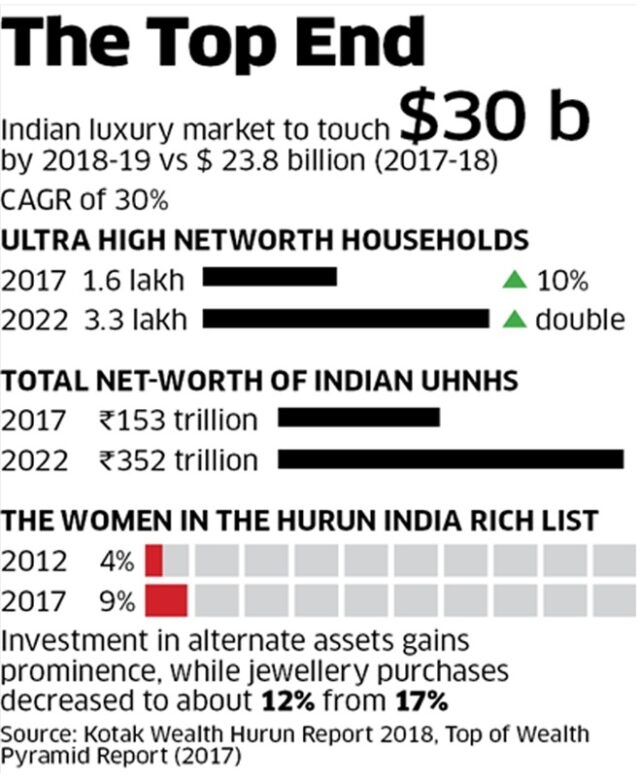
    Assocham figures continue to be optimistic and bullish. As per last projection, not only is the industry expected to be of a size of USD 30b by the year end 2018, but is also to continue its growth trajectory unhindered. But alas, the suddenly disturbed seemingly stable political applecart, the floundering rupee, the growing uncertainty, and the eminent global slowdown of 2020 looms large. Ground reality for luxury could be different. Industry insiders, trade analysts and brands all alike seek the pot of gold at the end of the rainbow.

    A seeming direction that the Indian Luxury Industry could take or adopt from the rest of the world appears as under:

    1. Consolidation is the key: With Reliance brands having taken over Genesis Retail in 2018, the largest fashion and accessory conglomerate of Indian Luxury and premium space has taken shape. With almost no competition, the all-powerful group is set to be the only point of entry into India. Surely independent brands and smaller groups continue to offer their wares, the sheer strength, negotiation powers and might of Reliance will perhaps be the single most driver of the fashion & Luxury space.
    2. Power of the Common Man: Someone wise enough once said ‘don’t underestimate the power of the common man’. Sure enough, luxury has slowly spread its wings to the hitherto sleepy tier I & tier II towns. The fast emerging Indian market is not only witnessing demand for luxury products from the Metros but also Tier I and Tier II cities which have a sizable number of HNIs (High Net-worth Individuals). Alongside, an increase in wealth for the middle class coupled with internet penetration has resulted in newer segments of first-time luxury buyers. This has given ample space for a whole lot of brands to set up shop in India, retail their brands through distribution networks. This surely will be the next growth driver for Luxury in India.
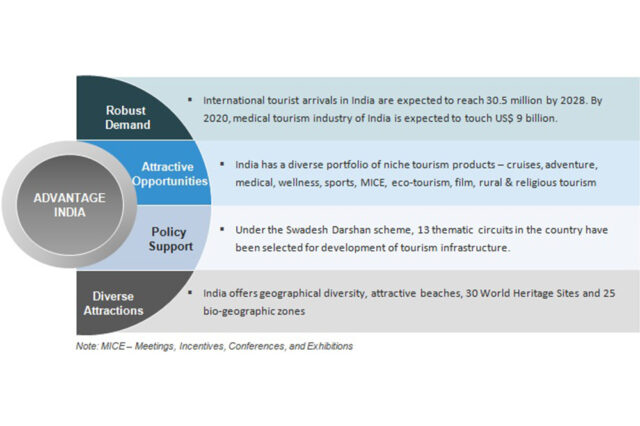
    3. Travel, Tourism &Hospitality will drive further growth to the value pie: With increased e-visa processing, faster on the ground arrival support, eye catchy Incredible India campaigns, the tourist inflow from within and outside is likely to further increase. Statistics according to a new report of the World Travel and Tourism Council (WTTC) reveal that India’s travel and tourism sector ranks 7th in the world in terms of its total contribution to the country’s GDP.During January-October 2018 FEEs from tourism increased 8.30 per cent year-on-year to US$ 23.54 billion.


      Source : www.ibef.or


    4. The Great Big Fat Indian Wedding carnivals will drive luxury: The wedding industry and the wedding service industry sets unprecedented benchmarks. According to a 2017 KPMG report titled Market Study of Online Matrimony and Marriage Services in India, the marriage services industry is estimated to be worth approximately US $53.77 billion (Rs 3, 68,100cr).This is one sector which adds incremental sales to all sectors of the industry – from beauty, fashion, accessories,  photography, jewellery, travel, hospitality, gifting to also the cuisine segment. With high standards being set by the likes of stars like Anushka Sharma – ViratKohli ; Priyanka Chopra – Nick Jonas& finally the Ambani weddings, the aspiration of average Indian to splurge on weddings is reaching a new peak. With Rolex watches as gifts to the entire wedding procession to bespoke clothing from super luxury brands to not only the entire family but the whole procession adds further fillip to the trade.
    5. Technology and Luxury: From high end home appliances such as Sub Zero Wolf to tech controlled homes like Home Automat, luxury and technology seem to marry and create an inseparable union. What was earlier restricted to high end laptops and computer systems demand has now invaded the mobile space, the home entertainment space besides the affluent kitchens. Super expensive mobiles from Iphone X to Hanmac are finding a demand que beyond their imagination in India.
    6. Technology and Retail: Omni-presence now means beyond just available everywhere to also be ‘Phygital’. A merger of the physical and digital retail is quietly invading the global retail. Amazon Go has already launched 8 number of cashier less stores& plans to ramp up to 3000 by 2021. Can India, the tech brain of the world be far behind? In Bangalore, Decathlon launched a similar store by introducing a ‘phygital experience’- an innovative mix of physical retail and digital touch points. From virtual reality to digital payments the intent is to create a fun, unique and immersive user experience designed to engage and add value to for them at every step of the way while choosing their favourite sports gear.On other hand, another concept store called ‘Watasale’ went further to create cashier less store, its first store in Kochi and have plans to expand to other cities including Bengaluru and New Delhi in the near future. Can Indian Luxury ignore this anymore?
    7. Predictive Analysis to Predictive Selling: The Indian fashion industry proudly receives its first futuristic analysis software, ‘Stylumia’. Created by ex Myntra founder Ganesh Subramanium, the software will assist in better buying to be able to improve efficiencies and sell through ratios. Most Luxury brands dependent on the human predictions of the buyer can now resort to technology and manage their budgets better. This coupled with predictive selling, could bring in the much needed correction in stocks over load with luxury brands.
    8. Experiential retail, Virtual Reality and Artificial Intelligence: These three aspects will come to the forefront: Brands like Arvind have introduced Magic Mirrors through its brand Creyate Custom Clothing. Also, Shoppers Stop has launched an innovative augmented reality-based dressing room: ‘The Magic Mirror’. It is an intelligent photo booth that gives customers the option to select and view apparel and accessories on themselves without having to physically ‘try on’ the desired products. Apart from this, ecommerce players such as Lenskart(Eyewear) and Caratlane (Jewellery) are already into Virtual trial of the products by customers.
    9. Rent a Luxury / Reusable Luxury are a reality: What started as a trickle two years back, is now a stream with more ventures offering specialised product categories arriving at the horizon.Websites such as Confidential Couture offer usable Luxury Goods while Ziniosa & Rent A Closet offer fashion on rent.And now, even the affluent women are renting high end jewellery for their wedding. The fashion rental market is becoming the biggest trend. A wedding suit or gown worth Rs. one lakh could be rented for as low as Rs. 2000 to Rs. 2500! It is estimated that the online wedding rental  business is worth Rs. 100 crore and the existing players have claimed a 25 to 50 per cent year-on-year surge in business (Black Book).
    10. Sustainable, Authentic and Responsible Luxury is being sought forGrassRootby Anita Dongre and Nicobar by Good Earth are few names that are famous for their Sustainable offerings.Slowly but surely, the well exposed Indian consumer seeks value over mere brand name. Value definitions are shifting rapidly in line with global shifts. A brand who pays heed to such demands will perhaps go a long way.
    11. SUVs take over the roads Various variants of SUVs have been introduced by automakers of all categories. From Mahindra XUV 500 to Lamborghini Urus, Rolls Royce Cullanin to Porsche Cayenne, almost all Luxury brands have come up with their SUV variant. Sale of SUVs grew seven times faster than that of passenger sedans. While small cars and sedans managed a growth of 3% in the last financial year, the sales of SUV grew 21%. The share of SUVs in overall passenger vehicle sales rose to nearly 30 % in 2017-18, compared to 14% recorded at the end of March 2017-18.According to numbers released by Society of Indian Automobile Manufacturers (Siam), 9.2 lakh SUVs were sold in 2017-18 against 7.6 lakh units in the previous year.
  • Small Chinese cities in China are the future for luxury

    Small Chinese cities in China are the future for luxury

    In China, luxury goods are no longer exclusively for well-heeled city folk. In fact, the future of brands like Louis Vuitton, Chanel, Gucci and Prada may lie in smaller cities like northern China’s Hohhot, which is 10 hours by rail to the capital of Beijing and has a population of three million.

    More than half of all luxury consumers in China live outside the top 15 cities, in so-called second- and third-tier cities and other less developed ones, according to a report jointly released last week by Boston Consulting Group and Chinese internet giant Tencent.

    Luxury goods, more often associated with sophisticated city dwellers, have become commodities to be bought by the aspirational classes and strivers from the boondocks.

    Such a fragmentation was made possible after brands digitised the marketing and purchasing process, and as Chinese consumers increasingly obtained information about luxury goods online, especially via smartphones. Mobile apps and content take up more than half the online attention of luxury buyers, through engagement by social media accounts of key opinion leaders and the brands themselves, and via apps, advertisements and third party e-commerce platforms, the report shows.

    However, 58 per cent of consumers still prefer the old-fashioned way of buying in bricks-and-mortar stores after doing the research online, and around half choose to make their purchases while travelling overseas.

    “The battle for luxury consumers will shift swiftly from offline to online, and in five years, we will enter the age of Luxury Digitisation 2.0 where online and offline [marketing and sales] will knit together closely,” BCG partner Wang Jiaqian said in a statement.

    In tier-three and lower-tier cities that do not have physical luxury stores, buyers are twice as likely to make purchases online as those in the top 15 cities, but nearly 80 per cent of them said they would not mind making the trip to a physical store to shop.

    Chinese consumers have been the key target for global luxury brands for their deep pockets and the sheer size of the country’s market. China’s personal luxury goods market, worth €105 billion (US$122 billion) in 2017, is expanding at 6 per cent annually, and is expected to reach €162 billion in 2024, according to the report. By then, 70 per cent of all new growth in the world’s luxury market will be driven by China, which will account for 40 per cent of the global market.

    Chinese luxury goods buyers are mostly young and well educated – and 70 per cent are female. The average age among both genders is 28 years, and two out of three are aged 18 to 30 with a bachelor’s degree or above, the report found.

    Chinese e-commerce platforms account for half of the country’s online luxury purchases, driven by the launch of Luxury Pavilion by Alibaba Group Holding’s Tmall and Top Life by JD.com.

    However, social commerce – a new form of e-commerce that incorporates social interactions among consumers via social media such as Tencent Holdings’ WeChat – is also on the rise and currently accounts for 11 per cent of all luxury online purchase.

    The concept of social commerce has exploded in popularity over the past two years, especially among young consumers. The new model gamifies shopping so that the more friends you share the deal with, the deeper the discount. It also involves creating a platform where users share photos and videos, write posts and tag items in their pictures that link to e-commerce listings.

    The pervasive use of smartphones among mainland China’s population is a key factor enabling social commerce. Research firm eMarketer forecasts that the total number of smartphone-based online shoppers in the country will reach 443.3 million this year, making up more than three quarters of China’s online retail sales.

    The BCG/Tencent report was based on data collected from 1.8 million Chinese luxury consumers identified by BCG and Tencent, as well as a poll of 2,620 consumers who bought luxury goods in the past 12 months.

  • After Death of Thai King, Luxury Market Wavers

    After Death of Thai King, Luxury Market Wavers

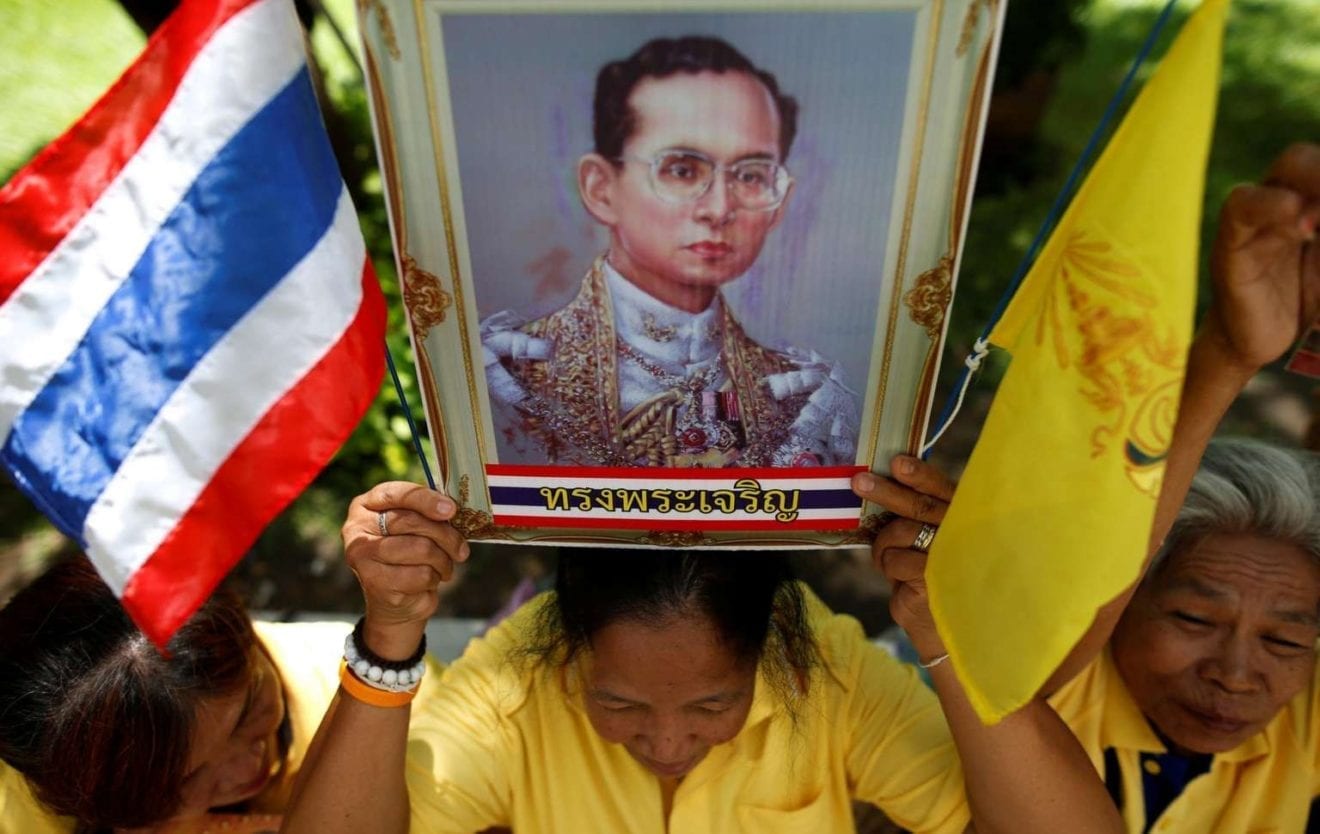
    Following a decade of declining health, 88-year-old King Bhumibol Adulyadej of Thailand, the world’s then-longest-reigning monarch, passed away in Bangkok on October 13. The king’s untimely death concluded a reign that lasted more than seven decades and initiated a year-long period of mourning, bearing substantial consequences for the nation’s luxury and fashion sectors.

    As declared by Prime Minister Prayuth Chan-ocha, leader of the junta that has ruled the country since 2014 after seizing power through a bloodless coup d’état, civil servants will be expected to wear “sombre-coloured” attire for the duration of the mourning period, while the rest of the population has been ordered to “tone down” or cancel entertainment and “joyful events” for at least the next month.

    Though the first full week of mourning has yet to pass, the consequences are already being felt. “I think [the fashion and luxury sectors] are definitely going to suffer — there will be a drastic decline in consumers of fashion brands,” predicts Kullawit ‘Ford’ Laosuksri, editor-in-chief of Vogue Thailand. “For example, I have spoken to a distributor of Kate Spade and Valentino, and they said that they had to re-estimate their Spring/Summer orders … The tourist and retail sectors are going to see a decline in sales — that is something the whole nation is afraid of.”

    Indeed, many of these fears are justified. “Retailers and hotels cancelled all promotions and activities related to sales and events during October to November,” says Anisa Ngandee, an analyst from Euromonitor. “Generally, the last quarter is usually the peak tourism period and the months where retailers [see] festive spending [during the] holiday seasons; thus, it will have a short-term impact on the retailers and hotels sales.”

    Regarding his publication, Laosuksri says, “There’s nothing we can do for the November issue, [but] for December issue, we are definitely going to decrease the print run, [while] a lot of traditional advertisements will be — if not in black and white — condolence messages.”

    From a Western perspective, the extent of mourning may seem extreme, but King Bhumibol’s reign was unique. For most Thais, life under Bhumibol is all they have ever known. “I and all the Thai people view this passing of the king as something that is quite personal as if somebody from our family has passed,” says Laosuksri. King Bhumibol’s heir, Crown Prince Maha Vajiralongkorn, has delayed his ascension to join the Thai people in grieving for his father; however, the country’s general election will go ahead as planned in late 2017.

    In recent years, the Thai luxury market has shown tremendous promise, growing 8 percent year-on-year from 2015 to 2016, reaching a total value of nearly $1.6 billion, according to Euromonitor. This can partly be attributed in part to the country’s young, wealthy upper-middle class. According to Digital Luxury Group,a business intelligence firm headquarted in Geneva, 20.5 percent of consumers who earned $150,000 or more in 2014 fell into the 30-34 age bracket, while another 18.6 percent fell into the 35-39 bracket, giving luxury brands and retailers ample space to penetrate the Thai market.

    The tourist and retail sectors are going to see a decline in sales — that is something the whole nation is afraid of.

    Nevertheless, despite this wealthy domestic consumer base, tourism still plays a significant role in sales of luxury goods. According to Bain & Company’s 2015 Global Luxury Goods Report, “Thailand [is a] top performer [in the Southeast Asia market] thanks to Chinese flows with strong potential going forward.” Just two days before the death of the king, Thailand’s biggest retailer, Central Group, announced expectations of a 21 percent rise in revenue to 320 billion baht ($9.17 billion) for fiscal 2016; sales at Central stores to foreigners rose 15 percent while transactions with domestic consumers merely increased by 5 percent.

    Given the immediate decline in the domestic demand for luxury goods, the Thai government must now tighten their dependence on the tourism sector to offset regressions, as retailers scramble to compensate losses in sales. “[The fashion industry] is very much going to depend on tourism; therefore, I think the government will be trying their best to promote it … after the one-month period,” predicts Laosuksri.

    If Laosuksri’s forecasts are correct, the Thai government will need to amplify its current efforts to engage Chinese tourists. “Thai authorities are leveraging Mandarin websites and KOL (key opinion leader) representation in China to promote the destination,” says Thibaud Andre of Daxue Consulting, a market research firm based in China. “[They] are strongly pushing their domestic practitioners to be more educated on Chinese culture and basic Mandarin, as well as [to increase activity] on Chinese platforms such as Wechat, Weibo or Taobao.”

    Despite the negative image of Chinese tourists in Thailand and controversy surrounding the recent crackdowns on “zero-dollar” budget tours targeted at lower-income tourists from China earlier this month, according to the Siam Commercial Bank, the average daily expenditure per person amongst Chinese tourists has grown to 5,748 baht ($164.1) in 2015, from 4,425 baht ($126.4) five years prior. In terms of purchasing power, foreign shoppers, especially Chinese tourists, have become a cornerstone of the Thai luxury market.

    In data provided by Thailand’s Department of Tourism, from January to August of this year, approximately 6.6 million tourists from China visited Thailand — more than from Europe, the United States, Australia, Africa and the Middle East combined – with nearly two million arriving between January and February 2016 alone, an especially high-traffic period for the Lunar New Year.

    In the near future, Thailand’s luxury retail market may face several hurdles in sustaining recent growths in sales — particularly given the country’s strict lèse-majesté laws and the increasing risk of ultra-monarchist violence in the capital deterring inbound tourists from mainland China. “In the short term … we already lowered our expectations to 10.5 million visits for 2016 due to the mourning period,” says Andre. “Chinese agencies are already refunding their clients and tour operators are cancelling trips.”

    While the short-term forecast may seem turbulent, market analysts remain positive about the future. According to Ngandee, “In the long term, with the development of infrastructure, expected number of tourists are projected to be positive; [compounded with] the expansion of Thai middle-income population, industries are generally looking forward to more optimistic performances.” Nevertheless, Euromonitor suggests that stability still remains contingent upon next year’s government election.

    However, the country has shown resilience during previous political and social upheavals, and many Thai industry insiders like Laosuksri maintain a sense of hope in this period of uncertainty.

    “Euromonitor projects that more than 12 million incoming Chinese tourists at the end of 2020, [and] Thailand is expected to remain among the top destinations and might overtake the second hit destination [for outbound Chinese travellers] at the end forecast period,” assures Ngandee.
     

  • Is Growth For Luxury Brands in China Over?

    Is Growth For Luxury Brands in China Over?

    China and the Chinese played a primary role in the growth of the luxury sector in the past decade. But what was once a boon for luxury goods brands is now turning around.

    Chinese consumers account for the largest portion (31 percent) of global luxury spending, up from only 1 percent in 2000, according to a study by consulting firm Bain & Company. And in the past decade, thanks to China and Chinese shoppers abroad, the luxury goods market worldwide grew by 72 percent in size.

    luxury goods

    (Statista)

    “The relentless expansion of the domestic economy that fueled China’s voracious appetite for the finer things in life has slowed,” Exane BNP Paribas analyst Luca Solca.

    “This only compounds the chilling effect that the government’s anti-corruption campaign has had on demand for luxury fashion and fine jewelry.”

    Many luxury goods brands opened up store after store to tap the Chinese market. The experts are now debating whether they are too exposed to China.

    In his analysis, Solca looked at whether each brand is over- or underexposed to the Chinese market based on the number of stores they have. Accordingly, Versace is the most over-exposed brand with 22 percent of its stores based in China. Moncler, Tod’s, and Dolce&Gabbana are among the overexposed brands as well.

    The only large brands underexposed to China are Hermes, Tiffany, and Michael Kors. And these brands still have some retail expansion opportunity in China, according to Solca.

    (Source: Exane BNP Paribas analysis, RE-Analystics, Business of Fashion)

    (Exane BNP Paribas analysis, RE-Analytics, Business of Fashion)

    Sales of luxury products in the mainland have started to slow down after Chinese regime leader Xi Jinping launched his political anti-corruption campaign in 2013. Many of the Chinese officials and their numerous cronies and associates notorious for using luxury items for bribes stopped shopping for those items.

    A slowdown in the Chinese economy since mid-2015 was the second blow for luxury brands. Some brands have already started closing stores in China.

    “A corollary to the drop in domestic sales is a reduction of the store footprint by most brands, with a greater focus on fewer, larger, and better-located stores” Bain & Company stated in its report on China’s luxury market in 2015.

    Louis Vuitton, which is the most valuable luxury brand in the world, closed six stores and opened two new stores in China in 2015. And the company recently announced the closure of two additional stores located in Shanghai and Shanxi.

    Meanwhile, Gucci closed five stores in China, Burberry closed two stores, and Prada closed four stores in 2015, according to the Bain report. Due to collapsing demand in China, brands are expected to shut more stores across the country in coming months.

    Adding to the industry’s woes, publicly traded luxury goods companies announced weaker than expected results in April 2016, caused by slowing Chinese tourism in Europe. Burberry Group Plc, Prada SpA,Kering SA, and LVMH Moet Hennessy Louis Vuitton SE all reported disappointing results following terror attacks in Europe.

    According to Bruno Lannes, a Bain partner based in Shanghai, luxury brands should place greater emphasis on exclusive and fashionable collections, digital platform engagement and digital content, as well as pricing, in order to remain competitive in rough times.

  • Chinese account for 31% of global luxury sales

    Chinese account for 31% of global luxury sales

    Chinese shoppers now account for 31 per cent of the world’s annual luxury sales.

    According to Bain & Company’s 2015 Worldwide Luxury Report, the overall luxury industry will surpass €1 trillion in retail sales value in 2015.

    The market delivered healthy growth of five per cent year on year (at constant exchange rates), driven primarily by luxury cars (eight per cent), luxury hospitality (seven per cent) and fine arts (six per cent).  Aided by global currency fluctuations and continued jet-setting of “borderless consumers,” the personal luxury goods market ballooned to over a quarter trillion euros.

    That sector – including leather accessories, fashion, hard luxury and fragrance & cosmetics – reached €253 billion in 2015. This represents 13 per cent growth at current exchange rates, while real growth is significantly slowing to between one and two per cent.

    But the report warns that luxury brands will need the right pricing model to win against hard to predict currency volatility in the year ahead, which has impacted heavily on luxury retailers especially.

    While global tourists flocked to Europe and Japan to capitalise on a weak euro and yen, the Americas region, stagnant in real terms, was strongly inflated by the super dollar, thus capturing more than a third (34 per cent) of the global market spend in 2015.

    Meanwhile, Asia registered the worst historical performance (at constant exchange rates), driven by the lacklustre trend of Mainland China and the sharp drop in sales in Hong Kong and Macau.

    “For the last several years, we’ve referenced ‘luxury’s new normal’ with a deceleration of the personal luxury goods market. Now, we are starting to feel the impact of that slow-down,” said Claudia D’Arpizio, a Bain partner in Milan and lead author of the study.

    “The challenge for luxury brands in this environment is how to successfully navigate through hard-to-predict volatility.”

    According to Bain’s research, Chinese consumers continue to spend the largest share of luxury purchases (31 per cent) globally, followed by Americans (24 per cent) and Europeans (18 per cent).

    Chinese consumers are flocking to mature markets in droves, especially Europe, where an analysis of European tax-free shopping data, conducted in partnership with Global Blue, shows Chinese tax-free purchases increased by 64 per cent, particularly among the accessible and aspirational luxury segments, thanks to a weak euro.

    Americans also increased their tax-free spending in Europe by 67 per cent, aimed largely at the high end of the luxury spectrum.  Meanwhile, Russians cut their European spending by 37 per cent, and spending among the Japanese in Europe withered by 16 per cent.

    “Undoubtedly, Chinese consumers play a primary role in the growth of luxury spending worldwide,” said Federica Levato, principal at Bain and co-author of the study.

    “For years, we have known that they spend far more abroad than in Mainland China, but what’s changing is that they’re spending little money in historically popular destinations, such as Hong Kong and Macau, and are instead gravitating to new locales, such as Europe, South Korea or Japan, to benefit from currency fluctuations that drive favorable price gaps.”

    In terms of constant exchange rates, the US market did not deliver.  The “super dollar” was too expensive for many global tourists and though local consumption is growing, it was barely sufficient to offset the lost tourism revenue. Nevertheless, the US is the confirmed largest luxury market in terms of global luxury value, reaching €79 billion; New York City alone outweighed all of Japan.

    Another trend evident this year is the impact of eCommerce, which grew to seven per cent market share in 2015, nearly double its penetration since 2012. Luxury globetrotters have also fuelled the performance of airport retail, which posted 29 per cent growth in current exchange rates (18 per cent in constant exchange rates) and now accounts for six per cent of the global luxury market.

    With the growing middle class in economies such as China seeking good quality and good value, the off-price channel has more than doubled to nearly €26 billion.  Mark-downs are also increasing in prevalence across more than 35 per cent of the luxury market, with a strong relevance in department and specialty stores, as well as online.

    The Price of Luxury

    According to Bain, the number one challenge facing most luxury brands is establishing the right pricing model.

    The rise of eCommerce and global tourism growth create greater transparency around international price differentials. Additionally, price-conscious luxury shoppers are struggling to reconcile the price of luxury products with their real value. As a result, luxury brands must assess how to mitigate volatility and how best to deliver at local and global levels. This includes managing inventory to accommodate fluctuations in tourism and coordinating pricing and mark-downs across markets and channels.

    Luxury brands also face a host of tough issues such as rethinking their store footprint and the role of their stores in a world of growing digitalisation, as well as figuring out how to delight local customers even as masses of tourists flock to stores in mature markets.

    “Relentless price increases over the last decade, aimed at creating a more exclusive position in the market and maximising touristic flows are now starting to backfire on luxury brands,” said D’Arpizio.

    “They face the long-term challenge of rebuilding credibility and trust among consumers, rather than simply making shortsighted, tactical pricing adjustments to benefit from market fluctuations.”