Tag: LV

  • Louis Vuitton debuts with Les Petits Nomades Project

    Louis Vuitton debuts with Les Petits Nomades Project

    Contributing to the Les Petits Nomades collection are Atelier Oi, Humberto & Fernando Campana, Marcel Wanders and Patricia Urquiola.

    The collection was launched alongside four additions to the French fashion house’s travel-inspired furniture and lighting collection, Objets Nomades. The pieces were all presented at an exhibition within the Baroque interiors of Milan’s 19th-century Palazzo Bocconi.

    Displays included a room with pink balloons covering the ceiling, a dark corridor of mirrors lined with glowing lamps, and a grand hallway strung with hundreds of leather flowers.

    Objects include a vase crafted from 176 two-tone, leather-covered metal petals, created by Humberto & Fernando Campana, while Swiss design studio Atelier Oi contributed 15 leather origami flowers.

    Making his debut with Louis Vuitton, Andre Fu has introduced a two-person “conversation” chair with swooping leather-wrapped wooden arms. The chair’s curved shape is inspired by the movements of traditional Asian ribbon dances.

    Louis Vuitton also showcases artworks inspired by vintage travel posters, each featuring a designer’s objects and home city.

    First created in 2012, the Objets Nomades collection is a series featuring travel-inspired furniture and lighting. Objects range from hammocks to deckchairs and portable lamps.

  • LV chooses Korea for the launch of its new menswear collection

    LV chooses Korea for the launch of its new menswear collection

    French luxury brand Louis Vuitton has chosen Korea for the launch of its new collection for men.

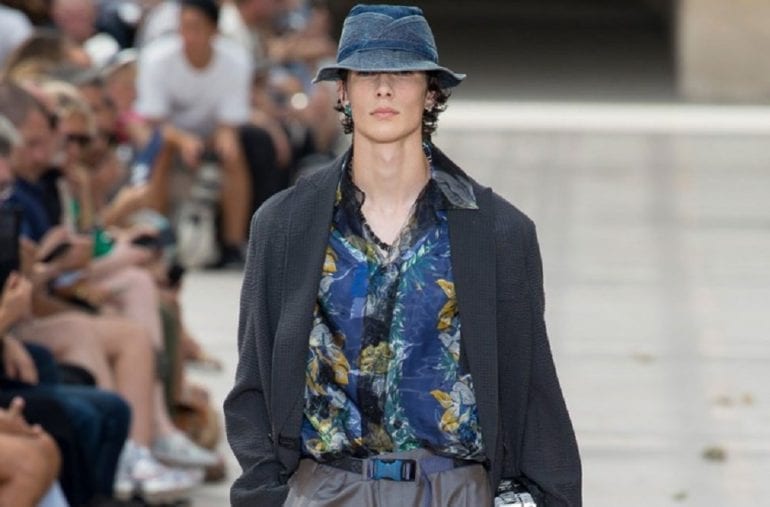
    The new SS18 menswear and bags will be available in Shinsegae Department Store from 19 January, and Louis Vuitton men’s exclusive store in Seoul from the 10 January 2018.

    Louis Vuitton said the collection is pre-sold at seven stores in seven countries with maily trend-conscious consumers.

    Louis Vuitton selected 7 countries to introduce its new menswear collection, namely Korea, France, the United States, Japan, China, Hong Kong and Singapore.

    In each country, the brand selected one store to represent the brand, and pre-release the collection.

    This new product reflects the design inspired by famous islands around the world with the subject of ‘luxury island hopping’.

    Leather goods, clothing, shoes, accessories, including the Monogram Reflective Keypole Bag, which was first unveiled in the menswear collection in Paris last June, are all available in the selected stores.

    Kim John, Artistic Director of the Louis Vuitton Men Collection Design said “this collection has been designed with a special reminder of beautiful islands such as New Zealand, Easter Island and Hawaii,” and “Travel and Island, where different cultures and identities can be experienced, that is where I got the idea from.”

    Meanwhile, Louis Vuitton store specializing in menswear was opened on the sixth floor of Shinsegae Department Store’s main branch in Seoul. The department store has accommodated a renovated store featuring women’s collections as well on the ground floor.

    Other Louis Vuitton stores can only be found at Saks Fifth Avenue in New York, Harrods in London, and Shin Kong Place in Beijing, as well as Shinsegae Department Store’s Gangnam branch stores having also womenswear.

  • Louis Vuitton adopts a new strategy in Korea

    Louis Vuitton adopts a new strategy in Korea

    Louis Vuitton has recently begun separating its men’s stores from women’s at major department stores in Korea.

    According to the French luxury brand on 11 December 2017, a Louis Vuitton store specializing in men’s fashion items was opened on the sixth floor of Shinsegae Department Store‘s main branch in Seoul last week. The department store will accommodate a renovated store featuring women’s collections as well on the ground floor next week.

    The international fashion house will also open a brand new store focusing on men’s collections at Galleria Department Store’s East Wing and a renewed women’s store in the store’s West Wing this month.

    Its Korean subsidiary said it divided the stores to offer clients a unique and personalized shopping experience.

    According to the company, separated Louis Vuitton stores can only be found at Saks Fifth Avenue in New York, Harrods in London, and Shin Kong Place in Beijing, as well as Shinsegae Department Store’s Gangnam branch having stores for women’s collections on its second floor, women’s shoes collections on the fourth floor and men’s collections on the sixth floor.

    Some observers regarded the company’s recent decision as a strategy to recover from its declining sales here by attracting male customers, who have emerged as big players in the nation’s luxury market.

    According to Reebonz Korea, a local subsidiary of the Singaporean-based online platform for luxury products, sales of men’s items rose 96 percent year-on-year in the first half. Sales of men’s luxury products have also increased in other online market places, such as Auction, Gmarket and 11st.

    Louis Vuitton and other global luxury brands are therefore making every effort to satisfy demand, so as to overcome slumps in sales. According to industry officials, Louis Vuitton’s sales growth has been decreasing at major department stores in Korea for years.

    Fendi, an Italian luxury fashion brand, also opened a store specializing in men’s items for the first time in Korea in September at Men’s Salon on the sixth floor of Shinsegae’s Gangnam store. Christian Louboutin, an international luxury brand known for high heels, revamped the first basement of a flagship store in Cheongdam-dong to sell men’s products.

    Given that Louis Vuitton has not unveiled its business performance in Korea, it is unknown exactly what its sales growth was after the latest renewal.

    However, sales of men’s items at Shinsegae’s Gangnam branch doubled after the renewal of Men’s Salon consisting of several luxury brands, such as Louis Vuitton, Berluti and Lardini. Among the brands, Louis Vuitton has maintained the top spot in terms of sales, according to industry officials.

    Thierry Marty, the CEO of Louis Vuitton Korea, said the luxury brand will push ahead with renewals at its nationwide stores to provide personalized services for customers, so the number of separated Louis Vuitton stores is expected to increase.

  • Changi airport T3 new experience unveiled

    Changi airport T3 new experience unveiled

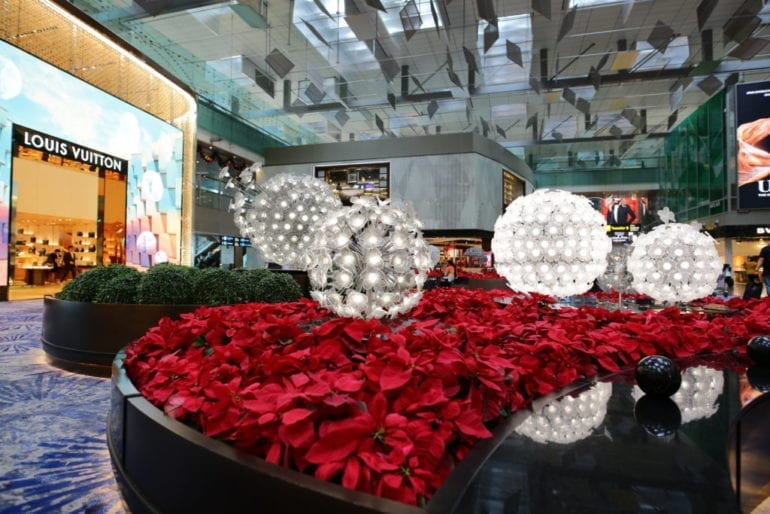
    Passengers at Changi Airport Terminal 3’s Transit Hall will be welcomed by the refurbished Central Piazza, featuring the airport’s latest feature garden made up of elegant glass dandelion sculptures – the Crystal Garden.

    The Crystal Garden is brought to life by tiered garden beds incorporating a curated selection of flowering plants and 12 spheres of artisan dandelion glass sculptures in varying sizes.

    Inspired by the flora and fauna of the other gardens in Changi Airport, the glass sculptures glow with luminance, creating the illusion that they are floating on pools of water or swaying in a breeze – these offer passengers a captivating and unforgettable experience amidst a garden of lights.

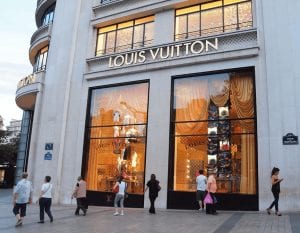
    Prominently nestled in the heart of the Central Piazza behind the Crystal Garden is the brand new Louis Vuitton store which opened its doors today. As the luxury brand’s first duplex airport store in the world, it is a travel destination itself with its unique architectural elements.

    Joining the ranks of The Shilla Duty Free’s Cosmetics & Perfumes duplex and the DFS Wines & Spirits duplex at the Central Piazza, Louis Vuitton’s arrival at Changi Airport completes the trio of duplexes at T3’s Central Transit Hall, lifting passengers’ retail experience another notch up. A linkway at the mezzanine level above the Crystal Garden connects all the duplex stores and offers passengers the luxury of browsing seamlessly across the three retail spaces.

    Ms Lim Peck Hoon, Executive Vice President of Commercial at Changi Airport Group said, “The Crystal Garden is designed to engage the senses of travellers while capturing the carefree spirit of travel, as it greets travellers when they first step into T3’s Transit Hall. Besides the enriched offering of luxury goods, cosmopolitan travellers can look forward to an engaging retail experience in the revolutionary two-store Louis Vuitton boutique.

    Without a doubt, Louis Vuitton’s definitive French charm and distinct travel heritage plays up Changi’s image as a world-class shopping destination. We are delighted to welcome Louis Vuitton to Changi Airport.”

    Specially conceptualised for the Central Piazza, the Crystal Garden is the seventh feature garden at Changi Airport. It comprises 1,735 Bohemian glass components hand blown with different finishes, giving the sculpture richness and texture.

    Embracing the philosophy that nature soothes, the Crystal Garden gently integrates nature into the Central Piazza, presenting travellers with an interesting juxtaposition of poetic calm amidst a burst of colour and activity.

    The seeds of the dandelions floating across the Crystal Garden represent passengers on their onward journeys, spreading out to different corners of the world, as seeds would travel.

    Behind the Louis Vuitton duplex store, the Central Piazza also offers a new open lounge with plush seating and soft lighting, a dedicated working area and individual charging points, all carefully designed to enhance the T3 experience for all travellers.

  • High-end retailers in China no longer have the luxury of time

    High-end retailers in China no longer have the luxury of time

    In the heart of Guangzhou’s Yuexiu district, the shopping centre La Perle is a symbol of luxury living in the southern mainland city.

    The high-end shopping mall, which opened in January 2004, has long been the first stop for many international brands seeking to conquer China market.

    But times are changing. A few weeks ago, La Perle lost one of its biggest tenants. Louis Vuitton. The French luxury retailer closed its store on the ground floor saying it would not renew its expired lease.

    This followed the shutting down of the two other LV stores – in the northeastern city of Harbin and the western city of Urumqi.

    The brand said the closures were part of a marketing strategy adjustment by headquarters.

    It’s a strategy that appears to have been taken on by many other international luxury brands.

    Following ten years’ aggressive expansion in China, they have been shrinking their physical presence in the nation to adapt to a cooling market plagued by a slowing economy, an ongoing anti-corruption campaign and Chinese buyers’ increasing overseas purchases.

    The Fortune Character Institute, a Shanghai-based market research unit, forecasts mainland luxury sales to grow 3 per cent to US$25.8 billion this year, much slower than the 11 per cent in the recovering global market.

    A study by the institute found that although Chinese shoppers consumed 46 per cent of luxury goods around the world, their purchases in their home market accounted for only 10 per cent of global sales, falling from 11 per cent in 2012 and 13 per cent in 2013.

    The sluggish growth is reflected in the expansion plans of luxury brands. They are opening fewer new stores and closing more.

    During the past two years, Burberry closed four stores on the mainland, Coach shut two, Hermes one, Armani five, and Prada went from 49 to 33.

    Regina Yang, of real estate consultancy Knight Frank Shanghai, said store consolidation would continue, especially in smaller cities.

    “Now the luxury brands do not need two or three outlets in one city. Those having three outlets will be cut to one,” said Yang.

    The situation is no better in Hong Kong, which relies heavily on mainland shoppers’ spending.

    In August, TAG Heuer, the expensive watch brand under LVMH, closed its Causeway Bay store while Coach closed its flagship store in Central due to high rent pressure and a falling number of mainland tourists.

    Store openings are no longer a major way for international luxury brands to expand in the China market

    Zhou Ting, Fortune Character Institute

    “Store openings are no longer a major way for international luxury brands to expand in the China market. Over the next two years we expect these brands to close even more stores than before,” said Zhou Ting, director of the Fortune Character Institute.

    “But if you think luxury brands are taking a totally defensive strategy in China, you would be wrong. The closures are only a small part of a thorough strategy adjustment they are undertaking in China.”

    While closing smaller and underperforming outlets, the top brands are investing more resources to upgrade and expand other stores and are even venturing into different industries to attract local shoppers. Considering Chinese buyers’ preference to shop online, they are also building e-commerce channels and closing price gaps between China and foreign markets to retain their consumption locally.

    “In the past, foreign luxury retailers had treated the China market like a money printer. They were busy opening stores to cover more cities. But their customer services and shopping experience were far from good compared to their stores in Europe. Now they have to pay a big cost for it,” said Zhou.

    The first batch of luxury brands entered into China in the 1990s. Most of them set up stores in five-star hotels and high-end department stores in big cities, targeting foreign businessmen, overseas Chinese and government officials.

    In 2004, as the Chinese government loosened restrictions on foreign retailers, luxury brands that had previously relied on local distributors started to engage in direct sales and expand into shopping malls.

    In the past, foreign luxury retailers had treated the China market like a money printer

    Zhou Ting, Fortune Character Institute

    The golden era came around 2009 and 2010 as a rising number of affluent Chinese consumers started to spend on high-end leather goods and jewellery, making the country the fastest-growing luxury market in the world.

    Encouraged by the fast growth and huge potential in the China market, luxury retailers rushed to open stores. Global consultancy Bain & Co estimated that the 15 top luxury brands it surveyed had opened more than 80 new shops during the first eight months of 2010.

    Meanwhile, the big brands’ aggressive expansion was also partly promoted by the increase in shopping mall construction.

    “Developers in second and third tier cities lured big brands as anchor tenants by offering them very flexible leasing terms,” said Kenith Kong, director and head of retail service at real estate agency DTZ/Cushman Wakefield China.

    A watershed for China’s luxury market came in 2013. Late that year, Beijing embarked on a long-term anti-corruption campaign and banned government officials from giving or receiving gifts. Such expenditure had previously been a major driver of domestic luxury consumption.

    More recently, the rapid growth of overseas purchases has also been worrying top-end retailers.

    Chinese consumers, who are travelling overseas more often, now spend more than 70 per cent of their luxury budgets in Europe, North America, Japan and other countries where the prices are lower, options are greater, and services better.

    The demand has even created a booming “daigou” or personal shopper industry, in which the daigou makes a living by purchasing products from overseas and selling them to buyers at home at a profit.

    All such developments are forcing luxury retailers to reappraise their business models.

    “We have noticed an upward trend on the portion of large stores opened by luxury brands in recent years,” said Frank Chen, research head of global real estate agency CBRE.

    The company observed that three quarters of renovations by luxury stores that took place between January 2013 and July 2015 in eight major cities were expansions.

    It also said the proportion of luxury stores with floor areas of more than 800 square metres climbed to 22 per cent in 2014 from 18 per cent a year earlier.

    “Larger sizes means luxury retailers can display more products and add more functions in their physical stores. Increasingly, they are displaying categories which were previously given little emphasis, such as shoes, household items, cosmetics and children’s apparel,” said Chen.

    In February, Louis Vuitton unveiled its newly upgraded store in the China World Mall in Beijing. The 3,000-square-metre shop not only offers various tailor-made services, it hosts a bookstore, an arts exhibition room and a Chinese tea zone.

    On July 31, the French luxury brand opened a new store on the bank of the West Lake scenic area in Hangzhou City, Zhejiang province, to tap the growing tourism market.

    Also taking an innovative approach in reaching out to local customers is Italian label Gucci. The brand opened a restaurant, 1921 Gucci, in Shanghai’s iAPM shopping mall.

    French fashion house Versace opened a cafe in one of Shanghai’s most expensive malls, Grand Gateway 66, which also hosts Burberry’s first beauty salon.

    Meanwhile, Hermes, Armani, and Dolce & Gabbana are expected to introduce their restaurants and cafes to China, providing a new engine for revenue growth.

    Such strategies create new forms of profitability based on experience-oriented consumption

    Frank Chen, CBRE

    “Such strategies create new forms of profitability based on experience-oriented consumption, as well as an additional sales opportunities for physical goods by attracting more shoppers to spend more time in their places,” Chen said.

    While reducing their physical presences, luxury retailers are embracing e-commerce despite their concerns that online channels cannot emulate the physical shopping experience.

    However, Chinese consumers’ increasing reliance on online shopping, especially on their mobile phones, has convinced brands to launch shopping sites or form partnerships with e-commerce firms.

    In October, Cartier launched its China shopping site. One month earlier, high-end brand Coach reopened its online store on T-mall.com three years after closing it.

    Other brands such as Burberry and Tag Heuer are working with local e-commerce giants like T-mall of Alibaba and JD.com to provide online selling services in addition to their own official shopping sites.

    “Many luxury brands have begun to close the retailing price gaps between China and other markets. One of their purposes is also to establish a comprehensive global pricing system and prepare for their future online expansion,” Zhou Ting said.