Retail News CRM

Tag: lychee

  • Skyrocketing Lychee Prices: A Sweet Yet Sour Tale Amid Plummeting Yields

    Skyrocketing Lychee Prices: A Sweet Yet Sour Tale Amid Plummeting Yields

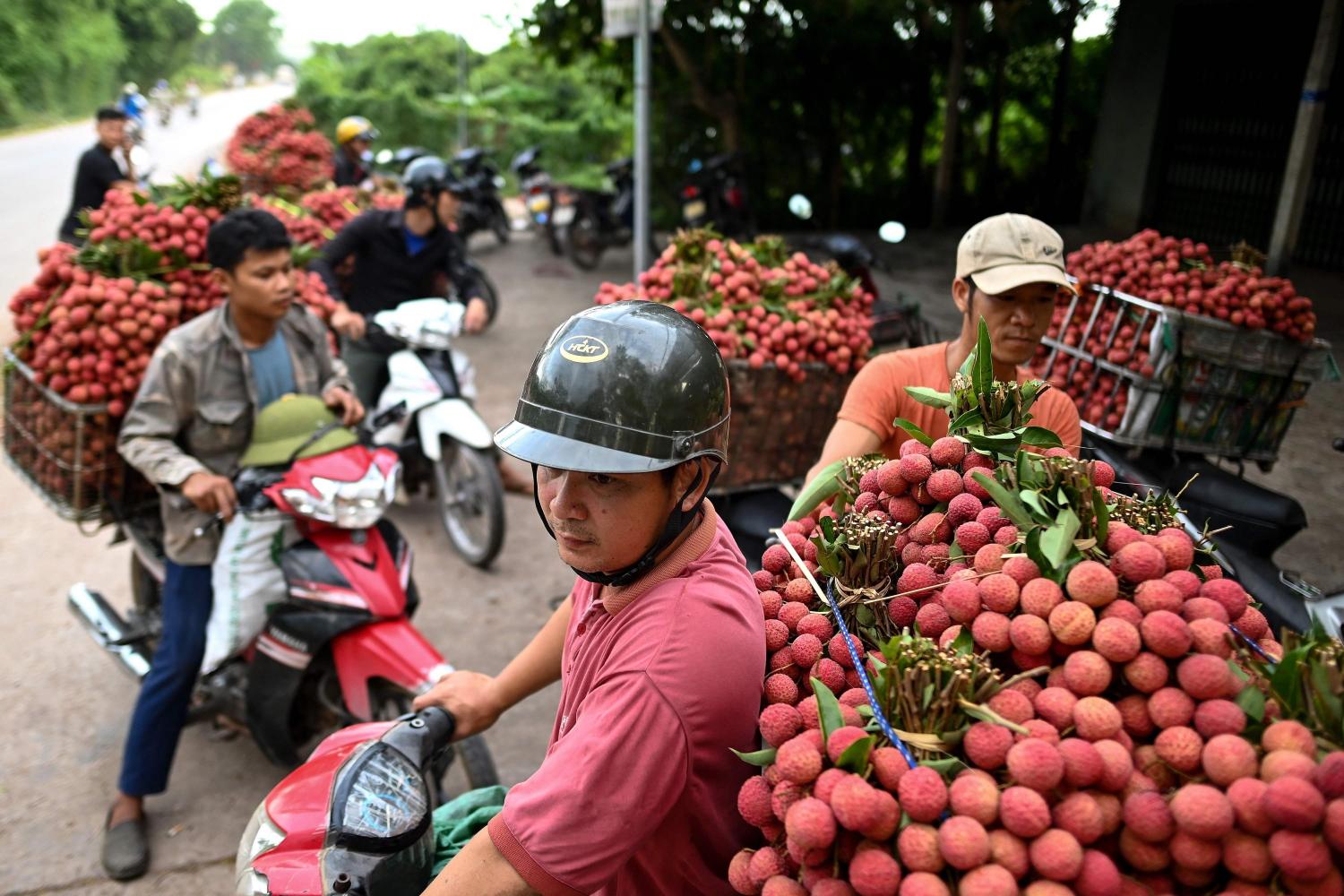
    The cost of lychees has increased by 20% compared to last year due to a decline in production brought about by unfavorable weather conditions. This information comes from Manh, a lychee orchard owner in the Thanh Ha Commune, Hai Phong City, who has seen his yield decrease by 30%, even though he recently sold a ton of the fruit for VND95,000 (US$3.61) per kilogram.

    Harvest Decline

    Pham Thi Van, a fellow farmer in the region, has reported a similar experience. She has only been able to harvest a ton of fruit so far this season, which is only half of last year’s yield.

    Although prices have dropped slightly since mid-April before the harvest, they remain at their highest in years, according to Van.

    Rising Profits

    In the Central Highlands province of Dak Lak, lychees are selling between VND60,000-80,000 per kilogram at the farm gate, which is considerably higher than in previous years. An orchard owner in the province confirmed that profits have increased as traders are proactively sourcing supply and placing advance orders.

    In Ho Chi Minh City, lychees from Dak Lak are selling for VND140,000-150,000 per kilogram, while specialty egg-shaped lychees from Thanh Ha are selling for VND150,000-180,000 per kilogram. Some stores that transport lychees by air to preserve freshness are charging as much as VND210,000.

    Weather Impact

    The Hai Phong Department of Crop Production and Plant Protection has said that the city has approximately 9,350 hectares of lychee trees, with 35% currently bearing fruit. According to them, a milder winter combined with a lack of cold weather has affected the flowering and fruit set rates of the lychee trees.

    Local authorities have advised farmers to improve crop care procedures and are urging businesses to collaborate with farmers to ensure a stable supply.

    Questions & Answers

    What has caused the increase in lychee prices?
    Poor weather conditions have resulted in a decrease in lychee production, leading to a 20% increase in the cost of the fruit.

    What measures are being taken to ensure a stable supply of lychees?
    Local authorities are encouraging better crop care techniques and pushing for partnerships between farmers and businesses to maintain a steady supply.

    How has the weather impacted the yield of lychee trees?
    A milder winter and a lack of cold weather have negatively impacted the flowering and fruit set rates of the lychee trees, leading to lower yields.
  • Lychee Exports Surge to $35M in June, Tripling Previous Figures!

    Lychee Exports Surge to $35M in June, Tripling Previous Figures!

    Vietnam’s lychee exports are soaring, with figures revealing a remarkable $27 million in sales to China alone—an astonishing 3.63 times increase compared to June of the previous year, according to customs data. Even in premium markets like France, Australia, the U.S., Canada, and the U.K., purchases of this luscious fruit surged by two to five times, showcasing the growing international appetite for Vietnamese lychees.

    Record-Breaking Exports Propel Local Farmers

    In the first half of 2025, total lychee exports reached an impressive $45.4 million, reflecting a remarkable 92% increase year-on-year. Shipments to the top ten markets saw staggering growth rates, ranging from 10% to a jaw-dropping 2,000%. These figures paint a vibrant picture of the fruit’s rising prominence on the global stage, capturing the taste buds—and wallets—of consumers around the world.

    Quality Meets Affordability in a Sweet Package

    One exporter highlighted that Vietnamese lychee’s appeal lies in its combination of affordability and high quality, making it a hit among international buyers. As Vietnamese and global quality standards like VietGAP and GlobalGAP are increasingly met, the credibility of these exports has skyrocketed, especially in demanding markets such as the U.S., Japan, and the U.K. Modern harvesting and preservation techniques, according to Dang Phuc Nguyen, general secretary of the Vietnam Fruit and Vegetable Association, have drastically enhanced the fruit’s quality and shelf life. Businesses are now collaborating directly with farmers to boost productivity and quality at every phase—from planting to harvesting.

    Price Trends and Export Markets

    Lychee is currently in season, with farm gate prices ranging from VND 8,000 to VND 20,000 (31-76 U.S. cents) per kilogram. Notably, lychees from orchards certified for export command higher prices, fetching between VND 25,000 and VND 30,000. At the beginning of the season in May, prices were higher, sitting at VND 35,000 to VND 40,000, while the fruit sells abroad for an impressive VND 200,000 to VND 300,000 per kilogram. Lychee, a staple summer delight in Vietnam, thrives predominantly in the northern regions, especially in the provinces of Bac Giang and Hai Duong.

    The Fruit’s Origin and Growing Regions

    This year’s harvest is expected to hit 250,000 tons, a 25% rise from 2024, with Bac Giang contributing a significant 165,000 tons. Luc Ngan, renowned as the “lychee capital” of the country, has approximately 18,000 hectares of lychee cultivation and yields over 100,000 tons annually. The Luc Ngan variety is particularly renowned for its size and sweetness, making it a favorite among discerning markets like Japan, Australia, the EU, and China. Meanwhile, Hai Duong, which made history as the first province to export lychees to Japan in 2020, boasts nearly 10,000 hectares of orchards producing the highly sought-after Thanh Ha lychees, recognized for their thin skin, thick flesh, aroma, and sweetness. Other areas like Hanoi, Quang Ninh, and Hung Yen also cultivate lychees, although on a smaller scale. The Central Highlands and some southern provinces have attempted to cultivate the fruit, but climate challenges have proven to be a significant hurdle.

    Questions & Answers

    What factors have contributed to the increase in Vietnam’s lychee exports?
    A combination of affordable pricing, high quality, and compliance with international standards has made Vietnamese lychees increasingly appealing in global markets.

    How has the production and quality of lychees evolved in Vietnam?
    Modern harvesting and preservation techniques, along with partnerships between businesses and farmers, have significantly improved the lychee’s quality and shelf life.

    Which provinces are the main producers of lychee in Vietnam?
    Bac Giang and Hai Duong are the primary provinces for lychee production, with Bac Giang accounting for a large portion of the national harvest.

  • Lychee Farmers Brace for Hardships as Prices Plummet Below $1 Per Kilogram

    Lychee Farmers Brace for Hardships as Prices Plummet Below $1 Per Kilogram

    Fruits from certified export orchards in Vietnam now command prices between VND25,000-30,000 per kilogram, a drop from VND35,000-40,000 at the season’s outset. Luc, a seasoned lychee farmer from Bac Giang Province’s Luc Ngan District—the country’s leading lychee producing region—revealed that prices have plummeted by a third compared to last year, putting his profit margins at risk.

    Despite producing high-quality lychees from his one-hectare orchard, Luc warns he may barely break even if market prices do not rebound. Growers report that the production cost for a kilogram of lychee, including packaging, hovers between VND8,000-12,000. In southern Vietnam, retail prices range from VND25,000-40,000 per kilogram, reflecting a nearly 30% dip from earlier this month and a staggering 50% drop compared to the same time last year.

    Giang, another farmer from Hai Duong Province’s Thanh Ha District, explains that an oversupply of lychees coupled with fierce competition from other tropical fruits has contributed to the current price slump. The situation has been exacerbated by a 26.6% year-on-year decline in lychee exports during the first four months of this year, with 17 markets pulling back on imports, notably the Netherlands and France, which reduced purchases by 84% and 40%, respectively. However, markets such as the U.S. and China have seen increases in demand, ranging from 25% to 116%.

    Transportation costs, propelled by ongoing tensions in the Middle East, have also played a significant role in suppressing imports. Competing with Vietnam, China has stepped up its own lychee exports, putting additional pressure on the market.

    This year, Vietnam’s lychee output is projected at about 250,000 tons—up 25% from 2022—with Bac Giang accounting for a substantial 165,000 tons. Yet, since the season launched, the province has managed to sell only 13,000 tons locally, with export figures remaining modest.

    In a move to ease the situation, the Bac Giang Department of Industry and Trade is advocating for processing initiatives, such as drying, juicing, or freezing the fruit, as a strategy to broaden sales channels. They launched a promotional program in both Hanoi and Ho Chi Minh City this week, aiming to boost the visibility and demand for this seasonal delicacy.

    Questions & Answers

    How has the lychee market in Vietnam changed this year?
    This year, Vietnam’s lychee market has experienced a significant downturn, with prices dropping by a third compared to last year, largely due to oversupply and competition from other fruits.

    What factors are affecting lychee exports from Vietnam?
    Lychee exports have fallen due to reduced demand from several markets, including notable decreases from the Netherlands and France, alongside rising transportation costs and increased competition from Chinese lychee exports.

    What steps is Bac Giang Province taking to improve lychee sales?
    Bac Giang Province is encouraging businesses to process lychee into products like dried fruit and juice to diversify sales channels, while also rolling out promotional programs in major cities like Hanoi and Ho Chi Minh City.

  • Chinese Seedless Lychees Command Attention with $35 per Kilogram Price Tag in Vietnam

    Chinese Seedless Lychees Command Attention with $35 per Kilogram Price Tag in Vietnam

    The arrival of seedless lychees in Vietnam is stirring excitement among fruit enthusiasts, thanks to a recent bumper crop that has brought prices down to VND45,000-120,000. As farmers and vendors report, this year’s harvest is notably cheaper than in the past, making the delectable fruit more accessible to consumers.

    Luxury from Hainan

    Thanh Tam, who runs a fruit store in Nam Tu Liem District, revealed that the seedless lychees are a bit pricier due to their origins in China’s Hainan Province, primarily meant for the Japanese market. Buyers are often looking to gift this unique treat or indulge in a fresh experience.

    In Dong Da District, Ngoc, another store owner, has imported 200 kilograms of these lychees since early June. With their striking reddish-pink skin and thick, juicy flesh, they are visually appealing. While these lychees are mostly seedless, consumers may occasionally encounter a tiny seed the size of a mung bean.

    Freshness, with a Concern

    E-commerce platforms are hopping with activity as sellers offer the seedless lychees mainly in two-kilogram baskets packed with ice to maintain freshness. However, some vendors report that the fruit’s skin can discolor rapidly, resulting in mixed reviews from customers. Hoang Anh from Cau Giay District recently tried them and was left wanting. She remarked, “It had a slightly sour and bitter taste, and its skin darkened after just one day,” expressing disappointment compared to local varieties.

    While some seedless lychees are also cultivated in northern Vietnam, costing around VND280,000 per kilogram, the quality has been inconsistent. In Bac Giang Province, 500 trees have been producing fruit since 2022, but yields remain low. Le Ba Thanh, deputy director of the province’s Department of Agriculture and Environment, indicated that there are currently no plans to increase production.

    On a larger scale, a company in Thanh Hoa Province has taken the lead, cultivating seedless lychees on over 1,000 hectares and exporting them to markets as far as Japan and the U.K., where they command a retail price of VND800,000 per kilogram.

    In a world where exotic fruits are increasingly popular, seedless lychees bring a delightful twist—who would have thought lychees would join the ranks of luxury gifts?

    Questions & Answers

    What is the price range for seedless lychees in Vietnam this year?
    Prices range from VND45,000 to VND120,000, which is more affordable than the previous year.

    Why are the seedless lychees from Hainan Province more expensive?
    These lychees are primarily grown for export to the Japanese market, which drives up their price.

    Is there any local competition for the seedless lychees?
    Yes, there are seedless lychees grown in northern Vietnam, but their yields and quality are inconsistent compared to the imports.

  • Lychee Production Set to Soar by 30% This Year: A Sweet Harvest Ahead!

    Lychee Production Set to Soar by 30% This Year: A Sweet Harvest Ahead!

    Favorable weather conditions and effective disease management have significantly boosted lychee production in Vietnam, a fact that’s exciting for enthusiasts and exporters alike. The total yield is expected to reach impressive figures, with the northern province of Bac Giang leading the way at around 165,000 tonnes. Other contributors include Hai Duong with 60,000 tonnes, Hung Yen and Lang Son each producing 22,000 tonnes, and Dak Lak in the Central Highlands offering another 21,000 tonnes.

    Timing is Everything

    Harvest time is a brief but crucial window, divided into two phases: the early harvest from May 20 to June 10, followed by the main crop from June 10 to July 25. Those looking to capitalize on the lychee’s short harvest must prepare adequately to ensure smooth processing and consumption, according to local agricultural authorities.

    Aiming for Quality Control

    Production management is being taken seriously, with 469 production unit codes issued across nearly 19,400 hectares and 55 packaging facilities approved for exports to markets like China, Australia, Thailand, Japan, and the U.S. These facilities are under constant oversight, having successfully registered for the upcoming 2025 crop year.

    Global Readiness

    The Department of Plant Production and Protection has engaged proactively with international plant quarantine agencies since early April. Their efforts focus on ensuring that all documentation is in order while also inspecting lychee processing facilities, which include three irradiation and three fumigation plants. These establishments have received the green light from foreign authorities for the 2025 crop, positioning them to facilitate export.

    In a particularly noteworthy development, Japan has decided to allow Vietnam to supervise the processing of lychee shipments starting with the 2025 crop, eliminating the need for Japanese experts to oversee the entire farming process. This new approach promises to save time and costs for both growers and exporters—a win-win scenario!

    In readiness for the upcoming season, quarantine units and food safety testing laboratories are gearing up to collect and examine samples, ensuring that all regulations are met. Quarantine officers are expected to be active in local areas from June 1 through the end of the harvest season.

    Domestic vs. Export Market

    About 60% of lychee production is anticipated to be consumed domestically, while the remaining 40% will be earmarked for export. Despite Vietnam’s lychees reaching over 20 countries worldwide, a staggering 90% of the export volume still heads to the Chinese market.

    As the excitement builds for this year’s harvest, one can’t help but wonder: what unique lychee recipes will emerge from this abundance?

    Questions & Answers

    What are the major provinces producing lychee in Vietnam?
    The major producing provinces include Bac Giang, Hai Duong, Hung Yen, Lang Son, and Dak Lak.

    When does the lychee harvest season occur?
    The harvest is split into two phases: early fruits are harvested from May 20 to June 10, and the main crop follows from June 10 to July 25.

    How much of the lychee production is expected to be exported?
    Approximately 40% of the lychee output is planned for export, while the remaining 60% will be consumed domestically.

  • Lychee prices triple at season end as poor harvest squeezes supply

    Lychee prices triple at season end as poor harvest squeezes supply

    Retailers are selling end-of-season lychees at up to VND180,000 (US$7.1) per kilogram, thrice the price a year ago, due to a poor harvest.

    They are not as plentifully available as in previous years in HCMC and cost VND165,000-180,000 at premium stores and VND85,000-96,000 at large retail chains like MM Mega Market and Winmart.

    Some supermarkets have run out of stock while others are selling the fruit in very limited quantities at VND120,000-135,000.

    Lychee output took a nosedive this year. In Bac Giang Province’s Luc Ngan District, a major producer of the fruit, lychee farmer Nguyen Thi Hien had expected her output to decrease by 30% this year, but she said it has dropped by 60%.

    She sold her last half a ton at VND80,000 per kilogram, the highest price she has got in her life.

    According to the Luc Ngan People’s Committee, even buyers and processing facilities in the district have been struggling to source lychees. While farmers usually have to transport the fruit to markets, traders are buying right at the farm gate this year, it said.

    Similarly, in Hai Duong Province’s Thanh Ha District, another large lychee grower, farmers have reported significantly lower harvests.

    One of them, Giang, said he has only managed to harvest three tons this year, down from last year’s 11. Despite the unprecedented prices he incurred losses due to the poor harvest, he said.

    Hoang Anh, a lychee merchant in the northern region, said Thanh Ha District is almost out of lychees and she is only able to procure them from Luc Ngan. The fruit is in great demand this year, both domestically and internationally, she said.

    Demand from China, the biggest consumer of Vietnamese lychees, has increased since that country also had poor harvests, while southern Vietnam has consumed a lot more lychees this year, she said.

    She was only able to buy enough to meet 50-70% of the orders she received.

    An MM Mega Market spokesperson said the falling supply has caused prices to increase towards the end of the season unlike in previous years when they would decline.

    MM signed an agreement with Bac Giang farmers at the start of the season to buy 100 tons of the fruit this year, but it now seems difficult given the poor harvest, they added.

    Central Retail, which operates the GO! supermarket chain, also said it might not be able to buy 300 tons of lychee as it had previously planned

    According to statistics from the Bac Giang Department of Industry and Trade, farmers in the province have harvested 67,000 tons so far this year.

    Around 43,000 tons have been consumed domestically, and the rest has been exported, the department said.

    China bought 23,800 tons of the remaining 24,000 tons. Japan, the U.S., the EU, Australia, Dubai, and some Southeast Asian countries also imported Vietnamese lychees.

  • Lychee farmers suffer losses despite 50% price increase

    A poor lychee harvest in Vietnam’s lychee production hub, northern Bac Giang Province, has led to financial losses for farmers, despite a 50% increase in the fruit’s price.

    Last year, the 40 lychee trees of Oanh’s family were full of fruit, earning them revenues of VND150 million ($5,900). But fewer fruit this year dropped earnings to only VND100 million.

    “I’ve been growing lychees for seven years, but I’ve never seen a year with such a poor harvest,” Oanh said. Anh Huy, also from Bac Giang, said all the lychee flowers were ruined following a period of rain. Production declined by over 90%, he added.

    “This lychee season is entirely lost. No matter how high the prices might be, I will still lose money,” he said.

    Giang, from Thanh Son Commune, said his family’s 5 ha of lychee would also see production dropping by 30% from last year. Even with prices increased 1.5 times higher than normal, the revenue would only be at around 80% compared to last year.

    Lychee gardens are faring well in other localities like Hung Yen, Hai Duong and the Central Highlands, with production dropping to 50-60% of the same period last year.

    Dong Thi Thu Huong, director of Minh Tien agriculture cooperative in Hung Yen, said the cooperative’s 400 ha of lychee production declined by half this year. While a kilogram of lychee was sold at VND15,000 last year, this year, it could be VND25,000, she added.

    “The estimated revenue this year of the cooperative would see a 20-30% drop compared to the same period last year, due to low production despite rising prices,” Huong said.

    The Hung Yen Department of Agriculture said lychee production in the province would see a 30% drop from last year, while Bac Giang said it would see a 50% drop.

    According to the Department of Agriculture and Rural Development, unstable weather patterns have contributed to poor harvest. In winter last year, average temperatures were around 1.5 degrees Celsius higher than the previous year, affecting the development of lychee trees. Short cold periods and long-lasting rains in January and February this year also affected production.

    Le Ba Thanh, vice director of the agriculture department of Bac Giang, said due to abundant harvests last year, there is not enough strength to guarantee a similarly strong harvest this year.

    However Nguyen Nhu Cuong, head of the Department of Crop Production, said rising prices may help offset low production, allowing farmers to net profits.

    Export businesses said they are adjusting their plans due to low lychee production and rising prices. Mai Xuan Thin, director of the Red Dragon production, commerce and service company, said the firm is worried about potentially low supply as it plans to export to several countries this year.

    “Besides Australia, we would export products to the U.S., Japan and Canada as well,” he said.

    Businesses said low supply and high demand may make it more difficult for Vietnamese lychees to be exported, as they would have to compete with lychees from other regions, like China or Mexico.

  • Fresh lychee conquering US market

    Fresh lychee conquering US market

    The first batch of fresh lychee has arrived in the U.S., opening up big opportunities for the specialty and other Vietnamese fruits to conquer the demanding market.

    Thanks to coordination between importer LNS International Corporation and the distributor L&V Food Supply Company in Houston, Texas, fresh lychee grown in the northern province of Bac Giang – dubbed Vietnam’s kingdom of the fruit, has been available on the shelves of many supermarkets and the largest Asian market in Houston.

    Chinh Nguyen, CEO of L&V Food Supply, said her group and LNS International Corporation are working on a plan to import big shipments of Vietnamese food and fruits to the U.S. this year.

    “After three shipments of fresh lychees (approximately 9 tonnes) to the U.S. in June, we plan to import frozen lychee (about 2 containers per month, equivalent to about 30 tonnes),” she said.

    “If Vietnamese suppliers can ensure enough standard products, we will import an additional three shipments (80-90 tonnes) this year.”

    The success demonstrates the efforts by Vietnamese ministries and agencies, including the Ministry of Industry and Trade, in trade promotion to deliver Vietnamese agricultural products to demanding markets such as the U.S. and the European Union.

    According to the Ministry of Agriculture and Rural Development, among Vietnamese agro-forestry-fishery products, the U.S. has purchased cashew nuts, aquatic products, wood and fruits most.

    The U.S. Department of Agriculture forecast that the US will import up to $199 billion worth of agricultural products this year, $5 billion higher than last year’s figure, which offers an opportunity for Vietnamese agro-forestry-fishery exports.

    Last year, the U.S.’s fruit-vegetable import reached a record high of over $31 billion, including $19.3 billion= of fresh and frozen fruits, an increase of 10% compared to 2021. The majority of these imports came from Canada, Mexico, and some countries in Central and South America.

    Apart from Vietnam, the U.S. also imported lychee from China, India and Thailand. Vietnam’s Bac Giang lychee has been favoured by local consumers for its quality.

    Vietnamese Trade Counsellor in the U.S. Do Ngoc Hung pointed out that there is ample room for Vietnamese fruits in the U.S. market.

    However, Vietnamese agricultural products and lychee still encounter obstacles in accessing the market due to the far geographical distance, and high irradiation and transportation costs.

    The Vietnamese trade office in Houston suggested relevant associations and businesses of Vietnam and the US exchange information and work together to support export-import activities.

    In particular, businesses should make long-term commitments to ensuring good coordination among exporters, importers, and distributors for large shipments, exchange market information and share responsibility and risks with partners, thus creating a healthy competitive environment, Hung said.

    He also suggested intensifying product promotion to introduce Vietnamese fruits to other communities in the US apart from Asian consumers.

  • First Vietnamese pomelo exported to US

    First Vietnamese pomelo exported to US

    Pomelo became the seventh Vietnamese fruit to be officially exported to the U.S. Monday with the first 100 tons being transported from the southern province of Ben Tre.

    The batch is split into six containers. Four of them will be exported by air and two by sea.

    Deputy Minister of Agriculture and Rural Development Tran Thanh Nam said at the announcement ceremony Monday that the U.S. is one of the most difficult markets in the world but has large demand for fresh fruits.

    He added that Americans consume about 12 million tons of fruits annually, with 30% of them imported.

    The exported pomelo must come from the 36 growing areas in Vietnam that have been registered with U.S. authorities.

    They span 752 hectares, or 0.71% of Vietnam’s total pomelo growing area.

    Many measures must be strictly taken to ensure the fruits are clean and healthy.

    Ben Tre Province Chairman Tran Ngoc Tam said that of the seven Vietnamese fruits that are exported to the U.S., the province has three: pomelo, longan and rambutan.

    Other fruits that have been approved for official U.S. exports are mango, dragon fruit, star apple and lychee.

  • Vietnamese lychee to be sold online for first time

    Vietnamese lychee to be sold online for first time

    Lychees grown in Hai Duong Province will be sold on e-commerce platforms Voso, Sendo, Lazada, and China’s Alibaba on Saturday, according to the Vietnam Trade Promotion Agency.

    It would be the first time that the fruits are sold online, and the agency said the biggest hurdle to this is farmers’ lack of knowledge of e-commerce, online marketing, selling and customer support, and quality control.

    It has collaborated with the northern province’s Departments of Agriculture and Rural Development and Industry and Trade to provide training to lychee farmers and traders in setting up and operating stores on the four e-commerce platforms.

    Hai Duong harvested 43,000 tons of lychee last year and exported half of it, including 1,600 tons to Japan, Australia, and the U.S. It expects to harvest 55,000 tons this year, and export half to China.

    In nearby Bac Giang Province, the director of the Department of Industry and Trade, Tran Quang Tan, estimated 180,000 tons of lychees would be harvested this year, with half of it exported to China, 10 percent to Japan, and another 10 percent to the U.S., the EU, and Australia.

    The harvest will take two months starting May end.

    Around 300 Chinese merchants have registered to visit Vietnam to buy lychees in Bac Giang.

    Local authorities will arrange transportation for them at the border, test them for Covid-19 and quarantine them for 14 days.

    The northern provinces of Bac Giang and Hai Duong are Vietnam’s lychee growing hubs, with the former having the largest area for lychee cultivation, which was 28,000 hectares last year, according to Bac Giang Portal. Hai Duong province came in second with 10,000 hectares.