Tag: m-commerce

  • Carousell raises US$56 million from Naspers

    Carousell raises US$56 million from Naspers

    Singaporean m-commerce platform Carousell has raised US$56 million from Naspers, the parent company of the Philippines’ online marketplace OLX.

    As part of the deal, Carousell will also acquire OLX Philippines, with the transaction due to be completed by the second half of this year.

    OLX Group will own a 10 per cent stake in Carousell, and values the company at “over US$550 million,” the firm says.

    The merger will give Carousell a boost in the Philippines and across Southeast Asia.

    Currently featuring 196 million listings Carousell has sold some 71 million items since it was founded in 2012. The company says it wants to continue improving predictive features like smart listings, personalised browsing, chat experiences and price-suggestion functions.

    The firm has raised approximately $170 million to date, and expects a valuation of $1 billion, in the near future.

    Carousell operates in Malaysia, Indonesia, the Philippines, Hong Kong, and Taiwan.

  • Singapore m-commerce set for 33 per cent growth

    Singapore m-commerce set for 33 per cent growth

    Singapore m-commerce is set for 33 per cent growth in the next five years, according to a new report.

    However, while it leads Southeast Asia in smartphone and mobile broadband use, Singapore is nearing saturation point for its e-commerce market, says Worldpay’s Global Payments Report.

    Despite its modest population numbers, the city/state is the region’s third-largest e-commerce market with 73 per cent of internet users already shopping online. But this growth is set to slow with a modest 9 per cent expansion to reach US$6.5 billion by 2021 predicts Worldpay, which analysed e-commerce spending patterns across 36 markets on five continents.

    In comparison, China’s e-commerce market is expected to grow by 11 per cent, South Korea should see 19 per cent growth and India is set for 24 per cent expansion.

    Despite Singapore’s decelerating growth, there will be plentiful opportunities for capturing a new wave of mobile shoppers in Singapore, says the report.

    Cross-border shopping is also increasingly popular, with more than half of Singapore’s online consumers buying from international merchants.

    ‘New set of demands’

    “Retailers looking for a foothold to the future must prepare to deliver on a new set of demands in Singapore,” says Worldpay Asia Pacific GM Phil Pomford. “Online shoppers are moving beyond the desktop, and beyond country borders. Savvy and well-connected across multiple devices, they increasingly prefer to shop via mobile and want more opportunities to buy from merchants around Asia and the globe.

    “To deliver on the demands of Singaporean shoppers who expect a convenient, seamless experience no matter how they shop, merchants need to create mobile-friendly payments.”

    Pomford says merchants will be able to capture more cross-border trade by accepting a variety of currencies and payment options.

    Worldpay also found that shoppers in Singapore still overwhelming prefer to pay with credit cards (66 per cent), but alternative payment methods are gaining a foothold. Bank transfers and e-wallets are both set to nearly double in share by 2021, increasing from 11 to 21 per cent and 13 to 21 per cent respectively.

    “Our report also uncovered that 70 per cent of Singaporean internet users would shop online more if offered loyalty benefits – a great tip for e-commerce businesses looking to gain a competitive edge,” says Pomford.

    Worldpay offers three main guidelines for merchants seeking to capitalise on the e-commerce and m-commerce opportunity in Singapore and the wider Asia-Pacific region:

    1. One-click ordering: Consumers are more likely to shop more often with companies that save their payment details for one-click ordering. This makes online checkout as seamless as possible, especially via mobile apps.

    2. Payment options: Merchants should look at the most popular payments methods in each territory, and prioritise those that complement their business model. There is no one size fits all in the Asia-Pacific region, so they need to understand their best options.

    3. Cross-border trade: Merchants should ensure they have local acquiring capabilities wherever they have a legal entity. They should also offer a range of currencies at checkout, and consider local-language customer support.
    Worldpay offers technology-led payment products and services to about 400,000 clients across 146 countries and 126 currencies.

  • Lazada opens m-commerce tech hub in Thailand

    Lazada opens m-commerce tech hub in Thailand

    Southeast Asian e-commerce company Lazada Group has opened a tech hub in Bangkok, Thailand to drive strategic mobile development initiatives.

    The Lazada Tech Hub in Thailand will focus on advancing the design and engineering of Lazada’s mobile shopping and selling sites and apps for Southeast Asia.

    With almost 30 million app downloads and more than 60% of its GMV represented by mobile sales by the end of December 2015, Lazada Group has been investing in m-commerce through new app and mobile site initiatives.

    In the next few months, Lazada Tech Hub aims to hire more than 50 staff, including iOS and Android developers, Go Programming Language developers, and Quality Assurance automation engineers. The tech hub team will operate from EmQuartier in Central Business District Bangkok.

    Lazada Group opened its first tech hub in Ho Chi Minh, Vietnam in November 2012. A second tech hub was opened in Moscow, Russia in February 2015. Together, the three tech hubs are dedicated to driving product engineering and technology infrastructure.

    “Mobile innovation is a discipline any serious online player must build, and having the best talent is critical to designing products and solutions that are not only intuitive but improve the quality of experience and life for our consumers and sellers,” Lazada CTO for operations Ifor Evans said.

    “We believe that Thailand attracts a highly-skilled talent pool. And, as the leading shopping and selling destination, Lazada is both enviably-positioned and committed to raising the bar for mobile and tech development in the region.”

  • Mobile commerce to drive retail innovation in 2016

    Mobile commerce to drive retail innovation in 2016

    The pervasiveness of mobile commerce will present some of the biggest challenges that will impact retailers’ strategies during 2016, according to latest predictions from Manhattan Associates, Inc.

    In 2016, retailers will also be impacted by more personalised shopping and rapid migration to customer-centric retailing.

    Retailers should make informed choices about what is right for the consumer and what is right for the business.

    They should strive to make the shopping experience personal and frictionless, re-define the role of the store assistant and recognise the power of Millennials.

    In addition, they should embrace mobile to achieve customer-centric retailing success and deliver faster, and be more flexible with returns.

    “Growing consumer demand, expectations for a more personalised shopping experience and increased mobile use will cause retailers to make some fundamental changes in 2016,” said Richard Wright, managing director, Southeast Asia at Manhattan Associates. “We have therefore identified five key areas in which retailers can focus attention, to not only achieve customer satisfaction but also to drive business growth and profitability.”

    Digital personalisation success

    Inspired by the digital personalisation success, retailers are now eyeing in-store experience as they recognise the rise in customer expectation and the differentiation personal service can offer.

    Retailers are beginning to understand the importance of store assistant to the overall shopping experience and the business. Predictions from Manhattan Associates alsoindicate that Millennials or Generation Y treat their mobile phone like an extension of their family and are always looking for an Internet connection.

    Mobile has begun to play a more important role in browsing, buying and paying for goods.

    Price is the number one attraction for two-thirds (67%) of shoppers across both online and in-store shopping.


  • Asia mCommerce shopping soars

    Asia mCommerce shopping soars

    Asia Pacific consumers are increasingly likely to make their online purchases and bill payments through mobile devices (mobile phone or tablet), rather than via desktops, according to Visa’s 2015 Regional eCommerce Monitor Survey.

    The survey, which polled 11,760 respondents from 13 markets in Asia Pacific, found respondents reported an average 22 per cent increase from 2014 in Asia mCommerce shopping.

    Respondents from Indonesia (36 per cent), Mainland China (34 per cent) and Taiwan (28 per cent) reported the greatest growth in mCommerce during the year.

    The rising popularity of mCommerce among Asia Pacific consumers is narrowing the gap with traditional eCommerce channels such as laptops or desktop computers across the region. In Thailand, consumers are as likely to purchase using their mobile devices as through desktops, while the mCommerce-eCommerce gap in markets such as Mainland China (eight per cent), Korea (nine per cent) and Indonesia (nine per cent) is decreasing.

    Visa’s regional director for eCommerce, Conor Lynch said the results show that making purchases on the go through mobile devices is becoming the norm in Asia Pacific.

    “As consumers get more comfortable using their smart devices to research, browse and purchase, mCommerce should soon overtake traditional eCommerce habits, strengthening this channel of engagement between consumers and retailers.”

    The survey also found travel, bill payments and movies were the top spending categories for eCommerce in general across Asia.

    For mCommerce, the top three categories are also fashion, bills and movies at 27 per cent each.

    “Across Asia Pacific, we are seeing that ticket-size, as well as the nature of the purchase, impacts how consumers purchase goods and services online. Consumers in this part of the world, are already comfortable purchasing smaller ticket-sized, everyday items by clicking the purchase button on an app or checkout button on a mobile device,” Lynch said.

    Another continuing trend revealed by the survey is the tendency for consumers to engage in cross-border online shopping. In particular, consumers from Singapore (77 per cent), Australia and Hong Kong (75 per cent) and New Zealand (74 per cent), are the most likely to make online purchases from retailers abroad, well above the regional average of 55 per cent. On the other hand, consumers from Japan (81 per cent), Taiwan (61 per cent) and Vietnam (57 per cent) are more likely to shop at domestic online stores.

    When shopping online with an overseas retailer, price (68 per cent), access to products (60 per cent), paying and delivery processes (40 per cent) and reputation of products (29 per cent) are key motivations for Asia Pacific consumers.

    The Visa eCommerce Monitor Survey 2015 was conducted by ORC International Singapore with 11,760 consumers, aged 15 to 55 years and across 13 countries and markets – Australia, Mainland China, Hong Kong, India, Indonesia, Japan, Malaysia, New Zealand, Singapore, South Korea, Taiwan, Thailand and Vietnam in May and June 2015.


  • JV ‘revolutionises’ m-commerce

    JV ‘revolutionises’ m-commerce

    Chinese mobile commerce company 99 Wuxian is bringing NFC technology to China.

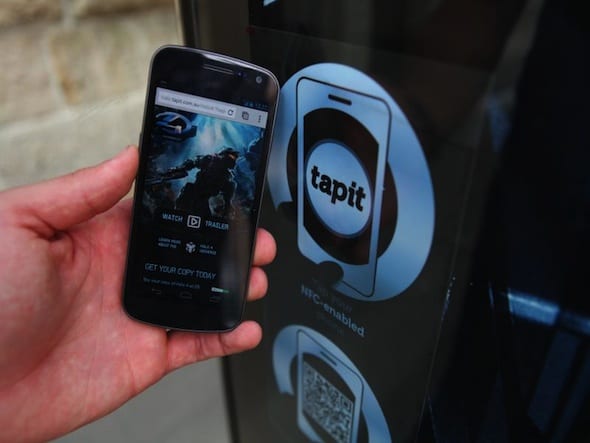
    99 Wuxian and Australian Near Field Communication (NFC) technology startup Tapit Media have joined to “revolutionise” Chinese m-commerce and offline media by integrating NFC enabled interactive offline marketing campaigns with 99 Wuxian’s platform.

    The JV will utilise Tapit’s contactless communication technology which uses a range of contactless standards including NFC and Bluetooth Low Energy (BLE) to deliver content to smartphones from offline physical media assets.

    Users with NFC-enabled smartphones have the ability to tap NFC-enabled objects to access content and information such as videos, mobile optimised pages and instant app downloads.

    It allows 99 Wuxian to provide a new and unique offering to its business partners in China by allowing smartphone users to interact with NFC-enabled offline media and 99 Wuxian m-commerce platform to complete transactions.

    The consumer engagement opportunity is significant and is expected to include using NFC-enabled smartphones to access information, buy movie tickets, receive food and beverage coupons or buy transport tickets.

    “It’s a very exciting development for 99 Wuxian and our business partners and merchants that we are bringing market leading Australian technology to China and drive direct B2C growth,” said 99 Wuxian CEO and executive director Amalisia Zhang.