Retail News CRM

Tag: m-payment

  • China’s m-payment market growing 142% annually

    China’s m-payment market growing 142% annually

    The total value of mobile payment transactions in China is expected to grow at an average annual growth rate of 142% over the next three years to reach 13,776.5 trillion yuan ($2,011.17 trillion) by 2020, according to Research and Markets.

    According to a new report by the research firm, mobile banking accounted for 83.1% of the value of mobile payment transactions in 2015, but this is expected to decline slightly to 80.4% in 2020.

    Among the banks, China Construction Bank had a 23.1% market share, followed by Industrial and Commercial Bank of China (20.0%) and Agricultural Bank of China (13.9%).

    Faced with fresh challenges from payment service providers, the banks are expected to strengthen competitiveness by introducing differentiated services and products, such as jointly-issued cards or support for large payments.

    Third-party mobile payment transaction values have been estimated at 21.96 trillion in 2015, with the market rapidly growing. Alibaba’s Alipay and Tencent’s Tenpay have captured 90% of the market.

    Market competition further intensified in 2016 as handset vendors and traditional enterprises stepped up their presence in the payment market.

    Research and Markets expects 2D QR code payment technology to continue to lead the market. More secure and advanced technologies such as near field communication (NFC), hosted card emulation (HCE), token authorization and biometric authentication will meanwhile mature more gradually.

  • Over half of APAC connected consumers use m-payment

    Over half of APAC connected consumers use m-payment

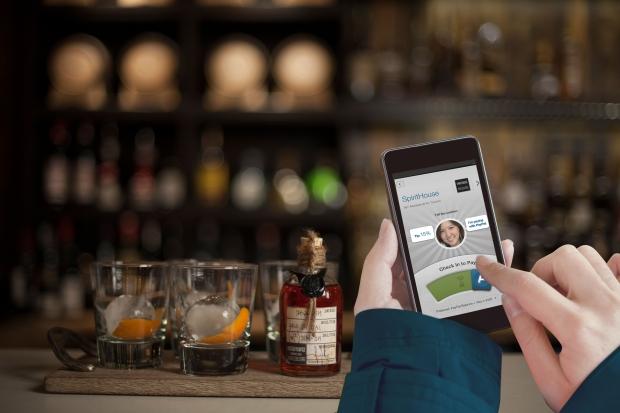
    The Asia Pacific region is leading the world in mobile payment adoption, with over half of connected consumers in the region using their mobiles to pay for goods or services at point of sale via apps.

    This is among the key findings of a survey of more than 70,000 consumers, conducted by consultancy Kantar TNS. The study pegged mobile payment penetration for Asia Pacific at 53%, compared to 33% in North America and 35% in Europe.

    With smartphone users across Asia Pacific numbering over a billion, one key driver behind this trend would be the significant mobile penetration here. Moreover, the evolution of Asian chat apps to include payment options and the lack of legacy banking structures has only served to accelerate adoption.

    Chat apps such as WeChat and LINE have developed numerous payment services such as WeChat Pay, Line Pay, Alipay and O! ePay to facilitate everything from taxi bookings to e-commerce sales.

    Mobile payment options within these apps allow consumers to complete their purchase journey seamlessly, and also serve to help to establish these behaviors.

    Many mobile-first markets such as India, Malaysia and Indonesia are also taking up the behavior, fueled by the lack of legacy banking structures. The study noted that this makes that mobile payment an especially attractive solution for connected consumers in these countries.

    China, Hong Kong and South Korea are the top three mobile payment markets globally for weekly use, while Singapore is in the fourth position with the use of mobile payment identified as most prevalent among middle-aged consumers.

    In Singapore, 57% of connected consumers have used mobile payment, with more than a quarter (27%) doing so on a weekly basis. This number rises among younger Singaporeans ages 16-30, where 31% use mobile payment weekly, but is highest (33%) amongst middle-aged consumers in the 31-45 age group.

    Only 11% of those ages 46-65 use mobile payment on a weekly basis, however, 37% have tried it in the past, showing that they are open to sampling this kind of new technology.

  • Ant Financial deploys V-Key tech for m-payment security

    Ant Financial deploys V-Key tech for m-payment security

    Ant Financial Services Group has deployed technology from Singapore-based V-Key to augment mobile payment security.

    V-Key will provide a virtual software solution called V-OS for Ant Financial to secure transactions on e-Commerce platform AliExpress, Ant Financial’s sister company. V-Key will also provide cryptographic services and trusted environments to help secure payments processed by Alipay on AliExpress, along with risk management for each transaction.

    V-OS, which is currently deployed by top banks, mobile payment providers, and governments globally, is the world’s first virtual secure element. With V-OS, card and cardholder data will be encrypted, providing for more secure user authentication.

    V-Key’s solutions allow businesses to roll out cloud-based payments, trusted digital identity and authentication necessary for mobile banking and other secured mobile applications. V-Key brings advanced user data protection to its partners without the need to use any form of hardware secure elements. Its mobile security solution works on both iOS and Android devices.

    “As more users opt for mobile payments, account safety assumes utmost importance. V-Key’s unique technology helps us deploy our risk engine to enhance mobile security. The partnership is part of our commitment to secure our services,” Ant Financial VP of fraud management Jason Lu said.

  • Cashless push stimulating APAC m-payment market

    Cashless push stimulating APAC m-payment market

    A top down regulatory push toward cashless societies will stimulate exponential growth in the mobile payment market in Asia-Pacific (excluding China and India), which will surge from $71.92 billion to $271.47 billion by 2021, research from Frost & Sullivan indicates.

    According to the research firm, the number of active customers will also double to 130.8 million users by this time.

    With standardization and increasing openness toward FinTech, competition is intensifying for the entire supply-side ecosystem. Mobile payments solution providers will need to fully understand the mobile payments market in the region to gain an edge.

    Asia-Pacific is expected to continue to lead the world in mobile payment developments as smartphone penetration here is the highest. Apple, Samsung and Google with Apple Pay, Samsung Pay and Android Pay have also addressed existing security concerns through tokenization in the payment infrastructure, supplemented by biometrics on the smartphone.

    “The mobile payments market in Asia-Pacific, however, is guided by local preferences and considerations,” noted Frost & Sullivan Digital Transformation Industry Principal Analyst Quah Mei Lee.

    “For instance, in Indonesia and the Philippines, telcos lead with their e-money products whereas in Japan, South Korea and Australia, credit card is the key payment method. Understanding these dynamics is critical for mobile payments solution providers to succeed.”

    Mobile payment in Asia-Pacific is being led by developed countries such as Japan, South Korea, Australia and Singapore. Japan and South Korea has dominated since the early days of near-field communications (NFC) in 2011 and continues to account for 89.2% of market revenue share in Asia-Pacific.

    Among mobile payment market segments, m-commerce dominates despite the rapid increase in point-of-sale (POS) payment transaction volumes. The strong deployment of NFC in some countries is expected to help expand POS payment shares.

    For now, the mobile payment market has the most promise in countries that have a mandate to go cashless, like South Korea, Australia, Singapore and Malaysia. These will be followed closely by countries such as Thailand and Vietnam which are slowly transitioning to cashless.

    “The opportunities are limitless and mainstream integration of mobile payments into everyday life is already underway,” said Quah. “Even beyond this, there is tremendous potential for growth alongside connected devices in the Internet of Things era.”

  • India’s YES BANK taps Gemalto for secure m-payments

    India’s YES BANK taps Gemalto for secure m-payments

    India’s YES BANK has deployed Gemalto technology to secure mobile payment transactions for its customers under India’s recently implemented Unified Payments Interface (UPI).

    YES BANK, India’s fifth largest private sector bank, has adopted Gemalto’s SafeNet Network HSM for the purpose.

    UPI, India’s online payments solution, enables all account holders to send and receive money from their smartphones with a single identifier – such as mobile number or virtual payments address – without entering any bank account information.

    The SafeNet Network HSM (formerly SafeNet Luna SA HSM) provides end-to-end data security and encryption to protect user credential confidentiality and the private keys responsible for digital signing.

    “With a widespread network of over 860+ branches and 1,625+ ATMs Pan India, we’re committed to taking a customer-centric approach to our banking services,” said Anup Purohit, CIO at YES BANK.

    “The Unified Payments Interface offers clients revolutionary convenience when it comes to banking and payments, and we want to ensure the highest levels of security for users of the platform. We’re thrilled to integrate Gemalto’s industry-leading SafeNet HSM technology into the UPI application to support this initiative.”