Tag: M2
-

Chip Apple developed for the Apple Car reportedly carried a whopping 536 billion transistors
Last month, Apple put an end to the development of the Apple Car after spending ten years and ten billion dollars to create an autonomous vehicle. One of the components that Apple built for the car was a new chip that supposedly had the same performance capabilities as four M2 Ultra chips! Considering that each M2 Ultra chip is equipped with 134 billion transistors, a 24-core CPU, a 76-core GPU, and a 32-core Neural Engine, stitching together four of these components creates an extremely powerful chip.Imagine a chip carrying 536 billion transistors with a 96-core CPU and a 304-core GPU. While there is no definitive proof that the chip Apple was planning to use to power the Apple Car was perfectly equivalent to four M2 Ultra chips, consider that the number of transistors inside a chip determines how powerful and/or energy efficient that chip is. Using the “UltraFusion” technology that helped Apple combine two M1 Max chips to become the M1 Ultra, and combine two M2 Max chips to become the M2 Ultra, Apple might have been hoping to create an incredibly powerful silicon component from four M2 Ultra chips.Let’s do a simple comparison. The A17 Pro application processor (AP) that powers the iPhone 15 Pro and iPhone 15 Pro Max contains 19 billion transistors, only 3.5% of the number of transistors that might have been placed inside the chip Apple would have used to “drive” the Apple Car. Wccftech says that the new chip that Apple was developing for the Apple Car was “nearly done” before Apple put the kibosh on the project. Could that chip have been the M3 Ultra?When Apple introduces the M3 Ultra, it will be interesting to see whether any of that chip’s specs match the rumored powerhouse chip that would have been used on the Apple Car. One thing that we can be sure of, this chip would have been built by TSMC, the world’s largest foundry. -
MacBook Air M2 laptop price falls then rises
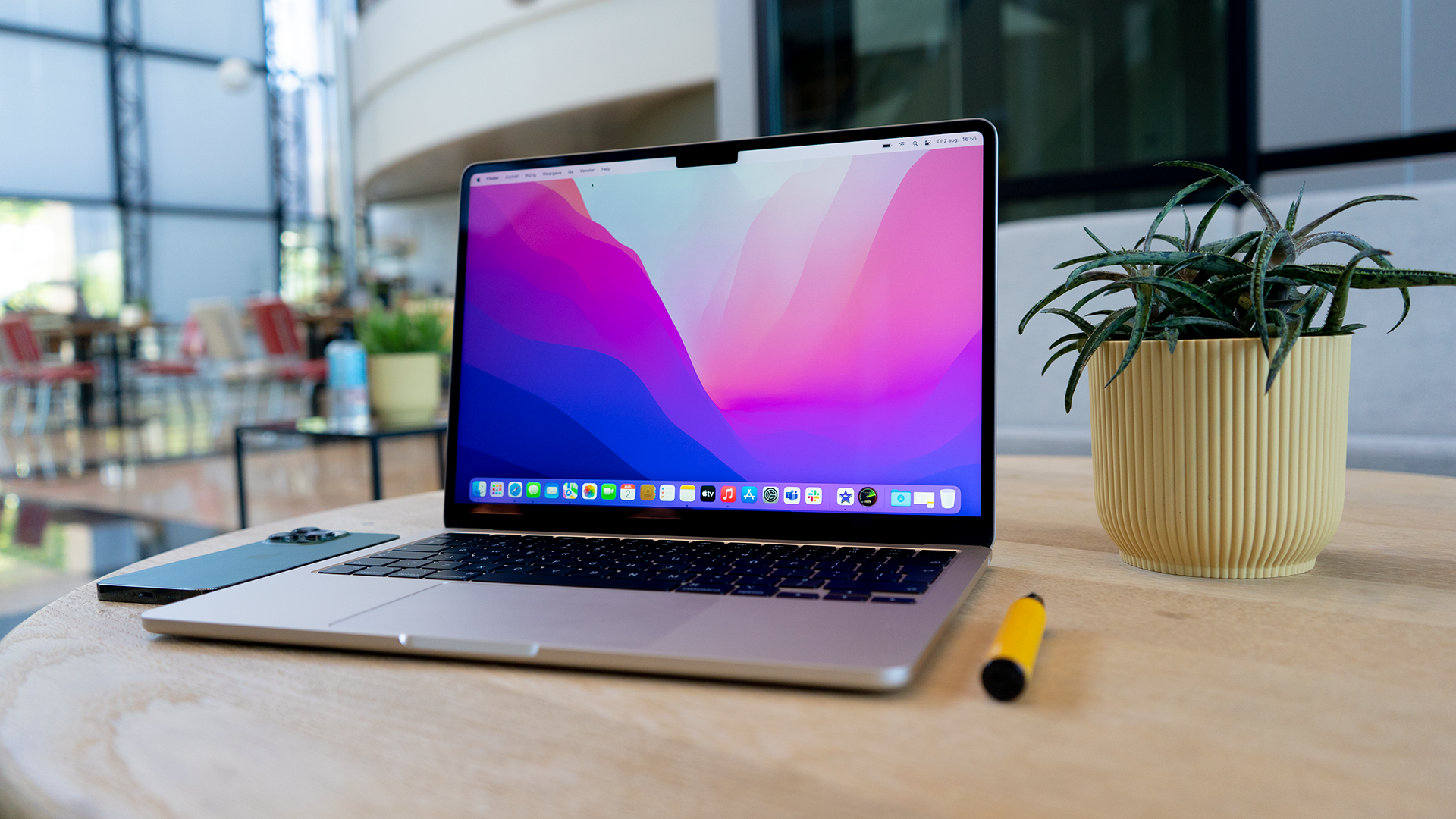
The retail price of the MacBook Air M2 laptop dropped by VND2.1-3 million (US$89-127) to VND25 million in April and has risen back to VND28 million in May.
The manager of an Apple distributor in Vietnam said retailers might have hiked the price because currently Air M2 inventories in the country are very low.
“If the demand … surges retailers … will have to wait for eight to 10 weeks for the product to be shipped to Vietnam.”
Large retailers such as The Gioi Di Dong, FPT Shop, and CellPhoneS had sold the Air M2 with the minimum configuration, the best-selling version, for VND28 million in early April, VND25.9 million in mid-April, and VND25 million in late April.
The laptop first sold for VND32.9 million when launched in Vietnam in July last year, but its price declined sharply partly due to competition among retailers to get a larger share of the pie, according to a manager of a The Gioi Di Dong store.
“Prices of technological products always tend to decrease gradually after launch. However, the continuous up and down with a large amplitude of several million dong in a short period of time shows the instability of the market,” said Nguyen Van Cong, a veteran trader of Apple products.
According to the manager of The Gioi Di Dong, the big discount of MacBook Air M2 is part of its price competition campaign.
In early April, during a shareholder meeting, Nguyen Duc Tai, Chairman of The Gioi Di Dong (Mobile World), said: “The price at The Gioi Di Dong was sometimes million dong higher than that at other retailers. However, this phenomenon will stop. We will not let the price difference become an advantage for competitors.”
Refusing to give the reason for their price fluctuations, managers of CellPhoneS and FPT Shop said MacBook prices have been “actively updated by the stores based on business strategies and the general situation in the market.”
In fact, the top three Apple device retailers in Vietnam, The Gioi Di Dong, FPT Shop and CellPhoneS, have changed the laptop’s prices frequently in recent days and the prices are almost the same.
At some Apple stores, it is one of the two best-selling laptops along with the MacBook Air with the M1 chip.
-

New M2 iPad Pro expected to launch today
Apple’s flagship tablet has been due for an update for quite some time. Last year, the iPad Pro received arguably the biggest upgrade in its entire history. The 2021 lineup saw the implementation of the M1 chipset (a full-fledged, desktop-class SoC) and the bigger 12.9” model in particular received a gorgeous mini-LED panel.
Some one and a half years have passed since then, however, and, given Apple’s consistency with regards to refresh cycles, an update was expected before the end of 2022. It seems that the announcement is just around the corner.
Mark Gurman, the final authority on all Apple-related leaks, confirmed last Saturday, in the latest edition of his Power On newsletter, that the 2022 iPad Pro is only “days away” and asserted that an announcement would take place before the end of this week.
Now, it seems that Gurman is certain that the new iPad Pro will be revealed today (Tuesday, October 18th). The information was first brought forward in a tweet by Gurman himself.
It should be noted that the announcement will be taking place via an official press release, as Apple is unlikely to hold another dedicated launch event before the end of 2022. This implies that the 2022 iPad Pro will be an incremental update over its predecessor.
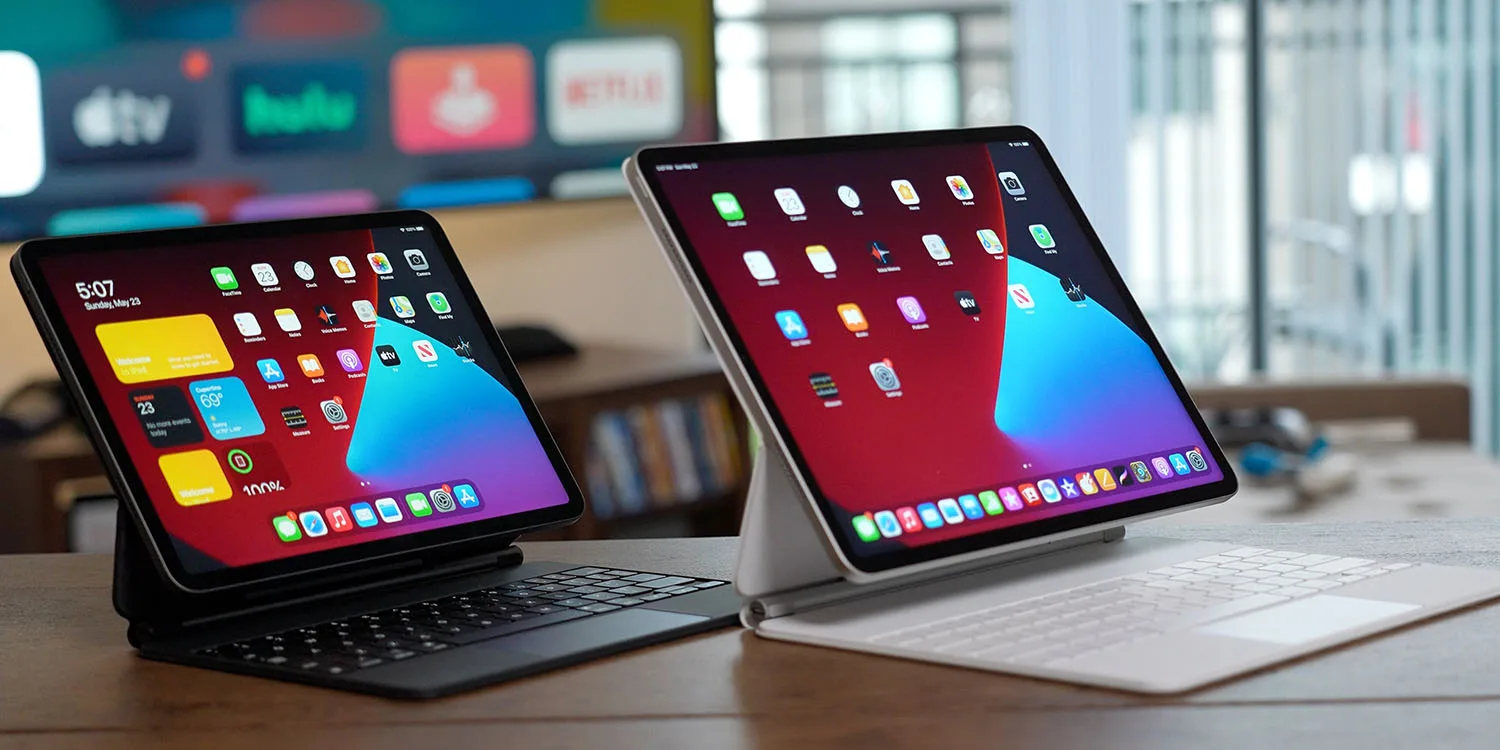
For reference, the biggest new addition is going to be the M2 chipset. The M2 processor will increase the performance of the new iPads by about 20%, which is unlikely to make much of a difference in day-to-day use, especially in the context of iPadOS.
There are also rumors that the new models could support new charging capabilities, and possibly reverse wireless charging. Major design tweaks are not expected, barring the possible enlargement of the Apple logo on the back (in order to facilitate MagSafe compatibility).
-

Samsung seeks to supply Apple with an important part of the latter’s M2 chip series
Apple’s initial line of M-series chips includes the M1, M1 Pro, M1 Max, and the M1 Ultra. Built by TSMC using its 5nm process node, these SoCs feature a large number of transistors starting with the M1’s 16 billion and moving ahead to the 33.7 billion on the Pro, 57 billion on the Max, and the whopping 114 billion on the Ultra (which is essentially two M1 Max chips combined.The M-series chips are based on Arm’s architecture and the M1 is employed inside the latest versions of the iPad Pro and iPad Air. Apple has finished the M1 series and is now moving on to the M2. One of Apple’s main rivals says that it wants a role in Apple’s M2 supply chain. Samsung, which was involved in the production of the M1 series, wants to continue peddling supplies to Apple for the M2 series.According to SamMobile, Samsung supplied Apple with FC-BGA (full-chip ball grid array) substrates that are used by CPUs and GPUs that have a large number of circuit connections. A substrate used in the production of chips is basically a thin copper wire placed in resin that helps transmit user instructions to chips and relay the answers. It is used because the extremely thin wiring attached to chips can’t handle being soldered directly to a circuit board.In other words, a substrate helps connect a chip to the motherboard of a device. As important a task as that is, it is not as high tech as other parts of a chipset are and margins are low.Last December, Samsung invested 1.3 trillion Korean won ($1.04 billion USD) to build an FC-BGA substrates factory in Vietnam. The company also spent another 300 billion won ($241 million USD) on its existing FC-BGA substrates facility in its home country of South Korea.Will Samsung get the job? Considering that there has been under-investment in the production of substrates (typical for such a low-margin business), supplies are tight and Apple has been known to tie up production for years in situations like this. And if Apple doesn’t go with Samsung, there are many chipmakers that need to find a source for advanced substrates.