
Tag: M2M

  • China’s 5G-Boosted M2M & IoT Market Set for 7% CAGR Surge by 2030: The Future of Mobile Connectivity

    China’s 5G-Boosted M2M & IoT Market Set for 7% CAGR Surge by 2030: The Future of Mobile Connectivity

    The cellular machine-to-machine (M2M) and Internet of Things (IoT) connectivity market in China is projected to experience considerable expansion over the next decade. Projected growth rates estimate an increase in subscriptions at a compound annual growth rate (CAGR) of 7% from 2025 to 2030. The driving factors behind this growth include the emergence of new applications across diverse industries, the development of 5G infrastructure by telecommunications firms, and their comprehensive M2M/IoT service offerings.

    Increasing Adoption of M2M/IoT Technology

    The China Mobile Broadband Forecast for the third quarter of 2025 suggests that M2M/IoT subscriptions will constitute approximately 30% of all mobile subscriptions in the nation by 2030. This statistic underscores the escalating adoption of this technology and its growing significance as a revenue stream for telecom firms.

    China’s vast manufacturing base and pervasive digitalization in the sector support the growth of the M2M/IoT market. The advent of digital factories, which require extensive automation and connectivity for real-time monitoring and predictive maintenance, will bolster this growth.

    Expanded Use Cases

    Telecom Analyst Hrushikesh Mahananda points out that the expansion of use cases beyond the manufacturing sector will also benefit the market. Applications in the utilities sector, such as smart grids and smart metering, along with vehicle-to-vehicle and vehicle-to-infrastructure applications in the automotive and transportation sector, are notable examples. Additionally, connected devices and patient monitoring in healthcare and smart city initiatives involving smart buildings, traffic control, and public safety systems show promising potential.

    Government backing for the integration of M2M/IoT technology into manufacturing, smart cities, and public infrastructure projects aligns with national strategies like Made in China 2025 and China 2035. This alignment highlights the technology’s increasing relevance in the country.

    5G Infrastructure and M2M/IoT Expansion

    The creation of a robust 5G infrastructure and advancements in 5G-Advanced technology, which support large-scale IoT deployments, will further boost the M2M/IoT sector in China. For instance, the Chinese telecom regulator MIIT plans to establish over 10,000 5G factories during the 14th Five-Year Plan (2021-2025) to enhance industrial applications of 5G, primarily in manufacturing.

    Mahananda concludes that the growing prominence of M2M/IoT has led China’s leading mobile operators to design comprehensive service offerings that are fueling growth in M2M/IoT connectivity subscriptions. These operators have also developed advanced M2M/IoT platforms that streamline deployment, integration, and management of M2M/IoT ecosystems across industries, further enhancing connectivity, device management, edge, and AI capabilities.

    Questions & Answers

    What factors are driving the growth of M2M/IoT connectivity in China?
    The growth is driven by new use cases across various sectors, advancements in 5G infrastructure by telecom companies, and their comprehensive M2M/IoT service offerings.

    What percentage of mobile subscriptions in China will M2M/IoT subscriptions make up by 2030?
    According to the China Mobile Broadband Forecast (Q3-2025), M2M/IoT subscriptions will account for approximately 30% of all mobile subscriptions by 2030.

    What role does the Chinese government play in the growth of M2M/IoT connectivity?
    The government supports the integration of M2M/IoT technology into the manufacturing sector, smart cities, and public infrastructure projects, which aligns with national initiatives like Made in China 2025 and China 2035.

  • Australia’s IoT Boom: 5G Evolution to Fuel 22.1 Million Connections by 2030

    Australia’s IoT Boom: 5G Evolution to Fuel 22.1 Million Connections by 2030

    The expansion and modernization of 5G networks, coupled with the increasing use of IoT/M2M connectivity and strong government backing for these ecosystems, is set to significantly increase M2M/IoT cellular connections in Australia. By the end of 2030, it’s projected that there will be 22.1 million such connections. This represents a robust compound annual growth rate (CAGR) of 8.7% from 2025 to 2030.

    5G Growth and Impact on IoT/M2M Market

    Forecasts for Australia’s mobile broadband landscape indicate that 5G mobile subscriptions will see a CAGR of 12.6% between 2025 and 2030. This growth will have positive implications for the M2M/IoT market. The higher capacity, lower latency, and greater scalability of 5G connectivity will enhance M2M/IoT deployments across a range of sectors.

    Telecom analyst Srikanth Vaidya notes that evolving M2M/IoT use cases across industries will also stimulate adoption. Examples of these use cases include telehealth & remote diagnostics, smart retail stores, smart manufacturing, fleet management & logistics, smart cities & infrastructure, automation in agriculture, and cybersecurity-enhanced networks. Dedicated connectivity plans offered by telecommunications companies will further facilitate this growth.

    Government Support and Industry Initiatives

    In 2025, the Australian government, together with IoT Alliance Australia (IoTAA), launched a Labelling Scheme for Smart Devices. This initiative, backed by funding of up to AUD 1.7 million (USD 1.07 million), is designed to improve security and standards in the IT industry. It focuses specifically on M2M/IoT consumer smart devices, opening up new opportunities for telecommunications companies in this sector.

    Telstra is anticipated to dominate Australia’s M2M/IoT market in terms of subscriptions through to 2030. This is largely due to its versatile IoT/M2M data plans, which cater to both low data sensors and high-usage connected devices. Optus also provides a variety of IoT solutions, including telematics, connected cars, emergency lift phones replacing PSTN, and digital signage, all designed to streamline and enhance business processes.

    Conclusion

    Vaidya concludes that the increasing demand for IoT solutions and connectivity will bring about significant changes in Australia’s mobile services market. Operators providing dedicated M2M/IoT connectivity plans and services that cater to emerging use cases will be in a solid position to benefit from this trend.

    Questions & Answers

    What is the projected growth rate for M2M/IoT cellular connections in Australia by 2030?
    The projected compound annual growth rate (CAGR) is 8.7% from 2025 to 2030, with total connections expected to reach 22.1 million.

    What initiatives have been introduced to support the growth of M2M/IoT technologies in Australia?
    In 2025, the Australian government and IoT Alliance Australia (IoTAA) introduced a Labelling Scheme for Smart Devices, an initiative designed to enhance security and standards within the IT industry, particularly for M2M/IoT consumer smart devices.

    Which company is expected to lead the M2M/IoT market in Australia?
    Telstra is expected to lead in terms of subscriptions through 2030, mainly due to its flexible IoT/M2M data plans.

  • APAC Sees Rapid Growth in IoT and M2M Connections Amidst 5G Expansion

    APAC Sees Rapid Growth in IoT and M2M Connections Amidst 5G Expansion

    The growth of machine-to-machine (M2M) and Internet of Things (IoT) cellular connections in the Asia Pacific (APAC) region is anticipated to soar, with an annual growth rate of 9.1% projected from 2025 to 2030, ultimately reaching a staggering 1.3 billion connections by the end of the decade.

    This surge can largely be attributed to advancements in 5G technology, the expansion of digital infrastructure, and the increasing integration of IoT applications, predominantly in the developed markets of the region, as reported by GlobalData.

    5G Push Drives Massive Connectivity

    According to GlobalData’s Asia-Pacific Total Mobile Broadband Forecast (Q2 2025), 5G mobile subscriptions are expected to expand at a phenomenal pace of 11.4% annually from 2025 to 2030. The expansion of network coverage, particularly in established mobile markets, is fueling this trend. Countries like South Korea, Japan, Singapore, and Australia are paving the way for 5G adoption, while regions like Hong Kong and China are poised to boast the highest 5G penetration rates by 2025.

    Kantipudi Pradeepthi, a Telecom Analyst at GlobalData, highlighted the monumental role of 5G networks, stating, “The ultra-low latency, high-bandwidth connectivity, and ability to connect vast numbers of devices crucial for M2M/IoT ecosystems will be pivotal for market growth over the forecast period. Developed markets, with their high 5G penetration and mature digital infrastructure, will undoubtedly lead in IoT adoption, resulting in increased M2M connections.”

    Sectoral Expansion: A Playground for Innovation

    The rising applications of IoT across diverse sectors—including manufacturing, healthcare, agriculture, transportation, and security—coupled with ambitious digital infrastructure projects ranging from smart cities to smart buildings, are set to escalate M2M/IoT adoption in the region. Telecommunications companies are also stepping up with dedicated connectivity plans to cater to these burgeoning demands.

    For instance, PLDT in the Philippines is actively providing M2M/IoT solutions targeting smart city initiatives, smart stores, smart buildings, and smart manufacturing. In New Zealand, Spark is delivering IoT-connected mobility solutions focused on sectors like healthcare, agriculture, and transportation, emphasizing device management, cost efficiency, and security. Meanwhile, in India, Bharti Airtel offers a diverse range of M2M SIM cards, including industrial-grade, consumer-grade, embedded M2M SIMs, and eSIMs tailored to meet specific deployment requirements.

    New Opportunities on the Horizon

    Pradeepthi concluded that the escalating demand for high-speed connectivity and enterprise-grade IoT solutions is set to dramatically reshape the mobile landscape across the APAC region. This evolution represents a golden opportunity for telecommunications companies to explore new revenue streams and diversify their offerings—after all, who wouldn’t want to ride the wave of innovation?

    Questions & Answers

    What is driving the growth of M2M and IoT connections in APAC?
    The growth is mainly driven by advancements in 5G technology, expanding digital infrastructure, and the increasing applications of IoT ecosystems, particularly in developed countries within the region.

    Which countries are leading in 5G adoption?
    South Korea, Japan, Singapore, and Australia are at the forefront of 5G adoption, with Hong Kong and China expected to achieve the highest penetration rates by 2025.

    How are telecommunications companies responding to this growth?
    Telecommunications companies are introducing diverse M2M and IoT solutions tailored for various sectors, providing dedicated connectivity plans to meet the demands of smart cities, healthcare, agriculture, and more, setting the stage for new revenue opportunities.

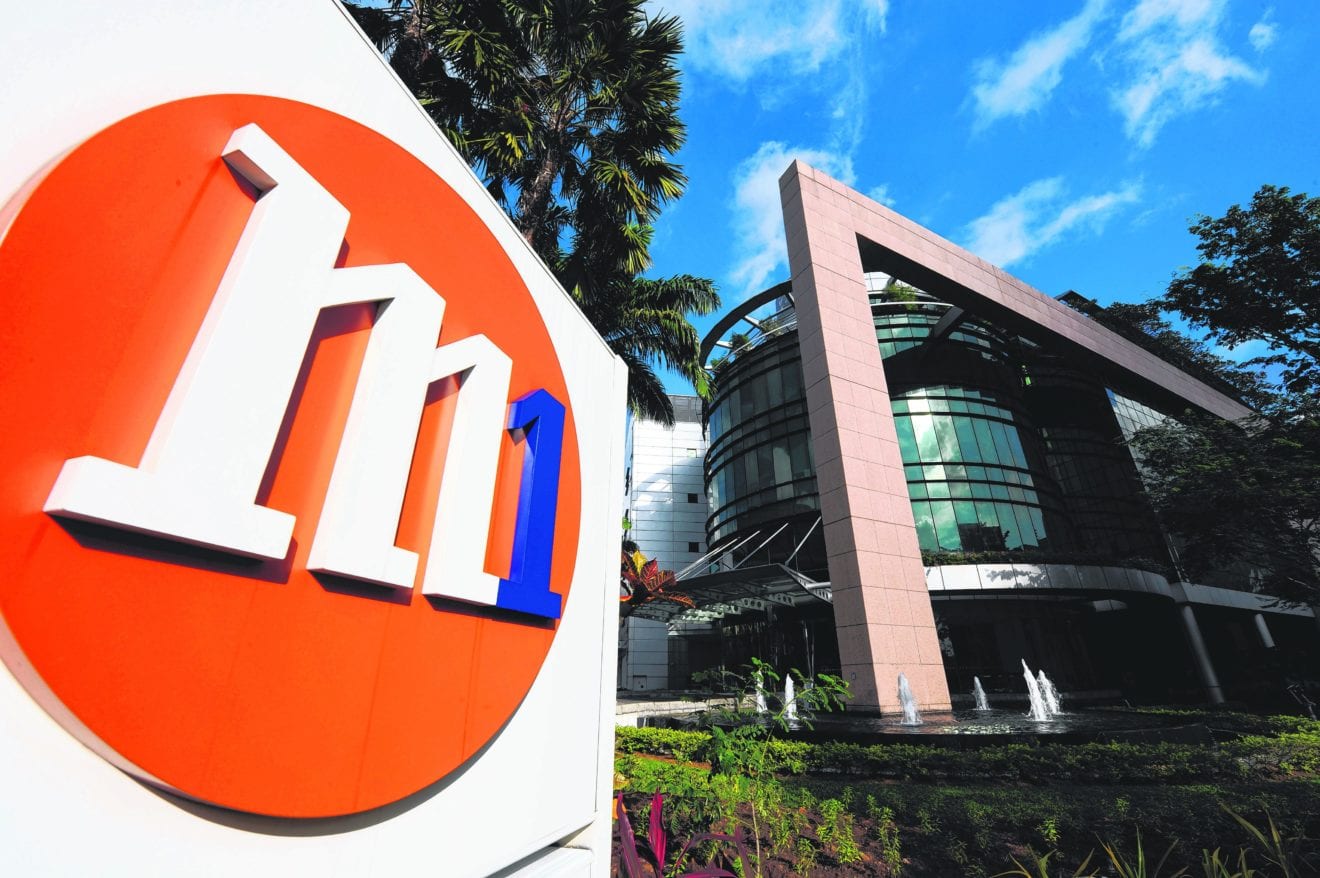
  • M1 launches M2M platform and solutions

    M1 launches M2M platform and solutions

    Strategic partnerships with multiple technology providers to deliver a wide range of smart M2M solutions for transport, retail, healthcare and security sectors.

    Singapore – M1 Limited (M1) today announced the launch of its advanced M2M (machine-to-machine) platform, M1 M2M Connect. Through M1 M2M Connect, corporate customers will be able to access, track and manage all their connected devices conveniently, from any authorised computer or mobile phone. They will also be able to set and change business rules, perform device troubleshooting and obtain detailed reporting of all M2M activities.

    Additionally, M1 has partnered multiple technology providers, including Aerolion Technologies, Napier Healthcare Solutions, Quantum Inventions, and Parametric Technology to introduce customised solutions to meet the needs of Singapore’s transport, retail, healthcare, and security industries, and enable more customers to enjoy the benefits of a M2M rollout on Singapore’s fastest 4G network¹.

    According to a recent Forbes² article, connected devices are expected to grow from 10 billion today to as many as 30 billion devices by 2020, deployed across homes, offices, and public spaces worldwide. At the M2M platform launch event today at the St. Regis Hotel for corporate customers, M1 and its partners demonstrated several innovative solutions, including smart healthcare monitoring solutions, and how security firms can deploy drones to stream real-time surveillance video over protected premises.

    Mr Willis Sim, Chief Product Development & Corporate Solutions Officer, M1, said:

    “Much has been made of the benefits of M2M and the Internet of Things. To make it even easier for our customers to leverage on M2M technology, we engaged them to understand their needs, and worked with our partners to develop and offer effective solutions that improve our customers’ productivity, lower their costs and help them tap on new market opportunities.”

    “M1 is a leader in communications infrastructure and we are excited to be their strategic partner. Our relationship has been proven to be successful during the lab trials for the Smart Nation program. Consequently M1’s leading edge connectivity solutions form the backbone of our Home Care solution making it really affordable for our elderly population. Taking preventive healthcare one step forward, this solution provides the chronically ill with on-demand access to healthcare service providers who can help monitor and maintain their health,” said Mr Tirupathi Karthik, Chief Executive Officer, Napier Healthcare Solutions.

    M1 is Singapore’s most vibrant and dynamic communications company, providing mobile and fixed services to over 2 million customers. Since the launch of commercial services in 1997, M1 has achieved many firsts, including the first operator to offer nationwide 4G service, as well as ultra high-speed fixed broadband, fixed voice and other services on the Next Generation Nationwide Broadband Network (NGNBN). With a continual focus on network quality, customer service, value and innovation, M1 links anyone and anything; anytime, anywhere. For more information, visit www.m1.com.sg.