Retail News CRM

Tag: machine

  • DBS to Train Staff in AI and Machine Learning

    DBS to Train Staff in AI and Machine Learning

    The bank hopes to equip its employees with skills in these areas, under a partnership with cloud services provider Amazon Web Services (AWS).

    DBS Bank will accelerate the use of artificial intelligence (AI) and machine learning (ML) across its business by training its staff in these skills with the launch of the AWS DeepRacer League, the bank announced on Tuesday.

    As part of the program, DBS staff will learn the basics of AI and ML through hands-on online tutorials and will use their knowledge in programming an autonomous model race car to compete in a virtual racing environment. The bank hopes to train some 3,000 employees, including its senior leadership, by the end of the year. The league is the largest among Asian-headquartered enterprises and one of the first in the world to be organized at scale by a financial institution, the announcement said.

    Employees are also encouraged to develop their talent beyond the bank’s league and compete globally – the bank said six of its employees have already qualified for the AWS DeepRacer Championship Cup to be held in Las Vegas later this year.

    We have never believed in limiting digital expertise to a small team. Instead, we passionately believe in democratizing technology skillsets among all employees, so that they can run alongside the company as we advance on our digital transformation together, Paul Cobban, DBS chief data and transformation officer, said.

    DBS said it is preparing for the next stage of its digital transformation efforts and has been leveraging AI and ML in areas such as advanced credit risk management, and to provide accurate self-service digital options to its retail customers based on their digital footprint.

  • Man vs. Machine: The Next Generation of the Retail Supply Chain

    Man vs. Machine: The Next Generation of the Retail Supply Chain

    Demand for retail goods continues to grow exponentially in today’s omnichannel world. In addition to this, COVID-19, which has seen a huge increase in activity within the e-commerce space, has put retail businesses and supply chains under even more pressure to keep up with increasing demand and sharper consumer expectations.

    Alongside the current high pressure retail climate, demand for labour in warehouses has never been higher, and this is leading to many retail businesses adopting advanced warehouse and automation technologies to stay ahead of the game and maintain their strength within the market.

    Turning to automation

    The switch from man to machine has quickly become a critical factor for many retail distribution centres (DCs) to maximise throughput, particularly when demand is high. As more orders flow through more warehouses, operations become tighter – with smaller delivery windows and less employees than ever to complete the work.

    When faced with these challenges, many businesses have had no choice but to adopt automated technologies to become less dependent on human labour. In fact, 99% of supply chain companies globally say that they are already using automation in the warehouse to assist with retail fulfilment operations.

    Online orders, which are rolling in at soaring volumes, are expected to be packed and delivered quicker than ever before as consumer expectations rapidly grow. Without the integration of automation in DCs, retailers simply can’t keep up with demand, which is why many of them are looking to invest in automation, not only as a solution to the current problem, but as a way to prosper in the future.

    Gaining operational control 

    Advanced Warehouse Management Systems (WMSs), are the leading innovation for businesses looking to take full control of their operations. They allow businesses to gain visibility and real-time insights into things like productivity rates, inventory and fulfilment, and the coordination of their workforce, as well as complete control of all deployed automated technologies

    WMSs work to provide a centralised point of control for all operations within a retail warehouse, including tasks outside of fulfilment, such as receiving and inspecting products and other value-added services. The integration of a WMS within retail warehouses has become an increasingly business-critical method for capitalising on any innovations as they emerge, offering a close-up view of one or all aspects of operations and coordinating the workflows of humans’ to collectively work together with robotics.

    The right WMS also uses machine learning to improve processes. Using artificial intelligence, the system creates a baseline by predicting how long tasks should take. As work is executed, it analyses the results, then armed with real data, the WMS couples advanced orchestration logic with real-time awareness of capacity to optimise operations. The resulting improvements lead to reduced dwell time, shorter order cycle times and more accurate allocation of work. This means retail warehouse managers can act on more orders, increase service levels and maximise asset utilisation.

    Technology fit to unify operations

    The future of the retail supply chain will be an integration of people, robotics, and technology innovations, and while they all have a major role to play, the key to better productivity lies in helping them to work better together. An advanced WMS takes a holistic view of operations to bring both labour and automation together, and then incorporates machine learning to maximise efficiency.

    This technology, built for purpose now and into the future, allows retail businesses to utilise all of their assets, synthesising any type of new automation they wish to add, to continually optimise operations. The right WMS gives retail businesses the best of man and machines, so they can take on any challenges that arise, as well as continue to get the most out of their operations and meet rising consumer demnds. 

    About Manhattan Associates

    Manhattan Associates is a technology leader in supply chain and omnichannel commerce. We unite information across the enterprise, converging front-end sales with back-end supply chain execution. Our software, platform technology and unmatched experience help drive both top-line growth and bottom-line profitability for our customers. Manhattan Associates designs, builds and delivers leading edge cloud and on-premises solutions so that across the store, through your network or from your fulfillment center, you are ready to reap the rewards of the omnichannel marketplace. For more information, please visit www.manh.com.au. 

    Written by: Richard Wright, Managing Director Southeast Asia, Manhattan Associates


  • Luckin Coffee ways into the vending-machines landscape

    Luckin Coffee ways into the vending-machines landscape

    China’s largest coffee chain Luckin Coffee is moving into the vending machines market.

    “It allows us to get closer to consumers and we are not restricted by the license approvals,” said Luckin founder and CEO Qian Zhiya of the new strategy. Luckin’s machines will serve freshly brewed drinks as well as food.

    The firm also launched a share placement and a convertible bond worth a combined US$821 million last week, according to a report.

    Proceeds will be used to open more stores and to invest further in sales and marketing.

    Luckin recently overtook Starbucks in terms of the number of outlets within the territory, operating more than 4500 stores. The firm focuses primarily on the coffee delivery and pickup business, and so stores are typically smaller in size than Starbucks locations and some are without seating.

  • Operation Octopus cracks down on counterfeit dolls in claw machines

    Operation Octopus cracks down on counterfeit dolls in claw machines

    Hong Kong Customs has conducted a territory-wide operation to combat counterfeit dolls in claw machines.

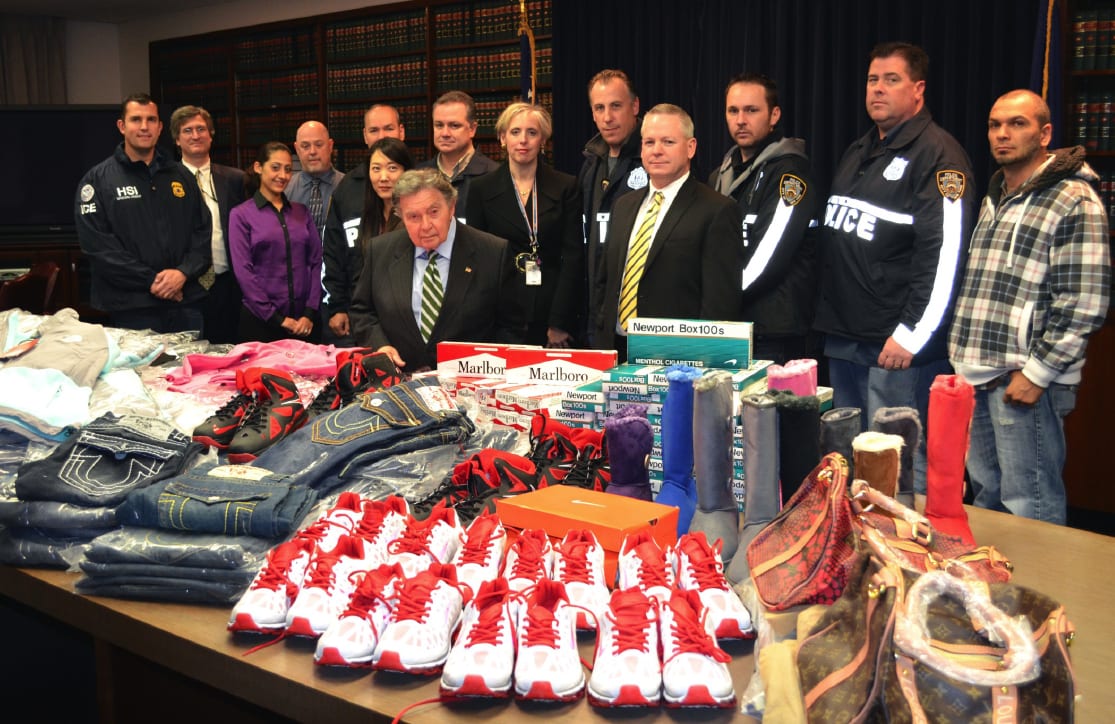
    Codenamed “Octopus”, the operation proceeded from June 5–13 and resulted in the seizure of about 2700 suspected counterfeit dolls and other relevant items with an estimated market value of about HK$300,000 (US$38,322).

    Customs had earlier received information alleging that the presence of counterfeit dolls in claw-machines shops was widespread in the market. Officers later conducted patrols in different districts.

    After further investigation with the assistance of a trademark owner, Customs officers raided six claw-machine shops in Chai Wan, Lam Tin, Mong Kok, Tuen Mun and Tin Shui Wai as well as a storage facility in San Po Kong. Some 2700 suspected counterfeit dolls and other suspected counterfeit goods, 15 claw machines and five token changing machines were seized.

    During the operation, three men and three women were arrested, including three shop owners and three staff members, aged between 26 and 50.

    The investigation is ongoing.

    Divisional commander (IP general investigation) Peggy Tam told press that Customs would continue to step up inspection and enforcement to fight against the use of counterfeit goods for the purpose of trade. She reminded consumers to check with the trademark owners or their authorised agents if the authenticity of a product is in doubt.

    She also reminded traders to be cautious and prudent in merchandising since the possession of counterfeit goods for any purpose of trade is a serious crime and offenders are liable to criminal sanctions.

    Under the Trade Descriptions Ordinance, any person who sells or possesses for the purpose of trade any goods with a forged trademark commits an offence. The maximum penalty upon conviction is a fine of HK$500,000 ($63,870) and imprisonment for five years.

  • Boardwalk Advendture vending machine cluster opens at Sentosa

    Boardwalk Advendture vending machine cluster opens at Sentosa

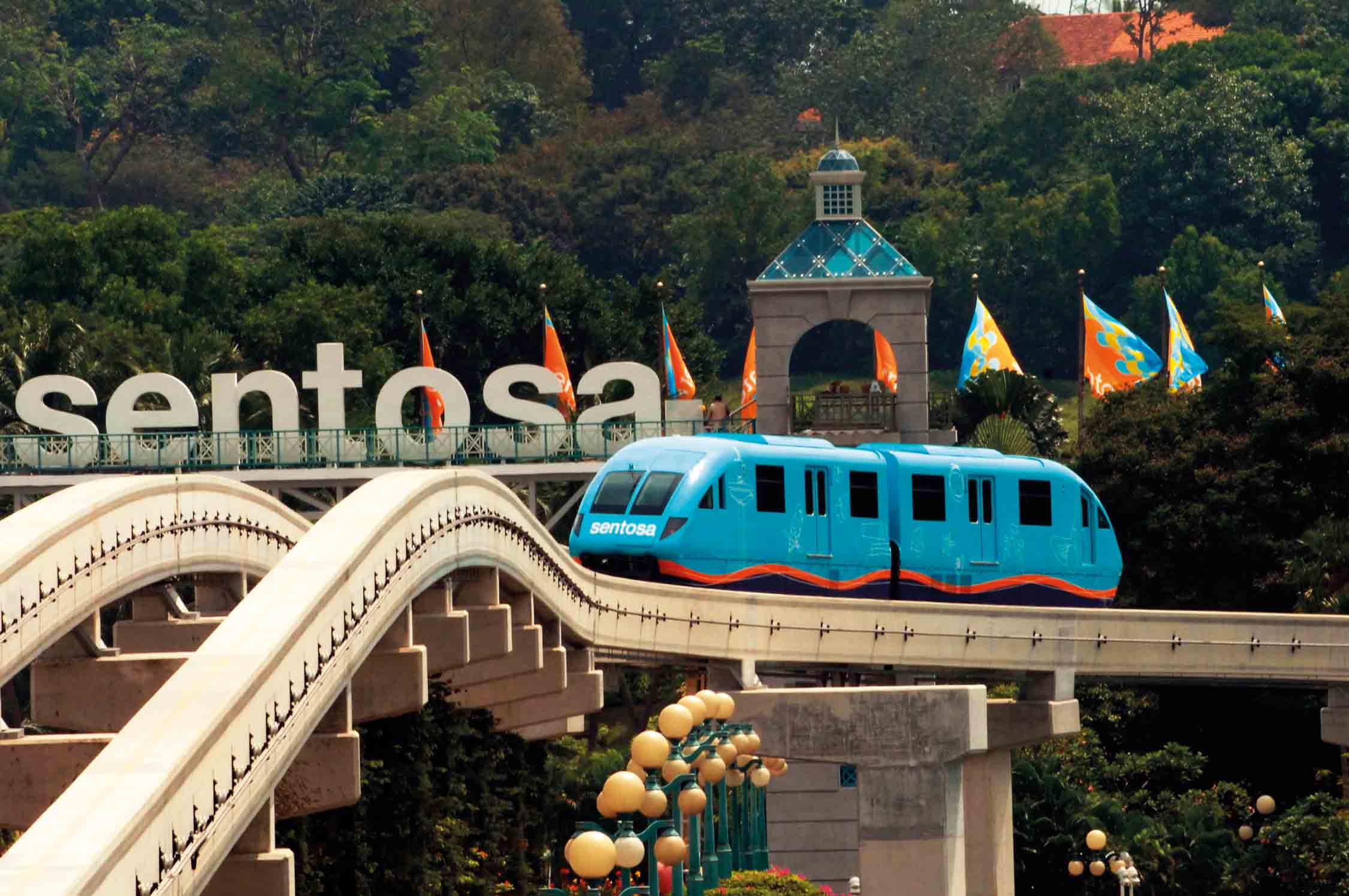
    Royal Vending has launched 35 cashless-enabled vending machines in a cluster it calls Boardwalk Advendture.

    Featuring more than 50 brands, Boardwalk Advendture is the first automation cluster set in a tourist attraction which the company says ushers in a new age of automated retail-tainment.

    “Boardwalk Advendture pushes the envelope and signals a new age of smart retailing,” said Jae Teo, Royal Vending MDr.

    “The innovative vending concepts of today can help hero made-in-Singapore brands, start-ups and host unexpected products. We hope that the Boardwalk Advendture will inspire other locales to embrace the next generation of retailing.”

    GOH meeting the artists from the Art Faculty by Pathlight

    GOH meeting the artists from the Art Faculty by Pathlight

    Starting off from VivoCity, the first ‘Fresh Point’ cluster kicks off with snacks, refreshments and essentials that visitors can grab to beat the heat and stay cool.

    The midway point houses a ‘Gift Street’ featuring quirky souvenirs, local crafts and tourist favourites from the city.

    There are other pleasant surprises dotted along the way, including ‘Fun Alley’ with game machines and outdoor must-haves that will keep both parents and children entertained.

    An air-conditioned ‘Foodie Zone’ is available at the end for tourists to re-fuel before heading into Sentosa.

    “With the support from Enterprise Singapore, Royal Vending was able to adapt its business model and curate a range of products that … enhance the customer experience as they walk down the Sentosa Boardwalk,” said Alan Yeo, director of Retail & Design, Enterprise Singapore.

    “We encourage more retailers to take the bold step to innovate and introduce differentiated retail concepts that can serve to delight their customers and ensure long-term business growth,” he added.

    Royal Vending’s Boardwalk Advendture will enrich the experience with 24-hour amenities such as food and beverage takeaways.

    Brands already signed up to the cluster include Art Faculty by Pathlight, beauty brand su:m37 and Singapore souvenirs and gift supplier Love SG.

    Royal Vending is one of Singapore’s largest vending machine companies, with more than 15 years of experience.

  • Car vending machines dispense vehicles bought online

    Car vending machines dispense vehicles bought online

    The US motor vehicle industry appear to have removed the last piece of personal interaction involved in the process of purchasing a car, with the launch of car vending machines.

    Shoppers who prefer to bypass physical dealerships can now order and pay for their car online before popping down to a multi-storey building resembling a vending machine to collect their ride.

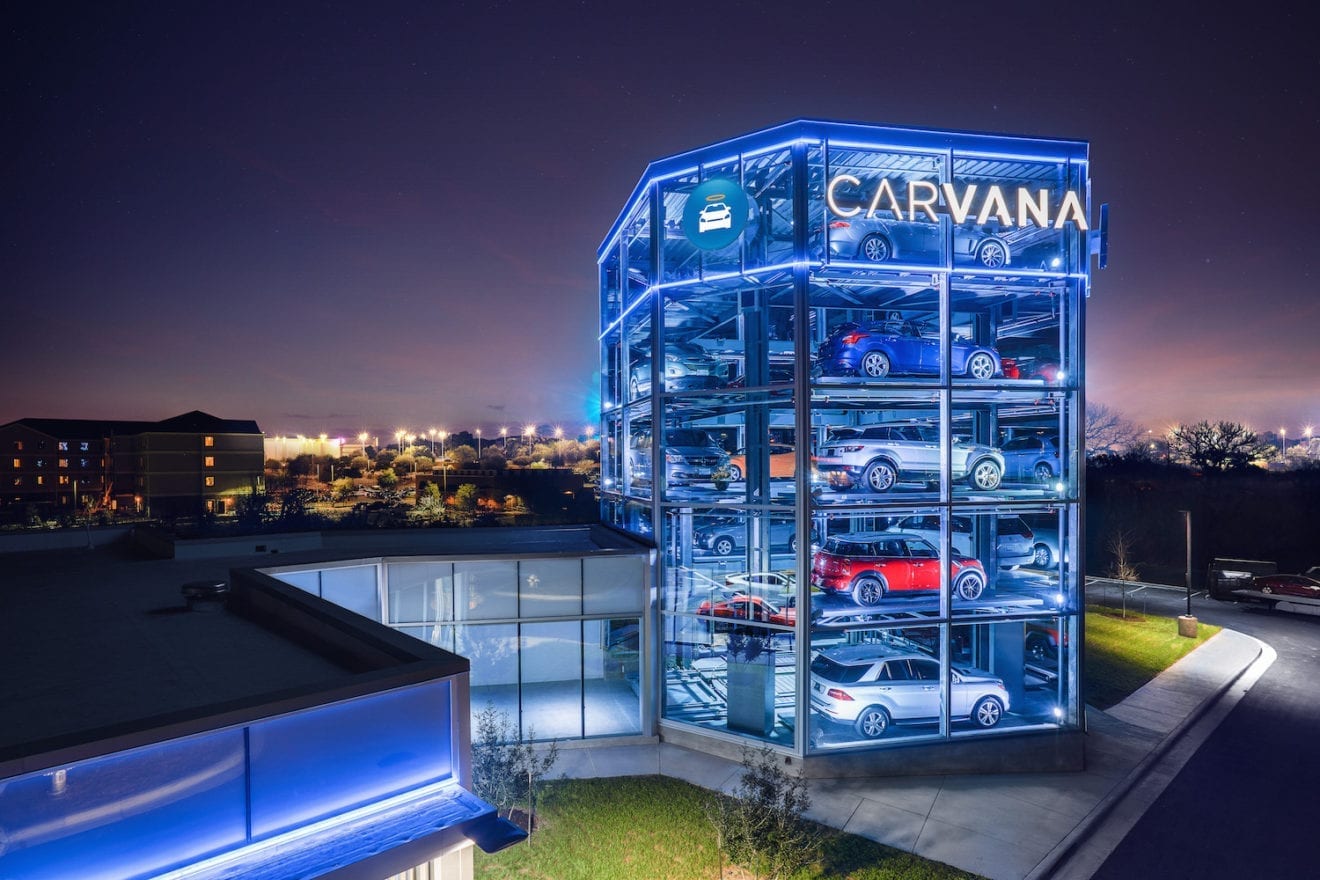
    NYSE-listed Carvana, a leading eCommerce platform for buying used cars, has launched the latest of its car vending machines in Jacksonville, Florida. The eight storey-high building is fully automated and coin-operated (yes, you did read that correctly) and can house as many as 30 vehicles. Carvana says the buildings “give customers a unique and memorable pickup experience” for cars they buy online.  It is the seventh such building Carvana has opened, the others being in Houston, Austin, San Antonio and Dallas in Texas, Nashville, Tennessee and Raleigh North Carolina.

    Carvana says its system appeals to customers because instead of spending hours walking around dealerships, customers who choose Carvana can search through the company’s national inventory of 7000 vehicles and finance and purchase their car completely online. From start to finish, the entire process takes as little as 10 minutes. All vehicles in Carvana’s inventory have passed a 150-point inspection and have never been in a reported accident or have frame damage. All features, imperfections and updated information about open safety recalls are listed on the car’s vehicle description page.

    Once the online purchase is complete, customers can choose to have their car delivered as soon as the next day, or pick it up from one of the car vending machines. Customers who choose  the vending machine option will receive a commemorative, oversized Carvana coin on-site to activate the vending process and transport the car into the delivery bay. Customers then have a seven-day, money-back guarantee, giving them the chance to see if the vehicle really fits their life. If they aren’t satisfied, they can return the vehicle for a full refund.

    Ernie Garcia, founder and CEO of Carvana says he wants to “bring some fun back into the car buying process”.

    Vehicle pickup at any of Carvana’s car vending machines is free for customers. Those who live outside the metropolitan delivery area but would still like to pick up their car at a vending machine, Carvana will subsidise $200 for an airfare and arrange “white glove transportation” from the airport.

    Founded in 2012 and based in Phoenix, Arizona, Carvana says its mission is to change the way people buy cars.

    “By removing the traditional dealership infrastructure and replacing it with technology and exceptional customer service, Carvana offers consumers an intuitive and convenient online automotive retail platform. A fully transactional website enables consumers to quickly and easily buy a car online, including finding their preferred vehicle, qualifying for financing, completing the purchase and loan with signed contracts, and receiving delivery or pickup of the vehicle,” the company says in a statement.

  • Uniqlo deploys apparel vending machines

    Uniqlo deploys apparel vending machines

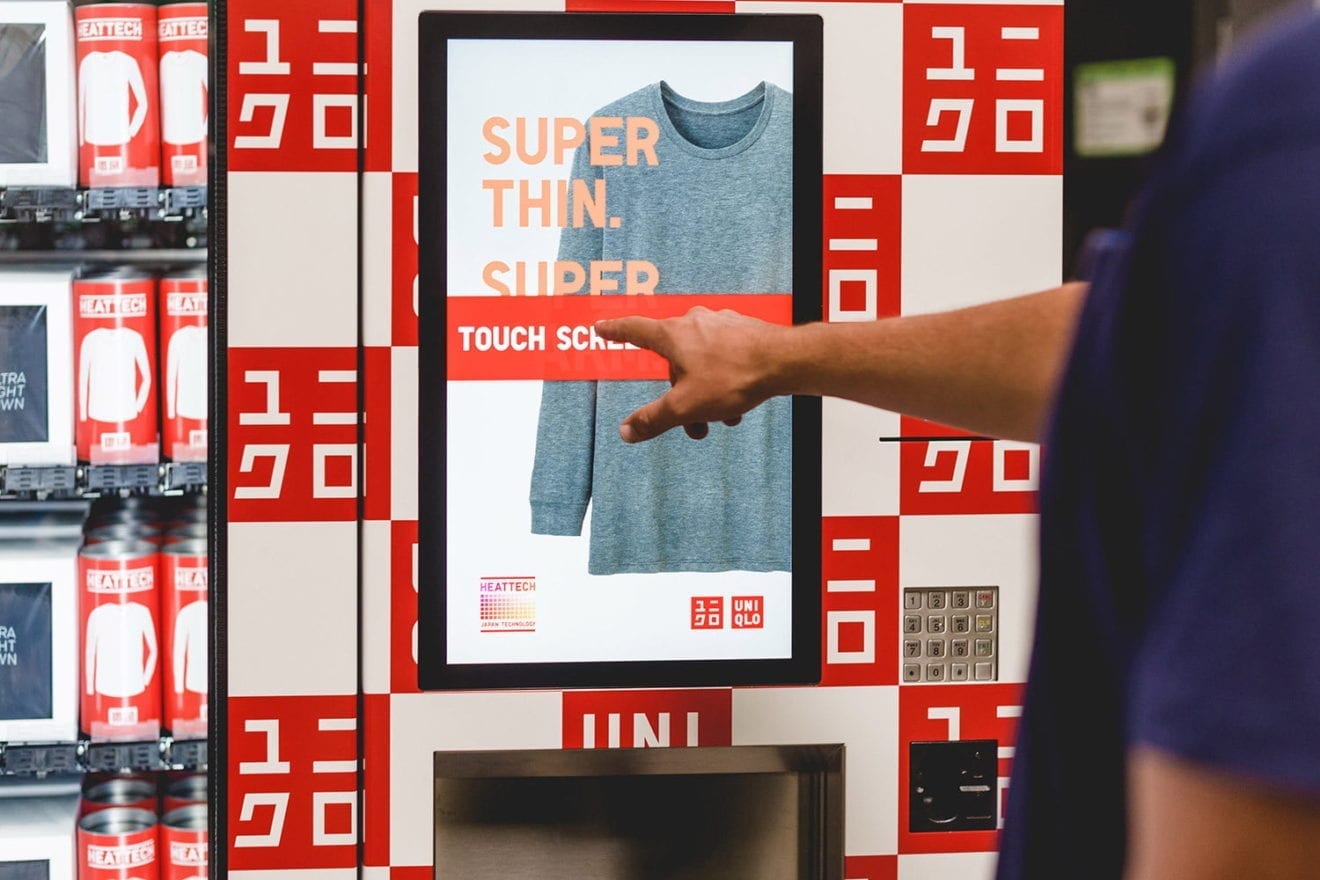
    Uniqlo has deployed its first apparel vending machines at key locations across the USA, as the Japanese retailer looks to enter new markets.

    Dubbed ‘Uniqlo to Go’, the fashion vending machines are popping up in select American airport terminals during August.

    According to the Fast Retailing-owned brand, the first ten are scheduled for Oakland Airport, where the vending machine bowed on Wednesday, followed by one in the Hollywood and Highland Centre in Los Angeles on August 10; Houston Airport, August 17, and Queens Center, Elmhurst, New York, August 22.

    The six remaining locations will be revealed soon, a Uniqlo spokesperson told WWD this week. Locations have been decided upon based on their potential for high-traffic and customer visibility.

    “We’re already talking with amusement parks, train stations, entertainment conventions and movie theatres about additional opportunities,” said the spokesperson. “The goal is to open new markets and use machines as an introduction to our products.”

    As for the operation of the vending machines, customers can use both debit or credit cards and access product via touch screens and a user interface.

    After browsing products, selecting and completing the transaction, a robotic arm retrieves the product. A conveyor shelf moves the item onto the robotic arm and the arm brings it to a window. From here, the customer can access the items.

    Apparel available for purchase includes Uniqlo’s Heat Tech Ultralight down jackets (US$69.9) and Heat Tech tops ($14.90). Both items are available in a variety of colours and styles for men and women.

    The company said it plans to expand to graphic t-shirts, Airism, and then innerwear items such as socks and underwear.

    Earlier in the year, Uniqlo said it plans to double its store count in Europe to 100 outlets over the next three years, in a bid to strengthen its retail presence outside of Asia.

    Uniqlo is eyeing global sales of 3 trillion yen ($26.6 billion) by the fiscal year ending August 2020.

  • New Hua Du Supercenter buys vending machine group

    New Hua Du Supercenter buys vending machine group

    Chinese supermarket chain New Hua Du Supercenter has acquired a vending-machine company just weeks after Alibaba and Auchan launched self-service convenience stores.

    Based in Fujian, the chain says it has signed an equity-swap agreement with Beijing Ubox Online Technology Corporation. Under the deal, Ubox, which runs more than 57,000 vending machines – more than any other similar company – will be absorbed into New Hua Du.

    New Hua Du has a market value of RMB5.7 billion (US$850 million), smaller than its new subsidiary Ubox, which is valued at RMB6.5 billion. New Hua Du’s profit last year rebounded to RMB54 million from a loss of RMB373 million a year earlier, driven in part by the three e-commerce companies it acquired.

    “The acquisition comes at a time when staffless retail is hot,” says Haitong Securities analyst Wang Liting. “The deal will enable integration between supermarkets and smart vending machines.”

    After Amazon.com launched its Amazon Go self-service shop last year, Chinese companies have taken up the staffless shop concept with Alibaba Group Holding opening Tao Cafe in Hangzhou and Groupe Auchan introducing BingoBox in Shanghai.

    Wang says the vending-machine market has significant potential in China. Ubox’s profit last year more than doubled to RMB81 million.

  • DHL: Machine learning to mitigate supplier risks

    DHL: Machine learning to mitigate supplier risks

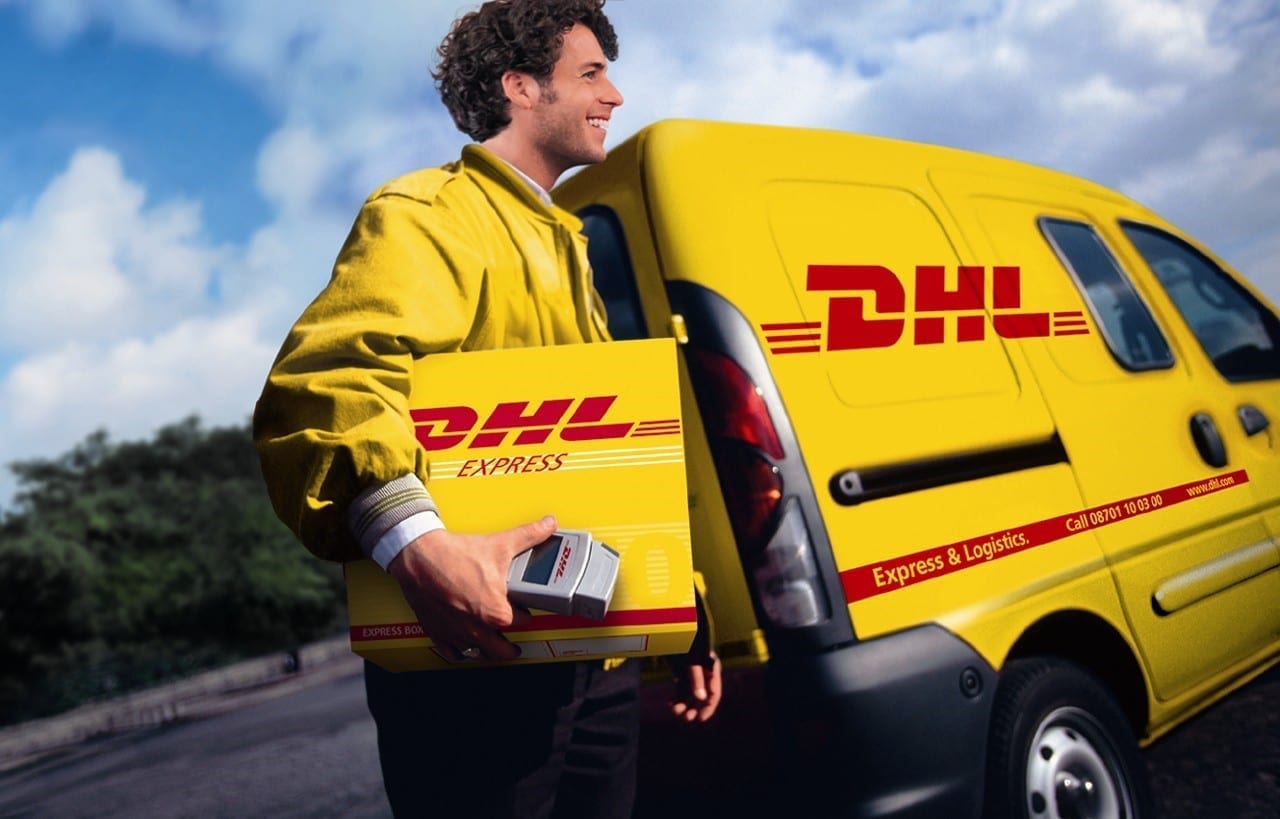
    DHL introduced a new integral part of its Resilience360 supply chain risk management platform called DHL Supply Watch. The extension of DHL’s early warning system uses machine learning and natural language processing to detect disruptions in a company’s supply base before they cause financial losses or long lasting reputational damage.

    With Supply Watch, DHL Resilience360 is adding a broad range of new risk categories to the system’s existing portfolio to monitor supplier risks on a company level, including financial indicators, mergers & acquisition, environmental damages, supply shortages, quality issues and labor disputes, using publically available data found by monitoring of online and social media sources.

  • Telcos turn to machine learning as they drown in data

    Telcos turn to machine learning as they drown in data

    Machine learning in 2017 will become a mainstream tool for communications providers struggling to transform data overload into actionable analytics, according to Argyle Data.

    “The telecommunications industry is drowning in data,” said Padraig Stapleton, VP of engineering at Argyle Data. “Functions like support, billing, customer care and marketing, throwing off large amounts of data as a by-product of their activities, the exhaust fumes of data.”

    Stapleton said fraud and financial analysts alike are overwhelmed by the struggle to control and harness this fire-hose of information into actionable analytics. There is just too much IP traffic going across mobile networks for humans to review, detect and respond to fraud in the traditional ways such as discovering fraud and writing preventative rules.

    Machine learning does all the grunt work for analysts, sifting through data in real time and providing output instantly in understandable, accessible formats,” said Stapleton.

    Based on customer feedback, Argyle Data said the following rank among the top communications service provider (CSP) concerns for 2017 — subscription fraud and dealer fraud; fraud using mobile data services and IP applications; call bypass; mobile voice is going extinct; identifying, analyzing and monetizing IP-based traffic; and the explosion of IoT devices across communications networks.

    “These issues can only be addressed if CSPs have better insight into voice and data traffic passing through their networks,” added Stapleton. “New machine learning algorithms give them the ability to respond rapidly to new trends, anomalies or threats.”

  • Huawei applies machine learning to network control

    Huawei applies machine learning to network control

    Huawei has developed a prototype technology involving using machine learning to achieve intelligent, automated network traffic control.

    The vendor’s Noah’s Ark Laboratory has announced results of tests into Network Mind, a prototype technology designed to enable automatic detection and accurate prediction of traffic changes on a network, applying optimizations based on service changes.

    Huawei said Network Mind can facilitate the management of millions of network elements with millisecond response time.

    It uses cutting edge machine learning technologies such as online deep reinforcement learning and real-time big data mining

    The technology is being designed for operators and enterprises maintaining ultra-large networks. The prototype was first developed in December last year, and is being tested in collaboration with operators.

    Tests indicate that Network Mind is is up to 500% more efficient in realizing KPIs such as task completion or policy generation compared to existing template or heuristic algorithm-based optimization methods.

    Network Mind is also over 50 times more efficient when analyzing paths of large optical networks, which has the potential to reduce the time it takes to analyze use cases such as optical network failure prevention from 5 hours to as little as 6 minutes.

  • BI to Introduce Coin Deposit Machine

    BI to Introduce Coin Deposit Machine

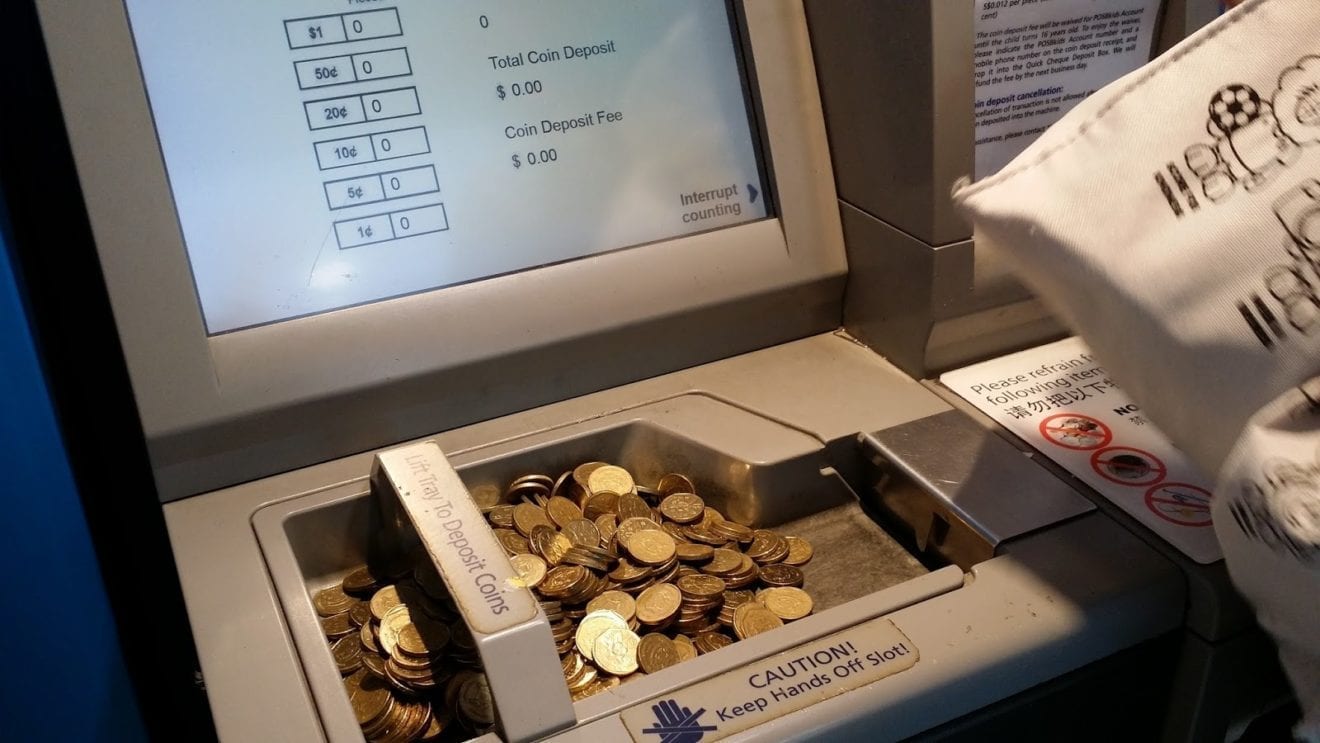
    Deputy Director of the BI Financial Management Department Asral Mashuri in Jakarta, Tuesday 4, 2016, said that Bank Indonesia (BI) is planning on implementing a coin deposit machine to ease people in saving the form of money.

    “The machine would look like an ATM, but this one is for coins, and the machine can sort out the money; which is one thousand and one hundred. It would be easy for people to use,”  he said.

    According to Asral, nowadays, many people keep the coins and left it uncirculated. The uncirculated coins have forced BI to reprint it, although coins have a longer lifespan than paper money.

    A coin deposit machine is hoped to help banking institutions in retracting the coins. “This also accelerates the money circulation, and later on, banking institutions can retrieve money from people’s savings,” Asral said.

    He added that it will be implemented as soon as possible. The study is still ongoing; it will be realized but not in the coming months. “The machine will be available for the public to use soon as possible,” Asral said.