Tag: Macy

  • Macy’s Makes Bold Return To International Market With Tokyo Store Launch In 2024

    Macy’s Makes Bold Return To International Market With Tokyo Store Launch In 2024

    In a remarkable move signaling a bold shift in the Asian retail landscape, iconic American department store chain Macy’s is poised to launch its inaugural store on the vibrant streets of Tokyo in 2024. This ambitious endeavor comes on the heels of Macy’s strategic decision to re-enter international markets, hoping to tap into the bustling consumer base of Japan, known for its affinity for global brands.

    Bridging the Gap with Local Culture

    Macy’s Tokyo outlet aims to offer more than just high-quality merchandise; it will feature a tailored assortment that resonates with local tastes. The retailer plans to collaborate with Japanese designers and artisans, seamlessly blending cultural nuances into its product offerings. It’s almost like Macy’s is stepping into the ring for a traditional tea ceremony but armed with a blend of Western retail expertise and Eastern aesthetics.

    The Grand Opening: What to Expect

    The anticipated store will occupy a prime location in Tokyo’s bustling Shibuya district, an area teeming with both tourists and fashion-forward locals. With an expansive 100,000 square feet of retail space, customers can look forward to a curated shopping experience that includes everything from exclusive fashion lines to premium beauty products, promising an engaging mix of American and Japanese retail elements, ensuring that no shopper leaves empty-handed.

    Economic Implications and Market Reception

    Macy’s return to Asia comes at a pivotal moment; the Japanese retail market is on the rebound post-pandemic, with consumers eager to embrace both international brands and local innovations. Experts predict that the presence of Macy’s will not only enrich the shopping landscape but also stimulate competition, urging local and regional players to elevate their offerings and customer service.

    Beyond Retail: Community Engagement

    In a commendable attempt to position itself as more than just a shopping destination, Macy’s plans to engage with the local community through events, workshops, and art exhibitions that showcase Japanese creativity. This holistic approach is likely to foster brand loyalty and create a sense of belonging among customers in Tokyo, turning casual browsers into devoted patrons.

    A Strategic Step Forward

    Analysts see this opening as a strategic pivot by Macy’s as it navigates the complexities of a globalized retail environment. By appealing to the eclectic tastes of Japanese consumers while upholding its storied American heritage, Macy’s is hoping to carve a niche that resonates on both cultural and commercial fronts.

    Questions & Answers

    What distinguishes Macy’s Tokyo store from its American counterparts?
    The Tokyo store will feature a curated product assortment that reflects local tastes, incorporating collaborations with Japanese designers and artisans, thus blending cultural elements into its offerings.

    Where will Macy’s new store be located?
    The new outlet will be situated in Shibuya, a high-traffic area in Tokyo that attracts both locals and tourists, providing an ideal setting for the retail giant’s re-entry into the Asian market.

    How does Macy’s plan to engage with the local community in Tokyo?
    Macy’s intends to host a variety of community events, workshops, and art exhibitions, showcasing local talent and fostering a sense of connection and loyalty among its customers.
  • Macy’s taps Ebay exec with strong digital background

    Macy’s taps Ebay exec with strong digital background

    US department store retailer Macy’s has named Hal Lawton, formerly senior vice president of Ebay North America, as president.

    Effective September 8, Lawton will be responsible for all aspects of the Macy’s brand, including merchandising, marketing, stores, operations, technology, and consumer insights and analytics, and will report to Macy’s CEO Jeff Gennette.

    Lawton brings strong retail and digital expertise from his time at Ebay and Home Depot, where he was responsible for jump-starting the hardware store’s e-commerce site and building it into a nearly $2 billion business.

    After reporting a fall in sales and earnings per share last quarter, though the fall wasn’t as bad as analysts were estimating, Macy’s is banking on Lawton’s tech background and track record of successfully driving change to turn the business around.

    “This is a key step as we look to further transform the business and work through the volatility of today’s retail landscape,” said Gennette in a statement.

    “Macy’s already has one of the strongest omnichannel businesses in the industry, and with Hal on the team, we will accelerate the integration of digital both online and in our stores to deliver the world-class experience our customers demand.”

    In addition to Lawton’s hiring, Macy’s has also announced the creation of a single simplified merchandising organisation and an enhanced focus on the company’s data analytics capabilities.

    The restructuring will consolidate three functions – merchandising, planning and private brands – into a single function organised around five ‘families-of-business’ (ready-to-wear, center core, beauty, men’s and kid’s, and home).

    The restructure will be supported by strengthened customer insights and data analytics, including new inventory replenishment and pricing capabilities.

    While the primary objective is growth, Macy’s anticipates it will save approximately US$30 million on an annual basis, some of which may be used for reinvestment in the business. It expects one-time costs of approximately $20-25 million to be booked primarily in the third quarter of 2017 and a headcount reduction of approximately 100.

    Lawton said he is excited to play a part in transforming the iconic retailer for the future of retail.

    “At a time when there is both dramatic change and great potential in retail, I’m excited to be part of the team that will shape the future of the Macy’s brand and, along with it, consumer expectations of what a great omnichannel experience can be,” he said.

  • Macy’s to close stores, cut jobs amid weak sales

    Macy’s to close stores, cut jobs amid weak sales

    Macy’s said the 68 store closures, which span the nation, are part of the 100 closings it announced in August. Of the 68, three were closed by the middle of 2016, 63 will close in the spring and two will be closed by the middle of 2017.

    Some employees may be offered positions at nearby stores, but Macy’s estimates that 3,900 employees will be affected by the closures.

    Macy’s also said it plans to restructure parts of its business and sell some properties. This will lead to the reduction of 6,200 jobs. The moves are estimated to save $550 million annually.

    The company, which has been under pressure from investors to sell some of its valuable real estate, is selling or has sold three locations. It is leasing the properties back and will keep operating those stores.

    Overall, Macy’s said, the job reductions represent about 7 percent of its workforce.

    The company, which owns the Macy’s and Bloomingdale’s brands, has been struggling with declining traffic in its stores, where the bulk of its business is still conducted.

    Longtime CEO Terry Lundgren, who is stepping down early this year and will be succeeded by Macy’s President Jeff Gennette, said in a statement the company is closing stores that are “unproductive or are no longer robust shopping destinations” as well as selling those with highly valued real estate.

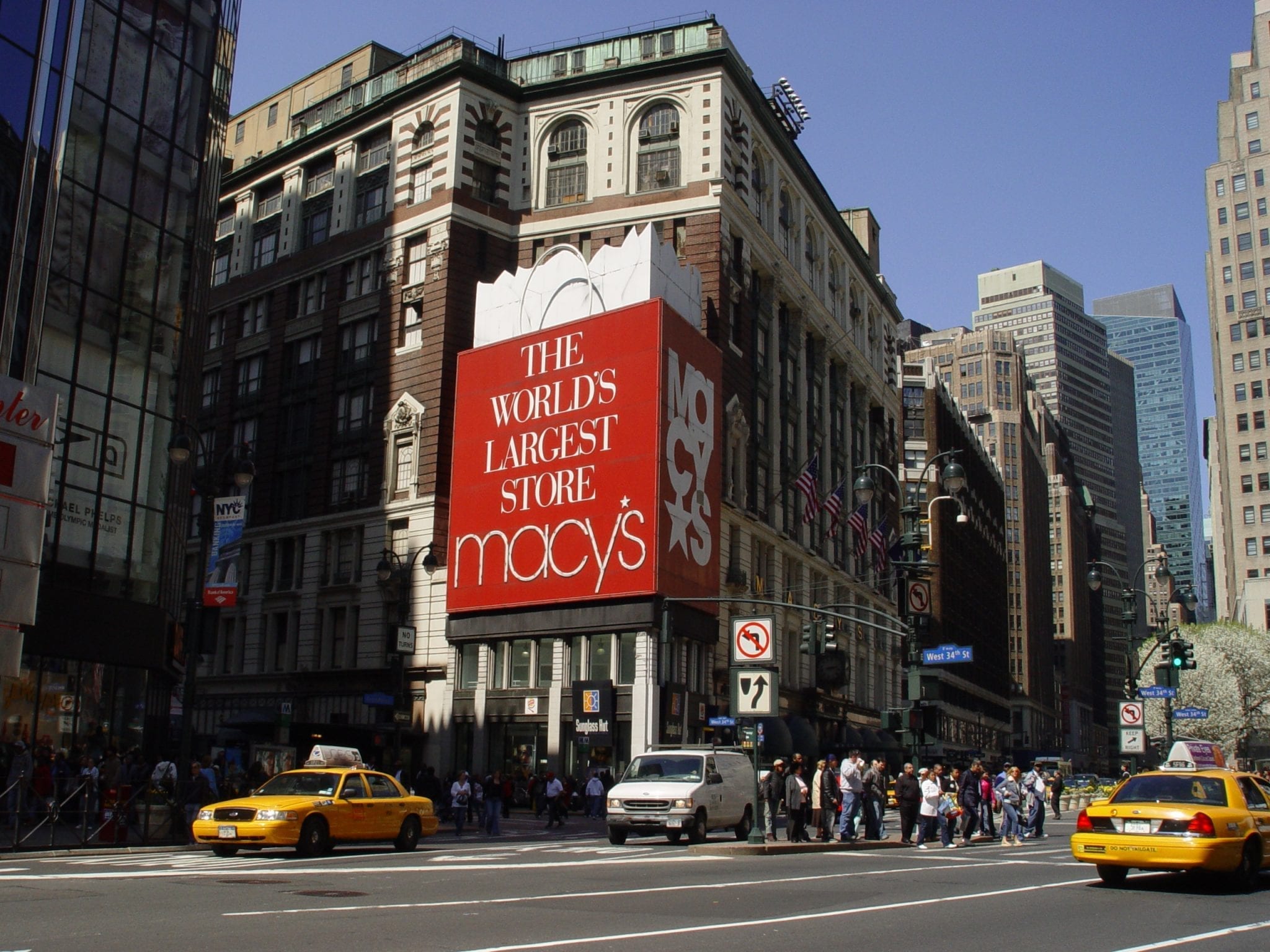
    Macy’s has seen sales growth slow as it and other traditional department store chains face competition from online and off-price rivals. It has tried new ways to attract shoppers, such as by offering more exclusive products, designating areas featuring “smart watches” and launching an Apple shop at its flagship New York store in Herald Square.

    The company said Wednesday it plans to invest some of its savings in growing its digital business.

    It said it now expects to earn between $2.95 and $3.10 per share on an adjusted basis for its 2016 fiscal year, versus its prior forecast of $3.15 to $3.40 per share. The company is scheduled to report full results in February.

    Shares in Macy’s fell more than 10 percent to $32.20 in after-hours trading.

    Kohl’s shares fell almost 15 percent to $44.15 after it cut its earnings guidance for fiscal 2016. It now expects $3.60 to $3.65 a share on an adjusted basis, down from its previous forecast of $3.80 to $4.00 per share.