Tag: Maersk Line

  • Maersk Line appoints new Greater China head

    Maersk Line appoints new Greater China head

    Maersk Line has announced that effective from 1 January 2017, Mike Fang will take up new responsibilities in Shanghai as Head of Maersk Line Greater China.

    Commenting on his new position, Mike Fang said: “I feel privileged that I can take on this new role. Greater China Cluster contributes around 30% of Maersk Line business globally, this is where we have to win in the market place. I’m keen to explore further the opportunities and growth spots with my colleagues and to ‘Make Greater China Cluster Greater’”.

    Robbert van Trooijen, Maersk Line Asia Pacific Region CEO said: “I’m delighted that Mike has decided to take over as the Head of Maersk Line Greater China. Mike has a track record of outstanding performance in many leadership roles in Maersk Line. I believe that his extensive experience, passion for serving our customers and deep insight of the local market will bring great value to our Greater China organization.”

    Mike Fang joined Maersk Line as a sales representative in 1994. In the past 22 years, he has held a succession of leadership positions in Maersk Line’s business in China including leading Maersk Line’s North China and East China organizations respectively from 2012 to 2015. Most recently, he is the Head of Sales in Maersk Line Greater China.

    Mike Fang was born in 1968. He graduated from Hua Zhong University of Science and Technology with a Master degree in System Engineering in 1992 and earned an Executive MBA from the China Europe International Business School (CEIBS) in 2004.

    Mike Fang will take over from Silvia Ding, who is moving to Copenhagen to take the position as Head of Trade Management in Maersk Line. “Moving to headquarter and stretching myself into a job that can make a multiplying impact on our business, customers and organization has always been in my long term career plan in Maersk,” says Silvia Ding, “I can pass the baton to Mike’s capable hands. Together with the rest of the leadership team, I’m sure the performance of Greater China Cluster will be raised to the next level, building on a strong foundation we together created in 2016.”
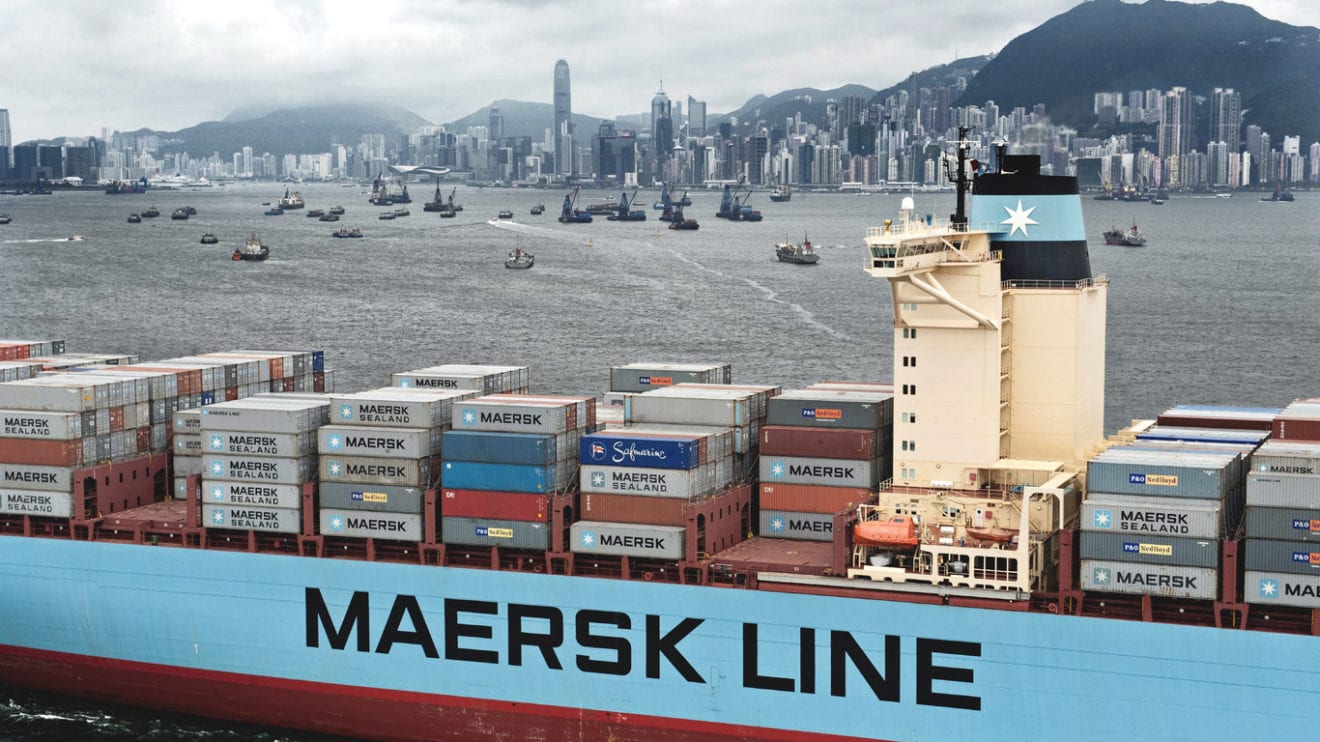
  • Maersk Line has ordered 14,800 additional refrigerated containers, to be delivered in 2017.

    Maersk Line has ordered 14,800 additional refrigerated containers, to be delivered in 2017.

    According to Maersk, which already has a reefer fleet of more than 270,000 containers, some of the new ones will be used as replacements while the rest will be used for expansion.

    “We continue to invest and modernize our reefer fleet to include the latest technologies in supply chain visibility and cargo care,” said Shereen Zarkani, head of reefer management at Maersk Line. “With the new equipment we will offer even stronger products across the reefer portfolio – enhancing transparency and care to our customers’ perishable products across Maersk Line’s extensive network.”

    The new reefers will offer enhanced data visibility and care to customers.

    The investment will lower the average age of the line’s reefer fleet to 7.9 years, according to Maersk.

  • Maersk Line Sees Improving Asia-Europe Demand on Retail Restocking

    Maersk Line Sees Improving Asia-Europe Demand on Retail Restocking

    The container shipping arm of Danish conglomerate AP Moller-Maersk A/S says the company saw strong growth in shipping volumes from Asia to the rest of the world in the first weeks of the year, sounding a positive tone for an industry still struggling with weak demand and overcapacity.

    The world’s biggest container shipping line by capacity estimates shipping volumes out of Asia increased 10% to 15% over last year in the runup to this month’s Lunar New Year break, as retailers rushed to move goods out of China before the nation’s factories shut for a couple of weeks.

    “There has been more demand certainly this time around than it was last year…That in itself is a positive sign of a good start to the year,” Robbert Van Trooijen, chief executive of Maersk Line Asia Pacific, said in an interview.

    “What we don’t know yet is what will happen when the factories come back from collective holidays. We don’t know how fast production would pick up after factories come back and to what level of exports they would resume,” Mr. Van Trooijen said.

    Despite the strong start, falling freight prices and excess capacity continue to haunt the global shipping industry, with spot shipping rates in major trade lanes near record lows. Shipping consulting firm Drewry Maritime Research estimates the container shipping sector faces a loss of more than $5 billion in 2016.

    Overall shipping capacity for the industry rose 8% last year, with nearly all the newly-delivered ships idled, said Mr. Van Trooijen. He said it would take several years for the industry to reach a better balance between supply and demand.

    The low freight rates helped drag Maersk Line into a fourth-quarter net loss of $182 million, compared with a net profit of $655 million a year earlier. Spot freight rates in December for shipping on the key trade lane from Shanghai to Europe’s Port of Rotterdam were down 79% from early 2015 to around $222 per twenty-foot equivalent unit, a standard measurement for shipping containers. That level isn’t considered profitable for most lines.

    The performance of the container-shipping industry, which carriers a wide range of consumer goods and industrial products, is considered an important barometer of the global economy.

    “We certainly feel that the current level of freight rates isn’t creating any more demand. It’s not because of low freight rates that demand would increase,” said Mr. Van Trooijen.

    A need to restock retail warehouses and store shelves in Europe this spring after cautious retailers kept inventories very low in 2015 may help fuel demand on the Asia-Europe trade lane. Meanwhile, the trans-Pacific trade for shipments from Asia to North America will likely continue to deliver moderate growth on the back of a rebounding U.S. economy.

    But Mr. Van Trooijen said demand for shipping from Europe to Asia, which is largely dominated by goods such as base manufacturing materials, wastepaper and chemical products, will remain weak in 2016, as currency weakness in Asia and China’s economy slowdown hamper local purchasing power.

    “I don’t yet see that there’s going to be a major recovery in 2016” for the Europe-Asia trade, he said.