Tag: mahindra

  • Tata Motors Take A Dig At Mahindra As Nexon EV Crosses 35,000 Unit Sales

    Tata Motors Take A Dig At Mahindra As Nexon EV Crosses 35,000 Unit Sales

    Tata Motors recently announced that its popular Nexon EV has crossed the 35,000 unit sales mark. Tata Motors posted the achievement on its social media channels, while also taking a dig at the upcoming Mahindra XUV400. Tata Motors posted an image that read 35,000 is greater than OO, where the OO was written in the same font that Mahindra uses for the XUV400.

    The soon-to-be-launched Mahindra XUV400 one-ups the Nexon EV in almost all the fields, except on the feature front. Its longer, and has better specs than the Nexon EV, but it is not as feature packed as the Nexon EV.

    The Nexon EV has been the bestseller EV in India for a while, Mahindra aims to dethrone the SUV once the XUV400 is launched early next year.

  • Mahindra Rolls Out M-Protect COVID Plan For Farmers

    Mahindra Rolls Out M-Protect COVID Plan For Farmers

    Mahindra & Mahindra’s Farm Equipment Sector on Sunday officially announced the rollout of the ‘M-Protect Covid Plan’ for the Indian farmers. With this new customer-centric initiative, the company intends to support Indian farmers in these testing times as the entire nation battles with the second wave of the coronavirus pandemic. The plan aims to safeguard new Mahindra tractor customers and their families against the possibility of contracting COVID-19. This plan will be available on Mahindra’s entire range of tractors purchased in May 2021.

    Under the M-Protect covid plan, Mahindra will provide its customers with a health cover of ₹ 1 lakh through a unique COVID Mediclaim policy covering the customer in case they contract COVID-19 with home quarantine benefits. It will also offer financial support by providing pre-approved loans to support medical expenses incurred during COVID-19 treatment. Moreover, customers’ loan with insured under ‘Mahindra Loan Suraksha’ in case of loss of life.

    Commenting on the development, Hemant Sikka, President, Farm Equipment Sector, M&M Ltd., “At Mahindra, we care about our customers and the community at large and have taken a series of initiatives to help those most in need to overcome the challenges related to COVID. Our new ‘M–Protect Covid Plan’ is a new initiative in that direction targeted at farmers, as we stand by them to drive positive change even in these tough times. With M-Protect we are privileged to serve and support them to reduce the impact of a COVID-related eventuality. With M-Protect we hope our farmers continue to have a healthy life.”

    Shubhabrata Saha, Chief Executive Officer, Farm Division, M&M Ltd. said, “May and June are important months for the livelihood of the farming community and COVID-19 has brought in several challenges. Our new M-Protect Covid Plan is intended to ease farmers’ worries as we support them in these crucial farming-related months. Through M-Protect we will offer health, financial and insurance-related protection to bring relief to the farmer during these challenging times, safeguarding them and more so their families. I would like to thank our channel partners for the immense support they’ve extended to our farmer customers.”

  • Amazon Web Services Puts Mahindra Electric In Top Gear

    Amazon Web Services Puts Mahindra Electric In Top Gear

    With India planning to replace a significant portion of its conventional internal combustion engine fleet by electric vehicles (EV) in the next decade and target 30 percent of all cars on the road to be EVs by 2030, the segment leader Mahindra Electric is witnessing a robust uptick for its vehicles not just in metro cities but also tier-1 and tier-2 cities, its CEO Mahesh Babu told IANS on Wednesday. Mahindra, the biggest electric car seller in the country, terms its eVerito “India’s first electric sedan”.

    Its electric 3-wheeler range Treo and Treo Yaari — India’s first lithium-ion electric 3-wheelers — is also witnessing a great adoption.

    As the company sees the future of the mobility as both electric and digital, the daunting task of handling data and maintaining an agile, scalable and secure workflow — anticipating millions of connected electric vehicles soon on the Indian roads — is what concerns Mahindra Electric the most.

    Amazon’s Cloud arm Amazon Web Services (AWS), which is organizing its annual flagship conference “AWS re: Invent” here this week, fits the bill for them.

    “Electric vehicles are bringing in best of the technologies together. The rapid progress demands us to be agile, secure and quick. AWS has empowered us better with handling data,” Babu said.

    “We are using load balancers and services that can auto-scale as the load increases. Agility comes from their serverless architecture that helps us to innovate faster. AWS Managed Services are compliant and have built-in security measures that include security updates and patching, etc,” he elaborated.

    Driven by an urge to cut pollution in the cities, enhance national fuel security and make it a major global manufacturing hub for electric vehicles, India has announced several incentives this year to boost the EV sector, ranging from tax cut to allow sale of electricity as “service” for charging of electric vehicles in a bid to attract investments into charging infrastructure.

    The government has introduced an outlay of Rs 10,000 crore for Phase 2 of the Faster Adoption and Manufacturing of Hybrid and Electric Vehicles (FAME 2) scheme to boost electric mobility.

    According to Babu, With FAME 2 and other benefits, they have seen an uptake in the sales of electric three-wheelers and electric cars in the fleet segment.

    “We expect the demand to come from the mass mobility segment first (3-wheelers, 2-wheelers, buses and fleet cars) followed by personal segment. Mahindra’s electric vehicles are witnessing demand not only in metro cities but also tier-1 and tier-2 cities have shown strong acceptance to our electric three-wheeler Treo,” Babu told IANS.

    Close on the heels of the Union Budget providing tax relief for buying EVs, the GST Council in its 36th meeting in July cut the tax on EVs from 12 percent to 5 percent. The Council also slashed rate for EV chargers from 18 percent to 5 percent making electric vehicles affordable for the buyers.

    Road transport accounts for around 90 percent of the total emissions in the transport sector in India. Given the large import dependence of the country for petroleum products, it is imperative that there should be a shift of focus to alternative fuels to support our mobility in a sustainable manner, according to the Economic Survey 2018-19.

    The lithium-ion powered three-wheelers are set to be a natural progression for the industry and Mahindra Electric is looking to ramp up its efforts in the li-ion battery space.

    “Mahindra Electric was the first to bring in lithium-ion powered auto with the launch of Treo. We have an experience of our 170 million electric kilometres in this technology in India that has helped us to understand the economics around EVs,” informed Babu.

    In 2018, the company announced collaboration with LG Chem to bring in global Li-ion technology to India.

    “The company is further investing in a new EV manufacturing plant in Chakan (Pune) and a global R&D centre in Bengaluru that will enable us to achieve scalability and agility to roll out new products quickly,” the Mahindra Electric CEO added.

    Mahindra Electric, he said, is now better equipped and flexible to quickly scale up its EV and connected mobility goals.

    0Comments
  • Toyota, Mahindra Decide To Stop Usage Of Single Use Plastic

    Toyota, Mahindra Decide To Stop Usage Of Single Use Plastic

    Over time cars and car companies have been blamed of contaminating the environment. Be it emission, exhausting fossil fuel or adding up to the noise pollution, cars have been the soft target to point the finger on. That said, the situation need not remain the same always. While carmakers are adhering to the government’s upcoming emission standards, fuel efficiency norms and electrification targets in a bid to curb pollution, some are also taking steps to refine their production methods. Automakers like Toyota and Mahindra have decided to eliminate the use of single-use plastic in their manufacturing process.

    As part of the six challenges to be achieved by 2050, Toyota is trying to establish a recycling-based society and systems. The move ensures zero waste directly to landfills and achieves recyclability of 96 percent, at its operating plant at Bidadi, Karnataka and also helps in reducing45per cent of the plastic footprint. Commenting on the initiative Masakazu Yoshimura, Managing Director, Toyota Kirloskar Motor said, “Keeping in-line with our global Toyota Environment Challenge 2050 and aligned with honorable Prime Minister’s nationwide campaign to limit the consumption of single-use plastic, we have proactively implemented several initiatives encouraging our stakeholders to reduce, recycle and reuse, as a step towards a better tomorrow.”

    Mahindra’s initiative could also be extended in Ford’s Chennai and Sanand plant following their recent JV.

    Along with Toyota, even Mahindra has taken steps in this direction. Pawan Goenka, Managing Director, Mahindra & Mahindra put out in a tweet today that all 15 manufacturing plants of Mahindra & Mahundra have committed to stop using single use plastic latest by the end of this year. The move is crucial, even much so at a time when Mahindra has partnered with Ford in its India operations. It will have 51 per cent ownership in its India business, in-turn taking the charge of its Chennai and Sanand manufacturing plants which means we can hope the initiative being extended to even these plants by the day.

  • Mahindra To Stop Production Of All Vehicles For Up To 13 Days Due To Low Demand

    Mahindra To Stop Production Of All Vehicles For Up To 13 Days Due To Low Demand

    Indian Auto Industry has been under turmoil since the start of 2019. In April, the Passenger Vehicle segment recorded the lowest sales in the last eight years witnessing a decline of 17.07 per cent. The drop in sales has continued in May as well and all major carmakers have again recorded de-growth. Mahindra also has been recording decline in sales and to the extent that the company had to shut down its production plants for up to 13 days, pertaining to the low demand.

    The Indian UV maker has issued a notification on the Bombay Stock Exchange (BSE) saying, “The Company at its Automotive Sector and Farm Equipment Sector, and Mahindra Vehicle Manufacturers Limited, a wholly owned subsidiary of the Company (‘MVML’), as part of aligning its production with sales requirements, would be observing ”No Production Days” ranging between 5 – 13 days in various plants of the Company and MVML during the first quarter of the Financial Year 2019-2020. The Management does not envisage any adverse impact on the availability of vehicles in the market due to the adequacy of vehicle stocks to serve the market requirements.”

    Mahindra & Mahindra sold a total of 43,721 vehicles in April 2019 compared to 48,097 vehicles during April 2018 which is a decline of 9 per cent. In the Commercial Vehicles segment, the company sold 17,321 vehicles in April 2019, as against 18,963 vehicles in April 2018 which marked a drop in sales by 9 per cent. In the Medium and Heavy Commercial Vehicles segment, M&M sold 474 vehicles for the month. Exports for April 2019 stood at 2,118 vehicles. In May 2019, the carmaker’s total sales stood around 45,421 units as against 46,848 units during the same month last year, which is again a de-growth of 3 per cent. That said, new models like the XUV300 and Marazzo have been well received in the market and Mahindra is soon going to introduce an automatic variant of both models which is likely to give a fillip to the overall sales.

  • Mahindra XUV300 Receives Over 26,000 Bookings

    Mahindra XUV300 Receives Over 26,000 Bookings

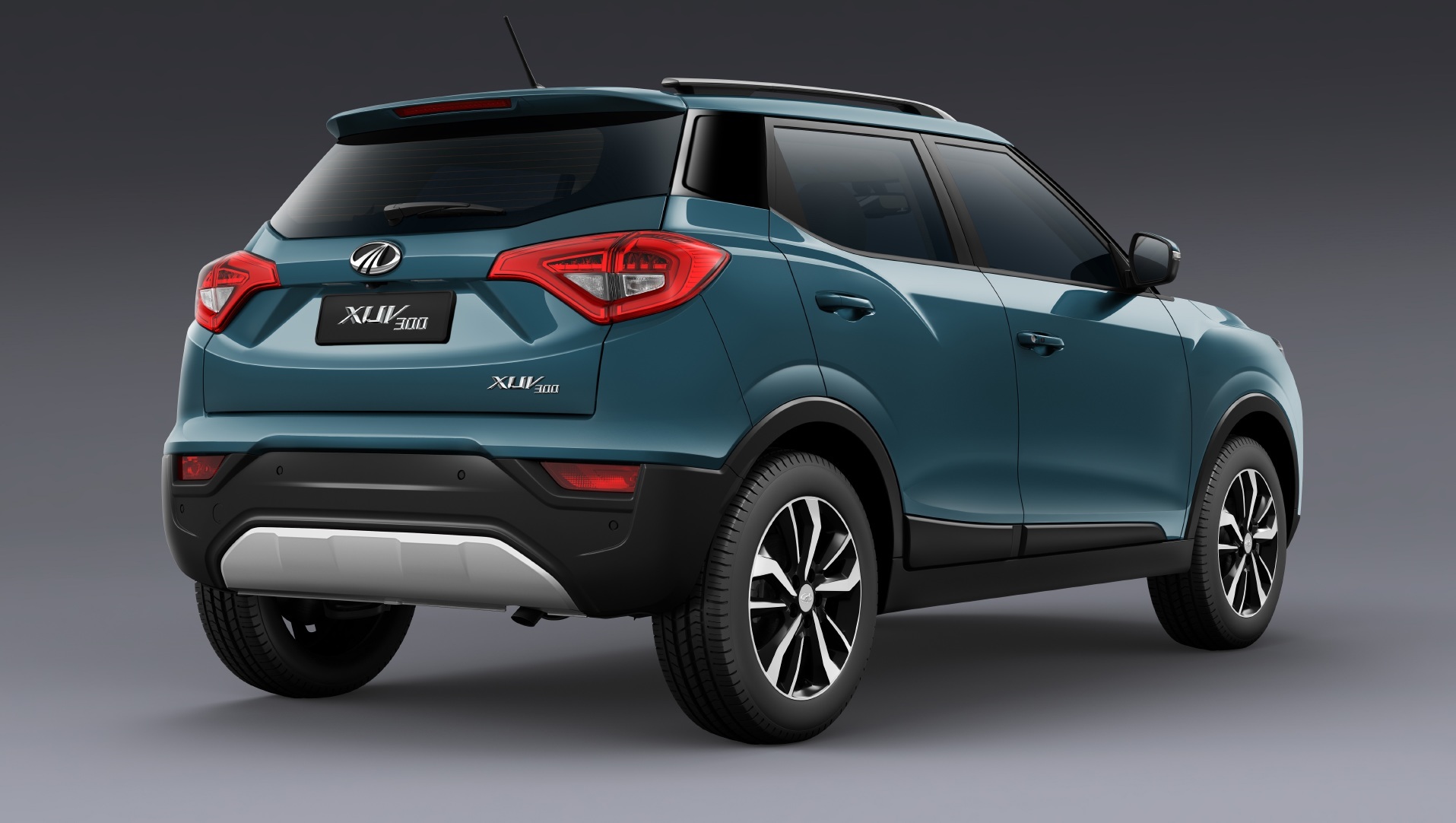
    Mahindra and Mahindra announced that the XUV300 has crossed the 26,000 bookings mark since its launch in February this year. In fact, the XUV300 also became the second-highest selling subcompact SUV in India. Among its 3 variants, the top end variant has seen the maximum demand and accounts for 70 percent of the overall bookings. The petrol variant, equipped with a 1.2-liter turbo-petrol continues to gain traction and now accounts for a substantial share of XUV300 sales and we were the first to drive the petrol powered XUV300.

    Veejay Nakra, Chief of Sales & Marketing, Automotive Division, Mahindra said, “We are thrilled with the XUV300 receiving over 26,000 bookings in just over two months since its launch. Consumers are finding the XUV300 to be an exciting and comprehensive package that offers thrilling performance, first-in-segment safety features and head-turning design, which is reflected in these impressive booking numbers. It is also encouraging to see that a substantial number of bookings are for the petrol variant. As a customer-centric organization, we are constantly working to keep the waiting period at a minimum and to get our customers their XUV300s as soon as possible. I am sure that the XUV300 brand will grow from strength to strength in the years to come.”

    The all-new Mahindra XUV300 is built on SsangYong’s X100 platform which also spawns the SsangYong Tivoli which in-turn means that the XUV300 inherits some of the characters of the Tivoli. However, both are not exactly the same models as Mahindra has made changes to other underpinnings of the XUV300. For instance, it gets a new suspension set-up along with an entirely new steering mechanism.

    The XUV300 is loaded with features in typical Mahindra fashion and gets features like auto-climate control 7-inch touchscreen infotainment system with smartphone connectivity options (Apple CarPlay and Android Auto), cooled armrest box, cruise control, steering mounted audio controls, engine start-stop button, rearview camera and more. Interestingly, this one is also equipped with some first-in-segment features as well which are the dual-zone climate control, a sunroof, front parking sensors along with rear ones and an auto-dimming inner rear view mirror. Moreover, it also gets driving modes to change the weight of the steering. However, the center armrest at the front does not slide and there is no A.C. vent at the rear which would have been an added novelty.

  • Ford Might End Its India Business

    Ford Might End Its India Business

    News has emerged that Ford India could end its India business as it looks to sign a new deal with Mahindra. According to a Reuters report, Ford could enter into a new joint venture in India in which it will hold 49 per cent stake, while Mahindra will own 51 per cent. The American carmaker could transfer most of its India business to the joint venture including its assets and employees.

    carandbike reached out to Ford India for a comment and the company responded by saying, “We do not comment on speculation. Ford remains committed to India. On the strategic alliance with Mahindra, teams from both companies continue to work together to develop avenues of strategic cooperation that help us achieve commercial, manufacturing and business efficiencies for the future.” Mahindra hasn’t confirmed the news either and has refrained from commenting on speculations.

    Ford and Mahindra entered into a strategic alliance in 2017 under which they will share platforms and build new models together. Mahindra Electric, a completely owned subsidiary of the Mahindra & Mahindra which expertise in electric vehicles will lead the alliance by providing the technology to develop new electric vehicles. Mahindra Electric will supply the electric powertrains, battery packs and software technology while Ford will share platforms with Mahindra.

  • Mahindra Sales Grow By 11% Last Year

    Mahindra Sales Grow By 11% Last Year

    Indian auto giant Mahindra & Mahindra (M&M) registered a growth of 11 per cent in auto sales for the financial year 2018-19. The automaker sold 608,596 units in the previous fiscal, as opposed to 549,153 units sold in FY2017-18. The company’s steady growth was visible in the March 2019 sales results as well with Mahindra selling 62,952 units, as against 62,076 units in March 2018. The automaker saw a hike of one per cent in its sales for the previous month.

    Commenting on the performance, Rajan Wadhera, President, Automotive Sector, Mahindra said, “We have closed FY-19 with robust double digit growth of 11 per cent at an overall level, despite strong headwinds faced by the Indian automotive industry this year. This growth has been supported by our three new product launches, which have been well received in the market. The commercial vehicles segment and exports have also posted strong growth rates of 15 per cent and 37 per cent respectively.”

    Mahindra’s domestic sales stood at 59,012 units for March 2019, growing by one per cent over 58,652 units sold in March last year. The Passenger Vehicle segment that includes UVs, cars and vans contributed 27,646 units to last month’s sales, registering a growth of four per cent over 26,555 units sold in March 2018. The commercial vehicle segment meanwhile saw sales decline by four per cent with 24,423 units sold in March this year, as against 25,495 units sold in March last year.

    The Medium and Heavy Commercial Vehicles segment saw Mahindra sell sold 917 units, which also saw sluggish volumes with a decline of 33 per cent in year-on-year sales. Nevertheless, exports dor March 2019 stood at 3940 vehicles, growing by 15 per cent, while three wheeler sales for the previous month grew by five per cent at 6943 units.

  • Toyota And Mahindra Register Growth, Maruti Suzuki Car Sales Drop

    Toyota And Mahindra Register Growth, Maruti Suzuki Car Sales Drop

    Carmakers in India have officially started to come out with their sales numbers for the month of March 2019. The Financial Year 2018-19 has been quite an eventful year for the Indian auto industry with the year ending in a positive note. As for the sales performances in March 2019, the results were quite mixed. In fact, the country’s largest carmaker, Maruti Suzuki India, continued to see a decline in sales in March 2019, while other manufacturers like Toyota Kirloskar Motors and Mahindra and Mahindra registered marginal growth.

    Toyota India

    In March 2019, Toyota Kirloskar Motor sold 13,662 units in India, registering a growth of 0.9 per cent, compared to the 13,537 units during the same month last year. As for the company’s domestic sales, Toyota’s wholesales numbers went up to 12,818 units last month, compared to the 12539 vehicles sold in March 2018, registering a growth of 2 per cent. Exports, on the other hand, saw a decline of 15.4 per cent during the month of March 2019 with 844 units, against the 998 vehicles that were exported during the same month last year. However, as for the company total sales during FY 2018-19, Toyota Kirloskar Motor recorded a sales growth of 7 per cent in the domestic market with 150,525 units, compared to the 140,645 units being sold during FY 2017-18.

    Commenting on the sales performance, N. Raja, Deputy Managing Director, Toyota Kirloskar Motor said, “We are happy to have clocked a growth of 7 per cent in domestic sales in FY 18-19 as compared to FY 17-18. Innova Crysta and Fortuner have been maintaining the growth trajectory and continue to be leaders in the segment.” He also added that “All New Camry Hybrid Electric Vehicle or self-charging electric vehicle has already crossed 500 bookings since its launch in Jan 2019. Additionally, Etios Liva has also contributed to the positive sales momentum in FY 18-19 with a growth of 13% as compared to FY 17-18.”

    Maruti Suzuki India

    Maruti Suzuki India has registered a decline of 1.6 per cent in the last month of the Financial Year 2019. Last month the company sold 158,076 vehicles, including domestic sales and export, compared to the 160,598 units that were sold in March 2018. The company’s total sales in India alone reached 147,613 units in March 2019, registering a marginal de-growth of 0.7 per cent, against the 148,582 vehicles sold during the same month last year. Exports, on the other hand, took a massive hit with a decline of almost 13 per cent with 10,463 units, compared to the 12,016 units exported in March 2018.

    Maruti Suzuki has registered the highest ever total sales in FY 2018-19 at 1,862,449 units, a growth of 4.7 per cent, compared to the 1,779,574 units sold in 2017-18. The company’s domestic sales for FY 2018-19 reached 1,753,700 units, also the highest ever, compared to the 1,653,500 units sold in 2017-18. In fact, this is the 7th straight year of growth in domestic sales for Maruti Suzuki India.

    Mahindra and Mahindra

    Mahindra and Mahindra has registered a marginal growth of 1 per cent in total sales for the month of March 2019 with 62952 units. In comparison, the company sold 62076 units in March 2018. Mahindra’s domestic sales touched 59,012 vehicles during March 2019, as against 58,652 vehicles in March 2018, registering a similar growth of 1 per cent. The Passenger Vehicles segment (which includes UVs, Cars and Vans) sold 27,646 vehicles in March 2019, registering a growth of 4 per cent. The company’s exports, on the other hand, saw substantial growth of 15 per cent with 3940 units, against the 3424 exported in March 2018.

    On the other hand, the company’s sales performance for the financial year that ended on March 31, 2019, stood at 6,08,596 vehicles, compared to 5,49,153 vehicles during FY-18, registering a growth of 11 per cent.

    Commenting on the performance, Rajan Wadhera, President, Automotive Sector, Mahindra and Mahindra said, “We have closed FY-19 with robust double-digit growth of 11 per cent at an overall level, despite strong headwinds faced by the Indian automotive industry this year. This growth has been supported by our three new product launches, which have been well received in the market. The commercial vehicles segment and exports have also posted strong growth rates of 15% and 37% respectively.”
  • Mahindra Marazzo MPV Gets Apple CarPlay

    Mahindra Marazzo MPV Gets Apple CarPlay

    Mahindra’s latest launch- the Marazzo will now be equipped with Apple CarPlay. The MPV was launched in India on September 3 and it’s infotainment system was Android Auto compatible. The UV maker has now confirmed to carandbike of having received the licence for Apple CarPlay. The company has sold over 4500 units of the Marazzo, which were rolled out of the Nashik plant. All these units did not have Apple Carplay but the company has informed us that all the models sold will be updated with the Apple CarPlay in their schedule service, without any additional cost.

    The timing for the license couldn’t have come at a better time as Mahindra is all set to launch the Y400 in the country in November this year and well, the SUV of course will get both Apple CarPlay and Android Auto now.

    The 7-inch touchscreen infotainment system in the Mahindra Marazzo is claimed to be the most updated unit in Mahindra’s product portfolio boasting of some cool features, for example configurable home screen. Buyers can add personalized images on the infotainment system’s internal memory via the USB socket and select it as the background wallpaper. Moreover, Mahindra has also been innovative with the creature comfort features in the Marazzo.

    The new Mahindra Marazzo is powered by a new 1.5-litre four-cylinder diesel engine that has been tuned to offer a maximum of 121 bhp and develops a peak torque of 300 Nm. The engine only comes mated to a 6-speed manual gearbox, and right now, there is no automatic transmission on offer. Mahindra is also working on the petrol engine and an automatic transmission for the Marazzo and could introduce the same when the BS VI emission norms come into effect from April 2020.