Tag: mail

  • Google Message Router is overloaded leading Gmail to go down on Thursday

    Google Message Router is overloaded leading Gmail to go down on Thursday

    Google first alerted Workspace users Thursday at 11:30 am ET that some Gmail users might see a delay in receiving emails. On DownDetector, the number of reports about Gmail went from 33 at 11:25 am ET to 761 by 1:55 pm. At 5:03 pm ET, Google issued an update that said, “the issue with email delays was mitigated for the majority of affected users at 2:45 PM” and “a few users may have observed delays until the full mitigation was done at 4:15 PM ET.”

    70% of those submitting a report on DownDetector said that the problem was receiving their email in a timely manner. 16% complained about sending email on the platform and 14% said that they could not connect with the Gmail server. One Gmail user on DownDetector with the username “Elizabeth” wrote, “Ah, glad to know that it’s Gmail and it’s not me, I was scared and lost why I couldn’t make one, so I guess I’ll wait whenever Gmail is back working again.”

    Another subscriber to the platform named Michael Hubert wrote, “My emails are not being delivered. it says they are sent but no one is receiving them.” As bad as this sounds, the issue appeared to be limited in scope. After all, 761 reports on DownDetector, while a decent jump from the 33 reports submitted two and a half hours before the peak number, indicates that most people weren’t affected or didn’t know that Gmail was having problems.

    Officially, Google says that the incident started at 11:30 am ET and ended at 4:15 pm ET. The issue lasted for 4 hours and 45 minutes. On the Google Workspace Status Dashboard, the company wrote, “Some Gmail users experienced a delay in sending emails globally for a duration of 4 hours and 45 minutes. Any emails that were delayed after entering our system were auto retried and should have been delivered within a couple of hours after mitigation.”

    As for the cause of the issue, Google wrote, “From preliminary analysis, the root cause of the issue appears to be an overload in Google Message Router (GMR). Google will complete a full incident report in the following days that will provide a detailed root cause.”
  • Gmail notifications on Android mare getting better

    Gmail notifications on Android mare getting better

    Google is finally getting around to putting dynamic theming in one of the last places on Android where it hadn’t before. We are talking about the Gmail app icon on the notification shade. Previously, when you pulled down the notification shade on your Android phone, the Gmail icon was red. That’s not a bad thing since the Gmail icon in that color certainly stood out and caught your eye. But the new dynamic theme color matching delivers a more pleasing aesthetic.
    If you have Version 2023.05.28.54044.3362 of the Gmail app (and we will show you how to find out which version you’re running on your Android phone), the tiny Gmail icon on the notification shade will match colors with those Quick Settings lozenges that have been enabled on your handset. And those Quick Settings indicators get their color theme from the wallpaper used on the device. So in other words, the Gmail icon on the notification shade will soon take its color theme from the handset’s active wallpaper.
    The version of Gmail on my Pixel 6 Pro running Android 14 Beta 3 does have the new feature as the Gmail icon on my notification shade is now one of the colors that has been pulled out of my wallpaper. To change the color theme based on your wallpaper, go to Settings > Wallpaper & style and under the preview of your wallpaper you will see color wheels. These colors are drawn from your wallpaper with the main color on top and accent colors on the bottom.
    Tap on one and you’ll see the main color fill in the Lock screen and Home screen pills at the top of the page. In addition, the image of your wallpaper on the bottom will have a box around it with a circle inside with a white checkmark. That circle will be filled with your main color theme.
    To change the color of your Android app icons, go to Settings > Wallpapers & style and press on Home screen in the upper right of the screen. Tap the color wheel you want to use (again, the main color is on the top of the wheel), scroll down to Themed icon (which is still considered a Beta), and toggle it on. Only compatible app icons will change color, but it will give your phone a refreshing new look.
    To see which version of Gmail you are running, go to System > Apps > See all xxx apps. Scroll to Gmail and tap on the listing. Scroll down to the very bottom to see the version you have installed.
    It’s just another way that Google allows Android users to customize their phones.
  • Updated Gmail for Android now includes animated swipe action

    Updated Gmail for Android now includes animated swipe action

    After reading your email on the Android Gmail app, users can use “Mail swipe actions” to delete, archive, mark as read/mark as unread, snooze, mark as, and move to messages. Each swipe is a different color. Each action is accompanied by a different color, but to make it even easier to tell the different gesture actions apart, Google has added some animation. For example, mark as read will show the fold of an envelope closing. Delete an email and the trash can lid rises, and snoozing an email will spin the clock.

    You should soon have the latest version of Gmail for Android installed on your phone. Google has been adding little things here and there in order to improve the app. For example, in February Google added confirmatory vibration feedback so that users don’t make an accidental swipe on the wrong spot. To make sure that your Gmail app is completely up to date, your Android phone should be running version 2021.03.07 which was released just last week. It is important for you to understand that the animations are not available on the iOS version of the app.

    Google is adding animation and other swipe action to its Gmail for Android app.

    You can find the Gmail for Android app in the Google Play Store. These are small things that might not seem like a big deal but they are important to users.

  • These changes being added to Microsoft’s Outlook greatly improve the app

    These changes being added to Microsoft’s Outlook greatly improve the app

    Microsoft’s attempt to take on Siri, Google Assistant, and Alexa was not what you might call a rousing success for the software giant. In most head to head testing, Cortana finished behind all of its rivals including Siri, which is about as bad as things can get. Earlier this year, Cortana was removed from the Microsoft App Launcher. And Microsoft itself has said that at the beginning of next year it will pull Cortana out of the App Store and the Google Play Store.

    But this might not be the end of Microsoft’s digital assistant after all.  In an effort to revitalize its mobile apps, Microsoft announced some changes it is making to Outlook at the request of IT administrators who want to encourage their end-users to start using the iOS or Android version of the app. In a blog post, Microsoft explains that Outlook users will be notified from their desktop or browser that they can have the Outlook experience on their mobile device.

    The users then send a text to themselves containing a link that allows them to download Outlook mobile from the app stores. When they open the app, scanning a QR code will securely transfer their Microsoft credentials from the desktop version of Outlook to the app on their phone. This way they won’t need to enter their username and password when adding a work or school account.” As Microsoft says, “This experience provides a shortcut for both users and IT administrators. Users can easily get started and IT administrators can quickly and confidently know they can scale their deployments in a secure way using the services they already have.

    “Microsoft says that over the next several weeks, it will be adding shortcuts into Outlook for iOS and Android. For example, if suggested replies is enabled by the user and allowed by his or her organization when receiving a message for a get-together, Send Availability will allow the user to work out a time that works out the best for him or her. Tapping on Schedule Meeting will allow the user to create a new event on his Outlook Calendar.

    In the Android version of Outlook, users will be able to respond to email notifications in the app by choosing Archive, Reply, and Delete. Two out of the three can also be selected as responses along with Mark Read, Flag, Read & archive, or none. With Drag and drop, files, text and images can be added to Outlook emails. And those using the iOS 14 version of Outlook now have a widget shortcut to the Outlook Calendar.

    Those with the iOS or Android version of Outlook will be able to schedule a meeting, call contacts from Outlook with their phone, and quickly compose short emails using their voice. This is in addition to searching for people, emails, events, and files, or monitoring new posts in their inbox with help from Cortana.

    The weather is coming to the Outlook app as a way for users to see what the forecast is for later on the same day, the forecast over the next three days, or over the upcoming week. Lastly, AI-based text predictions are coming to the mobile version of Outlook. This makes it quicker to complete composing emails in the app. Swipe on the screen to accept the suggested text or keep typing to ignore it.

    Coming around the beginning of the New Year is Reactions. This feature will allow the Outlook user to add an Emoji quickly in reaction to a message that he or she has received. It helps the user express his view about an email without having to write another long-winded response.

  • Gmail update lets users send emails as attachments

    Gmail update lets users send emails as attachments

    Google is making it easier to forward emails to multiple recipients via Gmail. The latest update lets you attach emails to other emails in Gmail without having to download them. Simply drag and drop the email you want to forward inside your email. In fact, you can drag multiple emails into a new thread, which makes the new feature even more useful.

    Another method to insert emails in a new thread to select the emails from the Gmail inbox and then choose to “Forward as attachment” from the three-dot menu. You can even reply to an email by adding multiple emails in the compose window via drag and drop.

    There are a couple of important details that Google mentions in the announcement. First off, all attached emails become .eml files. Secondly, you can attach as many emails as you want. Last but not least, every attached email will open in a new window.

    The new feature revealed by Google today will be available to all Gmail users, not just Gsuite members. However, according to Google, the rollout may take up to 15 days starting on December 9, so everyone should get it by the end of the year.

  • Google adds dynamic email support to Gmail on Android and iOS

    Google adds dynamic email support to Gmail on Android and iOS

    Google Docs is not the only app the Mountain View company is improving this week. As the title says, Gmail, Google’s email app is getting important upgrades on both Android and iOS platforms.

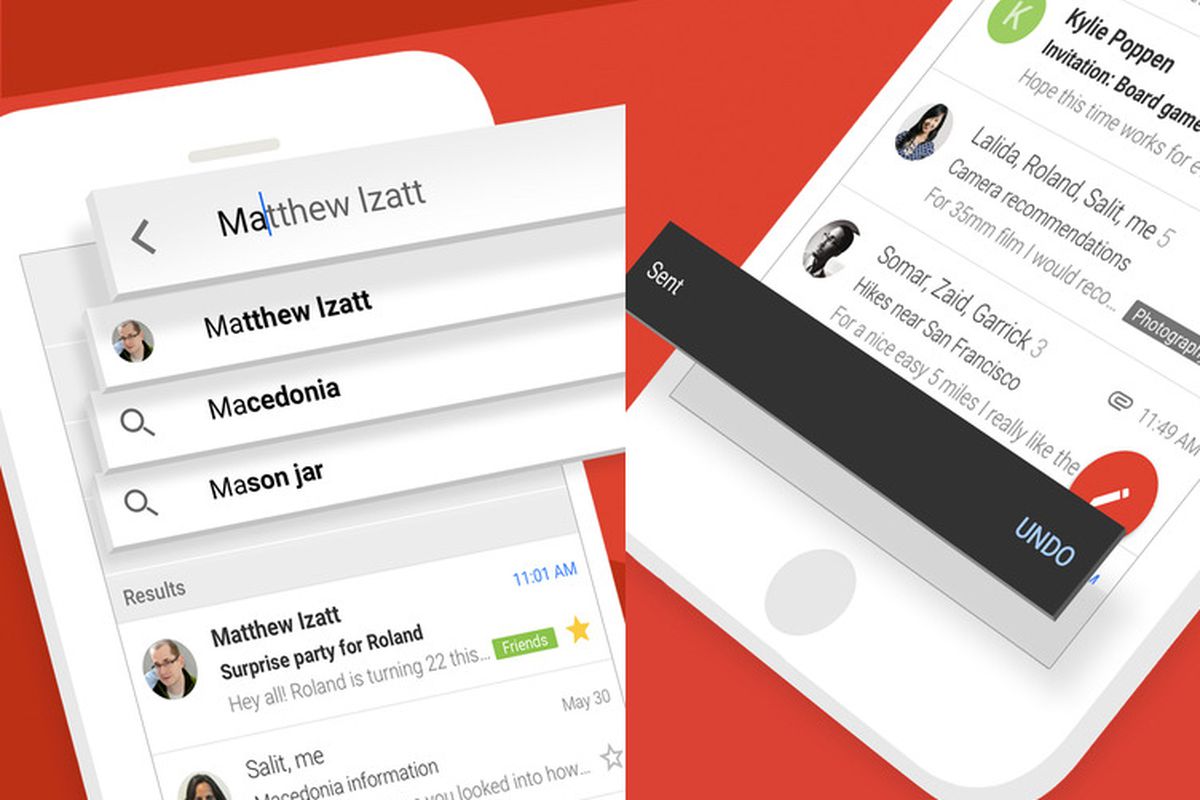
    The highlight of the latest update is dynamic email, new functionality that is now rolling out to Gmail on Android and iOS. Dynamic email lets Gmail users take action directly within a message. For example, you can respond to a comment, RSVP to an event, or manage subscription preferences directly within the email.

    Another advantage of having support for dynamic email is that the functionality can be kept up to date so that when you open an email you’ll see the most up-to-date information about the subject.

    Now, according to Google, the rollout is starting today, but it may take more than two weeks for everyone to see the functionality on their Android and iOS devices. It’s also worth mentioning that dynamic email support will be turned on by default when the functionality arrives on a compatible device.

  • Google brings new spelling and grammar correction capabilities to Gmail app

    Google brings new spelling and grammar correction capabilities to Gmail app

    Google has announced a couple of nifty features will soon be rolled out to Gmail on all platforms. Although the app does feature predictive text, users are still prone to typos or grammar mistakes.

    To correct that issue, Google announced it will introduce new spelling and grammar correction capabilities for Gmail which are meant to help users with G Suite accounts compose emails faster.

    The new capabilities will trigger ones you start typing a message and will use artificial intelligence to make smarter spell-check suggestions while detecting potential grammar issues at the same time. Moreover, Google mentions that it has added as-you-type autocorrect.

    Google says these new features will be rolled out gradually to all G Suite accounts starting today, but the full deployment will last until mid-September. Unfortunately, the new features are not yet available for regular users, although we can safely assume they will be made available to all Gmail users at some point, just like it happened with the Smart Compose function.

  • Australia Post announces e-vehicle trial

    Australia Post announces e-vehicle trial

    Australia Post has announced the trial of a new Australian-built three-wheeled electric delivery vehicle.

    Built in Melbourne’s south-eastern suburbs, the new Stealth OzPOD will service residents in the suburb of Lilydale over a five-week period, as Australia Post tests its features over different terrains in a bid to complement existing electric vehicles in operational use.

    Australia Post general manager of network optimization, Mitch Buxton, believes Lilydale is a perfect area to trial the new vehicle, with locals increasingly embracing online shopping and more small parcels being delivered than ever before.

    “We know that residents in Lilydale love online shopping. Health and beauty, fashion and media are the most popular purchases among residents in the trial area,” he added.

    “The yearly growth rate in Lilydale is higher than the national average, at close to 21%. The area saw almost 79% of households purchasing online in 2018, above the national average of 73%.

    “The Stealth OzPOD has been developed over the past 2.5 years and is designed to cater for Australian conditions, with added safety and stability, wet weather, and gradient and surface measures.”

    Buxton continued, “As our business continues to transform, we are equipping our posties to deliver more small parcels. In February we announced an order of 1,000 Swiss-built three-wheeled electric delivery vehicles, so this trial is another example of how we are looking at ways to keep our posties delivering for Australians and supporting local manufacturing businesses.”

    The Stealth OzPod has an increased carrying capacity of up to 720 liters and can travel up to 50km/h (31mph). Australia Post will use the trial to review the vehicle’s performance and identify where it can be introduced.

  • Inbox gets its official shutdown date and Google lies

    Inbox gets its official shutdown date and Google lies

    Google let Inbox users know quite a while ago that it would be shutting down the app in March 2019 and Google has continually promised that users’ favorite Inbox features would be integrated into Gmail before anyone was forced to leave Inbox. Now, Google has put a specific date on the Inbox shutdown despite that promise not having been kept.

    Inbox users have been getting a pop-up notification for a while reminding them that the app is going away and urging users to try out Gmail, but in the past day, that notification has gotten more specific. Now, the notification gives a more accurate timeline with the number of days left before Inbox is shut down and the countdown points to April 1st. Unfortunately, right after that Google straight up lies to Inbox users by claiming that “You can find your favorite Inbox features in the Gmail app.”

    As an avid Inbox user since the app launched, I can say unequivocally that is a lie. Gmail has gotten options to snooze emails, which is probably someone’s favorite Inbox feature, but that’s about it. Gmail still doesn’t have all of Inbox’s bundles (like Trips), it doesn’t highlight actionable items inline (like attachments, places, etc), it doesn’t have an option to save links to Inbox (instead it added Keep and Tasks to Gmail’s sidebar, which isn’t the same, it doesn’t have an option to quickly archive all items in a group (be it a bundle or a group of messages from a specific day), and Gmail also doesn’t have Inbox’s option to pin messages or notes.

    Maybe Google will surprise us and add all of those features in the next two weeks, but given how slowly features from Inbox have been added to Gmail, it seems pretty unlikely. In the meantime, users are being forced to leave Inbox and unless Google surprises us all with a major upgrade to Gmail, it seems poised to have lied about what Inbox users can expect when migrating to Gmail.

  • Asian postal services adapt to post-mail era

    Asian postal services adapt to post-mail era

    With the pre-Christmas rush at its peak, a serpentine network of conveyor belts at Singapore Post’s new logistics centre moves parcels destined for addresses across the world in time for the festive season.

    It is a scene repeated in sorting offices around the globe in December, the busiest time of the year for postal firms with armies of workers toiling to get presents delivered on time.

    But times are changing and the explosion of online shopping is forcing traditional delivery companies such as SingPost to adapt or be damned.

    The growth of websites such as Amazon and Alibaba means customers can avoid crowded high streets and buy anything from mobile phones to sports equipment online and send them straight to loved ones.

    US-based research firm eMarketer said online sales are expected to reach $1.9 trillion this year and top $4.0 trillion by 2020.

    And traditional firms are making moves to keep up.

    The nearly 200-year-old SingPost, which is partly owned by China’s Alibaba, last month inaugurated its ecommerce sorting office capable of handling up to 100,000 parcels a day.

    It also now provides a service setting up retail websites for clients and allows for online payments while it has teamed up with brands including Adidas, Timberland and Xiaomi to help expand their online retail sales in the region.

    And last year it expanded its US and European presence by buying ecommerce technology provider Jagged Peak and ecommerce firm TradeGlobal.

    – ‘Change or die’ –

    “In this new digital age, the lives of the traditional postal companies are coming to a turning point: change or die,” said Cris Tran, an analyst with consultancy Frost & Sullivan.

    With traditional mail volumes dropping dramatically, ecommerce offers hope for national postal firms in Asia if they adapt quickly enough and do battle with giants like FedEx and DHL.

    This year’s “Singles Day” ecommerce promotion by Alibaba on November 11 grossed 120.7 billion yuan ($17.8 billion), smashing last year’s sales record of 91.2 billion yuan.

    Asian postal firms “are doing some very innovative things to take advantage of ecommerce”, said Brody Buhler, global managing director for post and parcel at consultancy Accenture.

    Japan Post has partnered with convenience stores to provide 24-hour delivery, while Pos Malaysia is boosting its warehousing, logistics and other other capabilities in a bid to become a full-service ecommerce provider, Buhler said.

    “Pos Indonesia investments in capabilities such as lockers and faster fulfillment from China are great examples of postal organisations investing to take full advantage of the opportunity ecommerce provides for growth,” he added.

    In the year ended March 2016, ecommerce-related revenues accounted for 35.8 percent of SingPost’s turnover which crossed Sg$1.0 billion ($707 million) for the first time, and that is tipped to rise further.

    Teo Chung Piaw from the National University of Singapore’s Business School said Asian postal firms must also compete with domestic startups and delivery specialists such as Japan’s Ta-Q-Bin and China’s SF Express.

    Regulation of state-owned postal firms is also slowing crucial reforms that will allow them to compete better, he added.

    Government-owned Australia Post needed regulatory approval to raise the cost of a basic postage stamp, a move it said was necessary to ease losses in its traditional letter business.