Tag: mainland china

  • Burberry sales saved by Mainland China

    Burberry sales saved by Mainland China

    A mid-single-digit rise in Burberry sales in Mainland China in the third quarter helped produce a solid result for the luxury fashion retailer. The strong China performance helped mitigate reduced footfall in the Americas and a subdued European market where tourist spending showed only a small improvement. Global same-store sales rose just 1 per cent.

    However, CEO Marco Gobbetti said the company was buoyed by improvements and ongoing customer excitement ahead of new product delivery – the launch of new creative director Tisci Riccardo’s first runway collection which will hit stores next month.

    “I am pleased with our progress in the quarter as we continued to build brand heat around our new creative vision and shift consumer perception of Burberry. Excitement is growing ahead of next month’s launch of Riccardo’s debut collection,” said Gobbetti.

    “We will continue to manage the business dynamically as we reposition the brand. We confirm our outlook for the full year.”

    He said the company was seeing a continued shift in consumer perceptions of the brand, driving increases in digital engagement and drawing endorsements from key influencers. Increased Burberry sales can only follow.

  • Tourists from China are back to Korea, but not like before

    Tourists from China are back to Korea, but not like before

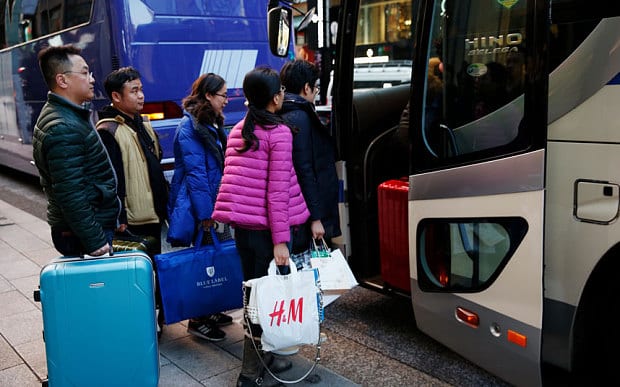
    Chinese group tours, which helped fuel local retail sector growth in recent years, have yet to make a full comeback despite the easing of restrictions by Beijing, Korean duty-free store operators said on Sunday. The assessment came as official data from the Bank of Korea showed that 475,000 Chinese nationals visited the country in October, up 37.6 percent from a year earlier.

    Local tax-exempted outlet operators like Lotte Duty Free and Shilla Duty Free, as well as the umbrella Korea Duty Free Shops Association (KDFA), said that most Chinese customers were individual travelers and so-called “daigongs,” rather than “youkers,” or group travelers.

    Daigongs are small-scale merchants who buy products here on behalf of customers back home.

    Chinese authorities clamped down on group tours to Korea in March 2017 after Seoul allowed the deployment of a U.S. anti-missile defense system on its soil, despite objections from Beijing. China has since partially lifted restrictions, but the number of group tours has not returned to past levels.

    Lotte said that it had almost no youkers, who enter the country on a group visa, and that most shoppers were individual travelers or small merchants.

    It said that before the frictions caused by the U.S. Terminal High Altitude Area Defense’s deployment, there were 7,000 to 8,000 youkers daily at its main duty free store in downtown Seoul. This dropped to around 2,000 after the uproar and then to zero.

    Shilla said it did receive 820 youkers in October.

  • Mainland role for Hong Kong retail

    Mainland role for Hong Kong retail

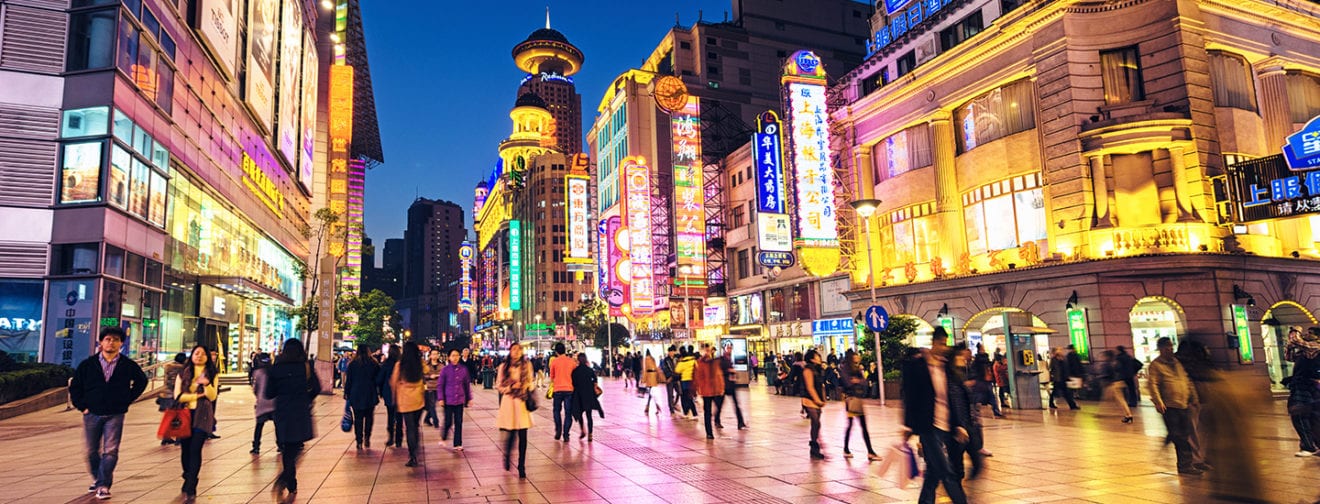
    While there are fewer of them, visitors from Mainland China are still vital to Hong Kong retail, says a new report from analyst Nielsen.

    It says Hong Kong has 42.8 million mainland visitors every year, representing 75 per cent of its total tourists and generating 35 per cent of retail sales.

    In the past 12 months, according to the 2016 Mainland Tourists Syndicated Report, 17 million mainland tourists stayed overnight in Hong Kong, with 80 per cent of them taking two trips a year on average and spending HK$20,000 (US$2578).

    Nielsen says that while the figures show Hong Kong businesses “still have a big chance to win if they find the right way to attract mainland travellers”, cross-border eCommerce opportunities offer them cheaper, easier access.

    “The incidence of buying foreign goods via a Chinese cross-border eCommerce platform is higher than overseas platforms and physical visits,” says Nielsen Hong Kong MD Angel Young.

    “Those overnight visitors, who are short in number but stronger in buying power compared with the day-trippers, is a key group to watch,” Nielsen’s report says business owners in Hong Kong might need to adapt their advertising and feedback mechanisms to create better customer experiences for digital-savvy mainland travellers.

    “They should focus more on the pre-travel period as more and more mainlanders are planning independent tours to Hong Kong, with 95 per cent gaining the necessary information from online travel agencies and 49 per cent from social media. Many can’t wait to post pictures on social websites when they are still shopping, to share both positive and negative comments and discount information.

    “Business owners also have to improve in-store customer service, as the research shows that 80 per cent of the mainlanders’ purchases in Hong Kong are for their own use rather than for friends.”

    The report recommends targeting two specific groups: so-called “super mainlanders” and culture seekers.

    The super mainlanders have a “huge shopping thirst”, says the report. They make up only 23 per cent of tourists from the mainland but account for 54 per cent of total mainlander sales, spending an average CNY46,902 (US$6810) each per visit.

    Culture seekers travel to Hong Kong for concerts, the food, sightseeing and exploring places they have seen on television shows. While not shopping-oriented, they still spend 10 per cent more than other mainland tourists.

  • Mainland China retail sales growth slows in July

    Mainland China retail sales growth slows in July

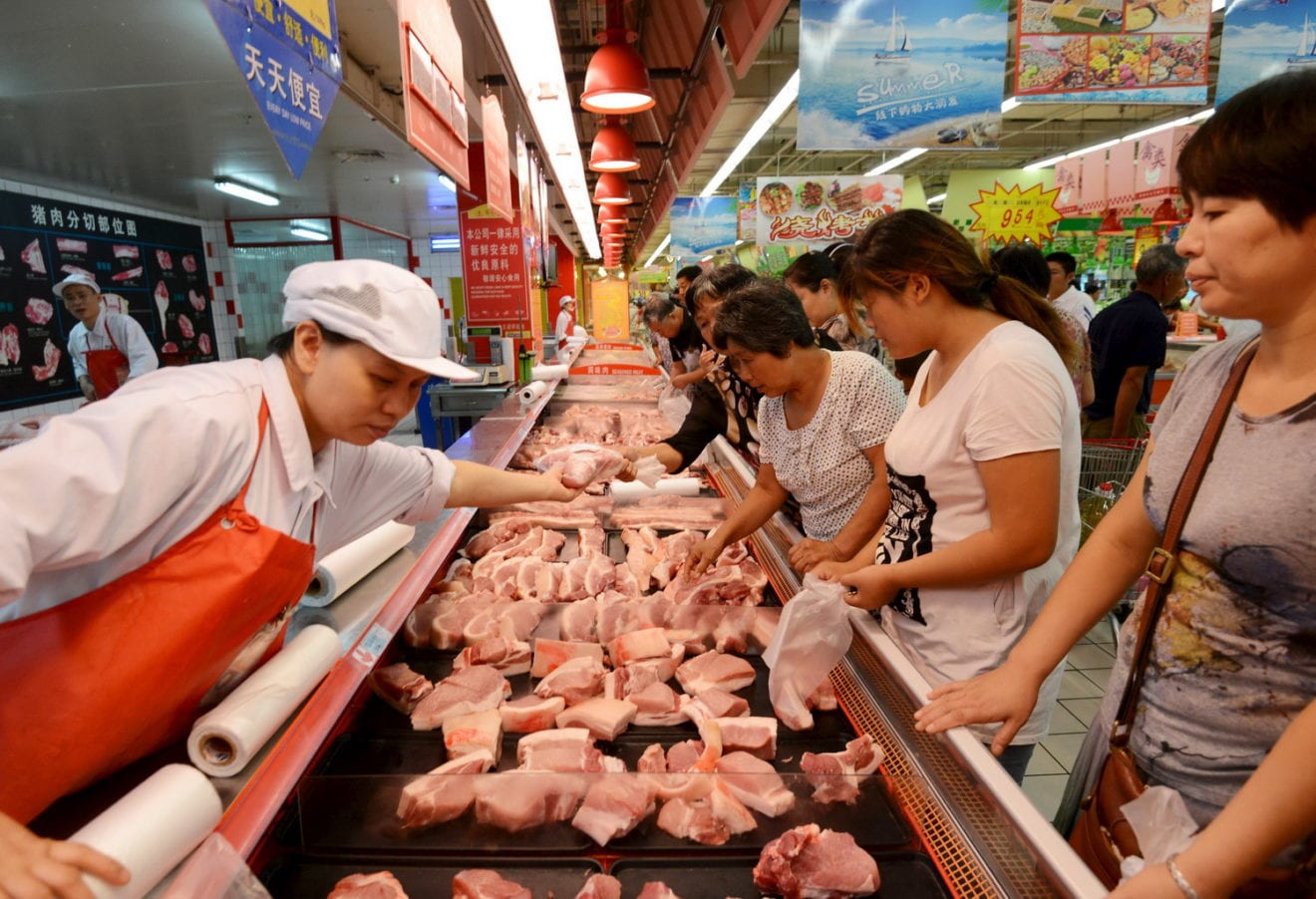
    Mainland China’s retail sales growth slowed sharply in July, statistics showed Friday, missing expectations in a disappointing sign for the world’s second-largest economy as the mainland China authorities look to consumer demand to push growth.

    Retail sales rose 10.2 percent in the month, the National Bureau of Statistics (NBS) said, a marked slowdown from June’s 10.6 percent increase and below the median forecast of 10.5 percent in a Bloomberg News poll of economists.

    Beijing is looking to retool the economy from a reliance on investment spending and exports to one driven more by consumer demand, but the transition is proving bumpy and gross domestic product growth is slowing.

    China is a key driver of the world economy but grew at its slowest rate in a quarter of a century last year, and has decelerated further since then.

    Industrial output in the Asian giant rose 6.0 percent in July over the year before, the NBS said, while fixed asset investment (FAI), a gauge of infrastructure spending, rose 8.1 percent in the first seven months of the year.

    Those figures also missed expectations of 6.2 percent and 8.9 percent respectively.

    Analysts were disappointed. Zhao Yang of Nomura called the figures an “across-the-board slowdown” that showed more weakness than expected. The investment figures were consistent with a deep contraction in imports that “points to sluggish domestic investment demand.”

    Looking ahead, factory output will face further downward pressures due to efforts to cut overcapacity, analysts with ANZ Research said in a note.

    Industrial production “may further dampen” this quarter, they added, as a result of flooding around the Yangtze River and suspended factory production in Zhejiang province, one of China’s most developed areas, due to a forthcoming G-20 summit in Hangzhou.

    Unswervingly Advance

    The NBS said in a statement China’s economy was “basically steady” in July but said that “serious disasters” from flooding and high temperatures in some parts of the country caused some indicators to slow.

    “However, overall economic development kept performing in a proper range with steady pace, as a result of stable employment and prices, deepened supply-side structural reform and accumulated new impetus,” it said.

    China should “unswervingly advance” supply-side structural reform and expand aggregate demand, it added.

    NBS spokesman Sheng Laiyun said it was “reasonable” for FAI growth to fall long-term as the economy shifts away from traditional heavy industries toward the service sector, which does not require as intensive investment.

    “The trend is good,” Sheng told a news conference. “Even though economic growth dropped slightly, the economy is stable and making steady progress, and the steady trend toward improvement has not changed.”

    Sheng acknowledged, however, that China faces “downward pressure” from weak global demand as Beijing carries out a marathon effort to nurture consumer-driven growth and reduce reliance on trade and investment.