Tag: maje

  • French Chic Meets Thai Style: Maje Unveils First Concept Store in Bangkok’s IconSiam

    French Chic Meets Thai Style: Maje Unveils First Concept Store in Bangkok’s IconSiam

    The French fashion label Maje has unveiled its inaugural concept store in Thailand. The new establishment is situated in Siam Takashimaya, part of the renowned Bangkok shopping complex, IconSiam.

    New Store, New Design Concept

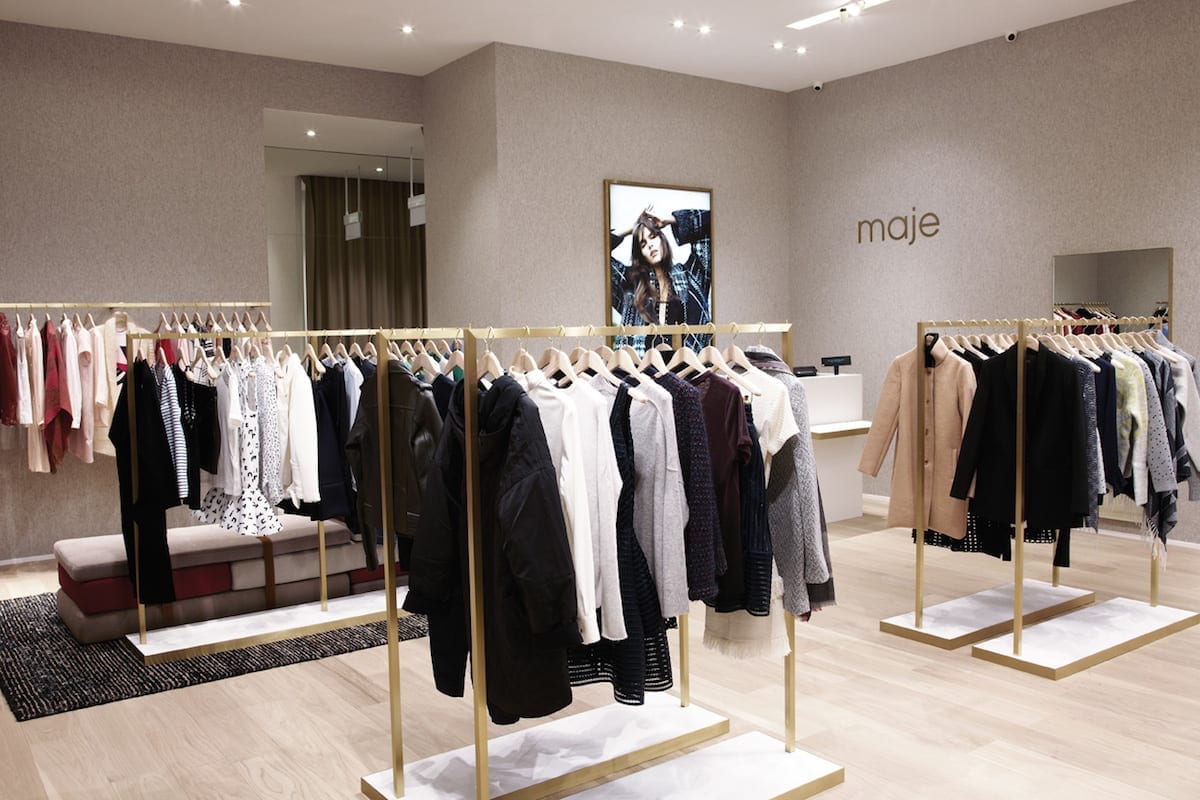
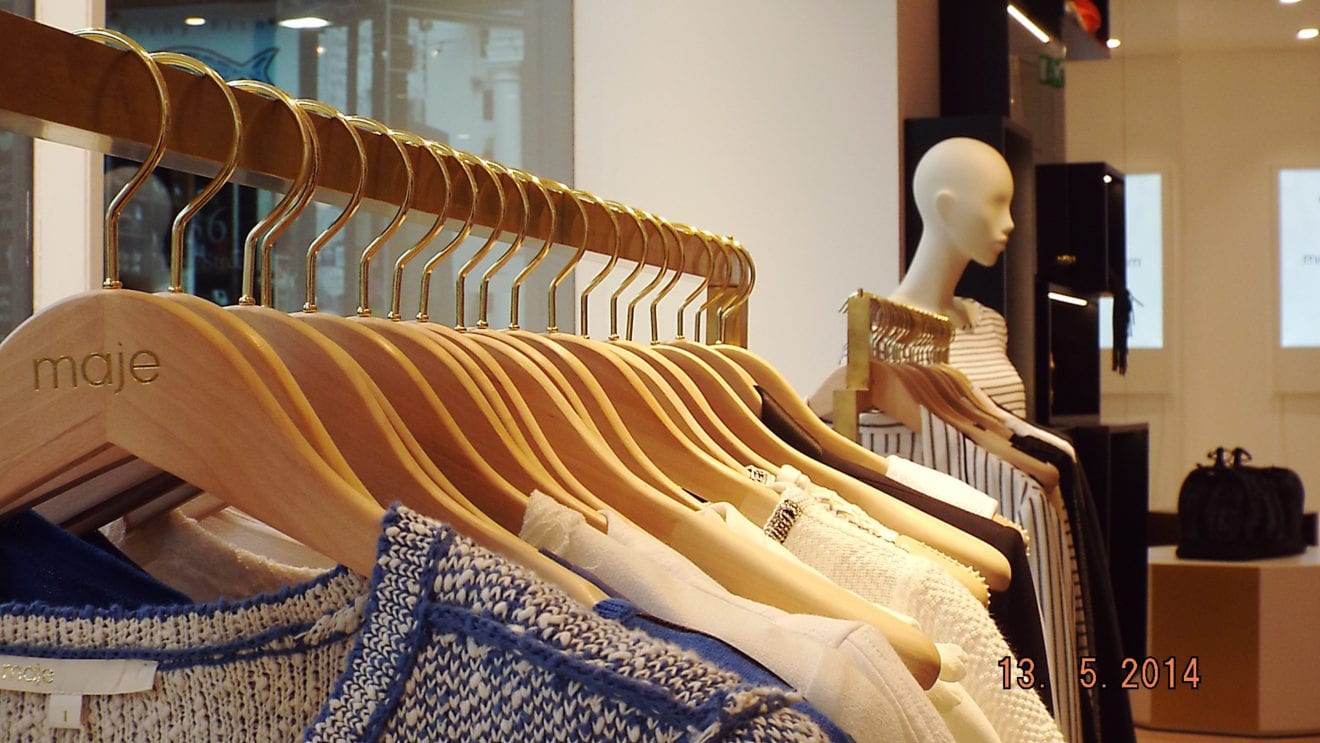
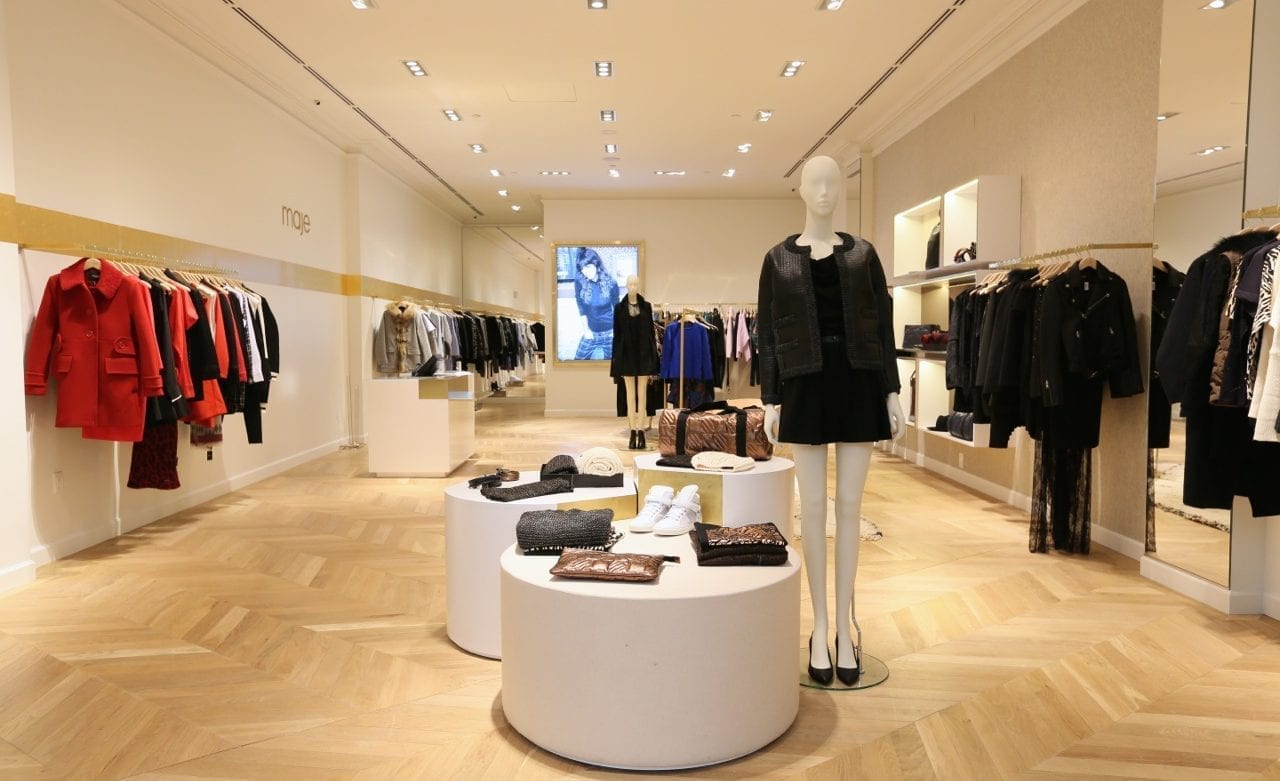
    Positioned on the M Floor of Takashimaya, the shop introduces a rejuvenated design idea that marries Parisian chic with a contemporary, feminine sensibility. The store’s layout was crafted in collaboration with designer Valeriane Lazard, who sought inspiration from the Mediterranean’s unique aesthetic, focusing on natural materials and light.

    Visitors are welcomed with a dark-glazed facade, which leads into a more luminous interior space. The finishing touches include pink terracotta floor tiles from Raujolles, hammered wrought-iron racks, ceramic display stands crafted in Portugal, and a centrally located curved sofa.

    The store utilises materials like wood, wicker, and lime-coated walls consistently throughout its design, along with textured glass shelves and mirrors that subtly alter their appearance under different lighting conditions throughout the day.

    Spring/Summer 2026 Collection

    In addition to its stylish interior, the boutique showcases Maje’s Spring/Summer 2026 range, which draws heavily from the maritime theme. The collection fuses practical elements such as hoods and workwear inspirations with more prep-oriented details. It also features loose silhouettes, lightweight materials, culottes, and designs that are reminiscent of sails.

    Questions & Answers

    What is the design inspiration behind Maje’s new store in Thailand?
    The design concept for Maje’s new store combines Parisian style with a modern, feminine approach. It was created in collaboration with designer Valeriane Lazard, who drew inspiration from the Mediterranean, emphasising the use of natural materials and light.

    What kind of materials and elements are used in the interior of the new Maje store?
    The store uses natural materials like wood, wicker, and lime-coated walls. Other design elements include pink terracotta floor tiles, hammered wrought-iron racks, ceramic display stands from Portugal, and a curved sofa situated in the store’s centre.

    What are some key features of Maje’s Spring/Summer 2026 collection?
    The Spring/Summer 2026 collection is centred around a maritime theme. It combines practical elements like hoods and workwear inspirations with preppy touches. The range also features loose silhouettes, lightweight fabrics, culottes, and sail-inspired shapes.
  • China’s SMCP tops 1 billion euros revenue for first time

    China’s SMCP tops 1 billion euros revenue for first time

    Chinese-owned SMCP Group said that total company sales exceeded 1 billion euros in 2018, marking a revenue-first for the French fashion group. “With double-digit sales growth in 2018, SMCP posted a remarkable performance and continued to deliver on its strategic roadmap,” said Daniel Lalonde, SMCP’s Chief Executive Officer. For the year ending December 31, SMCP recorded sales increasing 13%, in line with its previously upgraded full-year 2018 guidance.

    Lalonde said the achievement signalled rapid sales increase was fuelled by online and digital, with the company working hard to fight market headwinds, which have taken out other European retailers in 2018.

    “Our performance throughout the year, and more particularly over the last quarter, demonstrates that SMCP is built on strong foundations and further illustrates the resilience of our business model in the midst of unprecedented market headwinds,” said Lalonde, in a press release.

    “I would also like to place a special emphasis on our significant progress in digital: it has been growing consistently and strongly over the past years and now represents nearly 15% of our total sales,” he added.

    The sales growth included a solid like-for-like sales growth of 3.7% for the twelve-month period “despite challenging market conditions in the fourth quarter,” which saw sales climb less, up 8%.

    Full-year reported sales were up 11.5%, including a negative currency impact of -1.6% reflecting the appreciation of the euro.
    Over the last twelve months, SMCP net openings reached 134 points of sale, including 102 directly operated stores, surpassing its annual target. By region, 59 stores were opened in APAC alone, the zone receiving the most new outlets compared to the Americas and Europe.

    In APAC, the group posted a strong double-digit sales growth of 18.2% at constant currency, driven by mainland China which generated over 20% of sales growth.

    The operator of French fashion brands Sandro, Maje and Claudie Pierlot said Sandro sales grew 6% in 2018, while Claudie Pierlot recorded a 7% increase. Maje was the biggest grower, up 10% for the year.

    For 2018, SMCP confirmed its adjusted EBITDA margin guidance at around 17%.

    Evelyne Chetrite and Judith Milgrom founded Sandro and Maje in Paris, in 1984 and 1998 respectively, and continue to provide creative direction for the brands. Claudie Pierlot was founded in 1984 by Claudie Pierlot and acquired by SMCP in 2009.

    SMCP was acquired China’s Shandong Ruyi in 2016.

  • Shandong Ruyi buys Invista’s global Lycra business

    Shandong Ruyi buys Invista’s global Lycra business

    Chinese textile and retail investment company Shandong Ruyi has bought the US-based Lycra business for an undisclosed sum. Shandong Ruyi, whose retail investments include Aquascutum and SMCP (Sandro, Maje, and Claudie Pierlot), will take over the world-famous lycra brand, all assets and contracts relating to Lycra from current owner Invista and rename the business The Lycra Company.

    Lycra’s CEO Dave Trerotola said in a statement the company was fortunate to have been acquired by Shandong Ruyi.

    “[The] company shares our vision and our commitment to delivering high-quality products, technical expertise, and unmatched marketing support to our valued customers,” he said.

    The new company will operate as an independent subsidiary, and will continue to manufacture advanced fibre and technology solutions for the apparel and hygiene industries. The Lycra Company also owns a raft of consumer and trade brand names, including Lycra HyFit, Lycra T400, L by Lycra, Coolmax, Thermolite, Elaspan, Supplex, Tactel, and Terathane.

    “With the continued investment of Ruyi, we look forward to working with our customers to bring exciting innovations to market. Our new shareholder’s textile and retail experience will be a tremendous asset as we develop differentiated fibres that deliver the lasting performance benefits consumers have come to know and expect from our brands,” said Trerotola.

    The acquisition includes eight manufacturing facilities, four research and development labs, 17 offices located in 14 countries, and about 3000 employees. Current management and employees will continue in their roles.

    Yafu Qiu, chairman of the board of Shandong Ruyi, promised his company would continue to invest in The Lycra Company’s innovation pipeline and brands in order to grow the business.

    “As a spandex producer ourselves, we have admired the iconic Lycra brand for years, and we see the value The Lycra Company adds to our business. We believe its assets and capabilities are a perfect complement to our own and will help strengthen our position as a world-class, fully integrated textile company.”

    The Lycra Company’s legacy stretches back to 1958 with the invention of the original spandex yarn, Lycra fibre.

    Shandong Ruyi Investment Holding is the largest textile and apparel company in China, and ranks among the Top 100 Chinese multinational enterprises. It is headquartered in Jining, Shandong and operates 13 domestic industrial parks.

  • Sandro parent unphased by trade spat

    Sandro parent unphased by trade spat

    The parent of affordable-luxury fashion labels Sandro, Claudie Pierlot and Maje appears unphased by the Sino-US trade spat, vowing to continue its expansion in the region. SMCP’s CEO Daniel Lalonde said in an interview that the company plans to continue to open new stores in Mainland China and invest in e-commerce across the region.

    “From our perspective, everything is still intact [in China]. Any slowdown in our business is related to the comparison base … and we still expect to grow that market by more than 20 per cent this year,” Lalonde said. “We’re still confident on the region.”

    France-based SMCP is controlled by Chinese company Shandong Ruyi. This week it reported an 8.1 per cent increase in fourth-quarter sales to €276.1 million.

    SMCP has doubled its annual sales during the past four years, reaching €1 billion last year, largely due to rapid expansion in Mainland China. Asia is now SMCP’s third-largest geographic market behind France and the rest of Europe, with China accounting for the bulk.

    However, he said sales in Hong Kong were “a little softer” as a result of currency fluctuations between the Hong Kong dollar and the renminbi.

  • Sandro’s parent enjoys double-digit growth

    Sandro’s parent enjoys double-digit growth

    Affordable luxury fashion group SMCP has cited Asia as one of the reasons for double-digit growth across all its brands in the first half year.

    The French-headquartered affordable luxury brand has reported global consolidated sales of  €493.3 million, up 15.5 per cent at constant currency, driven by “outstanding” growth outside Europe of 27.2 per cent.

    CEO Daniel Lalonde said double-digit growth was achieved across all brands, together with “strong profitability” and a resulting reduction in debt.

    SMCP owns three contemporary Parisian fashion brands: Sandro, Maje and Claudie Pierlot. As at the end of last year, the brands were available at 1300 points of sale in 39 countries.

    Globally, like-for-like sales growth remained strong over the first semester, reaching 5.8 per cent, “driven by the dynamism of the brick and mortar store network as well as the exceptional results of the digital strategy,” which reached 14.3 per cent of net group sales.

    “This achievement underlines the effectiveness of our strategy, to generate profitable growth through the dynamic expansion of our core business, the success of our e-commerce approach and new store openings in highly attractive locations,” said Lalonde.

    “It also attests to the creativity and talent of our teams across the world. This well-executed strategic roadmap will continue to drive our long-term vision for the group.”

    Adjusted earnings before tax increased by 14.8 per cent from €73.1 million to €83.9 million in the first half, driven by strong sales growth and expanded margins.

    “This margin expansion is the result of a strong retail margin driven by the growing share of e-commerce and Asia-Pacific … while maintaining the pace of investment to support future growth.”

    Group net income rose from €1.1 million in the first half of last year to €27.4 million during the same period this year.

    Figures for Asia were not broken out, but the company has recently invested significant amounts in opening stores in Hong Kong and in Southeast Asia.

  • SMCP Opens 100th Store in Mainland China

    SMCP Opens 100th Store in Mainland China

    Apparel group SMCP China has opened its 100th physical store on the mainland, the Maje, in Beijing’s Chaoyang Joy City mall.

    Since its debut in Hong Kong in 2012, the French group has built up a presence in Greater China with stores in 22 cities, including Hong Kong, Macau and Taipei. Its stores can be found in such malls as Shin Kong Place (SKP) in Beijing, IFC in Shanghai and Taikoo Li in Chengdu.

    In April 2016, SMCP initiated a partnership with T-mall, closely followed by the launch of its own online stores in September last year.

    Over the coming years, the group plans to continue draw on the popularity of its three brands in Greater China, Sandro, Maje and Claudie Pierlot, to expand.

    Overall, the Asia Pacific region today accounts for more than 20 per cent of group sales, with 276 points of sale. At the end of last year, SMCP brands were available at more than 1300 points of sales in 38 countries.

  • SMCP Group sales up 16 per cent

    SMCP Group sales up 16 per cent

    SMCP Group sales soared last year, reflecting the strength of the affordable luxury category and successful expansion in Asia.

    The French fashion retailer achieved 16.4 per cent growth in sales to €786 million (US$844 million) last year. SMCP stands for its three fashion brands: Sandro, Maje and Claudie Pierlot.

    Like-for-like sales were up 7.1 per cent, which SMCP says was a reflection of market share gains as it outperformed rivals in the affordable luxury sector. Profit increased by 22 per cent to reach €130 million.

    SMCP’s e-commerce sales grew by nearly 80 per cent to represent about a tenth of group revenues. During the year the group launched two dedicated websites in China, Maje and Sandro on Tmall.com.

    The development of the accessories range is part of the group’s objective to make Claudie Pierlot, Maje and Sandro global lifestyle brands. Maje’s “M” bag was a hit last year, says the company, and sales of accessories rose by 42 per cent over the 12 months.

    Meanwhile, the group has formed a partnership this year with Mondottica to develop eyewear collections for the Maje and Sandro brands, completing the range of accessories after shoes and leather goods.

    A new concept for Sandro Homme stores was deployed in Greater China last year as part of the company’s international targeted expansion. There were 90 openings internationally during the year, including one on Fashion Walk in Hong Kong.

    Altogether, the company opened 105 stores over the year, ending with 1223 points of sale with its brands in 36 countries. SMCP says that consistent with previous years, it will introduce new points of sale at the pace of 100 to 125 a year.

  • Hong Kong shines for Sandro Asia

    Hong Kong shines for Sandro Asia

    Paris-based affordable luxury fashion chain Sandro Asia, along with sister brand Maje and Claudie Pierlot, recorded 51 per cent year-on-year growth in Asia Pacific in the first six months of the year.

    Sandro opened its largest Asia flagship store in the heart of Causeway Bay in August, and plans to double the size of its year-old store in Tsim Sha Tsui’s Harbour City.

    This store quickly became the most lucrative of Sandro’s 410 retail outlets worldwide in terms of sales per square metre. In contrast, total tenant sales at Harbour City fell 14.7 per cent to HK$13.3 billion (US$1.7 billion) in the first half, according to financial filings by its parent company Wharf Holdings.

    Sandro now has eight outlets in Hong Kong, and plans to add another two or three more by the end of next year.

    Branding its products as “accessible luxuries”, Sandro’s CEO Jean-Philippe Hecquet says the segment became “very powerful” when people started to look inside their wallets.

    Hecquet, who previously worked for luxury group LVMH, says upper-middle-class consumers still want to enjoy their life even with less money. “They still want to buy luxury products, for sure.”

    Sandro’s launched in Hong Kong in 2012, and Hecquet admits it may have missed the “golden age” when mainland shoppers would queue up outside Chanel, Gucci and Louis Vuitton outlets. But he says that while business is slowing for the traditional luxury brands, “we still see very decent traffic”.

    He believes the emerging young upper-middle class in Asia will be the future powerhouse for luxury goods, and the right time to expand is now. Hong Kong’s retail downturn has freed up more prime retail space and rents are going down. “We have been waiting for a long time to be able to open a flagship,” says Hecquet.

    He says the average age of Sandro’s customers in Hong Kong is between 25 and 30 years, and mainland visitors contribute to a significant portion of sales.

  • Mid-priced brands cash in on falling Hong Kong rents at expense of luxury retailers

    Mid-priced brands cash in on falling Hong Kong rents at expense of luxury retailers

    Hong Kong may no longer be the darling of European luxury brands after the combined effect of a slower local economy and fewer mainland shoppers as a result of Beijing’s anti-corruption crack down, but the city is still magnet for less expensive luxury brands and mid-priced retailers.

    Retail sales have seen an 18 month-long nosedive, with August figures (the latest available) down 10.5 per cent year on year to HK$33.9 billion.

    The decline, largely due to a drop in the number of mainland Chinese tourists, has forced landlords to reduce retail rents to avoid vacancies.

    “This has created a lot of opportunities for retail players to emerge and innovate,” Joanne Lee, associate director of research and advisory of Colliers International said.

    Some less expensive luxury brands and mid-priced retailers still have confidence in the Hong Kong retail market, taking the opportunity to move in on prime locations as high end luxury brands close up shop, according to property consultants.

    French brand Sandro is an example. It finds Hong Kong is still a highly lucrative market compared with the rest of the world – even in bad economic times.

    In August the Paris-based fashion chain opened its largest Asia flagship store in the heart of Causeway Bay, considered one of the world’s most prime shopping districts. It also plans to double the size of its store in Tsim Sha Tsui’s Harbour City, one of the most prestigious malls for mainland visitors.

    Branding its products as “accessible luxuries”, Sandro’s chief executive Jean-Philippe Hecquet said the segment became “very powerful” when people started to look inside their wallets.

    The luxury retail industry veteran, who previously worked for world’s biggest luxury group LVMH for over a decade, said that upper-middle class consumers still want to enjoy their life even with less money. “They still want to buy luxury products for sure.”

    Sandro, along with sister brand Maje and Claudie Pierlot, recorded a 51 per cent year on year growth in Asia Pacific in the first six months of the year.

    Encouraged by the strong performance, Sandro opened three new stores in prime shopping districts in Hong Kong, and plans to add two or three more by the end of next year. It currently operates eight outlets in Hong Kong.

    The Harbour City store, which opened a year ago, quickly become the most lucrative store among its 410 retail outlets worldwide in terms of sales per square metre.

    In contrast, total tenant sales at Harbour City fell 14.7 per cent to HK$13.3 billion in the first half, according to financial filings by its parent company Wharf Holding.

    “The economy is about cycles. Everything happen for a reason. You just need to hang in there,” Hecquet said.

    Unlike traditional luxury brands such as Gucci, Louis Vuitton and Burberry, which had previously aggressively expanded in the city to cater for the huge influx of mainland shoppers, Sandro has only recently ramped up its pace in terms of adding stores. Its first store in Hong Kong was not opened until 2012.

    Hecquet admits Sandro may have missed the “golden age” when rich mainland shoppers queued up outside Chanel, Gucci and Louis Vuitton outlets, snapping up expensive leather bags emblazoned with big logos.

    “For [traditional luxury brands], the traffic is going down, but for us, we still see very decent traffic,” he said.

    But he noted that the emerging young upper-middle class in Asia would be the future powerhouse for luxury goods, and the right time to expand is now. The current retail downturn in Hong Kong has also freed up more prime retail locations and rents were going down. “We have been waiting for a long time to be able to open a flagship,” he said.

    Hecquet said the average age of its customers in Hong Kong was from 25 to 30 years old, and mainland visitors contributed to a significant portion of sales.

    Property consultants said the impact of mainland tourists will continue to diminish as retailers focus their efforts on locals and millennial shoppers.

    “[Retailers will be] very much focusing on the local spending power, instead of relying on tourists,” said Daniel Shih, director of research and advisory at Colliers International.

  • SMCP vows to continue China roll-out

    SMCP vows to continue China roll-out

    SMCP, the group behind French fashion brands Claudie Pierlot, Maje and Sandro plans to pursue its international expansion, particularly in China, where it will continue to open about 30 shops a year.

    SMCP president/CEO Daniel Lalonde says the strategy has not changed after majority owner KKR agreed to sell control to China’s Shandong Ruyi in a €1.3 billion (US$1.4 billion) deal that made the company cancel its application for a Paris flotation.

    Shandong Ruyi will own 80 per cent of SMCP while KKR will retain a 10 per cent stake. The balance will be held by founders Evelyne, Ylan Chetrite and Judith Milgrom shared with management.

    Meanwhile, SMCP has bucked the global fashion industry’s sluggish sales growth trends with a 9.3 per cent increase in like-for-like revenue in the first half.

    Including the impact of foreign exchange and new stores, first-half sales were up 19.2 per cent at €377.2 million globally.

    Lalonde says SMCP’s digital strategy is paying off with online sales making up 10 per cent of total revenue, up from 6 per cent last year.

  • Shandong Ruyi confirms SMCP deal

    Shandong Ruyi confirms SMCP deal

    Subject to regulatory approvals, Chinese textile and apparel manufacturer Shandong Ruyi Technology Group has acquired a controlling stake in fashion brand parent SMCP.

    The Chinese company has signed an exclusive agreement along with global investment firm KKR, with the expectation that SMCP’s founders and management will reinvest alongside Shandong Ruyi as minority shareholders, while KKR retains a minority interest.

    SMCP, with its brands Claudie Pierlot, Maje and Sandro, has more than 1000 stores in 34 countries, including China, Hong Kong, Indonesia, Korea, Macau, Singapore, Taiwan and Thailand.

    Shandong Ruyi says it intends to maintain the DNA and unique identity of the SMCP brands, with the SMCP design and creative teams continuing to work from its Paris headquarters. SMCP will retain its strategy and organisational structure while benefitting from Shandong Ruyi’s global retailing expertise.

    “We have been highly impressed by the success of Sandro, Maje and Claudie Pierlot, and hold great respect for the founders and management of SMCP both for their passion and their achievement,” says Shandong Ruyi chairman Yafu Qiu.

    “This would be a significant step for Shandong Ruyi Group in our continued endeavour to become a leader in the fully integrated textiles and fashion business, both in China and globally. By taking on board the expertise of SMCP, a group well-rooted with a strong Parisian heritage, we would combine their merits with our existing strength in Asia, in particular China … We also look forward to supporting SMCP in achieving its long-term objective of becoming a global leader in accessible luxury.”

    “My sister Judith Milgrom and I are delighted to embark on the next phase in the journey of our company alongside Shandong Ruyi Group,” says SMCP founder/MD Evelyne Chetrite.

    “After record results for 2015, with 33 per cent net sales growth, we are very excited by the opportunity to partner with Shandong Ruyi Group, which can support us in our global ambition,” says SMCP president/CEO Daniel Lalonde.

    “We will continue expanding in areas where our brands have significant potential: Europe, North America, the Middle East and particularly Asia.”

    Founded in 1972, Shandong Ruyi Technology Group is one of the largest textile manufacturers in China and ranks among the Top 100 Chinese multinational enterprises.

    The group has a fully integrated value chain from cultivating raw materials, processing textiles and designing and selling brands and apparel.

    In the accessible luxury sector, SMCP has 1118 point of sales, 906 of them being run directly and 212 through partnerships. Its brands are in 33 countries.

    Shandong Ruyi’s bid to buy SMCP has been an “on again, off again” affair. On March 9 it was reported to have collapsed, but by the end of the month it was announced as going ahead again. Rumours of takeover bids for SMCP surfaced in January.

  • France’s Groupe SMCP finds favour in China

    France’s Groupe SMCP finds favour in China

    Parisian fashion label Groupe SMCP says its ‘affordable luxury’ positioning is luring growing numbers of Chinese shoppers.

    SMCP is 70 per cent owned by private equity group KKR (one of the companies linked to a bid for Tesco’s US$6 billion Korean operations).

    In an interview with Bloomberg, SMCP CEO Daniel Lalonde said the company is witnessing “an incredible demand” for its products in Hong Kong, and he suspects the reason is the brand’s ‘affordable luxury’ positioning.

    “Chinese consumers love the brands – they like the fit,” he said.

    In Greater China – including the mainland – Groupe SMCP’s same store sales rose in the high double digits in 2014, over 2013. The growth rate is showing little sign of slowing in the first months of this year.

    Chinese shoppers now account for about 10 per cent of Groupe SMCP’s global sales. An increasing number of Chinese travellers are shopping in the company’s European stores, Lalonde told Bloomberg.

    Besides its own label, the retailer sells Claudie Pierlot, Maje and Sandro brands, all targeting “modern and elegant women”.

    Groupe SMCP currently has eight stores trading in Hong Kong and plans to open as many as five more this year. It also plans more stores in Macau.

    While Hong Kong’s retail sales have fallen by more than two per cent so far this year, largely due to the bottom falling out of the luxury watch and expensive jewellery markets, Lalonde told Bloomberg his stores have not noticed any downturn.

    “This is what I read and what I’m told – we haven’t been able to see that at all. We’ve seen very strong sales in all our stores that have been here more than two and a half years.”