Tag: maker

  • Ferrero Group Acquires Wk Kellogg In $3.1 Billion Deal, Bolstering North American Presence

    Ferrero Group Acquires Wk Kellogg In $3.1 Billion Deal, Bolstering North American Presence

    The Ferrero Group, a major player in the confectionery industry, has recently announced its acquisition of WK Kellogg in an all-cash transaction amounting to US$3.1 billion. This significant development marks a critical milestone in Ferrero’s ongoing expansion in the North American market.

    In exchange for WK Kellogg’s manufacturing, marketing, and distribution operations in the US, Canada, and the Caribbean, Ferrero will pay $23.00 per share. Ferrero, a company employing over 14,000 individuals across 22 plants and 11 offices in North America, has plans to maintain WK Kellogg’s historical headquarters in Battle Creek, Michigan as the central hub for its North American cereal operations.

    Gary Pilnick, Chairman and CEO of WK Kellogg, believes that this merger with Ferrero will afford his company greater resources and flexibility, thus facilitating the growth of its iconic brands in a highly competitive and dynamic market. He stated, “As a family-owned private company with values in line with our founder, WK Kellogg, Ferrero provides a great home for our people and has a track record of supporting the communities where it operates.”

    Established nearly 120 years ago, WK Kellogg became an independent entity in October 2023 after parting ways with the Kellogg Company. The company owns several popular breakfast cereal brands, including Kellogg’s Frosted Flakes, Kellogg’s Froot Loops, Kellogg’s Frosted Mini Wheats, Kellogg’s Raisin Bran, Kashi, and Bear Naked.

    Lapo Civiletti, CEO of the Ferrero Group, expressed enthusiasm for the acquisition, asserting that it would play a significant role in extending Ferrero’s reach across more consumer occasions. He added, “This also reinforces our commitment to delivering value to consumers in North America.”

    The transaction is slated to be finalized in the second half of this year, contingent upon the necessary regulatory approvals and customary closing conditions.

    Questions & Answers

    What is the significance of the Ferrero Group’s acquisition of WK Kellogg?
    The acquisition represents a major development in Ferrero’s expansion in North America.

    What does the acquisition mean for WK Kellogg’s operations?
    Ferrero plans to maintain WK Kellogg’s historical headquarters in Battle Creek, Michigan as the central hub for its North American cereal operations, thereby preserving WK Kellogg’s operational continuity.

    What is Ferrero’s ultimate aim with this acquisition?
    Ferrero sees this acquisition as a means to extend its reach across more consumer occasions and reinforce its commitment to delivering value to consumers in North America.
  • China EV Maker Nio Says It Has No Plans To Raise Prices In Short Term

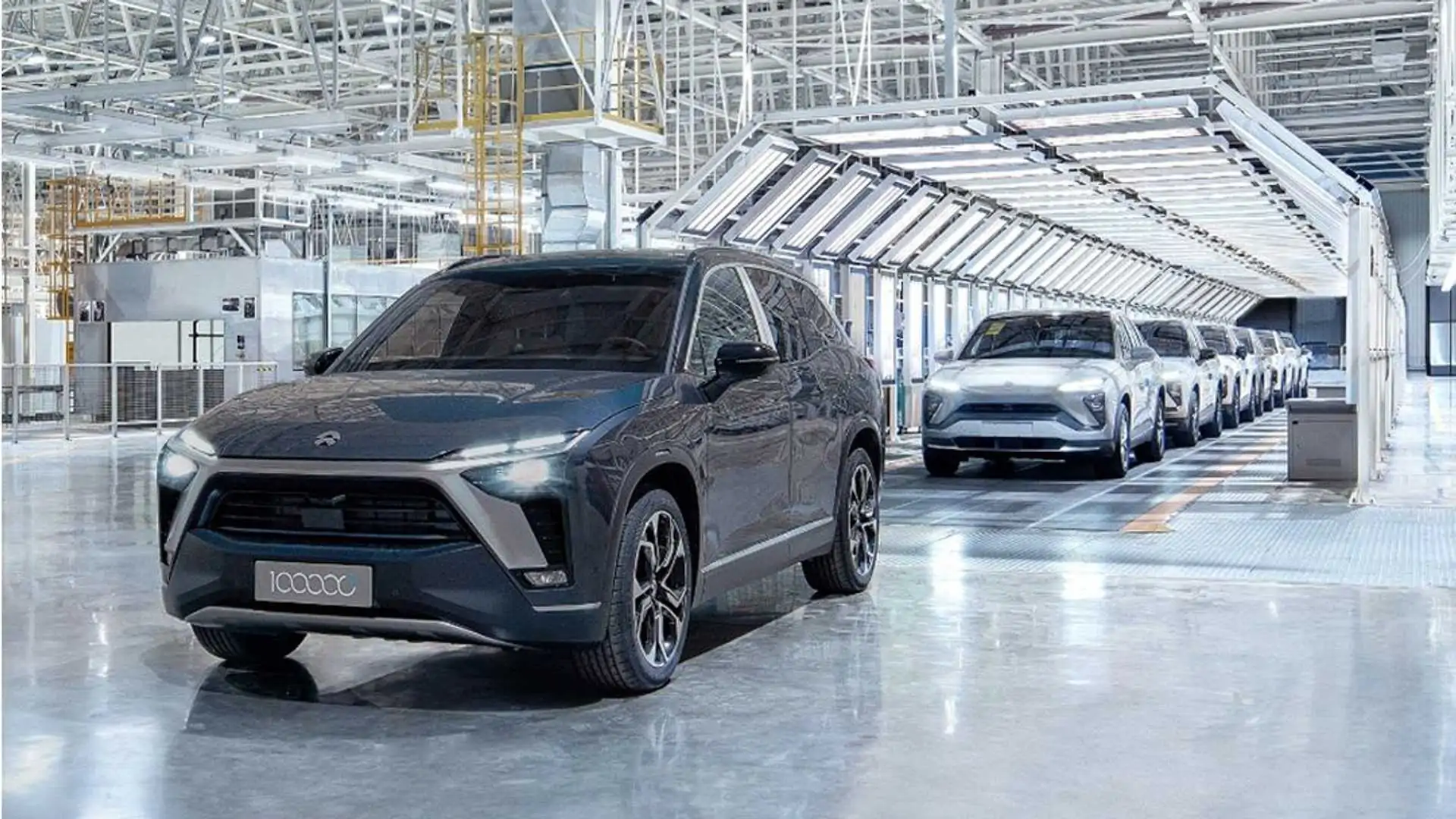
    China EV Maker Nio Says It Has No Plans To Raise Prices In Short Term

    Chinese electric vehicle (EV) manufacturer Nio said on Monday that it had no intentions to raise prices in the short term, but that it would be flexible on its decision making given evolving circumstances.

    Nio said in a statement that raw material prices and chip supply and demand were causing large changes to supply chain costs.

  • Self-Driving Sensor Maker Luminar Shares Rally On Mercedes-Benz Tie-Up

    Self-Driving Sensor Maker Luminar Shares Rally On Mercedes-Benz Tie-Up

    Luxury carmaker Mercedes-Benz will partner with self-driving sensor maker Luminar Technologies Inc to enable fully automated driving on highways for its next-generation vehicles, Luminar’s founder said.

    Luminar shares surged 18% at $15.89 on Thursday. Luminar said Mercedes-Benz will have 1.5 million shares in Luminar, which will vest over time when certain milestones are met.

    Vehicle autonomy “is really going mainstream with Mercedes,” Luminar CEO Austin Russell told Reuters on Wednesday, without disclosing a timeframe for putting the technology in Mercedes’ vehicles.

    He said the two would develop “true” autonomy capabilities to keep drivers out of the loop, while improving safety capabilities such as automatic braking.

    Automakers from Tesla to General Motors Co and Volvo have set their eyes on introducing autonomous vehicles for consumers, although regulatory and technological challenges remain.

    Luminar said Mercedes-Benz will have 1.5 million shares in Luminar, which will vest over time when certain milestones are met.

    Tech firms such as Alphabet’s Waymo and Cruise also are developing self-driving taxis or trucks for commercial use such as ride-hailing and delivery services.

    General Motors is working with its majority-owned Cruise self-driving unit to introduce a personal autonomous vehicle by as early as mid-decade, Chief Executive Mary Barra said this month.

    “If you want to be able to get to truly autonomous capabilities in a consumer vehicle, and you have to industrialize hardware, software, all of these systems that come into play. That by the way, is completely different than the work that the robo-taxi companies have been working on,” Russell said.

    He said it is a challenge to mass-produce lidars and make sure they are robust enough to meet stringent requirements from automakers.

    “It is a completely different kind of business of going from a science and technology business to an automotive corporation.”

    Tech firms such as Alphabet’s Waymo and Cruise also are developing self-driving taxis or trucks for commercial use such as ride-hailing and delivery services.

    Lidars, which use laser light pulses to measure the distance between the sensor and the target object, are widely seen as essential to achieving full autonomous driving. But Tesla has shunned the sensor, saying it is expensive and unnecessary.

    Volvo Cars and Luminar said earlier this month that they will put a hands-free driving system in an upcoming electric sport utility vehicle.

  • Japan Car Makers Scramble To Assess Impact Of Renesas Auto Chip-Plant Fire

    Japan Car Makers Scramble To Assess Impact Of Renesas Auto Chip-Plant Fire

    Toyota, Nissan, Honda and other Japanese automakers scrambled on Monday to assess the production impact of a fire at a Renesas Electronics automotive chip plant that could aggravate a global semiconductor shortage. “We are gathering information and trying to see if this will affect us or not,” a Honda spokesman said. Other car makers including Toyota and Nissan said they too were assessing the situation. The effect on car makers could spread beyond Japan to other auto companies in Europe and the United States because Renesas has around a 30% global share of micro control unit chips used in cars.

    Renesas said it will take at least a month to restart production on a 300mm wafer line at its Naka plant in northeast Japan after an electrical fault caused machinery to catch fire on Friday and poured smoke into the sensitive clean room.

    Two-thirds of production at the affected line is automotive chips. The company also has a 200mm wafer line at the Naka plant, which has not been affected. Concerns on the impact of the fire on production sent auto shares sliding in Tokyo on Monday, with the big three, Toyota, Honda and Nissan, down more than 2% by the midday break. Renesas shares tumbled as much as 5.5% and were down 3.9% midday. The benchmark Topix index shed 1.1%.

    “It will probably take more than a month to return to normal supply. Given that, even Toyota will face very unstable production in April and May,” said Seiji Sugiura, senior analyst at Tokai Tokyo Research Institute. “I think Honda, Nissan and other makers will also be facing a difficult situation.”

    Semiconductors such as those made by Renesas are used extensively in cars, including to monitor engine performance, manage steering or automatic windows, and in sensors used in parking and entertainment systems.

    Nissan and Honda had already been forced to scale back production plans because of the chip shortage resulting from burgeoning demand from consumer electronic makers and an unexpected rebound in car sales from a slump during the early months of the coronavirus pandemic. Toyota, which ensured parts suppliers had enough stocks of chips, has fared better so far.

    “It could take three months or even half a year for a full recovery,” said Akira Minamikawa, analyst at technology research company Omdia. “This has happened when chip stockpiles are low, so the impact is going to be significant,” he added.

    Renesas said it customers, which are mostly automotive parts makers rather than the car companies, will begin to see chip shipments fall in around a month. The company declined to say which machine caught fire because of the electrical fault or which company made it. The Japanese government promised help for the auto industry.

    “We will firmly try to help the Naka factory achieve swift restoration by helping it quickly acquire alternative manufacturing equipment,” Chief Cabinet Secretary Katsunobu Kato told a regular news conference on Monday.

    The latest incident at the Naka facility comes after an earthquake last month shut down production for three days and forced Renesas to further deplete chip stocks to keep up with orders. The plant was closed for three months in 2011 following the deadly earthquake that devastated Japan’s northeast coast.

  • Henrik Fisker Drops Hint On Next EV From The Automaker

    Henrik Fisker Drops Hint On Next EV From The Automaker

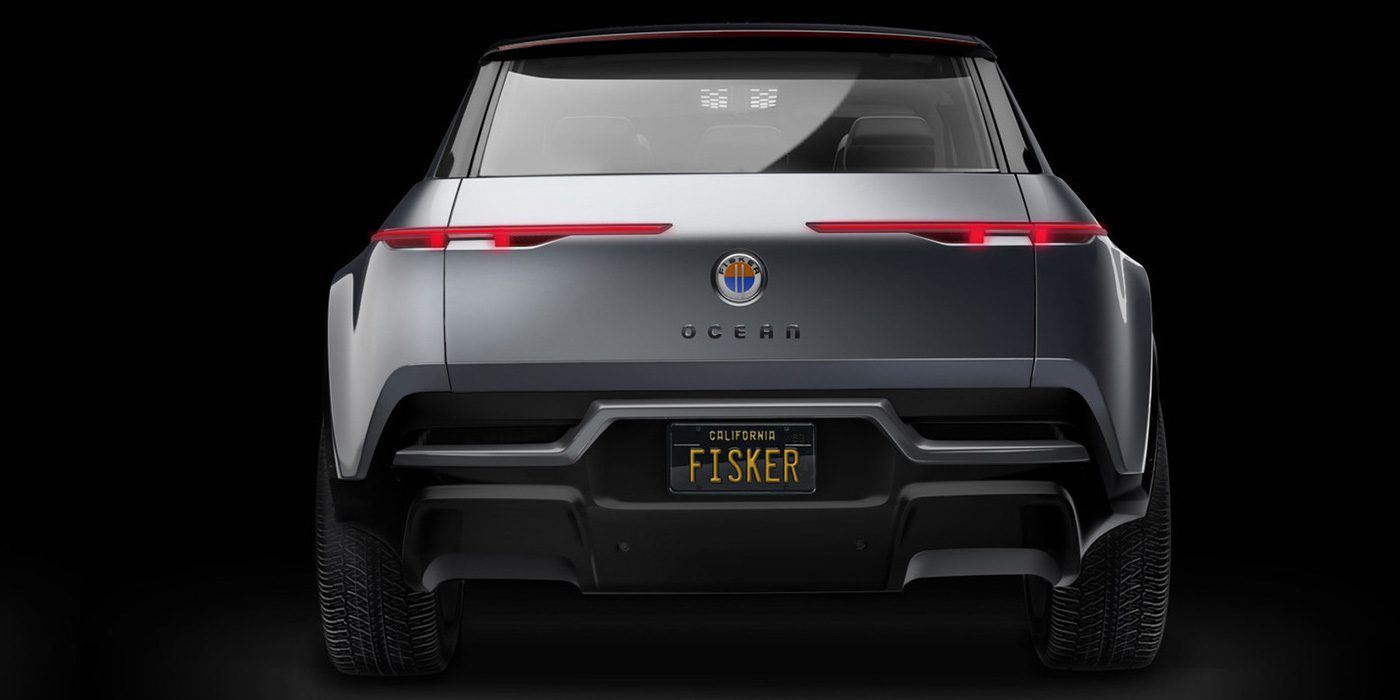
    Famous car designer and the Chairman and CEO of Fisker Inc., Henrik Fisker, recently confirmed that its next product could be a lifestyle EV truck. He is known for some of the iconic cars such as BMW Z8, Aston Martin DB9, Aston Martin V8 Vantage, and Fisker Karma. Fisker confirmed this development through his official LinkedIn profile, teasing the rear quarter shot of the EV truck, which seems to be aggressively designed. The EV maker aims to create the lightest and most efficient pickup truck in the world. However, the image is just a teaser, but the final product will be way more radical.

    Last month, the designer took to Twitter confirming that he has started designing his new vehicle, which will be radical. The company will also be launching its first all-electric luxury SUV globally next year.

    In a LinkedIn post, Fisker said, “Ok, yes, next vehicle might be a lifestyle pick up truck! But not just any truck! We want to create the lightest, most efficient EV pick up in the world! Making it, the most sustainable! image is just a teaser! Not the final: final will be way more radical!”

    We know that the upcoming electric pickup truck will be christened Fisker Alaska that was teased on Twitter last month. The company also plans to launch a range of new, advanced and radical electric vehicles, faster than any EV maker yet. We are not sure if this is the same truck that Fisker teased in December. But it’s worth noting that the CEO used the world radical for both the teasers.

  • China Carmakers Getting Ready To Build More, Much More, In India

    China Carmakers Getting Ready To Build More, Much More, In India

    Chinese automakers Great Wall Motor and Changan Automobile are accelerating plans to build cars in India after the initial success of rival SAIC Motor in one of the world’s biggest markets, three sources said. Great Wall, one of the biggest sellers of sports-utility vehicles (SUV) in China, expects to secure a production site in the first half of 2020, likely a General Motors plant in Maharashtra, a source familiar with Great Wall’s plans said

    Buying a factory is seen as the best way to get up and running fast and Great Wall is finalising which SUVs it plans to make in India, including whether to kick off its launch with an electric SUV, the source told Reuters. Great Wall said it would make an announcement next month about its plans for India but declined further comment.A spokesman for GM in Detroit said it was continuing to make vehicles for export at its Talegaon plant in Maharashtra state.”As we have said previously, we continue to explore options to improve utilisation of the plant

    We do not comment on speculation,” he said.Changan, too, is scouting for a production base and has held initial talks with suppliers, sources aware of its plans said

    Both automakers, which produce electric vehicles (EVs) in China, are also considering whether to set up EV battery assembly plants in India, the sources said. Changan declined to comment.The companies see India as a chance to combat slowing sales at home, which fell in November for a 17th month in a row

    While car sales in India are stuttering, the market is expected to become the world’s third biggest by 2026, behind China and the United States, according to consultancy LMC AutomotiveThe Chinese firms also hope to capitalise on gaps left by global automakers such as Fiat Chrysler , Ford Motor and GM which have scaled back plans in a market still dominated by smaller, low-cost cars made by Maruti Suzuki and Hyundai Motor. “It is an opportune time for China’s automakers to enter India. There is currently a gap in competition and it may take a couple of years for some of the established carmakers to bring new products to the market,” said LMC Automotive’s Ammar Master.

    PERCEPTION GAPGM’s retreat from India, for example, could help Great Wall get going quickly and it has been in talks to buy GM’s plant in Maharashtra, two of the sources said. GM stopped selling cars in India in 2017 and has already sold its other plant in Gujarat to SAIC, where the state-owned Chinese automaker now makes the Hector SUV it launched in June under its MG Motor brand. India is part of Great Wall’s planned global expansion into South America, South Africa, Southeast Asia and Australia, and it also plans to export from their to places such as Europe and the United States, said the source who is aware of its plans.”The plant in India is expected to be the biggest for Great Wall outside of China,” the source said.Great Wall has hired a former executive from Maruti Suzuki, India’s biggest carmaker, for its product and business planning, and appointed a former executive from SAIC’s India division as a consultant to liaise with the government

    “For global automakers, India is one of the many markets they are in but for the Chinese it is the first major market outside of home and so the level of investment and commitment will be proportionately high,” said the source.One of the biggest hurdles in India will be fighting perceptions about the quality and reliability of Chinese products and winning over brand-conscious buyers for whom cars are a prestige statement, say analysts

    Chinese smartphone makers such as Xiaomi Corp faced similar perception issues when they launched in India but they now dominate the market

    However, cars remain a significant outlay for most Indians and the Chinese brands will need to make their mark quickly.”Once the likes of Volkswagen and Ford start launching new models in India, the entrants from China could face tougher competition because a lot of buyers in India are still very brand conscious,” said LMC’s Master

    Launched at the end of June it said it had sold more than 13,000 cars by the end of November and plans to sell 24,000 next year.”SAIC has changed the perception about whether a Chinese brand can be made and sold in India,” said Santosh Pai, partner at law firm Link Legal which advises Chinese companies setting up in India

    “Fence sitters are getting in and have realised they can sell in India if the price and strategy is right.”Lessons for Great Wall and Changan from SAIC’s India launch include marketing the brand aggressively, packing the car with features to differentiate it from rivals and giving extended warranties to dispel doubts over reliability, analysts say

    Another advantage for Chinese carmakers in the coming years will be their EV expertise

    With the sale of EVs slowing in China they can deploy some of their existing capacity to India where the government is encouraging clean fuel cars. SAIC, which will soon launch an electric SUV in India, is also scouting for a second manufacturing site and is expected to make a decision in early 2020, said a source aware of its plans. SAIC did not respond to a request for comment though the head of its Indian division said in November it was working on an expansion plan and expected its total sales in India to hit 70,000 in 2021.

  • Tens Of Thousands Losing Jobs As India’s Auto Crisis

    Tens Of Thousands Losing Jobs As India’s Auto Crisis

    Slumping sales of cars and motorcycles are triggering massive job cuts in India’s auto sector, with many companies forced to shut down factories for days and axe shifts, multiple sources said. The cull has been so extensive that one senior industry source told Reuters that initial estimates suggest that automakers, parts manufacturers and dealers have laid off about 350,000 workers since April.

    Within this previously unreported figure, car and motorcycle makers have laid off 15,000 and component manufacturers 100,000, with the remaining job losses at dealers, many of which have closed, the industry source said.

    Reuters was able to identify at least five companies that have recently cut or plan to cut hundreds of jobs, mainly from their temporary labor force.

    The downturn – regarded by industry executives as the worst suffered by the Indian auto industry – is posing a big challenge for Prime Minister Narendra Modi’s government as it begins its second term at a time when India’s jobless numbers are climbing.

    To revive the sector, auto executives plan to demand tax cuts and easier access to financing for both dealers and consumers at a meeting with officials from India’s finance ministry scheduled for Wednesday, the senior industry source said. The industry’s plight was highlighted by the Automotive Component Manufactures Association of India (ACMA), with the trade body’s director-general, Vinnie Mehta, saying the sector was experiencing a “recessionary phase”.

    The malaise has been spreading across much of the industry, both in terms of vehicle type and components as well as geographically in India’s manufacturing hubs.

    For example, Japanese motorcycle maker Yamaha Motor and auto components makers including France’s Valeo and Subros have laid off about 1,700 temporary workers in India after a slump in sales, sources told Reuters.

    Subros, which is part-owned by Japan’s Denso Corp and Suzuki Motor Corp, has laid off 800 workers. Indian parts maker Vee Gee Kaushiko has cut 500 people while Yamaha and Valeo last month reduced their workforces by 200 each, said several sources aware of the cuts.

    Meanwhile, automotive supplier Wheels India could cut its temporary workforce by as much as 800 and has started realigning its shifts, two of the sources said. The layoffs come as carmakers including Honda Motor Co, Tata Motors and Mahindra & Mahindra have implemented brief suspensions to production in recent weeks in the face of slow demand, separate sources said.

    The auto sector, which contributes more than 7% of India’s GDP, is facing one of its worst downturns.

    Passenger vehicle sales have dropped for nine straight months through July, with some automakers suffering year-on-year declines of more than 30 percent in recent months.

    Manpower is the only variable factor for companies and more workers will face the axe, said ACMA’s Mehta.

    Yamaha, Subros, Vee Gee Kaushiko and Wheels India did not respond to requests for comment.

    Valeo India said it is realigning for changing conditions and has trimmed its temporary workforce.

    The fallout from the auto slump could be huge. The sector employs more than 35 million people, directly and indirectly, accounting for nearly half of India’s manufacturing output.

    India’s jobless rate rose to 7.51% in July 2019 from 5.66% a year earlier, according to private data group CMIE. The CMIE data is more up-to-date than government figures and regarded in financial markets as more credible.

    At least 7% of temporary workers employed by 15 automakers in India have lost their jobs in recent months, said Vishnu Mathur, director-general at the Society of Indian Automobile Manufacturers (SIAM).

    “It is a conservative estimate based on our initial analysis,” he said.

    Maruti Suzuki, India’s biggest carmaker, cut its temporary workforce by 6% over the past six months.

    There is little sign of a revival.

    Tata Motors has had week-long shutdowns at four of its plants in the past two weeks, while Mahindra has said it had 5-13 days without production at various plants between April and June.

    A statement from Tata Motors said it has aligned production with demand and adjusted the shifts and temporary workers.

    Honda has stopped production of some car models at its plant in the northwestern state of Rajasthan since July 16 and is halting manufacturing entirely at its second plant in Greater Noida on the outskirts of Delhi for 15 days from July 26, two sources said.

    The company’s Indian business said that production management will be critical throughout the year and it is seeking to avoid stock build-up.

  • Meitu’s Hong Kong IPO to value China photo app maker at up to $4.5 billion

    Meitu’s Hong Kong IPO to value China photo app maker at up to $4.5 billion

    Chinese photo app and mobile phone maker Meitu Inc is set to launch an up to $735 million initial public offering in Hong Kong, IFR reported on Monday, citing people close to the deal. Meitu, better known for its apps that let users retouch and beautify selfies and other photos, is offering shares in an indicative range of HK$8.50 to HK$9.60 ($1.10-$1.24) each, added IFR, a Thomson Reuters publication. The IPO is slated to be priced on Dec 8.

    Meitu did not immediately reply to a Reuters request for comment on the IPO terms. The deal will value Meitu, which counts venture capital investors Qiming Venture Partners, IDG-Accel China and Tiger Global among its backers, at up to $4.5 billion, IFR said.

    The IPO will be a rare technology sector IPO in Hong Kong. Between one-quarter to one-third of the shares will be sold to cornerstone investors, IFR said. That would be much lower than some of the large new listings in the city, including the $7.6 billion IPO of Postal Savings Bank of China (PSBC) in September that had 77 percent of its deal bought by cornerstones.

    Large investments by cornerstone investors hurt liquidity for IPOs once the shares start trading, as the stock is locked up for a minimum of six months. The cornerstone money can also pressure the stock as the expiration of the lock-up period nears. China Merchants Securities, Credit Suisse and Morgan Stanley were hired as sponsors of the IPO.