Tag: malaysia retail

  • Malaysia projected 4.9% retail sales growth for 2018

    Malaysia projected 4.9% retail sales growth for 2018

    The Malaysia Retail Chain Association (MRCA), which expects retail sales growth to come in at 4.9% for 2018 in line with the country’s gross domestic product growth, has pointed out that some of its members face difficulties in retailing online amid the push for e-commerce.

    MRCA, in releasing its first quarterly retail sales survey for the third quarter (Q3) today, highlighted that online sales make up only 3.9% of its retail revenue.

    The sample of respondents for the survey include 10% of MRCA’s members, representing 59 brands and 2,266 stores across a variety of trade categories, including food & beverage (F&B), fashion, health & beauty, supermarket & department stores, entertainment, optical, education, home improvement and more.

    MRCA president Datuk Seri Garry Chua said the association constantly reminds members to bring their businesses online and be part of the digital ecosystem, adding that MRCA also has digital membership for players like Lazada, Lelong and 11street, which are all its members.

    “We can also work closely with them (digital players) to reinforce and increase the market share for online. We’re confident the (industry) sales from online retail is going to be double-digit growth every year as more brick and mortar retailers go online, as with many start-ups,” Chua said.

    MRCA vice-president Datuk Liew Bin said although all members have an online presence, most of its members rely on the brick and mortar model and “survive happily on brick and mortar”, whereby online sales is regarded as a bonus to them.

    “With so many years in brick and mortar, it’s difficult for our members to turn to online. This is one of the challenges that our retailers face because (the) online (wave) is coming on strongly. This should be an alert to our members, as 3.9% is still a small figure,” Liew said, adding that MRCA expects online sales to grow 5% next year.

    Individually, he said some retailers have seen a 20% growth in their online retail sales.

    MRCA projected retail sales growth to grow 6.1% year-on-year in Q4 this year as year-end school holidays and the festive season are expected to bolster consumer spending; while an increase in the number of outlets is also expected to boost sales growth.

    It said retail sales grew 5.7% year-on-year in Q3 with the tax holiday between June and August that had encouraged consumers to spend.

    In Q2, retail sales grew at a slower rate of 2.1% year-on-year, affected mainly by the general election in May, where consumers held back on spending due to economic uncertainty.

    Retail sales grew 5.7% year-on-year in Q1 due to Chinese New Year sales and promotions.

    F&B, health & beauty and other retailers reported encouraging growth rate of 5.4%, 3.1% and 21.3% year-on-year respectively. However, fashion retailers suffered a negative growth in Q2 and Q3 at -2.2% and -2.8% year-on-year respectively.
  • Insufficient measures to boost retail spending : RGM

    Insufficient measures to boost retail spending : RGM

    The latest budget announcement is not expected to stimulate consumer spending in the near term, as there is insufficient economic policies aimed at increasing retail spending, opined retail consulting firm Retail Group Malaysia.

    Managing director Tan Hai Hsin said that Budget 2019 is focusing more on managing government deficit and social programmes for the B40 group.

    “We hope the economic activities will improve significantly in the immediate future. Higher economic activities will lead to higher take-home pays (and higher retail spending subsequently),” Tan said.

    Prior to the Budget announcement, he said Malaysian consumers were told that they should not expect monetary incentives from the government in 2019. Malaysians were also informed that more taxes could be expected next year.

    “Based on the latest announcement, it should improve consumer confidence. At least in the next six months,” said Tan.

    For next year, the government continues to distribute one-off monetary incentives to Malaysians (including civil servants) to reduce their financial burden. About 4.1 million households are expected to benefit from it.

    Increment of minimum wage by RM50.00 will also lessen the financial burden of B40 group.

    “On the other hand, higher minimum wage will lead to higher cost of goods for retailers. It will lead to higher retail prices eventually.”

    He said the soda tax will not have major impact on retail spending, while noting that it is still early to comment on the impact of RON95 until more announcements have been made.

    “Same as previous budgets for many years, there were no direct incentive and new government policies related to retail industry.”

    Sunway Malls & Theme Parks Chan Hoi Choy said the 2019 Budget balances fiscal discipline while emphasising development in the right sectors.

    “Initiatives announced particularly with the emphasis on B40 group is lauded while efforts to grow Industry 4.0 especially knowledge transfer, artificial intelligence development, matching grants will drive higher productivity and cost rationalisation in mall & retail industries.”

    Similarly, it is encouraged by the government’s focus in housing, public transportation and education initiatives to form the bedrock for Malaysia’s economy into the future. The drive for greener adoption and women representation also signifies a greater sustainable and inclusive approach.

    “We take note of the significance of Malaysia’s economy projected GDP growth rate of 4.8% for 2018 and 4.9% for 2019, against IMF’s projected slowdown of global growth of 3.7% in 2019. This underscores the relative resilience of the Malaysian economy in face of global headwinds and protracted trade war. In the light of this and the current country’s fiscal position, the overall Budget 2019 is targeted while exercising prudence,” said Chan.

  • Mr DIY ready for massive growth by 2020

    Mr DIY ready for massive growth by 2020

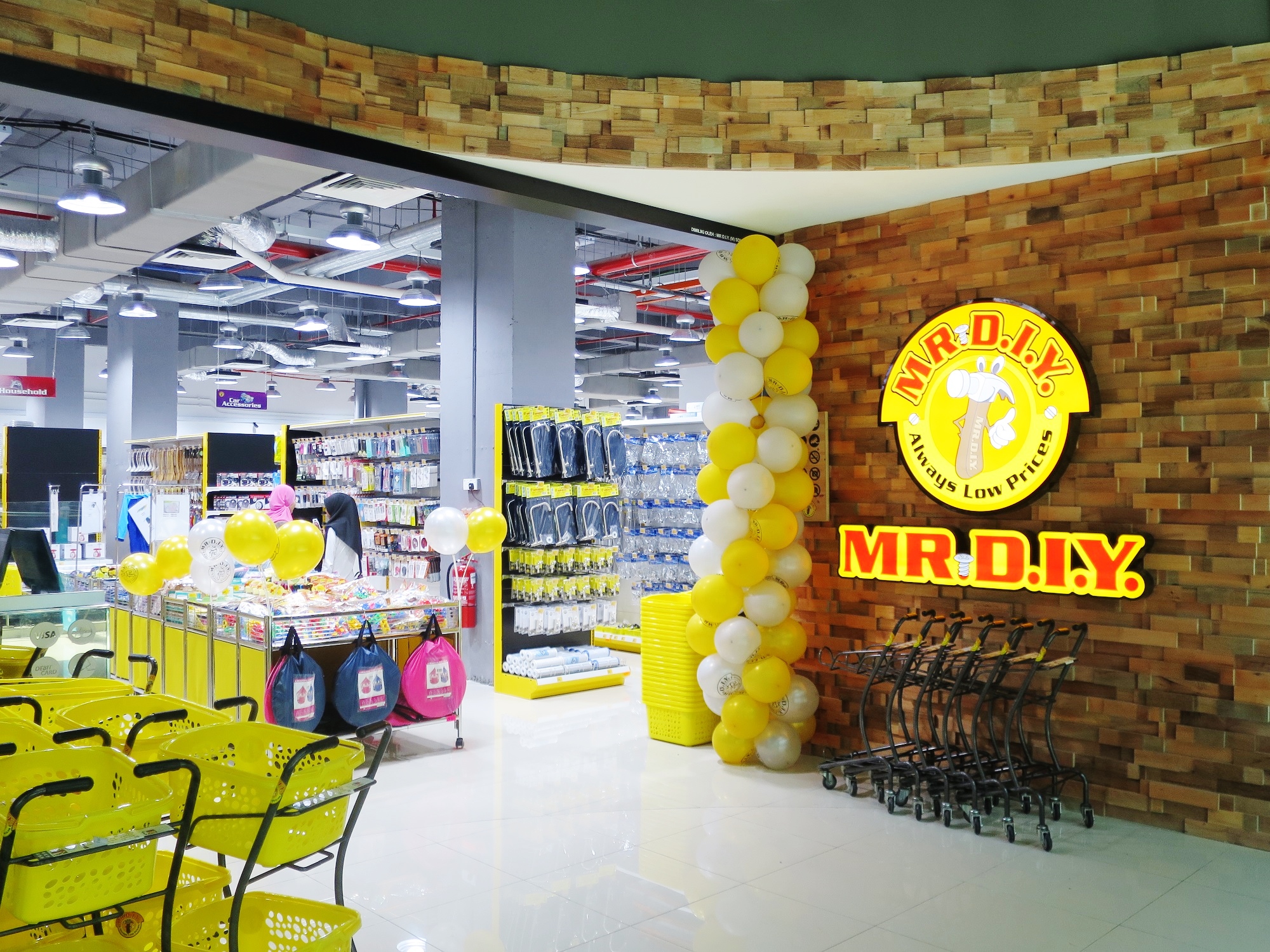
    Malaysian home improvement retailer Mr DIY has announced plans to open at least 1000 branches by 2020. The announcement was made at the opening of its latest outlet at Paradigm Mall, its 440th local branch and 600th global branch. The brand currently operates 120 stores in Thailand, 40 in Indonesia, four in Brunei, and one each in Singapore and the Philippines.

    Mr DIY head of marketing Andy Chin said: “We feel that our home improvement retail business model, offering a variety of goods at affordable prices, is suitable for better business growth in the country as well as the Asean market. At the end of this year, we target 700 global branches, and the number may reach 1000 or more by 2020. These will be based on an organic growth.”

    He added that the company’s prospect of Asean-level expansion will be focused on Indonesia, Thailand and the Philippines,” said Chin.

    Mr DIY is the largest home appliance retailer in Malaysia with more than 20,000 SKUs.

  • Retail industry gets boost from Hari Raya festival

    Retail industry gets boost from Hari Raya festival

    The retail industry has shown slight improvement in the months of April to June, as compared to the first three months of the year, with the Hari Raya festival in May boosting retail sales.

    The Retail Group Malaysia reports in its latest Malaysia Retail Industry Report that in the second quarter of 2017, Malaysia’s national economy recorded another sustainable growth rate of 5.6% as compared to 4.9% for retail sales, supported by domestic demand.

    “From the supply side, the improvement was driven by broad-based expansion across all major sectors,” said the report.

    The average inflation rate during the period under review slowed slightly to 4% with the two largest increases seen in the transport and food and non-alcoholic beverages sectors. This was mainly owing to a falling fuel prices.

    Private consumption climbed even higher by 7.1% with consumers spending more on dining out, services and Internet shopping.

    “During the latest quarter, the Consumer Sentiment Index (by MIER) improved slightly to 80.7. However, it was still below the threshold level of confidence. Malaysian consumers were still concerned on their rising cost of living and remained cautious in their monthly spending,” said the report.

    The unemployment rate improved marginally to 3.4%.

    Among the retail sub-sectors, the department store sub-sector was the strongest performer in the second quarter with a strong growth rate of 15.1%. The department store-cum-supermarket sub-sector also rebounded with a growth of 4.1% after a poor performance in the earlier quarter.

    The supermarket and hypermarket sub-sector improved slightly by 0.8% with heavy price discounts by grocery retailers depleting profit margins.

    The fashion and fashion accessories sub-sector returned to profitability with a growth rate of 2.5% as compared to the previous corresponding period.

    The pharmacy and personal care sub-sector also improved on-year with a growth rate of 7.9%.

    The Other specialty stores sub-sector reported a better growth rate of 6.3% during the second quarter of 2017 as compared to the same quarter last year. This sector includes photo shops, children-related stores, second-hand goods’ stores, TV shopping channels, toys’ stores as well as restaurants.

    The Retail Group Malaysia reports that the retailers’ association are not optimistic on their businesses over the next three months. They estimate an average growth rate of 2.9% in the third quarter of 2017.

    The department store-cum-supermarket operators and department store operators are expecting declines in their growth rates of 2.5% and 1.5% respectively.

    Supermarket and hypermarket operators are expecting to maintain a 0.8% growth rate for the quarter, while retailer in the fashion and fashion accessories sector expects a growth rate of 6.1%.

    Retailers in the pharmacy and personal care sub-sector expect to maintain growth at 7.2% while retailers in other speciality stores sector expect its business to expand by 5.6% over the same period last year.

    Based on these results, Retail Group Malaysia is revising its annual growth forecast downwards from 3.9% to 3.7% with the total sales turnover estimated at RM101.4bil.

    The third quarter growth rate estimate has also been revised from 5% to 4%.

    Retail Group Malaysia is maintaining its fourth quarter growth rate estimate at 5.5%, taking into consideration the 0.3% growth achieved in the same period last year.

    “For the rest of this year, the rise of our purchasing power will continue to fall behind the increase in prices of retail goods. More retail goods are expected to raise prices because of higher fuel prices in recent months.

    “The full recovery of the Malaysian retail market is highly dependent on external economic demand and ringgit performance for the rest of the year,” it said in its report.


  • Cold Stone Announces Malaysian Expansion

    Cold Stone Announces Malaysian Expansion

    Scottsdale, Ariz.-based Cold Stone Creamery has signed a master franchise agreement with Srivijaya Sdn. Bhd. to expand its presence into Malaysia. The company plans to roll out 20 stores over the next five years, beginning with a location in Kuala Lumpur.

    Cold Stone operates approximately 300 international outposts in more than 28 markets.

  • Petron posts 56% jump in income

    Petron posts 56% jump in income

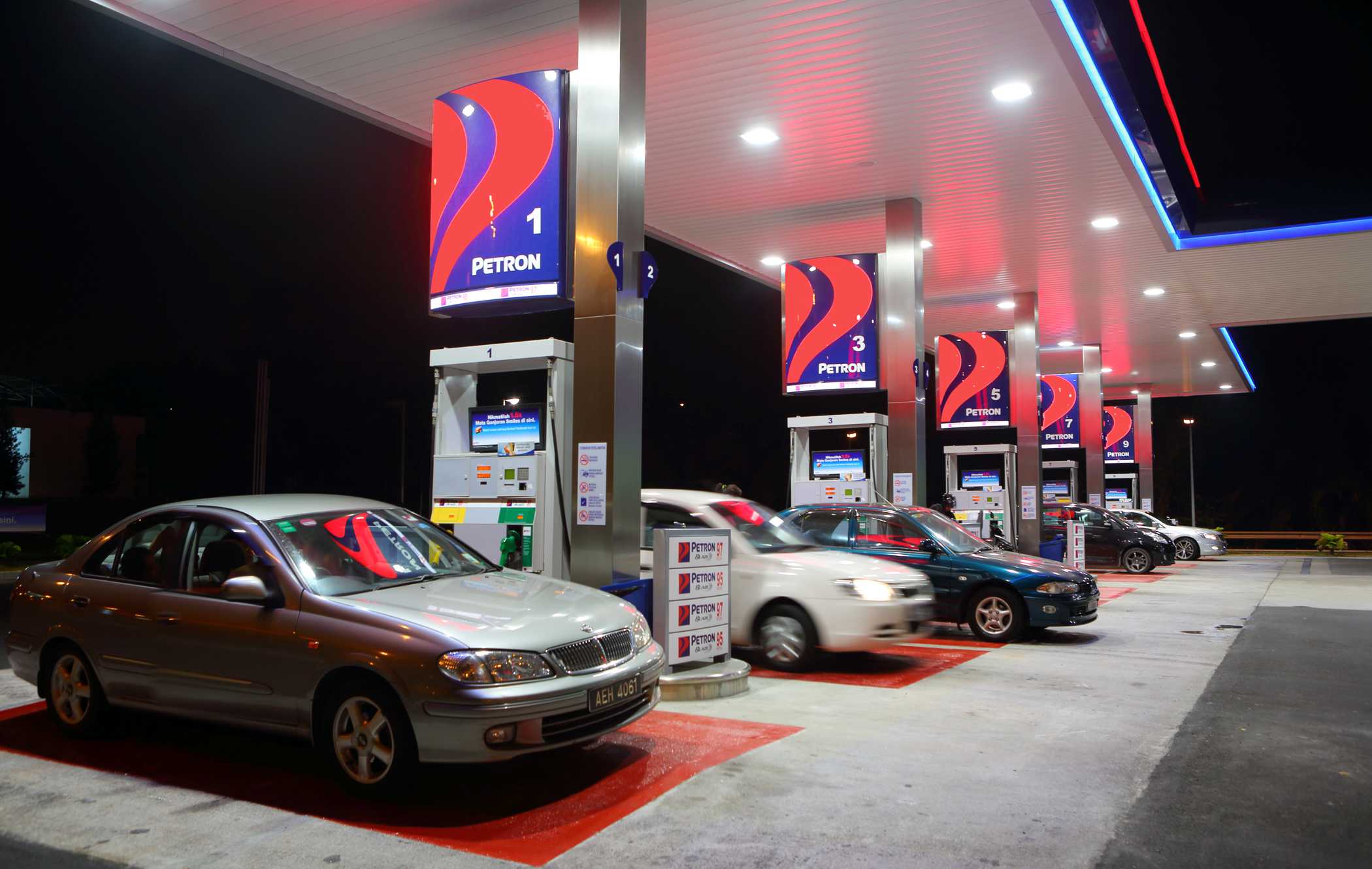
    Petron Corp. saw its consolidated net income in the first semester surge 56 percent year-on-year to P8.2 billion this year from P5.3 billion last year, despite supply issues brought about by refinery maintenance.

    The oil refiner and retailer said in the first half of 2017, it saw its crude oil inventory go down while its Bataan refinery went through a 45-day maintenance shutdown, scheduled as part of a 10-year inspection program.

    “With our upgraded refining capabilities, we derived more value and produced more profitable products,” Petron president and chief executive Ramon S. Ang said in a statement.

    “This is strongly complemented by our extensive expansion efforts in both our logistics and retail businesses,” Ang said.

    He said the strong showing during the first semester of the year was driven by a deliberate focus on more profitable segments and improved refinery production yields, while sustaining sales volumes.

    With volumes reaching record levels in 2016, Petron sold a total of 52.9 million barrels of products in the Philippines and Malaysia or just about the same as the level in the same period last year of 52.6 million barrels.

    Petron has a combined retail network of about 2,900 service stations, of which more than a fifth or about 600 are in Malaysia.

    With petrochemical sales revving up by 78 percent year-on-year, Petron saw consolidated sales revenue jump 28 percent to P207 billion in the six months to June.

    Also, operating income leaped 27 percent year-on-year to P14.6 billion from P11.5 billion.

    In both the Philippines and Malaysia, Petron is building “dozens” of service stations.

    “With the country’s economy growing at a rapid pace, we are expanding our facilities not just for the needs of today but also to ensure a reliable and continuous supply of quality fuels for tomorrow,” Ang said.

    “Our expansion projects mean more employment opportunities and economic activity, which help in nation-building,” he added.

  • Malaysians’ appetite for spending remains poor

    Malaysians’ appetite for spending remains poor

    Malaysian consumers continue to tighten their belts as reflected by the 0.3% year-on-year growth of retail sales in the fourth quarter of 2016 (4Q16), according to Retail Group Malaysia (RGM).

    The quarterly growth of retail sales decelerated for the third quarter after it hit a high of 7.5 per cent in 2Q16, based on data compiled by RGM from members of Malaysia Retailers Association (MRA).

    Retailers are pessimistic about the sales performance for 1Q17. “As consumer confidence remains low, they estimate an average growth rate of only 0.9 per cent during 1Q17,” said the report.

    “The year-end school holiday and festive celebration did not motivate Malaysian consumers to spend more. The weak economic environment and bleak job prospect discouraged shoppers to buy more than usual.

    “4Q16’s growth rate was a let-down taking into consideration the low growth rate of 1.3 per cent during the same period in 2015,” said RGM in its latest quarterly report that was released over the weekend.

    For 2016, domestic retail sales expanded by 1.7 per cent, which was not much stronger compared with 1.4 per cent growth in 2015 — the year when goods and services tax was introduced in April that year.

    “After almost two years, the retail industry has yet to recover. Economic condition remains tough for retailers,” said RGM.

    In view of the lacklustre growth pace in 4Q16, RGM has slashed its forecast annual retail sales growth to 3.9 per cent to RM101.6 billion (US$22,921,609,224) for 2017 from RM97.8 billion (US$22,064,304,942) in 2016, compared with its initial forecast of 5 per cent.

    RGM pointed out that the latest quarterly result was way below market expectations. “It was 95 per cent below the estimate made by members of MRA in November 2016 [at 5.5 per cent],” RGM wrote in the report.

    The weak retail sales are quite a sharp contrast to the growth of private consumption, which had been above 6 per cent for three consecutive quarters since April last year.

    Among the sub-sectors, the other specialty stores, which include photo shops, optical shops, children-related stores, second-hand goods stores, toy stores, TV shopping as well as restaurants, were the worst-performing retail category in 4Q16. This sub-sector suffered a contraction of 7.7 per cent — the second consecutive quarter of declining sales. For the whole year, this sub-sector suffered a decline of 2.2 per cent in its business.

    In contrast, the fashion & fashion accessories sub-sector was the bright spot among all. The sub-sector continued to fare well in 4Q16.

    “It managed to sustain its business with a growth rate of 6.9 per cent compared with the same period a year ago. This retail sub-sector was the best-performing retail sub-sector in 2016 with a growth rate of 5.8per cent,” said RGM.

    Moving forward, for the first-quarter growth rate, RGM predicts a 1.5 per cent improvement in overall retail business.

    “The weak ringgit has affected the costs of a large number of retail goods sold locally. Many retailers have begun to raise prices, including prices of food and beverages, household goods as well as other daily necessities.

    “Malaysian consumers are expecting to be cautious about their spending on retail goods during the first half of this year. Their cost of living has risen and their purchasing power has reduced during the last one year,” said the quarterly report.