
Tag: margin

  • KFC China Rides High on Delivery Boom, Yet Battles Margin Squeeze

    KFC China Rides High on Delivery Boom, Yet Battles Margin Squeeze

    The surge in food deliveries is significantly transforming KFC China, the country’s top restaurant brand, leading to increased sales but tighter profit margins.

    Delivery sales for the brand witnessed a year-on-year growth of 33%, making up approximately 55% of total sales, a significant increase from 43% the previous year, according to parent company Yum China.

    Adrian Ding, the CFO of Yum China, communicated to investors during the earnings call that they consider this a sustainable trend.

    Despite Yum China’s same-store sales remaining constant, the launch of new outlets increased sales by 4%, and the operating profit rose 12% to US$447 million.

    The food delivery sector in China has seen fierce competition in recent times. E-commerce powerhouses Alibaba and JD have been actively striving to dominate the market share by offering enticing deals and discounts on a variety of menu items, including ice cream, takeaway coffees, and KFC’s signature fried chicken.

    A trend referred to as “instant retail,” which involves delivery of goods within an hour, has attracted the attention of Chinese regulators. They have consistently cautioned against extreme competitive practices among food delivery firms.

    While the growth in deliveries has boosted sales, it has also put pressure on profit margins since Yum China subsidizes them in collaboration with tech companies. Ding indicated that margins would have contracted by 190 basis points due to the increased costs associated with delivery drivers. However, about half of this impact was offset by operational improvements in other areas of the business. The company anticipates a margin expansion throughout the entire year.

    During the earnings call, company executives noted that subsidies for delivery apps have recently decreased, and these apps are now focusing more on larger food orders. “We appreciate this shift and believe it will positively impact our industry in the long run,” stated CEO Joey Wat. The executives also shared that delivery driver expenses account for approximately 30% of the company’s labour costs. Yum China also operates the Chinese divisions of Pizza Hut, Taco Bell, and other restaurants.

    Questions & Answers

    How much have delivery sales grown for KFC China?
    Delivery sales for KFC China have grown by 33% year-on-year.

    What is the impact of the growth in food deliveries on Yum China’s profit margins?
    While the surge in food deliveries has led to increased sales, it is also exerting pressure on profit margins due to the company’s decision to subsidize them.

    What percentage of labour costs at Yum China is attributed to delivery driver expenses?
    Delivery driver expenses account for roughly 30% of the company’s labour costs.
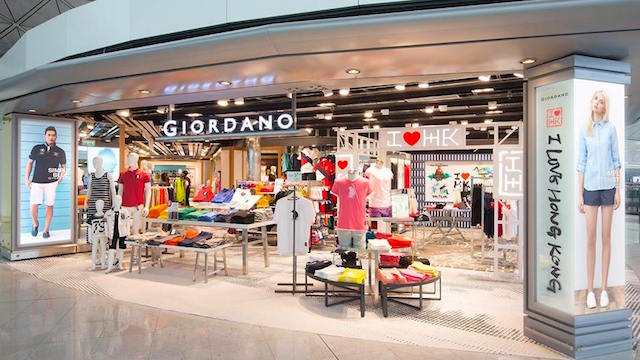
  • Giordano Sees Sales Surge Amid Economic Uncertainty: E-commerce Success And ‘beyond Boundaries’ Strategy Key

    Giordano Sees Sales Surge Amid Economic Uncertainty: E-commerce Success And ‘beyond Boundaries’ Strategy Key

    Hong Kong’s prominent fashion retailer, Giordano, recently announced an increase in their sales for the first half of the fiscal year. This significant improvement in sales is mainly attributed to a substantial surge in the company’s e-commerce operations.

    Positive Revenue Growth Amid Economic Uncertainty

    Giordano’s revenue for the first half of the fiscal year experienced an increase of 1.6 per cent, amounting to HK$1.934 billion (US$248 million). The management team highlighted this growth as a significant accomplishment in the midst of a fluctuating political and economic environment.

    The primary contributor to this growth was the company’s online business, which saw a remarkable increase of 26.1 per cent. This surge was credited to ongoing digital transformation efforts and customer-centric strategies.

    Geographical Revenue Analysis

    In the realm of geographical revenue, Mainland China saw a 13 per cent increase, with a nearly 18 per cent rise in the second quarter and an 8 per cent surge in the first quarter. Same-store sales remained steady in Q2, which was a positive shift from the 3.6 per cent decline in Q1.

    Revenue in Hong Kong and Macau reversed from a 6.5 per cent drop in Q1 to a 2.2 per cent increase in Q2, outperforming the overall negative retail sales in Hong Kong’s clothing sector.

    Sales in the Gulf Cooperation Council similarly experienced a 1.9 per cent growth during the half. However, Southeast Asia and Australia witnessed an 8 per cent decrease, mainly due to the poor performance in the Indonesian market.

    The company’s gross margin dropped by 3.3 percentage points to 55.6 per cent, which was primarily due to a larger volume of online sales and wholesale, inventory clearance efforts, and increased merchandise costs. The attributable net profit remained fairly consistent, with a minor increase of 0.8 per cent to HK$121 million.

    The ‘Beyond Boundaries’ Strategy

    CEO Colin Currie shed light on the company’s ‘Beyond Boundaries’ five-year strategy, which was initiated a year ago. He said that through this strategy, they were able to successfully execute a series of ‘Quick Win’ initiatives to establish a robust foundation for 2025 and beyond.

    The central focus of the ‘Beyond Boundaries’ strategy for 2025 is to strengthen the ‘Digital-First’ approach, simplify the brand portfolio, and make significant strides in Greater China.

    Currie stated that while the company is pleased with the positive results, they are continually reviewing and adjusting areas that need improvement, particularly in safeguarding their gross margin. To support better performance, they are actively improving their processes and enhancing sourcing efficiency.

    Last year, Giordano reported a 1.2 per cent revenue increase.

    Questions & Answers

    What led to the increase in Giordano’s sales for the first half of the fiscal year?
    The increase in sales was primarily driven by a significant boost in the company’s e-commerce operations.

    How did Giordano’s geographical revenue perform during this period?
    Mainland China experienced a 13 per cent revenue increase, while Hong Kong and Macau saw a 2.2 per cent rise. However, Southeast Asia and Australia faced an 8 per cent decrease in revenue.

    What is Giordano’s ‘Beyond Boundaries’ strategy?
    The ‘Beyond Boundaries’ strategy is a five-year plan aimed at strengthening the ‘Digital-First’ approach, simplifying the brand portfolio, and making significant strides in Greater China.

  • BMW warns profits under pressure as car margins slip

    BMW warns profits under pressure as car margins slip

    BMW’s profit margins on cars fell in the third-quarter, hit by spending on more engineering staff and new electric car technologies against a backdrop of stiffer price competition in the U.S. luxury car market.

    BMW and its rivals are struggling to maintain profit levels amid heavy investment in new technology including electric and self-driving cars, cleaner diesel engines as well as new ride-hailing business models to rival Uber.

    The Munich-based carmaker reiterated its full-year target of a slight increase in group pretax profit but warned that margins would remain under pressure due to continued investment.

    “Costs generally rise towards the end of the year so we expect this to have a dampening effect on earnings,” Chief Financial Officer Friedrich Eichiner told analysts on a call on Friday to discuss BMW’s results.

    “Capital expenditure will also be higher in the last three months of the year, mainly due to the start of production and ramp-up of the new BMW 5 Series,” Eichiner said, adding that research and development spending would remain high into 2017.

    While sales of BMW, Mini and Rolls-Royce cars rose 7.1 percent in the quarter ending in September, the return on sales at BMW’s core automotive division fell to 8.5 percent from 9.1 percent a year earlier.

    By contrast, archrival Mercedes-Benz Cars’ (DAIGn.DE) third-quarter operating margin was 11.4 percent while Audi’s was 6.9 percent for the first nine months of the year.

    BMW’s shares took a hit in early trading, but had recovered by late afternoon to trade unchanged at 1530 GMT, outperforming German blue-chips .GDAXI which were 0.8 percent lower overall.

    BMW said the dip in automotive profits was mainly attributable to higher personnel expenses as staff numbers rose 3.6 percent, along with changes in the mix of vehicle models sold.

    Customers are migrating to less profitable smaller sport utility vehicles (SUVs) while BMW’s popular 5-series is at the end of its lifecycle and competing with a brand new Mercedes-Benz E-class.

    BMW said sales in the United States, a market where sales of highly profitable large sport utility vehicles has been strong, had fallen 3.6 percent in the quarter.

    “Pricing remains a challenge in North America in particular,” Eichiner told analysts.

    The more competitive sales environment has already forced German premium auto maker Audi to cut its sales forecast for the year and to warn that its operating margin would remain below its 8 to 10 percent target range this year.

    BMW said it plans to keep the return on sales at its automotive division between 8 and 10 percent, a goal it has achieved for the last 26 quarters in a row.

    At a group level, BMW said third-quarter earnings before interest and taxes (EBIT) were 2.38 billion euros ($2.6 billion), in line with a 2.37 billion consensus forecast in a Reuters poll and little changed from 2.35 billion last year.

    The group benefited from a profit boost from its financial services business and a gain from derivatives hedging.

    “Operational performance on a group level came in as expected but for automotive below expectations,” DZ Bank analyst Michael Punzet said in a note on Friday.