
Tag: margins

  • Boosting Retail Margins: Uniting Fragmented Product Data through AI

    Boosting Retail Margins: Uniting Fragmented Product Data through AI

    While customers continue to make purchases across various channels, several retail businesses struggle with outdated and disconnected systems. These systems were designed during a simpler time and are now proving to be inadequate in handling the dynamic market trends.

    As products’ lifecycles become shorter and sales channels multiply, businesses that fail to connect product data to their decision-making processes are at a disadvantage. Disconnected systems can result in losses even before a customer reaches the checkout counter. However, retailers that integrate these systems can improve their speed, profit margins, and customer experience.

    The Challenge of Retail Market

    The shift from physical purchases to online buying or social media shopping has made the retail market more challenging. This trend has highlighted the fragmented product management within many organizations. Different departments often manage design and development, merchandise planning, pricing, and product information. This lack of integration introduces delays, inconsistencies, and missed opportunities which become more costly as businesses expand across various channels and markets.

    To cope with this, some businesses are focusing on brand management and outsourcing manufacturing, while others own product design and pass production to manufacturing partners. Regardless of the strategy, Artificial Intelligence (AI) provides an opportunity to connect teams across different geographies and stages of the product lifecycle.

    However, retailers are faced with more than the challenge of selling through various channels. They also have to navigate an increasing number of online shopping events and promotions where demand can change rapidly, and inventory decisions carry greater financial implications.

    Balancing product assortment with inventory levels is a constant struggle. Having too much stock results in markdowns, while offering too little causes customers to shop elsewhere. Thus, the ability to react quickly to market demands has become a crucial factor in the retail industry.

    The Role of AI and Data in Retail

    AI and data play a crucial role in making informed decisions. Without reliable and accessible product data, the impact on businesses can be immediate and severe. Customers now expect accurate information, competitive pricing, and immediate availability, regardless of where they choose to shop.

    AI can support better commercial decision-making, but only if organizations first establish a trusted data foundation. Beyond its use in language translation and communications, AI has a far greater potential in product management. It can enable retailers to better understand customer demand and reduce the time between product concept and market launch.

    Speed to market is often a key focus, but it’s equally important to identify where profitability is being lost throughout the product lifecycle. Retailers often overlook customer feedback within their own businesses. The information needed to make better decisions is already there; it’s just a matter of utilizing it.

    Retailers can identify changing customer preferences earlier by using AI to analyze their daily or weekly data, improving product selection while reducing excess inventory and missed sales opportunities.

    Questions & Answers

    How can retailers benefit from integrating their disconnected systems?
    By integrating their systems, retailers can improve their speed, profit margins, and overall customer experience.

    What role does AI play in the retail industry?
    AI can support better commercial decision-making by helping retailers understand customer demand, reduce time between product concept and market launch, and analyze existing data to identify changing customer trends.

    How can retailers utilize their existing data more effectively?
    Retailers generate vast amounts of customer, sales, and product data every day. By using AI, they can analyze this data to forecast future trends and make more informed decisions.
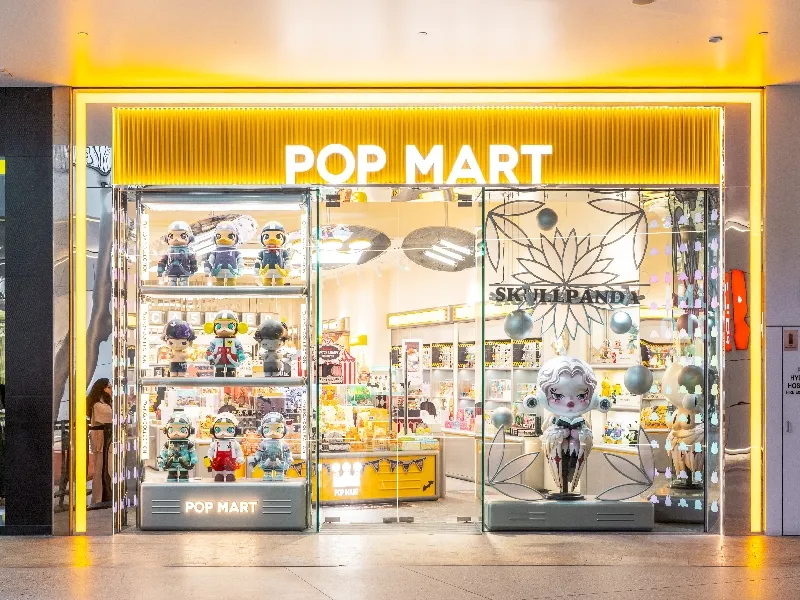

  • Pop Mart Warns of Shrinking Margins Amid Rising Production Costs and Market Uncertainties

    Pop Mart Warns of Shrinking Margins Amid Rising Production Costs and Market Uncertainties

    Pop Mart, a Beijing-based producer of ‘blind box’ collectible toys, recently announced that their imminent profit margins are expected to be impacted by escalating production costs. The increase in production costs is the result of surging raw material prices, which have been significantly influenced by the unforeseen energy price fluctuations due to circumstances in Iran.

    Despite the global popularity of their viral Labubu toys beginning to stabilize, Pop Mart has begun implementing standardization processes across its international retail and operations. The company is also establishing itself in the entertainment and culture sectors, with a Labubu film project underway and an extension to their Beijing theme park, Pop Land, that opened in the previous month.

    Performance in the Stock Market

    On Wednesday afternoon, Pop Mart’s shares declined by approximately 2%, settling at HK$159.50. In spite of this, the toy company announced an impressive 75% to 80% surge in revenue for the first quarter on Tuesday after the market closed. This substantial increase in revenue surpassed the growth projections for China, even though international growth experienced a slow-down.

    The company also acknowledged the potential impact of rising fuel prices on the gross profit of their international business. Furthermore, it was reported that earnings from regions with higher profit margins have also seen a decline.

    Challenges and Opportunities

    Pop Mart is currently tackling concerns in the market about the durability of its principal intellectual properties. Despite these concerns, recent collaborations, including the highly demanded Labubu x FIFA World Cup 2026 series, have performed exceptionally well. However, market experts have observed a decline in interest in the secondary market for some of their new releases.

    Questions & Answers

    What potential challenges is Pop Mart currently facing?
    Pop Mart is dealing with higher production costs caused by rising raw material prices, along with concerns about the longevity of its core intellectual properties.

    What strategic steps is Pop Mart taking to expand its brand?
    Pop Mart is working on standardizing its global retail and operations. Additionally, the company is venturing into the entertainment and culture sectors, with a movie project and theme park extensions in the pipeline.

    How has Pop Mart’s recent performance in the stock market been?
    Although shares declined by about 2% on Wednesday afternoon, the company reported a robust increase in first-quarter revenue, outperforming growth expectations in China.

  • Pharma in Indonesia: Competing for Higher Margins

    Pharma in Indonesia: Competing for Higher Margins

    IPMG members – including Novartis, Merck, Bayer, Boehringer Ingelheim, and Pfizer – have invested more than USD $1 billion in Indonesia’s pharmaceutical industry over the past few years, particularity for the construction of factories and clinical research (source: AmCham Indonesia).

    An example is Bayer, which recently invested 8.1 million euros in the expansion of its factory in Cimanggis (West Java). This factory produces multivitamins and medicines, about 75% of which is exported to 26 countries.

    Concurrently, Indonesia’s largest pharmaceutical company, Kalbe Farma, is shifting from being a maker of generic drugs to a high-tech pharma developer. Besides producing cancer drugs, Kalbe has been investing in R&D on stem cell therapies. Significantly, a lack of generic substitutes in these fields in Indonesia implies no government-set price ceilings, and therefore these products offer higher margins.

    In fact, there are more than 200 drugmakers in Indonesia, most of which produce only low-margin generics. While they control 95% of the market by volume, they have a combined 75% share in value terms. Therefore the few multinationals operating in the country have been able to make more profits because of their focus on high-value products.

    Such activities are taking place while Indonesian President Joko Widodo is pushing its universal health care program to cover the country’s projected population of 270 million by 2019, a leap from the 170 million currently covered. This year for the first time, government expenditures on health care reached the legally mandated 5% of the state budget. Health care spending is expected to grow 12% every year through 2020.

    To join the discussion on all developments in this industry sign up for CPhI South East Asia and its LinkedIn group. CPhI is the must-attend pharma event in Indonesia comprising of a trade show and state of the art conference where the regional industry meets to leverage connections, knowledge and insight to spur business. Launched 6 years ago, the next edition takes place during 22-24 March 2017 at JIExpo in Jakarta. Workshops and exhibitors’ presentations will add into the mix, and will complement the 3 days together with a business matchmaking platform.