Tag: market share

  • E-commerce share to rise to 12pc from 2pc in 10 years: Walmart India CEO

    E-commerce share to rise to 12pc from 2pc in 10 years: Walmart India CEO

    Share of e-commerce is set to rise, despite the growth in brick and mortar or physical retail from 2 percent to 12 percent over the next 10 years, aided by pick up in Omnichannel format, said Krish Iyer, President & CEO, Walmart India and Chairman of India Food Forum, at India Food Forum 2019 on Tuesday. Gap between physical and digital needs to be bridged as the consumer is going digital in terms of experience as also his touchpoints, he said delivering the inaugural address at the two-day India Food Forum 2019.

    Sharing his insight at Walmart, Iyer said that by enriching customer experience, the consumer started buying Rs 180 over Omnichannel instead of buying Rs 100 from the store itself and later the ratio in the store was Rs 70 while digital was Rs 110. Calling for technology adoption as key to retail growth, Iyer enumerated four key challenges led by food security, safety & nutrition, food wastage and sustainability.

    “Feeding a rising world population of 10 billion from 7 billion amid rising death of infant children due to malnutrition, changing climatic conditions are key challenges. In India, phenomenal efforts are made on the regulatory front for safety and nutrition that will follow with awareness, compliance and enforcement of law. Significant investment amounting to Rs 92,000 crore in food processing in catchment areas is needed to overcome the wastage of 30 percent of all food and 40 percent of fruits and vegetables,” he said.

    Earlier, speaking at the forum, Ajay Macaden, Executive Director, Nielsen said, “Consumers have evolved now for omni-channel even for specific categories like milk and bakery. Increased internet and smartphone penetration has led to multiple shopping channels and change in consumer behaviour.”

    In markets around the world categories such as travel, entertainment (books, music, events) and durable goods (fashion, IT/mobile, electronics) are the front runners for consumers to enter the online retail sphere. Consumers are, however, also looking for e-commerce options for an increasing range of categories, as their more immediate needs for convenience and ease expands, Macaden said.

    Consumers in APAC (Asia Pacific) have even evolved to fresh grocery and packaged goods with China, India, Japan and Korea leading the market. In fact, packaged grocery food and fresh groceries are showing the highest percentage growth of all categories in 2018 in this region, he said.

    Other key speakers at the forum included Damodar Mall, CEO, Reliance Retail (Supermarketwala), Sadashiv Nayak, CEO Food business, Future Group, Mohit Kampani, CEO, Aditya Birla Retail, C. Gopalkrishnan, Founder, N. Supermarkets, Ramesh Menon, Former CEO, Hypercity, Mohit Anand, MD, Kellogg, India and South to name a few.
  • Japanese cosmetics surges in export number

    Japanese cosmetics surges in export number

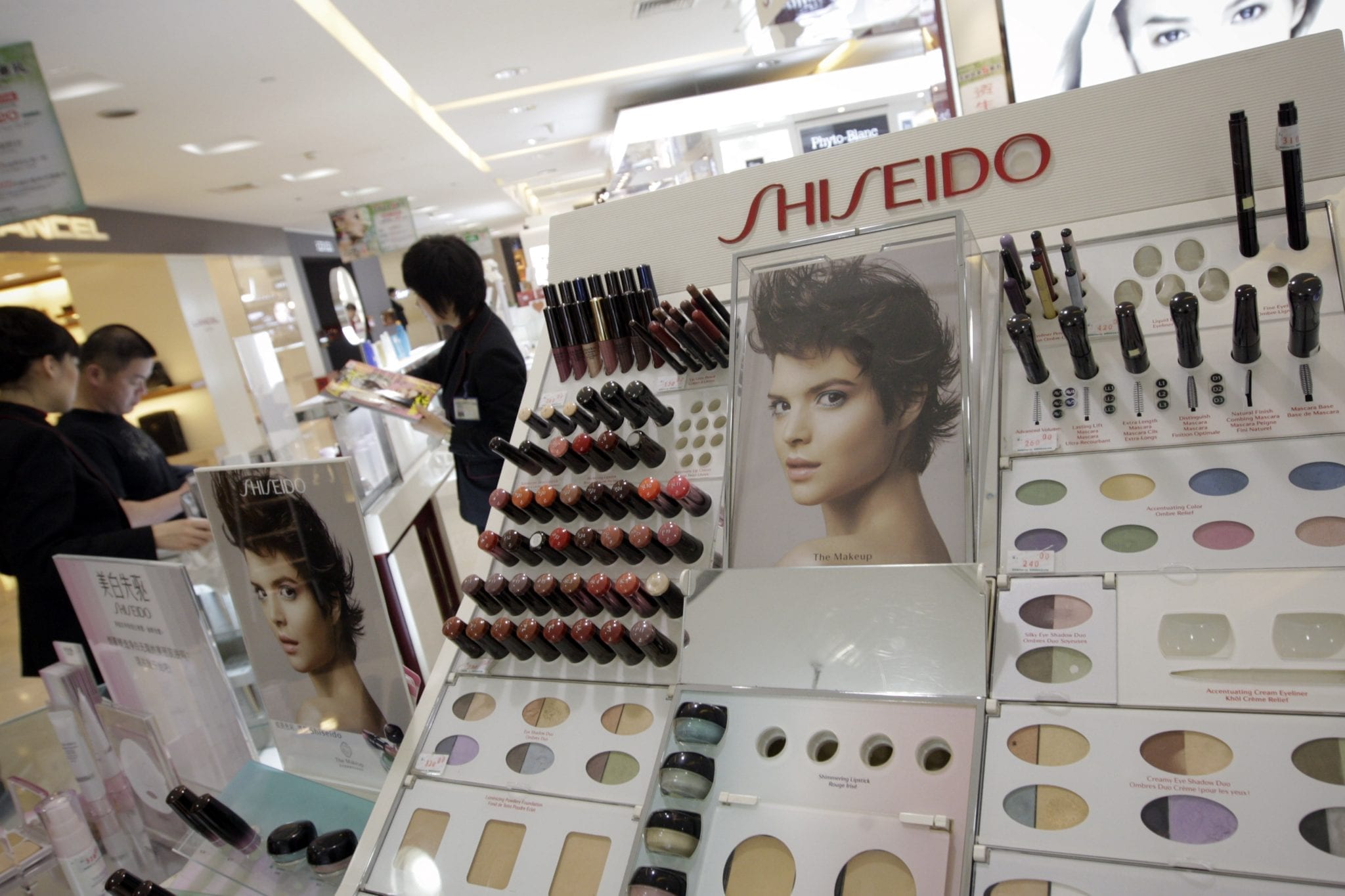
    Japan’s cosmetics exports are on track to surpass 500 billion yen ($4.53 billion) for the first time in 2018, marking a sixth consecutive record year, thanks to Asian tourists who continue to buy these products after returning home. Exports in the January-November period grew 44% on the year to 482.8 billion yen, according to a tally of 16 types of cosmetics compiled from trade data by Nikkei. Demand for gifts tends to boost exports in December, and with major cosmetics makers’ plants running at high capacities, the full-year figure is expected to reach around 520 billion yen.

    Mainland China was the top buyer from January through November, accounting for 34.9% of exports by value, followed by Hong Kong at 25.9%, South Korea at 10.3%, Taiwan at 7.3% and Singapore at 7.3%. Asia accounted for 90% of the total.

    Japan’s cosmetics exports have tripled in the last four years along with a rise in visitors to Japan. Exports exceeded imports for the first time in 2016 as inbound tourism creates new customers for high-quality Japanese goods who continue to buy them online or in stores upon returning home.

    Cosmetics exports are likely to keep climbing in 2019. China will implement in January its first e-commerce law, which will require domestic online platforms to register with the government. With the crackdown on illegal marketing, direct exports of Japanese cosmetics are expected to increase as smaller Chinese retailers that sell goods procured directly from shops in Japan decline.

    Top cosmetics makers are also actively expanding their sales. Shiseido plans to begin in 2019 officially selling new products in China from its namesake mainstay brand, which launched worldwide this fall. The company will open a facility for collaboration with Alibaba Group in Hangzhou from January and jointly develop products with the Chinese e-commerce empire.

    Kao plans to double the number of stores in China carrying its popular Freeplus skin care brand to more than 2,000 by 2020. It will also cultivate sales for its makeup brand Kate, which launched a Chinese marketing campaign in December. Kose is accelerating the online sales campaign it began in China this autumn for its luxury brand Decorte.

    Japanese cosmetics makers are increasing the capacity of domestic plants to meet the surging export demand. Shiseido plans to bring a new domestic factory online in 2019 for the first time in 36 years, in Tochigi Prefecture, to produce more items like skin care products. It will also begin operations at a new facility in Osaka Prefecture in 2020.

    Kao will roughly double production for its Freeplus brand from 2017 levels, too, by investing in its main factory in Kanagawa Prefecture. Boosting domestic production is likely to encourage exports further by increasing supplies of “made-in-Japan” cosmetics.

  • Vietnam’s love for instant noodles rises to near-boiling point

    Vietnam’s love for instant noodles rises to near-boiling point

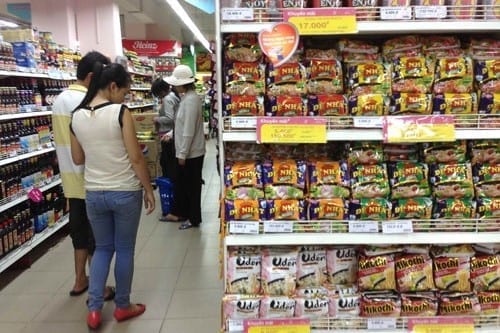
    Vietnamese people consumed more than 4.9 million packs of instant noodles last year, behind China, Indonesia and Japan, new data shows.

    Vienam has held fourth spot since 2012 in the rankings compiled annually by the World Instant Noodle Associations (WINA).

    On a per capita level with a population of over 93 million, the average Vietnamese person gobbled 53 packs of instant noodles in 2016, higher than Indonesians at 49, Japanese at 44 and Chinese people at 38.

    WINA said Vietnam’s instant noodle market recovered last year thanks to more diverse products that offer a wider range of choices for customers.

    Kajiwara Junichi, CEO of noodle producer Acecook Vietnam, said that the company’s revenue from instant noodles rose 5-20 percent during the second half of this year.

    Meanwhile, Masan Consumer and Asia Foods have been suffering from falling revenue.

    The three firms are the three biggest instant noodle producers in Vietnam and make up 70 percent of the domestic market share.

    Last year, The Washington Post cited a South Korean study that pointed out how harmful instant noodles can be for the health.

    “Although instant noodles are a convenient and delicious food, there could be an increased risk for metabolic syndrome given [the food’s] high sodium, unhealthy saturated fat and glycemic loads,” said Hyun Shin, a doctoral candidate at the Harvard School of Public Health and a co-author of the study.

    Doctor Dang Huy Quoc from the Ho Chi Minh City Oncology Hospital told Tuoi Trenewspaper that no studies have concluded that instant noodles can cause cancer, but high consumption of fat and salt can cause cancer and other heart diseases.

    Other experts suggest that people should only eat one or two packs of instant noodles per week.

    Many Vietnamese people are well aware of the harmful effects of instant noodles, but it’s common in Vietnam for people to snack on a pack of instant noodles between breakfast, lunch and dinner.

    The noodles are popular among college students, who often live far from home and lack the facilities to cook themselves a proper meal.

  • Shares of world’s largest footwear maker plunge on false sales data

    Shares of world’s largest footwear maker plunge on false sales data

    Pou Sheng International Ltd, a unit of the world’s largest producer of branded footwear, recorded the largest intraday plunge in its stock price since 2008, after firing its chief financial officer for publishing inaccurate sales figures, and announced the departure of its chief executive.

    Shares of the company tumbled as much as 37 per cent to an intraday low of HK$1.30 in Hong Kong, wiping out HK$4.1 billion of its value. Share prices of Yue Yuen Industrial Holdings, the 62 per cent shareholder of Pou Sheng, fell as much as 9.8 per cent.

    “The Company discovered on 6 January 2017 certain incorrect sales records in the month of December 2016, which could potentially lead to recognition of revenue for sales transactions that did not take place before end of year 2016,” Pou Sheng said in its filing to the Hong Kong stock exchange.

    “The incident revealed weakness over the financial controls,”the Hong Kong-based company said, even though the relevant figures were not significant compared with the group’s overall revenue and did not materially affect any financial information published prior to the announcement.

    The retailer said it has sacked CFO Chen Luo-leng, while CEO Kwan Heh-Der has resigned.

    Pou Sheng is a spin off of Taiwan’s apparel and footwear maker Yue Yuen, which owns factories in mainland China, Vietnam and Indonesia, producing 300 million pairs of shoes every year for Nike, Adidas, Reebok, New Balance, Puma and Timberland.

    Deloitte has been hired by the Hong Kong-based retailer to carry out a check on accounting records of the company, Pou Sheng said.

    Pou Sheng has been in a tight financial spot for the past few quarters, as same store sales growth — a crucial gauge on a retailer’ s business well-being — slowed to 4.6 per cent for the first three quarters of the year from 6.7 per cent for the first half, spurring investor concerns over its long-term prospects.

    The incident has triggered a series of downgrades by research houses on Pousheng and Yue Yuen’s shares.

    “We are worried that a slowdown in Yue Yuen’s retail arm will only be more severe than what the market had feared, and the resignation of the CEO could lead to near term disruption of the company, indirectly affecting Yue Yuen’s financial performance,”a UBS report issued Monday said.

    Credit Suisse cut Yue Yuen’s rating to Underperform from Neutral, as it reckoned its earnings will be weighed down by a projected decline in Pou Sheng’s net profits, according to a Monday note. “This should significantly affect operations and financials of Pou Sheng in the near-term,”the investment bank suggested.

    However, Hugo Suen, an analyst with Sunwah Kingsway, painted a slightly rosier picture for Pou Sheng.

    “After all, this company has the best international sports brands [as its business partners], and the swift action by the board should be able to rescue its reputation in the long term,” Suen said.

    Pou Sheng closed Monday trading at HK$1.61, down 22.22 per cent while Yue Yuen erased some of the earlier losses to settle 6.88 per cent down from the previous close at HK$27.05.

  • Apple and Samsung continued to lose smartphone market share in China during Q2

    Apple and Samsung continued to lose smartphone market share in China during Q2

    Smartphone shipments in China during the second quarter rose 14.9% on a year-over-year basis to 149 million units. Sequentially, shipments rose 2.7%. This growth is not coming from high-end manufacturers like Samsung and Apple. Instead, entry-level handsets and mid-range 4G models are capturing attention from subscribers to the nation’s three major carriers. China Mobile, China Unicom and China Telecom are each offering subsidies on these less expensive models.

    This has resulted in a build up of inventory in the country’s retail channels. During the first two quarters of the year, manufacturers shipped more phones than the number that consumers were buying. As a result, analysts expect an “inventory correction” during the fourth quarter. This should result in manufacturers slowing down shipments of smartphones to retail channels in order to keep inventories lean.

    Digitimes own research has Huawei listed as the top smartphone producer in China with a 14% market share from April through June. The 12.7% share earned by Oppo during the same time period was next, followed by Vivo and Xiaomi with 11.2% and 10.4% of the market, respectively. Apple was fifth with a single digit slice of the pie.

    In an earlier report, Apple was said to have claimed 10.8% of the Chinese smartphone market during the first quarter of this year. That was a decline from the 12% share Apple controlled in the first quarter of 2015. Now in single digit territory, the company is looking at India to provide future growth in iPhone shipments.

    source: Digitimes

  • How smaller retailers can win market share and drive growth

    How smaller retailers can win market share and drive growth

    I’m always interested in the small business owners I meet across the world, many running generations-old businesses that offer one-of-a-kind treasures. These shop owners, with their time-honored craftsmanship, quickly win over even the most casual window shopper, effortlessly converting passersby into loyal customers.

    Creating this sort of memorable customer experience is one of the keys to success for small retailers in the fashion and luxury goods sector.

    However, as the worlds of fashion, luxury and media descend upon New York for Fashion Week, these experiences and transactions seem increasingly quaint and inconsequential; one could be forgiven for thinking that high fashion remains the exclusive preserve of global retailers and big-name luxury brands.

    While that may once have been true, it’s no longer the case. Remarkably, more and more fashion retailers are starting to embrace being ‘small’ as a strategy for success and growth. Increasingly user-friendly technology tools are helping smaller retailers to speak and deliver to their niche customer sets across all channels with the same voice as they would in a shop in Hong Kong.  So what is driving their success?

    Tech-savvy

    According to research from eMarketer, e-commerce growth is projected to double the retail industry average at least until 2017. Half of all shoppers discover new products when searching with smartphones, and 82 percent of smartphone owners look online for product information when shopping. Smartphones already account for over 40 percent of ecommerce transactions in Japan and South Korea, so it is no wonder that small retailers are realizing that they need to be as tech-savvy and flexible as their customers. That means engaging and delighting shoppers on mobiles, social media and online channels.

    Highly personal

    Technological advancements and the democratizing power of the Internet have allowed retailers to scale up without sacrificing intimacy and personal service. As customers no longer think about retailers’ brands in a silo, neither does the small retailer. They analyze insights from website visitor traffic, social media interactions, and newsletter click-through rates to better understand their customers. Any retailer with a Facebook page can now easily discover that their average customer is, for example, female, aged between 16 and 24, listens to Adele, and by using this data to precisely tailor their sales and marketing strategy, they can more effectively engage and delight their customers.

    Cultivate and engage a community

    It is much more profitable to sell to loyal customers than to constantly look for new ones. A Bain study showed that just a five percent growth in customer retention could boost profitability by 75 percent.

    Small retailers are starting to use this insight to build loyal online communities, which do the selling for them. No wonder a brief Google search on the words ‘e-commerce’ and ‘social media’ turns out 101 million results, with articles such as ’12 Social Media Tactics to Drive Traffic to your E-commerce Site’ being the most visited. Another way is through loyalty programs, which 30 percent of independent retailers are planning to implement in 2016. This is on top of the quarter of independent retailers who already have a loyalty program in place.