Tag: market trends

  • Human Connection Remains Key Driver for Purchases in Southeast Asia Retail, Despite AI Growth

    Human Connection Remains Key Driver for Purchases in Southeast Asia Retail, Despite AI Growth

    Personal trust remains the most significant driver for consumer purchases across Southeast Asia’s US$219 billion market, even as artificial intelligence technologies become more prevalent. This human element is proving more influential than advanced technology in motivating buying decisions.

    Retailers and brands operating in the region are observing that customers prioritise relationships and reliable advice. This trend highlights the need for businesses to balance technological integration with strategies that foster genuine human connection and build consumer confidence.

    Trusting Human Connections

    Consumers in Southeast Asia are more likely to make a purchase when they have confidence in the people or businesses they interact with. This human-centric approach to commerce means that recommendations from trusted individuals, word-of-mouth, and established brand loyalty, often built through personal experiences, hold substantial weight. Businesses cannot solely rely on algorithmic recommendations or automated services to secure sales.

    RetailNews Asia regularly tracks how consumer behaviour in this diverse region is shaped by cultural nuances and evolving market dynamics. This focus on human trust mirrors similar findings in other Asian markets, where authentic engagement often translates into stronger customer retention and higher transaction values.

    Balancing AI With Personal Touch

    For retailers, the challenge lies in effectively integrating AI and other digital tools without eroding the trust built through human interaction. While AI can enhance efficiency, personalise experiences, and streamline operations, it should complement, rather than replace, the personal touch. Strategies might include using AI to free up staff for more meaningful customer engagements or to provide data-driven insights that help build better human relationships.

    The US$219 billion market in Southeast Asia is dynamic, with consumers increasingly sophisticated in their choices. Companies that successfully combine the convenience and intelligence of AI with the irreplaceable value of human connection are better positioned for sustained growth in this competitive landscape.


  • Vietnam Gold Bullion Dips Unexpectedly, Contrasts with Global Market Trends

    Vietnam Gold Bullion Dips Unexpectedly, Contrasts with Global Market Trends

    In a surprising twist, Vietnam’s gold prices have dipped despite a global rally in bullion values this Friday morning.

    Vietnamese Gold Prices Diverge from Global Trends

    The Saigon Jewelry Company reported a 0.33% decrease in the price of gold bars, bringing the cost to VND120.9 million (approximately US$4,617.23) per tael. Meanwhile, the price for gold rings held steady at VND117.4 million per tael. For context, one tael is equivalent to 37.5 grams or 1.2 ounces.

    Despite the recent downturn, gold prices in Vietnam have soared by 43.5% since the start of the year, showcasing a remarkable year for the precious metal.

    Global Gold Market Sees Gains Amid Fiscal Concerns

    Globally, gold prices saw a boost this Friday, signaling a strong performance and poised for weekly gains. Investors appeared wary, flocking to safe-haven assets amid worries following the approval of U.S. President Donald Trump’s tax-cut and spending bill in Congress, which raised red flags about fiscal stability, according to reports by Reuters.

    Spot gold rose 0.4% to $3,340.79 per ounce, and the bullion market enjoyed an uptick of over 2% for the week. Historically, non-yielding bullion tends to thrive in low-interest-rate environments, making it a preferred choice for cautious investors.

    Questions & Answers

    What caused the drop in Vietnam’s gold prices despite global gains?
    The decline in Vietnam’s gold prices, despite an overall rise in global bullion values, appears to be a local market anomaly, influenced by unique domestic factors.

    How much have gold prices in Vietnam increased since the start of the year?
    Gold prices in Vietnam have surged by an impressive 43.5% since the beginning of the year, marking a significant rally for this precious metal.

    What factors are driving the global increase in gold prices?
    Global gold prices are climbing as investors turn to safe-haven assets amid fiscal uncertainties, especially in response to political shifts, such as the recent U.S. tax and spending policy changes.

  • Gold Bar Prices Drop as Global Rates Experience Decline

    Gold Bar Prices Drop as Global Rates Experience Decline

    Gold Prices in Vietnam Decline
    Gold bar prices in Vietnam experienced a slight decrease on Wednesday, following a decline in global bullion rates. The Saigon Jewelry Company noted a 0.4% drop in its pricing, bringing the cost to VND 121.7 million (approximately US$4,688.79) per tael. Meanwhile, gold rings maintained a steady price at VND 118 million per tael—a tael being equivalent to 37.5 grams or 1.2 ounces.

    Regulatory Adjustments on the Horizon
    In a recent report submitted to the National Assembly, the State Bank of Vietnam outlined initiatives to amend the existing gold market regulations. The goal is to enhance procedural efficiency while ensuring robust oversight of gold trading activities. The bank emphasized its commitment to coordinating with various ministries to strengthen inspections and audits across retail and trading sectors, aiming to swiftly identify and rectify any regulatory breaches.

    Global Gold Market Trends
    The global gold market saw notable declines on Wednesday as optimism surrounding potential trade negotiations between the U.S. and China reduced the appeal of safe-haven assets. Investors are closely monitoring the Federal Reserve’s upcoming policy decision, which is anticipated to influence market dynamics. Spot gold prices dropped by 1.3%, settling at $3,383.88 an ounce, following a nearly 3% increase in the previous session.

    Ilya Spivak, head of global macro at Tastylive, commented on the market’s behavior, suggesting, “Gold seems to be pulling back amid a broad-based ‘risk on’ move across markets. This reflects growing optimism following indications that the U.S. and China may be initiating real trade discussions.”

    A Watchful Eye on Economic Factors
    As discussions continue, U.S. Treasury Secretary Scott Bessent and chief trade negotiator Jamieson Greer are set to meet with Chinese economic official He Lifeng in Switzerland this weekend. Furthermore, Fed Chair Jerome Powell’s upcoming remarks could provide critical insights into the potential timing of future interest rate adjustments, with gold typically thriving in low-interest environments that cushion against economic uncertainties.

    Implications for the Retail Sector
    The ongoing shifts in gold pricing and the anticipated regulatory changes could have significant effects on consumer behavior and the broader retail landscape. With consumer trends directly tied to economic conditions and regulatory frameworks, retailers must stay agile in their response to maintain engagement and trust among gold buyers.

    Questions & Answers:

    1. What factors contributed to the decline in gold prices in Vietnam this week? The decline in gold prices in Vietnam was influenced by a drop in global bullion rates, which fell primarily due to increased optimism surrounding U.S.-China trade talks.

    2. What actions is the State Bank of Vietnam taking regarding gold market regulations? The State Bank of Vietnam is planning to amend existing gold market regulations to streamline procedures and enhance inspections of trading businesses and retail shops to address any vulnerabilities or violations.

    3. How are upcoming Federal Reserve decisions expected to impact gold prices? Decisions from the Federal Reserve regarding interest rates could significantly affect gold prices, as lower rates typically bolster gold’s appeal as a hedge against economic uncertainties.

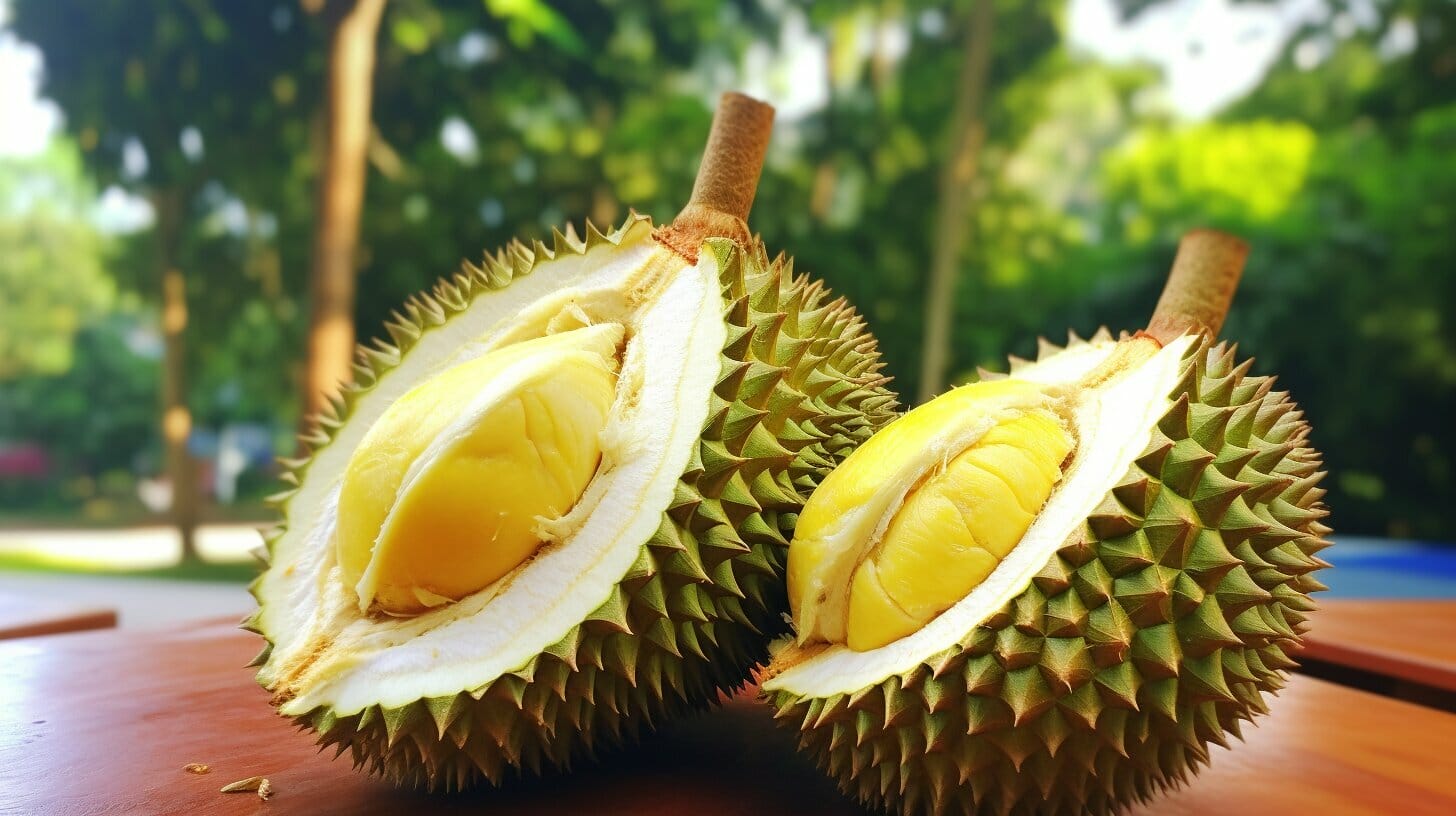
  • Durian prices drop up to 30%

    Durian prices drop up to 30%

    Farmers are now selling top-grade Monthong durians for VND65,000-70,000 (US$2.64-$2.84) per kilogram, down 25-30% compared to the prices at the start of the season in July.

    Grade B durians are priced at VND55,000-63,000 per kilogram, with a similar decrease from July and approximately 10% lower than the same period last year.

    Minh Thanh, a farmer in the Central Highlands province of Dak Lak, hopes that durian prices will recover by the season’s end. However, prolonged heavy rains have compromised the fruit’s quality, leading to low selling prices at the garden.

    Similarly, Hong Anh, owner of 0.5-hectare crop in the Central Highlands province of Gia Lai, encounters challenges as buyers rescind their offers of VND80,000 per kilogram, even forfeiting deposits, compelling her to sell at only VND65,000 due to poor quality.

    Anh attributes the price drop to the fruit’s diminished quality from excessive rainfall, particularly in new orchards that lack proper cultivation techniques. The hardened fruits complicate exports, with most being consumed domestically.

    Manh Hoang, a trader in the Central Highlands, observes that durian quality suffers when grown alongside pepper and coffee. As the prices for pepper and coffee increase, many farmers prioritize them and apply unregulated fertilization, which degrades the durian quality. Some buyers only purchase durian for use in ice cream or for extracting the pulp, further complicating the export of whole fruits.

    “I buy a few tons each day, but only 50% of the fruits meet export standards,” says Hoang. “The rest are sold in HCMC, Hanoi, and Da Nang.”

    The General Department of Vietnam Customs reports that in the first seven months of 2024, Vietnam exported 476,130 tons of durian, valued at US$1.6 billion, representing a 50.5% increase in volume and 49.4% increase in value compared to the same period last year.

    However, July saw a 30.8% decrease in both value and volume compared to June, totaling only US$280 million. Exports further declined to US$200 million in August.

    Despite weather-related slowdowns, businesses note that durian export demand from China is recovering due to festive occasions. Improved weather from October is anticipated to enhance the quality of durian. Additionally, the volume of off-season produce has increased potentially, increasing export turnover.

    Dang Phuc Nguyen, Secretary General of the Vietnam Fruit and Vegetable Association, explains that the reduction in export volume during July and August is temporary. From September, durian export turnover is expected to surge, potentially reaching nearly US$3 billion this year.

    On Aug. 19, during a visit to China by Party General Secretary and State President To Lam, the two countries signed a protocol on exporting frozen durian, offering substantial opportunities for Vietnamese agriculture. Exports of frozen durian are anticipated to generate US$400-500 million this year.

    In 2023, Vietnam exported approximately 500,000 tons of fresh durian, valued at US$2.3 billion, with 90% destined for China. The area planted with durian encompassed 154,000 hectares, yielding nearly 1.2 million tons, an annual increase of 15%.

    Vietnam has around 151,000 hectares under durian, with the Central Highlands accounting for half of it. Other large growing areas include the southeast and the Mekong Delta regions with 25,000 ha and 42,000 ha.