Tag: Massimo Dutti

  • Massimo Dutti Singapore opens at Jewel Changi

    Massimo Dutti Singapore opens at Jewel Changi

    Massimo Dutti Singapore has launched its sixth store, at Jewel Changi. The Inditex-owned fashion label’s almost 600sqm retail space features the brand’s newest design concept for the first time in Southeast Asia and following the opening of a similar outlet in Munich, Germany.

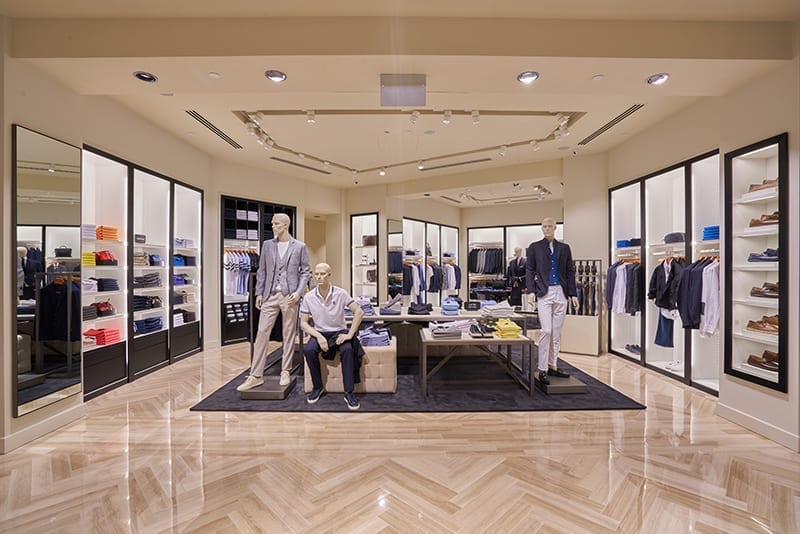
    Designed to look like a New York apartment, the new interior design layout expresses the natural evolution of the brand. The store concept is focused on lifestyle, offering a more enticing setting via the use of warm, high-quality materials such as wooden furniture and finishes and the use of plants – a blending of contemporary designer furniture that greatly reinforces this updated identity.

    As Massimo Dutti Singapore’s second largest store after Liat Tower, the new venue is in line with the Inditex Group’s latest approach to eco-efficiency.

    Electricity consumption has been reduced by some 30 per cent and water consumption by 40 per cent in comparison with its conventional stores. The eco-efficiency measures implemented include a store lighting system that optimises the lighting for the furnishings, and the exclusive use of LED bulbs. The lighting system also enables partial lighting of store spaces.

    The Changi store also features a Travel Collection, with easy-iron shirts and lightweight crease-resistant suits.

  • Inditex suffers from late coming winter

    Inditex suffers from late coming winter

    Zara owner Inditex has posted slow like-for-like sales growth due to the unusually warm autumn and adverse currency moves. Inditex, which also owns upmarket label Massimo Dutti and teen label Bershka, posted a 3 per cent rise in like-for-like sales in the six months to the end of November after an “extraordinarily warm September”. Sales bounced back somewhat to 5 per cent in October and November.

    The fashion giant reported an increase in earnings before interest and tax of €3.07 billion from the previous corresponding period.

    In the first nine months of the year, the world’s largest fashion retailer reported a 3 per cent increase in sales to €18.4 billion and a 4 per cent rise in net profits to €2.4 billion.

    According to Inditex, the company didn’t have to cut clothing prices from September like its rivals, which resulted in margin growth of 108 basis points during the third quarter.

    The clothing retailer maintained sales and margin guidance for the rest of the year.

    Pablo Isla, Inditex chair and CEO, said the group’s strong business model, which continues to deliver solid structural growth in all markets, and its constant focus on developing the integrated store and online platform through continued enhancement of technology and systems, have contributed to its performance.

    The company announced last September that all products from all its brands will be made available online by 2020, including in markets where it does not have any stores.

    Isla had said that Inditex wants to make all fashion collections available to all customers wherever they are in the world.

    “Even in those markets which do not currently have our bricks-and-mortar stores,” Isla added.

    Other than Zara, Massimo Dutti and Bershka, Inditex also sells the brands Pull & Bear, Stradivarius, Oysho and Uterque across its network of almost 7500 physical shops. It operates online in 49 markets.

  • Inditex to sell all its brands online by 2020

    Inditex to sell all its brands online by 2020

    Zara owner Inditex announced all products from all its brands will be made available online by 2020, including in markets where it does not have any stores.

    Pablo Isla, Inditex chairman and CEO, announced they want to make all their fashion collections available to all their customers wherever they are in the world.

    “Even in those markets which do not currently have our bricks-and-mortar stores,” Isla added.

    Other than Zara, the world’s largest clothing retailer also sells the brands Pull & Bear, Massimo Dutti, Bershka, Stradivarius, Oysho and Uterque across its network of almost 7,500 physical shops. It also operates online in 49 markets.

    In FY2017, Inditex’s online sales saw a 41-per cent increase to reach 10 per cent of group net sales, although it fell short compared to rival Swedish retailer H&M’s which made close to 12 per cent on online sales.

    Isla said all of the Group’s brands will also be adopting the integrated stock management system by 2020 in all the countries in which there is a physical store presence.

    He said the system would make it possible to fulfil online customer orders with store inventory. To date, integrated stock management is in place in Zara stores in 25 markets including Spain, France, Italy, China, the US, the UK and Mexico. Inditex currently has stores in 96 markets. The technology will be completely adopted across the whole group by 2020.

  • Online sales surge boosts Zara owner Inditex

    Online sales surge boosts Zara owner Inditex

    Surging online sales have boosted Zara parent’s Inditex’s net profit in the past fiscal year by 7 per cent.

    Inditex, which also owns brands including Pull & Bear, Bershka and Massimo Dutti, reported an increase in net profit for the 12 months ending January 31 to €3.37 billion (A$5.27 billion) from €3.16 billion a year earlier.

    Sales rose 9 per cent to 25.34 billion euros in the fiscal year, with revenue for online sales growing by 41 per cent.

    In FY17, Inditex invested €1.8 billion in further developing its integrated stores and online model and upgrading its technology. Specifically, the rollout of RFID technology has improved flexibility and response times by integrating stores and online inventories, the company said.

    Pablo Isla, chairman and CEO of Inditex, described it as a year of “solid growth”, and highlighted, “the unique strength” of their integrated stores and online model and its significant growth potential.

    He added that “the prescient investments made in technology and logistics in recent years,” coupled with space optimisation, had positioned the company for continued growth across all its markets.

    The group, which during 2017 opened its first stores in Belarus and launched its online sales platform in India, Vietnam, Singapore, Thailand and Malaysia, was founded in 1975 by Amancio Ortega and has become the world’s largest clothes retailer with eight brands.

    Inditex owns 7,475 shops worldwide, an increase of 183 stores from the previous year when factoring in shop closures, but 29 less than three months earlier.

    Florence Allday, beauty and fashion associate at Euromonitor International, said Inditex faces a period of uncertainty as the changing retail environment and globally volatile currencies make this rapidly evolving market sector even more competitive.

    The fashion conglomerate may be one of the most dynamic players in the industry, Allday said, but the past few months have seen Zara and its direct global competitors vie to remain in favour with their female, millennial demographic in a market that is fast-maturing and reaching saturation.

    Currently, Zara has the fourth largest global market share in the apparel and footwear category, behind Hennes & Mauritz (H&M), Adidas and Nike. Other significant competitors include Asos, Boohoo and Primark.

    Allday said rankings and shares in the global apparel and footwear market remained static in 2016, with sportswear giants taking the top two spots.

    Inditex ranked fourth, maintaining its positioning as one of the leading non-sportswear companies in the world. Inditex’s key rival is H&M, which slightly outperformed Inditex due to more dynamic store expansion and an aggressive pricing strategy. H&M also utilises far more visible marketing, including collaborations with high-profile designers that attract widespread fashion press.

    “Although Inditex does rank higher than H&M in the global footwear market the company will need to utilise its vertical operations and exploit its widespread geographic coverage, to overtake H&M in apparel, capitalising on the narrowing gap between the two rivals,” Allday said.

    “Further still, players such as Fast Retailing [Uniqlo parent] continue to move up the ranks, capturing consumers’ demand for value-orientated product offerings, threatening the dominance of Inditex and H&M.”

    Allday said despite Zara’s status as the world’s largest fast fashion retailer, its sales slowed last year due to a lack of distinction between seasonal collections, and general market saturation.

    “To continue to be a key player in the fast fashion arena, Zara needs to ensure that its constant, uninterrupted flow of new designs and products is matched by a digital retail experience that is equally seamless,” she said.

    “With competitors like Asos, Amazon and Missguided enjoying enormous sales and growth, thanks to their sleek online platforms, Zara must streamline its payment and delivery options to ensure that its online shoppers remain loyal. Consumer attitudes are shifting, preferring to pay more for quality over quantity.”

    “To ensure that it remains relevant, Zara must emphasise the quality and longevity of its garments and justify its low price points to ethically-conscious consumers.”

  • Massimo Dutti Opens a New Global Concept Store at Vivocity

    Massimo Dutti Opens a New Global Concept Store at Vivocity

    The establishment, with over 518 square metres of retail space on one floor, hosts the collections for both men and women.

    Interiors project

    The interior design, entirely developed by Massimo Dutti, was based on the use of new material, details and lighting. The floors are set with Serpeggiante’s Italian marble in beige and placed in spike, it contributes a note of elegance in an example of modernity and contemporaneousness mixture. The lighting has also project with supreme detail, zenith areas give the protagonist to the collections and different lamps give the perfect dose of environmental light, creating a warm atmosphere that yields the protagonist to the collection. In this new shop all the details line up to consolidate the identity and the lifestyle of the brand, sending a message of quality, a value inherent in all the Massimo Dutti’s collections. Also the furniture contributes to the warmth of the environment with the balanced combination of Krion’s big central tables with style 50’s armchairs and clear carpets.

    Advanced technology 

    Technology at the service of customers. The explosion of 3.0 technology including social networks and mobile services has led to the appearance of new, omni-channel trends that serve to connect the virtual and online world with brick-and-mortar stores, making the point of sale a space where emotions can take flight.

    Always at the cutting-edge of where fashion and technology meet, Massimo Dutti has implemented a series of activities with the aim of offering new purchasing experiences based on innovation and adaptation to customers’ new needs. These activities include:

    Dynamic marketing screens. These allow the continual publication and broadcast of the brand’s own contents, reflecting its physical and aspirational world.

    Eco-efficiency: a brand commitment

    The new store is in line with the Inditex Group’s most advanced concepts of sustainability, principles that have been followed both in the restoration project and in the store’s commercial operations. Electricity consumption has been reduced by some 30% and water consumption by 40% in comparison with conventional stores. The eco-efficiency measures implemented include a store lighting system that optimizes the lighting of the furnishings, and the exclusive use of LED bulbs. The lighting system also enables partial lighting of store spaces depending on the time of day and tasks to be carried out, as well as automatic activation when a presence is detected in internal working areas.

    Optimal air conditioning and ventilation are achieved using thermal insulation, and a ventilation control that varies according to space occupation, calculated using CO2 measurements. The equipment installed employs inverter technology capable of regulating itself depending on the demand for heating or cooling, adapting at all times to consumption needs. The air curtain is controlled by probe and allows three working levels depending on the air temperature on the premises. Finally, control and monitoring devices allow instant distance readings of consumption levels, making it possible to detect and correct any anomaly affecting the use of the facilities and their consumption.

  • Inditex Group sales rise on new stores

    Inditex Group sales rise on new stores

    Zara parent Inditex Group sales rose by 12 per cent in its latest trading year, to January 31, reaching €23.3 billion.

    Growth was achieved in every geographic region where the group is present, and includes contributions from debut stores in Vietnam and New Zealand.

    Same-store sales rose by 10 per cent, up from 8.5 per cent the previous year, with positive same-store sales growth in all geographies and across all brands.

    Net profit was €3.2 billion, up 10 per cent year-on-year, while earnings before interest and tax grew 8 per cent to €5.1 billion.

    Chairman and CEO Pablo described the result as positive against a backdrop of strong prior-year performance.

    Inditex opened 279 stores, net of closures, in 56 markets, across all its brands, ending the year with 7292 stores in 93 countries, a large proportion of the new ones in Asia, including its first Zara in Vietnam, in Ho Chi Minh City.  Other Zara stores opened in China, Thailand, Indonesia and Japan and it refurbished it flagship in the Shinjuku district in Tokyo, one of Japan’s most important shopping districts, which reopened to the public in November.

    A flagship Pull&Bear store opened in Windsor House in Hong Kong and new stores were opened by Massimo Dutti in India and by Oysho in Indonesia. Bershka refurbished its flagship on Nanjing Road East in Shanghai and Zara Home opened a global flagship on Garosu de Seoul in South Korea.

    Since the financial year ended, it has opened online stores in Malaysia and Singapore, taking its online platform to 43 markets.

  • How to grow for Luxury brands

    How to grow for Luxury brands

    Luxury brands need to use new technologies and offer experiences for their customers, the second Luxury Society keynote event in Shanghai has been told.

    UCO Cosmetics CEO Arthur Zhang told the event that the early-stage eCommerce model of simply providing a platform for selling products online is dead.

    He said key technologies being experimented and improved upon in China include augmented reality, virtual reality and live-streaming.

    “The millennial generation in China, which already numbers about 300 million people, seeks experiences and emotional connection – they are not just bystanders,” DLG China partner/MD Pablo Mauron told the audience of more than 150 luxury-industry brand executives. “As a result, live-streaming has become a medium for them to express themselves.”

    He told how brands such as Maybelline, Montblanc and Swarovski are taking advantage of these new opportunities.

    Underlining the key message of the event that eCommerce is changing, CEO Thibault Villet of luxury fashion eCommerce platform Mei.com told how a live-streamed show in collaboration with TMall resulted in 65 per cent of the products featured quickly selling out.

    Meaningful data

    Social customer-relationship management (CRM) makes highly targeted messaging and engagement possible, the event was told by Four Seasons Hotels Asia Pacific director of marketing communications John Hamilton. He said the luxury hotel chain has been gaining meaningful data about its customers, which in turn has driven growth. In the past year, through trial-and-error and optimisation, the group has defined a CRM-led content strategy on WeChat.

    Celebrity and key-opinion-leader partnerships can make a big impact in China, said East Entertainment commercial director Qing Dai, who spoke of her experience of partnering luxury brands with appropriate celebrities. One of Easy Entertainment’s most successful was in linking up Cartier with singer/actor Lu Han.

    Baidu GM for East China Wan (Grace) Zhang said Cartier was the most-searched luxury watch brand among the generation born between 1990 and 2000, linked to Cartier’s collaboration with Lu Han.

    Other speakers at the event included Four Seasons Hotel Pudong (Shanghai) GM Arthur Ho, writer Casey Hall of Women’s Wear Daily, Digital Luxury Group founder/CEO David Sadigh and MD for China Pablo Mauron, Baidu senior project manager Di Fu and Sephora China digital manager Vanessa Qian.

    Attendees included representatives of Alexandre de Paris, Baume & Mercier, Bottega Veneta, Bulgari, Cartier, Chanel, Chaumet, Conde Nast, De Beers, Dior, Hublot, Loewe, LVMH, Marc Jacobs, Massimo Dutti, Michael Kors, Montblanc, Nars, Net-a-Porter, Nike, Sephora, Shiseido, Swarovski, TAG Heuer, Tiffany & Co and Vacheron Constantin.

    Luxury Society, published by Digital Luxury Group, is an online destination for luxury-brand executives covering digital and technology matters and with more than 40,000 members across 150 countries.

  • US investor buys into Mitra Adiperkasa

    US investor buys into Mitra Adiperkasa

    US private-equity company General Atlantic has made its first investment in Indonesia by buying into lifestyle retailer Mitra Adiperkasa (Map).

    It has subscribed for Rp1.08 trillion (US$80.5 million) in bonds issued by Map which are convertible into shares in its F&B subsidiary Map Boga Adiperkasa (MBA), which runs Cold Stone Creamery, Godiva, Krispy Kreme, Pizza Express and Starbucks in Indonesia. It has more than 300 stores across 24 cities, and has more than doubled its store count over the past five years.

    Map runs multi-channel retail concepts in Indonesia across a diversified portfolio of department stores, sportswear, specialty fashion, F&B, and lifestyle products. It has nearly 2000 retail stores.

    “We believe the rapid rise in Indonesia’s middle and young working classes, the increase in this population’s disposable income, and the continued rural-to-urban migration represents an opportunity for us to strengthen our international food brands and cement our leadership position in the F&B market,” says Map CEO V.P.

    Sharma. A portion of the investment money will be used to accelerate the F&B division’s network expansion.
    “Indonesia’s domestic consumption comprises more than half of gross domestic product, and consumption patterns are increasingly shifting toward modern and aspirational lifestyle brands,” says General Atlantic Southeast Asia head Wai hoong Fock. “These secular trends position MBA’s food & beverage portfolio well for further expansion.”

    Regional commitment

    The partnership, General Atlantic’s first investment in Indonesia, indicates its commitment to long-term market prospects in South-east Asia,” says Fock, who joined General Atlantic from CVC Capital Partners last year to lead its South-east Asia investing program. He is based in the firm’s Singapore office.
    General Atlantic has 18 investment professionals in Asia, based in offices in Beijing, Hong Kong, Mumbai and Singapore. The firm opened its Singapore office in 2011, investing three years later in Singapore-based online mobile entertainment/communication Garena platform. It has also supported the growth of retail and F&B companies including lifestyle brand Tory Burch, luxury fashion brand Zimmermann, restaurant group Barteca Holdings, urban juice-bar concept Joe & The Juice, community accommodation marketplace AirBNB and transportation network company Uber.

    Map has 1921 retail outlets in 68 cities throughout Indonesia. Its retail concepts include department stores (Debenhams, Galeries Lafayette, Seibu and Sogo), fashion and lifestyle (Crabtree & Evelyn, Kipling, Lacoste, Marks & Spencer, Massimo Dutti, Nautica, Sephora, Swarovski, Topman, Topshop and Zara), sports (Converse, Golf House, Oakley, Payless ShoeSource, Reebok, Rockport, Skechers, The Athlete’s Foot and The Sports Warehouse), F&B (Burger King, Cold Stone Creamery, Domino’s Pizza, Godiva, Krispy Kreme and Starbucks), kids (Kidz Station and Oshkosh B’Gosh) and bookstore Kinokuniya.

  • CityOn.Zhengzhou to open fully leased

    CityOn.Zhengzhou to open fully leased

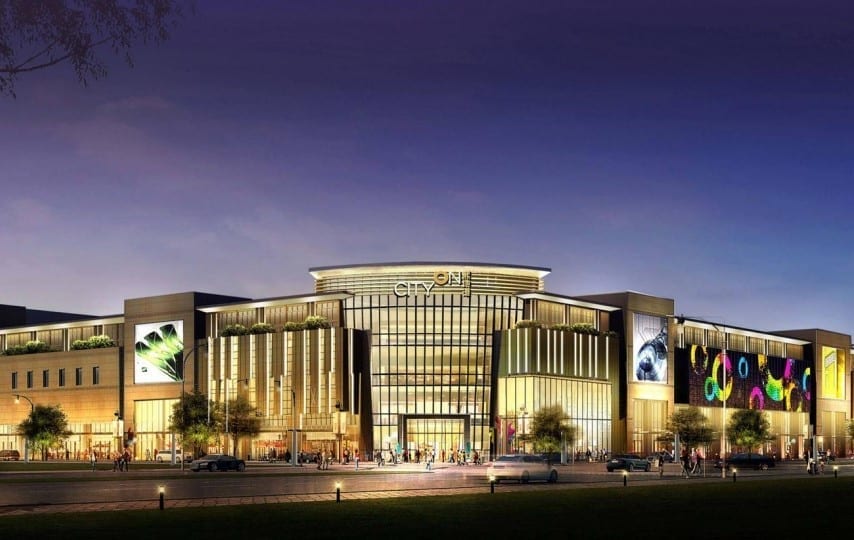
    Taubman Asia, a subsidiary of US shopping centre group Taubman Centers, and China’s Wangfujing Group, have announced the line-up of retailers for its CityOn.Zhengzhou mall in Henan province, set to open on March 16.

    When it opens, the centre will be 100 per cent leased and 90 per cent occupied with nearly 200 stores and restaurants. In the heart of Zhengdong New District, the six-level, 94,000 sqm shopping and dining destination will offer domestic, international and lifestyle brands from fast fashion to accessible luxury, anchored by a four-level Wangfujing department store.

    “We are thrilled to see our second China project coming to life in Zhengzhou,” says Taubman Asia president Rene Tremblay.

    Local, regional and international cuisine at all price points and in both seated restaurants and quick-serve formats will be a feature of the centre, which will also offer family-friendly experiential, educational and entertainment offerings.

    Many international brands will be making their central China debut at the centre, says Taubman Asia group VP Paul Wright.

    Outlets at the mall include…

    Fashion: Adidas, Ajidou, Basic House, Bershka, Charles & Keith, Columbia, Converse, Ecco, Five Plus, Forever 21, H&M, Innisfree, Jack & Jones, KIKC, Kipling, La Chapelle, Lee, Levi’s, Mango, Massimo Dutti, Miniso, Mishka, Mobi Garden, Nike, Pandora, Polo, Sand & Foam, Sephora, Skechers, Stradivarius, The North Face, Uniqlo, Vans, Vero Moda, Westlink and Zara.

    F&B/entertainment/kids/lifestyle/electronics: Acasia Food Village (featuring 14 food vendors), Benfu Sushi, Boat Noodle, Chatime, Chez Choux, Chicken Container, Coco, Dollar Shop, FrozenYo, GB Kids Station, Gong Cha, Grandma’s Kitchen, Guoguo Mutton Soup Restaurant, Guxiang No. 9 Catering, Hallmark Babies, Homao, Huawei, iSpace, La Chapelle Kids, Lenovo, MagicSalad, MM by Haircode, Mr Wish, NaughtyKids, New York Fries, Oscar CityOn Cinema, PapaBubble, Pizza Zone, Rbike, Siwuke Tea, Starbucks, Strawberry Forever, Subway, Teppanyaki Xiang, Toot Science, Udon & Tempura, Uncle, Wan Quan Bu Tong, Xiang Tian Xia Huo Guo, Xiao Liu Jia, Xiao Zhu Zhu Kao Rou, Xue Mi Da, Yang Xiang Dou Pi Shuan Niu Du, YuYuTo, ZBX Fresh Fish Hot Pot, Zheng Shi Yi and Zoo Steak.

  • Inditex Asia: the relentless push continues

    Inditex Asia: the relentless push continues

    As Spanish apparel giant Inditex continues its global expansion in earnest, the Inditex Asia business is accounting for a major share of the action.

    Inditex is committed to both multi-brand and multi-channel strategies as it builds it global dominance of the fast fashion market.

    During the first nine months of 2015 it opened 230 stores in 48 markets.

    Online, Zara extended its eCommerce presence to Taiwan, Hong Kong and Macao. Inditex also launched online operations in the southern hemisphere with the launch of Zarahome.com in Australia on December 3 – soon after the homewares brand opened online in Japan.

    Pull&Bear, Massimo Dutti, Stradivarius and Oysho all launched online in China.

    Inditex opened physical stores in all continents during the nine months to the end of October. The net number of stores across the group’s brands increased by 109 in Europe, by 47 in the Americas – and in Asia and the rest of the world, by a net 74, taking the group’s global store count to 6913.

    In Asia, these openings included new Zara stores in Osaka (Japan), Beijing, Harbin and Hong Kong (China) and in Singapore.

    Bershka opened its first store in Taiwan and a flagship store in Korea; and Stradivarius, with openings in the Chinese cities of Chengdu and Harbin.

    Oysho has opened its first store in Korea; Zara Home opened its flagship in Sydney (marking its 500th store worldwide).

    As at the end of October, Inditex had a presence in 88 markets, with online operations in 28 of these.

    Inditex said its net profit over the first nine months of the year was up 20 per cent to €2.020 billion. Net sales increased 16 per cent year on year to €14.74 billion.