Tag: Maybank

  • Knight Frank and CBRE|WTW Market 55-Storey Menara Tun Perak

    Knight Frank and CBRE|WTW Market 55-Storey Menara Tun Perak

    Knight Frank Malaysia and CBRE|WTW have been jointly appointed to advise on the proposed investment opportunity in Menara Tun Perak, bringing the landmark 55-storey commercial tower in central Kuala Lumpur to market.

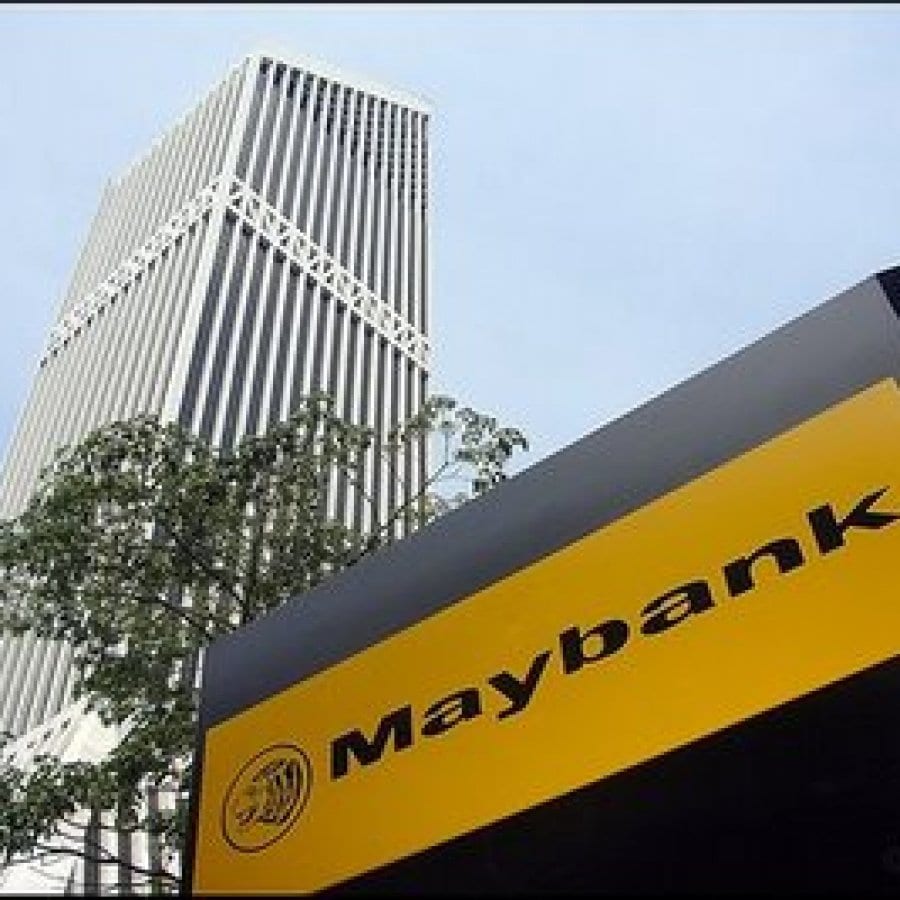
    Completed in 1988, the 244-metre building along Jalan Tun Perak previously served as the headquarters of Malayan Banking Berhad (Maybank). The former Menara Maybank sits near Merdeka 118, Chinatown, Petaling Street, Central Market and Dataran Merdeka, giving investors exposure to commercial, heritage and tourism precincts.

    The advisory team is marketing the skyscraper for partial or full investment structures. Prospective plans include ongoing commercial use, asset enhancement or repositioning into hospitality, serviced accommodation and mixed-use development, subject to feasibility assessments and regulatory approvals.

    Structure and Conversion Options

    Transit access anchors the property’s location. The site sits roughly 450 metres from Masjid Jamek LRT Station and 550 metres from Plaza Rakyat LRT station, connecting commuters to three RapidKL train lines, Kelana Jaya, Ampang and Sri Petaling, across the Klang Valley.

    Surrounding blocks have seen an emergence of boutique hotels, hospitality concepts and lifestyle destinations, supported by growing tourism activity and the revitalisation of Chinatown and its neighbouring streets.

    “Menara Tun Perak represents a unique opportunity to invest in a property that has played an important role in shaping Kuala Lumpur’s skyline and commercial history. Landmark assets of this nature, particularly those located within the city’s historic core, are rarely made available for investment.

    With the continued revitalisation of central Kuala Lumpur and growing interest in the surrounding heritage and tourism precincts, the property offers considerable potential for investors with a long-term vision to preserve and enhance its legacy while exploring opportunities to unlock further value.”

    James Buckley, Head of Capital Markets at Knight Frank Malaysia, noted that the asset allows buyers with a long-term vision to explore opportunities to unlock further value as downtown rejuvenation proceeds.

    “Menara Tun Perak’s strategic location within Kuala Lumpur’s historic city centre, coupled with its architectural prominence and established identity, presents an interesting proposition for investors. As the surrounding precinct continues to evolve, we see opportunities for the property to benefit from the ongoing rejuvenation of the city centre and increasing demand for well-located assets with the flexibility to accommodate a variety of potential uses.”

    Next Steps for Bidders

    For further enquiries, prospective investors can contact jointly appointed agents James Buckley at Knight Frank Malaysia and Marcus Yeo at CBRE|WTW as marketing outreach progresses.
  • Bursa Malaysia Edges up to 1,596 Points on Bank Gains

    Bursa Malaysia Edges up to 1,596 Points on Bank Gains

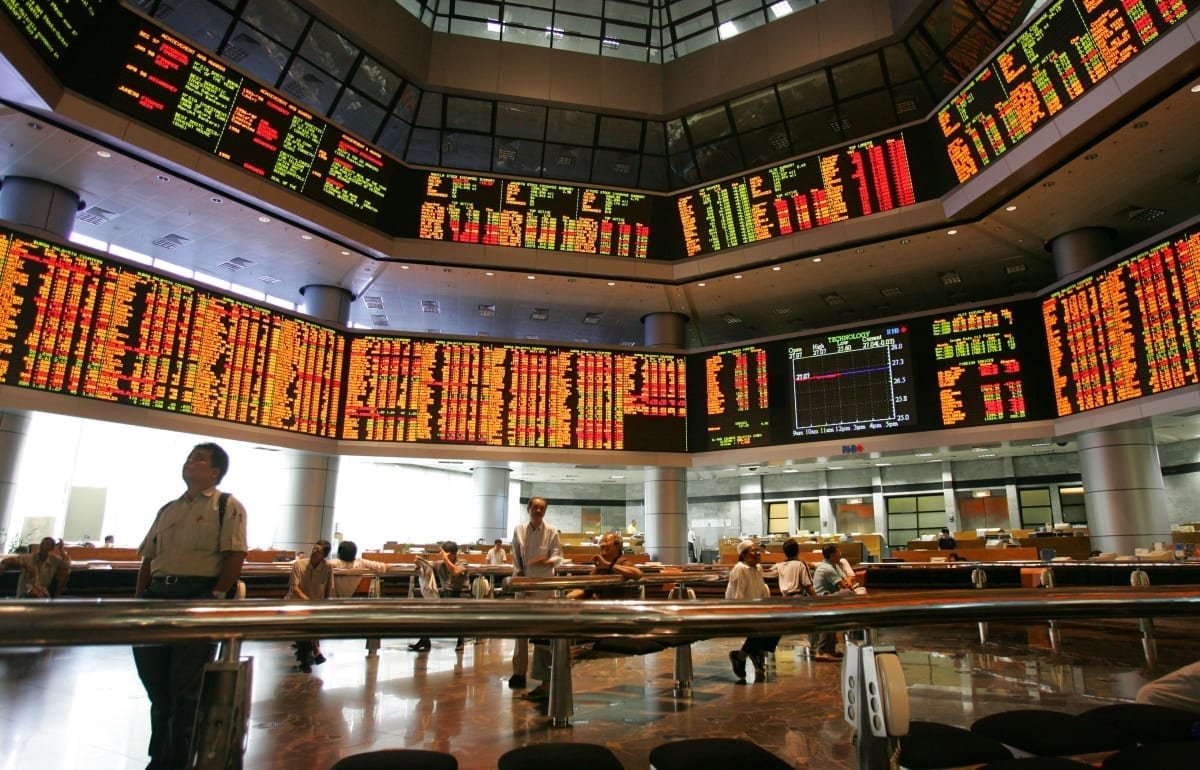
    Bursa Malaysia’s benchmark index edged up 0.36 points to 1,596.11 in early Tuesday trade as gains in heavyweight commercial lenders offset broad weakness across secondary counters.

    The marginal 0.02 per cent advance recovered an opening drop of 3.18 points to 1,592.57, though decliners outpaced advancers 201 to 156 across the broader exchange. Morning volume reached 180.64 million units worth RM90.02 million.

    Trading remained divided between domestic financial counters and export-oriented industrial names. Investors tracking Wall Street overnight gains looked for traction following a 1.11 per cent rise in the Nasdaq Composite and a 0.41 per cent lift in the S&P 500, where buyers returned to artificial intelligence semiconductor and memory hardware producers. That overseas bounce failed to spark a broad rally in Kuala Lumpur, where 302 counters traded unchanged and ten remained suspended.

    Lenders and Consumer Stocks Hold the Line

    Large commercial banks provided the primary support for the headline index during early exchanges. Malayan Banking added four sen to trade at RM9.94, Public Bank picked up one sen to RM4.72, and CIMB Group rose two sen to RM7.17. Hong Leong Bank held steady at RM21.10. Those advances lifted the Financial Services Index by 55.25 points to 18,546.22.

    Consumer and industrial heavyweights also found buyers. Food manufacturing major Nestle climbed 40 sen to RM90.30 to lead the top gainers list. Energy shipper MISC advanced 14 sen to RM9.49, refiner Petron Malaysia added 11 sen to RM3.45, and aluminum producer Press Metal gained five sen to RM6.73.

    Selling pressure hit utilities and infrastructure names, capping the index’s upward room. Tenaga Nasional dropped six sen to RM12.92, while YTL Power slipped five sen to RM5.21.

    Yield Pressure Weighs on Tech and Construction

    Elevated fixed-income yields in the United States continued to cast a shadow over rate-sensitive regional assets. The US 10-year Treasury yield held near 5.15 per cent while the 30-year yield stood around 5.48 per cent, keeping capital cautious toward emerging market equities.

    Technology equipment and assembly counters saw selective selling despite the overnight recovery in US chip stocks. Automated test equipment supplier KESM dropped 15 sen to RM4.54, and engineering solutions group UWC gave up nine sen to RM7.21. In building materials and construction, Kerjaya Prospek shed 10 sen to RM3.22, while ceramic tile manufacturer Kim Hin lost 8.5 sen to 80.5 sen.

    Apex Securities noted the split in investor sentiment as global interest rate pressures collided with domestic capital allocations.

    “the FBM KLCI is likely to trade within a range, with investors remaining selective and favouring domestically driven and defensive counters,”

    the brokerage said.

    Sector Divergence Deepens Across Secondary Boards

    Broader market gauges drifted lower as mid-cap and Shariah-compliant equities failed to mirror the banking index. The FBM Emas Index dipped 1.31 points to 11,908.38, while the FBM Top 100 Index fell 1.18 points to 11,704.04. The mid-cap FBM Mid 70 Index declined 17.71 points to 17,116.03, and the FBM ACE Index eased 1.58 points to 5,391.71.

    Shariah counters faced heavier selling, pulling the FBM Emas Shariah Index down 13.83 points to 11,860.36. The Plantation Index dropped 62.97 points to 8,590.4. In contrast, the Energy Index added 1.67 points to 825.23, supported by global crude prices trading near US$100 per barrel, while the Industrial Products and Services Index crept up 0.40 points to 174.5.

    Speculative retail counters dominated trading volume without driving major index shifts. GIIB rose 1.5 sen to 70.5 sen, and Ni Hsin picked up one sen to 45.5 sen. Zetrix AI and OCR stayed flat at five sen and 4.5 sen, respectively. Medical glove producer Top Glove eased half a sen to 88.5 sen, and healthcare firm LYC fell one sen to half a sen.

    Domestic Defensives Face Real Estate Headwinds

    The morning session shows institutional funds directing liquidity into large-cap balance sheets while avoiding debt-funded expansion plays. In retail, commercial development, and logistics, property developers and real estate investment trusts face higher borrowing costs because US long-term yields remain elevated above 5 per cent.

    Construction contractors linked to hyperscale data center infrastructure maintain a separate stream of domestic order book momentum. Yet the broader real estate ecosystem is operating with tighter capitalization spreads, leaving consumer staples and cash-generative banking operations as the primary defensive refuge for local asset managers.

    Market participants are now watching whether benchmark crude can maintain the US$100 per barrel threshold to support domestic energy counters, while keeping a close eye on the 1,600 psychological barrier for the FBM KLCI.

  • Bursa Malaysia Climbs to 1,635 as Financial Counters Lead Early Trade

    Bursa Malaysia Climbs to 1,635 as Financial Counters Lead Early Trade

    Bursa Malaysia opened higher on Monday as the benchmark FTSE Bursa Malaysia KLCI gained 5.01 points to reach 1,635.88 within the first ten minutes of trade.

    The 0.31 per cent advance built on the previous Friday’s close of 1,630.87, aided by softer United States payroll figures that dampened expectations of immediate monetary tightening by the Federal Reserve.

    Trading across the Kuala Lumpur exchange showed broad participation in the opening hour. Advancing stocks outnumbered decliners 224 to 158, while 337 counters remained unchanged, 2,054 went untraded and 24 faced suspension.

    Banking and energy counters advance

    Lenders provided the primary push for the index. Malayan Banking, Public Bank, and CIMB each climbed four sen to RM10.06, RM4.70, and RM7.69 respectively, driving the Financial Services Index up 97.59 points to 19,138.10.

    Utility giant Tenaga Nasional also added four sen to trade at RM13.00. Energy stocks followed suit, pushing the sector index up 2.57 points to 835.60, while the Plantation Index gained 2.23 points to 9,058.78.

    Healthcare provider IHH Healthcare moved against the upward trend, shedding six sen to RM7.74.

    Trading volume and market breadth

    Total market turnover reached 206.30 million shares valued at RM98.78 million during early exchanges. Technology and manufacturing counters saw heavy volumes among retail and institutional accounts.

    VS Industry gained three sen to 32 sen, while Notion VTec added four sen to 74.5 sen. GB Bond rose half a sen to 23.5 sen, SFP Tech picked up one sen to 28.5 sen, and Dagang NeXchange traded unchanged at 51.5 sen.

    Renewable energy and industrial engineering names led percentage gains. Samaiden climbed 19 sen to RM3.03, UWC gained 16 sen to RM7.73, Critical Holdings rose 15 sen to RM2.61, Mi Technovation added nine sen to RM5.30, and Solarvest advanced eight sen to RM4.25.

    Regional pressures and bond yields

    External macroeconomic indicators continue to dictate capital flows across Southeast Asian bourses. Rakuten Trade equity research head Thong Pak Leng noted that elevated benchmark borrowing costs and commodities keep local sentiment selective.

    Brent crude traded at US$102.25 per barrel while the US 10-year Treasury yield held at 5.28 per cent, maintaining pressure on emerging market valuations. In Hong Kong, the Hang Seng Index slipped below the 24,000 threshold as selling hit technology and financial listings.

    For consumer brands and industrial suppliers across Malaysia, higher bond yields and fuel costs present direct friction against corporate margins and transport overheads. Investors are filtering allocations toward cash-generative banking and energy plays while trimming positions in high-multiple consumer staples.

    Consumer decliners and index levels

    Consumer bellwether Nestle recorded the sharpest decline of the morning, dropping 32 sen to RM89.20. Industrial and tech decliners included Vitrox, down 14 sen to RM10.32, Kobay Technology, losing 12 sen to RM2.18, and Kelington, shedding five sen to RM8.58.

    Secondary indices tracked the main board higher. The FBM Mid 70 Index rose 28.14 points to 17,510.07, the FBM Emas Index added 33.81 points to 12,204.38, and the FBM ACE Index climbed 31.41 points to 5,560.87.

    Rakuten Trade projects the FBM KLCI to fluctuate between 1,625 and 1,635 points through the remainder of the session as bargain hunters test resistance levels.

  • Bursa Malaysia Opens Higher Before Trimming Gains to 1,666.81

    Bursa Malaysia Opens Higher Before Trimming Gains to 1,666.81

    Bursa Malaysia opened higher on Tuesday morning before trimming its advance, with the benchmark index easing 0.13 of a point to 1,666.81 at 9.10am.

    Trading volume reached 314.78 million shares valued at RM148.07 million, supported by selective bargain hunting across consumer, plantation, and financial counters.

    Market breadth stayed positive across the wider exchange in early trade. Advancers led decliners 265 to 150, while 294 counters were unchanged, 2,164 remained untraded, and 11 stayed suspended.

    Consumer and Energy Heavyweights Drive Divergent Moves

    Consumer goods companies posted sharp split movements during the morning session. Food and beverage manufacturer Fraser & Neave led the gainers board, rising 50 sen to RM23.10.

    Packaged food giant Nestle Malaysia moved in the opposite direction, dropping 48 sen to RM89.22. That drop positioned the food manufacturer among the session’s steepest decliners alongside insurer Allianz Malaysia, which fell 20 sen to RM21.10.

    Downstream fuel retailer Petron Malaysia advanced 21 sen to RM4.00, buoyed by shifting sentiment as easing tensions in West Asia pushed Brent crude oil prices lower. Semiconductor and technology equipment makers also found support, with Malaysian Pacific Industries adding 18 sen to RM42.98, while Pentamaster and MI Technovation each rose 16 sen to RM5.56 and RM5.82.

    Banking Stocks Draw Morning Capital

    Lenders provided steady support to the benchmark index as capital rotated into dividend-yielding financial counters. Malayan Banking added two sen to RM10.40, and CIMB Group rose four sen to RM7.69. Public Bank moved lower by one sen to RM4.78.

    Utility provider Tenaga Nasional shed 10 sen to RM12.94, while private hospital operator IHH Healthcare traded unchanged at RM7.62.

    Aviation and penny stocks dominated early trading activity. AirAsia rose two sen to 55 sen, building active retail turnover. Building materials firm BMS gained 1.5 sen to 15 sen, and Kinergy Advancement added half a sen to 40.5 sen. Artificial intelligence plays AIMAX and Zetrix AI traded flat at one sen and 20 sen, respectively.

    Valuations and Sector Rotations

    Rakuten Trade Sdn Bhd vice-president of equity research Thong Pak Leng noted that the domestic equity market presented attractive entry levels following softer trading last week. “Market valuation remains decent, currently at below the 16.5 times price-to-earnings average,” Thong said.

    Institutional and retail flows have increasingly concentrated on domestic-facing cash generators. For retail operators and consumer goods suppliers, pricing discipline and raw ingredient costs continue to dictate corporate margins on the ground, creating clear performance gaps between diversified beverage producers and legacy packaged food manufacturers.

    Plantation operators saw mixed pricing in morning trade. United Plantations fell 12 sen to RM33.30 despite modest underlying gains across the broader agricultural sector. Sunway Healthcare retreated nine sen to RM2.20.

    Mid-Cap and Shariah Gauge Gains

    Broader market indices traded in positive territory despite the slight retreat on the headline composite gauge. The FBM Mid 70 Index climbed 51.93 points to 17,741.07, and the FBM ACE Index rose 19.87 points to 5,336.30.

    The FBM Emas Index gained 12.17 points to 12,410.78, while the FBM Top 100 Index added 8.48 points to 12,198.93. The FBM Emas Shariah Index advanced 8.07 points to 12,244.83.

    Sector-specific indices tracked upward across the board. The Financial Services Index gained 25.65 points to 19,517.12, the Energy Index picked up 2.14 points to 847.57, the Plantation Index added 1.10 points to 9,411.59, and the Industrial Products and Services Index rose 0.69 of a point to 184.19.

    Market participants are tracking whether the benchmark composite index holds within its expected range between 1,665 and 1,680 points as institutional volume builds through the trading week.

  • Maybank Unveils Ambitious ‘ROAR30’ Five-Year Strategy, Aims for 14% ROE

    Maybank Unveils Ambitious ‘ROAR30’ Five-Year Strategy, Aims for 14% ROE

    Maybank, a Malaysian-based banking corporation, has recently unveiled its ambitious five-year strategy plan, dubbed “ROAR30”. The roadmap, which extends until 2030, outlines significant financial targets, including a return on equity (ROE) aim of 13-14 percent, a net interest margin that exceeds 2.05 percent, a cost-to-income ratio of 47 percent or lower, and a CASA (current account and savings account) ratio above 41 percent.

    Dato’ Sri Khairussaleh Ramli, Maybank’s President and Group CEO, emphasized the importance of the bank’s core markets – Malaysia, Indonesia, and Singapore – as primary growth and profitability contributors. He commented, “Our regional network strategy will enable us to support our clients across various markets. We are committed to shaping a mobile workforce, fostering a transformative mindset and culture, encouraging continuous learning, implementing technology modernisation and optimising productivity and financial performance.”

    Three Strategic Pillars

    Maybank’s newly announced strategy rests on three strategic pillars.

    The first pillar involves redefining its services to provide exceptional customer experiences, positively impact society, and stimulate the real economy.

    The second pillar focuses on the expansion of four key business areas: global Islamic finance, regional wealth management, regional transactions and payments banking, and regional corporate and investment banking.

    The third and final pillar is the creation of a sustainable bank via three core strategies: nurturing an enviable workforce and organisational culture, harnessing the power of technology and artificial intelligence, and optimizing productivity and capital allocation to enhance performance.

    Khairussaleh concluded, “Through ROAR30, Maybank aims to generate meaningful impact and ensure sustainable value creation for all stakeholders, spanning our customers, communities, and the economies we serve.”

    Questions & Answers

    What is Maybank’s new strategic plan named?
    The new strategic plan is named “ROAR30”.

    What are the three strategic pillars outlined in the “ROAR30” plan?
    The three pillars are redefining services to provide exceptional customer experiences, expanding four key business areas, and creating a sustainable bank through staff development, technology use, and productivity optimization.

    What are some of the financial goals set by Maybank in the “ROAR30” plan?
    Some of the key financial targets include a return on equity aim of 13-14 percent, a net interest margin that exceeds 2.05 percent, a cost-to-income ratio of 47 percent or lower, and a CASA (current account and savings account) ratio above 41 percent.

  • Maybank Reports 4% Increase in H1 Net Profit, Reaching $1.23 Billion

    Maybank Reports 4% Increase in H1 Net Profit, Reaching $1.23 Billion

    In an intriguing juxtaposition of regional economic trends, Maybank’s financial results for the first half of 2025 reveal a complex landscape for loans across Asia. While activities in Malaysia and Singapore showcased robust growth, Indonesian lending experienced a slight dip, highlighting uneven recovery trajectories across the region.

    Solid Growth for Maybank in Malaysia and Singapore

    Maybank reported a commendable 4% year-on-year increase in net profit, reaching $1.23 billion (MYR5.22 billion) during H1 2025. The bank’s net operating income also moved in a positive direction, climbing to $3.64 billion (MYR15.4 billion), reflecting a 3.2% growth.

    Investment Income Fuels Profit Boost

    Boosted by non-interest income from enhanced investment and trading activities, profit before tax (PBT) surged by 3.2% to $1.68 billion (MYR7.11 billion). However, this positive performance came with a small caveat; net interest margin saw a decline of 2 basis points from the previous year. Maybank attributed this slight downturn to a softer interest rate environment, particularly in Singapore.

    Inflation Pressures Cost Structure

    Despite the overall profitability, the bank faced rising overhead costs, which totaled $1.78 billion (MYR7.53 billion). Contributing factors included inflation-driven increases in personnel expenses and higher marketing and software maintenance costs. The net impairment provisions were pegged at MYR901 million.

    Regional Loan Dynamics

    Breaking down the loan performance, Malaysia emerged as a strong performer, with loans growing by 6.8% compared to the same period last year, while Singapore recorded an increase of 4.3%. Meanwhile, Indonesia experienced a 0.4% decrease in loans, a decision driven by strategic corporate portfolio rebalancing.

    Deposits on the Rise

    In a sign of market confidence, total deposits surged by 6.1%, bolstered primarily by Singapore’s impressive 21.5% growth and Malaysia’s respectable 4.9% increase. These figures suggest that while loan activities varied, confidence in deposit growth remains strong across the region.

    With these results, Maybank continues to navigate the ebbs and flows of a post-pandemic economic landscape, illustrating how differing conditions can affect financial institutions even within the same conglomerate.

    Questions & Answers

    What were Maybank’s net profits for H1 2025?
    Maybank’s net profit for the first half of 2025 reached $1.23 billion (MYR5.22 billion), showing a 4% increase year-on-year.

    How did loans perform in various countries?
    In Malaysia, loans grew by 6.8%, while Singapore saw a 4.3% increase. Conversely, loans in Indonesia decreased by 0.4% due to corporate portfolio adjustments.

    What factors contributed to the rise in overhead costs?
    Maybank’s overhead costs rose primarily due to inflation-driven adjustments in personnel expenses, higher marketing costs, and increased software maintenance expenses.

  • Maybank IB lifts AirAsia outlook on reopening of major markets

    Maybank IB lifts AirAsia outlook on reopening of major markets

    While the Thai operations of AirAsia Group Bhd continue to drag on the earnings of the low-budget airline group, the falling rate of Covid-19 infections in the region offers optimism for a longer-term recovery, says Maybank Investment Bank Research.

    Thai AirAsia recently reported wider third-quarter losses of THB2.1bil resulting from a suspension of its flight operations to mitigate a third wave of the Covid-19 pandemic in the country

    A “spectre of PN17 classification” looms over the Thai carrier, said Maybank IB, even as the Thai airline embarks on recapitalization and restructuring initiatives. Consequently, Maybank IB forecasts that AirAsia may take a huge hit in the coming financial year.

    “For FY22E, our core net loss estimate is twice than before largely due to AAGB recognizing the huge MYR1.1b in previously unrecognized losses from TAA,” said Maybank IB.

    Over the longer term, the research firm emphasized a swing in the group’s net profit to the black in FY23, underpinned by the decelerating rate of Covid-19 cases in the region.

    There has been a resumption of mass travel in all four of AirAsia’s major markets, including Malaysia, which historically contributed 70% to 80% of group profits.

    Meanwhile, Maybank IB also noted that the Malaysian aviation industry is consolidating, which is positive for Malaysia AirAsia fares.

    “We forecast FY23E to swing to a core net profit of MYR255m from a core net loss of MYR439m before due to higher MAA fares.

    “With a profitable FY23E, we hope AAGB will no longer be classified as a PN17 listed issuer by then (if it is classified as such on 7 Jan 2022),” it said.

    Adding to the future prospects, Maybank IB said AirAsia may also list its digital assets, which will unlock a lot of value for the group.

    Given the improved outlook, the research firm upgraded AirAsia to “buy” from “sell” and raised its target price to RM1.36 from 36 sen previously.

  • Ex-Maybank Private Wealth Head Resurfaces

    Ex-Maybank Private Wealth Head Resurfaces

    Maybank’s former head of private wealth has reemerged at a rival Southeast Asian private bank.

    Khoo Lin-Wein was named head of wealth at Vietnam’s Techcombank, sources based in Hanoi said.

    Founded in 1993, Techcombank is one of the largest joint-stock banks in Vietnam today with over 300 branches and more than 5 million customers.

    Khoo is an industry veteran, having first started his career at Mizuho where he was an equity sales trader from 1994 to 1998.

    Since then, he has focused on private banking and has worked with the likes of Coutts, Morgan Stanley, Credit Suisse, Deutsche Bank and, most recently, Maybank where he was head of private wealth for four years.

  • Maybank CFO to Head Malaysia Sovereign Wealth Fund

    Maybank CFO to Head Malaysia Sovereign Wealth Fund

    He takes over from Shahril Ridzuan who will be departing to pursue his personal interests.

    Malaysia’s Khazanah Nasional has appointed veteran banker Amirul Feisal Wan Zahir as managing director, effective 16 July, it said in a statement on Tuesday.

    Zahir, 51, began his career at auditing firm KPMG and later joined Citi in the Kuala Lumpur, Singapore and Hong Kong offices until 2004. He joined Maybank in 2008 as head of investment banking but left two years later for government fund manager Permodalan Nasional as executive vice-president of special projects. He rejoined Maybank in 2014 as group head of global banking and was made CFO in 2016.

    Kazanah’s portfolio includes a commercial fund, with a realisable asset value (RAV) of 95.3 billion ringgit ($22.94 billion), and a strategic fund with a RAV of 27.9 billion ringgit ($6.72 billion), as of end-2020.

  • Maybank Kim Eng Appoints Singapore Chief

    Maybank Kim Eng Appoints Singapore Chief

    He replaces Harmeet Singh Bedi, who left after six years at the firm in 2020 for Prime US Reit, a Singapore real estate investment trust.

    Maybank Kim Eng, the fully owned investment banking arm of Malaysia-headquartered Maybank, has appointed Aditya Laroia as chief executive officer, Singapore, according to an announcement on Wednesday.

    Laroia joined Maybank Kim Eng in 2020 as head of prime brokerage and country head of investment management in Singapore. In his new role, he will be responsible for the firm’s overall securities and investment banking business in Singapore and the execution of its five-year plan that is anchored by a sustainability-first approach.

    The new chief brings over 23 years’ experience in financial markets in New York, London and Asia.

    He was previously head of sales Asia-Pacific at Saxo Markets, responsible for managing all sales and commercial activities for Saxo Group in the region. Before joining Saxo in 2012, he spent 4 years at Nomura in London, and 10 years at Lehman Brothers.

    Singapore is a key home market for Maybank Kim Eng Group as it is a financial gateway for many of its client segments, Group CEO Ami Moris said in the announcement.

    With Aditya’s global experience and strong capital markets knowhow, I am confident that he will strengthen our franchise in Singapore to continue providing Asean-leading solutions to our clients, Moris said.

  • Maybank Sued for Loan Pullback

    Maybank Sued for Loan Pullback

    Malayan Bank Berhad – better known as Maybank – is reportedly being sued for effectively thwarting a Manhattan-based proper project after allegedly reneging on a loan agreement.

    American real estate developer Sharif El-Gamal said that the Malaysian lender and other syndicate members ignored and breached their obligations under the building facility and related loan documents which caused «irreparable damage to the plaintiff’s relationship with its contractor, leading to a cessation of all work, according to a report citing a notice last week.

    El-Gamal, also chairman and chief executive of Soho Properties, is seeking an award of more than $245 million which he claims is the net sell-out value of the property that has been filed for disclosure by the loan syndicate.

    According to El-Gamal, Maybank reneged on agreements to provide more than $162 million in syndicated construction loans to fund the project in New York.

    At the time of the project’s announcement, El-Gamal reportedly also said in a statement a senior construction loan totaling US$174 million was received from a syndicate that also included Warba Bank of Kuwait and Intesa Sanpaolo alongside US$45 million in mezzanine financing from MASIC, a Saudi investment firm.

  • Maybank Posts Q1 Profit Growth

    Maybank Posts Q1 Profit Growth

    The bank’s improved quarterly performance was the result of the sale of some liquid assets and fixed income instruments, which raised net fee-based income.

    Malaysia’s largest lender recorded a profit of RM2.05 billion ($470 million) for the first quarter of the year, an increase of RM240.4 million or 13.3 percent year-on-year, according to financial results released on Thursday.

    However, the bank’s group president and chief executive Abdul Farid Alias said the results do not reflect expectations for the rest of the year, as the full impact of the Covid-19 pandemic was not yet known.

    The full effects of rate cuts across key markets will show in 2Q income, with net interest margin expected to compress 15bps in the current rate environment, Maybank said in its outlook for 2020.

    Given the strong trading income and heightened risk going forward, the bank is making additional provisions of about RM600 million for loan losses, RM400 million for forward-looking assessment based on weakening macro-economic factors, and RM200 million for retail portfolio slippage.

    Maybank said its priority was to help support the domestic economies of its home markets and to work with affected borrowers to ensure viable solutions that support employment and prevent business failures in the near term.

    In Singapore, its profit before taxation was S$77.3 million, an improvement of more than 100 percent from the same period a year before, which recorded a loss before taxation of S$79.7 million, which was due to higher loan loss allowances.

    Net fund based income was 11.8 percent lower on-year at S$170.4 million, attributed to margin compression, while fee-based income grew 26.1 percent on-year, led by wealth management and investment gains. At the same time, overhead expenses increased by 7.5 percent due to higher personnel and information technology costs.

  • ING and Maybank Top Creditors To Troubled Commodity Trader

    ING and Maybank Top Creditors To Troubled Commodity Trader

    ING and Malayan Banking Bhd (Maybank) were the top creditors of Singapore commodity trader Agritrade International, which was last month placed under interim judicial management.
    Malaysia’s Maybank tops the list of secured lenders to Agritrade with $118 million owed to it, while Dutch bank ING is owed $100 million, according to a report. Agritrade International was placed under interim judicial management in February after the court dismissed an application for a debt moratorium.
    The trading company has $1.55 billion in outstanding liabilities, including $983 million owed to secured lenders, an affidavit by Agritrade’s chief executive officer Xinwei Ng dated Jan. 16, showed. Multiple Banks InvolvedFrench, Indian, Italian, Japanese, Chinese, the United Arab Emirates and Korean banks, along with 10 private funds are among Agritrade’s other creditors, are also on the list. Others on the list include global commodity traders.
    Agritrade said in the affidavit it ran into financial problems around 2018 amid a declining commodities market and its funding issues were compounded after many banks halted funding.
  • Broking Pressures Prompt Cuts at Maybank Kim Eng

    Broking Pressures Prompt Cuts at Maybank Kim Eng

    The job cuts are part of a broader review that also affects Maybank Kim Eng’s regional institutional sales and research, and Hong Kong investment banking and advisory businesses.

    Maybank Kim Eng (KE), the investment banking arm of Maybank, is restructuring its retail brokerage operations, and 5 percent of its staff in Singapore, or about 30 people, are being laid off, the firm said in an internal memo circulated.

    About 3 percent of its global workforce of 2,000 are affected by the latest exercise. The firm has about 600 employees in Singapore, which includes 400 full-time staff and self-employed remisiers, though none of the latter were affected, «BT» reported. Back office staff are among those being let go.

    The restructuring was prompted by changes in the investment banking landscape, including shifting customer preferences, increasing automation and digitalization of brokerage offerings, and changes in the regulatory environment, a spokesperson told the newspaper in a statement.

    Lower trading commissions and the growing popularity of passive investing with robo-investors are putting a strain on securities brokers like Maybank KE, which reported a pre-tax loss of 7.3 million ringgit ($1.75 million) for the first nine months of 2019, compared to a pre-tax profit of 227.4 million ringgit for the same period last year.

    Singapore, however, continues to be the firm’s largest market outside its home base Malaysia. Maybank KE is the city-state’s 15th-largest broker, with a 3.38 percent market share.

  • Maybank Extends Avaloq Partnership

    Maybank Extends Avaloq Partnership

    The Swiss banking software company will help the bank to create a better customer experience for its affluent clients with performance calculation and a suite of wealth products and services.

    Avaloq has won more business in Southeast Asia, with Maybank Group opting to use its suite of banking services to serve Maybank Premier clients in Singapore, the firm announced in a statement on Wednesday.

    Maybank has been using the Avaloq platform for its Singapore-based private banking division since March 2016, but this extends the relationship to include the bank’s affluent clients and will help deliver investment product features to them while upgrading the risk management and oversight of client portfolios, the statement said.

    The implementation successfully went live on 25 November.

    Having a strong backend platform is integral to building positive customer experience for our wealth management clients,» said Lim Kok Boon, head of Maybank Premier, Maybank Singapore.

    He said such technological upgrading is «vital to maintaining an advanced and digitally proficient wealth management suite to increase [Maybank’s] competitive edge.»